Sabitlenmiş Tweet

Verathos
51 posts

@verathos_ai
Verified Intelligence for Everyone. Cryptographically Verified AI inference & training on Bittensor Subnet 96.


the need for censorship resistant ai infra has never been higher, soon it will be the only viable option. bittensor:native
CHINA CONSIDERS RESTRICTING OVERSEAS ACCESS TO CUTTING-EDGE AI MODELS China’s Ministry of Commerce has led meetings over the past month with major AI companies, including Alibaba, ByteDance, and Z.ai, to discuss measures that would restrict overseas access to cutting-edge AI models, including models that have not yet been released. The discussions reportedly include not only closed-source models but also open-weight models. However, the scope of application is still under debate, and the rules may ultimately apply only to future frontier models. Officials have also discussed designating the leakage or theft of proprietary AI technologies as a national security crime, with stronger penalties, as well as restricting the types of foreign capital that can invest in Chinese AI startups. The backdrop is the U.S. move to strengthen export controls on AI models, along with national security concerns over cutting-edge models that could possess advanced cyberattack capabilities. Chinese authorities are reportedly concerned that advanced U.S. cybersecurity AI models could be used to exploit vulnerabilities in Chinese software. Since the beginning of this year, China has continued to tighten measures to prevent AI technology from being transferred overseas. Authorities have investigated whether Chinese AI startups that relocated abroad violated export control laws, while also strengthening oversight of overseas transactions involving Chinese investors, technology, data, and national security concerns. Future regulations could take the form of a tiered framework based on technological capability. Basic open-source AI models may be managed through a filing system, high-performance models may be subject to security reviews, and the most sensitive frontier models may be banned from public release or restricted to use within China.



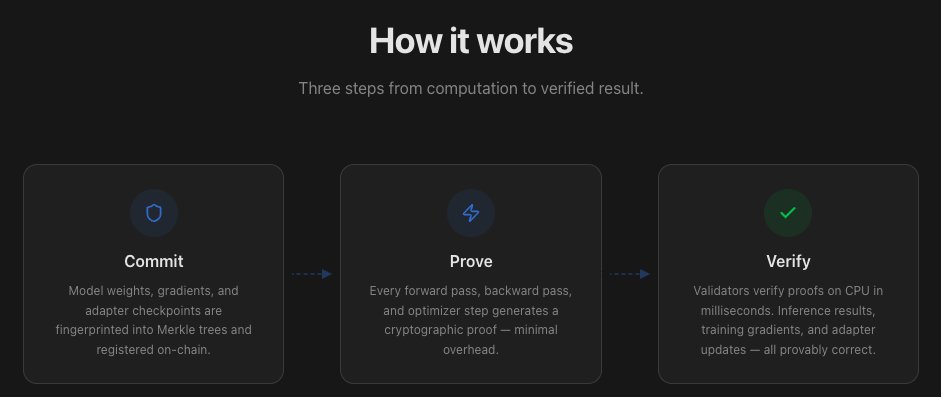
Bittensor | $TAO You know why I still think TAO is undervalued? Because when I look at the problems in AI today, and solutions that subnets like @verathos_ai offer, I know we're on the right track. Model access is getting restricted (GPT-5.6, Fable 5), inference is expensive, and even when you pay for a model, you still can’t verify that the correct model weights and computation were actually used. @verathos_ai does not just return an AI output. The computation comes back with proof that the correct model and computation were used. That is the definition of untrusted compute. Most compute networks focus on cheaper inference, more supply, or better routing. Those matter, but the harder problem is proving that the work actually happened. Without proof, decentralized compute is just rented hardware with a trust assumption. With Bittensor, you get different subnets attacking different parts of AI like cheaper inference, open AI markets, and verified compute through Verathos. That is why TAO still looks undervalued to me.



One thing I’m enjoying about my first Stitch3 campaign is that I’m mining and learning about #Bittensor at the same time 🧠 A week ago I was buying my first $TAO. Today I’m diving into SN96 @verathos_ai. The more I read, the more I think they’re tackling one of the biggest problems in decentralized AI: trust. If anyone can contribute compute, how do you know the work was actually performed? Most projects solve this with trusted hardware. Verathos uses cryptographic proofs to verify the computation itself. No trusted enclaves. No special hardware. Just math. Trust the math, not the server ⚔️ Who’s building something similar, and how does Verathos compare?