Martijn Verbove

1.5K posts

Martijn Verbove banner
Martijn Verbove

Martijn Verbove

@verbove

Co-founder @ https://t.co/AKF3HR4fMQ → AI roadmaps for legacy enterprises | Building agents & automation systems | 3x founder + Investor @ Material V | Golden Kitty winner

Katılım Kasım 2013
641 Takip Edilen1.5K Takipçiler
Martijn Verbove
Martijn Verbove@verbove·
building a startup is literally just 3 things on repeat: ship → get users → make them successful people complicate this with 47-slide decks and quarterly OKRs but every founder who's won just did those 3 things faster than everyone else build the thing. find the people. help them win. that's it. that's the whole playbook.
English

0
0
1
11
Martijn Verbove retweetledi
Ray Dalio
Ray Dalio@RayDalio·
The former Dutch Empire teaches us a lot about the importance of capitalism in driving long-term success through the development of productive entrepreneurs. The Dutch became a leading empire by being open to the best thinking in the world. They became so inventive that they were responsible for 25% of all the major inventions in the world — including ships that could travel and collect great riches, and the invention of capitalism as we know it today to finance those voyages. This virtuous cycle leads to strong income growth, which can be used to finance investments in education, infrastructure, research, and development. Over time, that helps its citizens become more productive and more competitive than their peers. #principles #raydalio #history #capitalism
English
99
274
1.5K
152.5K
Martijn Verbove retweetledi
Claude
Claude@claudeai·
Introducing Claude Managed Agents: everything you need to build and deploy agents at scale. It pairs an agent harness tuned for performance with production infrastructure, so you can go from prototype to launch in days. Now in public beta on the Claude Platform.
English
1.9K
5.3K
51.1K
16.7M
GREG ISENBERG
GREG ISENBERG@gregisenberg·
THE CLEAREST PATH TO A $10M+ SOFTWARE EXIT in 2 YEARS (with AI and agents) building an agency right now is one of the most interesting business moves the productized agency had its moment in 2022. it collapsed because scaling humans is a nightmare. inconsistent output, people quitting, margins getting crushed. most of the founders (and creators) who tried it got burned and moved on but the thesis was right. the labor problem is just solved now with AI, claude code, openclaw etc. here's the actual playbook i'd run today: pick one painful deliverable for one specific buyer. like SEO content for e-commerce brands doing $1M+ but not "marketing." or like ad creatives for DTC brands spending $50k/month on meta. one thing. one customer. that's it then you build the AI workflow behind it. you're selling an outcome on a monthly retainer. $3-5k/month. 80%+ margins because your cost is compute and a few hours of QA "BuT tHaT'S nOt a BiG bUsInnesS" okay but you're still swinging for the fences because the agency IS the research and development for your agent SaaS every client is paying you to figure out what to automate. you're learning what breaks, what scales, what customers actually want. by month 4 you know exactly what to productize. you build the software on top of the workflow you've already proven works and already have customers paying for agency funds the agent SaaS. SaaS scales without the agency overhead. the clients become your first software customers now let's talk about what this actually looks like financially year 1: 10 clients at $4k/month. $480k revenue. 2 people. maybe $80k in costs including compute, tools, one part time VA. you're taking home $400k between two people while building the software in the background year 2: you launch the software. your 10 agency clients are the first to convert. they already trust you. they've seen the output. you charge $800/month for the software version. now you have recurring software revenue AND the agency still running year 3: agency is winding down or running on autopilot. software has 200 customers at $800/month. that's $1.9M ARR. 2-3 person team. 85% margins. you are now a very attractive acquisition target the exit math is interesting. SaaS at $1.9M ARR with strong retention trades at 5-8x revenue. that's a $10-15M exit for something two people built in 3 years starting with zero VC CAVEAT: Startups are hard. A lot needs to go right. But from a framework perspective, I think this probably the lowest risk, highest reward option for lots of of folks and most of the businesses cost $0 to start basically this is the most capital efficient path to a software exit that exists right now happy building
English
229
172
2.7K
327.2K
Fabrizio Rinaldi
Fabrizio Rinaldi@linuz90·
I built my dream Markdown editor for Mac. → Introducing Cogito (pronounced koh-gee-toh). It started out of frustration: Obsidian is powerful but overwhelming. iA Writer is beautiful but feels built for a different era. Nothing felt right for how I actually write and work now: plain files, lots of folders, agents and scripts editing alongside me. I wanted both: native and beautiful, powerful and calm. So I finally built it. It's fast, keyboard-first, polished, truly native. A Mac app built with power users and developers in mind. This is my love letter to writing and Mac apps. I use it for all my writing now. Free while in beta ✌️
Fabrizio Rinaldi tweet media
English
159
49
1.4K
161.1K
Jesse Tinsley
Jesse Tinsley@JesseTinsley·
I basically spend most of my day talking to founders… As a founder myself it led to us creating a founder centric acquisition model. Basically the antithesis of Private Equity. Founder friendly, no lockups, no huge retrades, close on your timing. Works great.
English
5
0
20
2.1K
Jesse Tinsley
Jesse Tinsley@JesseTinsley·
Easiest way to become a millionaire in 2026? Buy 2-3 SaaS businesses with $300-500k ARR automate everything with AI and you’re now making $1m+ a year. No easier time to become a millionaire at any point in history.
English
32
4
258
133.6K
Martijn Verbove retweetledi
Marc Andreessen 🇺🇸
Magical OpenClaw experiences that use frontier models cost $300-1,000/day today, heading to $10,000/day and more. The future shape of the entire technology industry will be how to drive that to $20/month.
English
623
520
7.7K
1.6M
Martijn Verbove
Martijn Verbove@verbove·
If you met your 16-year-old self for coffee and they asked: 1. Do we ever get to travel the world? 2. What if I’m not enough? 3. I want to do something great… but where do I start? What would you say back? Be grateful for how far you’ve come!
English
0
0
0
27
Martijn Verbove
Martijn Verbove@verbove·
Everyone is talking about the autonomous enterprise. Almost nobody is building one, because they’re trying to jump straight to “AI employees” instead of treating the company like software. The practical path is simpler: An autonomous enterprise is a set of business processes that run as loops — and refactor themselves after every run. Just like programming.
jack@jack

x.com/i/article/2038…

English
0
0
0
24
Daniel Vassallo
Daniel Vassallo@dvassallo·
I just filed my taxes with OpenClaw. Here's how it went. I sold my 90% stake in a business last year for $1.8M cash (installment sale: half in 2025, half in 2026). I also had a single-member LLC, brokerage income from dividends and stocks, HSA distributions, ACA marketplace insurance, 3 real estate properties, prior estimated tax payments, foreign income tax credits, and three kids. Not a simple return. I usually pay a CPA. Last year it cost me $8,000 for personal and business returns, and every question took weeks to get answered (so I didn't ask much). This year I decided to see how far I could get with OpenClaw instead. Here's what actually happened: Phase 1: Research (Monday) I had a pile of documents: the purchase agreement, all LLC operating agreement amendments, old K-1s, prior tax returns going back to 2012, bank statements, balance sheets. I fed everything to OpenClaw and said "read everything in chronological order and figure out my 2025 tax situation." It reconstructed the full entity history: my LLC started in 2019, converted to an S-corp in 2020, became a multi-member LLC (partnership) in 2023, then I sold a small share to an acquirer in 2024, and eventually sold my remaining 90% last year. Having all the prior returns was huge. OpenClaw traced my cost basis through every transition: original capital contributions, income allocations, distributions, entity conversions. It cross-referenced numbers across years, verified how my previous CPA had handled things, and flagged details I never fully understood, like why my ending capital account was negative and what my recourse liabilities represented. It even caught an error. My previous accountant flipped the month with the day for when I sold a small share of my business (5/4 instead of 4/5) which meant I got attributed some income for one month that should have gone to another partner. Didn’t change tax due much, but OpenClaw FTW! By the end of the day, it had prepared a comprehensive summary.md document with all the numbers, forms needed, and open questions. Phase 2: Actually filing (Tuesday) OpenClaw researched TurboTax's current plans and saved me $500 by unburying the $129 TurboTax DIY plan I actually needed. Intuit was trying to sell me a $639 package via a recommendation quiz that said there's no other option for my situation. There was! This was a 4+ hour session where I went screen by screen through TurboTax with OpenClaw guiding every field: - Brokerage 1099: Imported automatically. OpenClaw verified the numbers matched my records. - Schedule C (my solo LLC): I had no bookkeeping done for this, so OpenClaw analyzed all bank transactions and prepared the P&L. I only had to recategorize one transaction because it was a reimbursement for something I had paid for personally. - K-1 partnership income: No actual K-1 yet (the acquirer hasn't filed the entity return), so we estimated my share of the partnership based on bank statements and revenue data. - The installment sale: This was the hardest part. TurboTax kept double counting the gain, reporting it through both the K-1 disposition AND Form 6252. We had to zero out the K-1 sale fields and let the installment sale section handle all the gain reporting. Took several attempts to get right. - Itemized deductions: Mortgage interest, property taxes, local sales taxes, and so on. Uneventful, and OpenClaw correctly predicted the SALT cap limits I'd run into it. TurboTax confirmed those calculations. - Annualized income method: Since the $900K installment came in Q2, using the annualized method on Form 2210 saved ~$3,700 in underpayment penalties. This was quite tedious, and I'm not sure an accountant would have done this for me. I've been told "just pay the penalty" before. - HSA: ~$12K distribution, all qualified medical expenses, $0 taxable. - ACA Premium Tax Credit: 1095-A entered month by month for 11 months of marketplace coverage. I quit the ACA plan in November, in favor of CrowdHealth. No deductions from them unfortunately. At the end, OpenClaw reviewed the final 137 page tax return draft return line by line. Total federal due: $125K, excluding the ~$40K in estimated taxes already paid throughout 2025. — Have you said thank you once, Donald?! What worked well: 1. Document analysis. I threw PDFs and CSVs at it: purchase agreements, K-1s, old returns going back years, bank statements, and it extracted exactly what was needed. Being able to say "look at my 2022 return and tell me what basis my CPA used" and get an answer in seconds was invaluable. Way faster than explaining things to a human. 2. Answering questions in real time. Instead of emailing a CPA and waiting days, I asked "what are recourse vs nonrecourse liabilities?" and got a clear answer in 5 seconds while staring at the TurboTax field. This back-and-forth is what made the whole thing work. Every question I had, answered immediately. 3. Catching optimizations. The annualized income method, investment interest expense from brokerage margin, etc. Small things that add up. 4. Cross-referencing prior years. Having OpenClaw dig through my old returns to verify how things were previously handled gave me real confidence. I could see that the numbers were consistent with what my CPA had done before. What didn't work well: 1. Driving TurboTax directly. I had OpenClaw try to fill in the forms via browser automation. Too slow! TurboTax's multi-step wizards with radio buttons and dynamic forms don't lend themselves well to AI control yet. We switched to me clicking while it dictated what to enter. I'm optimistic this will be improved soon. 2. TurboTax's installment sale handling. This was genuinely tricky. The double counting issue required a creative workaround. A CPA familiar with TurboTax would know the right workflow. OpenClaw had to experiment. 3. No K-1 yet. We estimated the partnership income. When the real K-1 arrives, I'll probably need to amend. This is the same problem I'd have with a CPA though. But if the K-1 preparer was using OpenClaw, maybe I would already have it! What to watch out for: - You need to know your own situation. I'm not completely ignorant about tax prep. I had a reasonable expectation of what the numbers should look like, roughly how much I owed, what the major items were, and so on. I wasn't relying on blind faith. The ability to ask questions and verify things quickly is what built confidence. - Complex form interactions are tricky. The TurboTax installment sale / K-1 double-counting issue could have resulted in extra taxable income if we didn't catch it. Having a sense of what the final number should be matters. - You still need to understand your own finances. The bottom line: Total cost: $129 (TurboTax Premium) vs $8,000 I paid my CPA last year. Also $23.90 in OpenAI GPT 5.4 tokens, including drafting of this post :) Time spent: ~6 hours total across research, prep, and filing. Still faster than dealing with a CPA, and I got much better answers. The biggest difference wasn't the money. It was the speed of answers. Every question I had during filing got answered in seconds. That real-time loop of "what does this field mean?" → clear explanation → enter the number → move on is something no CPA engagement can match. Next year, I'll know the drill. And OpenClaw has memory. That one should be much simpler. Long live the claw! 🦞
English
80
10
421
231.4K
Yann
Yann@yanndine·
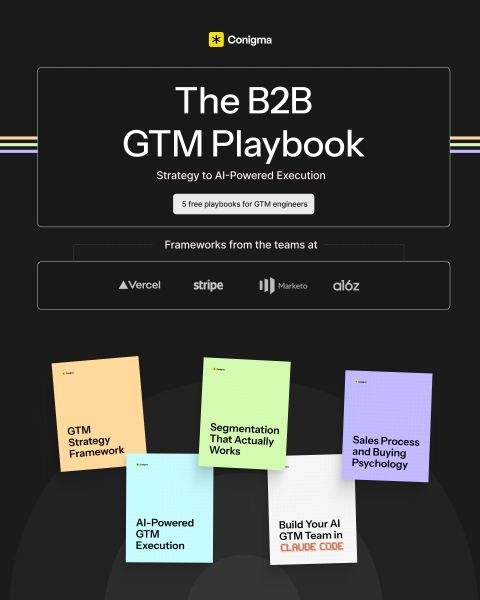
A two-person GTM team at a Series B SaaS company closed $2.4M in pipeline in one quarter. No SDRs. No demand gen agency. No paid ads. Signal-based outreach. Intent scoring. AI-sequenced follow-up. Automated reporting. Two GTM engineers running the whole motion - for one quarter. I pulled it apart. Compared it to every system we've built across the GTM teams we've worked with. Then asked myself one question: If I had to reverse engineer this from scratch - what would it actually look like? Turns out the architecture isn't that complicated. I mapped the whole thing into a step-by-step playbook you can upload directly to any LLM. It walks you through building your own version from GTM strategy to fully AI-powered execution. Comment "GTM" and I'll send it over.
Yann tweet media
English
926
34
487
54K
Martijn Verbove
Martijn Verbove@verbove·
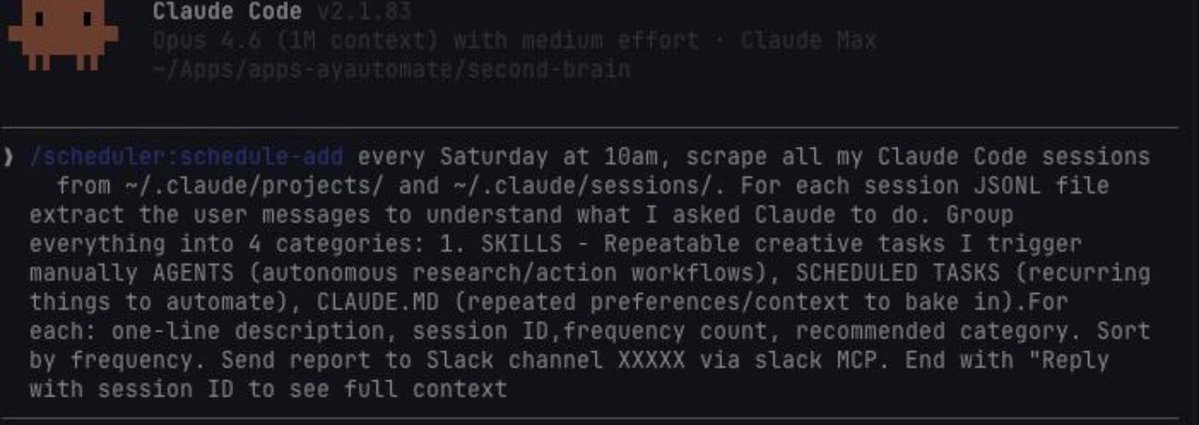
Steal this: run a weekly AI memory audit. Your chat history is not knowledge. It’s a graveyard. Once a week, have Claude summarize your Claude Code sessions and cluster what you actually asked it to do into 4 buckets: 1. SKILLS Repeatable tasks you still do manually (should become a button) 2. AGENTS Autonomous workflows (research + action, end to end) 3. SCHEDULED TASKS Stuff to cron (recurring, predictable) 4. CLAUDE.md Your repeated preferences + context (the rules you keep retyping) For each item, include: • 1-line description • session id(s) • frequency count • recommended bucket Sort by frequency. Result: your real workflow, not your imagined one. Whatever you repeat becomes automation, docs, or a skill. Copy/paste prompt: “Analyze my Claude Code session logs from the past 7 days. Extract every user request as a single line. Deduplicate similar requests. Cluster into: SKILLS, AGENTS, SCHEDULED TASKS, CLAUDE.md. For each cluster, list: summary, session id(s), frequency, and what to build next. Sort by frequency. End by asking me which session id to expand for full context.”
Martijn Verbove tweet media
English
0
0
0
40
Martijn Verbove
Martijn Verbove@verbove·
Most people don’t lack ideas. They lack an unfair advantage. That’s what an opportunity is. A business opportunity is basically an asymmetry you can turn into something customers will pay for before the market catches up. There are 3 asymmetries worth looking for: 1. Information asymmetry You know something others don’t (yet). You’ve seen a problem up close, you have evidence, you have timing, you have context. This is where a lot of strong B2B ideas come from. 2. Distribution asymmetry You can reach the buyer faster, cheaper, or more reliably than other founders. Network, channel, platform, audience, partnerships, a proven motion. Great products die all the time because this part was “figured out later”. 3. Talent asymmetry You (or your team) can build something others can’t. Deep technical ability, rare domain + engineering combo, world class taste, speed. The best opportunities stack these. The most common founder mistake is having only one: an idea. And one more thing: asymmetries decay. Markets learn. Channels get crowded. Competitors catch up. Your window is the gap between “you see it clearly” and “everyone sees it”.
English
0
0
2
28
Martijn Verbove
Martijn Verbove@verbove·
The future of education is not “learning facts”. It’s learning how to build skills as systems. University should look less like: • memorize -> test -> forget And more like: • build repeatable systems for 1-2 years • using the latest tech + tooling • with real constraints (security, data, stakeholders, budgets) • in environments that resemble actual enterprises Because in the AI era, the value isn’t knowing the steps. The value is designing a machine that produces the outcome reliably. If you can build skills this way, you don’t just become “employable”. You become a force multiplier. You can: • replace parts of a team • automate a department’s workflows • or remove entire outsourced processes This is why “skill building” matters more than “credential collecting”. And why AI automation isn’t optional anymore, it’s the new literacy. The winners won’t be the people with the most knowledge. They’ll be the ones with the best systems.
English
0
0
0
20
Vitalii Dodonov
Vitalii Dodonov@vitaliidodonov·
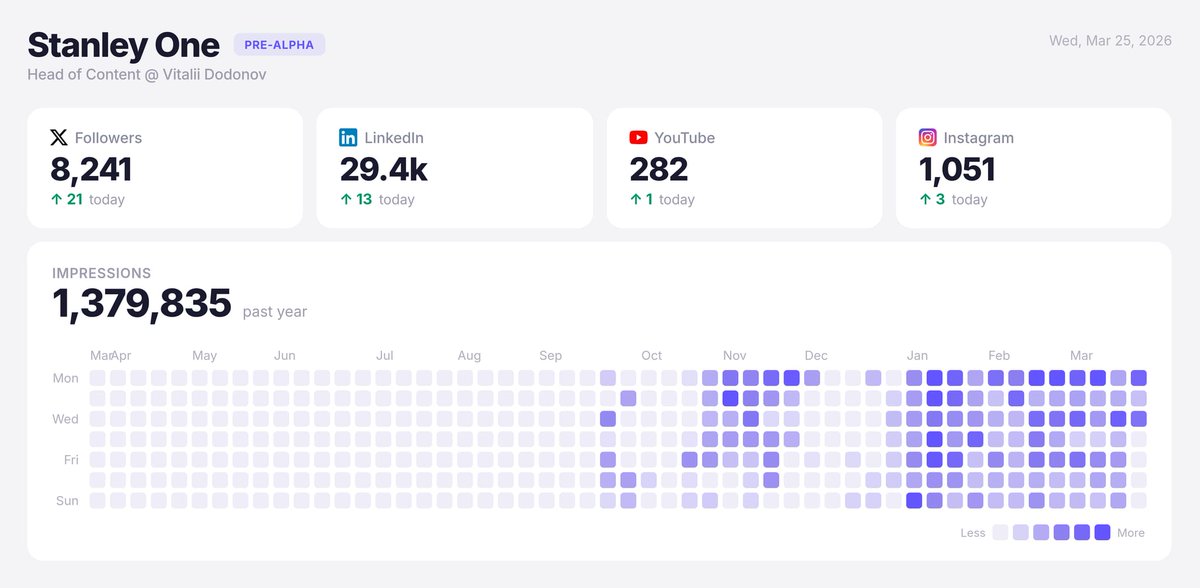
I’m launching Stanley (AI Head of Content) on June 1, 2026. Over the next 6-12 months, I'll grow it from $0 → $10M ARR. In public. (While running my $30M ARR business full time) I will also be using only AI employees to do it, so you can copy the playbook. I'll update this thread as I go. Bookmark it and follow along to hold me accountable 🤝 Comment "alpha" to get early access. My social media stats as of today:
Vitalii Dodonov tweet media
English
350
35
525
62.5K
Martijn Verbove
Martijn Verbove@verbove·
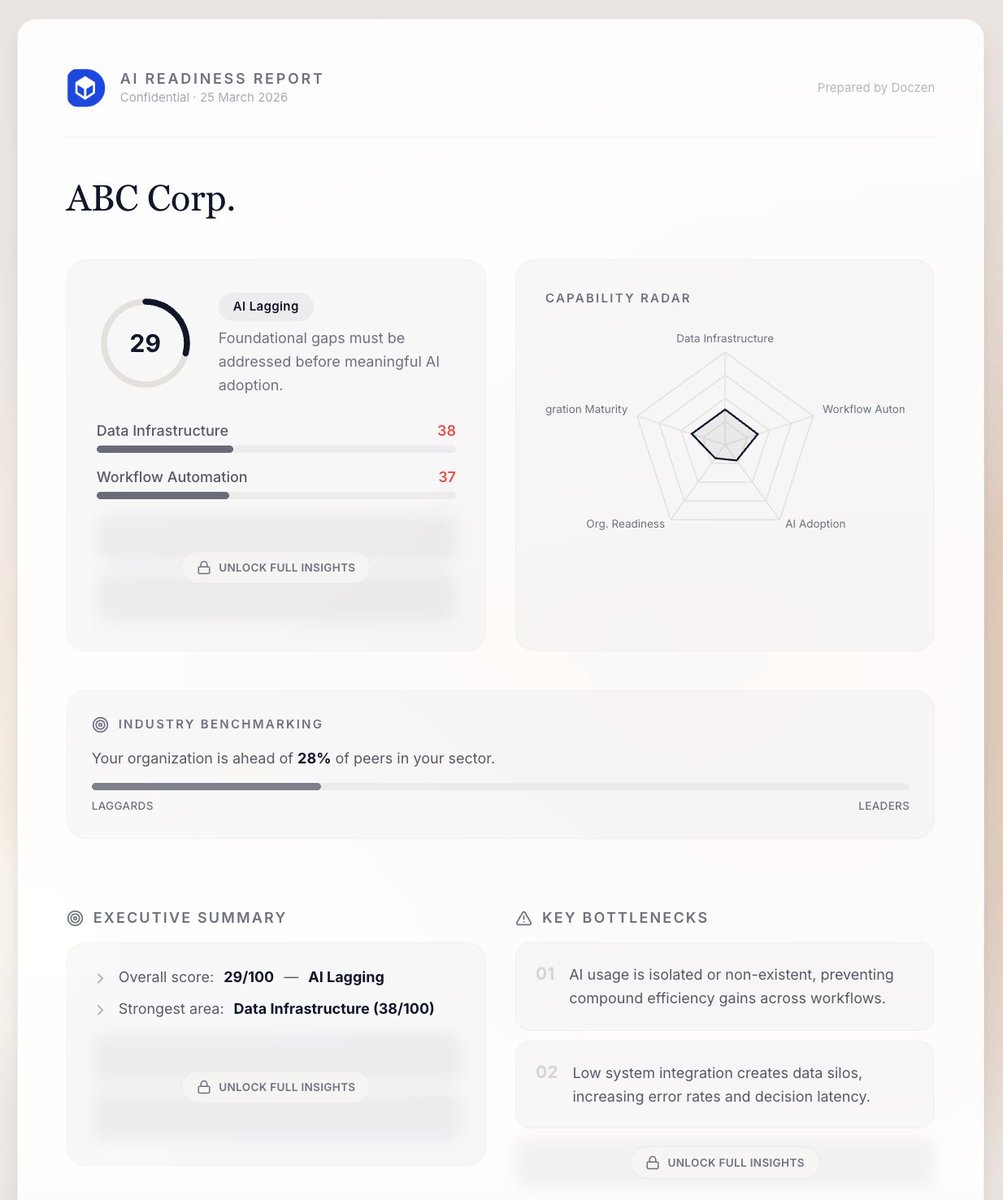
95% of enterprise AI projects deliver ZERO measurable ROI. Not low ROI. Zero. MIT looked at 300 deployments, interviewed 150 leaders, surveyed 350 employees. The needle didn’t move. Meanwhile companies dumped $30-40B into “AI” last year and mostly lit it on fire. And everyone’s still hiring “Head of AI”. Why? Most companies don’t have an AI strategy. They have AI anxiety. They see a competitor’s press release, panic, and spin up 10-15 pilots with: • no success criteria • no owner • no kill switch That’s not innovation. That’s expensive theater. Comment “Get Shit Done” and I’ll DM you a free assessment of where AI can actually drive ROI in your business.
Martijn Verbove tweet media
English
0
0
0
24
Martijn Verbove retweetledi
Alex Finn
Alex Finn@AlexFinn·
This is potentially the biggest news of the year Google just released TurboQuant. An algorithm that makes LLM’s smaller and faster, without losing quality Meaning that 16gb Mac Mini now can run INCREDIBLE AI models. Completely locally, free, and secure This also means: • Much larger context windows possible with way less slowdown and degradation • You’ll be able to run high quality AI on your phone • Speed and quality up. Prices down. The people who made fun of you for buying a Mac Mini now have major egg on their face. This pushes all of AI forward in a such a MASSIVE way It can’t be stated enough: props to Google for releasing this for all. They could have gatekept it for themselves like I imagine a lot of other big AI labs would have. They didn’t. They decided to advance humanity. 2026 is going to be the biggest year in human history.
Google Research@GoogleResearch

Introducing TurboQuant: Our new compression algorithm that reduces LLM key-value cache memory by at least 6x and delivers up to 8x speedup, all with zero accuracy loss, redefining AI efficiency. Read the blog to learn how it achieves these results: goo.gle/4bsq2qI

English
330
868
9.7K
1.5M