Vishal Parekh

766 posts

Vishal Parekh banner
Vishal Parekh

Vishal Parekh

@vishalsp10

🇮🇳🇸🇪 a proud father was @DBT_NCCS_Pune, @UmeaFor, @UMPharmacology, & @Broadinstitute Islet cells| Diabetes|

Katılım Temmuz 2016
186 Takip Edilen147 Takipçiler
Sabitlenmiş Tweet
Vishal Parekh
Vishal Parekh@vishalsp10·
Mutations are expected in genome. Now we already have a mutation in SARS-CoV2, are there (machine learning) algorithms efficient enough to predict mutations in sars cov2?
English
0
1
4
0
Vishal Parekh retweetledi
Math Files
Math Files@Math_files·
1. Algebra is good for problem-solving. 2. Geometry is good for visual thinking. 3. Calculus is good for understanding change. 4. Statistics is good for decision-making. 5. Number theory is good for logical discipline. 6. Linear algebra is good for modern science and engineering. 7. Discrete math is good for computer science. 8. Differential equations are good for modeling the real world. 9. Optimization is good for smart planning. 10. Graph theory is good for network thinking. 11. Set theory is good for structured reasoning. 12. Practice is good for mathematical fluency. 13. Curiosity is good for lifelong learning in math.
English
216
4.3K
21K
999.7K
Vishal Parekh retweetledi
Scott Soleimanpour
Scott Soleimanpour@SoleimanpourLab·
🚨The @SoleimanpourLab is hiring!!! 🚨 If you or someone you know is looking for a post-doctoral position and interested in studying mitochondria and diabetes, please get in touch (or RT)!
Scott Soleimanpour tweet media
English
10
86
176
23.5K
Vishal Parekh retweetledi
Scott Soleimanpour
Scott Soleimanpour@SoleimanpourLab·
Type 2 diabetes is often considered a protein misfolding disease. But where are these toxic proteins found? 🤔 🚨In new work out today in @NatMetabolism, we show that mitochondrial protein misfolding (yes mitos🤯) leads to beta cell damage in T2D. 🚨 nature.com/articles/s4225… 1/n
English
3
51
178
10.6K
Vishal Parekh retweetledi
NidheeshDadheech, PhD
NidheeshDadheech, PhD@NidheeshDadhich·
We are looking for a qualified professional to join our stem cell islet engineering team. If you have an interest in developing human #iPSIslet cells for clinical therapies, come join us. Submit your application today! Last date- June 24, 2025. #hiring apps.ualberta.ca/careers/postin…
English
0
1
2
115
Vishal Parekh retweetledi
NidheeshDadheech, PhD
NidheeshDadheech, PhD@NidheeshDadhich·
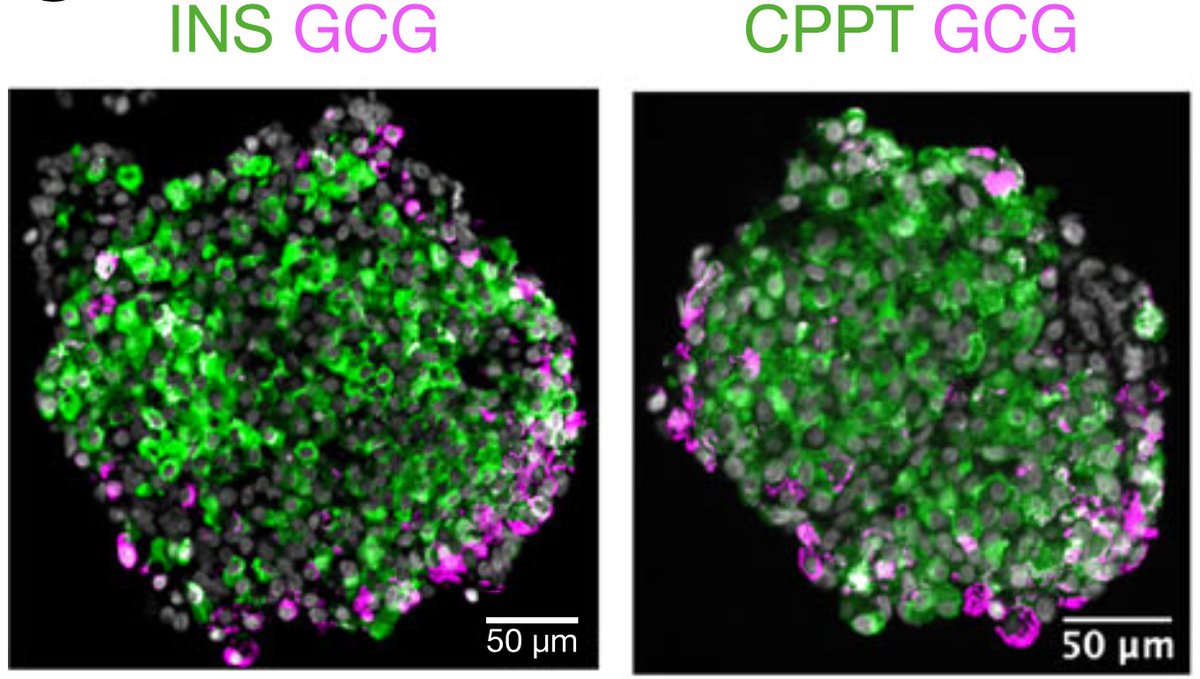
I’m thrilled to share our latest publication in @Nature_NPJ : “Scale-up production of human induced pluripotent stem cell-derived islets using Vertical-Wheel® bioreactors.” Thanks to all my mentors and co-authors 🙏 📖 Full paper link: nature.com/articles/s4153…
NidheeshDadheech, PhD tweet media
English
0
4
12
283
Vishal Parekh retweetledi
Anand. A Hardikar
Anand. A Hardikar@AnandHardikar·
The study demonstrates the use of #Generative-AI and #ML-based workflows in enhancing model performance across contexts. Since #microRNAs are #biomarkers as well as #regulators of underlying pathophysiological mechanisms, our risk score can be used to assess beta cell function.
English
1
3
5
121
Vishal Parekh retweetledi
Jessica Adams
Jessica Adams@RxRegA·
The intro statements at FDA's Cell and Gene Therapy Roundtable has ended. Here are my QUICK NOTES. This means there are typos and it's incomplete. But for the sake of time, here you go: 1-SMA should be available to more children. Good products discontinued not because of treatment failure but market failure. Platform designation has greatest potential to advance the field. Expand this out to other centers that use these therapies. Greater flexibility is desired for accelerated approval and flexible trial designs. Also, the use of real world data. PRV is a useful incentive. Win-win because it doesn’t use gov money. 2-Talks CRISPR advances, mentioning KJ, who was on the Today show today. Another example was provided. Not enough patients to make it commercially viable. 10 million babies are born with 10k rare diseases. Need a system to treat these babies involving identification, CMC, tox platform and reg pathways for small N trials. Need to scale these treatments. 3-Served on ODAC for Kymriah. Believes in cancer use for the field. Many are left in “IND-limbo.” Her team has created models to advance this. Prasad noted it’s a good point was made RE: Kymriah. 4-Focus on pediatric access. Advances since the 80’s have been remarkable. But the field is struggling to deliver to all patients who can benefit due to high dev cost and reg risk. Hopes we can work together on evidentiary standard. Endorse GMP standards for small bath. Also need CMS reimbursement. PRV is essential. We can reduce barriers. Prasad echos how potent CAR-T can be. 5-UPenn.FDA need not regulate small scale early bespoke N of 1 autologous products. Local IRB supervision is enough. Proposes 2-tier model akin to China’s. US process has become too slow and costly with regulatory hurdles. Fears a retreat could happen. Chinese momentum should be a wake up call. US must not become complacent. Reg reforms are urged to maintain leadership and models that involve FDA later in dev. This wouldn’t lower standards but would right-size them. Prasad-says good points were made and he agrees trials need to be brough back to US. 6-CMC comments. Full GMP plasmid is too costly. GMP-light can make a huge cost difference. Reduce burden of comparability studies. PPQ is too hard. For accelerated approval. Qualified assays without full validation upfront. These changes can half the costs. Need a right-size path. Prasad notes he hears recurring themes. 7-United therapeutics, transplant surgeon? Keep the patient’s voice in mind.Listen with intent to understand. They want the right to try, hope. For compassionate use. 8-Ron Barcheck? Advance AA. Advance platforms. Reduce CGT costs.Driving down manufacturing drives down overall costs. Thanks FDA OTT Office for work to advance. Treat early at the maximal point of benefit. Clarity needed 1) RE: placebo trials, consider comparison v. natural history and untreated subjects who can crossover; 2) AAV mechanism safety. Might there come a time where FDA can share lessons learned. We listened RE: your announcement of animal models. We also want to leverage human cell based tech (human cell printing, chips, etc.) For PRV. For START program. Science is changing quickly. We need leadership. Prasad-Commish is very interested in cutting back on unneeded animal leadership. 9-For lighter approval package. Treat all the kids not the lucky few. Let’s think outside the box and help these children. Pretend it’s your child. 10-Paula Cann? Lot of advances.No doubt ex-vivo approaches will advance to in-vivo. Doing nothing creates harm. There are opportunities to expand. Appreciates OTT chances to collaborate. 11-These are devastating diseases. Well run efficient communicative OTT is needed. How do we strengthen OTT to ensure they have the resources they need. 12-St Jude’s. Machine learning and AI. Want more examples of what would acceptable submissions so not to be working in the dark. Prasad-Project in works on learning from others. 13-Concerned about pessimism of 1st get therapies that are being overcome in 2nd gen. Remember we’re at early stages and need plan to move forward to realize potential set. 14-Hopkins. Transplants are so successful that patients wait. There’s hope that genetically engineered organs will help. 15-Parent advocate. Started company with angel investors to advance ASO therapy. Says we need to focus on “What does improvement look like to those impacted? What matters to patients?” Sees potential for future successes. Pragmatism in manufacturing is need. Tox packages. Use historical arms. 16-Bret C. Father of patient notes “We’re on a clock.” Approval doesn’t matter w/out reimbursement. Guidance should support scientific rigor. Common sense should be guided by patient voice. Patients are willing to accept risk Harmonize between FDA and EMA. For PRV. PPQ. Push into postmarked. As you on board bring patient advocates to discuss the disease. \ 17-Rachel M. Sibling of rare disease. Neuro field is hard. Found Neurogene. Work on Rhett syndrome. Recipient of START program has afforded an unprecedented level of interaction at a regular cadence. Apply START learnings across agency. Mine data for 6K patients received an AAV product for safety info. 18-Fidoro. KJ. Thanks for parachute paper framing. Collaboration is key. Goal is for for-profit to step in and help but they’re too tied to old mechanisms. 19-Allen. Rapid ID of candidates is important. Ways to prioritize needed. Nee pathways for rare pops needed. Use RWE. 20-Hill. Remarkable advances are happening now. But leadership is eroding. Investment is eroding. Reg unpredictability is an issue. China is taking over. Their trials cost 90% less. We need to step up. Need condition-specific approach. Not de-regulation but discipline modifiation. This is about national strength. 21-Bambi. Many companies fail and the concerns are real. GMP issues. Cost recovery is needed. Need to move studies here. 22-Stem cell research. Notes there are bad actors attempting to sell snake oil, estimated at 2k companies. Americans need FDA to protect them. Buyer beware isn’t enough for these therapies. Companies that ignore FDA reg also ignore CMC. Strike a balance to permit innovation without allowing bad actors in. 23-Cell biologist/systems engineer. Mom of 2 boys with DMD. Underscore the need for pediatrics, many patients go without. Platform designation. Umbrella trials. Surrogate markers. Biological plausibility. RWE. Prasad said many themes have been on the radar and he added some.
English
1
1
4
630
Vishal Parekh retweetledi
Jessica Adams
Jessica Adams@RxRegA·
I think it is significant for HHS to refer to mRNA tech as under-tested. I imagine many mRNA manufacturers have had high hopes to somewhat leverage the mRNA Covid vax experience.
English
2
1
2
461
Vishal Parekh retweetledi
Emily Kopp
Emily Kopp@emilyakopp·
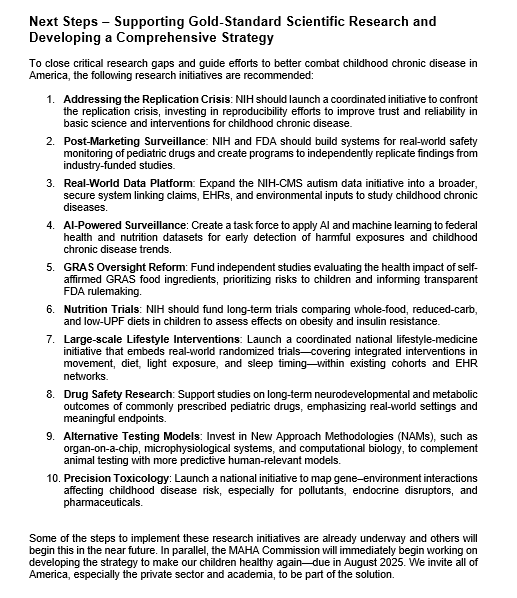
Another report outlining the solutions is expected on August 12th. Some of the early solutions already outlined in the report: - Addressing the replication crisis in science - Post-marketing drug safety surveillance shouldn’t be up to the drugmakers - That NIH study on autism incorporating real-world data (“autism registry”) - AI surveillance of childhood chronic diseases - Study effects of “generally recognized as safe” (GRAS) – i.e. unstudied – food additives - Nutrition trials studying ultra-processed foods vs. whole foods - Studying the health effects of movement, diet, light exposure, sleep timing - Looking at the long-term effects of commonly prescribed pediatric drugs - Calls for supplementing (though not totally replacing) animal testing with new methodologies like organs-on-a-chip - Looking at epigenetics (“gene-environment interactions”) Specific legislation or policy problems mentioned in the report that we could see changes to: - U.S. policy favors large farmers over small ones. Farmers of traditional field crops receive much less support than specialty crops like fruits, vegetables, tree nuts, & nursery plants. - The Dietary Guidelines Advisory Committee includes conflicts of interest. This may explain why the guidelines do not address ultraprocessed foods. E.g. The 1992 food pyramid with grains at the bottom was unduly influenced by the sugar industry. - Changes to SNAP, the School Breakfast Program and National School Lunch Program, and WIC to encourage whole foods. - Revisiting America’s Children and the Environment (ACE), which tracks children’s exposure to chemicals, to assess cumulative exposure. The report emphasizes a technology-focused solution rather than European-style regulations. - Changes to the FDA’s vaccine monitoring systems including VAERS and the Vaccine Safety Datalink, which does not make data available to scientists. - Changes to the National Childhood Vaccine Injury Act of 1986, which shields manufacturers from liability for vaccine injuries, disincentivizing safety studies both pre-approval and post-approval. HHS has the conflicting duties of monitoring for safety issues, but defending drugmakers against claims of injury via the National Vaccine Injury Compensation Program.
Emily Kopp tweet media
English
9
25
93
7.2K
Vishal Parekh retweetledi
Shalin Naik
Shalin Naik@shalinhnaik·
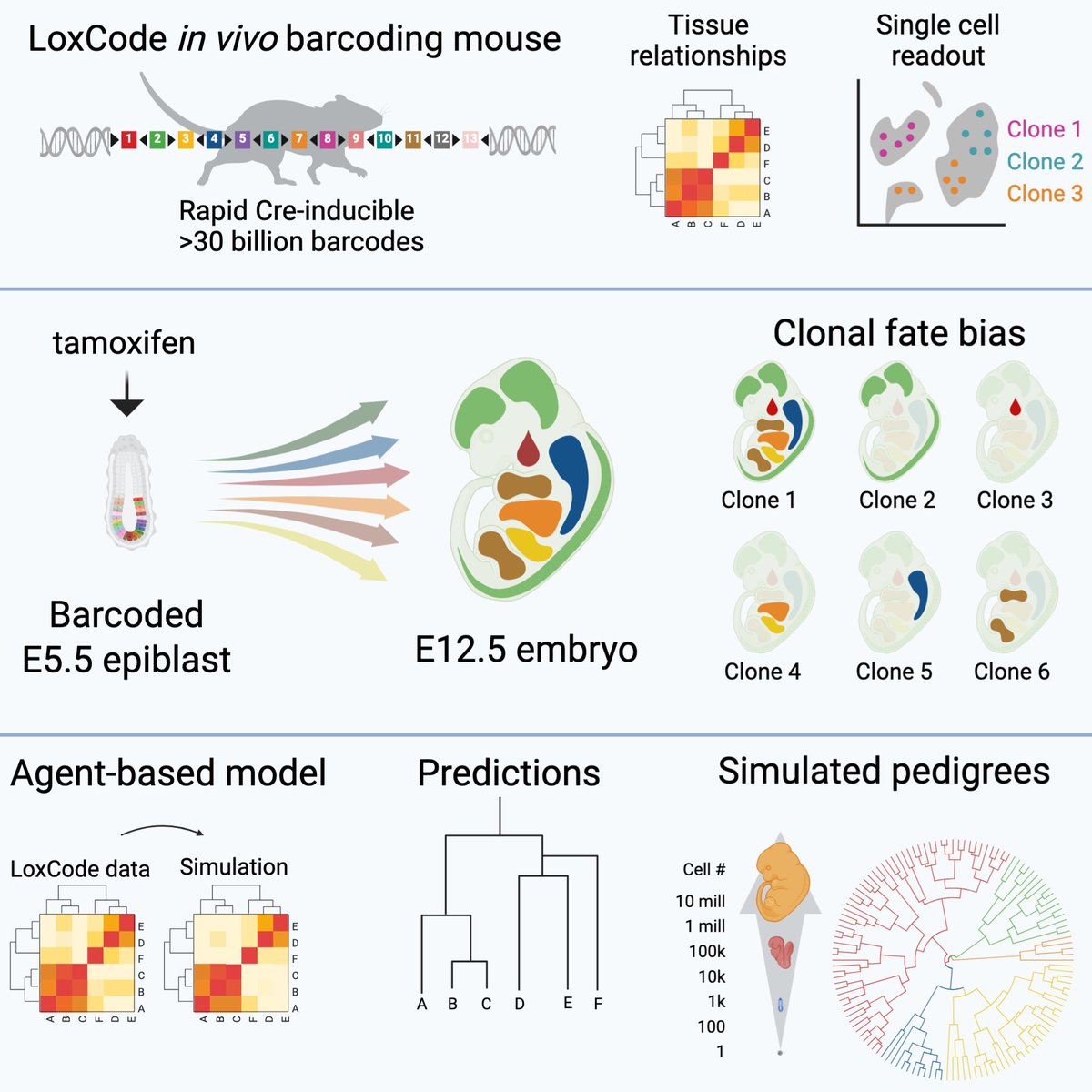
A triumph of perseverance from twitterless Tom Weber, Christine Biben and the team, our in vivo barcoding "LoxCode mouse" used to resolve epiblast fate to fetal organs is finally published in @CellCellPress and available to import through @jacksonlab sciencedirect.com/science/articl…
Shalin Naik tweet media
English
10
54
210
15.6K
Vishal Parekh retweetledi
Michael Okun
Michael Okun@MichaelOkun·
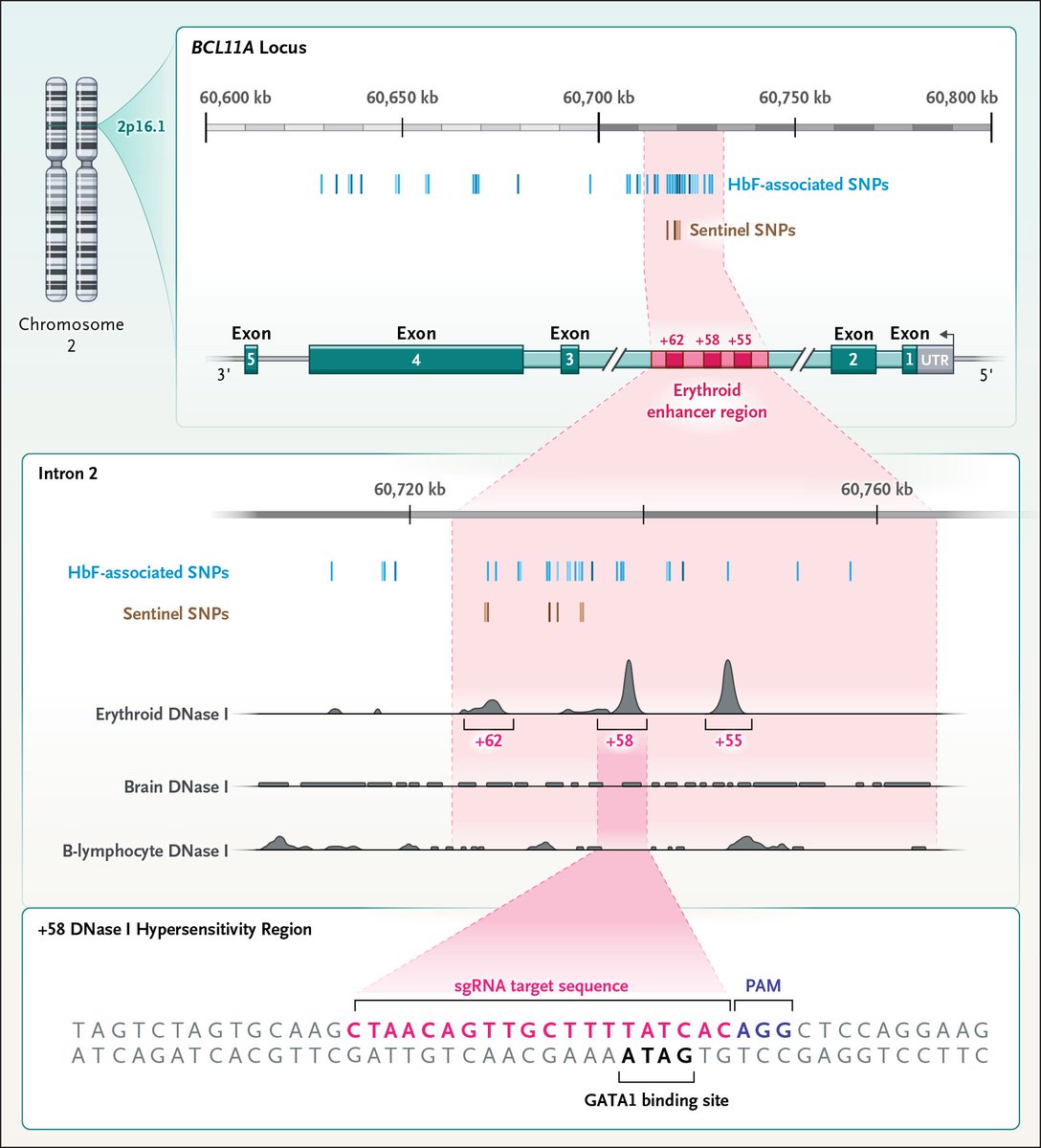
Today, the New England Journal of Medicine published what may be a landmark moment: doctors used customized gene editing inside a living baby to treat a deadly genetic disease called carbamoyl-phosphate synthetase 1 (CPS1) deficiency. Is it time to prepare for a world where we don’t just treat genetic diseases, we rewrite their story? Will gene editing change the future of medicine? Key Points for the Public: - Think of it as the first real-life genetic fire rescue; editing a baby’s DNA to prevent brain damage and death. - They used a tool called base editing, that is considered a precise cousin of CRISPR. - The authors corrected a disease-causing mutation in the liver using lipid nanoparticles. - You may recognize lipid nanoparticles as the same delivery technology used in mRNA COVID vaccines. - Their treatment was "tailor-made for a single patient." - The personalized gene-editing drug called k-abe was made in under 6 months (incredible!). - The single infant they used it on had a rare and fatal genetic disorder. - So far, the treatment has been safe and effective though followup has not been very long. - The infant tolerated more protein, required fewer medications, and recovered from infections without ammonia spikes (known to be bad for the brain). My take: This isn’t science fiction anymore, gene editing can be performed in real-time. Gene editing is moving beyond sickle cell. Lipid nanoparticle delivery facilitates re-dosing, making it safer and more flexible. What does this mean for the future? Neurogenetic diseases could be next in line? Could we start moving into rare brain conditions in children or even adult-onset disorders like Huntington’s or inherited forms of Parkinson’s? What was cool about this study was moving from diagnosis to therapy, in just months. The platforms like this one seem to be scalable. Many diseases could share delivery systems with only the guiding RNA changing. Ethics and oversight will be critical. Safety, long-term monitoring, and clear boundaries (e.g., no germline edits) must be built into the future of this therapy. Could this change the arc of progression for many diseases? We hope this technology and approach will move from lethal newborn disorders to slowly progressive neurologic conditions. Has gene editing moved past the dream stage? Is it time to prepare for a world where we don’t just treat genetic diseases, we rewrite their story? nejm.org/doi/full/10.10… #GeneEditing #CRISPR #Neurology #RareDisease #BaseEditing #PrecisionMedicine #NEJM #Parkinsons #Neurogenetics @ParkinsonDotOrg @FixelInstitute
Michael Okun tweet media
English
6
147
511
31K
Vishal Parekh
Vishal Parekh@vishalsp10·
FDA - The Lumipulse G pTau217/ß-Amyloid 1-42 Plasma Ratio measures, pTau217 and β-amyloid 1-42, human plasma proteins and calculates the numerical ratio there of. This ratio is correlated to the presence or absence of amyloid plaques in the patient’s brain.
English
0
0
0
76