
Sabitlenmiş Tweet
Vyren
349 posts


Vyren
@vyrenio
Participation is optional in most systems. That’s why they fail. Vyren. Participation isn’t optional.
Global / Web3 Katılım Kasım 2025
33 Takip Edilen267 Takipçiler
@rohanpaul_ai Markets don’t fail from lack of compliance.
They fail from broken coordination.
English

Anthropic CEO Dario Amodei : "Software is going to become cheap, maybe essentially free.
The premise that you need to amortize a piece of software you build across millions of users, that may start to be false.
But at the same time, there are whole jobs, whole careers that we've built for decades that may not be present.
And, you know, I think we can deal with it. I think we can adjust to it. But I don't, I don't think there's an awareness at all of what, of what is coming here and the magnitude of it."
---
From "The Wall Street Journal" YT channel (link in comment)
English
@zhuren1992 @TurnerNovak @ttunguz Speed is a moat
until it removes the buffers that make systems survive.
English

@TurnerNovak @ttunguz Speed is the only moat that matters in this AI arms race.
English

From @ttunguz on the all-out sprint happening in AI:
"There aren’t enough GPUs. So people are sprinting to buy GPUs or rent them.
The second thing is model improvements. A model only remains state-of-the-art for about 41 days, even though it’s several hundred million or a billion to train, maybe less.
And then there’s also an all-out sprint for customer acquisition. Buyers are the most open they’ve ever been to trying new things. And so if you can capture many of them, you’ll have a big business.
And then the businesses themselves are growing at unprecedented rates.
So everybody is sprinting."
Turner Novak 🍌🧢@TurnerNovak
New @ThePeelPod with @ttunguz We talk through Anthropic’s strategy, today’s “all out sprint” in AI, how it compares to prior technologies, the three layers of AI business models, where to invest today, and what Theory looks for in new investments. Thank you to @numeral, @FlexSuperApp, and @Amplitude_HQ for supporting this episode YouTube: youtu.be/hKLuvfr22Vs Spotify: open.spotify.com/episode/39WBdI… Apple: podcasts.apple.com/us/podcast/ins… Timestamps: 0:42 The “all out sprint” in AI today 1:40 Why GPU prices are up 116% in six weeks 6:34 AI infra end-state: “We’ll over build” 9:12 Tokenmaxxing, and why AI needs to get more efficient 15:48 AI models will resemble pharma more than software 19:52 Why Anthropic still trades at a discount 25:42 Anthropic’s strategy: commoditize the compliments 30:29 Why OpenClaw is so strategic for OpenAI 34:08 The three layers of AI business models 38:18 Where to invest in AI today 45:49 Who will survive SaaSpocalypse? 52:15 Comparing AI’s impact to historical technology cycles 57:34 How new technology historically impacts jobs 1:05:58 Where AI is underrated today 1:10:41 How people are actually buying AI products 1:14:06 Why Theory’s investing in ads, inference, and email 1:16:24 2026 IPO pipeline, how VC has changed over 20 years 1:20:56 What Theory looks for in new investments 1:22:32 Starting Theory Ventures in 2022 1:25:39 Running a monte carlo analysis to determine portfolio construction 1:27:54 Tomasz personal AI projects
English

AI is creating a new generation of internet-native builders.
People are learning, building, sharing, and scaling ideas faster than ever before.
We’re witnessing a major technology shift in real time. 🌐
#AIRevolution #Innovation

English
@PreyWebthree @GenLayer Identity enables coordination.
Enforcement is what makes it persistent.
English

I think the AI industry is accidentally rebuilding the need for blockchain in real time.
Every week we hear:
better agents
better reasoning
longer autonomy
But almost nobody asks the uncomfortable infrastructure question:
What happens when intelligence stops being tied to a human worker?
Because the moment AGI becomes economically useful, it immediately collides with systems that fundamentally cannot process non-human actors.
A bank account assumes legal personhood.
An employment contract assumes biological accountability.
A court assumes disputes happen slowly enough for humans to interpret them.
AGI breaks all three assumptions at once.
An autonomous agent operating 24/7 across borders cannot realistically depend on human financial infrastructure forever.
It needs:
native internet money
machine-readable agreements
persistent reputation
autonomous coordination
That is basically the blockchain stack.
And honestly, I think stablecoins are the clearest signal this convergence already started.
Most people still frame stablecoins as “crypto payments.”
I increasingly think they are becoming machine payments.
Not because humans disappear.
Because software is becoming economically active.
An AI agent paying for inference, APIs, compute, data, or specialized agents does not need a bank branch.
It needs programmable settlement.
That is why I think the AGI x blockchain thesis is much deeper than speculation.
Blockchain is not just a financial layer for humans anymore.
It is probably the first globally accessible coordination system built for entities that traditional institutions were never designed to handle.
The underrated part is that intelligence alone is not enough for AGI economies to function.
Agents also need:
trust
memory
reputation
settlement
jurisdiction
Without those layers, AGI remains powerful but institutionally trapped.
That’s also why infrastructure experimenting with intelligent contracts and synthetic jurisdictions like @GenLayer feels structurally important.
Not because “AI onchain” sounds exciting.
Because autonomous intelligence eventually needs somewhere native to the internet to actually exist economically.

English
@StockSavvyShay @FuturumEquities Training builds capability.
Inference is where that capability meets demand.
That’s why the real bottleneck isn’t models anymore, it’s how efficiently they can be used.
English

Great to be featured in the Wall Street Journal today talking about the $CBRS IPO.
Cerebras is attacking one of the biggest bottlenecks in the AI economy like running massive models faster, cheaper and more efficiently as the world shifts from training to inference deployment.
But the difference between a great company and a great stock is entry price. At a ~$70B valuation, Cerebras is already being priced like a major AI infrastructure winner before I've even seen multiple quarters of execution.

English
@0xRansome @codatta_io Data doesn’t become valuable just because it’s used.
It becomes valuable when it can be traced, verified, and attributed over time.
That’s what turns training into an economy.
English

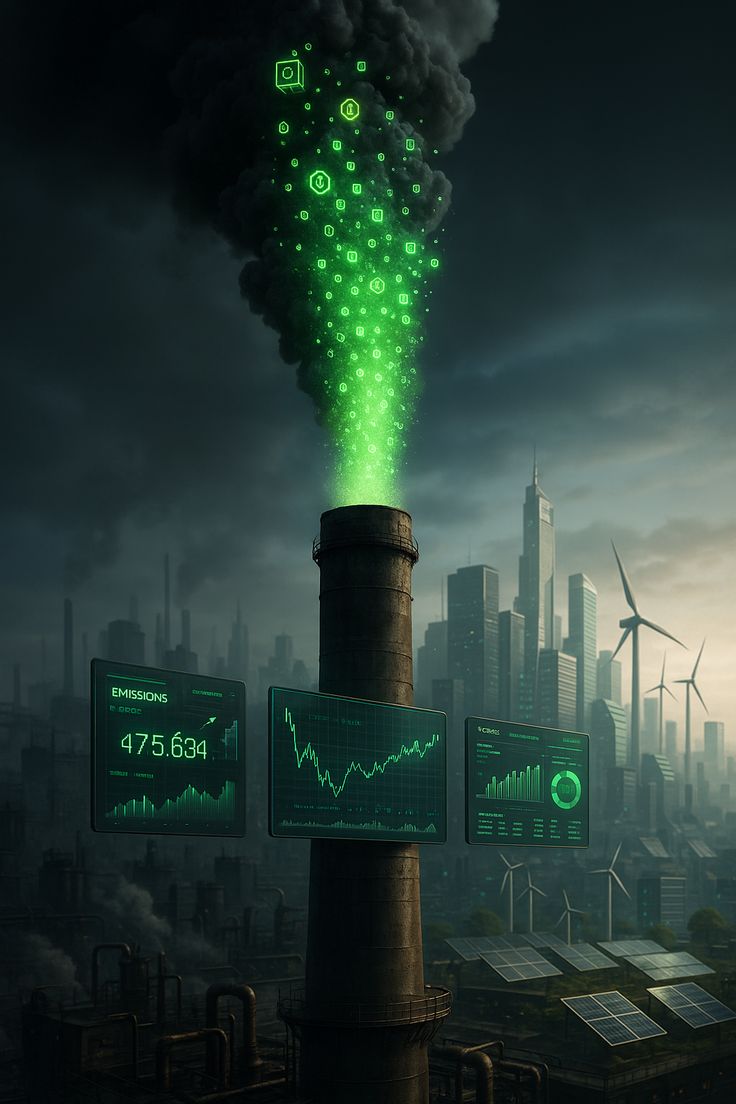
Most platforms treat training data like coal extract.
They burn it and move on.
@codatta_io treats it like a tradable asset.
It is verifiable, versioned, lineage-tracked usage-metered, and royalties automated.
Contributors prove their work exists.
Builders verify dataset quality, systems can meter usage and route payments.
That's the infrastructure AI actually needs.
English
@navleruel Alignment isn’t just about better data or narratives.
It’s about who has the ability to shape and update them over time.
That’s where control over the system actually emerges.
English


AI agents are starting to feel like crypto in its most exhausting form...
too many launches, too many narratives, & too many ppl pretending they know which one survives.
huh, right.
→ the same trap crypto already had
→ AI tools feel like new coins
→ the 5-second filter
→ learn the boring parts
→ build one small thing
→ skip the shiny stuff
→ the small playbook
▫️the same trap crypto already had
AI agents are starting to feel a lot like crypto cycles.
every week there is another AI tool, framework, demo, or thread claiming the stack changed again.
then 2 weeks later, half of it disappears from the conversation...
crypto already trained us for this.
crypto runs the same loop w/ new coins, narratives, L2s, bridges, RWA plays, AI coins, restaking, & meme coins pretending to be infra.
if you try to follow all of it, you end up busy, tired, & still not better at building or investing.
which is kind of stupid, but also very familiar.
▫️AI tools feel like new coins
vibe coding has the same trap.
open Cursor, Claude Code, Codex, Replit, Lovable, or whatever tool is hot rn.
ask for an app.
watch it appear.
feel like you unlocked some cheat code.
then the ugly part starts.
the app breaks, the agent edits the wrong file, login stops working, & the same bug comes back after 3 fixes.
now you’re watching videos about 12 new tools instead of fixing the thing you already started.
huh..
that’s crypto brain again.
chasing the new ticker instead of understanding the game.
▫️the 5-second filter
before touching a new AI tool, i’d ask:
• does this help me build the thing today
• does it make my current setup easier
• can i tell if the output improved
• can i skip it rn w/o losing anything serious
• did someone show a messy real build, not only a clean demo
same in crypto.
before caring about a new narrative, i’d ask:
• who uses it
• where does value come from
• does it solve a real problem
• does it still make sense after the hype
• are ppl building, or only posting charts
the filter saves you from fake urgency.
or at least it saves you from opening 19 tabs and calling that research...
▫️learn the boring parts
the useful stuff in AI feels boring.
the agent needs the right file, error, goal, & context before it can help properly.
"it broke" gives the agent almost nothing.
"login fails after refresh because the token disappears" gives it something to work w/.
a notes.md or tasks.md file also helps because the agent forgets, repeats work, or starts fixing things you didn’t ask for.
crypto has boring checks too.
the boring crypto checks are still wallet safety, token unlocks, liquidity, fees, real users, & who controls the contracts.
less fun than a new narrative.
more useful when things go wrong.
and things usually go wrong, lol.
▫️build one small thing
i’d start smaller than the internet tells you.
don’t build "an AI startup".
build one useful thing that removes one annoying job.
examples:
• a script that renames messy files
• a bot that turns notes into drafts
• a small dashboard for expenses
• a tool that checks broken links
• a helper that drafts support replies
make the agent write a plan first.
let it touch 1-2 files.
run the app.
paste the error back.
repeat the boring loop until it works.
not sexy, but this is where you actually learn.
▫️skip the shiny stuff
i’d skip anything that sounds too magical.
• "build any agent" platforms
• autonomous agents that run forever
• agent marketplaces
• benchmark flexing w/o real examples
• demos where 5 bots talk to each other
• tools that force you to rebuild your whole setup
same w/ crypto pitches that rely only on labels.
"AI x crypto", "next Solana", RWA season, bitcoin DeFi, or new liquidity layer can sound good.
the label alone means nothing.
check what sits under it.
annoying work, i know...
but that’s where the signal usually is.
▫️the small playbook
pick one small annoying task.
write the goal in plain english.
ask the agent for a simple plan.
make it change fewer files.
test after each change.
save the errors and keep notes.
don’t let the tool drag you into a full rebuild because it "found a better approach".
that sentence usually means pain is coming.
AI agents made building easier.
crypto already showed what too many shiny things can do to your attention.
you can spend months chasing the newest tool, coin, or narrative.
or you can build one tiny useful thing & understand why it works.
boring answer, but yeah... probably the right one.

English

wiping a corrupted local db for a script and realizd @KoloHub is actually tackling the multi-platform state sync problem properly.
tested their tg mini app setup then hopped onto ios to see if the state would fragment. usually these all-in-one finteh apps are just buggy webviews slapped together with glue but the backend responses here actually feel native.
to set it up you just route through the telegram bot link first hit authorize then copy the sync key over to native mobile. old way meant waiting for legacy database replication delays which was absolute trash.
protip for testing: run it through a proxy to watch the payload weight if you care about latency optimizaton. real inframstructure grit right here. leave a reply if u see it.

English
@DMLDeFi @WCovenant Autonomy isn’t just about acting without humans.
It’s about being able to settle outcomes without them.
Until that layer exists, agents aren’t independent, they’re assisted.
English

can ai agents really become autonomous?
because right now, they can write code, create content, and complete tasks…
but they still can’t get paid without humans approving everything.
@Wcovenant changes that with on-chain settlement for ai labor.
a 🧵☟

English
@rahulanumalla3 @goldfishggbr Governance doesn’t just produce signal.
It decides which signals matter.
That’s what turns activity into coordination instead of noise.
English

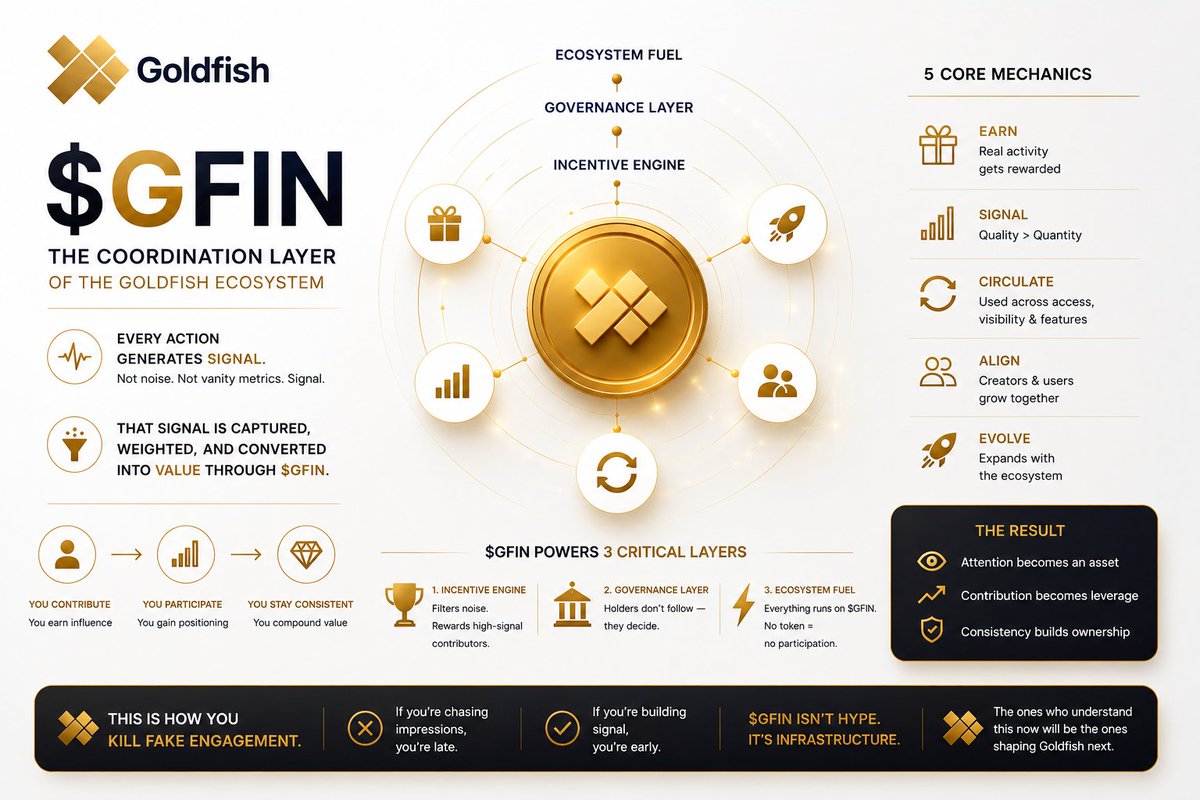
Most people still Misunderstand @goldfishggbr's Governance Token ( $GFIN )
It’s not just a token - it’s the coordination layer of the entire Goldfish ecosystem.
Here’s the reality ↓
Every action generates signal.
Not noise.
Not vanity metrics.
Signal.
That signal is captured, weighted, and converted into value through $GFIN.
→ You contribute → you earn influence
→ You participate → you gain positioning
→ You stay consistent → you compound value
$GFIN operates through 5 core mechanics:
• Earn — Real activity gets rewarded
• Signal — Quality > Quantity
• Circulate — Used across access, visibility, and features
• Align — Creators & users grow together
• Evolve — Expands with the ecosystem
And it powers 3 critical layers:
1) Incentive Engine :
Filters noise. Rewards high-signal contributors.
2) Governance Layer :
Holders don’t follow — they decide.
3) Ecosystem Fuel :
Everything runs on $GFIN.
No token = No participation.
The result?
- Attention becomes an asset
- Contribution becomes leverage
- Consistency builds ownership
$GFIN isn’t hype.
It’s infrastructure.
The ones who understand this now
will be the ones shaping Goldfish next.
#GFIN #Goldfish
English
@PreyWebthree @GenLayer Agents don’t just need infrastructure.
They need systems that can define identity, responsibility, and boundaries.
Without that, coordination doesn’t scale beyond isolated interactions.
English

all social media platforms are cold traffic recommendation algorithms now
so if u can crush it with content on them in 2026
u can also EASILY crush it with paid ads
high retention cold traffic content is probably the number one most valuable skill on the internet right now
English

unfortunately people in crypto adopt a transactional mindset to everything they do
this kills all creativity
attention is always towards the next paid deal, airdrop or new shiny narrative that can yield some payout
creativity cannot thrive when focus is solely on making money
Shiv@shivst3r
This industry LACKS creativity.
English
@Humanoholic @Hotel111048 @RiverdotInc Distribution isn’t the hard part.
What matters is what happens once liquidity arrives.
If participants have no reason to stay, distribution just accelerates the exit.
English

@Hotel111048 @RiverdotInc Most airdrop systems fail because they optimize short-term distribution rather than long-term participant alignment after liquidity actually arrives.
English

空投这件事,行业已经做了无数种方案,但几乎所有方案都有同一个结局:TGE 当天即巅峰,之后一路抛售。
@RiverdotInc 的 Dynamic Airdrop Conversion 是目前我看到的第一个试图从结构层面解决这个问题的模型。
从 1.0 到 3.0,三次迭代的方向很清晰:
1.0 引入时间编码——奖励跟贡献时长挂钩,不再是快照一次就结束
2.0 加入积分曲线和半衰期——转换汇率动态波动,避免集中抛压
3.0 拉到赛季制——每季独立设定汇率和质押周期,分发变成持续循环
传统空投是单次博弈,领完就跑是理性选择。Conversion 3.0 把它改造成了重复博弈——你每季都能转换,但转换时机、质押周期都会影响最终收益。这迫使参与者从"怎么最快变现"转向"怎么长期最大化"。
当然,这套模型能不能跑通取决于 $RIVER 协议本身的增长。如果 TVL 和 satUSD 流通量持续上升,赛季制就有持续发放的底气;反之则难以为继。
但至少在机制设计层面,这是一个值得整个行业研究的案例。
@River4fun
区块链天才 🐧✳️@Hotel111048
之前一直在 River4fun 上赚 Pts,但说实话对转换机制没仔细研究过。今天认真看了一遍 Conversion 3.0 的文档,发现这东西比我想的复杂得多。 简单说就是:你的 River Pts 不是直接 1:1 换成 $RIVER 的。中间有一个实时波动的汇率,取决于当时有多少人在转换。扎堆转的时候汇率差,没人转的时候汇率好。 这就意味着你得挑时机。 然后质押周期是另一个变量。3个月到24个月,8档可选。选的越长,拿到的 Staked RIVER 越多,投票权倍数也越高。24个月直接是24倍。而且质押期间还能继续赚 Pts,相当于复利。 我自己的想法是先观察几天转换密度的节奏,找一个汇率回升的窗口再动手。周期的话倾向选长一点,反正 @RiverdotInc 这个项目我打算跟一段时间。 还有一个细节:不管你在赛季内哪天转换,解锁日期都是同一天。所以早转晚转不影响解锁时间,只影响你拿到多少。 S4 已经转了 6.5 亿 Pts,S5 刚开跑到6月底。还没仔细看过这套机制的可以去研究一下,别稀里糊涂就转了。 @River4fun
中文
@RealJGBanks Most trading journeys look exponential in hindsight.
But what gets hidden is how much of it depends on survival, not just improvement.
That’s where most people drop out before anything compounds.
English

There was a point I genuinely thought trading just wasn’t for me.
Could barely stay green.
Blew multiple accounts.
Couldn’t even imagine making $1,000 consistently.
Now I’m having $100k weeks.
Debt free.
House paid off.
Cars paid off.
You have to take this risk.
English
@coinbureau When compute becomes elastic to energy pricing, it stops being a fixed resource.
It turns into a market participant.
That shift is what makes infrastructure start behaving like a financial system.
English

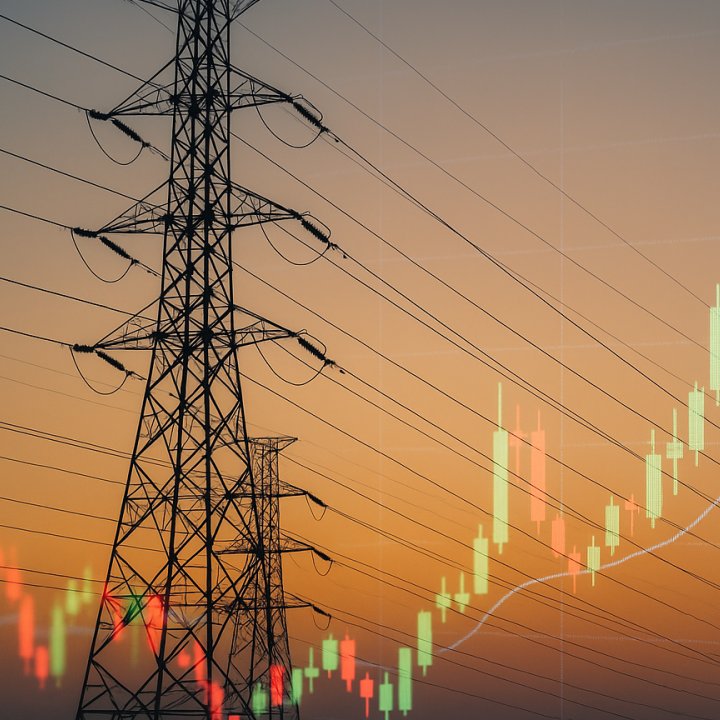
🇨🇳 NEW: CHINA’S BIGGEST DATA CENTERS ARE NOW TRADING ELECTRICITY
For the first time in history, China's largest data centers are joining electricity spot trading as “virtual power plants.”
These facilities now adjust AI computing loads in real-time based on spot market price forecasts.
That means AI compute can be ramped up when electricity is cheap, and slowed down when it's expensive.
The AI race is may no longer just be a tech story.
It is becoming an energy trading story too.
English
@nirajhodler Markets don’t misprice fundamentals.
They misprice the ability to capture value from them.
That’s why “stronger infrastructure” doesn’t automatically translate into better outcomes.
English

🧵 THREAD: The biggest opportunity in the world right now might be crypto infrastructure.
Here’s why I believe capital will eventually rotate from expensive global assets into deeply undervalued crypto alts👇
1/ Look around globally:
• Stocks near ATH
• Gold at ATH
• Real estate massively inflated
• AI equities overcrowded
Meanwhile most crypto infrastructure alts are still down 70–99%.
That disconnect is not normal.
2/ Markets reward asymmetry.
The biggest wealth is NOT created by buying assets after everyone already believes in them.
It’s created when:
• sentiment is dead
• attention disappears
• prices stay depressed
• but fundamentals improve quietly underneath
3/ People are still pricing crypto emotionally based on:
• FTX collapse
• scams
• meme coin casino
• 2022 trauma
But underneath the noise, the industry kept building.
4/ Today we already have:
• Bitcoin ETFs approved
• Institutions entering
• Stablecoin adoption exploding
• Tokenization growing
• AI + crypto infra emerging
• DePIN narratives expanding
• Better regulatory clarity globally
The infrastructure became stronger than ever.
5/ And yes
90% of altcoins will probably disappear.
But infrastructure won’t.
Every future digital economy still needs:
• compute
• storage
• exchanges
• data layers
• interoperability
• settlement networks
Infrastructure always captures value.
6/ Same pattern happened before:
Internet boom → cloud infra won
AI boom → GPU/data infra won
Crypto cycle → decentralized infrastructure may become the biggest winner.
The “picks & shovels” layer matters most.
7/ What makes this cycle unique is:
Fundamentals improved MUCH faster than prices.
Usually markets front-run narratives early.
But many strong infrastructure projects still trade like the industry is dying.
That mismatch creates opportunity.
8/ Liquidity cycles matter too.
When global liquidity expands:
capital starts hunting higher returns again.
Historically crypto becomes one of the highest beta asset classes during those phases.
And alts usually move AFTER Bitcoin.
9/ Bitcoin already recovered strongly.
But many quality infra alts are still sitting near multi-year lows despite stronger ecosystems and adoption.
That’s where risk/reward becomes interesting.
10/ The key is NOT gambling on random memes.
The key is identifying narratives that can survive the next 5–10 years:
• decentralized AI
• compute networks
• storage
• RWAs
• DePIN
• privacy
• data marketplaces
That’s where real value may emerge.
11/ Global assets are priced for perfection.
Crypto infrastructure is still priced for extinction.
And historically, the biggest opportunities are born when perception and reality completely disconnect.
English