

Will Manning
489 posts

Will Manning
@willmanning
Husband & dad (x2), rugged individualist, co-founder/CEO @SpiralDB, project chair @vortexdotdev
New York, NY Katılım Mayıs 2009
1.7K Takip Edilen615 Takipçiler

Token capital sounds like token conservative or token minority; it diminishes the noun and sounds really weak. Should be cybernetic capital or computational capital or synthetic capital or tribal capital.
Realistically it’s the digital encoding of the business itself.
English
Two comments: cloud adoption happened because of cryptography. It wasn’t a license agreement that prevented AWS from stealing your data or giving it to the FBI - it was secure by design.
Second: I don’t think I could invent a less charismatic term than token capital.
Satya Nadella@satyanadella
English
@sunbains Any intent to OSS it? I have so many tokio gripes 😄
English

Preliminary results of the custom runtime are pretty good. Worth the effort. Need to run two more performance tests to be convinced that it works for all loads.
English
Will Manning retweetledi


@willmanning Looked it up; it wasn't a lot, but I did manage to contribute over $3,000 to them over 5 years!
English
Have been sponsoring Zig for a couple of years after writing a few things in it.
Checked today – turns out my reward of "Your name listed in the official release notes with every release of Zig." hasn't been honored as of late.
🤷
English
Will Manning retweetledi

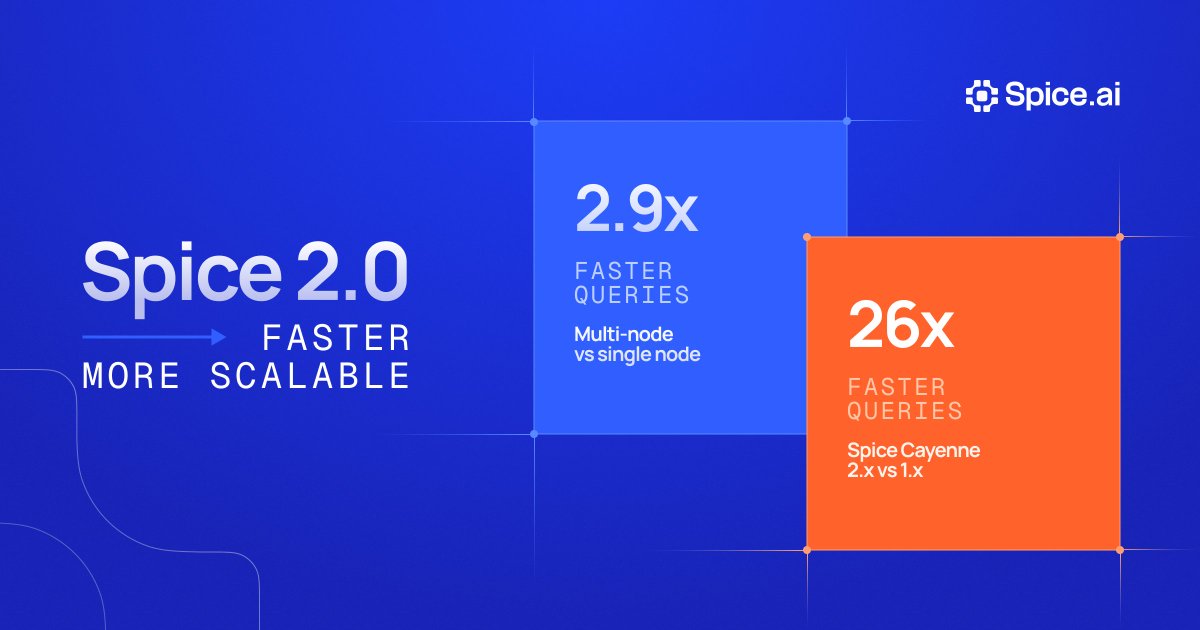
AI agents and real-time apps increasingly need analytical answers from data that was written seconds ago. Pointing those queries straight at an operational database slows production and widens security risk. The usual alternative, an ETL pipeline into a warehouse, is costly to operate and can lead to data that's stale by hours or days.
Spice 2.0 offers a new approach, and is now available.
It stands up a sandboxed analytic replica beside your operational store and keeps it current with high-throughput change data capture directly from those sources. You point Spice at a database and start running analytical queries in minutes, while production never carries the analytical load.
High-throughput CDC replication is complemented by the rest of the 2.0 platform: multi-node distributed compute on @ApacheDataFusio Ballista for petabyte-scale queries, Spice Cayenne columnar acceleration on the open @vortexdotdev format, a cluster-sidecar architecture that pairs isolated local sidecars with a shared cluster, and enterprise security enforced in the engine with OIDC, Cedar policies, PII masking, and mTLS.
"Spice is the data plane behind Summation. Every connector we ship, from Snowflake to a generic REST-as-a-table, collapses into one SQL surface, which is what makes our AI agents portable across a customer's stack. 2.0's distributed query takes the scaling concern off the table."
-Ramachandra Ramarathinam, CTO at @summation
It's open source, portable, scalable, and fast.
Read the launch blog for more details: hubs.ly/Q04p5pFw0
And, check out the thread ⬇️ for breakdowns of the major features in 2.0.
English
@_Felipe I love the Zig language, and I respect @jorandirkgreef’s dedication to TigerStyle and the craft. I know Zig has been great for them… but Andrew’s response post was just really disappointing. It was mostly ad hominem attacks rather than disagreement on substance.
English

Author of Zig complains that hacks and focus on productivity is what prevents a Zig codebase like Bun to be memory safe. This is a take that only makes sense in a different world where software is not tied to market dynamics. A world that doesn’t exist. Software as art.
Nick Schrock@schrockn
I have never actively wanted a programming language to fail but thanks to Andrew Kelley's scurrilous, outrageous, classless post on @jarredsumner 's bun rewrite, I got there. Port every project from Zig to Rust.
English
@schrockn @jarredsumner Yeah, both my company & I personally donated thousands of dollars to ZSF in 2023 & ‘24. The contrast between @jarredsumner’s post (classy) and Andrew’s response (tacky af) was jarring. Completely uncalled for
English

I have never actively wanted a programming language to fail but thanks to Andrew Kelley's scurrilous, outrageous, classless post on @jarredsumner 's bun rewrite, I got there. Port every project from Zig to Rust.
English
@penberg Yeah, Andrew’s post is dominated by ad hominem attacks, which IMO is a bad look in this situation.
English

I like the Zig language, even started to build Turso with it. But the attitude towards losing Bun feels so hostile, I get the vibe like they want to remain a niche language, which is a stark contrast to C which they want to replace.
Debasish (দেবাশিস্) Ghosh 🇮🇳@debasishg
Andrew's thoughts on the Bun Rust rewrite .. andrewkelley.me/post/my-though…
English
Yeah, I don’t understand what user problems this solves beyond managed neon + CDC… now PageServer writes Parquet to S3 and then reads/transposes into PG pages in memory. But the PageServer could easily dual write PG pages & Parquet to S3, same essential user-facing behavior, just a different storage-CPU tradeoff 🤷🏻♂️
English
Honestly, this has been in production for years and that too with strong consistency to boot. Is this the best a 60B company could come up with?
Ali Ghodsi@alighodsi
My co-founder @rxin personally wrote this really good paper that explains the main idea behind postgres Lakebase as well as LTAP. It almost serves as a primer on how transactional databases are built and how Lakebase and LTAP work. Maybe more importantly, what are the tradeoffs, and what are you giving up by adopting this new approach. Highly recommended reading: databricks.com/blog/lakebase-…
English
Will Manning retweetledi

Will Manning retweetledi
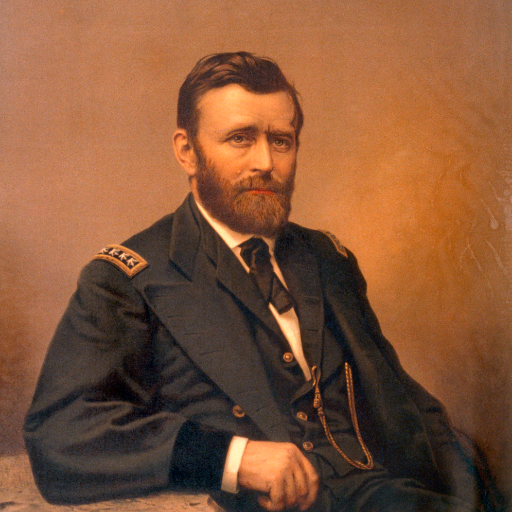
I love this country. I’m proud of this country, its people, its history. I’m an American, and will die an American, and as long as we stand for it America, as framed and intended, will live. So stand for it. Happy Independence Day. 🇺🇸
English
Will Manning retweetledi

My family moved to America 18 years ago and have been blessed with opportunity and fortune beyond our wildest dreams. Opportunities that would have never been available to us back home.
Happy 4th of July to the greatest country on Earth 🇺🇸 🦅!
English
Will Manning retweetledi

Some quotes you read just stun you. This is one of them.
So grateful to be one of those unborn millions.
God bless America.
Flappr@flapprdotnet
"The fate of unborn millions will now depend, under God, on the courage and conduct of this army. Our cruel and unrelenting enemy leaves us only the choice of brave resistance, or the most abject submission. We have, therefore, to resolve to conquer or die.” - George Washington, July 2, 1776
English
Will Manning retweetledi

fun fact: there are two American flags in this photo

English
Will Manning retweetledi
My father raised me with Jewish observance. Shma at night, Kiddush on Friday night. But the earliest memories I have of reading a sacred text with my father aren't of Genesis, or the Exodus from Egypt, or even of my Bar Mitzvah parsha.
They're of reading the Declaration of Independence with him every July 4th.
He would read them aloud with the same musical, passionate voice that compelled the attention of listeners at state affairs or class day ceremonies. We were a small family of four, often in those early years with another family we were close to, but we felt like a jury listening to the case that he was making in the highest of courts.
"We hold these truths to be self-evident, that all men are created equal!" he would insist, his eyes meeting ours -- and then pause, waiting to see if any of us would dare to challenge him. I didn't understand many of the specific accusations that the Founding Fathers were laying at Britain's feet, but I knew by the end that my father believed America had the protection of divine Providence, and that he pledged his life, fortune and honor to this country that had taken him in, that had given him a home when he was stateless.
To our fellow Americans, Shabbat Shalom and happy 250th anniversary of these blessed United States of America.


English
Will Manning retweetledi

@jamwt RLS is just a filter parameterized by (attributes of) the security principal sending the query… but then you have to make the db have first-class concept of principals and support expressions over their attributes.
It’s either a tight coupling or an awkward one 🤷🏻♂️
English

Row level security is perfectly fine as a feature. It's kinda weird to build your entire security model and brand identity around though.
English
@pauldix Literally like 42 seconds, no way it survives to the weekend 😅😅😅
English

And we're off. Wonder how long it'll take me to burn down this 50% of weekly usage. All during a holiday weekend.
Paul Dix@pauldix
I’m am going to burn all the tokens tomorrow. ALL OF THEM
English
Will Manning retweetledi

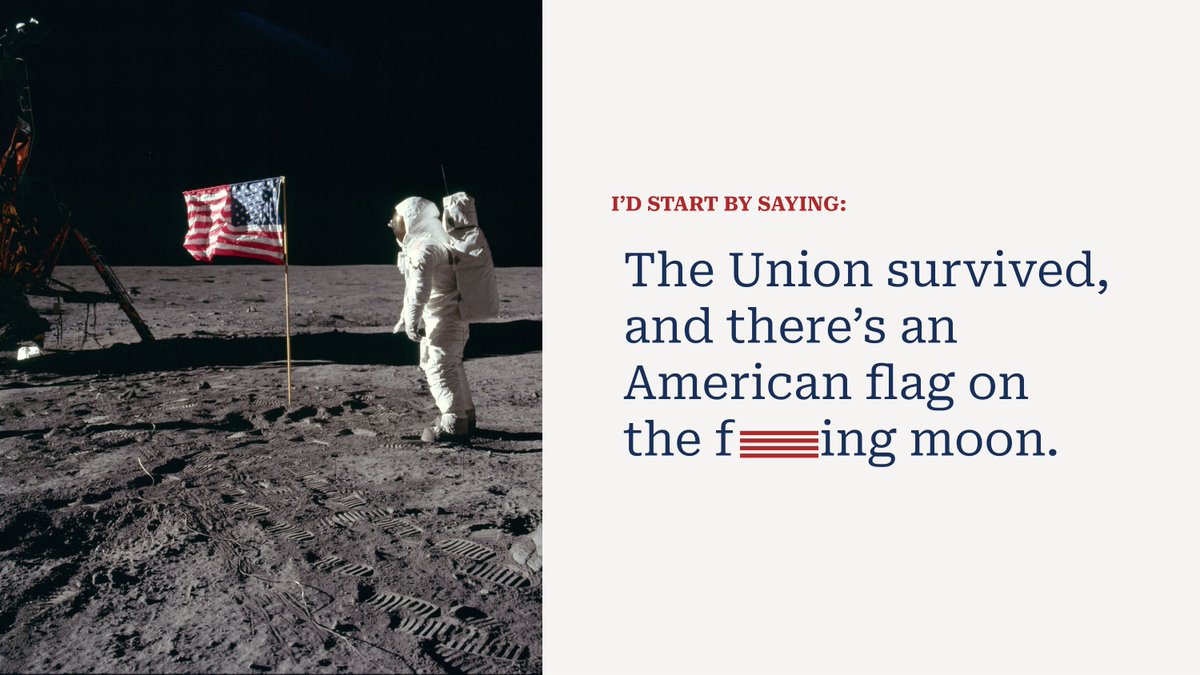
If the Founders visited us today, I think we'd have to start by saying this:
Aaron Rupar@atrupar
Ossoff: "Just think, 250 years on, what the Founders would see if they visited us today. *crowd groans* But wait -- they would see that slavery had been abolished. They would see that Americans without land, and then women, and then the descendants of slaves had secured voting rights ... "
English