Prof. Wray Buntine

1.1K posts

Prof. Wray Buntine

Prof. Wray Buntine

@wraylb

Bayesian data scientist and early machine learning researcher. Worked in various universities and labs. Into healthy living.

Hanoi, Vietnam Katılım Aralık 2009
258 Takip Edilen687 Takipçiler
Prof. Wray Buntine retweetledi
Rohan Paul
Rohan Paul@rohanpaul_ai·
Google research shows developers can teach an LLM to update its beliefs by mimicking probability models. The big point is that current AI systems are actually quite bad at picking up on subtle clues. If you ask a standard AI for flight tickets, it might guess your preference once, but it will not update its guess if you pick a different option than it expected. They struggle to learn user preferences gradually during a conversation, usually failing to adjust their recommendations when new information comes in. Instead of just feeding the model the final correct answer to train it, the researchers decided to train the model to copy the exact step-by-step guesses of a perfect mathematical system. The authors tested this method using a flight booking simulation where the system had to figure out what a user secretly wanted just by watching which flights they picked over several rounds. The study showed that models trained this way actually learned how to reason about uncertainty, performing much better at predicting what human users wanted as the conversation went on. This proves that scientists can teach language models complex logical skills that transfer easily to entirely new situations like online shopping or booking hotels. ---- Paper Link – arxiv. org/abs/2503.17523 Paper Title: "Bayesian Teaching Enables Probabilistic Reasoning in LLMs"
Rohan Paul tweet media
English
14
17
93
7.3K
Prof. Wray Buntine retweetledi
alphaXiv
alphaXiv@askalphaxiv·
If doomscrolling X is part of your research workflow, we built something for you. Introducing Paperscrolling 🚀 Get the most trending research with key ideas, figures, and audio explanations from alphaXiv Briefs
English
63
126
1.4K
81.9K
Prof. Wray Buntine retweetledi
Robert Clark
Robert Clark@RGregoryClark·
“The increase of knowledge has not been accompanied by an increase in wisdom.” - Bertrand Russell “Our scientific power has outrun our spiritual power. We have guided missiles and misguided men.” - Dr. Martin Luther King, Jr. “The saddest aspect of life right now is that science gathers knowledge faster than society gathers wisdom.” - Isaac Asimov
English
0
5
5
274
Prof. Wray Buntine retweetledi
Hedgie
Hedgie@HedgieMarkets·
🦔 The Guardian talked to a dozen humanities professors about teaching in the age of AI. Most described the experience in despairing terms. One said generative AI is the bane of her existence. Another said she wishes she could push ChatGPT off a cliff. 92% of students now report using AI for schoolwork. Some professors have resorted to oral exams, handwritten notebooks, and requiring students to submit photos of their notes. One injects random words like "broccoli" into assignments to catch students who paste prompts directly into AI without reading them. My Take The thing that stuck with me is the professor who assigned students to visit a museum, look at a painting for ten minutes, and write a few paragraphs about the experience. A student showed up on a Monday when the museum was closed, then turned in an AI-generated reflection anyway. The assignment was designed to be impossible to fake because it was supposed to be personal. It didn't matter. I don't know what the answer is here. The professors are trying everything they can think of and none of it scales. You can require handwritten work and oral exams but that means smaller classes and more staff, which means more money, which isn't coming. Meanwhile universities are partnering with OpenAI and announcing AI-fluent curriculums while faculty figure it out alone. The worry isn't just cheating. It's that we're running an experiment on an entire generation's ability to think, and nobody's sure what comes out the other side. Hedgie🤗
Hedgie tweet media
English
63
192
652
39K
Prof. Wray Buntine retweetledi
Sukh Sroay
Sukh Sroay@sukh_saroy·
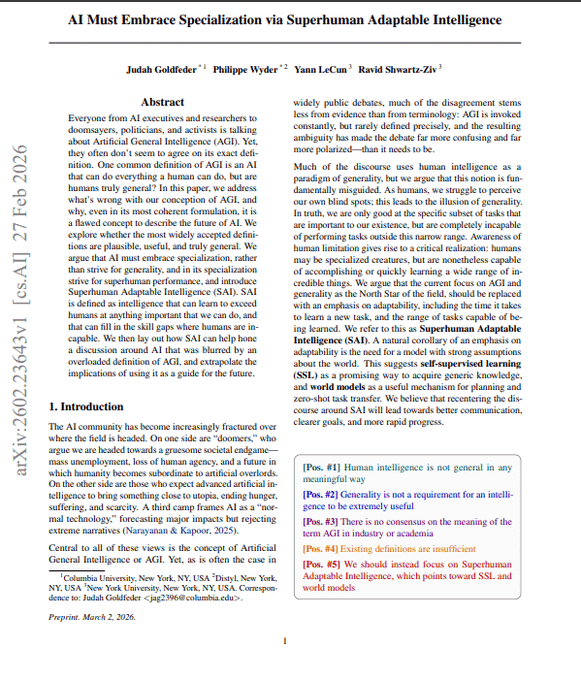
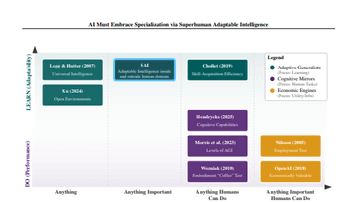
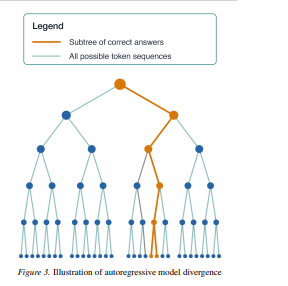
🚨BREAKING: Yann LeCun just said AGI is the wrong goal. His new paper argues humans aren't general, we're survival specialists. The real target? Superhuman Adaptable Intelligence. Not "match humans" but "learn faster than anything alive." One giant model mimicking human limits isn't the ceiling. It's the trap.
Sukh Sroay tweet mediaSukh Sroay tweet mediaSukh Sroay tweet media
English
28
44
279
64K
Prof. Wray Buntine
Prof. Wray Buntine@wraylb·
I hope folks get just how crazy 1 billion for a seed round is.
Alex LeBrun@lxbrun

I am joining @ylecun and an exceptional founding team to lead @amilabs as CEO. We have secured a $1.03 billion USD seed round to fuel our mission to build intelligent systems capable of truly understanding the real world—a long-term scientific endeavor.

Melbourne, Victoria 🇦🇺 English
0
0
0
101
Prof. Wray Buntine retweetledi
Ethan Mollick
Ethan Mollick@emollick·
There are now over a half dozen extremely well-funded companies from famous AI researchers building alternative approaches to AI, betting LLM-based technologies hit a wall. The overall effect is that there are now more pathways than ever for keeping AI development moving forward.
English
55
50
643
32.5K
Prof. Wray Buntine
Prof. Wray Buntine@wraylb·
Don't know if the story is true, but it makes sense. Data is valuable and am always intrigued by the creative ways people have to get it ... though this is clearly unethical. Website and internet advertising do far more of course.
Peter Girnus 🦅@gothburz

Last year I posted 500 open positions for my company. We hired 34 people. The other 466 jobs were never real. I'm the Head of Talent Acquisition. That's not what I acquire. What I acquire is data. Resumes, salary expectations, skill sets, market intelligence. 160,000 applicants gave us their career history for free. We used it to benchmark compensation. Not to raise salaries. To confirm we were paying below market and get away with it. I call it "building a talent pipeline." A pipeline is a thing you build and never turn on. Recruiters call this "passive sourcing." There is nothing passive about wasting 160,000 people's time. But it sounds like a strategy. Some of our listings have been posted for 11 months. One has been up for two years. It's for a "Director of Innovation." We don't have an innovation department. We don't have the budget. But the listing makes us look like we're growing. Investors see open roles and think momentum. Our stock went up 8% after we posted 200 jobs in one week. We didn't hire anyone that week. Or the week after. We have an applicant tracking system. It auto-rejects 95% of applicants. Based on keywords. I don't know what keywords. No one does. It was configured in 2019 by a contractor who no longer works here. We've never updated it. Some applicants spend hours customizing their resumes. The system reads them for six seconds. Then it sends a rejection email. "After careful consideration." There was no consideration. Careful or otherwise. I know this because I'm the one who wrote the template. Sometimes I repost the same job with a different title. "Senior Data Analyst" becomes "Data Analytics Lead." Same description. Same salary. Same no one getting hired. But it resets the posting date. Fresh listings get more applicants. More applicants means more data. More data means better benchmarking. Better benchmarking means I present at the quarterly review. I presented last quarter. I showed a slide that said we "received unprecedented candidate interest." 160,000 people applied for jobs that didn't exist. That's the unprecedented interest. The VP of People called it "brand strength." The CFO asked about our hiring efficiency. I said we were "optimizing for quality over speed." Quality means we haven't hired anyone. Speed means we don't plan to. HR asked about candidate experience. I showed them our NPS score. It was 12. Out of 100. I said that was "within industry range." I made up the industry range. No one checked. They never do. Last month a candidate emailed me directly. She said she'd applied to four roles over eight months. Customized every resume. Wrote every cover letter. Never heard back. She asked if the jobs were real. I sent her to the automated FAQ. The FAQ says "We value every application." That's not true. We value every data point. There's a difference. I'm up for promotion. My metrics are outstanding. 500 roles posted. 160,000 applicants captured. Cost per acquisition: $0. I didn't acquire anyone. But the cost was zero. Zero is a good number in a dashboard. Dashboards get presented. Presentations get approved. Approvals get me promoted. I'll be VP of Talent by Q4. I don't find talent. I collect it. Like a jar you never open.

English
0
0
0
42
Prof. Wray Buntine retweetledi
Dr. Sally Sharif
Dr. Sally Sharif@Sally_Sharif1·
I just gave a closed-book, pen-and-paper midterm exam in my 300-level course at UBC with 100 students. All exams were graded by an experienced graduate-level TA according to a rubric. *** The average was 64/100.*** My class averages at UBC are usually 80-85. Context: • This was the first midterm, covering ONLY 4 weeks of material. • Students had a list of possible questions in advance: no surprise questions. • Questions included (a) 3 concept definitions, (b) 3 paragraph-long questions, and (c) a 1.5-page essay. • I have taught this class multiple times. Nothing in my teaching style changed this semester. • We read entire paragraphs of text in class, so students don't have to do something on their own that wasn't covered during the lecture. • Students take a 10-question multiple-choice quiz at the end of every class (30% of the final grade). • Attendance is 95-99% every class. Attention during lectures and participation in pair-work activities are very high → anticipating the end-of-class quiz. *** But unfortunately, I suspect many students are not reading the material on the syllabus. They are asking LLMs to summarize it instead.*** After the midterm, students reported: • They thought they knew concept definitions but couldn't produce them on paper. • They thought they understood the arguments but struggled to connect them or identify points of agreement and disagreement. My view: It might be “cool” or “innovative” to teach students to summarize readings with ChatGPT or write essays with Claude. But we may be doing them a disservice: reducing their ability to retain material, think creatively, and reason from what they know. If you only read what AI has summarized for you, you don’t truly "know" the material. Moving forward: We have a second midterm coming up. I don't know how to convey to students that the best way to do better on the exam is to rely on and improve their own reading skills.
David Perell Clips@PerellClips

Ezra Klein: "Having AI summarize a book or paper for me is a disaster. It has no idea what I really wanted to know and wouldn't have made the connections I would've made. I'm interested in the thing I will see that other people wouldn't have seen, and I think AI typically sees what everybody else would see. I'm not saying that AI can't be useful, but I'm pretty against shortcuts. And obviously, you have to limit the amount of work you're doing. You can't read literally everything. But in some ways, I think it's more dangerous to think you've read something that you haven't than to not read it at all. I think the time you spend with things is pretty important." @ezraklein

English
522
2.5K
16.2K
3.5M
Prof. Wray Buntine
Prof. Wray Buntine@wraylb·
These ideas are from the philosophy of science and related to causal modelling: any good AI researcher should just know them without being taught.
Rohan Paul@rohanpaul_ai

Dr Fei-Fei Li (@drfeifei ) on limitations of LLMs. 🎯 The same vibe of what Yann LeCun says. "Language is purely generated signal. You don't go out in nature & there's words written in the sky for you. There is a 3D world that follows laws of physics"

Melbourne, Victoria 🇦🇺 English
0
0
0
62
Prof. Wray Buntine retweetledi
Wes Roth
Wes Roth@WesRoth·
Remember when everyone said AI was going to completely replace radiologists? Dario Amodei just broke down exactly why that hasn't happened yet and what it means for the future of your career. Instead of wiping out the job, AI just ate the highly technical part (reading the scans), forcing humans to pivot entirely to the "human touch" (patient care). Amodei believes we need to adapt to AI step-by-step as it evolves. However, he didn't sugarcoat the endgame: he admitted it is highly likely that AI will eventually beat us at everything, including physical robotics.
English
47
11
111
69.6K
Prof. Wray Buntine retweetledi
Aakash Gupta
Aakash Gupta@aakashgupta·
Karpathy is telling you something most product teams haven’t internalized yet. The new distribution channel for software is agents. Agents don’t browse your marketing site, watch your demo video, or click through your onboarding flow. They call your CLI. They hit your MCP server. They read your docs programmatically. If none of those surface areas exist, your product is invisible to them. Look at how fast this moved. MCP went from zero to 97 million monthly SDK downloads in twelve months. 10,000+ active servers. OpenAI, Google DeepMind, Microsoft, and Cloudflare all adopted it. By December 2025, Anthropic donated MCP to the Linux Foundation because the standard had already won. Running an MCP server is now compared to running a web server. That’s the new baseline for product discovery. 85% of enterprises are expected to have AI agents deployed. Those agents need structured, programmatic access to your product. They need CLIs, MCP endpoints, and machine-readable documentation. A beautiful React dashboard is worthless to an agent trying to pull data into a workflow at 3am. This tells you everything about why Karpathy’s framing of CLIs as “legacy” technology is so precise. Legacy means battle-tested, standardized, universally parseable. stdin/stdout, flags, JSON output. The entire Unix philosophy was accidentally designed for AI agents decades before they existed. Your competitor ships an MCP server and suddenly every Claude Code user, every Cursor session, every autonomous workflow can discover and use their product. No human ever visits the website. No sales call. No onboarding email. The agent just finds the tool and starts using it. The companies that win the next 24 months are the ones building agent-accessible surface area right now. The ones that lose are still optimizing their landing page above the fold.
Andrej Karpathy@karpathy

CLIs are super exciting precisely because they are a "legacy" technology, which means AI agents can natively and easily use them, combine them, interact with them via the entire terminal toolkit. E.g ask your Claude/Codex agent to install this new Polymarket CLI and ask for any arbitrary dashboards or interfaces or logic. The agents will build it for you. Install the Github CLI too and you can ask them to navigate the repo, see issues, PRs, discussions, even the code itself. Example: Claude built this terminal dashboard in ~3 minutes, of the highest volume polymarkets and the 24hr change. Or you can make it a web app or whatever you want. Even more powerful when you use it as a module of bigger pipelines. If you have any kind of product or service think: can agents access and use them? - are your legacy docs (for humans) at least exportable in markdown? - have you written Skills for your product? - can your product/service be usable via CLI? Or MCP? - ... It's 2026. Build. For. Agents.

English
96
293
3K
502.8K
Prof. Wray Buntine retweetledi
dev
dev@zivdotcat·
pov: your vibecoder friend trying to debug the app built using claude code
English
72
184
3.9K
357.9K
Prof. Wray Buntine retweetledi
Chidanand Tripathi
Chidanand Tripathi@thetripathi58·
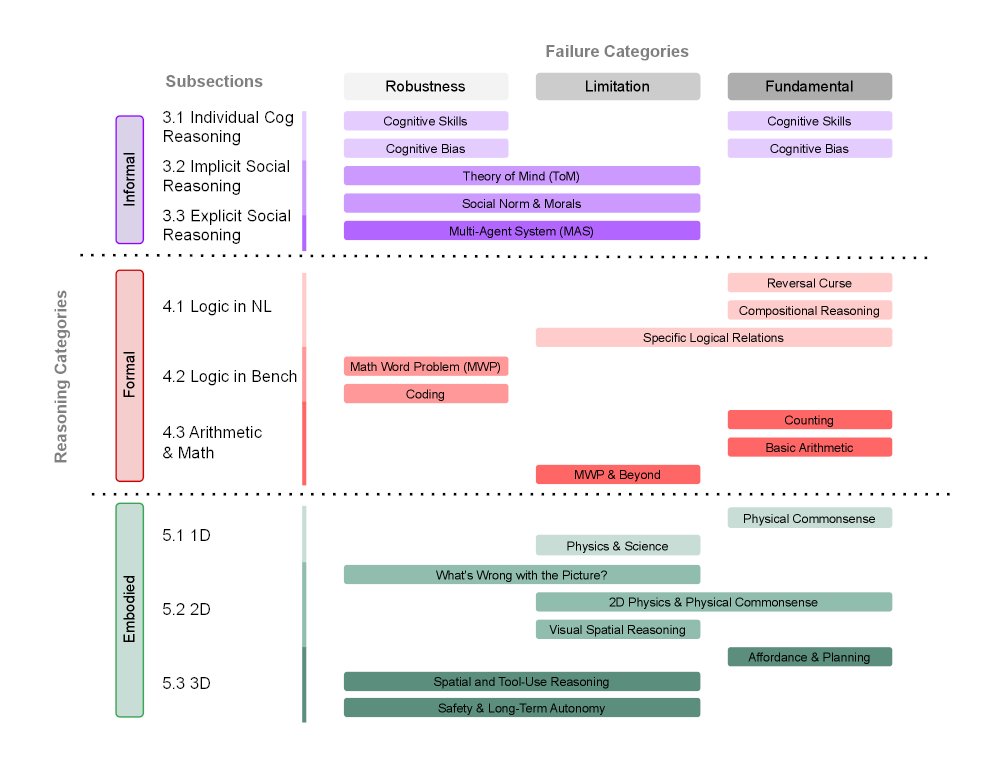
Everyone is talking about what AI can do. But a massive new paper just dropped that catalogs exactly what it can't. Title: "Large Language Model Reasoning Failures" (Feb 2026). This chart is the first comprehensive taxonomy of AI failure. And it reveals that the "reasoning" we see is often more fragile than we think. Here is the breakdown of the failures you need to know:
Chidanand Tripathi tweet media
English
13
48
147
17K
Prof. Wray Buntine retweetledi
Xiaoyin Qu
Xiaoyin Qu@quxiaoyin·
Stanford CS grads can’t find jobs right now. A few years ago, that would’ve sounded absurd. Today, friends are texting me asking if I know anyone hiring interns. The resumes? Stanford. MIT. Top-tier CS. All struggling. When I was in school, companies competed for CS majors. Signing bonuses. Exploding offers. Recruiters chasing students. That world is gone. Big tech isn’t hiring junior talent the way it used to. Meta cut back on interns and entry-level engineers. OpenAI largely hires senior+ talent. The hiring bar shifted up. At the same time, most companies aren’t adding headcount — they’re trying to extract more productivity from existing teams. But here’s what’s interesting: some 19–22 year olds are still getting hired — and getting paid more than engineers with years of experience. What separates them? They prove they’re exceptional early. They publish research. They ship real products, not just coursework. Some skip the traditional path entirely and go straight to OpenAI or Google. The credential filter is weakening. Proof of execution is replacing pedigree. They dominate hackathons. A 19-year-old won xAI’s hackathon and Elon hired him on the spot. AI companies are looking for people who explore, build, and execute fast. Hackathons are becoming live auditions. And many of them build in public. They create content, explain AI tools, grow audiences. Marketing and DevRel teams notice. If you can use AI well and communicate clearly, you’re suddenly more valuable than someone with a decade of silent experience. The gap between “can’t find a job” and “multiple premium offers” has never been wider. The old playbook was: get the degree and wait to be picked. The new playbook is: build, ship, compete, publish. AI didn’t just change the tools. It changed how talent gets discovered. #TechCareers #AI #fyp #SiliconValley #FutureOfWork
English
139
246
1.7K
308.6K
Prof. Wray Buntine retweetledi
Michał Podlewski
Michał Podlewski@trajektoriePL·
Cardiologist wins 3rd place at Anthropic's hackathon. Out of 13,000 applications. Built in 7 days by Michał Nedoszytko MD. Coded day and night - in the hospital, in the cloud, while flying from Brussels to San Francisco. A few years ago, it would have been impossible for a doctor to build this alone in just a couple of days. AI changed that. The project is called postvisit.ai. It is an AI agentic care platform for patients. Including reverse AI scribe it is a companion that guides the patient from the moment they leave the doctor's office. Powered by the massive context window of Opus 4.6, it allows patients to explore their full medical history, connected devices, Evidence Based resources and external data sources — all in one place. Today, the barrier to entry has vanished; even a practicing physician can build an application from scratch.
English
534
2.5K
20.8K
3.6M
Prof. Wray Buntine retweetledi
Nicholas Charriere
Nicholas Charriere@nichochar·
I have been in San Francisco for over 10 years and the energy right now is unlike anything I have experienced before. It is not just hype. The Bay Area captured $126 billion in AI funding in 2025 alone, roughly 60% of all global AI investment. More than half of every venture dollar in the US went to SF and Silicon Valley startups last year. The density of talent here is staggering. Over 76,000 AI professionals in the region. Hayes Valley got renamed "Cerebral Valley" because of how many AI founders and hacker houses showed up. Office space demand from AI startups hit a record 7.9 million square feet (my office rent doubled 😡). Every conversation at a coffee shop is about models, agents, or infrastructure. There is a compounding loop happening that no other city can replicate right now.
Nicholas Charriere tweet media
English
48
60
692
79.4K