
Yang Tang

2.8K posts

Yang Tang banner
Yang Tang

Yang Tang

@yangtang

Co-founder & CEO @qstarlabs_ai | @archindices

Manhattan, NY Katılım Eylül 2009
277 Takip Edilen888 Takipçiler
Sabitlenmiş Tweet
Yang Tang
Yang Tang@yangtang·
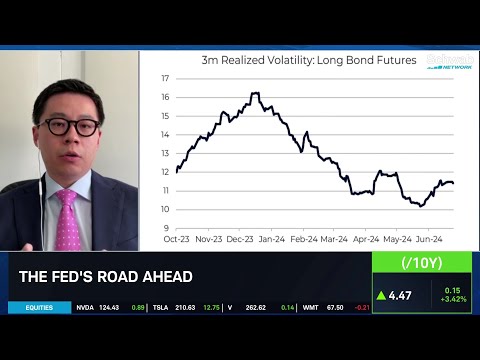
Before July 4 last summer, I was on @SchwabNetwork and talked about how early we were in the AI game I highlighted the world's fascination with LLMs but how much white space there are in apps Applications accrue value at the end of the day youtube.com/watch?v=Xz3GgW…
YouTube video
YouTube
English
1
3
9
5K
Yang Tang
Yang Tang@yangtang·
@buccocapital Couldn’t agree more. If you can grind out 10 years in a high paying career that’s a lifetime of network and experience to build off
English
0
0
0
94
BuccoCapital Bloke
BuccoCapital Bloke@buccocapital·
Earlier this week I tweeted that people who want to get rich should focus on maximizing their career, not investing In a sign of the times (frothy market), a bunch of people told me I was wrong. But I’m obviously not wrong, and it’s worth talking a bit about why Let’s say your goal is to make $10M career earnings. Which group of people do you think have a more consistent, repeatable path to wealth?: 1) Career professionals who spent all of their time on their profession, and indexed 2) Entrepreneurs 3) People with a durable edge in the market *across cycles* who compounded above the index from a low AUM The answer is so obviously 1 and 2. The fact that people even think it’s 3 shows how much 2021 and 2025 have broken their brains. Let’s take 1, our career professionals, because most people fit into that bucket The first 10-15 years of your career are really when you’ll see if you can “make it”, again, assuming our goal is to be rich. Basically any time not spent on career progression (of your free time, not saying don’t start a family and have friends) is lower ROI. Including stock picking. I set $500k/yr as the threshold to be provocative…the point is that if you’re gunning for it, the ceiling is higher than you think. Every minute spent researching stocks is a minute not developing skills, developing relationships, and growing your career. If you want to get rich, that should be your focus Now at some point, you hit diminishing returns on career growth - due to ability, desire to keep compmaxing, industry constraints etc. At that point it’s practical to lean into investing. Similar for having investing as a hobby. But as the higher ROI path to wealth than investing in your career? Come on, people
English
151
58
1.4K
497.4K
Yang Tang
Yang Tang@yangtang·
@Restructuring__ Even if there’s a security guard what could they have done? You’d essentially need armed guards (not a thing for liability reasons) or off duty NYPD. We had off duty NYPD at the banks I worked at but usually it was 1-2
English
0
0
0
34
commissioner shayla, smiling politely
I don’t know if the response is automated or just elements of this account are but this is a FANTASTIC response to Gibby’s retirement. Sometimes you gotta look at the stats in a deeper context to really understand what a player really brings to table.
Liam | AI-Powered Sports Bettor | Self-Learning@bets_liam

@MLB Consistency is rare in this game – Gibson proved it over 13 seasons with a 4.60 ERA across 1,900 innings. Not flashy stats, but the kind of reliability that smart money respects. Workhorses like him are why baseball isn't just about strikeouts.

English
1
0
1
446
EconstratPB
EconstratPB@EconstratPB·
I’m at a Lumineers concert at CitiField. $50 bucks for two beers. People are talking about cutting rates. People are outta their mind.
English
67
33
788
108.3K
Mark McGrath
Mark McGrath@MarkMcGrathCFP·
Most important thing I've learned about myself after being in Spain this summer: I am absolutely insufferable at temperatures above 35°. Instantly furious and inconsolable.
English
35
0
119
15.1K
Yang Tang retweetledi
Mark McGrath
Mark McGrath@MarkMcGrathCFP·
Shocking
Mark McGrath tweet media
English
24
10
147
11.9K
Yang Tang
Yang Tang@yangtang·
@Shaughnessy119 @Apple Debatable: if you know you won't make it then why bother See how long it takes to melt the ice cube
English
0
0
0
63
Tommy
Tommy@Shaughnessy119·
This was potentially the nail in the coffin for @Apple on AI Instead of investing in AI and acquiring top talent before the $100m talent offers they announced massive buybacks Investing in AI would have driven way more value vs buybacks long term
Tommy tweet media
English
23
0
28
10.1K
Yang Tang
Yang Tang@yangtang·
@rich_toad It's weekly at boutiques now from what I hear
English
1
0
2
227
Toad Capital
Toad Capital@rich_toad·
BREAKING: Goldman Sachs will require equity research associates to certify every three months that they’ll not jump on a hedge fund opportunity any chance they get.
English
2
1
93
8.3K
Yang Tang
Yang Tang@yangtang·
I’m nearing on 3 years as a founder and I have realized my biggest regret It’s not starting sooner I wish I left banking in 2018 If only I had that time back Progress is exponential and starting earlier is the best step
English
3
0
9
255
qw
qw@QwQiao·
from years of helping @alliancedao startups fundraise, ive found that most vcs tend to judge startups as finished sculptures that don't evolve over time, rejecting them over trivial product and go-to-market flaws. the problem is empirically they’re usually wrong, and even when they are right strong teams course-correct quickly. the only sound reasons for passing before clear product-market-fit is market size and founder-market fit—yet few investors cite those reasons.
English
57
10
298
25.7K
Yang Tang retweetledi
Aaron Levie
Aaron Levie@levie·
There is a sense that as AI models improve, prompt engineering becomes less relevant. If anything, the opposite is true. As models get better, they can take on even more complicated directions and tasks, which means knowing how to guide them is a potent skill.
English
60
48
386
72.7K
Yang Tang
Yang Tang@yangtang·
@QwQiao Munger convinced Buffett early on to stop focusing on cigar butt value ideas (similar to Michael Burry) but instead on quality biz
English
0
0
0
58
qw
qw@QwQiao·
recently learned that munger convinced buffett to buy byd, at a time when the stock was trading at absurd multiples and thin margins. his argument was that the ceo was a killer and electric cars was going to be the next big thing. buffett wasn't convinced. he's been a "screener guy" his entire life. he would normally only buy stocks in traditional industries with "strong metrics". but ofc munger proved to be right and byd became one of his best investments of his lifetime. am starting to wonder if munger was the key reason why buffett didn't dramatically underperform the index the last couple of decades. this has been a period of increasing technological disruptions, value stocks underperforming growth stocks as a result, and purely relying on metrics and farmiliar industries would've missed the biggest waves. in his last annual shareholder meeting buffett said munger has always had broad interests, whereas he himself has been narrow and stayed in his "circle of competence". maybe the munger approach would work better in this day and age. tldr: - expand ur cicle of competence - rely less on metrics
English
36
21
399
36.6K
Yang Tang
Yang Tang@yangtang·
@JohnStonkton4 I get this a lot I ask them if it's long term or short term money For long term, I tell them to buy a Vanguard broad index ETF: can decide if US or World, add a bit of bonds if they're older For short term, I tell them to find a short-term bond ETF Otherwise it's a rabbithole
English
0
0
0
43
John Stonkton
John Stonkton@JohnStonkton4·
I work in finance and often get asked for personal finance advice by friends or family. What’s the best way to respond? I’m an investor so obviously am more informed than average person, but not a financial advisor. Unsure how to balance being helpful vs not overstepping.
English
130
6
453
118.6K
Yang Tang retweetledi
John Arnold
John Arnold@johnarnold·
I spent 6 years at Enron right out of college, including through the bankruptcy, but I didn’t really grasp what happened until I studied GE. It’s basically the same story. GE was an industrial company that transformed into a conglomerate under a hard-charging, visionary CEO. Early success and a high-growth culture led to significant expansion and a variety of business lines, including heavy industry, healthcare, media, appliances, financial services, and insurance. The p/e multiple of each unit independently would have been roughly 10x (GE Capital) to 30x (Healthcare). But with years of high and consistent earnings growth, GE transcended their peer group and traded over 50x at the peak. But, this was dependent upon high and consistent earnings growth. If GE ever missed earnings, the company would be rerated. It wouldn't drop 10%; the stock would be cut in half. The pressure from the CEO to division heads was clear: make earnings or else. This led to a culture of aggressive accounting practices, including using the financial arm to prop up underperforming units. Jack Welch defended this practice even after leaving the company, saying earnings management was a sign of operational excellence. GE Capital, the pension fund, actuarial assumptions in the insurance business, and a portfolio of appreciated real estate became an endless well that was used to manage earnings, at least for a long time. Eventually severe underperformance in certain units, particularly insurance, after the 2000 bubble led to questions about quality of earnings, particularly in light of Enron's bankruptcy. The stock rerated over several years, falling 60% by 2003, where it stabilized until the GFC. By this point, GE Capital was roughly 50% of total earnings. It was easier to sell consumers more loans than refrigerators. The company had effectively become a bank, though avoided the capital requirements of one. The financial crash in 2008 was the exogenous shock that sent the company into crisis as it was undercapitalized for the portfolio risks and dependent on Wall Street for financing. Having lost the market's trust, the company couldn't roll over its short term debt and the company was days away from bankruptcy in October '08. Worried about contagion effects, the Federal Reserve and FDIC decided to guarantee over $200 billion of new GE debt. Without this, GE would have met the same fate as Enron. Still, GE was severely weakened and had to go back to its core. It took nearly 15 years for the company to recover and start to thrive again. Enron was a similar story but a different ending. Enron was an industrial company (pipelines) that transformed into conglomerate under its own hard-charging, visionary CEO. Early success and a growth culture led it to expand into finance (trading and merchant bank) and then retail electricity, international assets, and broadband. The alchemy of the agglomeration was similar to GE. Enron traded at 30-40x multiple for a collection of businesses that would have been worth <10x (trading) to maybe 20x (retail) if independent. During the broadband bubble in 2000, the p/e reached a staggering 60x. Enron transcended its peer group because of high and consistent earnings growth. And like GE, the knowledge that the stock would substantially rerate if it ever missed estimates created a culture of "make the numbers," which led to aggressive accounting. Like GE, underperformance in some units was hidden by both real and managed profits in the financial unit. It was easier to give the traders more risk capital than grow an electric utility in Brazil that it owned for some reason. The trigger for the initial decline was similar. A few outsiders pointed out major red flags in Enron’s financials, particularly the gap between reported profits and actual cash flow, which the company failed to adequately explain. This started a steady decline from the peak in 2000 through 2001. The broadband bubble popped, more accounting questions arose, the CEO resigned (within 1 month of Jack Welch leaving GE), and 9/11 happened. There was also a realization that the company, like GE, was heavily reliant on its trading operation. A credit downgrade could have jeopardized that entire unit. With outsiders, internal accountants, and external auditors digging into the company's financials, the company announced a $618 million loss for 3q '21. That triggered the announcement of an SEC investigation. Like GE, Enron had significant exposure to the short-term, commercial paper market. With Wall Street skittish post 9/11, significant debt maturing in the near-term, questions about undisclosed liabilities, and no government bailout coming, the company’s collapse became inevitable. The credit agencies downgraded the debt, triggering collateral calls and restricting access to capital. Four days late, in December, 2001, Enron declared bankruptcy. The similarities were stark: valuation that transcended the sector, earnings management, ‘growth at all costs’ culture, opaque and growing financial arms, reliance on short term debt, hyper-aggressive/illegal accounting, praise by analysts and media, weak internal controls, and hubris. Only government intervention in the case of GE kept their fates from being the same.
English
208
510
4.3K
866.4K