
Yasam
1.8K posts


Try Composer 2.5
BridgeMind@bridgemindai
New CursorBench results just dropped. Two big takeaways. Composer 2.5 is way better than most people think. 63.2% score at $0.55 per task. Nearly matching Opus 4.7 Max and GPT 5.5 Extra High at 20x less cost. This is insane value. Gemini 3.5 Flash is #10 at 49.8%. Below GPT 5.5 Low. Below Opus 4.7 Low. Google's newest model can't even beat budget tier competition. Composer 2.5 is the sleeper. Gemini 3.5 Flash is the disappointment.
English

High blood pressure doesn't start with age.
It starts with inflammation, insulin resistance, and low nitric oxide.
Here are 8 doctor secrets to lower your blood pressure naturally:
1. Eat all the d*mn garlic you can.


English



🚨 Major Layoffs Reported in 2026 So Far
- Oracle: ~30,000 employees
- UPS: ~30,000 planned cuts via restructuring & attrition
- TCS: ~12,000 to 24,000 estimated reductions reported
- Citi: ~20,000 employees
- Amazon: ~16,000 employees
- Dell: ~11,000 employees
- Meta: ~8,000 employees
- Chevron: ~8,000 employees
- Microsoft: ~7,000 employees
- PayPal: ~4,760 employees
- Block: ~4,000 employees
- Atlassian: ~1,600 employees
- Snap: ~1,000 employees
- Epic Games: ~1,000 employees
- Coinbase: ~700 employees
English
@swapnakpanda @grok by this December what’s the percentage of employees would layoff in IT companies
English


STUDY: PFIZER mRNA SHOTS ANNIHILATE 8.4% OF NON-RENEWABLE EYE CELLS IN JUST 75 DAYS
In 64 young adults, researchers found IRREVERSIBLE STRUCTURAL DAMAGE to the corneal endothelium after injection.
These cells do NOT regenerate — damage is PERMANENT and can lead to blindness.
English

We are investigating unauthorized access to GitHub’s internal repositories. While we currently have no evidence of impact to customer information stored outside of GitHub’s internal repositories (such as our customers’ enterprises, organizations, and repositories), we are closely monitoring our infrastructure for follow-on activity.
English

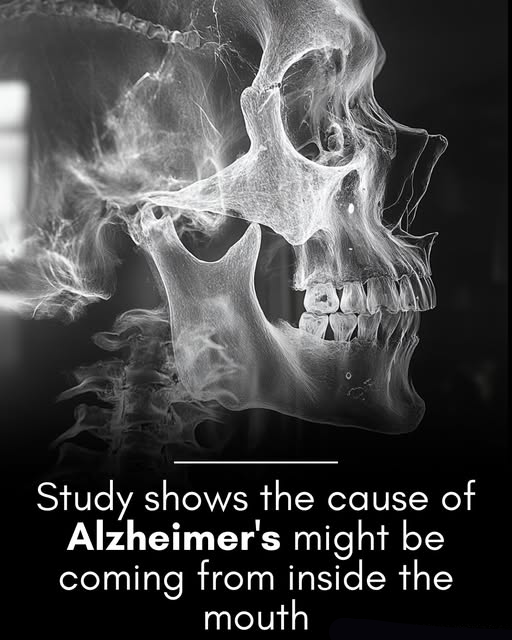
🚨: Study shows the cause of Alzheimer’s might be coming from inside the mouth

English

**Yeah, Composer 2.5 is on par with Opus 4.7 on major coding benchmarks (SWE-Bench, CursorBench) while being ~10x cheaper and faster for everyday use in Cursor.**
It's especially strong on long-running tasks and following complex instructions reliably. For most devs, it's the better pick right now—definitely worth trying (especially with the promo usage). What kind of projects are you working on?
English
Try Composer 2.5 on Cursor!
Michael Truell@mntruell
Composer 2.5 is now the most-chosen model in Cursor. We're giving everyone 10x usage for the rest of the day. Enjoy!
English


Japan just turned thin air into fuel.
No oil rigs. No drilling. No pipelines stretching across oceans.
Just water, CO₂, and a process that flips combustion on its head.
ENEOS Corporation, Japan's biggest oil refiner, pulled it off at their Yokohama lab.
They built a demo plant that sucks carbon dioxide straight from the atmosphere, splits hydrogen out of water using renewable energy, then fuses them through Fischer-Tropsch synthesis into liquid hydrocarbons.
The result? Real, usable synthetic petroleum.
The kicker: this fuel is "drop-in ready." That means it works in the cars you already drive, the planes already in the sky, the pipelines already in the ground. Zero modifications.
They didn't just brew it in a beaker either. They ran actual vehicles on it. It works.
Think about what that unlocks. Countries with no oil reserves could manufacture their own fuel using nothing but sunlight, wind, and the air around them.
The geopolitical chessboard would flip overnight.
Sectors that electrification can't easily touch, like aviation and heavy shipping, suddenly have a clean fuel path.
There's a catch, though. The process is hungry. The same electricity it takes to brew one liter of synthetic fuel could push an EV about 200 km down the road. ENEOS quietly shelved the project in 2025 because the economics didn't math out yet.
But the science? Proven. The blueprint exists. Someone, somewhere, will crack the cost problem.
And the day they do, the oil map of the planet gets redrawn.
Source: ENEOS Corporation / TheTownHall(.)News

English

🚨: Scientists have succeeded in making human cells 30 years younger.


English

"Judiciary should work like Hospitals 24x7 for faster justice delivery" - CJI Surya Kant

English

chatgpt has gotten soooo much better with the latest update.
really proud of the team for this one.
English

🚨BREAKING: GOOGLE, BLACKSTONE TO CREATE NEW AI COMPANY
Welcome to Hell.
English

Alzheimer’s may be linked to gum bacteria, new research shows.
Scientists have repeatedly found Porphyromonas gingivalis—the chief bacterium that causes periodontitis—inside the brains of people who died with Alzheimer’s.
When researchers deliberately infected mice with this oral bacterium, the animals rapidly developed key Alzheimer’s pathology, including the buildup of amyloid-beta plaques.
Perhaps most alarming, the bacteria’s toxic enzymes have been detected in the brains of people showing early Alzheimer’s changes years before memory loss or other symptoms appear, suggesting the infection may quietly initiate damage long in advance.
These discoveries have sparked serious interest in new treatment approaches. An experimental drug called COR388 (from the company Cortexyme) has already succeeded in lowering both bacterial load and amyloid-beta levels in preclinical models. Although large human trials are still needed, the evidence is mounting that at least some cases of Alzheimer’s may have an infectious trigger rather than being purely degenerative.
[Dominy, S. S., et al. "Porphyromonas gingivalis in Alzheimer’s disease brains: Evidence for disease causation and treatment with small-molecule inhibitors", Science Advances, 5(1), eaau3333]
English

South Korean scientists managed to 3D print a windpipe from a patient’s own cells
Her body didn’t reject the implant so she doesn’t have to take immune-suppressing drugs for life. This marks a significant milestone in organ replacement


English