zkCross Network

2K posts

zkCross Network banner
zkCross Network

zkCross Network

@zkCrossNetwork

zkCross Network delivers DeFi + AI infra for hassle-free Web3 onboarding & cross-chain liquidity. Explore @Surf_Liquid, our autonomous, high-yield DeFAI Agent

Universe Katılım Kasım 2023
90 Takip Edilen12.2K Takipçiler
Sabitlenmiş Tweet
zkCross Network
zkCross Network@zkCrossNetwork·
@Surf_Liquid just published their biggest ecosystem update. The entire execution stack powering it runs on zkCross Network. Every vault deployment, every AI agent action, every Guardian Layer rule enforcement, every circuit breaker trigger, every cross-chain capital route. All of it executes through the zkCross infrastructure. → The Guardian Layer that held every vault safe during the recent wave of DeFi exploits is the zkCross architecture. → The MPC signing that secures every transaction is the zkCross infrastructure. → The cross-chain settlement rails that move capital across Base, Polygon, and the upcoming Ethereum mainnet deployment are zkCross rails. → The isolated vault contracts that keep each user's capital separate from everyone else's deploy via zkCross. $107M+ in on-chain volume. 194K+ transactions processed. When Surf scales to @arbitrum, @avax, @BNBCHAIN, @solana, @StellarOrg and @HyperliquidX, the same zkCross rails handle every chain. Surf is the product users see. zkCross is the infrastructure that makes it all work.
SurfLiquid 🌊@Surf_Liquid

x.com/i/article/2050…

English
0
0
2
251
zkCross Network
zkCross Network@zkCrossNetwork·
This is what gets built on zkCross infrastructure. Per-user proxy wallets via CREATE2. Scoped MPC signing. Atomic on-chain settlement. 34 versions shipped The base architecture never changed. The vault contracts stayed boring. The trading layer did the work. Full breakdown from our founder below. 👇
Shivam Tandon@shivamtas

We built @Surf_Liquid AI that trades @Polymarket sports markets while you sleep. Six weeks. 34 upgrades. 605 paper trades. All three strategies profitable. +$3,737 in returns. Here's what it actually does: → Listens to live score data from every match on Polymarket simultaneously → Runs sport-specific probability models on every single score change → Finds the moments when the market hasn't repriced fast enough → Executes before the odds catch up → Tennis modelled point by point. Soccer is modelled by goal rate. Hockey and basketball are built differently. → One generic model doesn't survive contact with real sports. So we built one engine per sport. Three strategies. One AI. Three risk levels: 1. Conservative: strictest signals, lowest drawdown. Your money is treated like savings. 2. Active: wider signal range, more trades, more upside, more variance. 3. Calibrated: the interesting one. Same signals as Active, but every probability runs through a self-correction layer first. If the model says 80% but history says 73%, it trades the 73. Gets smarter every day. Here's the part I want to talk about. In late April, we caught ourselves inflating our P&L. The bot was assuming fills at the quoted price. Real markets don't work that way. You walk the order book. Every batch fills worse than the last. We shipped an honest fill simulation. Our paper P&L dropped meaningfully the same day. That drop is the entire point. If your simulated fills are better than your real fills will ever be, you're flattering yourself. Then last Tuesday we found a bug. A safety mechanism in the hedging path had been failing silently for weeks. Hundreds of failures per day. None flagged. None surfaced. The system was profitable anyway. That sentence bothers me more than the bug itself. Good performance hiding a broken safety system is exactly what kills strategies three months from now. We fixed it. Wired up a live monitor that fires the moment the hedge's success rate drops below the threshold. This is Surf Prediction Vaults. You deposit stables. Pick a risk level. The AI does the rest. You never touch Polymarket. Sports is live. The weather is next. Crypto follows. Building this in the open. The good weeks and the bad ones. The wins and the bugs were caught silently for a month. If you trade prediction markets or build in this space, I want to hear the strongest argument against what we're doing. Full write-up with the architecture, the Guardian Layer, the numbers and the path to real capital: x.com/shivamtas/stat…

English
1
0
2
139
zkCross Network
zkCross Network@zkCrossNetwork·
Reasoning is half of it. The agent stack also needs an execution layer that prevents reasoning from leaking past policy. Computing and reasoning both improve faster than the contracts they act on. The constraint that scales agent autonomy in production is the policy gate at execution time, the on-chain rules that decide which moves the model can even propose to a signer. Strong reasoning, plus a deterministic gate, is the shape that ends up being trustworthy for value-bearing actions.
OpenServ@openservai

x.com/i/article/2036…

English
1
1
3
144
zkCross Network
zkCross Network@zkCrossNetwork·
The identity layer is the right starting point and the authorisation layer is where the next problem lives. An agent identity that proves who is acting still leaves the question of what the agent is allowed to do, under what conditions, and with whose ratification. A signer with policy bounds and an off-the-shelf rule contract closes that loop. The two together are what make agent participation production-grade.
Self@selfxyz

ERC-8004 gives AI agents a portable onchain identity, the critical starting point for agent-to-agent trust. But there's a gap. When an agent borrows funds, claims a yield boost, or votes in governance, the protocol has no way to know if a real human authorized it, or if it's a bot farming rewards across hundreds of wallets. ERC-8004 gives agents an identity. It doesn't verify the human behind them. That's where Self fits. Through ZK proofs, Self anchors an agent's onchain registration to a verified human, without ever exposing their personal data. The ZK proofs map directly into ERC-8004's Validation Registry hooks. Protocols can check that an agent's operator is OFAC-compliant, or above a required age, all from existing Self infrastructure. This isn't theoretical. → @aave integrated Self's ZK proof-of-humanity to offer verified humans boosted yield on USDT and WETH, a direct financial incentive for human verification in a DeFi environment increasingly populated by autonomous actors. → @googlecloud integrated Self into its Web3 Testnet Faucets to ensure real humans get 10x more @Celo Sepolia testnet tokens, verified through ZK proof-of-humanity, no personal data required. Both cases are the exact problem ERC-8004 surfaces, already live and in production. The agentic web needs both layers. The agent identity standard and the verified human behind it. The full breakdown of how they work together is in the blog 👇

English
1
0
3
191
zkCross Network
zkCross Network@zkCrossNetwork·
Autonomous payments are settled on @0xPolygon. Cross-chain settlement is settled on zkCross. Every vault deployment, AI agent action and Guardian rule enforcement powering Surf runs on the same execution stack, with deterministic policy contracts and multi-party authorisation behind every move. Production-grade abstraction, audited by Halborn, working under live consumer products on Polygon. The more autonomous activity Polygon settles, the more proven the abstraction layer underneath becomes.
Polygon | POL@0xPolygon

Autonomous payments run on Polygon.

English
0
0
3
137
zkCross Network
zkCross Network@zkCrossNetwork·
Native protection inside the vault experience is the right next layer for on-chain savings. Premiums streamed from yield rather than paid upfront removes the last piece of friction in coverage. Coverage that activates by default reshapes how depositors think about their risk surface. The protection lives in the same place as the position, with one product to manage rather than two. Coverage is a built-in property of the vault, not a separate purchase. Worth watching how this changes the floor for what depositors expect from any on-chain yield product.
English
1
0
2
29
OpenCover
OpenCover@OpenCover·
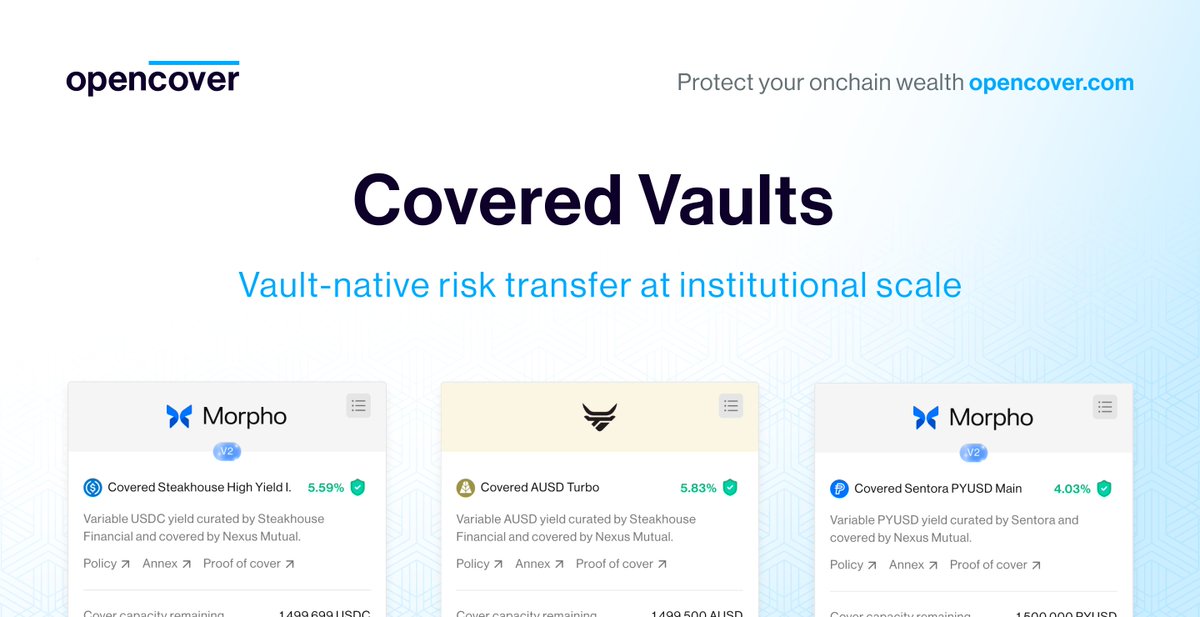
🏆 A month after launch, 15+ Covered Vaults are live across @Ethereum, @Optimism, @Base and @Gnosis. The most battle-tested onchain protection @NexusMutual is now natively built into the vault experience: no upfront cost. No duration commitment. Premiums streamed from yield. 👇
OpenCover tweet media
English
6
7
33
2.9K
zkCross Network
zkCross Network@zkCrossNetwork·
The architecture lesson lands hard. A single EOA holding an admin role is a single point of failure waiting to be social-engineered. zkCross runs the opposite shape. Three-of-four MPC signing, on-chain authorisation per call and @HalbornSecurity audited contracts on the infra side. The signer is bound to the transaction, not to a wallet that can be drained. A settlement layer where signing is split across nodes by default. The more value sits behind permissioned contracts, the more the underlying signing model has to live across nodes from the start.
Francesco Andreoli ᵍᵐ@francescoswiss

wow, i want to re-iterate here, the @wasabi_protocol exploit isn't really a story about a stolen key. It's a story about what happens when one EOA controls a batch of upgradeable vaults with no multisig, no timelock, and no DAO governance as @evilcos and @zachxbt both pointed out within an hour of the drain (it should have never happen) The mechanics: deployer EOA grants ADMIN_ROLE to an attacker contract → UUPS upgrade replaces the perp vaults & LongPool with malicious logic → strategyDeposit() called on 7 vaults → drain(). 3 minutes, $5M+ across Ethereum, Base, Berachain & Blast. Largest single hit: 840.9 WETH (~$1.9M) from wWETH. Wasabi has acknowledged the issue and asked users not to interact with contracts. @blockaid_ flagged that all Wasabi/Spicy LP-share tokens minted by these vaults should be treated as compromised the underlying assets are gone. If you have funds anywhere in the protocol: withdraw and revoke approvals via @RoscoKalis's @RevokeCash. Big shoutout to him, the tool everyone reaches for on days like this. 34th major incident this month. April 2026: 30+ exploits, ~$630M drained. The recurring pattern keeps writing itself: privileged EOAs over upgradeable contracts, no governance friction, one phished signature away from zero.

English
1
0
2
144
zkCross Network
zkCross Network@zkCrossNetwork·
Stani putting personal capital into the recovery is a strong builder signal for the lending side. Strong primitives in lending need strong primitives in cross-chain settlement and policy enforcement underneath them. zkCross runs the settlement and policy layer via 5-of-3 MPC over deterministic policy contracts, which are audited by Halborn. Strong primitives stack.
Stani@StaniKulechov

Aave is my life's work and we're working nonstop to find the best possible outcome for users. I’m personally contributing 5000 ETH to DeFi United as we continue working together with partners on formalizing more commitments. I’m working to see this resolved and market conditions normalized as soon as possible. DeFi United.

English
1
0
2
105
zkCross Network
zkCross Network@zkCrossNetwork·
Institutional RWAs onchain need settlement infrastructure that holds at every step zkCross was built for that surface Deterministic cross-chain vault addresses, three-of-four MPC signing, on-chain authorisation per call and Halborn-audited contracts on the infra side. The institutional-grade venue is what the rules are designed to support. A settlement layer that hardens with the asset class on top of it.
English
0
0
1
196
Cointelegraph
Cointelegraph@Cointelegraph·
🔥 TODAY: Aave founder Stani Kulechov unveils 2026 master plan with Aave V4, Horizon for institutional RWAs, and Aave App and says, “Aave will win.”
Cointelegraph tweet media
English
46
16
143
23.4K
zkCross Network
zkCross Network@zkCrossNetwork·
A trillion dollars onchain only sticks if the settlement layer underneath stays deterministic at scale. That's the surface zkCross is built for. On-chain authorisation per call, three-of-four MPC signing, deterministic cross-chain vault addresses and Halborn-audited contracts on the infra side. Volume scales because the rules scale with it. Settlement infrastructure that hardens as the institutional volume lands.
English
0
0
1
11
zkCross Network
zkCross Network@zkCrossNetwork·
The macro picture in this report basically confirms that vault flow is now driven more by curator decisions than by underlying market rates. That makes the layer below the curator the real determinant of risk. Cross-chain execution paths, signing infrastructure and on-chain enforcement of allocation limits matter more than the headline yield number. zkCross has been operating that layer across multiple chains, with Halborn-audited infra and 26K+ active wallets running through it.
English
0
0
1
16
zkCross Network
zkCross Network@zkCrossNetwork·
The order-book rebuild is the bit that opens up automation. With CTF V2 and a tighter order book, market-making and liquidity provision into prediction markets become the same kind of programmable surface that lending and CLMM already are. Risk-bounded execution, deterministic position sizing, atomic settlement, all the same building blocks. My team has been spending real time on the proxy-wallet pattern for automated execution into Polymarket through isolated user vaults. Curious how others are thinking about the routing layer that sits on top of CTF V2.
English
0
0
1
55
GA Crypto
GA Crypto@GACryptoO·
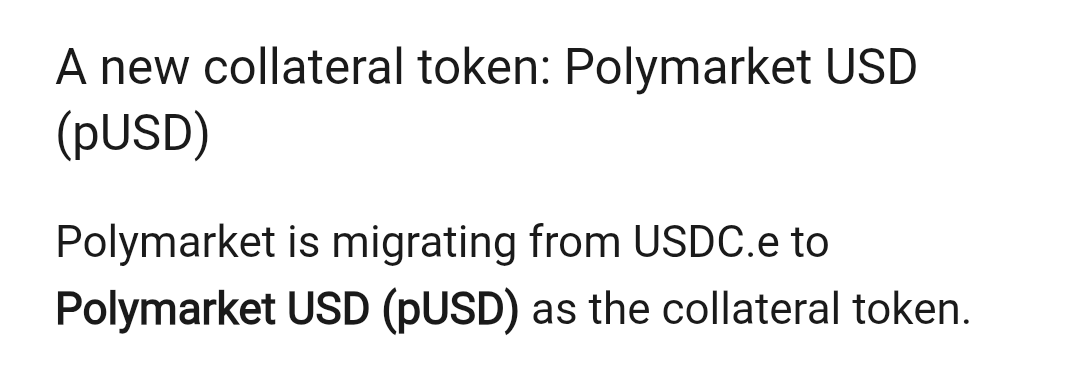
⚡️ Polymarket Exchange Upgrade Incoming @Polymarket is rolling out a major backend upgrade on April 28, 2026 🗓 Upgrade Time ➖ Starts: ~11:00 UTC ➖ Downtime: ~1 hour (trading paused) ⚠️ New Updates ➖ New CTF Exchange V2 (faster + more efficient) ➖ Rebuilt order book → fewer failed trades ➖ Lower gas fees & smoother execution ➖ Improved fee system & better order tracking 💰 New Collateral Token ➖ Introducing pUSD (Polymarket USD) ➖ Backed 1:1 by USDC (onchain verified) ➖ Replacing USDC.e 📌 What You Need To Do ➖ Approve one-time conversion to pUSD ➖ Approve new trading contracts ➖ Re-place orders (old ones will be cleared) 🛡Your balance stays safe ~ fully backed, no algorithmic risk 💬Wait For Updates..... 💙Like 🔄 RT
GA Crypto tweet media
GA Crypto@GACryptoO

⚡️ Perps Trading Coming to @Polymarket If you’ve ignored it till now because it wasn’t built for traders ~ this changes things 📢 What’s New ➖ Polymarket is gearing up to add perpetual futures (perps) ➖ Whitelist for early access is already open 🎯 Why You Should Care ➖ Finally relevant for perps traders ➖ Could align with upcoming $POLY airdrop phase 👉Go-To Here: polymarket.com/perps?r=Gacrypt 🔹Log in 🔹Join early access 💡 Different phase, different opportunity ~ especially if you trade perps instead of predictions 💙Like 🔄 RT

English
8
5
25
5K
zkCross Network
zkCross Network@zkCrossNetwork·
The curator-layer growth is real and the RWA tailwind is real. The piece that sits under both and does not get enough attention is the cross-chain settlement layer. Curators choose strategies, RWAs sit somewhere on-chain, the actual fee flow and reallocation have to route across multiple chains without breaking custody assumptions. zkCross has been processing exactly that flow with Halborn-audited infra. Worth tracking how many of the new curator layers end up settling against the same set of cross-chain rails.
English
0
0
1
8
zkCross Network
zkCross Network@zkCrossNetwork·
Another vault exploit. $2.7M drained from a pooled Bitcoin yield product. Shared pools mean shared blast radius by definition. The choice of architecture is what propagates the loss across depositors. Products built on zkCross infra run single-depositor execution paths with deterministic rules enforced on-chain. The blast radius stops at the vault boundary by design.
English
0
0
1
31
🐝 BLOCKCHAIN HIVE 🐝
🐝 BLOCKCHAIN HIVE 🐝@_BlockchainHive·
⚡ SOLV PROTOCOL EXPLOIT :: Analysts confirm a massive new exploit on Solv Protocol just drained $2.7 million from a Bitcoin yield vault. Developers are actively investigating the sophisticated breach to prevent further losses today. #Bitcoin #DeFi $BTC
English
1
5
14
933
zkCross Network
zkCross Network@zkCrossNetwork·
Sorry to see this. The lesson the past month has taught us is that the bug now sits in operational privilege, not in the audit report. Drift, Volo, this one. All audited, all drained through a key that could grant admin and rewrite the rules in a single transaction. The thing builders have to ship next is the layer between the deployer and the contract, with delays, quorums and policy gates that the deployer key alone cannot bypass.
English
0
0
1
19
Wasabi Protocol 🟢
Wasabi Protocol 🟢@wasabi_protocol·
We're aware of an issue and are actively investigating. As a precaution, please do not interact with Wasabi contracts until further notice. We'll share an update as soon as we have more information. Thanks for your patience.
English
101
25
132
94.7K
zkCross Network
zkCross Network@zkCrossNetwork·
The window between detecting unusual movement and pausing the bridge is the single hardest engineering problem in cross-chain. Most bridges find out after the funds have already been settled on the destination side. zkCross runs every cross-chain call through deterministic policy contracts with circuit breakers wired into the settlement layer itself. Unusual movement against the policy halts the path before settlement, and the post-settlement check rejects the result if the on-chain effect deviates from what the policy approved.
English
0
0
1
25
Syndicate
Syndicate@syndicateio·
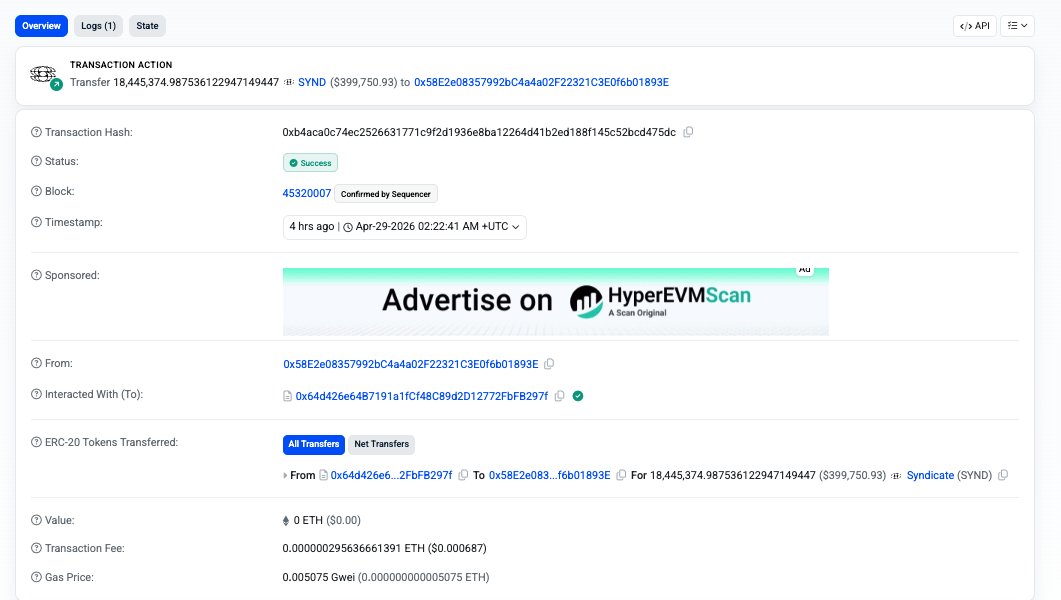
We are investigating unusual movements in SYND tokens that may indicate a possible security issue. We recommend avoiding provisioning any liquidity until this is resolved.
English
20
20
69
33.1K
zkCross Network
zkCross Network@zkCrossNetwork·
A vault-focused track is a useful sign that the architectural layer is finally being treated as the main event rather than a feature. The interesting open questions sit one level below the vaults themselves. How do execution layers stay deterministic across chains? How do curator decisions become verifiable rather than discretionary? How does cross-chain settlement preserve the isolation properties that the vaults rely on? zkCross has been operating exactly that layer for $107M+ in cross-chain volume so far.
English
0
0
1
20
zkCross Network
zkCross Network@zkCrossNetwork·
The freeze is the right reactive step. The structural question is whether the trigger sits at the protocol level or the vault level. zkCross runs the rule per user vault. Each vault has its own bridge allowlist, oracle list and exposure caps. A bridge config upstream propagates only into vaults that authorised that dependency. The market-level freeze is one circuit breaker. A per-vault rule set is finer-grained, and the two compose. Curious whether Aave's rsETH listing review moves toward more isolation or more shared safety nets.
English
0
0
1
11
zkCross Network
zkCross Network@zkCrossNetwork·
Cross-chain exfil through bridged sales is the part of the incident that scales beyond the original protocol. The route only stays open while the destination side accepts the result. zkCross runs cross-chain settlement through deterministic policy contracts authorised by 5-of-3 MPC, audited by Halborn. The signing layer holds back if the call sits outside the allowlist, the settlement layer rejects the result if the on-chain effect drifts from policy. A cross-chain rail with the rule check on both sides of the bridge.
English
0
0
1
6
zkCross Network
zkCross Network@zkCrossNetwork·
25,000 ETH, proposed through a DAO governance process, is the clearest demonstration of how multi-party authorisation should look on the recovery side. The same shape that takes a privileged action through review on the upgrade side, applied to the recovery side too. zkCross runs that pattern by default. Every cross-chain settlement call routes through deterministic policy contracts authorised by 5-of-3 MPC, audited by Halborn. Privileged operations and recovery operations share the same ruleset.
English
0
0
1
12
Aave
Aave@aave·
Aave service providers have published an Aave DAO governance proposal to contribute 25,000 ETH to the ongoing DeFi United effort. Aave DAO's ETH contribution would go towards the plan to restore rsETH's backing to try and normalize market conditions as quickly as possible. DeFi United. governance.aave.com/t/arfc-rseth-i…
English
132
346
1.4K
325.9K
zkCross Network
zkCross Network@zkCrossNetwork·
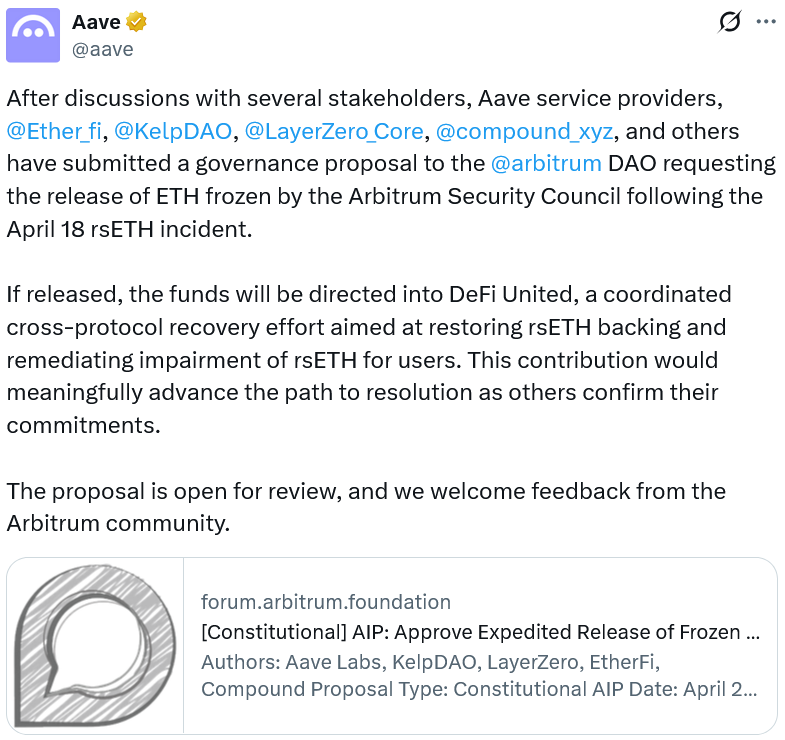
Arbitrum's freeze is the right tool for the moment and the right thing to release once the path forward is clear. The architectural angle is whether the freeze and the release route through the same multi-party rule set that the chain itself runs on. zkCross is built around that pattern. Every cross-chain settlement call, every privileged operation, and every recovery operation runs through deterministic policy contracts authorised by a 5-of-3 MPC and audited by Halborn. The freeze and the release are governed by the same contract surface.
English
0
0
1
25
Cointelegraph
Cointelegraph@Cointelegraph·
⚡️ NEW: Aave Labs proposes that Arbitrum unfreeze $73.5M in ETH tied to the Kelp DAO exploit and redirect it to the "DeFi United" relief fund to compensate affected rsETH holders.
Cointelegraph tweet media
English
80
51
307
31.2K