Zaki Machfj

179 posts

Zaki Machfj banner
Zaki Machfj

Zaki Machfj

@zmachfj

swe @stripe | prev cs @uwaterloo learning about agents and distributed systems

Toronto, Canada Katılım Aralık 2025
31 Takip Edilen6 Takipçiler
Sabitlenmiş Tweet
Zaki Machfj
Zaki Machfj@zmachfj·
for folks working in large orgs: how are you managing CLAUDE.md (or equivalent) at scale? specifically curious how teams: • version common instructions • prevent drift across tools (Claude, Cursor, Copilot, etc.) • allow personal overrides without polluting git
English
0
0
1
224
Zaki Machfj
Zaki Machfj@zmachfj·
@RhysSullivan genuinely would want to see what his workflow is like 😂 that is insane
English
0
0
1
3.5K
Zaki Machfj
Zaki Machfj@zmachfj·
@jackiechanisme lots of big tech companies based in Toronto stripe, shopify off the top of my head. while historically we've been known to be finance/bank-heavy, a lot more companies are starting to move over. I heard OpenAI is opening here soon still measurably behind the States tho :/
English
1
0
2
286
Jackie
Jackie@jackiechanisme·
toronto tech scene.. what do you think of it?
English
40
0
51
12.2K
Zaki Machfj
Zaki Machfj@zmachfj·
am I the only one that believes Cursor's harness is measurably better than Claude Code? also their UX and attention to quality just seems so much better. never have to worry about stability or regressions
English
0
0
0
11
Zaki Machfj
Zaki Machfj@zmachfj·
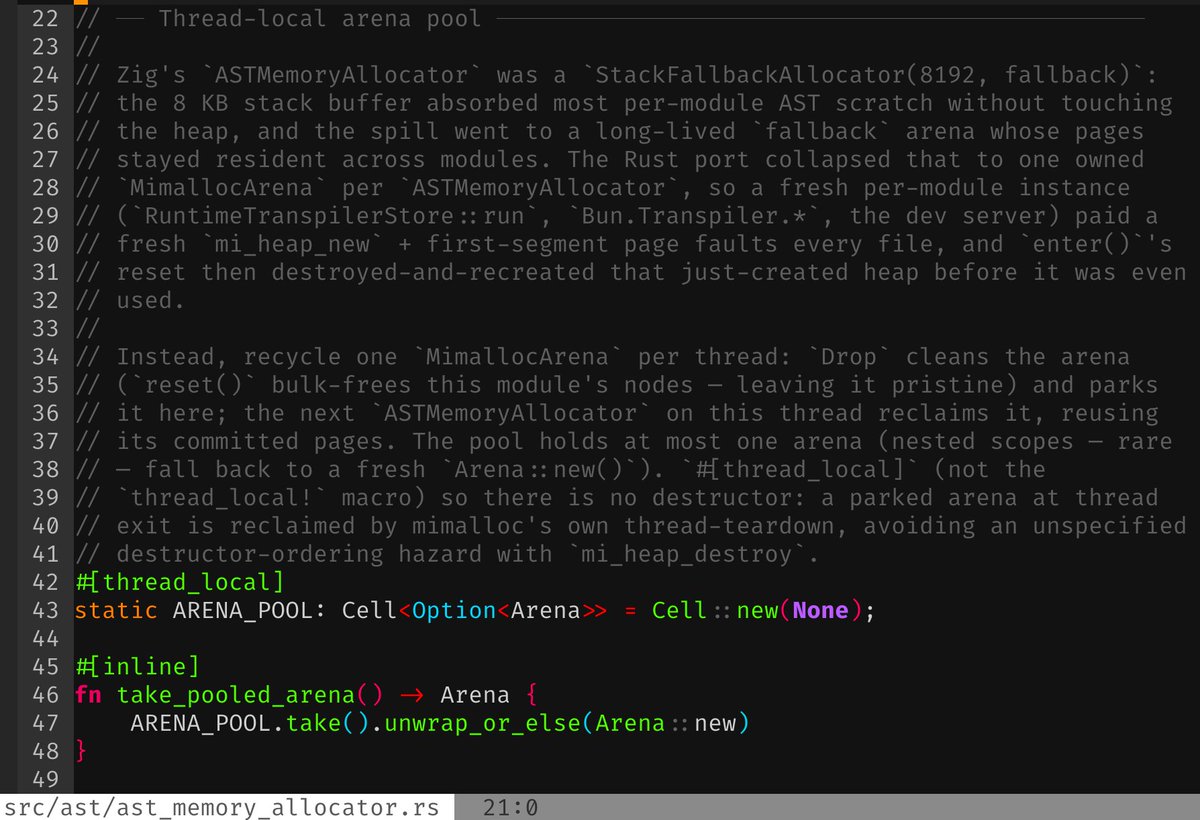
@boshen_c very interested to learn more about arena allocators in general
English
0
0
0
2.7K
Boshen
Boshen@boshen_c·
Thanks to the Rust rewrite, I now learn why Bun is fast First find: it uses a thread local arena for ASTs
Boshen tweet media
English
25
17
981
103.9K
Zaki Machfj
Zaki Machfj@zmachfj·
@designertom every company is building agent-first interfaces now, seems to be the trend. excited to try this out though
English
0
0
1
686
Zaki Machfj
Zaki Machfj@zmachfj·
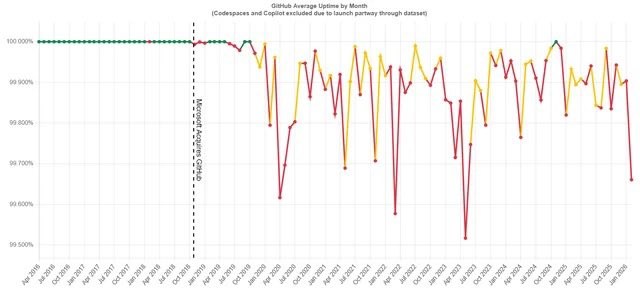
@zeeg while I don’t agree with everyone’s criticism, it is concerning to note the change in GitHub’s reliability since Microsoft took over whether or not the timing is coincidental with the influx of agent commits, but feels poor on their part not to anticipate part of it
English
0
0
0
309
David Cramer
David Cramer@zeeg·
What if everyone built their own product instead of pretending GitHub is an easy problem
English
22
9
202
12K
Zaki Machfj
Zaki Machfj@zmachfj·
I’ve been trying to defend them given the sheer amount of load their services are being bombarded with from agents, but it’s becoming harder and harder
English
0
0
0
15
Zaki Machfj
Zaki Machfj@zmachfj·
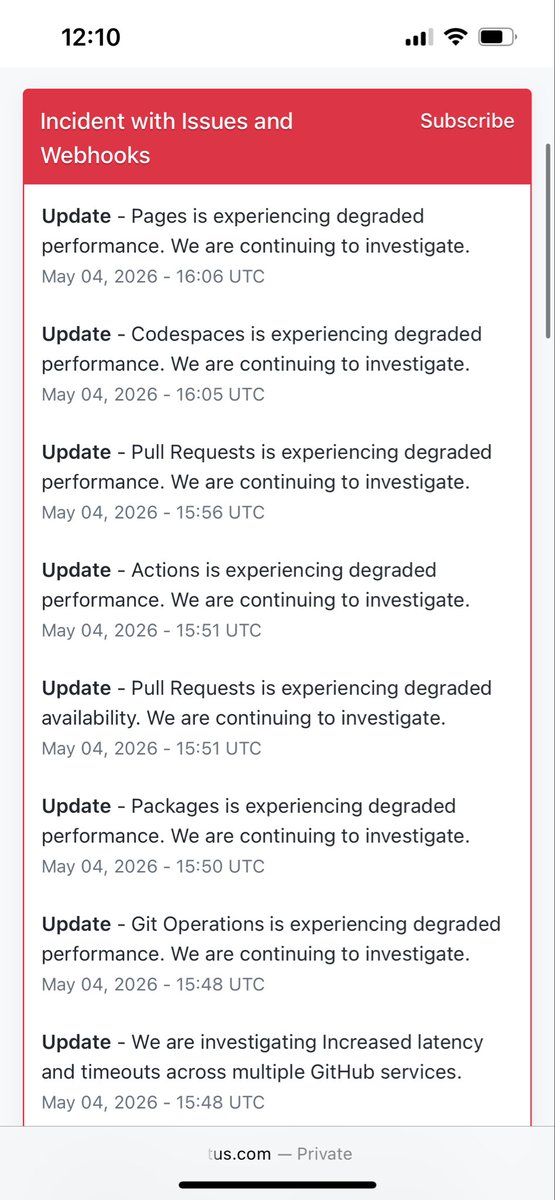
what is going on at GitHub…
Zaki Machfj tweet media
English
1
0
0
30
Zaki Machfj
Zaki Machfj@zmachfj·
@Wealthsimple is the greatest financial app for Canadians, too good UI is too 🧼, you can tell they care about quality and craft
English
0
0
0
31
Zaki Machfj retweetledi
shadcn
shadcn@shadcn·
Rooting for @github. They’ve given me years of free infra. happy to give them some time to figure this out. You got this.
English
128
418
7.9K
319.1K
Zaki Machfj
Zaki Machfj@zmachfj·
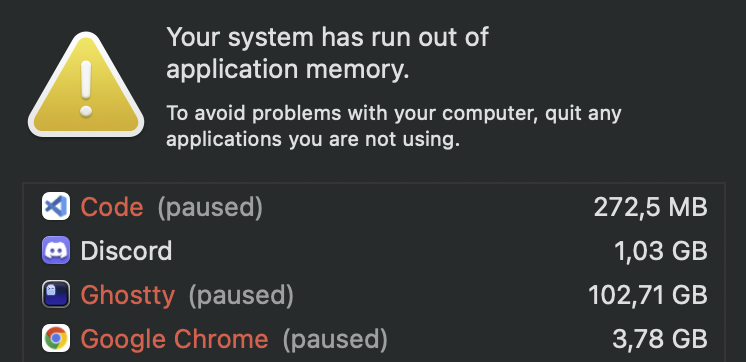
@steipete seeing this after installing ghostty 2 days ago over iterm2…
English
0
0
0
2.7K
Zaki Machfj
Zaki Machfj@zmachfj·
@icanvardar I think some of the onus should still fall on them given that the writing was on the wall regarding AI code commit increases. Seems like poor planning on their behalf, but would be curious to hear from someone on their team directly tbh
English
0
0
3
2.3K
Can Vardar
Can Vardar@icanvardar·
87.87% uptime for one of the most critical pieces of infrastructure on the internet has ai made the whole stack this fragile?
Can Vardar tweet media
English
78
85
1.7K
359.6K
Zaki Machfj
Zaki Machfj@zmachfj·
@IanPrawel @icanvardar wait this is actually crazy 😂 is it just coincidental timing with the increase in requests from coding agents/AI? or should I fully be blaming Microsoft here regardless of the request increases it seems like poor planning not to have anticipated that somewhat
English
2
0
0
743
Zaki Machfj
Zaki Machfj@zmachfj·
@wesbos do we need a new GitHub? I think svale and reliability is the primary concern rn, wouldn’t be eager to use a new product that isn’t 3 9s minimum reliable
English
0
0
0
1.2K
Wes Bos
Wes Bos@wesbos·
what would a "better github" even look like?
English
325
7
470
122.4K
Aayush Shah
Aayush Shah@aayush_shah15·
another underrated testbox use case: get agents to stress a flaky test across a dozen blacksmith VMs in parallel and let them hammer away until the cause is understood and deflaked. latest coding models are great at this kind of long-horizon work
GIF
Peter Steinberger 🦞@steipete

Been so CPU-constrained on OpenClaw work. Switched local tests running to @useblacksmith and IT IS SO GOOD. codex can literally spin up to 32vCPU instances and rip through our test suite. docs.blacksmith.sh/blacksmith-tes…

English
2
2
16
4K
Zaki Machfj
Zaki Machfj@zmachfj·
@alvinsng i love working in infra even as a product dev, problems are more technical and makes you much stronger as an engineer imo
English
0
0
1
344
Alvin Sng
Alvin Sng@alvinsng·
The most desirable hires in tech right now: - Ex-founders going back to IC. They have the agency to just ship. No waiting for permission. - Generalist engineers who've worked across frontend, backend, and infra. End-to-end context lets them debug problems LLMs can't fix and ship anything. - Engineers turned PMs. The strict separation between roles is over. The best ones now do both. - Younger new grads living on the bleeding edge. Vibe coding side projects (in parallel), dictating into Wispr, Granola all chats, OpenClaw agents going at home, every new skill imported, every agentic tool tried the week it ships. These highly productive go-getters are maxxing value at AI-native companies. I see it at @FactoryAI and hear the same from other startups.
Andrew Ng@AndrewYNg

AI-native software engineering teams operate very differently than traditional teams. The obvious difference is that AI-native teams use coding agents to build products much faster, but this leads to many other changes in how we operate. For example, some great engineers now play broader roles than just writing code. They are partly product managers, designers, sometimes marketers. Further, small teams who work in the same office, where they can communicate face-to-face, can move incredibly quickly. Because we can now build fast, a greater fraction of time must be spent deciding what to build. To deal with this project-management bottleneck, some teams are pushing engineer:product manager (PM) some teams are pushing engineer:product manager (PM) ratios downward from, say, 8:1 to as low as 1:1. But we can do even better: If we have one PM who decides what to build and one engineer who builds it, the communication between them becomes a bottleneck. This is why the fastest-moving teams I see tend to have engineers who know how to do some product work (and, optionally, some PMs who know how to do some engineering work). When an engineer understands users and can make decisions on what to build and build it directly, they can execute incredibly quickly. I’ve seen engineers successfully expand their roles to including making product decisions, and PMs expand their roles to building software. The tech industry has more engineers than PMs, but both are promising paths. If you are an engineer, you’ll find it useful to learn some product management skills, and if you’re a PM, please learn to build! Looking beyond the product-management bottleneck, I also see bottlenecks in design, marketing, legal compliance, and much more. When we speed up coding 10x or 100x, everything else becomes slow in comparison. For example, some of my teams have built great features so quickly that the marketing organization was left scrambling to figure out how to communicate them to users — a marketing bottleneck. Or when a team can build software in a day that the legal department needs a week to review, that’s a legal compliance bottleneck. In this way, agentic coding isn’t just changing the workflow of software engineering, it’s also changing all the teams around it. When smaller, AI-enabled teams can get more done, generalists excel. Traditional companies need to pull together people from many specialties — engineering, product management, design, marketing, legal, etc. — to execute projects and create value. This has resulted in large teams of specialists who work together. But if a team of 2 persons is to get work done that require 5 different specialities, then some of those individuals must play roles outside a single speciality. In some small teams, individuals do have deep specializations. For example, one might be a great engineer and another a great PM. But they also understand the other key functions needed to move a project forward, and can jump into thinking through other kinds of problems as needed. Of course, proficiency with AI tools is a big help, since it helps us to think through problems that involve different roles. Even in a two-person team, to move fast, communication bottlenecks also must be minimized. This is why I value teams that work in the same location. Remote teams can perform well too, but the highest speed is achieved by having everyone in the room, able to communicate instantaneously to solve problems. This post focuses on AI-native teams with around 2-10 persons, but not everything can be done by a small team. I'll address the coordination of larger teams in the future. I realize these shifts to job roles are tough to navigate for many people. At the same time, I am encouraged that individuals and small teams who are willing to learn the relevant skills are now able to get far more done than was possible before. This is the golden age of learning and building! [Original text: deeplearning.ai/the-batch/issu… ]

English
18
31
555
105.7K
Zaki Machfj
Zaki Machfj@zmachfj·
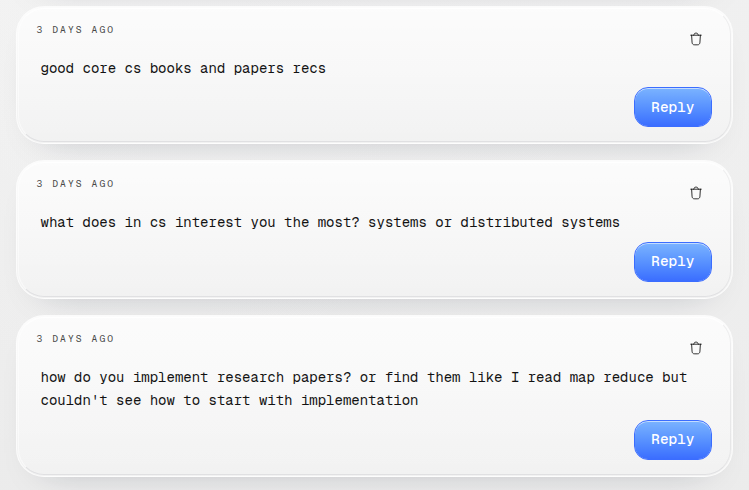
@pixperk been reading ddia and implementing a small working system for each chapter like u mentioned here, great way to retain info and address gaps in your knowledge from just reading
English
0
0
0
62
yashaswi.
yashaswi.@pixperk·
- good books : dbi & ddia, crafting interpreters, tapl, ostep papers which i am reading now : aries, bigtable, crdt foundational paper, unix time sharing system paper - distributed systems ⊆ systems - for implementing papers, dont try to build everything at once. pick one small part, make a simple version of it locally, then keep adding pieces. like for mapreduce, just get map + reduce working on files first, no distribution.
yashaswi. tweet media
English
4
7
124
4K
Zaki Machfj
Zaki Machfj@zmachfj·
@rayansadri Canada needs to do a better job at retaining tech talent, they can’t expect new grads to reasonably work in country when they can work remotely or in person in the US and make more comp, bigger name brands, etc
English
0
0
0
96
Rayan
Rayan@rayansadri·
The hard part about hiring in Canada, and I’m not a recruiter, so this is only based on the hundreds of resumes I’ve seen, is that so many tech candidates come from banks. Inherently, that’s not a bad thing. They’re smart and capable people.But it does say something about the ecosystem. It’s so small and concentrated that, for many fresh grads, their first real exposure to “tech” is inside a bank, not at a tech company with a wider range of products, cultures, and interesting technical problems to work on. So people spend 4 to 5 years in that environment, then either try to make the jump into tech later or leave for the US to get broader exposure.That’s the issue. It’s not the talent. It’s that the system gives too many people the same narrow starting point. That’s the real cliffhanger for Canada: if the best local talent can work for US tech from Toronto, Waterloo, Vancouver, or Montreal, what exactly is left for Canadian companies to compete on? see ..
English
22
10
266
42.9K