@CaseyGaldieri @TaxAlphaInsider Not even close. Gotham is awful. Just compare the tear sheets. Tax loss absolutely not the same on all. Would recommend getting more educated before putting your money/your clients into these
English
NFW
102 posts



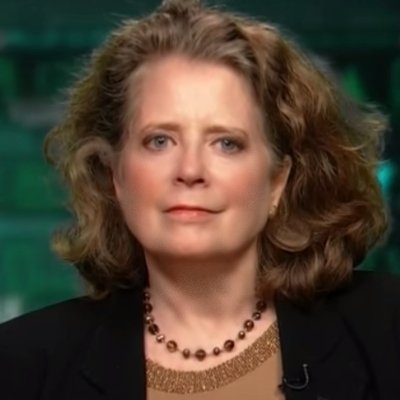
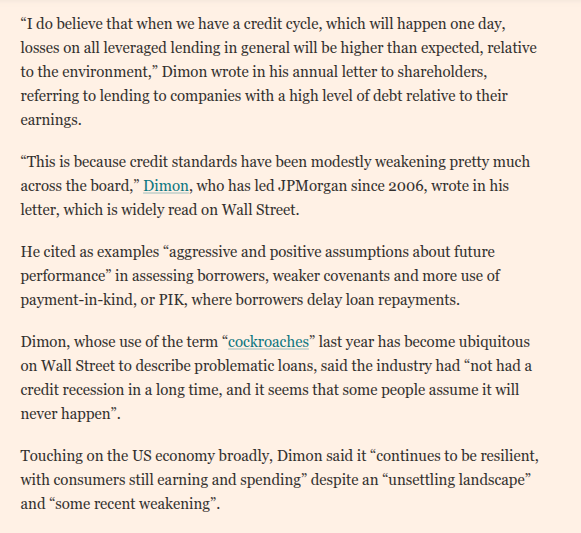


Jamie Dimon warns private credit losses will be larger than feared ft.trib.al/lzBFTyn

NYC business leader warns exodus is brewing over Zohran Mamdani's tax hike crusade: 'Exploring options' trib.al/Z60VQoO


Jamie Dimon warns private credit losses will be larger than feared ft.trib.al/lzBFTyn

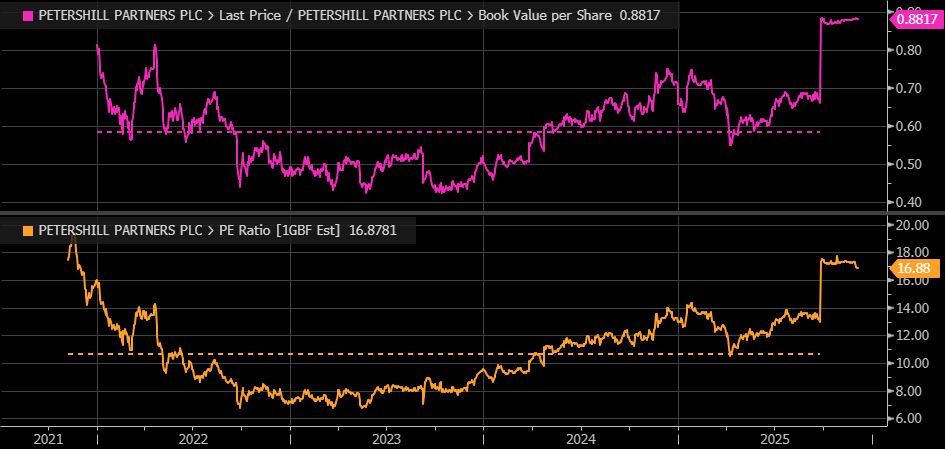
So quick math on Goldman Petershill take-private at $4.5B (35% premium to last close, 11% discount to NAV) was 23x the midpoint of 2025 Partner FRE guidance, ~15% of ownership weighted fee-paying AUM. Fair way to look at it given the discourse around $OWL's Dyal GP stakes biz?





Athene sells Fixed Indexed Annuities. The pitch to retirees: "You get some of the S&P 500's upside with none of the downside." To deliver that promise, Athene buys call options on the S&P 500 from investment banks. Market goes up, the option pays, Athene pays the retiree. The retiree thinks she owns a savings product. She owns the other side of a derivatives trade. The numbers: $8.1 billion in fair value derivative assets against $4.1 billion in capital. The derivative book alone is 2x the capital base. 78% is S&P 500 call options. 1-2 year maturities. The annuity liabilities they hedge last decades. Every year the hedges must roll — at whatever the market is charging. In a vol spike, option costs can triple. The cost of keeping the promise can exceed the profit earned on the entire investment portfolio. Two French banks — Societe Generale ($2.04B) and BNP Paribas ($1.69B) — hold $3.7B in fair value derivative exposure. Nearly the entire $4.1B capital surplus is concentrated in two counterparties. Citibank's potential exposure alone is $590 million — 15% of total capital from one name. $655 million in cash collateral posted. Hundreds of millions more in corporate bonds pledged as initial margin. In a liquidity crunch, that collateral is trapped. The NAIC's own "Potential Exposure" metric — what Athene could lose if counterparties default — is $2.1 billion. Half the capital. Estimated total notional: $120-160 billion against $4.1 billion in capital. 30-40x the capital in derivative exposure alone, stacked on top of 69:1 leverage on the invested asset portfolio. This extends beyond Athene. The dealers who sold these calls — SocGen, BNP, Barclays, BofA — delta-hedge by holding S&P 500 stocks and futures. If the economics of rolling break in a vol spike, the dealers unwind those hedges. That is a sell program the equity market does not see coming because it is embedded in the options market. Athene is one insurer. The entire FIA industry runs the same playbook through the same 8-10 dealers. The collateral is pro-cyclical — market stress reduces collateral values, triggers margin calls, forces liquidation, reinforces the decline. The derivative book is not a hedge that makes the company safer. It is a transmission mechanism connecting the S&P 500 options market, the European banking system, and American retirement savings into a single point of failure. Max pain is a simultaneous equity sell-off and vol spike — Q4 2008 conditions. Equities drop, so the call options Athene holds lose value. Vol spikes, so the cost of rolling triples. Credit widens at the same time, impairing the bond and mortgage portfolio. Collateral values fall, triggering margin calls from the same French banks. Margin calls force liquidation of illiquid private credit at distressed prices. Realized losses erode capital. Rating agencies downgrade leading to more capital calls. Headlines hit. Policyholders surrender. Surrenders require cash. More liquidation. More losses. Dealers unwind delta hedges. More equity selling. More vol. The loop feeds itself. The closest analog is AIG. AIG sold credit protection to banks. Athene buys equity protection from banks. The direction is reversed but the mechanic is the same — a massive concentrated derivative position with a handful of counterparties, on a balance sheet with insufficient capital to absorb a tail event, wrapped in an insurance company that the public trusts because the word "insurance" is in the name. AIG needed $182 billion from the Fed. Athene's balance sheet is comparable in size. This structure has never been stress-tested by a real crisis. It did not exist in 2008. This reads to me as lot like Leland O'Brien Rubinstein. Page 9,599 has the verification table. Pages 6,401 through 9,598 have every individual position. The filing is public. I am inviting every derivative structurer, risk manager, and counterparty credit analyst to open Schedule DB and tell me what I am missing. @jam_croissant The filing: athene.com investor relations, AAIA Q4 2025 Annual Statement.

See the relationship between: - Round size - Valuation - Dilution Does that help?

Citadel CEO Ken Griffin on why the AI boom might be the most overhyped tech cycle we have ever seen: This year alone, data center spending in the United States is projected to exceed $500 billion. And Griffin wants to know what all of that money is actually buying. "You're not going to generate this kind of spend unless you're going to make a promise. You're going to profoundly change the world." In his view, the scale of the capital commitment demands the scale of the promise. And when the promise has to be that big, hype becomes inevitable. "Is it hype? Of course." Griffin isn't arguing that AI is worthless. He sees real impact in certain areas like call centers and software engineering. But for the broader white collar workforce, he's far less convinced. He points to a recent Harvard paper that coined the term "AI work slop." It looks impressive on the surface, but falls apart the moment you look closer. He saw it firsthand inside Citadel. A colleague running their commodities business handed him a report generated by an AI engine. "The first few sentences like, 'Wow, that's really insightful.' And then you go down below that and it's all garbage." For Griffin, this is the defining tension of the current AI cycle. The industry needs to promise transformation to justify the investment. But the actual productivity gains, for most jobs, haven't shown up yet. We have seen this pattern before. Transformative technology attracting massive capital well ahead of proven results. When the hype finally settles, will AI have actually changed anything at all?