

Rob Steele
12.5K posts

Rob Steele
@RobSteele3
Two Feather Hobbit. Blocked by at least three semi-famous people who I actually like. Likes watching other people work and giving them advice.
Присоединился Ekim 2011
886 Подписки284 Подписчики

How to Dress Like a Presbyterian:
7 Rules Every Man Needs to Know.
Video link 🔗 youtu.be/44oBDVk2DXA

YouTube

English

Boomers had it so easy.
Reflection🪩@0xReflection
The poorest people you know are obsessed with calling tops
English
@pastarchive I only ever set a business card's worth of type but it was enough to memorize the layout.
English

This is where “uppercase” and “lowercase” came from. In the early days of printing, capital letters were kept in the upper compartments of the type case, while the smaller letters were placed below for easier access.

English
@OwenGregorian Movie pitch: Hero doesn't think he's psychic but he actually is.
English

Why do nearly 20% of Americans believe they’re ‘basically psychic’? | Talker Staff, SWNS
One in five Americans believes they’re basically psychic (19%), according to new research.
A survey of 2,000 adults explored how they employ their intuition in their daily lives, finding that another 71% rely on their intuition at least sometimes — only 11% don’t believe in it.
Over the past year, respondents have had an average of 18 psychic moments.
Across generations, Gen Z is the likeliest to say that they’re psychic (30%), having the most of these instances (two moments per month) — doubling the frequency that baby boomers experienced (one moment per month).
Some of the top areas where intuition reigns strongest are just “knowing” — whether it’s when something is “off” without explanation (33%), sensing dishonesty (28%), and feeling just when to walk away from something (26%).
Where finances are concerned, Gen Z and baby boomers are equally accurate in their financial intuition (14% each). And when it comes to meeting their perfect match, Gen Z and millennials have a sixth sense about dating (14% each).
Adam Dickinson, a former FBI intelligence analyst and current logic-to-intuition integration advisor, provided insight into the pull of intuition.
“Intuition is a second intelligence channel: it arrives quickly, feels light and steady, and quietly points you toward what fits,” said Dickinson. “From a mental standpoint, intuition is your body compressing years of experience and pattern recognition into a clear signal you can feel right now.”
Respondents have experienced different phenomena over the past year based on feelings that panned out to be true, most commonly having a bad feeling about something beforehand or a gut feeling that something was going to happen (25% each).
Similarly, 24% thought of someone before they texted, had a notion that someone was untrustworthy (22%) or knew what someone was going to say before they said it (19%).
Gen X was the likeliest to be able to predict outcomes (21%), while millennials have the strongest dream-tuition (21%).
Gen Z has had the most “lucky” moments based on a feeling (15%).
But how many of these experiences are just that — a “lucky feeling?”
Thirty-five percent of all respondents admit they’re not confident that they know the difference between a genuine gut feeling and anxiety.
Dickinson also weighed in on how to differentiate between intuition and anxiety.
“Anxiety, by contrast, is heavy, chaotic mental noise that pulls you into endless ‘what if’ futures instead of the present moment,” said Dickinson. “Anxiety is the mind trying to simulate every possible outcome to feel safe, which is why it feels constricting, looping, and never quite peaceful.
“One simple test I share is this: when you slow down and get neutral, does the inner voice feel caring, curious, and quietly firm? If so, that’s intuition. Or, does it feel urgent, critical, and repetitive? That urgent, demanding tone is usually anxiety trying to control uncertainty, not your deeper intelligence speaking.
“Practices like noticing physical sensations, giving yourself a bit of time to pause, and improving self-awareness are exactly how you build an internal standard operating procedure for your inner signals so you can tell, ‘this is my deeper intelligence’ versus ‘this is my nervous system in overdrive.’”
Certain influences have allowed respondents to rely on their intuition more, feeling supported by the rise of therapy and mental health care (44%) and access to expert advice (40%).
On the other hand, factors that create distance, like social media (46%) and working remotely (40%), have made people less in touch with their intuition.
More respondents agree, too, that heavier reliance on features that pull away from their own judgment, like tech (47%) and the rise of AI (43%), have contributed negatively to trust in intuition.
Interestingly, the same percentage of respondents said that current events and the news over the recent years have been both an awakening and a source of uncertainty, with the same percentage feeling more and less in touch with their intuition (36% each).
“I actually see the rise in therapy and expert mental health support as training people to read their inner data better, even as the news cycle floods them with undesired information,” said Dickinson. “Current events can leave the world feeling unrecognizable and erode trust, even in yourself, but when you build a deeper relationship with your own inner signals, you can integrate what your body is telling you with what your rational mind knows. That’s how you make decisions from a higher‑integrity place and keep healthier boundaries as you move forward, even in uncertain times.”
Read more:
nypost.com/2026/04/16/lif…

English


@millerman You know the old saying about teaching students not what to think but how to think? Wouldn't a mind-reading machine do both? It'd train users in the much the same way but more effectively than a video game. They'd soon have an interior dialogue.
English

Can neuralink transcribe the thoughts of someone with no interior dialogue?
English
English

The Most Ambitious Piece of Financial Engineering $STRC
English
@isaacrrr7 You assume there's something abnormal about murder and genocide. That's sweet but naive. We're all capable of the most heinous acts given the right circumstances.
English


@davepl1968 Contribute mine to the worldwide Tetris consortium. They can have the whole thing.
English

If the whole world had to share 64GB, everyone would get 10 bytes.
A social security number is 36 bits in BCD (I think), so what you do with the extra 44 bits is up to you!

allOS.dev - Creating Cross-Platform Apps@raddevus
@davepl1968 "...enough for _everybody_" Hmm... Dev thinks about this statement... 64GB / 6 Billion people = 10.6 bytes per person. 🤓 Doesn't sound like that much. Now, on the other hand, "64GB ought to be enough for _anyone_." Yes, that math checks out. 🤓
English
@esrtweet @akramcodez A Univac was my first too. It was 1979 or so and I'd been hired to maintain a RS-232 campus network on the strength of knowing a little electronics. I taught myself BASIC and then started taking classes. Ended up writing R to predict and trade stocks.
English

@RobSteele3 @akramcodez A Univac 1108. And yes, I can't have been more than 12.
English


@davepl1968 @MbarkCherguia I was thinking guinea pigs doing ballet but yeah.
English
@MbarkCherguia Two ninja bears high-fiving while knee to knee. Am I sane?
English
@DrFrankTurek More like saying a Model T can disprove the existence of Henry Ford.
English

To say that a scientist can disprove the existence of God is like saying a mechanic can disprove the existence of Henry Ford. It doesn’t follow.
English
@akramcodez Your measure brackets top off at 30 years? Infant!
*Thinks*
57 years, I think. Yeah. 1969.
English

I need yall’s opinions.
I’m making a thing for my grandma where I write question prompts and she records the answers and I’m going to put it in a video and in a hardbound book to keep and pass down.
What questions would you ask your grandma to be recorded and passed down?
English
@BowTiedTrance Liked the non-standard robots and time folding. Found the drama blah.
English

My most embarrassing moment of 2026.
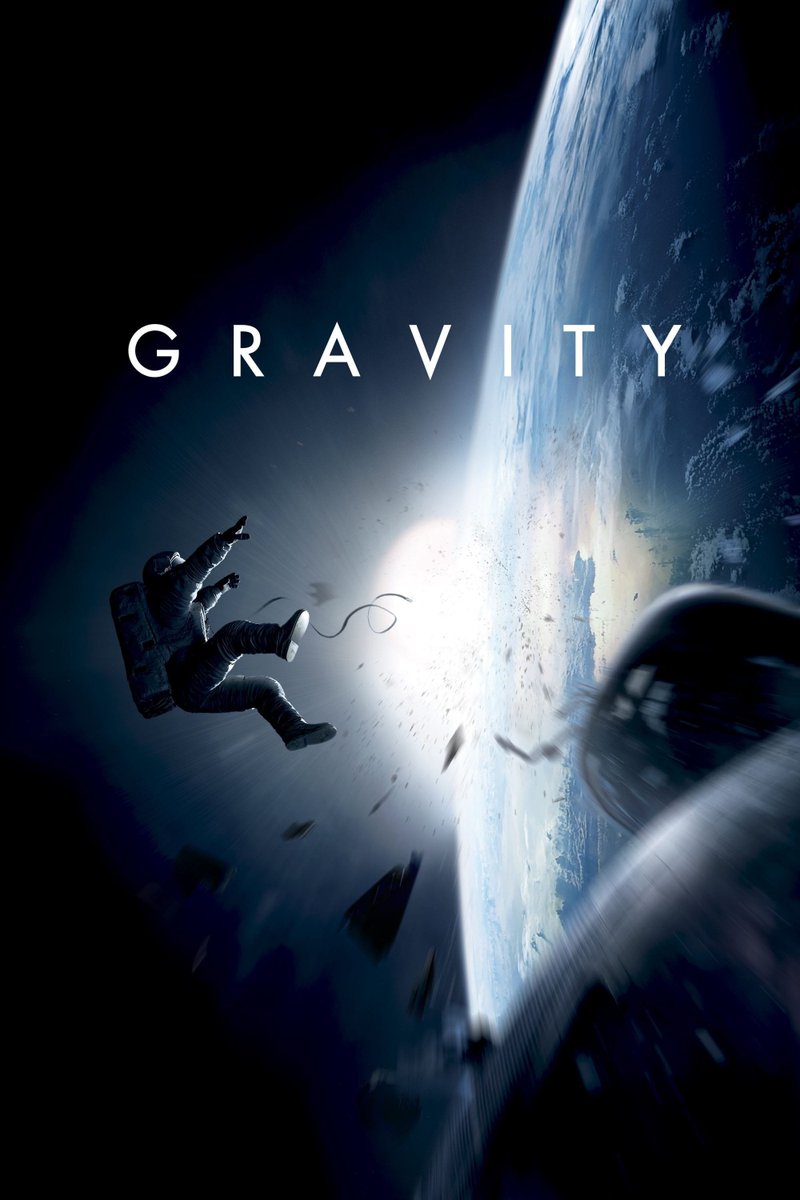
For years, I've been hearing how great "Interstellar" was.
I didn't think it was that great. I tried to watch it, but I quit after about a half-hour. No desire to attempt it again.
Couldn't understand why it kept getting such great reviews. Just last week, a friend mentioned it as one of the best films in recent memory.
So I decided to give it another try.
Folks ... I never watched "Interstellar" before last night. What I tried to watch, and quit, was "Gravity."
Those two films existed as one and the same in my mind, for over a decade.
In my defense, they were released only a year apart.
English
@TheBrancaShow Of course it’s what the Left wants. They hate America.
English

This is NOT a useful way to think about migration.
This is the ONLY way to think about migration.
Stephen Miller@StephenM
A useful way to think about migration is to consider what kind of societies the migrants have built in their home countries and to what extent you would like those conditions replicated here.
English


Hypothesis: Undisciplined pride that won't submit to external direction.
English
Can't concentrate for more than a minute but must fling attention in a dozen directions. Or two anyway. What is this?
English
@jamesrwoodtheo Cultural Christianity beats the cultural paganism we have now.
English

Martin Bucer on the role of encouraging public conformity to the moral law and suppressing public impiety:

English