Muhammad Idrees

158 posts

Muhammad Idrees

Muhammad Idrees

@Idrees535

Blockchain Research Engineer | Robotics, AI & Blockchain

Pakistan เข้าร่วม Aralık 2013
752 กำลังติดตาม75 ผู้ติดตาม
Muhammad Idrees
Muhammad Idrees@Idrees535·
Excited to join the April 2026 cohort of the V4 Hook Incubator (UHI9) organized by @AtriumAcademy and @UniswapFND I’ll be building an AI-powered risk oracle hook that detects liquidity manipulation, MEV risks, and anomalous on-chain behavior, adding a runtime security layer
Muhammad Idrees tweet mediaMuhammad Idrees tweet media
English
0
0
1
14
Muhammad Idrees รีทวีตแล้ว
a16z
a16z@a16z·
"A lot of intelligence is in how we reason, perceive, understand, and interact with the 3D spatial world." Fei-Fei Li says human intelligence boils down to two buckets—language and spatial—but spatial is the key to unlocking the robotic revolution: "The application is so wide. You can imagine this technology will help our doctors with patients. For example, elderly people living at home using spatial intelligence and assistive technology. We can help assess their health, medical situation, and life-threatening events." "From a geopolitics point of view, this is part of the technology that goes straight into weapons. Whether it's drones or devices. It's also the technology that leads to robotic intelligence because every robot is a moving agent, including your Roomba, which is not very smart." "As a moving agent, just like humans and animals, we use spatial intelligence to move around the world and interact with the world. When this technology is ready, the robotic revolution is going to start." @drfeifei with @StanfordHAI
English
30
82
367
37.8K
Muhammad Idrees รีทวีตแล้ว
Andrej Karpathy
Andrej Karpathy@karpathy·
When I built menugen ~1 year ago, I observed that the hardest part by far was not the code itself, it was the plethora of services you have to assemble like IKEA furniture to make it real, the DevOps: services, payments, auth, database, security, domain names, etc... I am really looking forward to a day where I could simply tell my agent: "build menugen" (referencing the post) and it would just work. The whole thing up to the deployed web page. The agent would have to browse a number of services, read the docs, get all the api keys, make everything work, debug it in dev, and deploy to prod. This is the actually hard part, not the code itself. Or rather, the better way to think about it is that the entire DevOps lifecycle has to become code, in addition to the necessary sensors/actuators of the CLIs/APIs with agent-native ergonomics. And there should be no need to visit web pages, click buttons, or anything like that for the human. It's easy to state, it's now just barely technically possible and expected to work maybe, but it definitely requires from-scratch re-design, work and thought. Very exciting direction!
Patrick Collison@patrickc

When @karpathy built MenuGen (karpathy.bearblog.dev/vibe-coding-me…), he said: "Vibe coding menugen was exhilarating and fun escapade as a local demo, but a bit of a painful slog as a deployed, real app. Building a modern app is a bit like assembling IKEA future. There are all these services, docs, API keys, configurations, dev/prod deployments, team and security features, rate limits, pricing tiers." We've all run into this issue when building with agents: you have to scurry off to establish accounts, clicking things in the browser as though it's the antediluvian days of 2023, in order to unblock its superintelligent progress. So we decided to build Stripe Projects to help agents instantly provision services from the CLI. For example, simply run: $ stripe projects add posthog/analytics And it'll create a PostHog account, get an API key, and (as needed) set up billing. Projects is launching today as a developer preview. You can register for access (we'll make it available to everyone soon) at projects.dev. We're also rolling out support for many new providers over the coming weeks. (Get in touch if you'd like to make your service available.) projects.dev

English
602
539
6.3K
2.3M
Muhammad Idrees รีทวีตแล้ว
Andrej Karpathy
Andrej Karpathy@karpathy·
Software horror: litellm PyPI supply chain attack. Simple `pip install litellm` was enough to exfiltrate SSH keys, AWS/GCP/Azure creds, Kubernetes configs, git credentials, env vars (all your API keys), shell history, crypto wallets, SSL private keys, CI/CD secrets, database passwords. LiteLLM itself has 97 million downloads per month which is already terrible, but much worse, the contagion spreads to any project that depends on litellm. For example, if you did `pip install dspy` (which depended on litellm>=1.64.0), you'd also be pwnd. Same for any other large project that depended on litellm. Afaict the poisoned version was up for only less than ~1 hour. The attack had a bug which led to its discovery - Callum McMahon was using an MCP plugin inside Cursor that pulled in litellm as a transitive dependency. When litellm 1.82.8 installed, their machine ran out of RAM and crashed. So if the attacker didn't vibe code this attack it could have been undetected for many days or weeks. Supply chain attacks like this are basically the scariest thing imaginable in modern software. Every time you install any depedency you could be pulling in a poisoned package anywhere deep inside its entire depedency tree. This is especially risky with large projects that might have lots and lots of dependencies. The credentials that do get stolen in each attack can then be used to take over more accounts and compromise more packages. Classical software engineering would have you believe that dependencies are good (we're building pyramids from bricks), but imo this has to be re-evaluated, and it's why I've been so growingly averse to them, preferring to use LLMs to "yoink" functionality when it's simple enough and possible.
Daniel Hnyk@hnykda

LiteLLM HAS BEEN COMPROMISED, DO NOT UPDATE. We just discovered that LiteLLM pypi release 1.82.8. It has been compromised, it contains litellm_init.pth with base64 encoded instructions to send all the credentials it can find to remote server + self-replicate. link below


English
1.4K
5.4K
28.1K
66.1M
Muhammad Idrees รีทวีตแล้ว
alphaXiv
alphaXiv@askalphaxiv·
RL Isn’t Actually Optimizing What We Think, And That’s a Problem Come join us for this AI4Science talk: Maximum Likelihood Reinforcement Learning (MaxRL). In this session, the author of MaxRL @FahimTajwar10 will cover their paper that takes a step back and asks a fundamental question: when we use RL for tasks like reasoning, coding, or navigation, are we even optimizing the right objective? Whether you’re working on RL, LLM reasoning, or just curious about how training objectives shape model behavior, this is one to check out. 🗓 Wednesday March 18th 2026 · 10AM PT 🎙 Featuring Fahim Tajwar 💬 Casual Talk + Open Discussion
alphaXiv tweet media
English
1
11
81
21.3K
Muhammad Idrees
Muhammad Idrees@Idrees535·
In this path RL will matter far more than RLHF. Self-evolving, continually learning systems will be more RL-heavy than supervised. Great conversation on AGI, SSI’s mission, and why the next big leap will be algorithmic breakthroughs, not more compute. 🔗 youtu.be/aR20FWCCjAs?si…
YouTube video
YouTube
English
0
0
0
20
Muhammad Idrees
Muhammad Idrees@Idrees535·
Ilya defines AGI as a continual learning algorithm — something that learns, evolves, and eventually becomes AGI. OpenAI Charter view of AGI as a one-time breakthrough that can do everything humans can. In his view, AGI = that can learn anything and specialize like humans do.
English
1
0
0
32
Muhammad Idrees
Muhammad Idrees@Idrees535·
Ilya Sutskever: “Everyone has been locked into the idea of self-improving AI, because there are fewer ideas than companies.” Most AI startups today are slight variations of each other. In near future we’ll start seeing companies built on truly unique ideas, not incremental tweaks
English
1
0
1
28
Muhammad Idrees
Muhammad Idrees@Idrees535·
Proactive Scheduling + Smart Notes = Intelligent Calendar Your AI-enhanced calendar and notes app that connects your thoughts to your schedule. Get automatic event creation, and chat with your AI assistant inside every event and note. timelyzer.celystik.io
English
0
0
0
40
AK
AK@akrtws·
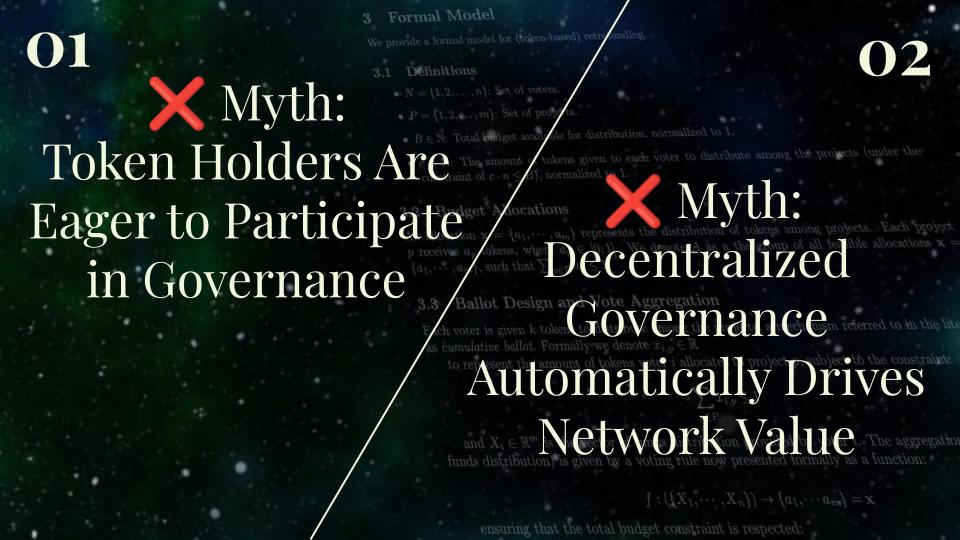
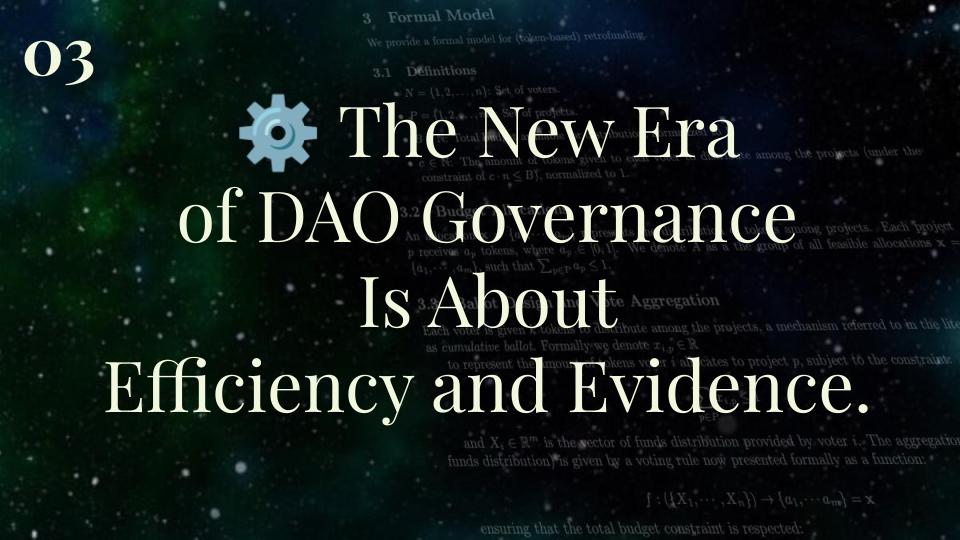
During EthCC 2025 in Cannes, my team at GovXS and friends — @devanshmehta, @dwddao, @noturhandle, @Bbeats1, and @Jamilya_eth — organized breakout sessions to share and debate the latest developments in governance design. This post summarizes my main observations — shaped by those sessions as well as subsequent discussions at @Web3Summit and dawo25.org, where I had the opportunity to present our research and design work at GovXS. To stay updated on our ongoing work, follow me here, or visit: mirror.xyz/0x803860D2C333… I’ll start with some persistent misconceptions. What have we learned since The DAO in 2016? Here are two things we’ve consistently gotten wrong 👇🏽 01 ❌ Myth: Token Holders Are Keen to Participate in Governance DAOs often assume that token holders are intrinsically motivated to participate in governance. But reality paints a different picture. Take Uniswap: On average, only 15% of circulating tokens participate in votes on proposals. The pattern is similar across most DAOs. Despite the ideal of decentralization, we have to accept that the willingness, ability, or interest of most token holders to engage in governance is low. It’s more accurate to view DAOs as highly specialized organizations with a defined vision and mission — not as mass-participation democracies. Instead of designing governance to maximize participation, we should ask: - What level of power distribution is sufficient for long-term sustainability? - What expertise is needed to make good decisions — and who should be eligible to vote? How do we keep governance open, not exclusive? - How do we make decisions that benefit the network — and how do we define and measure success? 02 ❌ Myth: Decentralized Governance Is About Driving Network Value There’s a widespread belief that decentralizing governance will make a protocol or ecosystem more valuable — since any token holder has an incentive to contribute to value growth. But in practice, DAO decisions are rarely focused on long-term success. They’re mostly about dividing up existing value. We’ve seen extreme cases, like the 2024 Compound DAO hijack. But it’s not just about outright attacks. Most DAO proposals fall into these categories: - Governance changes and voting processes - Tokenomics and supply management - Rewards and incentive programs - Grants and treasury funding allocations So what actually gets token holders to vote? Not strategies to grow value — but mechanisms to extract it. 🤡🤡🤡 To build truly successful DAOs, we need to make governance attractive for contributors and design systems that discourage extractive behavior. 03 ⚙️ The New Era of DAO Governance: Efficiency and Evidence We’re entering a new phase of DAO evolution. After the “era of democratization,” we’re now in the “era of governance efficiency.” Some of the largest protocol ecosystems are leading this shift: - @NEARProtocol is experimenting with the House of Stake and AI-powered governance. - @protocollabs, and @deep_funding are developing new impact evaluation methods for public goods — using dependency graphs, machine learning, and AI. - @UniswapFND and @butterygg are testing conditional funding markets to allocate grants tied to TVL growth - @Optimism is pioneering metrics-based voting in its latest Retro Funding rounds. One route to efficiency: separating preference collection from decision-making. Why do we vote? To collect the preferences of stakeholders and contributors — and steer protocol development based on crowd intelligence, not top-down leadership. But voting is just a snapshot in time — and it takes effort. In retroactive rewards, we want to reward measurable past achievements. So the question becomes: Can we combine crowd intelligence on the direction with frequent, data-driven decisions based on measurable positive impact made? We can define up front which outcomes we want to reward over the next 6–12 months (the “what”), and then use data to assign rewards to projects based on their quantifyable impact (the “how much”).
 This approach addresses common governance pain points: popularity contests, voter apathy, and lack of transparency. Metrics-based voting is one of the most promising governance models emerging now. It allows us to reward real contributions, streamline decision-making, and scale governance through evidence. 04 🎯 We Need Better Incentive Alignment Infrastructure DAO governance can be described as a Principal-Agent Problem. A broad group of stakeholders — token holders, core devs, app builders, liquidity providers — (the principals) rely on voters (agents) to make decisions on their behalf. This design exists for good (Condorcet) reasons. But if incentives aren’t aligned, agents may act in their own interest — not the protocol’s. That’s where governance design comes in: to create mechanisms that align actions with shared goals. Now, think about voters. In most DAOs today, voters aren’t accountable for outcomes. If a decision goes badly, they suffer no loss. If it goes well, everyone benefits — whether they voted or not. So how can we give voters real skin in the game? Enter prediction markets. @butterygg is currently testing this in ecosystems like Uniswap — building conditional funding markets where voters stake on the success of projects. Funding decisions are then guided by these signals. Early experiments at Optimism show that projects selected by prediction market participants performed 5x better than those selected by traditional grant councils. That’s massive! Aligning incentives across the entire stakeholder ecosystem is the most important challenge in DAO governance today. And we’re not powerless. Tools like prediction markets, or staking mechanisms show it’s possible to create governance with real accountability — and better outcomes. 05 🤖 DAOs Have a Competitive Edge to Go AI-Native Did Web3 redefine democracy? Maybe not. But it did give us the first fully digital organizations. Every component of a crypto DAO is natively digital: - The protocol, with applications and transactions on top (value creation) - Voting power (tokens) - Reputation (track records, proofs of expertise) - Trust (delegation mechanisms) - Stakeholder voice (forums, proposals) - The vote itself - And even the impact of that vote These systems are verifiable and programmable. We can govern through code. DAOs are uniquely positioned to augment governance with AI. While many are frustrated with democratic decision making today, we have a rare opportunity to build better organizations — with new levels of transparency, coordination, and collective intelligence. What a future for governance! If you think the same way — I’d love to connect.
AK tweet mediaAK tweet mediaAK tweet mediaAK tweet media
Token Engineering Academy@tokengineering

Yesterday was a great day at #EthCC — we explored ecosystem funding and DAO decision-making through four of the most exciting experiments in the space. Big thanks and kudos to
@devanshmehta @dwddao @noturhandle @akrtws 
for sharing their work so openly, offering thoughtful feedback, and showing what’s possible when governance becomes real infrastructure. Key takeaways: 1/ AI Delegates, from DAOs to Democracy AI agents in governance aren’t just a tech fantasy — they’re becoming real tools to amplify collective intelligence. @dwddao showed how digital agents can listen, learn, distill, and represent what a community values — not just automate it.
Their system just won a hackathon prize for bhutan.deepgov.org, enhancing Bhutan’s young democracy with decentralized tools.
Much more to come, kudos @dwddao! 2/ Metric-Based Voting: Scaling Decisions, Not Opinions Metric-based voting emerged from the crypto world — most notably through @Optimism’s Retro Funding. But we’re only beginning to understand its full potential. Key properties: - Forces clarity around quantifiable criteria — no more vague popularity contests - Decouples values/preferences from performance data — enabling real scale - Enables asynchronous decisions in dynamic ecosystems, without bottlenecks Primer @akrtwsmirror.xyz/0x803860D2C333… 3/ CFMs, Skin in the Game for Better Funding Decisions Do voters make better decisions when they have skin in the game? @noturhandle and the team at @butterygg tested this — comparing Butter's Conditional Funding Markets (CFMs) to traditional grant councils. Early results:
Projects selected via CFMs produced 5x more growth than council-picked projects 👀 This might be the fix we need for grants.
New CFM experiment coming up via @UniswapFND:
x.com/UniswapFND/sta… 4/ Deep Funding: @devanshmehta wrapped up with hard-won insights from years of ecosystem funding: from DAO proposals to QF, to trust/value graphs. There’s no one-size-fits-all — but clear best fits at each stage:
→ Early-stage, broad scouting: QF
→ Mature projects: value graphs, dependency graphs
→ Add markets + incentive layers? Huge potential ahead. Follow Devansh: @devanshmehta Finally, big thank you ❤️ for @bbeats1 and team at @Scroll_ZKP and @metagov_project and @EthCC for supporting us in hosting this session!

English
2
7
32
1.7K
Muhammad Idrees
Muhammad Idrees@Idrees535·
@akrtws @EthCC @ethereumfndn @VitalikButerin In crypto space, scientific rigor is often overlooked, leading many teams to ship experimental stuff without thorough validation, which has contributed to a lot of "onchain nonsense". Bridging this gap with applied research can make this ecosystem reliable and sustainable
English
0
0
2
51
Muhammad Idrees รีทวีตแล้ว
AK
AK@akrtws·
Attending the Ethereum Research Funding Forum @EthCC gave a lot of food for thought. It seems @ethereumfndn is leaning more into applied research to support Ethereum’s long-term vision (as echoed in @VitalikButerin’s talk). I think that’s a legit move. Some thoughts from my applied research work with the @GovXS team (Social Choice/Game Theory) and my background in early-stage Web2 startups: a) Onchain builders and academic researchers move at very different speeds. If EF or any org wants to bridge the two worlds, this is critical to understand. For builders, speed is everything: finding PMF, removing unknown unknowns, getting support fast. Researchers who want to engage can provide tremendous value—if they meet teams where they are. In our Governance & DAO breakout we looked at funding via dependency graphs, and how hard it is to define meaningful base weight values in dynamic systems (e.g. via expert assessment). Idea: Why not add markets to weight newcomers? Problem: Every new node will globally change the game. In Stackelberg games terms: local updates can invalidate the original leader’s strategy (base weights). This kind of input can save teams months of wasted effort—and potentially prevent betting on infeasible ideas. (Props to @dwddao for surfacing this challenge.) More from that session here: x.com/tokengineering… We also saw a pattern: most builder teams have access to technical advisors—game theory advice is much rarer. Takeaway: Support builder teams where they are. Often, a small amount of well-placed support can be invaluable. b) The best crypto researchers thrive on novel challenges. Often, we’re not just discovering new questions—we’re also seeing real-world experiments to study them. A great example: Metrics-based voting (trialed in Optimism Retro Funding in mid-2024, props to @JonasSFT). We realized this is largely uncharted territory in Social Choice Theory. Our GovXS team started analyzing it—through lenses like complexity, incentive compatibility, and welfare maximization. The potential here goes far beyond crypto—it's a way to attract research grants and academic interest across domains. Mid-term, this kind of work helps create a new tech stack for metrics-based voting, producing well-tested primitives for scalable decision-making. And that directly promotes decentralization. mirror.xyz/0x803860D2C333… c) What role could EF play? My take: Focus on what onchain builders need. Then find people who understand both sides: Builder teams + academic researchers. Get them talking. For builders: Let builders get support where they are - e.g. in verifying mechanism design as part of an acceleration program. For researchers: Bring in researchers who are excited about crypto challenges and willing to get hands-on. From there, let builders + researchers explore mutual service contracts for applied research. Research grants don’t hurt either ofc. In GovXS's space (social choice, game theory), interest in DAOs and digital democracy is growing beyond crypto. Explore crypto + non-crypto research co-funding? You get the idea. Done well, this could massively multiply Ethereum’s investment in applied research. 🔁 My two gwei—would love to know how others see it.
English
4
4
25
2.2K
Muhammad Idrees รีทวีตแล้ว
Prateek Tripathi
Prateek Tripathi@prateekhh·
Unpopular opinion: The AI industry is solving the wrong problem 🔥 Everyone's racing to build GPT-5, Claude 4, Gemini Ultra++... but we're missing the obvious question: How do we know when AI is lying? I spent weeks creating this cinematic piece about AI verification, and honestly? It changed how I think about the entire industry. Here's my hot take: We're so obsessed with making AI "smarter" that we forgot to make it honest. I've been using AI daily for work, and the number of times I've caught it confidently stating complete nonsense is scary. But here's the thing - I only catch it when I know the subject well enough to spot the lies. What about the millions of decisions being made in fields where I have no expertise? The video shows scenarios that genuinely keep me up at night: - Medical AI giving different diagnoses based on patient appearance - Hiring AI perpetuating historical biases while claiming objectivity - Financial AI making discriminatory decisions at scale And we're just... okay with this? Because the alternative is admitting our AI revolution is built on quicksand? @miranetwork approach feels like the first real solution I've seen. Instead of pretending one AI can be perfect, they're building systems where multiple AIs verify each other. It's like having a panel of experts instead of one confident amateur. But here's what really gets me: This should be the default for any AI making important decisions. The fact that it's not tells you everything about our priorities. ----- We're building toward superintelligence without solving basic reliability. That's not innovation. That's negligence. Am I being too harsh? Or is this the conversation we should have been having years ago? Drop your thoughts below. Especially if you think I'm wrong - I want to hear the counter-arguments.
English
13
7
28
2.9K
Muhammad Idrees
Muhammad Idrees@Idrees535·
@LizaRosen0000 Are you on the side of one who has killed over 50k children, attacked hospitals, residential buildings, killed journalists, health workers, restrained the supply of food and water. Unprovoked attacked a sovereign country and is now crying for support
English
0
0
0
3
Liza Rosen
Liza Rosen@LizaRosen0000·
Iran’s regime openly vows to wipe Israel—and its entire population—off the map. Israel vows to stop Iran from gaining the means to do it. So tell me: Whose side are you on—the Islamic Republic or Israel
English
962
810
4.2K
253.3K
Vivid.🇮🇱
Vivid.🇮🇱@VividProwess·
This horrifying footage of Iranian ballistic missiles in the skies of Israel could be anywhere above Europe and America as well, even with nuclear warheads, if Israel hadn’t done what needs to be done. Israel is defending Western civilization.
English
844
1.6K
11.1K
368.3K
Eli Afriat 🇮🇱
Eli Afriat 🇮🇱@EliAfriatISR·
No need to be Jewish to support Israel. 💯
English
151
495
4.1K
45.8K
Muhammad Idrees
Muhammad Idrees@Idrees535·
@VividProwess Wasn’t it israel who attacked Iran? After killing more than 50k children in Palestine now they want people to make a moral choice in their favor. Nobody believes in this shit. You guys are doomed, and it isn’t Iran who will kill you, you will do it by yourself
English
0
0
0
13
Vivid.🇮🇱
Vivid.🇮🇱@VividProwess·
Insane footage of Iran's last ballistic missile wave above Israel moments ago. Just imagine for a split second what it's like. Israel is at war with the most evil subhumans on this earth. Standing with Israel is the only moral choice anyone can make.
English
6K
4.5K
34K
4.4M
Muhammad Idrees
Muhammad Idrees@Idrees535·
@CitizenMattersX Indians cry when a sovereign country retaliates and so does israel. You both should stand for each other and destined for same end
English
0
0
0
20
Muhammad Idrees
Muhammad Idrees@Idrees535·
@RonSCantor You define your goals by yourself, then you execute it the plans without respecting sovereignty of a country, and when you face retaliation, you start crying like bitches. It is dildo of consequences and it never comes lubed
English
0
0
0
12
Ron Cantor
Ron Cantor@RonSCantor·
My friend in IDF reserves sent me a video on the destruction that an Iranian missile did to an apartment building in the city of Bat Yam. Israel is trying to stop Iran from getting a nuke. Iran is trying to kill Israelis. Israel’s goal is to prevent an existential threat. Iran thrives on terror.
English
9
18
67
4.8K