Josh Rayner 🧙🏻‍♂️

1.4K posts

Josh Rayner 🧙🏻‍♂️ banner
Josh Rayner 🧙🏻‍♂️

Josh Rayner 🧙🏻‍♂️

@Josh_Rayner

Captivated by #Bitcoin

Toronto, Ontario เข้าร่วม Kasım 2010
341 กำลังติดตาม568 ผู้ติดตาม
ทวีตที่ปักหมุด
Josh Rayner 🧙🏻‍♂️
Josh Rayner 🧙🏻‍♂️@Josh_Rayner·
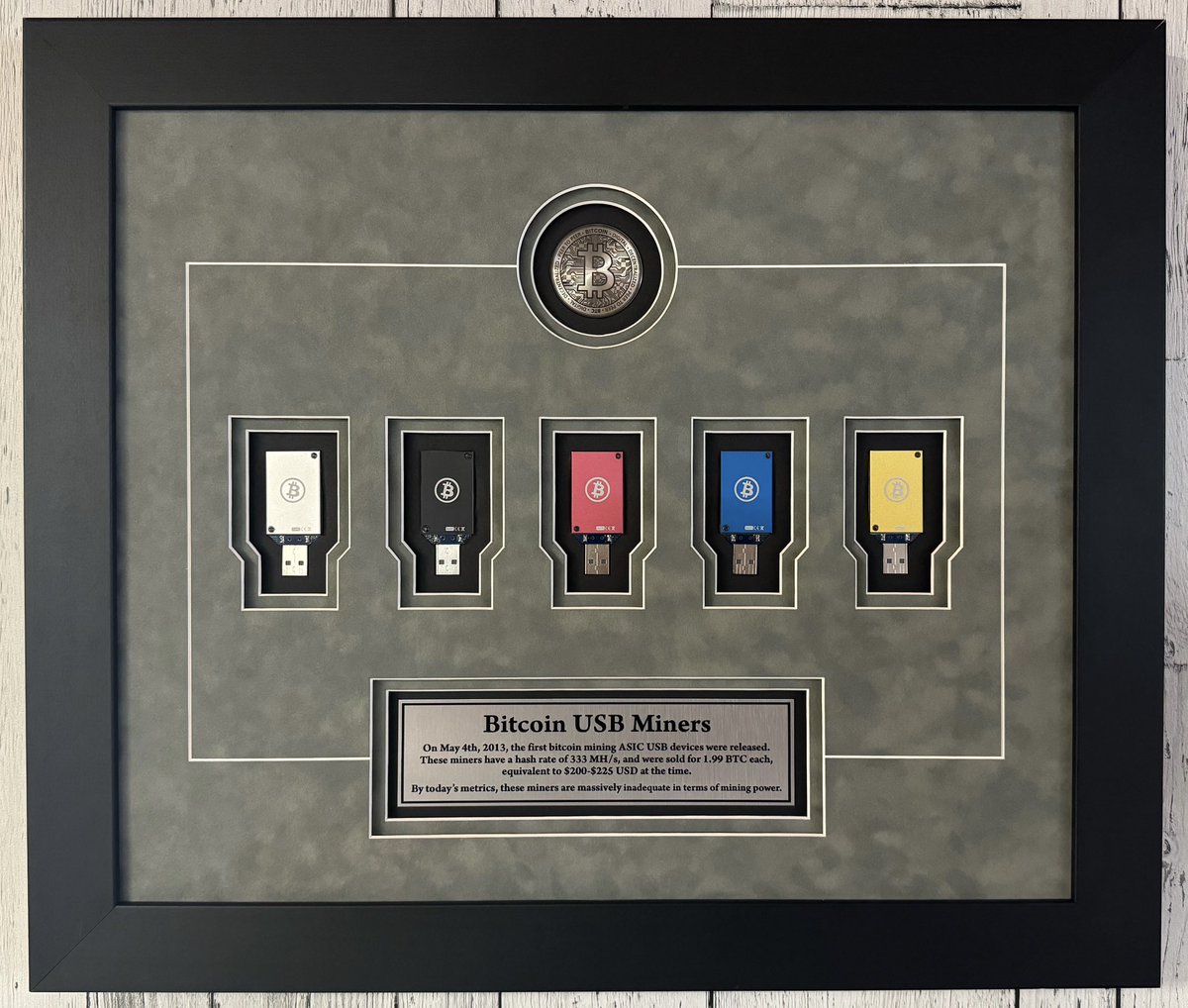
Had my Bitcoin USB miners framed and love the finished product. Tungsten coin at top by @MTS_Store
Josh Rayner 🧙🏻‍♂️ tweet media
English
1
4
15
816
Josh Rayner 🧙🏻‍♂️
It depends on the DC tier the customer requires. They will need generators, UPS systems, and potentially new transformers. They will certainly have a head start since power is on-site but would still be 12+ months out due to infrastructure lead times. Immersion is better in my opinion. More efficient, fewer points of failure (leaks), and maximizes cooling. It can be challenging for hardware repairs but still wins imo.
English
0
0
1
27
Balmy Investor 🟧⛏️
Balmy Investor 🟧⛏️@balmy_investor·
@Josh_Rayner Are current liquid cooled hydro mining sites able to convert to AI compute easily Josh? Second, do you see immersion as more PUE efficient option over liquid cooled AI compute that builders go that path?
English
1
0
1
20
Matt Prusak
Matt Prusak@MattPrusak·
Your grandparents had grandparents. They had grandparents. Somewhere back there, someone got on a boat, or didn't. Someone changed their name, or had it changed for them. Someone is buried in a cemetery you've never heard of in a country you've never been to. Most families lose track after two generations. I used AI to push mine back nine. One session with @karpathy's autoresearch pattern: over 100 organized research files. It found a 1940 Norwegian emigrant history with my ancestors in it. Resolved a maiden name question that confused my family for 70 years. Identified relatives no one alive knew existed. The method is simple: set a goal, measure progress, verify against real records, repeat. The AI searches public archives, cross-references birth certificates against cemetery records against church books, and logs everything it finds (and everything it doesn't). Open sourced the whole toolkit. Prompts that do the research for you, archive guides for 20+ countries, starter templates, even a framework for making sense of DNA results. If you have a box of old photos and unanswered questions, this is where to start. github.com/mattprusak/aut…
English
78
228
3.4K
270.4K
Josh Rayner 🧙🏻‍♂️
Josh Rayner 🧙🏻‍♂️@Josh_Rayner·
@MattPrusak @dwarkesh_sp @dylan522p Honestly alarming how dependent the world is on China. It’s certainly going to change but will take time. The current administration is all over this as you know. Huge opportunity for America manufacturing.
English
0
0
1
76
Matt Prusak
Matt Prusak@MattPrusak·
One number from the @dwarkesh_sp x @dylan522p podcast this week stopped me cold. The real performance gap between Nvidia's last two GPU generations isn't 2x. It's 20x. The difference isn't compute. It's networking bandwidth, compounding across on-chip, inter-chip, and inter-rack communication. Every high-speed optical link in that network starts with one material: indium phosphide (InP). Two companies make InP substrates at scale. AXT - $AXTI - in Beijing, and Sumitomo in Japan. China placed export controls on InP in February 2025. Every shipment out of the country now requires a per-customer, per-order permit from the Ministry of Commerce. ~60 business days to process. That permit is now the single biggest bottleneck in the photonics supply chain. You'll see people say $AXTI is "63% China revenue." I pulled the actual 10-Q footnotes. The number is real but the read is wrong. The filing classifies revenue by "products shipped to customers in the corresponding geographic region." Shipped to. Not consumed by. Not where the end demand lives. CEO Morris Young on the Q3 call: "A lot of our substrates are shipped to Taiwan to put an EPI on and ship back to the United States to make a device and ship back to China to make a transceiver and then ship back to U.S. data centers." One wafer can cross four borders before it powers an AI cluster in Virginia. Here's where it gets interesting. Q2 vs Q3 2025, country-level revenue from the 10-Q: China: $14.5M → $13.1M (down 9%) Taiwan: $530K → $9.0M (up 1,607%) Europe: $1.6M → $3.4M (up 114%) North America: $224K → $140K (down 38%) One thing changed between those quarters: MOFCOM issued InP export permits in June and August. Taiwan went from half a million to nine million dollars in 90 days. That's the permit gate, made visible. When permits flow, substrates leave Beijing and flood Taiwan's epi houses. From there they move to US and global data centers. When permits are blocked, Taiwan collapses. China stays flat, because domestic sales don't need a permit. VP Timothy Bettles, Q3 call: "InP in Q2 was about $3.5 million, and that's increased to about $13 million in Q3. All of that incremental has come from outside of China." The entire InP growth story for AI photonics is an export story. Which means it's a permit story. Not all of AXT's revenue carries this risk. InP substrates (~32% of rev) and GaAs (~31%) require export permits. Raw materials (~33%) ship within China with no permit and have never been disrupted. The permit risk is concentrated in the substrate export lines, and within those, InP is the one driving the AI thesis. Also buried in the 10-K: "Our U.S. gallium arsenide customers are considered dual use customers: in addition to commercial applications they have significant levels of military involvement. As such, no permits for gallium arsenide to the U.S. have yet been approved." North America revenue went from $20.4M in FY2022 to $140K in Q3 2025. An entire product line cut off from its largest historical market, and most investors missed it. The demand side is confirmed: $60M+ InP backlog, customer forecasts past 2030, capacity doubling to $35M/quarter by end of 2026. The constraint is whether China lets the material leave. In Q4 2025, MOFCOM issued fewer permits than expected. InP revenue dropped from $13.1M to $8.0M. Stock fell 30%. $COHR dropped 10% in sympathy, because the entire downstream stack ($LITE, $COHR, $AAOI, every transceiver going into hyperscaler data centers) depends on this corridor staying open. Everyone talks about AI chokepoints: memory, packaging, EUV tools. This one is hiding in plain sight. A permit desk at China's Ministry of Commerce, deciding on a per-order basis how much InP leaves the country. 99.3% of AXT's long-lived assets sit in China. All manufacturing is in Beijing, Kazuo, and Dingxing. There is no announced plan to build outside China. If you want to track it in real time: every quarter the 10-Q breaks out revenue by country. Watch the Taiwan line. That's your proxy for whether MOFCOM is letting InP leave. Taiwan surging = permits flowing = photonics supply intact. Taiwan collapsing = permits blocked = downstream names at risk. Q2 2025: Taiwan $530K. Stock cratered. Q3 2025: Taiwan $9M. Stock doubled. The 20x inference gap means networking bandwidth is the multiplicative factor in AI performance, not an accessory. InP is the material that makes it possible. The demand side is locked in for years. But the supply side runs through a single geopolitical corridor: Chinese manufacturing, Chinese export permits, then onward to the world. When people say "63% China revenue," they're looking at the shipping label. The real story is the permit stamp.
English
2
3
18
2.6K
Josh Rayner 🧙🏻‍♂️ รีทวีตแล้ว
The Humanoid Hub
The Humanoid Hub@TheHumanoidHub·
A preview of the animatronic Olaf coming to Disneyland Paris.
English
35
71
845
417.2K
Josh Rayner 🧙🏻‍♂️ รีทวีตแล้ว
Wall St Engine
Wall St Engine@wallstengine·
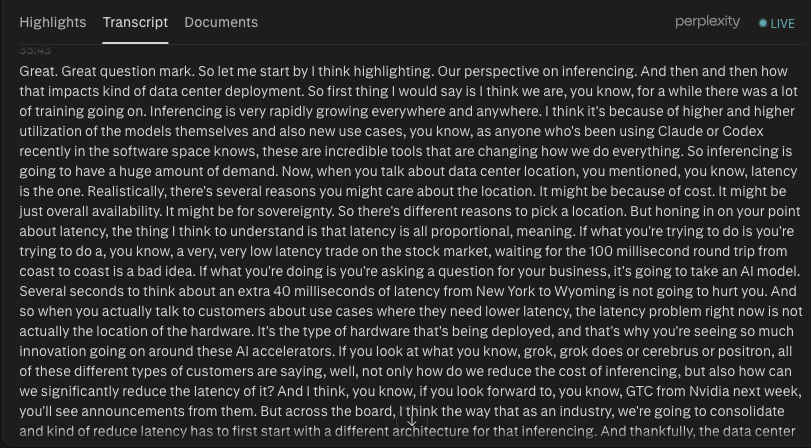
$ORCL CEO WHY DC DON’T NEED TO BE NEAR POPULATION CENTERS, YET: “Inferencing is very rapidly growing everywhere and anywhere... it’s because of higher and higher utilization of the models themselves and also new use cases... inferencing is going to have a huge amount of demand.” “If what you’re doing is asking a question for your business, it’s going to take an AI model several seconds to think about it... an extra 40 milliseconds of latency from New York to Wyoming is not going to hurt you.” “The latency problem right now is not actually the location of the hardware. It’s the type of hardware that’s being deployed, and that’s why you’re seeing so much innovation around these AI accelerators.” “If you look at what Groq does, or Cerebras, or Positron, all of these different types of companies are saying not only how do we reduce the cost of inferencing, but also how can we significantly reduce the latency of it.” “That makes it much more flexible for us to put data centers where power is abundant, land is plentiful, and we can optimize for what’s available to meet this ever-increasing demand.”
Wall St Engine tweet media
English
4
11
124
27.8K
Ben Rabidoux
Ben Rabidoux@BenRabidoux·
No bottom for Toronto house prices...down 7.9% in the past year as of Feb, equivalent to an average equity decline of $80,000 in the past 12 months.
Ben Rabidoux tweet media
English
58
38
360
41.7K
Balmy Investor 🟧⛏️
Balmy Investor 🟧⛏️@balmy_investor·
Valuation Gap 💎 The market is sleeping while $SATO.v pivots in the shadows. Currently trading at a Price-to-Book of 1.0. 🤯 At this price, you're buying the hardware at cost and getting the 20MW Quebec Hydro PPA for ZERO. The math is broken. #Bitcoin #AI #SATO
English
2
0
3
873
pennyether
pennyether@penny_ether·
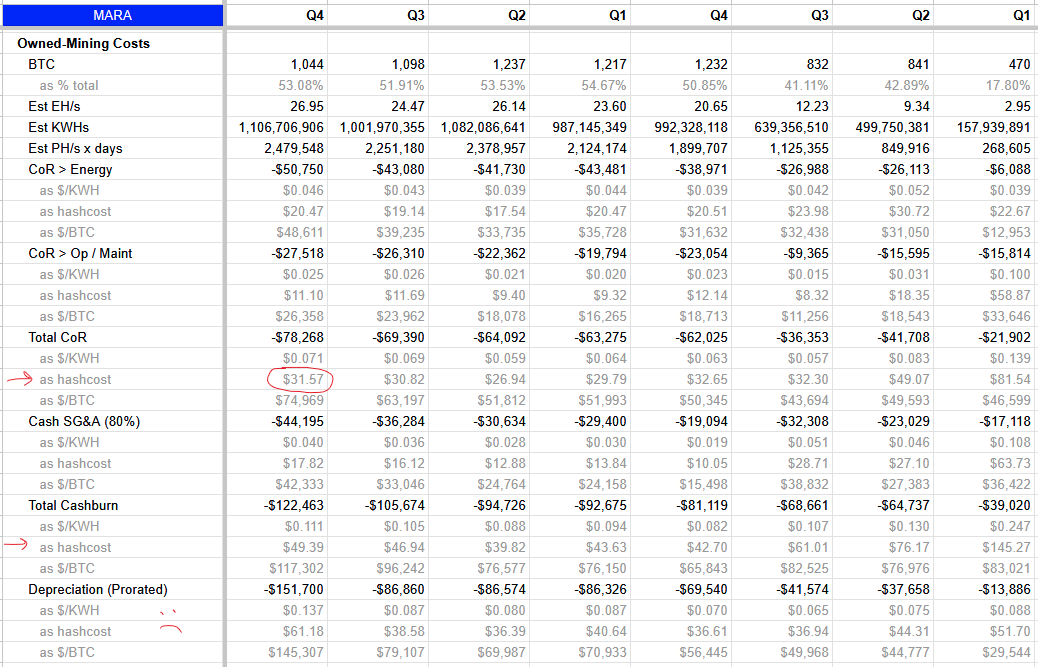
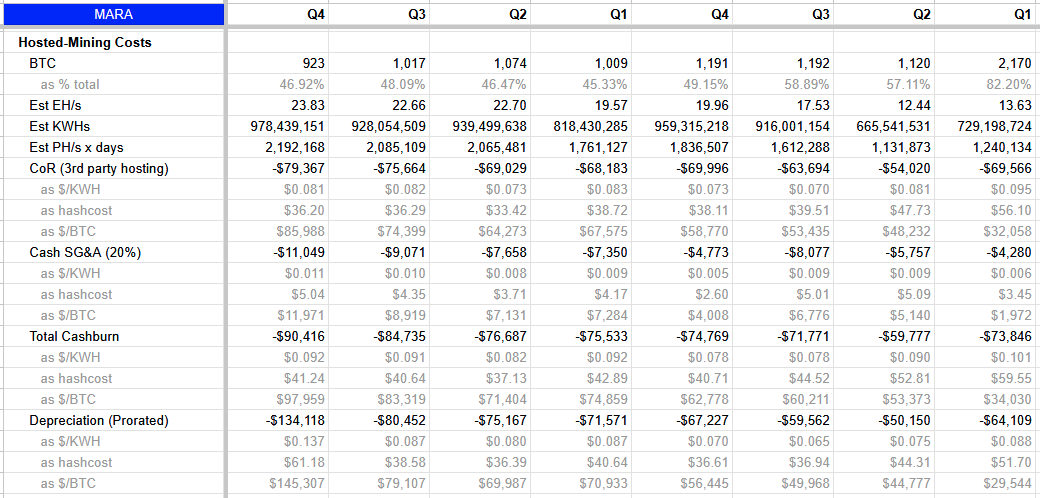
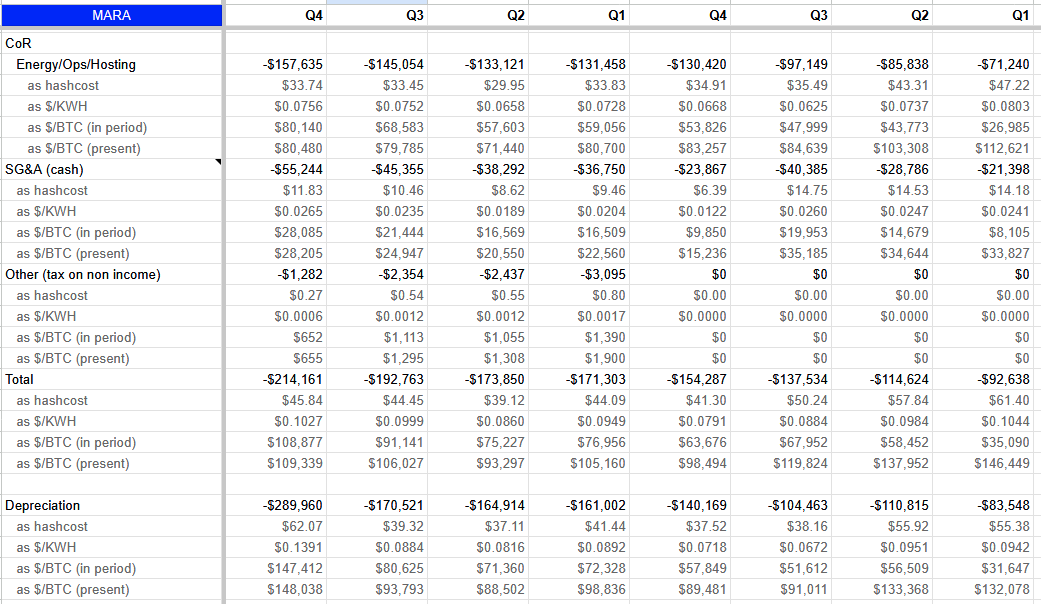
$MARA - Q4 update. The Starwood news is definitely bullish, because any use of their MWs is better than mining. PnL of their mining ops -- particularly the "vertically integrated" portion -- is abysmal. Assuredly losing money at $30 hashprice. In Q4 they self-mined 1,044 BTC (vertical), and mined 923 from their hosted rigs (hosted). Here are the costs they delineate in 10K and 10Q: Direct Costs: - energy costs (for vertical): $50.8m - ops/maint (presumably for vertical): $27.5m - hosting costs (for hosted): $79.4m Other Costs: - cash SG&A: $55.2m (this excludes SBC, acquisition and integration costs) - taxes other than on income: $1.3m All told, they lost about $11.9m mining in Q4. Blended hashcost of around $45.80. This was in a period where hashprice averaged $42. Hashprice it is now around $30... meaning they're losing about $15 for every EH/s they operate. If they operate at, say, 50 EH/s, that's paying per day $2.3m to mine $1.5m of BTC. In all likelihood, Q1 will be the worst quarter they'll have on record Adj EBITDA wise (ex change in FV of BTC). Hashprice in Q1 has averaged, to date, ~$36. If it maintains $30 in March, that'd drag it down to $34 for Q1. That'd result in a burn of around -$50m in Adj EBITDA (ex change in FV of BTC) for the quarter. Or they could possibly have less uptime/BTC, and post less revenue but at higher net margins than they would otherwise. More on that later. Costs I Ignore: - R&D: $3.6m - other non-operating income: $24m - SBC: the most dramatically undeserved figure imaginable If you include these costs, they basically lost $39.5m of cash in the quarter (vs revenue, which is value of BTC when mined). A quarter which, again, averaged $42 hashprice vs the present $30. Yikes. With this data we can break down the cash hashcosts for both vertical and hosted. (More accurately, the costs that hit adjusted EBITDA.) Note: they started breaking down costs from a lump sum of "mining" into: "energy", "3p hosting", and "op/maint" in 2025Q1, but you can back populate 2024 using the "year ago" figures in 2025's 10Qs, which I've done below. ------- One question is how to split up some costs between "vertically integrated" mining ops, and "hosted". Eg, when they already pay ~$0.075/KWH for their hosted ops... how much of ops/maint is allocated to the hosted operation? How much SG&A does it take to run hosted ASICs? I've taken a stab at it below, by ballparking 20% SG&A to hosted, and 0% of ops/maint to hosting. If you disagree with this, then fine. The undisputed blended numbers are provided at the end, and when you blend "shit" with "ass" you still get "shit ass". You might also wish to argue that SG&A shouldn't all be allocated to mining.. after all, you have to pay the great minds at $MARA to strategize, do PR and marketing, etc... To which my response is: every penny of revenue has thus far been from mining. All of that being said, Starwood news is bullish.. but to me it depends on the economics of how the JV deals work, which seems to be contained in Exhibits/Appendixes that were not disclosed. On to the numbers.... ------ VERTICALLY INTEGRATED SEGMENT The direct energy cost clocks in at $20.47 hashcost, which is likely profitable for most of their fleet. But it's the overheads that absolutely destroy them. When you include "operating and maintenance" costs, hashcost clocks in at $31.57. Hard to imagine they can mine without these costs -- but they're probably not elastic like energy costs... so I'm they'll probably keep most rigs running (or they can fire staff, and stop repairing so much). When you include cash SG&A, you get a disgusting hashcost of $49.39. Present day hashprice is $30. They are incinerating cash. Maybe BTC will jump to $110,000, and they'll just about breakeven on a cashflow basis.. meaning they'd only have incinerated the $1.3b spent on ASICs. If I recall correctly, the push to vertical integration was supposed to be some big cost-saving thing, but it doesn't really seem like it. Seems like it has just allowed the "Energy Cost" line item, and related gross margins, to appear improved... while the cost of SG&A, ops/maint, etc, continue to balloon. Uptime is also suffering quite a bit. They still generally have 15% or greater downtime... which means all that overhead is not really being used as efficiently as it could. --------- HOSTED SEGMENT If the only cost to host ASICs was "third-party hosting" .. then it is/was indisputably cheaper for $MARA to be asset light. Comes in at $36.20, which is cheaper than the vertical segment. Regardless, a hashcost of $36.20 is not at all profitable in current conditions.. and I wonder how much this will impact Q1 and onwards BTC-mined / revenue. (In Q4, average hashprice was ~$42.. so they were "fine" keeping the machines one.) How are their hosting contracts are structured? Are they billed per KWH consumed? Is there some flat fee per KWH capacity, even if not used? The answer to these questions will, in part, determine how much they slash hashrate in hosted rigs. Assuming the contracts allow it, and they behave with fiscal responsibility, production should meaningfully decline. Fiscally responsible is the key word here. My gut tells me they'd rather just eat losses in order to post maximal revenue and BTC mined numbers. It's not as though their shareholders are the most discerning audience, nor do they have an attention span strong enough to resist "we make money from electrons now". Again, I'm not sure how much of "ops/maint" is attributed to third party hosted ops -- I've allocated $0. And, for cash SG&A, I've allocated 20% (likely overkill). Anyway.. if you add 20% of SG&A, you get to $41.24. Still not sustainable, but better than Vertically Integrated. Which is kind of absurd if you also consider that CapEx spent on their owned sites. -------------- COMBINED Grand total of $45.84 cash hashcosts. Current hashprice is $30. A cash incinerator. What's excluded: R&D, "other non-operating income" (which is usually quite negative), the INSANE capex (look at depreciation), and the cherry on top is mgmt paying themselves stock based comp (and selling pretty much each month). The mining business is a black hole for cash, and even if BTC were to meaninfully rally, there's hardly any chance $MARA comes anywhere near to posting a net profit after excluding change in FV of BTC. In other words, in the past two years they sank ~$1.3b on ASICs and have hardly any shot of breaking even because they spend so much cash operating them. ---------- The takeaway: If $MARA is rational, and if contracts are elastic enough to allow it, expect meaningful declines in realized hashrate (hitting negatively: BTC mined, revenue) in Q1 and further. But, they might not be fiscally rational... preferring instead to hit higher revenue/BTC mined... in which case, just buckle up for more cash burn and PR. $MARA has by far the worst mining PnL. They've actually spent money (on sites, ASICs, etc) to have a higher cashburn business than asset-light. This shows up as depreciation, and if you include that in hashcost or $/BTC it gives you a holistic view of their genius ivory tower strategizing they've been claiming to have done for these past years. The upside... In exchange for burning some of this cash on sites, they are in a position to (finally) maybe pivot to a business that makes money.. which is AI/HPC. Despite Fred having poo-poo'd the whole idea for a long time... or somehow claiming they are distinct (and better) than peers. Anyway, I applaud them landing a "deal" with Starwood, but without providing the economics, it's hard to figure out what that's worth. The details of how $MARA's assets are appraised when being folded into the JV, and how much equity of the JV will cost, elude me. They seem to be contained in Exhibits/Appendixes that were not included in the filing. Still, I would never really trust anything they say, nor would I believe for a moment that "responsible capital allocation" is something they are capable of. Without AI/HPC they are up shit's creek unless BTC rallies hard. Enterprise as it stands is utterly worthless.. they are essentially a holding company for BTC, power assets, and in the meantime pretend they're good at mining and pay themselves 1-2% of float per year as a management fee, while just incinerating cash. Finally, don't buy into the whole "mining as an offload for AI/HPC". The rights to do that on potential JV sites is worthless... it is entirely unsustainable to buy ASICs and run them intermittently. You are competing with ASIC buyers that can run at close to 100%.... and $MARA's so bloated it hardly matters if they got them for free. The "mining as an offload" story is, at best, a graveyard for the existing overpaid-for fleet.
pennyether tweet mediapennyether tweet mediapennyether tweet media
English
15
9
58
9.1K
Hunter Beast 🕯️
Hunter Beast 🕯️@cryptoquick·
@rodarmor Hmm. Honestly it's not a bad idea, but you do realize that post-Q-day you will be saddled with a vestigial internal key. 32 extra bytes.
English
1
0
7
188
Casey
Casey@rodarmor·
Quantum-proofing bitcoin with minimal disruption: New address type, P2Q, same as P2TR, except it opts-in to the key path being disabled by soft fork. When Q day comes, P2Q key path spends are disabled by soft fork, and users have to use a PQ recovery leaf in the script tree.
English
31
27
320
58.9K
Josh Rayner 🧙🏻‍♂️ รีทวีตแล้ว
Kirk Lubimov
Kirk Lubimov@KirkLubimov·
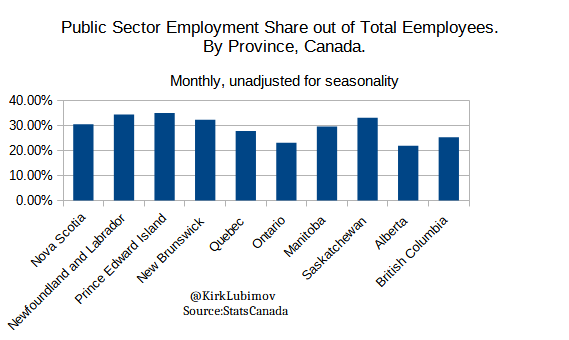
Canada has a huge issue with public sector bloat but I don't think most realize how bad it is. Around 25% of these employed in Canada work for the public sector but in many provinces, it's over 30%. The main reason for high taxes & low productivity. Breakdown by province:
Kirk Lubimov tweet media
English
113
319
1.2K
58.6K
Josh Rayner 🧙🏻‍♂️ รีทวีตแล้ว
The AI Investor
The AI Investor@The_AI_Investor·
Hyperscaler compute capacity set to DOUBLE to 98GW by 2027 And to 125GW+ by 2028. (Wells Fargo) Compute capacity now vs 2028: 🟦 Alphabet: ~16GW → 35GW (+19GW) 🟧 Amazon: ~13GW → 29GW (+16GW) 🟩 Microsoft: ~11GW → 27GW (+16GW) ⬛ Meta: ?GW → 21GW 🟥 Oracle: ?GW → 11GW Total industry: 49GW (end 2025) → 125GW+ (2028) Capex nearly doubles to $860B by 2027. $2.47T spent 2026–2028.
Indonesia
19
52
319
92.6K
Josh Rayner 🧙🏻‍♂️
Josh Rayner 🧙🏻‍♂️@Josh_Rayner·
@matthew_sigel The challenge is hyperscale deals can take years. Given RIOT was late to pivot, they’re going to be one of the last miners to announce a deal, same with Bitfarms/Keel
English
0
0
1
193
matthew sigel, recovering CFA
matthew sigel, recovering CFA@matthew_sigel·
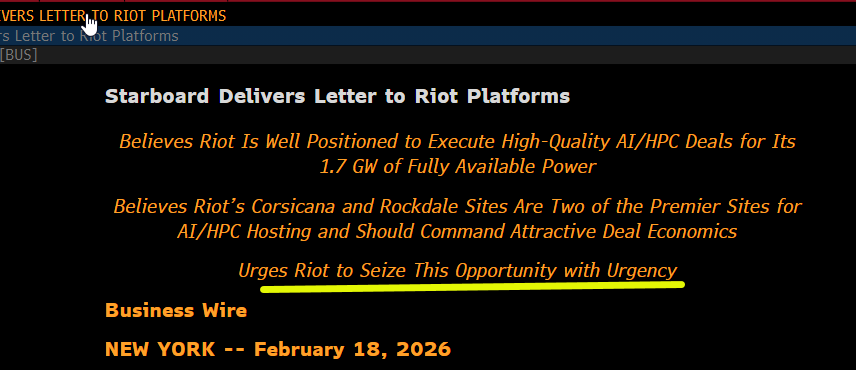
$RIOT - activist holder Starboard Value says AI pivot not moving fast enough. Sends mildly worded letter. RIOT +5%
matthew sigel, recovering CFA tweet media
English
17
6
60
17.1K
Josh Rayner 🧙🏻‍♂️
Josh Rayner 🧙🏻‍♂️@Josh_Rayner·
If AI can find a replacement for salting roads and sidewalks that would be great. Canadian winters would be much better without salt everywhere.
English
0
0
0
22
Bb
Bb@bitbitcrypto·
- incoming another Trump dinner
TrenchDiver@trenchdiver0x

EXCLUSIVE: The $TRUMP team is building a points system where the top 47 point holders get invited to a meme conference, dinner with Trump, and meet with 18 world superstars. Back in May I first reported on this site trumppoints.gettrumpmemes.com. This week they password-protected the page — so I knew something changed. Since I had the site ID saved, I loaded a preview that bypasses the gate via @Snag_Solutions: …-dbfddd46c7b7-preview.snag-render.com/loyalty How points are earned: → 1 pt/hr per $TRUMP held (Solana or Robinhood) → 250 pts per $1 spent at Trump merch stores Leaderboard already has accounts on it but unclear if real or test wallets. I tried holding $TRUMP on Solana and it still showed "No tokens detected" — may not be fully active yet. Haven't tested Robinhood or merch purchases. This could be a chance to accumulate points before a public announcement. Site last updated Feb 10th.

English
6
1
29
13K