
Rashan A. Colbert

6.3K posts

Rashan A. Colbert banner
Rashan A. Colbert

Rashan A. Colbert

@Rashan

Director, US Policy @crypto_council, @dydx @CoryBooker alum | DC sports fan. You can probably find me reading. Crypto//History//Politics//Art

Washington, DC เข้าร่วม Ocak 2009
1.2K กำลังติดตาม1.5K ผู้ติดตาม
Rashan A. Colbert รีทวีตแล้ว

Will Ahmed
Will Ahmed@willahmed·
You have no experience. You’ve never started a company. You’ve never had a full time job. Nike is going to kill you. You’re a kid. You don’t have technical skills. You shouldn’t build hardware. Apple is going to kill you. You can’t build hardware. You can’t measure heart rate non-invasively. Athletes don’t care about recovery. Under Armour is going to kill you. It won’t be accurate. You don’t listen. You’re an ineffective leader. You can’t recruit great talent. You’re going to have to pay every athlete. You can’t measure sleep non-invasively. It’s too expensive to research. Athletes are a small market. The product costs too much to make. The product costs too much to sell. Your valuation is too high. Consumers aren’t going to want it. Hardware is too hard. You should measure steps. Fitbit is going to kill you. You can’t build a marketing engine. You can’t raise enough money. You need a real CEO. Google is going to kill you. You can’t be a subscription. You can’t build a brand. You can’t do consumer in Boston. Your valuation is too high. You shouldn’t make accessories. You shouldn’t make apparel. Lululemon is going to kill you. You can’t predict Covid. Stay in your niche. You are going to run out of money. You can’t build a health platform. Amazon is going to kill you. You can’t measure blood pressure. You can’t get medical approvals. The market is too small. You don’t understand AI. The market is too competitive. It won’t work internationally. The supply chain is too complicated. You can’t build an AI. You can’t raise enough money. It’s too competitive. Healthcare isn’t going to want it. … Just keep going ✌️
Will Ahmed tweet media
English
651
1.7K
14.1K
874.2K
Rashan A. Colbert รีทวีตแล้ว
The Kobeissi Letter
The Kobeissi Letter@KobeissiLetter·
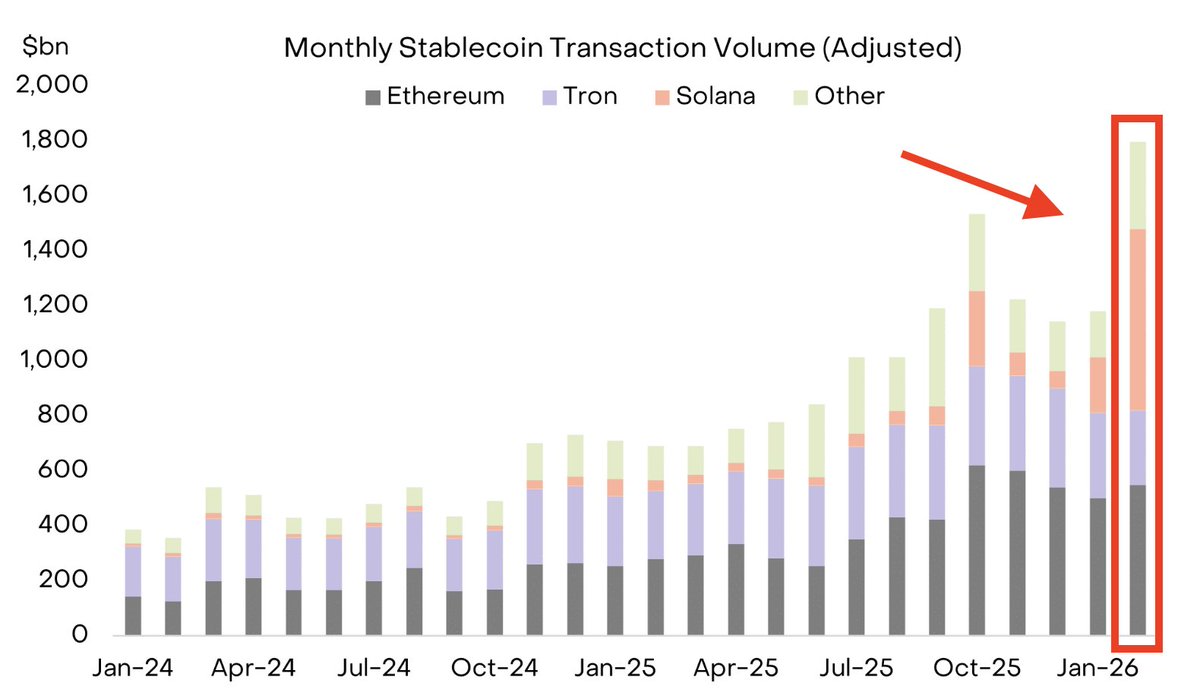
BREAKING: Solana processed a record $650 billion in Stablecoin transactions in February 2026. As a result, aggregate Stablecoin transaction volume is now nearly a record $2 trillion per month. Stablecoin volumes on Solana nearly TRIPLED month-over-month, with another surge expected in March amid the Iran War. The surge in volume comes after the launch of Western Union's $USDPT, Jupiter's $JUPUSD, which has gained traction amid its goal of returning a yield back to the ecosystem. To put this into perspective, CME Group futures trading in gold just hit a record $208 billion per month. In other words, Stablecoin transaction volumes are now nearly 9 TIMES the size of gold futures traded on CME.
The Kobeissi Letter tweet media
English
186
355
2.2K
266.2K
Tommy
Tommy@TomasIsMe·
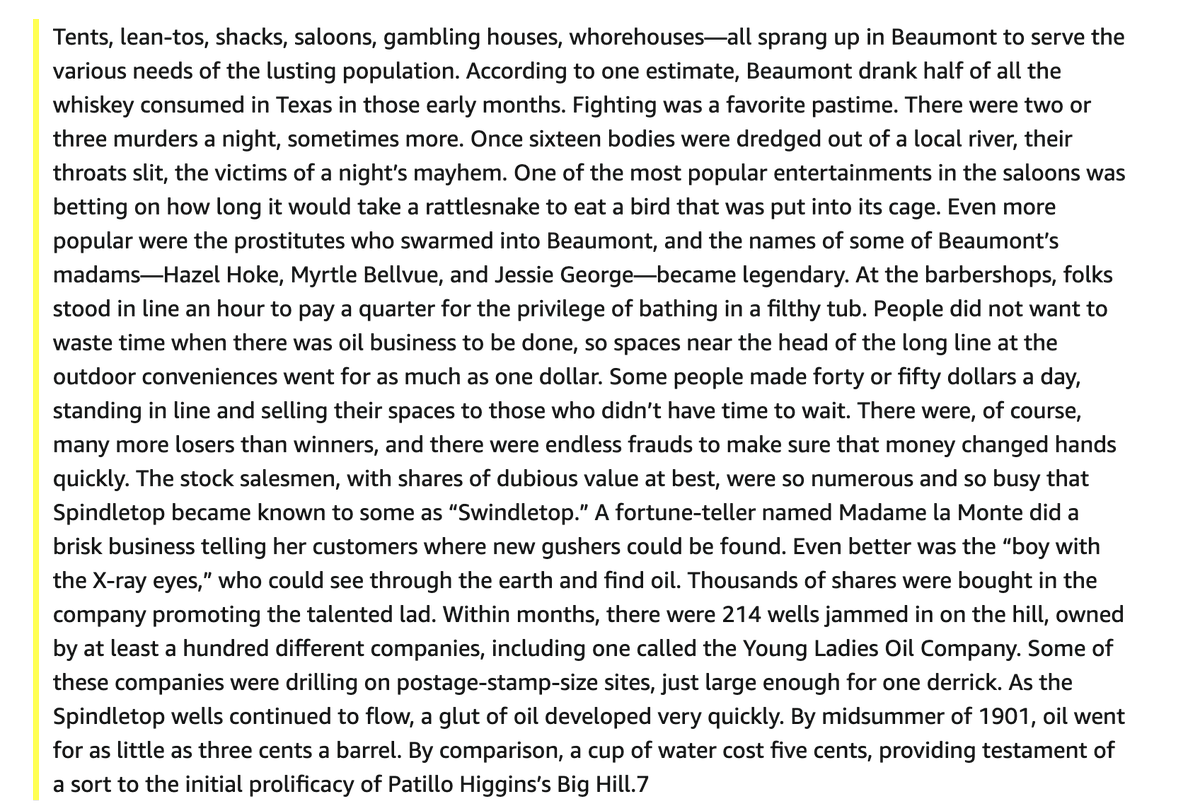
Only 1/4 through but wanted to say I haven't read a non-fiction book this good in a long, long time. Highly recommend, even more so with errr everything going on. The character profiles of the early visionaries and risk takers, as well as the rich historical backgrounds, make this a page turner (it's like 1000 pages though so that's why I'm only 1/4 in) Also it won a Pulitzer so don't just take my word!
Tommy tweet mediaTommy tweet mediaTommy tweet media
English
1
0
3
156
Graham Ferguson
Graham Ferguson@grahamfergs·
A working group with likeminded folks interested in collaborating to further the adoption of RWAs. DM for link to join.
Graham Ferguson tweet media
English
67
8
192
10.6K
Rashan A. Colbert
Rashan A. Colbert@Rashan·
Seems logical. In conversation with a founder raising venture funding for the first time, I recommended raising with a seed SAFE before moving onto a priced equity round (which is what he wants). We think this leans into the increasing trend of relatively quick follow on rounds, building hype along the way and moving toward the target valuation. But hadn't contemplated cascading SAFEs, just the one. Interesting insight.
English
0
0
2
156
arian ghashghai
arian ghashghai@arian_ghashghai·
i've seen a few rounds now where the founders reject a priced round (i.e. every new investor pays the same entry price) to raise on SAFEs with rapidly ascending valuation caps. they end up securing more capital with less (future) dilution than if they had taken the priced round: > early priced rounds being put on the back burner. more net dilution (sometimes) + more admin headache (sucks for VC markups!) > fundraising is a live auction atm > being an auction, priced round term sheets box in how much a company can raise (and at what cost), limiting how much a company can leverage its "hotness" factor to raise cheap capital feels like something needs to be fixed here: > priced rounds are absurdly archaic (administratively) and much too slow/painful vs SAFEs (I'm always bemused it takes a couple of months to go from signed TS to closed round i.e. wired capital). As a pre-seed investor, I'm also not unhappy about founders raising their seed rounds on SAFEs as it kicks the can down the road on my dilution (i.e. potentially better for DPI) = very little incentive to do priced rounds from both sides > schizophrenic VC behavior that disregards the entry price (i.e. paying 2x vs what the VC before me paid yesterday) under the pretense that "wHaT IF its THe nexT FaCeBoOK" is financially irresponsible and unsustainable as fudiciaries of LP capital
English
17
6
90
14.4K
Rashan A. Colbert รีทวีตแล้ว
Prof. Tonya M. Evans | #CEOofME
Prof. Tonya M. Evans | #CEOofME@IPProfEvans·
How Democrats Fumbled Crypto And How To Recover Before 2028 Clock Runs Democrats fumbled on crypto’s potential. Can they recover the ball, pivot, and lead before the clock runs out on shaping the web3 economy? forbes.com/sites/tonyaeva…
English
0
3
1
283
Morning Mist
Morning Mist@0x_Mist·
Is it weird I prefer bear markets
English
1
0
5
134
Michael Cameron🌐
Michael Cameron🌐@mtcameron·
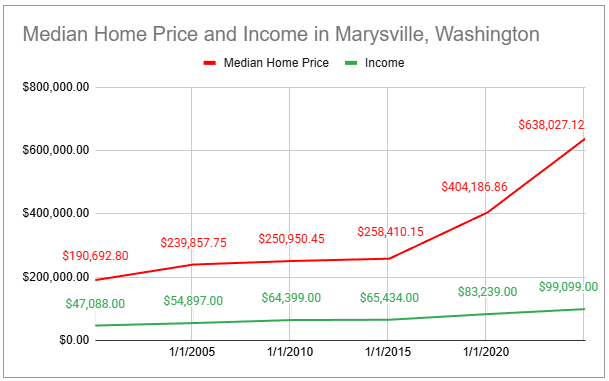
I think about this a lot.. home prices vs. median income in my hometown:
Michael Cameron🌐 tweet media
English
2
0
3
163
Rashan A. Colbert รีทวีตแล้ว
Blockchain Foundation
Blockchain Foundation@TheBlockFound·
Blockchain Foundation is a proud Community Partner of the #DCBlockchain Summit 2026, hosted by @DigitalChamber. Apply now for their State Network Microgrants Program ($2,000 + Summit tickets). Applications open until Feb 6: bit.ly/GRANTAPPLY
Blockchain Foundation tweet media
English
0
6
5
300
Rashan A. Colbert รีทวีตแล้ว
Amanda Tuminelli
Amanda Tuminelli@amandatums·
The BRCA is good policy. And this myth - that it somehow lets people get away with money laundering - is my favorite (because it’s so untrue). The BRCA protects software devs who *do not have control over user funds* from being inappropriately classified as running a “money transmitting business.” Does not touch the money laundering statutes in any way.
DeFi Education Fund@fund_defi

Myth: The BRCA makes it easier for criminals to get away with laundering money or engaging in illicit activity. Fact: The BRCA does not touch the criminal code provisions related to money laundering and does not limit prosecutors’ ability to bring charges against illicit actors.

English
4
7
46
6.6K
Rashan A. Colbert รีทวีตแล้ว
TuongVy Le
TuongVy Le@TuongvyLe12·
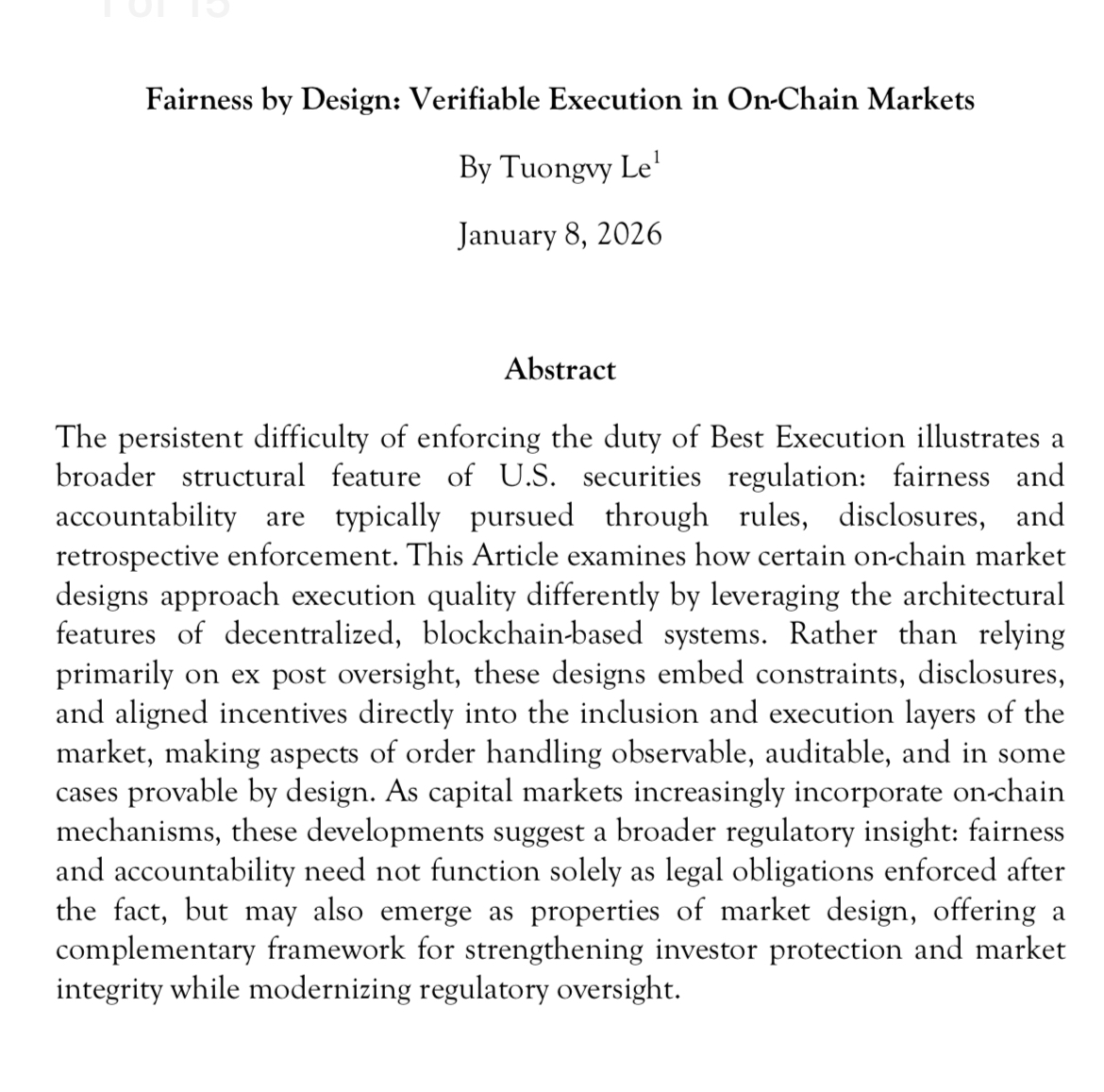
Regulators don’t regulate technology; they regulate outcomes like investor protection, fairness, and market integrity. But when rules focus on preserving legacy market structures, they risk freezing yesterday’s systems in place, and missing new market designs that may better achieve those goals. That’s the premise of my new paper, Fairness by Design: Verifiable Execution in On-Chain Markets. Discussion of tokenized equities and on-chain securities markets often emphasize efficiency gains. This paper asks a different question: what if blockchain’s most important contribution is its ability to make fairness and accountability properties of the system itself, rather than enforced solely after the fact? And how should securities regulation adapt to this fundamentally different architecture? Using order execution as a case study, I argue that the difficulty of enforcing best execution is not primarily a failure of enforcement or compliance culture. It is structural. Fragmented liquidity, conflicted routing incentives, payment for order flow, and latency games make it difficult not only to achieve best execution, but even to know when it has occurred. By contrast, some on-chain markets are experimenting with fairness as infrastructure: execution rules that are constrained, observable, incentive-aligned, and in some cases cryptographically verifiable at the moment of trade. In some of these systems, investors can even directly express preferences among price, speed, atomicity, and privacy, rather than relying on opaque, discretionary routing. The paper does not argue for deregulation or for replacing law with code. Instead, it asks whether verifiable execution guarantees could complement existing securities law as markets move on-chain. In a world where tokenized securities and on-chain settlement are no longer speculative, the question isn’t whether regulators should engage with infrastructure-level guarantees, but whether they can afford not to. This is the first paper in a planned series, Fairness by Design, applying this framework to custody, disclosure, capital formation, and more as part of the broader question, why on-chain capital markets?
TuongVy Le tweet media
English
7
9
73
13K
Rashan A. Colbert รีทวีตแล้ว
Washington Commanders
Washington Commanders@Commanders·
Rooted in memory, propelled by state-of-the-art design The first look at our new home
Washington Commanders tweet mediaWashington Commanders tweet mediaWashington Commanders tweet media
English
1.4K
2.5K
25.4K
6M
Rashan A. Colbert รีทวีตแล้ว
Crypto Council for Innovation
Crypto Council for Innovation@crypto_council·
CCI appreciates Chairman @SenatorTimScott, the Senate Banking Committee, and Committee staff for their leadership and tireless efforts to enact a durable, comprehensive market structure framework. Clear rules of the road remain essential to getting this right for American consumers, businesses, and markets, and to cementing U.S. leadership in digital assets. We’ve made meaningful progress and look forward to continued engagement with Congress to build consensus and move legislation to the President’s desk as soon as possible.
Senator Tim Scott@SenatorTimScott

I’ve spoken with leaders across the crypto industry, the financial sector, and my Democratic and Republican colleagues, and everyone remains at the table working in good faith. As we take a brief pause before moving to a markup, this market structure bill reflects months of serious bipartisan negotiations and real input from innovators, investors, and law enforcement. The goal is to deliver clear rules of the road that protect consumers, strengthen our national security, and ensure the future of finance is built in the United States.

English
1
3
12
1.8K
Rashan A. Colbert รีทวีตแล้ว
Crypto Council for Innovation
Crypto Council for Innovation@crypto_council·
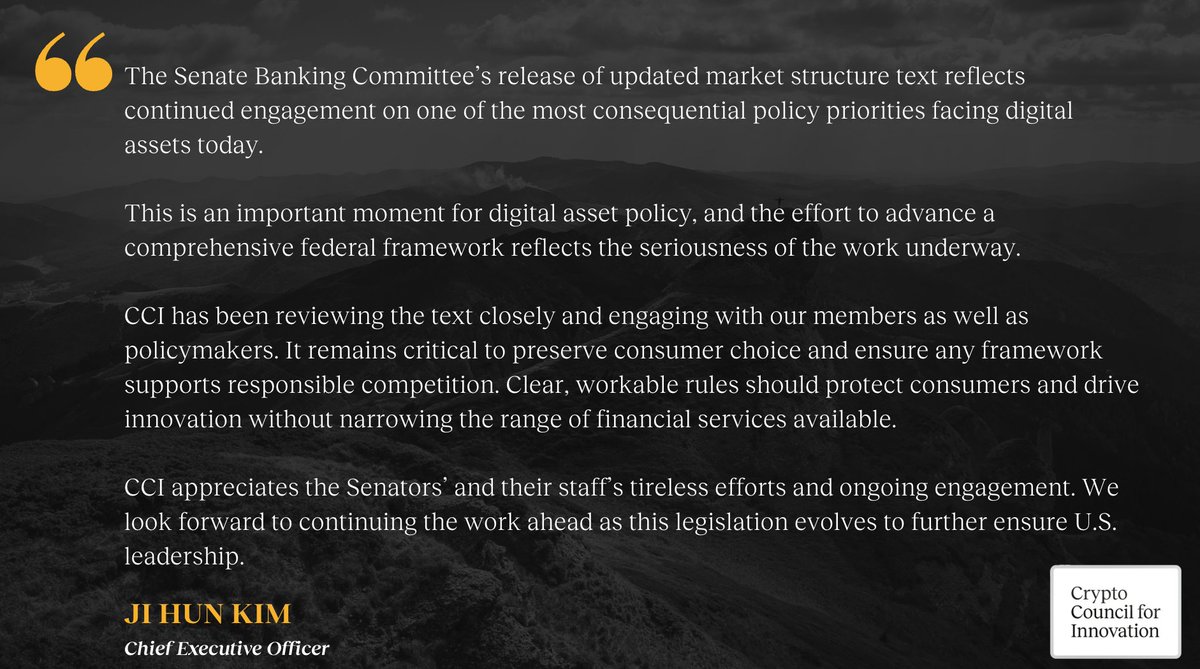
CCI's CEO @_jikim on the Senate Banking Committee’s release of updated market structure text:
Crypto Council for Innovation tweet media
English
0
4
9
1K
Rashan A. Colbert รีทวีตแล้ว
Ji Kim
Ji Kim@_jikim·
Stablecoin rewards are market-based incentives, which benefit consumers. Stablecoin rewards facilitate customer acquisition, allow for customer loyalty, build merchant acceptance, and ensure continued U.S. leadership over stablecoin innovation and adoption. As @faryarshirzad points out, if the U.S. limits stablecoin rewards, consumer adoption can and will move offshore, along with the underlying technology, developers, and much more, which will only negatively impact the U.S. and continued dollar dominance. "[T]he ability to offer rewards. . . means lower costs, more choice, and a more competitive payments system for Americans." 💯🇺🇸
Faryar Shirzad 🛡️@faryarshirzad

The Senate Banking Committee marks up the Market Structure bill next week, and stablecoin rewards remain under debate. Congress already settled this in GENIUS—reopening it now only creates uncertainty and risks the future of the US Dollar as commerce moves onchain. Here’s why Congress should protect the GENIUS Act, and why rewards help consumers without harming community banks. 1/ 🧵

English
14
20
92
11.8K
Felix Lee
Felix Lee@felixleezd·
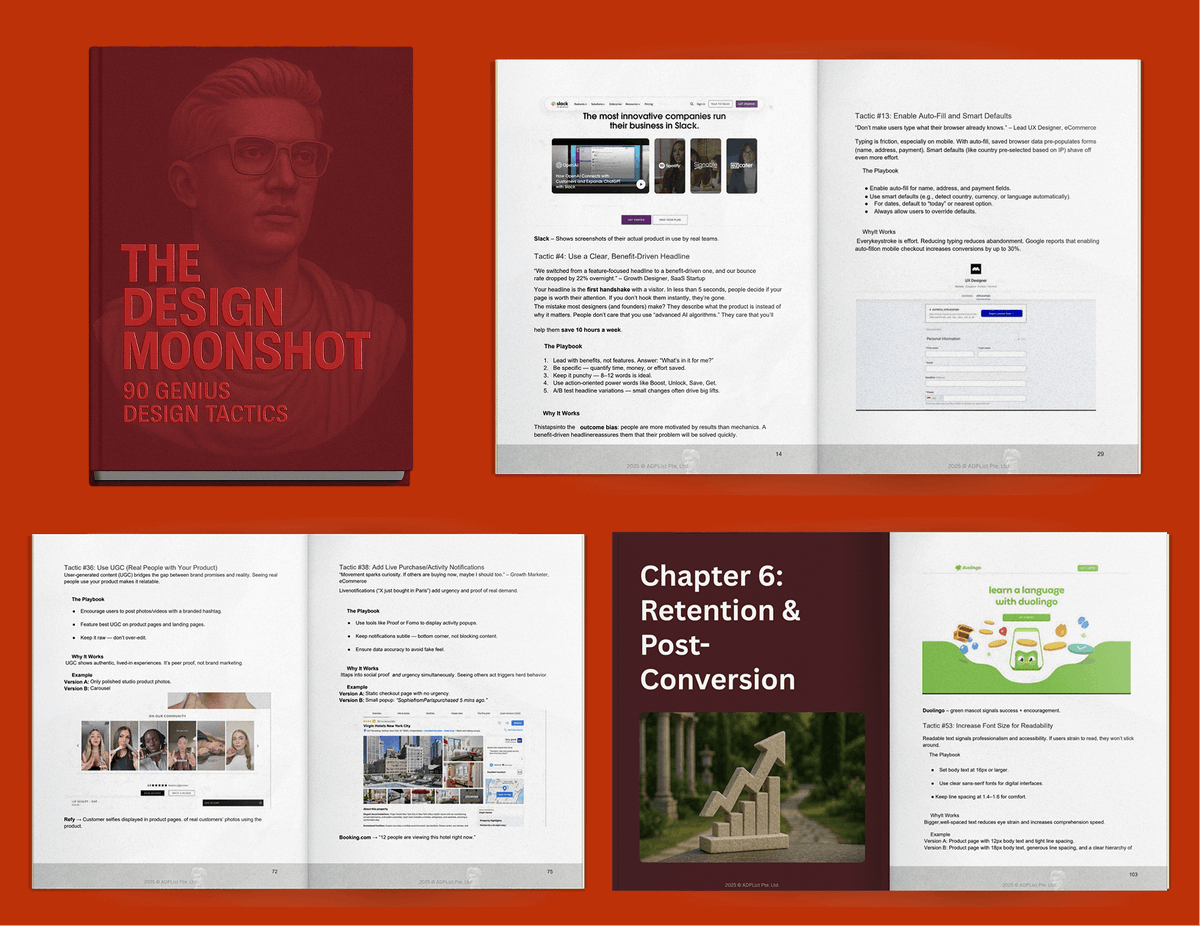
Design is the differentiator in AI era. Companies are waking up to the importance of having good design. Today, @ADPList is releasing an extraordinary collection of 90 winning design tactics used by the world's best products like Duolingo, Airbnb, Figma and more. This is a blueprint for design, proven by the best, and ready for you to use—we believe craft is eating the world. Want a copy? Just raise your hands below, I will send it to you!
Felix Lee tweet mediaFelix Lee tweet mediaFelix Lee tweet media
English
2.5K
182
2.9K
207.9K
Rashan A. Colbert รีทวีตแล้ว
Jake Chervinsky
Jake Chervinsky@jchervinsky·
The debate over tokens versus equity has barely begun. Many of the top crypto projects came up in the Gensler era, when regulatory pressure forced devcos to drive all value to equity, not tokens. The new policy environment means new opportunities, but no simple answers. It will take a lot of time and experimentation to figure out how (or if) tokens and equity can work well together. That era of experimentation is beginning now. I have no view on the Aave situation in particular, except to say that as usual, the most important thing is clarity: tokenholders should know exactly what they own and control (and what they don't). The design space for token value accrual is huge, much larger than traditional equity, so I doubt there will be a standard model for tokens like there is for stock any time soon. This means the key for each token isn't following a preset playbook, but rather being perfectly clear about what powers the token actually provides to its holders. Six months ago, @jessewldn and I wrote a piece on our view re: the correct divide between tokens and equity. In short, we concluded that tokens should accrue onchain value, and equity should accrue offchain value. The key innovation unlocked by tokens is self-sovereign ownership of digital property. Tokens uniquely enable holders to own and control onchain infrastructure without reliance on offchain intermediaries. That means tomenholders can (and should) own and control all value and other assets that exist and flow onchain. Offchain value is different. Tokenholders can't directly own or control offchain revenue or assets, so in most cases, those should accrue to equity, not tokens. Devcos that accrue offchain value may want to share it with tokenholders, and that may be doable with the right structure (e.g., tokenholders organize a legal entity like a DUNA and contract with the devco), but ideally that value would flow onchain from the start. Other models will certainly work too. Some projects may decide to have a one-asset model with no equity at all. Others may decide that their tokens should be treated as tokenized securities subject to whatever rules the new SEC writes for that market. New and better ideas will hopefully come along too. Meanwhile, some food for thought as the debate over how to make tokens truly valuable unfolds: blog.variant.fund/tokens-versus-…
English
48
56
376
46.6K
Rashan A. Colbert รีทวีตแล้ว
Alison Mangiero
Alison Mangiero@AMangiero·
Long awaited discussion draft of the crypto tax bill from @RepMaxMiller just dropped. Looking like crypto tax issues will be front and center as we head into 2026👇
Congressman Max Miller@RepMaxMiller

Alongside @RepHorsford, I released a working draft of The Digital Asset PARITY Act, a bipartisan effort to bring clarity and parity to crypto tax policy. This bill would protect consumers making everyday purchases, ensure the rules are clear for innovators and investors, and strengthen compliance so everyone plays by the same rules. maxmiller.house.gov/posts/congress…

English
3
3
7
1.6K