

David Juce
7.4K posts



𝐀𝐍𝐃𝐑𝐄𝐖 𝐖𝐈𝐋𝐒𝐎𝐍: “𝐖𝐇𝐘 𝐃𝐎 𝐈 𝐇𝐀𝐓𝐄 𝐋𝐄𝐅𝐓𝐈𝐒𝐓𝐒? 𝐁𝐄𝐂𝐀𝐔𝐒𝐄 𝐓𝐇𝐄𝐘’𝐑𝐄 𝐏𝐒𝐘𝐂𝐇𝐎𝐏𝐀𝐓𝐇𝐒 𝐖𝐇𝐎 𝐀𝐑𝐄 𝐆𝐎𝐈𝐍𝐆 𝐓𝐎 𝐃𝐄𝐒𝐓𝐑𝐎𝐘 𝐄𝐕𝐄𝐑𝐘𝐓𝐇𝐈𝐍𝐆 𝐈 𝐂𝐀𝐑𝐄 𝐀𝐁𝐎𝐔𝐓 𝐓𝐇𝐑𝐎𝐔𝐆𝐇 𝐒𝐔𝐈𝐂𝐈𝐃𝐀𝐋 𝐄𝐌𝐏𝐀𝐓𝐇𝐘”
Wilson was asked why he enjoys debating leftists:
“𝘞𝘩𝘦𝘯 𝘺𝘰𝘶 𝘳𝘦𝘢𝘭𝘭𝘺 𝘨𝘦𝘵 𝘪𝘯𝘵𝘰 𝘵𝘩𝘦 𝘨𝘳𝘢𝘯𝘶𝘭𝘢𝘳𝘪𝘵𝘺, 𝘪𝘵’𝘴 𝘢𝘭𝘭 𝘢𝘣𝘰𝘶𝘵 𝘦𝘵𝘩𝘪𝘤𝘴 𝘢𝘯𝘥 𝘵𝘩𝘦𝘺 𝘥𝘰𝘯’𝘵 𝘩𝘢𝘷𝘦 𝘢𝘯𝘺 𝘧𝘰𝘶𝘯𝘥𝘢𝘵𝘪𝘰𝘯. 𝘈𝘭𝘭 𝘺𝘰𝘶’𝘳𝘦 𝘵𝘢𝘭𝘬𝘪𝘯𝘨 𝘢𝘣𝘰𝘶𝘵 𝘪𝘴 𝘥𝘦𝘨𝘳𝘦𝘦𝘴 𝘰𝘧 𝘱𝘴𝘺𝘤𝘩𝘰𝘱𝘢𝘵𝘩𝘺.”
Then he steel-manned the left’s argument for redistribution — and dismantled it in one question:
— The left says: some people struggle due to 𝐥𝐮𝐜𝐤, 𝐧𝐨𝐭 𝐥𝐚𝐳𝐢𝐧𝐞𝐬𝐬 — so society should help them
— Wilson: “𝘚𝘰 𝘩𝘰𝘸 𝘤𝘰𝘮𝘦 𝘵𝘩𝘰𝘴𝘦 𝘴𝘢𝘧𝘦𝘵𝘺 𝘯𝘦𝘵𝘴 𝘢𝘳𝘦𝘯’𝘵 𝘷𝘰𝘭𝘶𝘯𝘵𝘢𝘳𝘺?”
— Answer: “𝘉𝘦𝘤𝘢𝘶𝘴𝘦 𝘺𝘰𝘶 𝘤𝘢𝘯’𝘵 𝘢𝘤𝘩𝘪𝘦𝘷𝘦 𝘵𝘩𝘦 𝘭𝘦𝘷𝘦𝘭 𝘰𝘧 𝘳𝘦𝘥𝘪𝘴𝘵𝘳𝘪𝘣𝘶𝘵𝘪𝘰𝘯 𝘺𝘰𝘶 𝘸𝘢𝘯𝘵 𝐰𝐢𝐭𝐡𝐨𝐮𝐭 𝐚𝐩𝐩𝐥𝐲𝐢𝐧𝐠 𝐬𝐨𝐦𝐞 𝐥𝐞𝐯𝐞𝐥 𝐨𝐟 𝐟𝐨𝐫𝐜𝐞”
— The left promises secularism means 𝐧𝐨 𝐨𝐧𝐞 𝐟𝐨𝐫𝐜𝐞𝐬 𝐲𝐨𝐮 𝐭𝐨 𝐝𝐨 𝐚𝐧𝐲𝐭𝐡𝐢𝐧𝐠 — unlike those “evil Christian nationalists”
— But they just admitted their entire system 𝐜𝐨𝐦𝐩𝐞𝐥𝐬 𝐲𝐨𝐮 𝐚𝐠𝐚𝐢𝐧𝐬𝐭 𝐲𝐨𝐮𝐫 𝐰𝐢𝐥𝐥
𝐇𝐞 𝐠𝐚𝐯𝐞 𝐭𝐡𝐞 𝐥𝐞𝐟𝐭 𝐭𝐡𝐞 𝐬𝐭𝐫𝐨𝐧𝐠𝐞𝐬𝐭 𝐩𝐨𝐬𝐬𝐢𝐛𝐥𝐞 𝐯𝐞𝐫𝐬𝐢𝐨𝐧 𝐨𝐟 𝐭𝐡𝐞𝐢𝐫 𝐨𝐰𝐧 𝐚𝐫𝐠𝐮𝐦𝐞𝐧𝐭 — 𝐭𝐡𝐞𝐧 𝐚𝐬𝐤𝐞𝐝 𝐨𝐧𝐞 𝐪𝐮𝐞𝐬𝐭𝐢𝐨𝐧 𝐭𝐡𝐚𝐭 𝐜𝐨𝐥𝐥𝐚𝐩𝐬𝐞𝐝 𝐭𝐡𝐞 𝐰𝐡𝐨𝐥𝐞 𝐭𝐡𝐢𝐧𝐠. 𝐓𝐡𝐞𝐲 𝐬𝐚𝐲 𝐠𝐨𝐯𝐞𝐫𝐧𝐦𝐞𝐧𝐭 𝐰𝐨𝐧’𝐭 𝐟𝐨𝐫𝐜𝐞 𝐲𝐨𝐮 𝐭𝐨 𝐝𝐨 𝐚𝐧𝐲𝐭𝐡𝐢𝐧𝐠. 𝐓𝐡𝐞𝐧 𝐭𝐡𝐞𝐲 𝐚𝐝𝐦𝐢𝐭 𝐭𝐡𝐞𝐲 𝐜𝐚𝐧’𝐭 𝐟𝐮𝐧𝐝 𝐭𝐡𝐞𝐢𝐫 𝐯𝐢𝐬𝐢𝐨𝐧 𝐰𝐢𝐭𝐡𝐨𝐮𝐭 𝐟𝐨𝐫𝐜𝐞. 𝐓𝐡𝐚𝐭’𝐬 𝐧𝐨𝐭 𝐜𝐨𝐦𝐩𝐚𝐬𝐬𝐢𝐨𝐧 — 𝐭𝐡𝐚𝐭’𝐬 𝐜𝐨𝐞𝐫𝐜𝐢𝐨𝐧 𝐰𝐢𝐭𝐡 𝐛𝐞𝐭𝐭𝐞𝐫 𝐛𝐫𝐚𝐧𝐝𝐢𝐧𝐠.
𝘝𝘪𝘥𝘦𝘰 𝘧𝘳𝘰𝘮 @𝘋𝘢𝘯𝘨𝘦𝘳𝘰𝘶𝘴𝘛𝘩𝘪𝘯𝘬𝘨
English
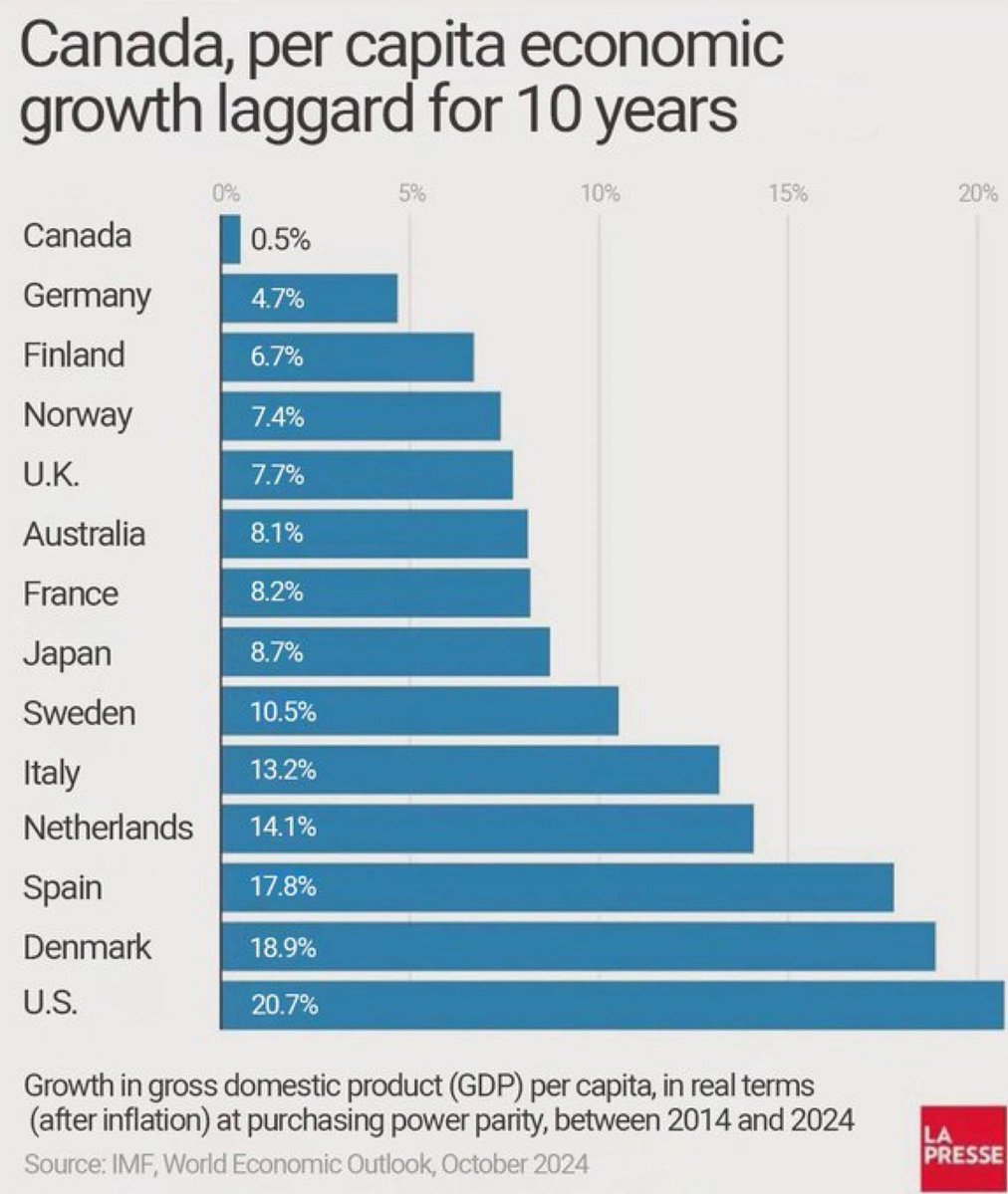
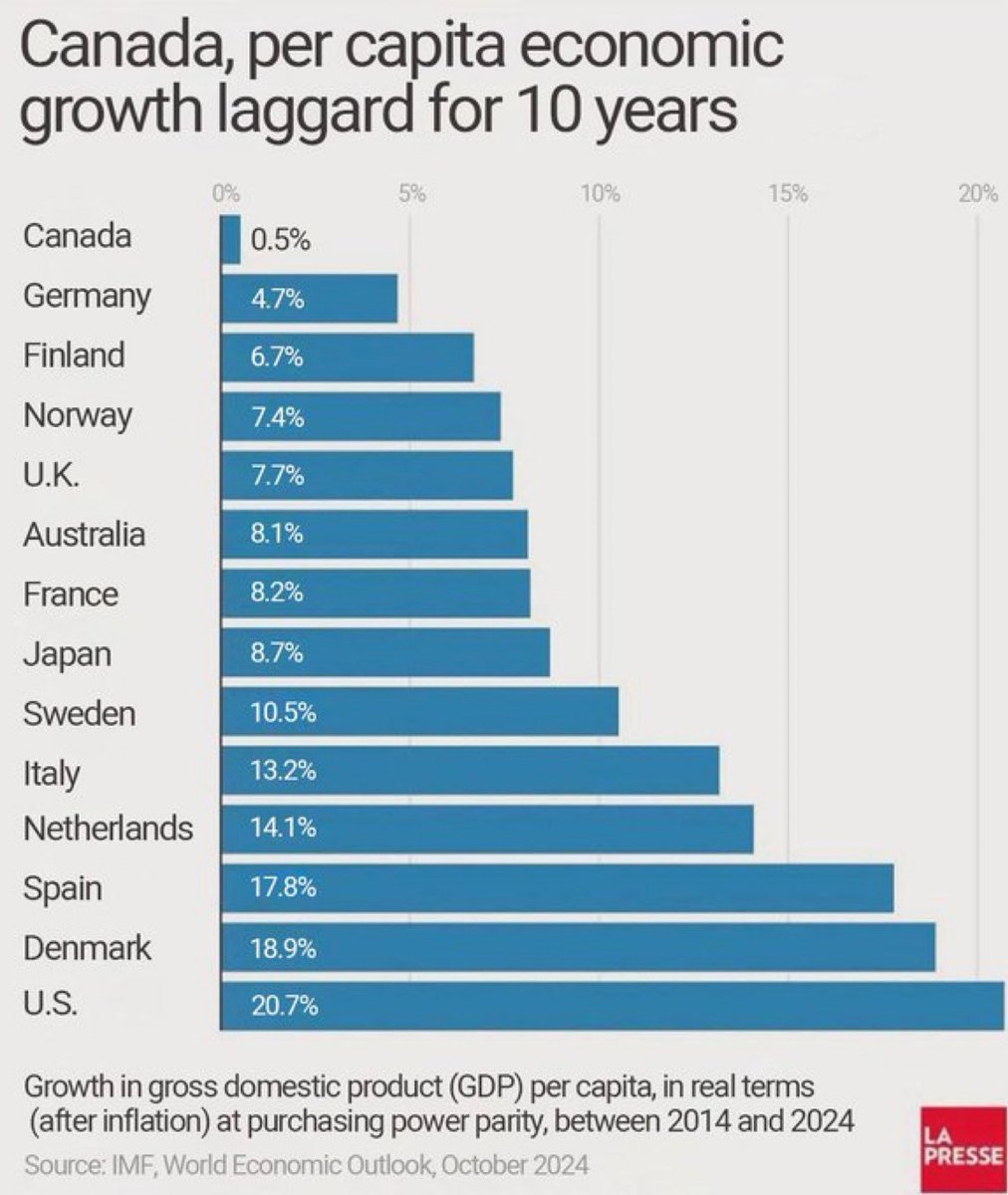
@ikwilson @primetimecrime We could’ve been an economic powerhouse & a world leader in geopolitical affairs by supplying our European allies & the world with oil & LNG. Instead we flounder on the brink of insolvency as the lineups to our food banks grow. Why do liberals hate our children & grandchildren?
English

Under Mark Carney’s vision, Canadians are being asked to accept less:
Less growth.
Less opportunity.
Less affordability.
Less hope.
That’s not a plan for prosperity: it’s Carney's managed decline to achieve Net Zero fanatical goals. #AlbertaIndependence
wealthmoose@wealthmoose
🚨🇨🇦 The $150 Billion Canada Lost This map shows over a dozen massive energy projects in Canada that were officially cancelled or shelved between 2015-2020. 🛑 These weren’t just "ideas" – they were multi-billion dollar investment plans, thousands of jobs, and future tax revenue that simply evaporated. Where did it all go, and why did it stop? 👇 🧵 #cdnpoli #energy #economy #Canada
English
@jaynitx Nope, it’s all about grit. x.com/ihtesham2005/s…
Ihtesham Ali@ihtesham2005
A professor quit a high-paying consulting job to teach math to seventh graders in a New York public school, and what she saw in that classroom launched the most important research on human achievement of the last 30 years. Her name is Angela Duckworth, and the question that haunted her from day one was deceptively simple: why do some kids succeed and others don't? It wasn't IQ. She could see that immediately. Some of her sharpest students were underperforming. Some of her slowest were grinding past everyone else. The variable she couldn't name was right in front of her face and it took her a decade of research at Penn and Stanford to finally pin it down. Here is what she found, and why it should change how you think about every hard thing you are trying to build. She started by going back to a famous experiment from the late 1960s. A Stanford psychologist named Walter Mischel brought four-year-olds into a small room one at a time, placed a marshmallow in front of them, and told them he had to leave. If they waited until he returned, they'd get two marshmallows. If they couldn't wait, they could ring a bell and eat the one in front of them right now. Most kids lasted about thirty seconds. But what happened over the next decade is what made Mischel's study famous. When he tracked those same children down years later, the ones who had waited the longest had SAT scores 210 points higher on average than the ones who rang the bell immediately. Self-control at age four predicted academic outcomes that most educators couldn't explain even after years of watching the kids up close. Duckworth was fascinated but she was after something deeper. Self-control explained part of the picture. It didn't explain everything. She thought about her own career early, scattered, unfocused by her own admission and compared it to people she knew who had found a mission at twenty-two and never let go of it. They weren't smarter than her. They weren't working harder than her in any obvious sense. They had something else. She called it grit. And the definition matters, because the word has been diluted into a motivational poster cliché that misses the point entirely. Grit, in Duckworth's framework, is not toughness. It is not working long hours. It is not refusing to quit when things get hard, although that is part of it. Grit is the combination of passion and persistence aimed at a single long-term goal over years and sometimes decades. The passion part is often misunderstood. She does not mean excitement or enthusiasm. She means the sustained fascination with a specific problem. The thing you keep returning to even when you don't have to. She built a twelve-question test to measure it. The Grit Scale. And then she took it into the field. At the University of Pennsylvania, students with high grit scores earned higher GPAs than their peers, even when those peers had entered college with stronger test scores. At the National Spelling Bee, grit scores predicted which children survived to the later rounds more accurately than hours of practice alone. But the finding that stopped the room every time she presented it came from West Point. Every year, West Point runs thousands of incoming cadets through a brutal summer training course called Beast Barracks. The military had developed its own complex evaluation tool called the whole candidate score to predict who would make it through. It factored in academic grades, physical fitness, leadership potential. Admissions teams had been refining it for years. Duckworth gave her twelve-question grit test to over twelve hundred cadets as they arrived. Her test outpredicted the whole candidate score. The cadets who dropped out weren't the weakest physically or the least intelligent academically. They were the ones who scored lowest on passion and persistence toward a long-term goal. The ones who made it through were the ones who had a reason to be there that was bigger than any single difficult day. The finding that most people miss when they hear about this research is the distinction Duckworth draws between motivation and volition. Motivation is wanting something. Volition is the ability to keep moving toward it when the wanting isn't strong enough to carry you on its own. You can be extremely motivated to build something and still quit at the first serious obstacle because you never developed the second thing. The marshmallow kids who waited the longest weren't the ones who wanted two marshmallows more desperately. They were the ones who had learned to redirect their attention, to think abstractly about the goal, to make the immediate discomfort feel smaller than the long-term payoff. That skill is trainable. That is the part that almost never makes it into the summary. Duckworth's research shows grit is only faintly related to IQ. There are brilliant people with almost no grit and ordinary people with extraordinary amounts of it. The raw intelligence gets you to the starting line. What happens after that is almost entirely determined by whether you have the combination of a goal worth caring about for years and the discipline to keep working toward it on the days when nothing is going well. Her TED Talk on this has been watched over 17 million times, which means the idea has clearly landed somewhere real in people. But the part that usually gets quoted is the definition. The part that actually matters is harder to talk about. You cannot manufacture grit by deciding to be grittier. What you can do is find the problem you are genuinely willing to be obsessed with for a decade. Not excited about. Obsessed with. And then build the systems around that obsession that make daily persistence the default, not the exception. The marshmallow test did not sort brave children from cowardly ones. It sorted children who had already learned that discomfort is temporary from children who hadn't learned that yet. Every gritty person you have ever admired figured out one thing the rest of the room hadn't: the goal on the other side of the hard stretch is more real to them than the discomfort standing between them and it. That is not a personality type. That is a decision, made early and remade every day.
English

In 1972, a Stanford psychologist gave 4-year-olds a choice.
"One marshmallow now or wait 15 minutes and get two."
Rich kid waits. Poor kid eats it immediately.
For 50 years, psychologists said this proved poor kids lack self-control.
Wrong.
Poor kids learned that promises get broken. The second marshmallow isn't coming.
Professor Jiang Xueqin spent 50 minutes explaining why the poor kids are the rational ones:
The psychologist was named Walter Mischel. He put a marshmallow in front of 4-year-olds and said: "You can have it now, or wait and get two."
He tracked them for decades. The kids who waited did better at everything.
His conclusion: success means delayed gratification. Long-term planning. Self-control.
So educators built curricula around it. Teach kids self-control, resilience, self-assessment. They'll succeed.
It didn't work.
"If you take a bad student and teach him self-control, resilience, and self-assessment, the student doesn't actually get better."
The reason is simple: correlation does not equal causation.
Successful people wake up at 4am. But waking up at 4am won't make you successful.
If you're successful, you wake up early because you're motivated. If you're successful, you have self-control because your environment rewards it.
The traits don't cause success. Success causes the traits.
Here's what actually determines success:
"We know for a fact that rich people are much more likely to succeed than poor people. School doesn't really matter. If your parents are rich, you'll be successful. If your parents are poor, you will not."
The difference starts with parenting.
A rich kid touches a hot stove. The parent says: "You made a mistake. Don't worry about it. Let me explain why fire is dangerous. You could burn yourself. We'd have to go to the doctor."
A poor kid touches a hot stove. The parent says: "Don't you ever do that again or I'll beat the crap out of you."
Same lesson. Completely different worldview.
The rich kid learns: the world is safe. I am respected. Adults explain things to me.
The poor kid learns: the world is scary. I must fear authority. Don't ask questions.
There's another difference. Rich parents keep promises. Poor parents can't.
"Next week we'll go to Thailand." Next week, you go to Thailand.
"Next week we'll go to McDonald's." But the paycheck isn't enough. "Sorry, we can't go anymore."
Rich parents offer stability. Poor parents can only offer volatility.
Now go back to the marshmallow test.
"If you believe the teacher will keep his promise, you won't eat that marshmallow. If you think the teacher is lying, you will eat it."
If you're a poor kid, you've learned that promises get broken. Adults lie. The second marshmallow probably isn't coming.
So you eat the first one. That's not lack of self-control. That's rational decision-making.
"Poor kids are not stupid. Poor kids are rational. They're responding to the circumstances they live in."
The same logic applies to resilience.
"The idea of resilience is that you believe the world will help you. If you're rich and you fail, someone will help you get up. If you're poor and you fail, that probably tells you that you shouldn't be doing this."
Why try again when trying again has never worked?
And self-assessment? "If you're a poor child who lives under a lot of stress, it's hard to be self-reflective. Because if you look back at yourself, all you think about is your pain and your stress."
Here's the deeper structure.
"As a poor person, if you want to survive, you have to obey authority. As a rich person, you maximize your outcome by negotiating with others."
Poor parents command their children because that's what the world will demand. Obey the police. Obey the boss. Don't talk back.
Rich parents teach their children to debate, argue, negotiate. Because that's their game.
"From day one, rich kids know they're playing a different game."
Here's something stranger.
500 students took an IQ test. Then they guessed their ranking.
The top 5% thought they were top 20%. The test was easy for them, so they assumed it was easy for everyone.
The bottom 5% thought they were average.
"People who are stupid lack the capacity to know they're stupid."
This is the Dunning-Kruger effect. And it explains why the most confident people are often the least competent.
"This helps explain why the world is why it is. Often the people in power are stupid. They don't know they're stupid. They were confident."
Can poor kids escape?
"Yes. But it means leaving your community. You have to be extremely individualistic. Very ambitious. High risk tolerance. Most people don't have that."
The professor is one of them.
"I'm a poor kid who succeeded. My father was a dishwasher. But I left Canada for the United States. I got lucky."
"You can work as hard as you want, but the chances are against you. It takes luck. And that's often the exception to the rule, not the rule itself."
Here's what he wants you to understand:
When we see differences in success, our default explanation is differences in ability or effort.
We forget that a poor kid eating the marshmallow isn't weak. He's learned that waiting doesn't pay.
We forget that a poor kid giving up isn't lazy. He's learned that no one's coming to help.
We refuse to admit that the traits we associate with success are products of environment, not causes of it.
The marshmallow test is about measuring childhood, not measuring character.
English
David Juce รีทวีตแล้ว

On the first day of the Battle of the Somme, 800 (overwhelmingly “white heterosexual”) men of the Royal Newfoundland Regiment went over the top.
68 answered roll call the next morning.
Now their male descendants can’t work at NL’s only university which was named in their honour.
National Post@nationalpost
'Five active job postings by Memorial University explicitly bar applications from heterosexual white men' nationalpost.com/opinion/univer…
English
@ThomasSowell It's called the Cloward-Piven strategy and it has been the blueprint, and a very successful one, for destabilizing countries all over the world. What's made it worse is that we now have traitors in the very halls of government.


English
@PoliceOnGuard Much of Canada is facing the same political vacuum that Louis Riel did over 150 yrs. ago when he wrote in the DECLARATION Of the People of Rupert's Land and the North-West, “a people, when it has no Government, is free to adopt one form of government in preference to another”

English

Michael Bourque: A Veteran's Perspective on the State of Canada
One Canadian veteran hopes to remind us of a truth etched in blood and history.
He speaks of the soul of the free nation our veterans defended. The same one we’ve seen eroding under misdirection and overreach.
The Freedom Convoy stood as a reminder of their sacrifices and of what Canada represented under their guard. A place of freedom where debate thrives, rights are sacred, and leaders answer to citizens, not the reverse.
Let’s reclaim that birthright, through the peaceful and unstoppable power of a free people remembering who they are.
We hope this awakens the patriot in every Canadian heart. The convoy showed us the way. Now we must finish the journey together, for the Canada our children deserve.
Our story is not over.
English


Canada has MADE International NEWS
LEFTIES Losing It: Crazy Canucks
English


𝐓𝐡𝐢𝐬 𝐒𝐨𝐧𝐠 𝐖𝐢𝐥𝐥 𝐑𝐈𝐏 𝐘𝐎𝐔𝐑 𝐇𝐄𝐀𝐑𝐓 𝐎𝐔𝐓 ❤️
Let Angels Carry You Today - Caleb Walker | The AGT Song That Broke Everyone
Caleb Walker quietly captures one of life's most powerful truths.
The song tells the story of a man child caring for an ageing parent until her
death—a parent who once carried him, fed him, and held their world together.
Now, time has come full circle, and the roles have gently reversed.
Powerful song. You will love it.
English


@sanegrain It’s called grit. x.com/ihtesham2005/s…
Ihtesham Ali@ihtesham2005
A professor quit a high-paying consulting job to teach math to seventh graders in a New York public school, and what she saw in that classroom launched the most important research on human achievement of the last 30 years. Her name is Angela Duckworth, and the question that haunted her from day one was deceptively simple: why do some kids succeed and others don't? It wasn't IQ. She could see that immediately. Some of her sharpest students were underperforming. Some of her slowest were grinding past everyone else. The variable she couldn't name was right in front of her face and it took her a decade of research at Penn and Stanford to finally pin it down. Here is what she found, and why it should change how you think about every hard thing you are trying to build. She started by going back to a famous experiment from the late 1960s. A Stanford psychologist named Walter Mischel brought four-year-olds into a small room one at a time, placed a marshmallow in front of them, and told them he had to leave. If they waited until he returned, they'd get two marshmallows. If they couldn't wait, they could ring a bell and eat the one in front of them right now. Most kids lasted about thirty seconds. But what happened over the next decade is what made Mischel's study famous. When he tracked those same children down years later, the ones who had waited the longest had SAT scores 210 points higher on average than the ones who rang the bell immediately. Self-control at age four predicted academic outcomes that most educators couldn't explain even after years of watching the kids up close. Duckworth was fascinated but she was after something deeper. Self-control explained part of the picture. It didn't explain everything. She thought about her own career early, scattered, unfocused by her own admission and compared it to people she knew who had found a mission at twenty-two and never let go of it. They weren't smarter than her. They weren't working harder than her in any obvious sense. They had something else. She called it grit. And the definition matters, because the word has been diluted into a motivational poster cliché that misses the point entirely. Grit, in Duckworth's framework, is not toughness. It is not working long hours. It is not refusing to quit when things get hard, although that is part of it. Grit is the combination of passion and persistence aimed at a single long-term goal over years and sometimes decades. The passion part is often misunderstood. She does not mean excitement or enthusiasm. She means the sustained fascination with a specific problem. The thing you keep returning to even when you don't have to. She built a twelve-question test to measure it. The Grit Scale. And then she took it into the field. At the University of Pennsylvania, students with high grit scores earned higher GPAs than their peers, even when those peers had entered college with stronger test scores. At the National Spelling Bee, grit scores predicted which children survived to the later rounds more accurately than hours of practice alone. But the finding that stopped the room every time she presented it came from West Point. Every year, West Point runs thousands of incoming cadets through a brutal summer training course called Beast Barracks. The military had developed its own complex evaluation tool called the whole candidate score to predict who would make it through. It factored in academic grades, physical fitness, leadership potential. Admissions teams had been refining it for years. Duckworth gave her twelve-question grit test to over twelve hundred cadets as they arrived. Her test outpredicted the whole candidate score. The cadets who dropped out weren't the weakest physically or the least intelligent academically. They were the ones who scored lowest on passion and persistence toward a long-term goal. The ones who made it through were the ones who had a reason to be there that was bigger than any single difficult day. The finding that most people miss when they hear about this research is the distinction Duckworth draws between motivation and volition. Motivation is wanting something. Volition is the ability to keep moving toward it when the wanting isn't strong enough to carry you on its own. You can be extremely motivated to build something and still quit at the first serious obstacle because you never developed the second thing. The marshmallow kids who waited the longest weren't the ones who wanted two marshmallows more desperately. They were the ones who had learned to redirect their attention, to think abstractly about the goal, to make the immediate discomfort feel smaller than the long-term payoff. That skill is trainable. That is the part that almost never makes it into the summary. Duckworth's research shows grit is only faintly related to IQ. There are brilliant people with almost no grit and ordinary people with extraordinary amounts of it. The raw intelligence gets you to the starting line. What happens after that is almost entirely determined by whether you have the combination of a goal worth caring about for years and the discipline to keep working toward it on the days when nothing is going well. Her TED Talk on this has been watched over 17 million times, which means the idea has clearly landed somewhere real in people. But the part that usually gets quoted is the definition. The part that actually matters is harder to talk about. You cannot manufacture grit by deciding to be grittier. What you can do is find the problem you are genuinely willing to be obsessed with for a decade. Not excited about. Obsessed with. And then build the systems around that obsession that make daily persistence the default, not the exception. The marshmallow test did not sort brave children from cowardly ones. It sorted children who had already learned that discomfort is temporary from children who hadn't learned that yet. Every gritty person you have ever admired figured out one thing the rest of the room hadn't: the goal on the other side of the hard stretch is more real to them than the discomfort standing between them and it. That is not a personality type. That is a decision, made early and remade every day.
English
@Icko_Jim @mark_rivenbark @jaynitx One would think that Gladwell would have been aware of the research done on Grit. So he’s either made a category error or is choosing to ignore it and is just projecting. Ted talk on grit.. x.com/ihtesham2005/s…
Ihtesham Ali@ihtesham2005
A professor quit a high-paying consulting job to teach math to seventh graders in a New York public school, and what she saw in that classroom launched the most important research on human achievement of the last 30 years. Her name is Angela Duckworth, and the question that haunted her from day one was deceptively simple: why do some kids succeed and others don't? It wasn't IQ. She could see that immediately. Some of her sharpest students were underperforming. Some of her slowest were grinding past everyone else. The variable she couldn't name was right in front of her face and it took her a decade of research at Penn and Stanford to finally pin it down. Here is what she found, and why it should change how you think about every hard thing you are trying to build. She started by going back to a famous experiment from the late 1960s. A Stanford psychologist named Walter Mischel brought four-year-olds into a small room one at a time, placed a marshmallow in front of them, and told them he had to leave. If they waited until he returned, they'd get two marshmallows. If they couldn't wait, they could ring a bell and eat the one in front of them right now. Most kids lasted about thirty seconds. But what happened over the next decade is what made Mischel's study famous. When he tracked those same children down years later, the ones who had waited the longest had SAT scores 210 points higher on average than the ones who rang the bell immediately. Self-control at age four predicted academic outcomes that most educators couldn't explain even after years of watching the kids up close. Duckworth was fascinated but she was after something deeper. Self-control explained part of the picture. It didn't explain everything. She thought about her own career early, scattered, unfocused by her own admission and compared it to people she knew who had found a mission at twenty-two and never let go of it. They weren't smarter than her. They weren't working harder than her in any obvious sense. They had something else. She called it grit. And the definition matters, because the word has been diluted into a motivational poster cliché that misses the point entirely. Grit, in Duckworth's framework, is not toughness. It is not working long hours. It is not refusing to quit when things get hard, although that is part of it. Grit is the combination of passion and persistence aimed at a single long-term goal over years and sometimes decades. The passion part is often misunderstood. She does not mean excitement or enthusiasm. She means the sustained fascination with a specific problem. The thing you keep returning to even when you don't have to. She built a twelve-question test to measure it. The Grit Scale. And then she took it into the field. At the University of Pennsylvania, students with high grit scores earned higher GPAs than their peers, even when those peers had entered college with stronger test scores. At the National Spelling Bee, grit scores predicted which children survived to the later rounds more accurately than hours of practice alone. But the finding that stopped the room every time she presented it came from West Point. Every year, West Point runs thousands of incoming cadets through a brutal summer training course called Beast Barracks. The military had developed its own complex evaluation tool called the whole candidate score to predict who would make it through. It factored in academic grades, physical fitness, leadership potential. Admissions teams had been refining it for years. Duckworth gave her twelve-question grit test to over twelve hundred cadets as they arrived. Her test outpredicted the whole candidate score. The cadets who dropped out weren't the weakest physically or the least intelligent academically. They were the ones who scored lowest on passion and persistence toward a long-term goal. The ones who made it through were the ones who had a reason to be there that was bigger than any single difficult day. The finding that most people miss when they hear about this research is the distinction Duckworth draws between motivation and volition. Motivation is wanting something. Volition is the ability to keep moving toward it when the wanting isn't strong enough to carry you on its own. You can be extremely motivated to build something and still quit at the first serious obstacle because you never developed the second thing. The marshmallow kids who waited the longest weren't the ones who wanted two marshmallows more desperately. They were the ones who had learned to redirect their attention, to think abstractly about the goal, to make the immediate discomfort feel smaller than the long-term payoff. That skill is trainable. That is the part that almost never makes it into the summary. Duckworth's research shows grit is only faintly related to IQ. There are brilliant people with almost no grit and ordinary people with extraordinary amounts of it. The raw intelligence gets you to the starting line. What happens after that is almost entirely determined by whether you have the combination of a goal worth caring about for years and the discipline to keep working toward it on the days when nothing is going well. Her TED Talk on this has been watched over 17 million times, which means the idea has clearly landed somewhere real in people. But the part that usually gets quoted is the definition. The part that actually matters is harder to talk about. You cannot manufacture grit by deciding to be grittier. What you can do is find the problem you are genuinely willing to be obsessed with for a decade. Not excited about. Obsessed with. And then build the systems around that obsession that make daily persistence the default, not the exception. The marshmallow test did not sort brave children from cowardly ones. It sorted children who had already learned that discomfort is temporary from children who hadn't learned that yet. Every gritty person you have ever admired figured out one thing the rest of the room hadn't: the goal on the other side of the hard stretch is more real to them than the discomfort standing between them and it. That is not a personality type. That is a decision, made early and remade every day.
English
@mark_rivenbark @jaynitx I watch Gladwell debate. I think vs Mark Steyn. Regardless, Gladwell is as bloated as Windows.
English
In the 1920s, a Stanford psychologist tracked genius children for 50 years.
Malcolm Gladwell breaks down what he discovered:
Rich families → successful. Poor families → failures.
Not average. Failures. Genius-level IQs that produced nothing.
He spent 60 minutes at Microsoft explaining why we're wrong about success:
The psychologist was named Terman. He gave IQ tests to 250,000 California schoolchildren.
He identified the top 0.1%. Kids with IQs of 140 and above.
His hypothesis: these children would become the leaders of academia, industry, and politics.
He tracked them. And tracked them. For decades.
The results split into three groups.
The top 15% achieved real prominence. The middle group had average, moderately successful professional lives.
And the bottom group? By any measure, failures.
The difference wasn't personality. Wasn't habits. Wasn't work ethic.
It was simple: the successful geniuses came from wealthy households. The failures came from poor families.
Poverty is such a powerful constraint that it can reduce a one-in-a-billion brain to a lifetime of worse than mediocrity.
There's a concept called "capitalization rate."
It asks a simple question: what percentage of people who are capable of doing something actually end up doing that thing?
In inner city Memphis, only 1 in 6 kids with athletic scholarships actually go to college.
If our capitalization rate for sports in the inner city is 16%, imagine how low it must be for everything else.
Here's something stranger.
Gladwell read the birth dates of the 2007 Czech Junior Hockey Team:
January 3rd. January 3rd. January 12th. February 8th. February 10th. February 17th. February 20th. February 24th. March 5th. March 10th. March 26th...
11 of the 20 players were born in January, February, or March.
This isn't unique to the Czechs. Every elite hockey team in the world shows the same pattern. Every elite soccer team too.
Why?
The eligibility cutoff for youth leagues is January 1st.
When you're 10 years old, a kid born in January has 10 months of maturity on a kid born in October. That's 3 or 4 inches of height. The difference between clumsy and coordinated.
So we look at a group of 10 year olds, pick the "best" ones, give them special coaching, extra practice, more games.
We think we're identifying talent. We're just identifying the oldest.
Then we give the oldest more opportunities, and 10 years later they really are the best.
Self-fulfilling prophecy.
The capitalization rate for hockey talent born in the second half of the year? Close to zero.
We're leaving half of all potential hockey players on the table because of an arbitrary date on a calendar.
Kids born in the youngest cohort of their school class are 11% less likely to go to college.
11% of human potential squandered because we organize elementary school without reference to biological maturity.
Now here's the part about math.
Asian kids dramatically outperform Western kids in mathematics. The gap is enormous and consistent across decades of testing.
Some people say it's genetic. It's not.
It's attitudinal.
When Asian kids face a math problem, they believe effort will solve it.
When Western kids face a math problem, they believe the answer depends on innate ability they either have or don't.
Here's the proof.
The international math tests include a 120-question survey. It asks about study habits, parental support, attitudes.
It's so long most kids don't finish it.
A researcher named Erling Boe decided to rank countries by what percentage of survey questions their kids completed.
Then he compared it to the ranking of countries by math performance.
The correlation was 0.98.
In the history of social science, there has never been a correlation that high.
If you want to know how good a country is at math, you don't need to ask any math questions. Just make kids sit down and focus on a task for an extended period of time.
If they can do it, they're good at math.
Why do Asian cultures have this attitude?
Gladwell's theory: rice farming.
His European ancestors in medieval England worked about 1,000 hours a year. Dawn to noon, five days a week. Winters off. Lots of holidays.
A peasant in South China or Japan in the same period worked 3,000 hours a year.
Rice farming isn't just harder than wheat farming. It's a completely different relationship with work.
There's a Chinese proverb: "A man who works dawn to dusk 360 days a year will not go hungry."
His English ancestors would have said: "A man who works 175 days a year, dawn to 11, may or may not be hungry."
If your culture does that for a thousand years, it becomes part of your makeup.
When your kids sit down to face a calculus problem, that legacy of persistence translates perfectly.
Now consider distance running.
In Kenya, there are roughly a million schoolboys between 10 and 17 running 10 to 12 miles a day.
In the United States, that number is probably 5,000.
Our capitalization rate for distance running is less than 1%.
Kenya's is probably 95%.
The difference isn't genetic. The difference is what the culture values and where it spends its attention.
Here's the most fascinating finding.
30% of American entrepreneurs have been diagnosed with a profound learning disability.
Richard Branson is dyslexic. Charles Schwab is dyslexic. John Chambers can barely read his own email.
This isn't coincidence. Their entrepreneurialism is a direct function of their disability.
How do you succeed if you can't read or write from early childhood?
You learn to delegate. You become a great oral communicator. You become a problem solver because your entire life is one big problem. You learn to lead.
80% of dyslexic entrepreneurs were captain of a high school sports team. Versus 30% of non-dyslexic entrepreneurs.
By the time they enter the real world, they've spent their whole life practicing the four skills at the core of entrepreneurial success: delegation, oral communication, problem solving, and leadership.
Ask them what role dyslexia played in their success and they don't say it was an obstacle.
They say it's the reason they succeeded.
A disadvantage that became an advantage.
Here's what Gladwell wants you to understand:
When we see differences in success, our default explanation is differences in ability.
We forget how much poverty, stupidity, and attitude constrain what people can become.
We refuse to admit that our own arbitrary rules are leaving talent on the table.
We cling to naive beliefs that our meritocracies are fair.
The capitalization argument is liberating.
It says you don't look at a struggling group and conclude they're incapable. It says problems that look genetic or innate are often just failures of exploitation.
It says we can make a profound difference in how well people turn out.
If we choose to pay attention.
This 60 minute Microsoft talk will teach you more about success than every self-help book you've ever read combined.
Bookmark this & give it an hour today, no matter what.
English
@DRils @McLeanChronicle @scoopercooper @AndrewScheidl Yup…Carney like his WEF mentor Schwab, envisions a pathway to a new world order where a global plutocracy with a cabal of non-elected oligarchs rule. History tells us that people like Lenin, Hitler, Mao & Stalin will pave that path with blood.
English



At the least someone of Coyne’s stature explaining this can cause the rest to examine their assumptions. Most have no idea of what corruption really is. I think many don’t realize they are not analysts or original thinkers but absorbers of crowd thinking in a political/govt city.
Northern Perspective@NorthrnPrspectv
🚨THIS IS WILD🚨 CBC's Rosemary Barton started out celebrating Mark Carney’s majority. Then a reporter called him “autocratic”… live on air. Watch what happens when he backs it up with receipts.
English
Today is Yom HaShoah. The Jewish holy day for remembering the Holocaust. It is a custom to deliver a “hesped” or eulogy and address the departed.



English
@bennyjohnson @MadPharmacist1 Trump also realized that we are a fossil fueled civilization. Socialist, liberal WEF pawns/stooges like Starmer, Newsome, Carney etc. thought they were leading the world in a green energy revolution by handicapping Canadian fossil fuel development and exports.

English

Trump Just Pulled Off The Biggest Power Move in Global Economic History…
Iran played their last card. Then Trump hit ‘em with the Uno Reverse. Now the deck is reshuffling entirely.
Energy will never flow the same way again.
With Venezuela’s vast oil reserves under U.S. control and now the blockade of the Strait of Hormuz, America now oversees the global oil supply.
Countries that want oil must buy from America. This is the Gulf of America, packed with supertankers racing to load up on US oil.
Hardest hit? China, who just lost their number 1 and 2 oil exporters in a matter of weeks.
Absolute masterclass.
English
@Bitcoin_Teddy @RichardHou86445 One of the mysteries of the ages is why the political left has, for centuries, lavished so much attention on the well-being of criminals and paid so little attention to their victims.
- Thomas Sowell
English

Matt Walsh: "As a society, we have two choices. Either we inflict severe, merciless suffering on violent criminals, or we allow severe, merciless suffering to be inflicted on the innocent. One group or the other will endure brutality and violence."
English

@Arielle7161 @JayGenXer @Outfmatrix @liberal_party I agree with you. Carney ran on building up a hatred for Trump. What the Carney liberals are doing is supporting what they claimed to be against. Carney is dangerous and the worst possible leader we could have.

English
@dmjuce @JayGenXer @Outfmatrix @liberal_party Trump is not a fascist/dictator. More like giving the US a reset which it desperately needed.
We are living the Obama Biden Administration a total demise of the country.
English

😡 106,714 Conservative voters just got SCREWED — their voices STOLEN in broad daylight!
Chris d’Entremont – 23,024 votes ❌
Michael Ma – 27,055 votes ❌
Matt Jeneroux – 30,343 votes ❌
Marilyn Gladu – 26,292 votes ❌
These four ran as Conservatives, won their seats with your hard-earned votes… then betrayed every single one of those voters by crossing the floor to prop up Mark Carney’s Liberals.
No by-election.
No voter consent.
Just a sleazy backroom power grab that hands Carney the seats he couldn’t win at the ballot box.
This isn’t democracy — it’s a disgrace. It hasn’t happened on this shameless scale in over 50 years. Those 106,714 Canadians had every right to expect Conservative MPs fighting for them, not watching their reps flip to the other side and hand Carney a near-majority without ever facing the voters again.
I’m furious. And so are most Canadians.
An Ipsos poll shows 69% of us demand immediate by-elections when MPs cross the floor. A majority say this crap shouldn’t even be allowed.
How much more of this theft are we supposed to accept?
When do the voters finally get their say back?
This is not the Canada I signed up for.
#CDNPoli #VoterBetrayal #FloorCrossingScam #CarneyPowerGrab
English
@JayGenXer @Outfmatrix @Arielle7161 @liberal_party It’s time to turn the tables on the liberals. What Carney and the liberals have done is the most fascist Trump like behaviour we’ve ever had in a Canadian leader/party. It’s time for voters to get mad.

English
English