James Lin

934 posts

James Lin banner
James Lin

James Lin

@jlinbio

Making films about founders, prev. neuroscience @mit "Those who lack the courage will always find a philosophy to justify it." — Camus.

SF, Toronto, Boston เข้าร่วม Ocak 2022
812 กำลังติดตาม3.5K ผู้ติดตาม
ทวีตที่ปักหมุด
James Lin
James Lin@jlinbio·
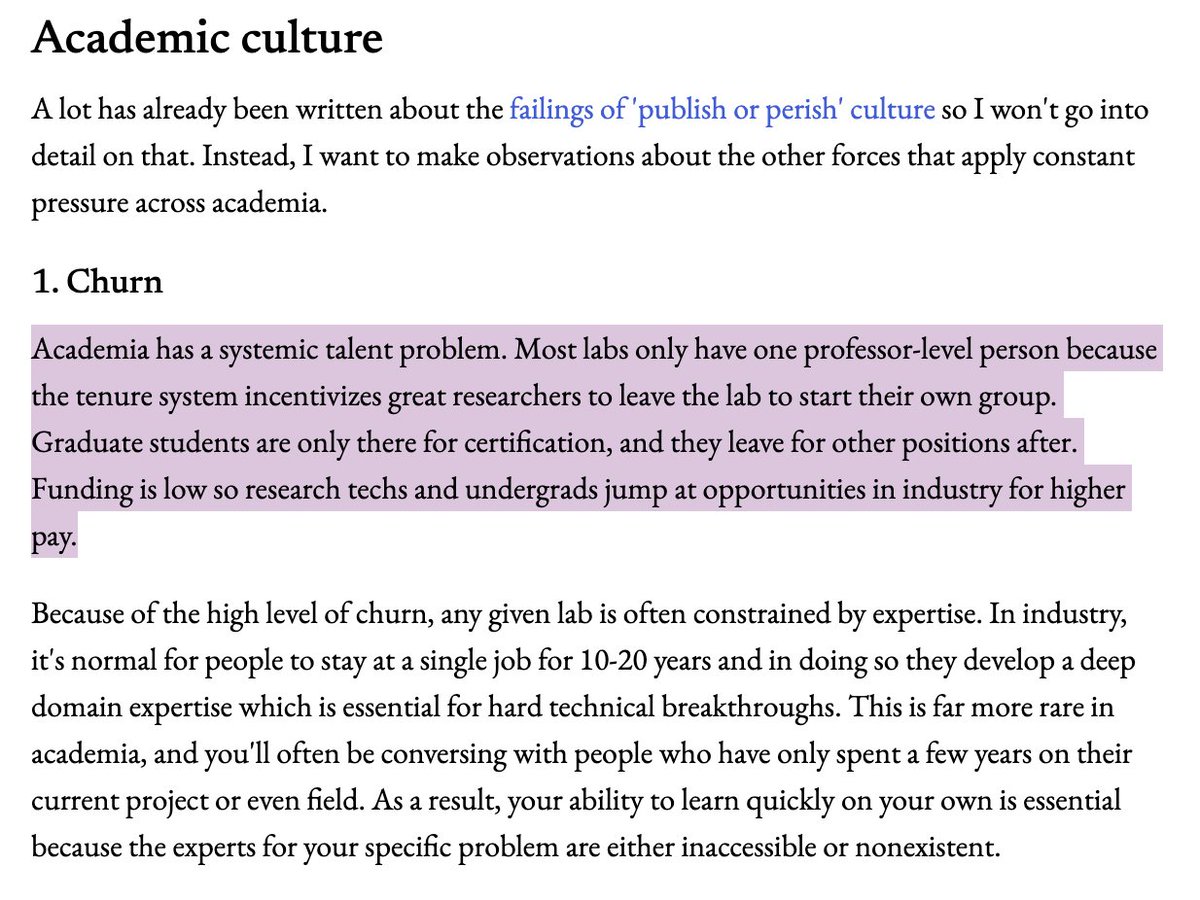
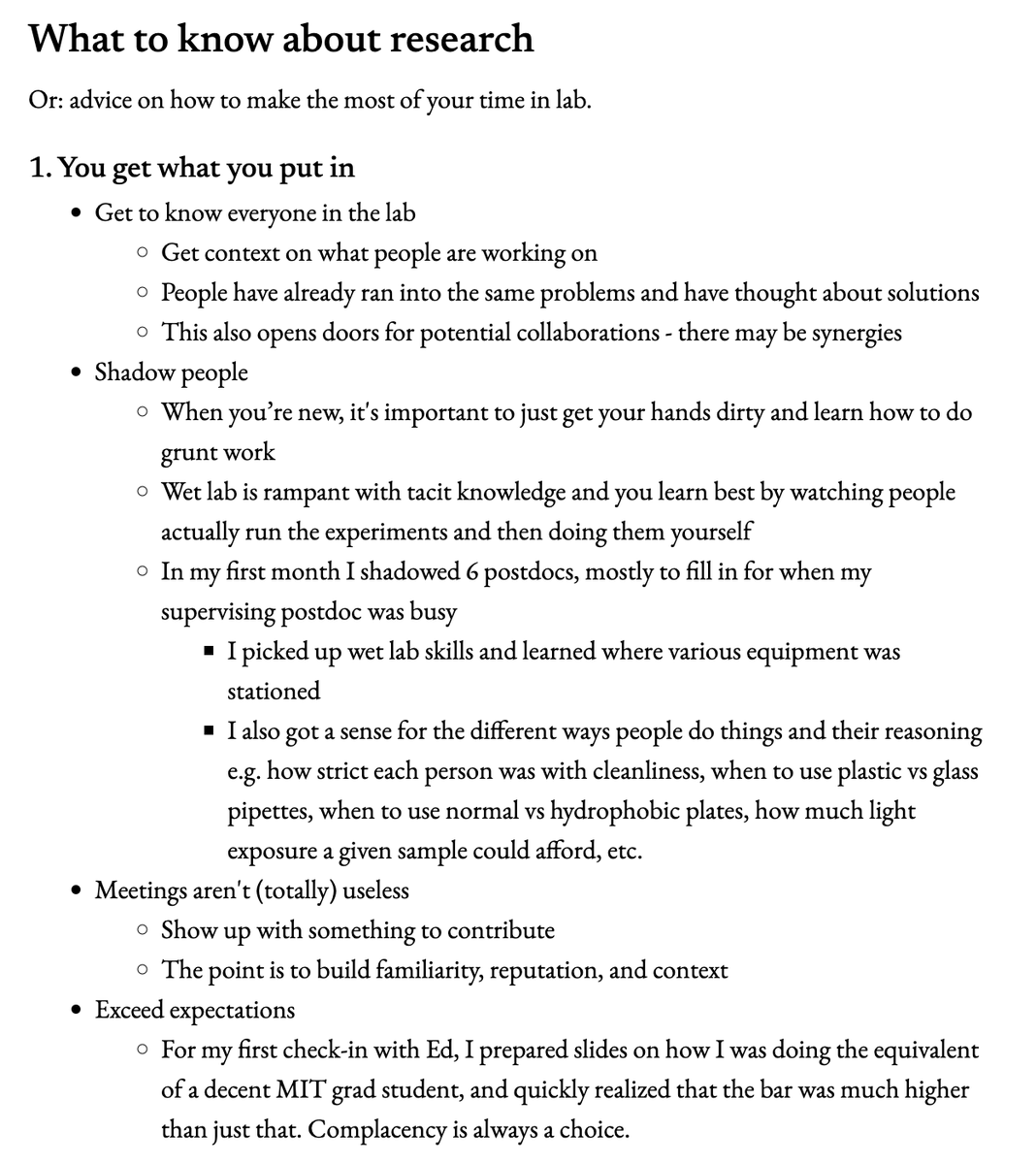
I wrote some observations from my first two months at MIT's best neuroscience lab 1. How to make the most of a research position 2. Notes on academic culture jameslin.bio/research
James Lin tweet mediaJames Lin tweet media
English
6
10
102
14.6K
James Lin
James Lin@jlinbio·
@levchizhov the tracking work is phenomenal to generate the render
English
0
0
4
65
Lev Chizhov
Lev Chizhov@levchizhov·
I really like our raw ultrasound data: it doesn't look as fancy as the final image, but you can feel it: you see the individual microbubbles flowing through the brain. If you randomly generated MEG data I wouldn't be able to tell
Lev Chizhov@levchizhov

We scanned the blood flow inside the brain using microbubbles+ultrasound. What is really striking to me about the imaging is how interpretable and physical the data feels. You can just see the actual microbubbles flowing through the brain in the ultrasound acquisitions!

English
3
2
94
6.6K
donald
donald@donaldjewkes·
this is the epitome of cowboy science @_marleyx & @levchizhov injected microbubbles into their bloodstreams in order to get these images of their brains I spent the last few weeks with Aleph playing with the aesthetics of brain data – enjoy
Aleph@alephneuro

We recently obtained the highest-resolution 3D images of the human brain ever taken from outside the skull. This is the first look. Introducing Aleph, a research lab building brain interfaces for the telepathic future. (1/n)

English
26
46
612
58.6K
James Lin
James Lin@jlinbio·
@jffbrwn2 jeff this is awesome! i didn't realize you were working with aleph now we should catch up :)
English
1
0
4
444
jeff
jeff@jffbrwn2·
early this year, i came to san francisco to visit some friends. i wrote a tracking algorithm for some microbubbles they'd injected into themselves (yes, really). we ended up with some of the most beautiful images of the brain i've ever seen.
Aleph@alephneuro

We recently obtained the highest-resolution 3D images of the human brain ever taken from outside the skull. This is the first look. Introducing Aleph, a research lab building brain interfaces for the telepathic future. (1/n)

English
11
11
136
20K
dar
dar@radbackwards·
It’s really hard to comprehend that this is my yard.
dar tweet media
English
65
35
1K
26.6K
GEOFF
GEOFF@geoffreywoo·
only venues that could possibly beat White House: Roman Colosseum Moon Mars
GEOFF tweet media
English
11
5
99
29.3K
Raffi Hotter
Raffi Hotter@raffi_hotter·
As you see in the video, the path through bone is not clean, but the ultrasound does go through. The fact that it's not clean makes the standard ultrasound beamforming fail, which is why everyone thinks ultrasound doesn't go through bone. (2/4)
English
2
0
52
3.5K
Raffi Hotter
Raffi Hotter@raffi_hotter·
"Ultrasound can't look through bone or air." This is not true. Here's a video from Guasch et al 2020 simulating ultrasound propagation through the skull. There's also a whole field that sends ultrasound through the skull for neurostimulation (see @nudge). (1/4)
Scott Alexander@slatestarcodex

I should probably learn more and write a post on this, but my first thought is that this isn't too interesting and the degree to which they're overselling it is a red flag. Ultrasound can't look through bone or air. Many of the things in the body you'd use an MRI to look at are past some sort of bone or air. So this is limited to a few use cases - mostly breast, kidneys, liver, some parts of the digestive and reproductive systems, and metabolic things like muscle vs. fat. You can already visualize most of these things with normal ultrasound, and the one case where it's already known to be really important to have some sort of 3D ultrasound (breast) already has a specialized 3D ultrasound system for it. So what this adds is convenience/repeatability/standardizability to visualizing these couple of organs. That means it can go from something you do every so often in the hospital when something is wrong, to something you can do all the time as a "whole body" (quotes because it excludes the brain, lungs, and everything else past bone and air) screening exam. But whole-body screening exams are often bad. The medical community specifically recommends *against* getting whole-body screening MRIs, even though the MRI itself is mostly safe. In a healthy person, false positives so outnumber true positives that this is more likely to send people on wild goose chases that end up getting them unnecessary interventions than detecting something horrible that needs to be treated right away. I think the bull case for this scanner is that if we got massive amounts of really great ultrasound data, we could put it in an ML model and train it to something something something and then advance biology. That's probably why an AI company is doing this. But the point is that they'd have to invent their own use cases as they go along, and the first patients - the people who are getting it before they invent the use cases - will have to be duped into thinking it's cooler than it is and useful right now. That's probably why they're starting by building a spa around it, even though spas are not generally known for being the sort of place that actually-cutting-edge medical innovations with clear uses cases get their start. I am not a radiologist, this is all speculation, other people might know more.


English
34
28
332
118K
James Lin
James Lin@jlinbio·
@andrenuyens_ fascinating - the spectral theory idea is the first time i've come across it but is really interesting, irreducibility gives rise to a lot of generative properties it seems
English
1
0
1
21
André Nuyens
André Nuyens@andrenuyens_·
If you want to model or simulate the universe in digital space, all you have to do is study primes I find fascinating that prime numbers dictate the fundamental informational architecture of physical systems. Here’s my 1 am rabbit hole:
English
2
0
7
763
James Lin
James Lin@jlinbio·
@andrenuyens_ the transformer architecture thing is really interesting - didn't realize that rotary embeddings use prime number injections
English
1
0
1
468
James Lin
James Lin@jlinbio·
really really cool - cicadas also have a hibernation period which lasts a prime 13 or 17 years to prevent syncing with predator cycles seems like the general pattern is that prime emergence in nature is highly defense-driven to prevent code-breaking / syncing which is also why we see primes used in cryptography
English
2
0
4
609
Cosmos Raj
Cosmos Raj@cosmos_raj·
Some of my favorite shots from last night Thank you to @MTSlive @liangsays for letting me shoot the event. It was a true pleasure
Cosmos Raj tweet mediaCosmos Raj tweet mediaCosmos Raj tweet mediaCosmos Raj tweet media
English
3
2
39
4.6K
James Lin
James Lin@jlinbio·
@gilbert disney the sports broadcasting company?
English
0
0
4
224
Ben Gilbert
Ben Gilbert@gilbert·
Doing a little hands-on prep for our next episode...
Ben Gilbert tweet media
English
8
2
108
8.6K
James Lin
James Lin@jlinbio·
@songyou oh my god the blue glyphs look so edible
English
1
0
4
873
song
song@songyou·
Emi Takahashi is currently my favorite designer. she does incredible experiments combining her glyphs with physical materials, so fresh & new
song tweet mediasong tweet mediasong tweet mediasong tweet media
English
19
240
2.8K
63.5K
James Lin
James Lin@jlinbio·
@sdand @rahulgs the same is true for all intelligence-related tasks too, e.g. science + discoveries, etc. are now just a functional of capital allocation because it's just a function of compute
English
0
0
3
117
Surya
Surya@sdand·
@rahulgs ok so every startup is a function of capital allocation essentially
English
2
0
8
709
rahul
rahul@rahulgs·
1. as a mental model it is more correct to think of fable+ class models as english -> code interpreters - converts your idea into code into "correct" code regardless of problem complexity and output complexity (diff size). Fable 5 will be the worst of this new class of models 2. diff size/complexity is to be managed purely for review: small diffs - in high risk areas of code (auth/identity/data access/network access/money movement) large diffs for code that can be empirically verified (frontend/backend plumbing/code without network or db access/performance code that can be empirically verified) 3. time it takes to ship software is completely disconnected from time to produce the PR - how long the work takes depends fully on ability to review/merge code while managing risk at scale 4. solving the bottlenecks for above matter enormously- linters/testing/CI/shadow mode verification/empirical verification 5. agency matters enormously- what are the biggest bottlenecks to speeding up the loop and eliminating them? what are the problems that need solving and when do they need solving? what does it take to the solution to all of them today? 6. deep understanding of the full stack matters enormously- what problems are worth pursuing? is there a higher level of problem abstraction to address first? should I give it the sub-sub task, the sub task, or the task itself. what are the major risks with this PR (order of importance: security holes/correctness holes/performance holes). is there a higher speed way of producing data that allows me to merge this? should this be run in shadow or in a sandbox or a flag. understanding every line of logic may not be needed but understanding and managing risk matters enormously. 7. the cost of complexity itself is changing. it might be now worth "maintaining" 50% more code to get a 5% performance win. getting the right abstractions matter less because larger refactors are less tedious. code quality nits become huge drag. very likely, a much smarter model will be maintaining your code so worth taking on more technical debt now. taking the time to hand architect and rebuild systems comes with an enormous cost of velocity 8. if it quacks like a duck and walks like a duck, it's a duck. For low risk cases, it might be more sane to treat code chunks (services / functions) as a black box, like we do for neural networks: do full empirical verification only: has code produced correct outputs for the last 10,100,1000,10k inputs ? can we quarantine this large piece of code - no outbound access to network / database ? what happens when this code is wrong? do we get hacked/or crash(memory/cpu)/is an inconvenience? is it internal facing or external? what can we do to address these risks? 9. eventually, logical verification (line by line review) will come at an enormous cost- save it for where it matters and build systems that are tolerant to empirical verification. is there a decorator that prevents db / network access? correctness bugs are significantly easier to rectify than access bugs 10. what are the rails that allow for even faster iteration? code permissions can be opt in - db writes, db reads, network egress (to where?), PII access. how long does it take to get shadow mode data? how many PRs can be tested? What are the categories of diffs
English
65
151
1.8K
301.6K