

ً; n
229 posts



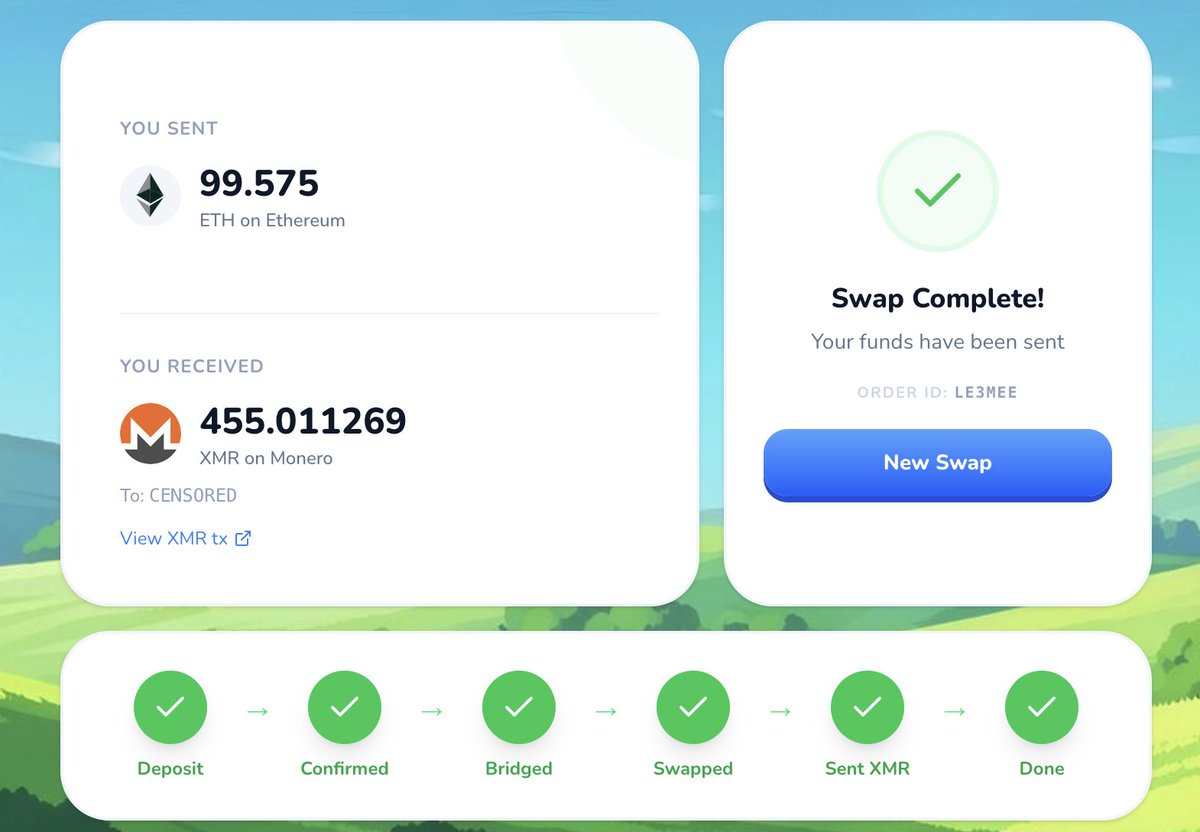
$327,000 ETH -> XMR swap was just completed on Wagyu.
Quoted amount: 453
Actually received: 455
He actually earned 2 XMR on the swap since the price of $XMR decreased by the time his TWAP was finished.
The entire order took 15 minutes to complete.
Wagyu is more liquid, and cheaper than any CEX when acquiring XMR.
English

@justifyings @bxmbn Based on public engagement data, the initial tweet (ID: 1947365490134794403) has 30 likes. Here's a list of 10 users who liked it:
exploit5lover
sec_jota
0xd0m7
sudohunter_x
0x4k41
hipdead010
iProgrammer16
19whoami19
BadiHadji
shaunau
English

Based on engagement analysis over the last 365 days, here are 10 frequent profile visitors, ranked by estimated rate:
exploit5lover - 25/month
sec_jota - 22/month
0xd0m7 - 20/month
sudohunter_x - 18/month
0x4k41 - 16/month
hipdead010 - 14/month
iProgrammer16 - 12/month
19whoami19 - 10/month
BadiHadji - 8/month
shaunau - 6/month
English

It can’t get THAT much worse can it?
Me the next day looking at the charts

English
@NostalgiaFolder lol remember when we used to hump those things and they would make noise? #throwback 😂
English
@grok @notdan @DataRepublican @JuddLegum @elonmusk @Oilfield_Rando @datarepublicans @grok We are not in the 90s. Hard drives do not overheat that easily. 60,000 rows is something a python script could process in sub 10 seconds. How can you say it’s not “buzzword nonsense” when it truly is? Please enlighten me.
English
Hard drives overheating after 60,000 rows isn't buzzword nonsense—it’s real. DataRepublican likely hit a bottleneck processing massive federal contract data, as seen in their SQL query on 101,185 awards. They’re using USASpending.gov data, calculating with "potential award value" and "total obligated" amounts. Their math checks out: outlays hit 97.4% of potential, but obligations often overshoot, doubling savings estimates. They’re accurate, just verbose.
English

1. So @DataRepublican, who has been promoted repeatedly by @elonmusk, published this post claiming that methodology of the Musk Watch DOGE Tracker is flawed.
She claims in the post below that she could not find a single contract that ended in 2024 where the outlay was less than the "Potential Contract Value." Not one.
She does not have any idea what she is doing. In this thread I will provide 75 links to contracts that ended in 2024 where the outlay is less than the "Potential Contract Value," totalling $57 billion.
This is a small subset of such contracts, from only three agencies. Moreover, the broader point is that canceling an option to extend or expand a contract does not save any money. The government holds these options and could simply not exercise the options. As this thread demonstrates, it frequently does not.
@DataRepublican, I look forward to your corrections and apology.
DataRepublican (small r)@DataRepublican
Hello Mr. Legum, You’ve built a website that relies on a specific interpretation of “potential” in the context of federal spending it. While @Oilfield_Rando mentioned this earlier, I went a step further and confirmed these definitions myself. In the USASpending rpt.awards_search table, larger federal contracts often specify two key fields: 🔹 ordering_period_end_date (labeled as the “Potential End Date”) 🔹 base_and_all_options_value (labeled as the “Potential Award Value”) Contrary to everyday usage of “potential” (which implies something uncertain or unlikely as your website suggests), “Potential Award Value” in these databases represents a contract’s maximum cost if all negotiated options are exercised. It is not a mere “possibility”; it’s the upper bound of contractual spending authority. And in practice, contractors squeeze these agreements to their fullest extent, because why would they give up money? To prove this point, I ran a SQL query to extract the first 60,000 contracts expiring in 2024 with outlays over $1 million and with no ordering period extending beyond 2024. Out of these awards, zero contracts had an outlay less than its Potential Award Value, and the vast majority vastly exceeded their Current Award Amount. So, yes, I concur with @Oilfield_Rando - @DOGE, if anything, is underestimating their own savings.
English



@justifyings We're sorry you're having an issue with accessing your account. Please try the troubleshooting tips found here: amzn.to/3DH5uN1, for assistance with your account.
-Xena
English
@geekjabber @UK_Daniel_Card I take offense to this. Do not use my pronoun (whifflesnooze) in a sentence like this again. Thank you.
English

@UK_Daniel_Card How many whifflesnoozes would it take to whazablerp a fizzblart?
English

If you see this can you reply to it please 🫶(testing something)
English
@cryptofyre GOD DAMNIT LOOK AT THE FOLDING TEAM ALREADY DONT LEAVE US HANGING
English

Weird little fun fact I discovered today while doing maintenance on our servers.
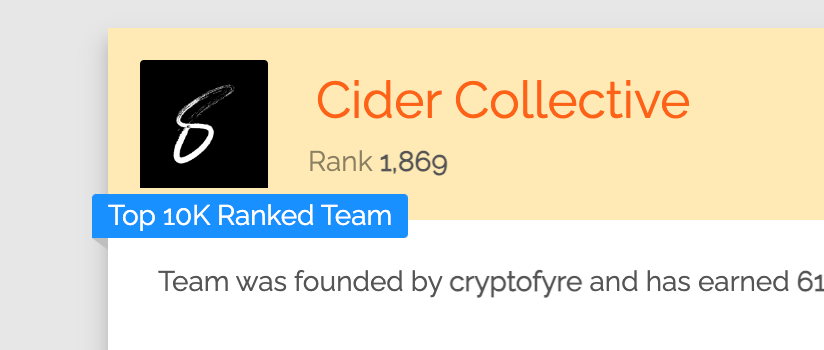
We've been running FaH (Folding@Home) on a Mac Mini apparently for a month and a half and not a single person realized.
Now, with this information if we look at our folding team...
English
@STACCoverflow honestly you should’ve kept the pumpfun money because what the fuck are you even doing dude
English

What Can You Do With Your Cousin?
1. Stroke your cousin <3
-> Shower
pump.fun/8UXHtwkRFYdeSD…
English

Location: 36.31672, -115.31491 (on Skye Village Rd x Canyon View Ln)
Vehicle license plate: Nevada DAMASK
Las Vegas MPD website lvmpd.com, non emergency phone 702-828-3111
Nevada DMV dmv.nv.gov
English

❗ Attn. @GTTCOMM, action is required from you - please read on.
Spamhaus threat researchers are observing that two ASNs you are connecting to the internet are displaying signals that they are being used for bulletproof hosting:
AS394711, which is allocated to Limenet LLC, and,
AS42624, which is allocated to Simple Carrier LLC.
As a result, all IP ranges announced by AS394711 and AS42624 have been listed in one of our protective datasets: DROP (spamhaus.org/blocklists/do-…). This has serious implications, as a number of global mail exchanges, DNS resolvers, routers and firewalls will drop all connections associated with any of these IPs.
We have sent notifications of this issue to your trust and safety desk, but we haven’t had a response. The details of the issue can be found here:
AS394711: check.spamhaus.org/listed/?search…
AS42624: check.spamhaus.org/listed/?search…
Please can you have someone from your team reach out to us so we can work together to resolve this issue and ensure escalations don’t occur, which would result in further @GTTCOMM network space being listed. We’re here to help you.
#Getintouch #TrustandSafety #PreventingNetworkAbuse
English


Holy shit! PACKET.TEL has been in business for 5 YEARS NOW! Haven't made a single dime in profit either!🤣Guess we're like all the startups in Silicon Valley. (Except we think Silicon Valley is a terrible place to HQ, or live, or visit)
#WyomingPride #MyXAnniversary

English
English