
ทวีตที่ปักหมุด
quub
1.4K posts


quub
@quubspace
We build micro-satellites that take the pulse of planet Earth. 🌎
Akron, PA เข้าร่วม Eylül 2021
803 กำลังติดตาม333 ผู้ติดตาม
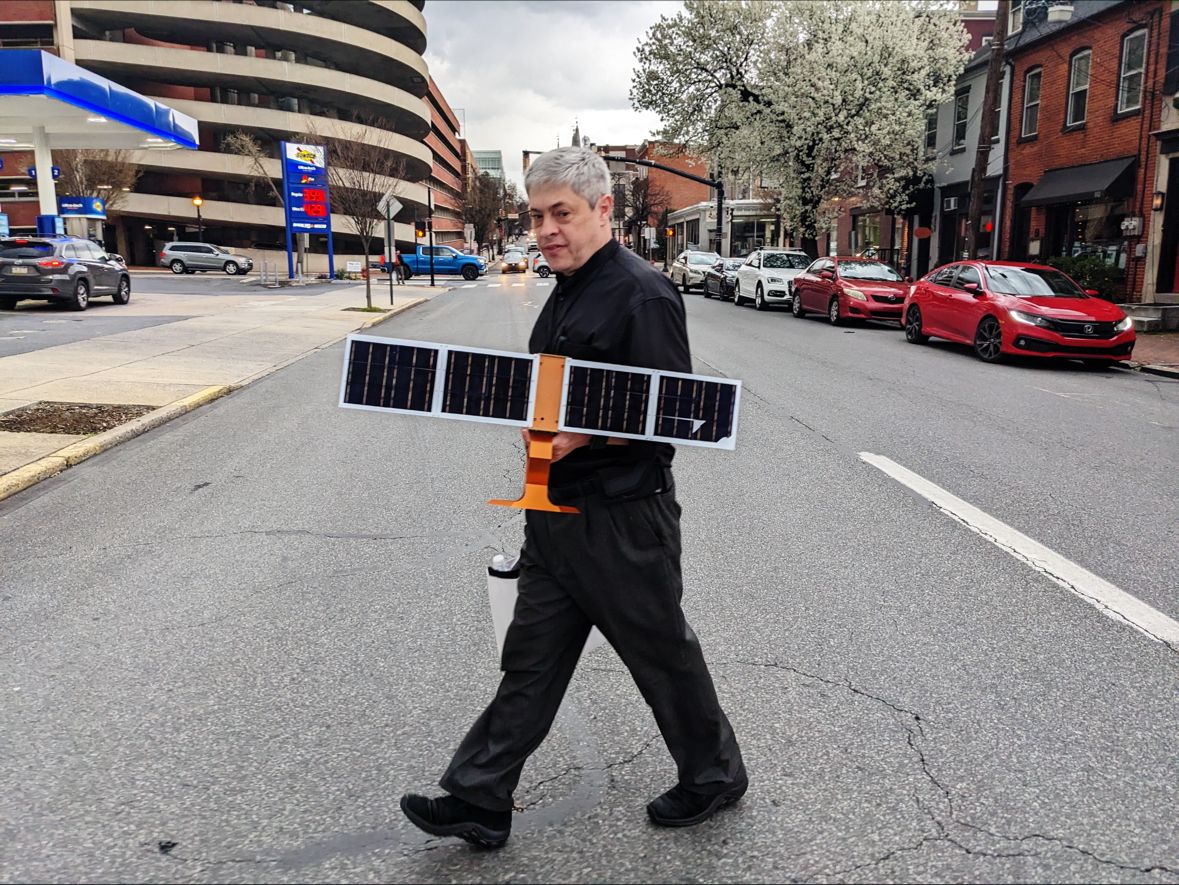

Today at the PocketQube workshop I saw someone developing a reentry vehicle small enough to fit in your hand


English

Based on the Mars helicopter? Where are the helicopter blades?!
😉 Don’t @ me.
Truthful🛰️@Truthful_ast
BREAKING: NASA has announced a new program named “MoonFall” -Various Lunar drones -Derived from the Ingenuity Mars helicopter -50km range -Fully autonomous -High quality cameras -Possible repurpose capability for communications after running out of fuel
English
@Space_Horton @DrPhiltill That only works if the mining and construction move off Earth as well. That just isn’t possible in this AI driven bubble.
English
@DrPhiltill I'm not all that surprised, it's been Jeff's stated goal for a long time to shift major industry off-world to preserve our homeworld as a kind of planetary nature reserve.
English
Interesting that it is Blue Origin, not Amazon, that is building the data center in space. I suspect this hints at the long-term vision for Blue Origin. It is Rockets and Compute deeply intertwined, just as it is with SpaceX/xAI.
Space Investor@SpaceInvestor_D
Blue Origin just filed for a 51,600-satellites Orbital Data Center constellation called "Project Sunrise" h/t: @trypto_tran @FranciscoSpace5
English
@KaranKunjur @ErickHe369 Impressive. I understand the issue of having to build in house. Our issue is on the other end of the spectrum. Our satellites are so small, no one makes parts for them.
English

We have shipped our 20kW satellite - Gravitas - to the launch site.
Given the supply chain to operate at this power regime doesn’t exist, we had to build 85% of the satellite in-house. This includes building our own large solar arrays, high power propulsion system, large batteries, large reaction wheels and much more.
This launch will represent the first time all of these systems are test on orbit together.
Internally at @K2SpaceCo, we’ve thought about a few levels of success for this mission - we expect mission success to fall somewhere along this spectrum:
- Tier 1 (Baseline mission success): Deploy solar arrays, establish comms, operate the satellite —> we’ve now got an operational 20kW satellite on orbit
- Tier 2: Power on the payloads, activate the 20kW propulsion system —> we’re completing payload missions and have fired the highest power hall thruster ever flown on orbit
- Tier 3: Orbit raise the satellite, test performance in high radiation environments (like 2,000km) —> we’ve collected massive amounts of data on the performance of the platform in very very difficult environments
More than anything, Gravitas represents the start of an iterative journey, where we will take the data we receive from this first satellite and incorporate it into the next wave of satellites launching next year.
We’re excited to start this journey, we’ll report back as we get more data.
Thanks to Tim for covering our story on TechCrunch
techcrunch.com/2026/03/19/k2-…
English
@MarcusHouse Impressive! Right now, if v3 clears the tower it will be a major milestone. This is not easy any way you look at it.
English

Brilliant result. Lets go with that 33. It is going to be absolutely wild.
SpaceX@SpaceX
Initial Super Heavy V3 and Starbase Pad 2 activation campaign complete, wrapping up several days of testing that loaded cryogenic fuel and oxidizer on a V3 vehicle for the first time. While the 10-engine static fire ended early due to a ground-side issue, we saw successful startup on all installed Raptor 3 engines. Next up: preparing the booster for a 33-engine static fire
English

I’ve never seen so much obviously fake/doctored satellite imagery going viral on here as I am seeing now.
English

feel like I have no one to talk to in my normal life about Datacenters in Space
can’t stop thinking about how this will transform everything and make humans a space fairing civilization
gonna record a long podcast about it this week. Thankful for the Hyperchange internet community for being my outlet to scheme on the future 🙏⚡️
English
Type of thing you scoff at if you’ve never operated satellites and solemnly nod at if you have
Scott Manley@DJSnM
According to a NASA report Lunar Trailblazer failed because the software pointed the solar panels *away* from the Sun. The NASA panel says Lockheed did not properly test the solar panel pointing software before launch. npr.org/2026/02/26/nx-…
English
@MarcusHouse @cnunezimages Just think of the massive amount of power it takes to push that much that fast.
English
Certainly my fav image of the week! 🤯
What a champion @cnunezimages is. ❤
Starbase Surfer@cnunezimages
Top Deck Deluge! Or should I say Top Tech Deluge? - February 16, 2026
English
@DrPhiltill It seems this is just another distraction. There are serious issues that need (uncomfortable) attention. This resets the public focus elsewhere.
It will be a nothing burger.
English
I’m gonna predict there won’t be much released, because a lot of the files are about the performance of classified radars and sensors. This is another administration in the process of discovering why it has always been classified.
Open Source Intel@Osint613
Trump: Based on the tremendous interest shown, I will be directing the Secretary of War, and other relevant Departments and Agencies, to begin the process of identifying and releasing Government files related to alien and extraterrestrial life, unidentified aerial phenomena (UAP), and unidentified flying objects (UFOs), and any and all other information connected to these highly complex, but extremely interesting and important, matters. GOD BLESS AMERICA!
English

Trump says US government will declassify its UFO files. Will we actually learn anything this time, or is this a distraction? space.com/space-explorat…
English

Elon is being characteristically modest. The true number will likely be closer to $5 trillion. Maybe higher.
Elon Musk@elonmusk
I will probably end up paying over $500B in taxes, inclusive of death
English
@Erdayastronaut @NASAAdmin @rookisaacman Given how long this development was, it seems like the sunk cost fallacy has kicked in hard. Time to cut it loose and start again.
English
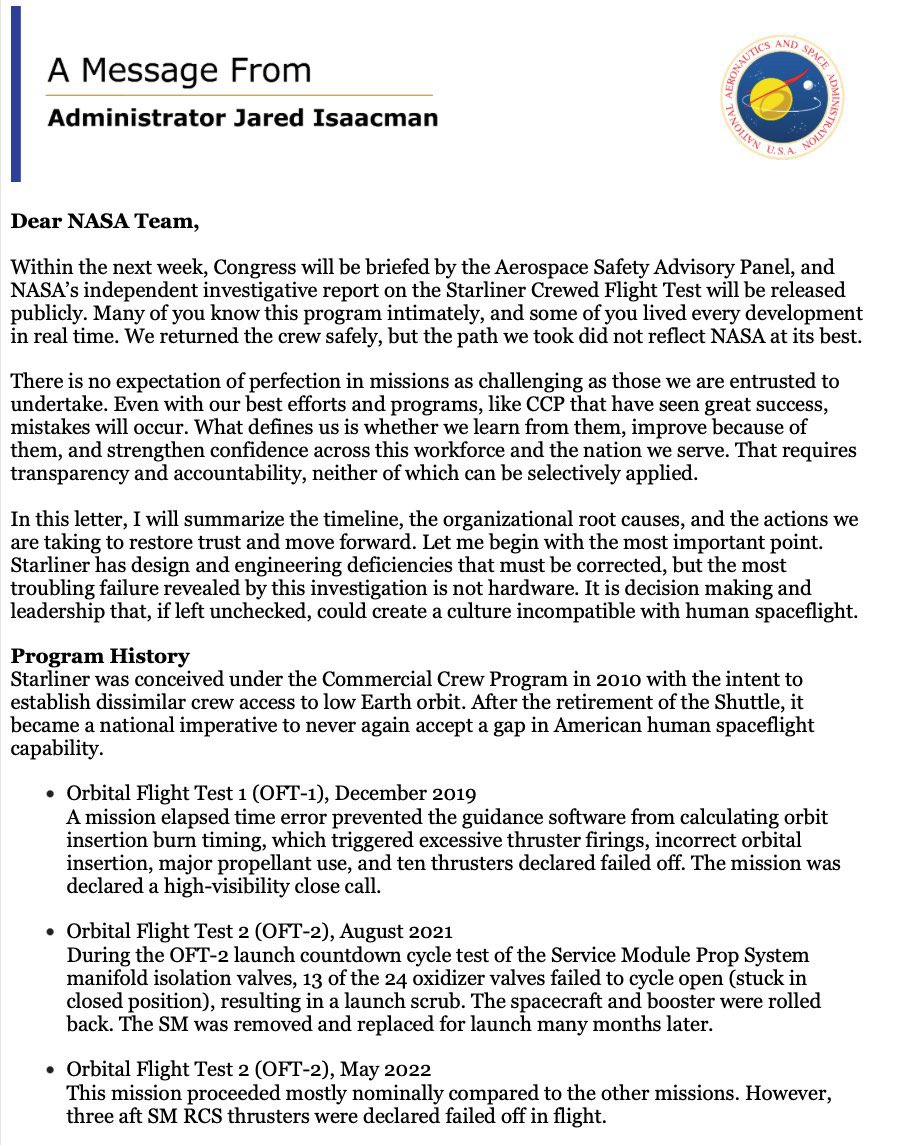
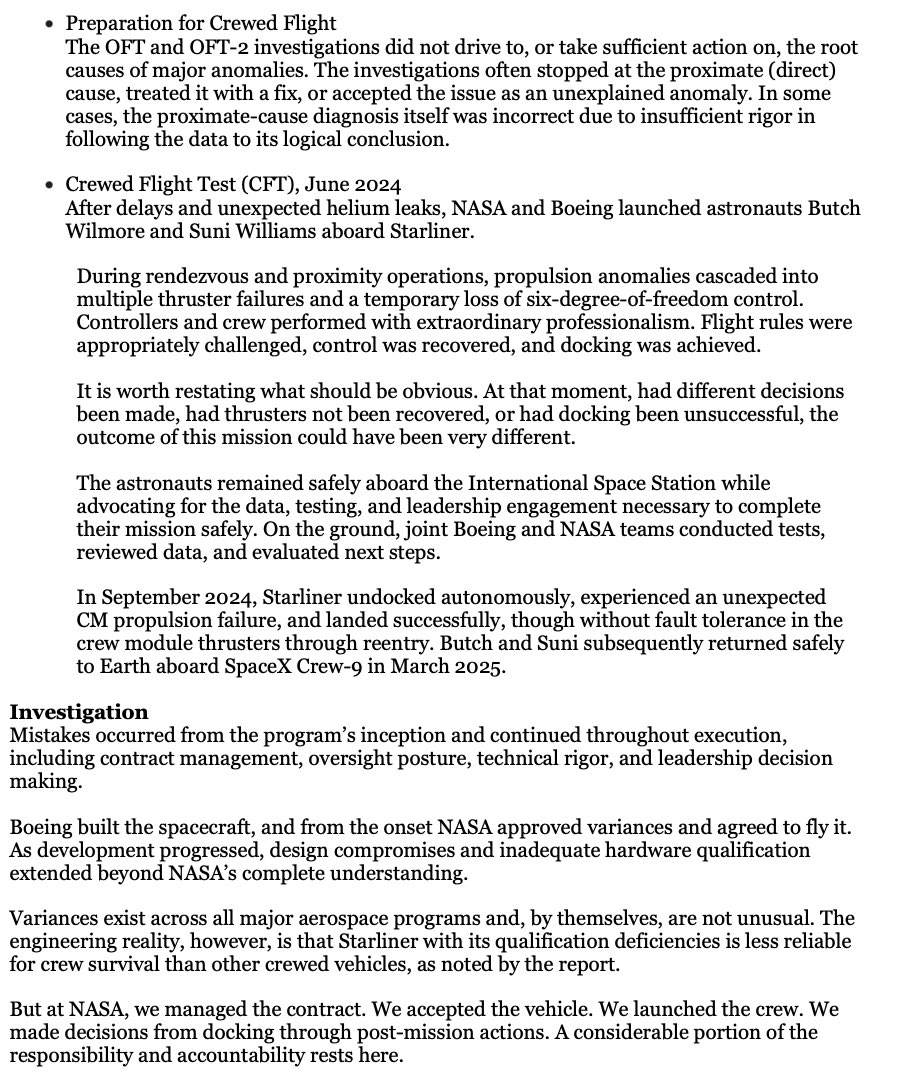
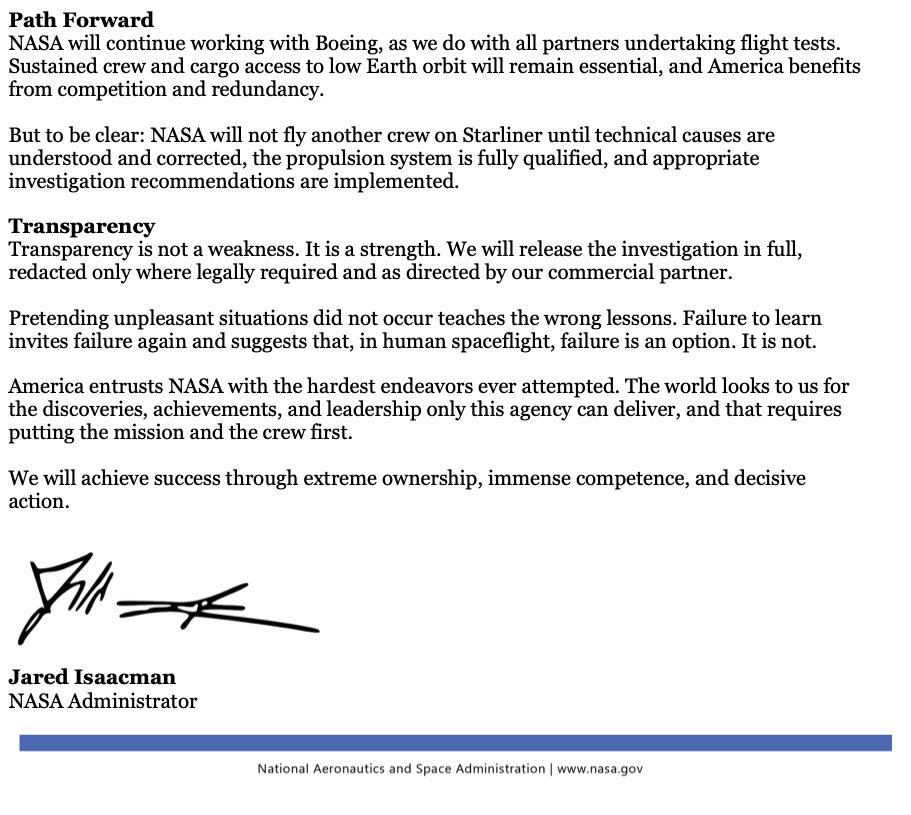
Some incredible transparency from @NASAAdmin @rookisaacman regarding the Starliner crew fiasco. It will not fly again until the ROOT CAUSE is addressed, not just bandaided. I don’t see how this is can be worth it to Boeing anymore TBH. They have to be losing money on Starliner

English
Telescope view of Jupiter tonight
This is the same telescope I use to photographed the Sun, just without the modifications to make it safe for solar photography
English
@Bubbinski @NASA_Technology The could contact Up Aerospace or Exos Aero for flights.
English

@NASA_Technology Now that New Shepard’s been sidelined, I hope NASA can find a good replacement - maybe put out a tender for one from the commercial sector or take over New Shepard from Blue?
English

You're invited! ✉️
Join our Flight Opportunities Program at 1 p.m. ET on Wednesday, Feb. 4, as we explore flying externally mounted payloads on suborbital rockets. Hear about testing opportunities provided by exterior mounting, how to prepare payloads for these conditions, and lessons learned from researchers: go.nasa.gov/3M44RkS
English
@elonmusk @ID_AA_Carmack Would it be a good idea to just change out data center modules and keep the main structure operational?
English

Certainly an argument for staying low enough at first to allow atmospheric drag to clean things up.
At least for the first several years, AI hardware will advance fast enough that an orbital lifetime of ~5 years is fine.
Note: once you get far enough into space, it’s just so absurdly vast that “Kessler Syndrome” can’t happen due to extreme sparsity.
English

With the recent talk of massive amounts of data centers in space, I wonder how the thinking on Kessler Syndrome has evolved, where cascading collisions with debris makes orbit unusable.
I have tended to think that people underestimate the vastness of orbital space, and that treating debris collisions as having the same fragmentary potential as the tank explosions we have some data on is probably pessimistic, but the hazard doesn’t seem completely negligible.
Presumably @SpaceX has the best data driven models in the world, at least for Starlink altitudes. Have there been any debris related failures discussed?
English
@SciGuySpace If you want it fast, then let's put more money and effort into it. The current process is too slow and very broken.
English

A key Senate staffer is asking NASA politely to please hurry the hell up with commercial space stations.
arstechnica.com/space/2026/01/…
English


learning how to use satellite data to predict crop yields because why the fuck not, this costs like one dollar per month now
English
@deanwball Not an easy task. The government data can be difficult to work with but it has the advantage of being cheap. More options will be coming soon.
English