
GHOSTE
2.6K posts


Open-source wins.
Open Intelligence wins.

Nathan Lambert@natolambert
Airbnb CEO Brian Chesky: “We’re relying a lot on Alibaba’s Qwen model. It’s very good. It’s also fast and cheap... We use OpenAI’s latest models, but we typically don’t use them that much in production because there are faster and cheaper models.” The valley is built on Qwen?
English
GHOSTE รีทวีตแล้ว

./ GRADIENT 💌
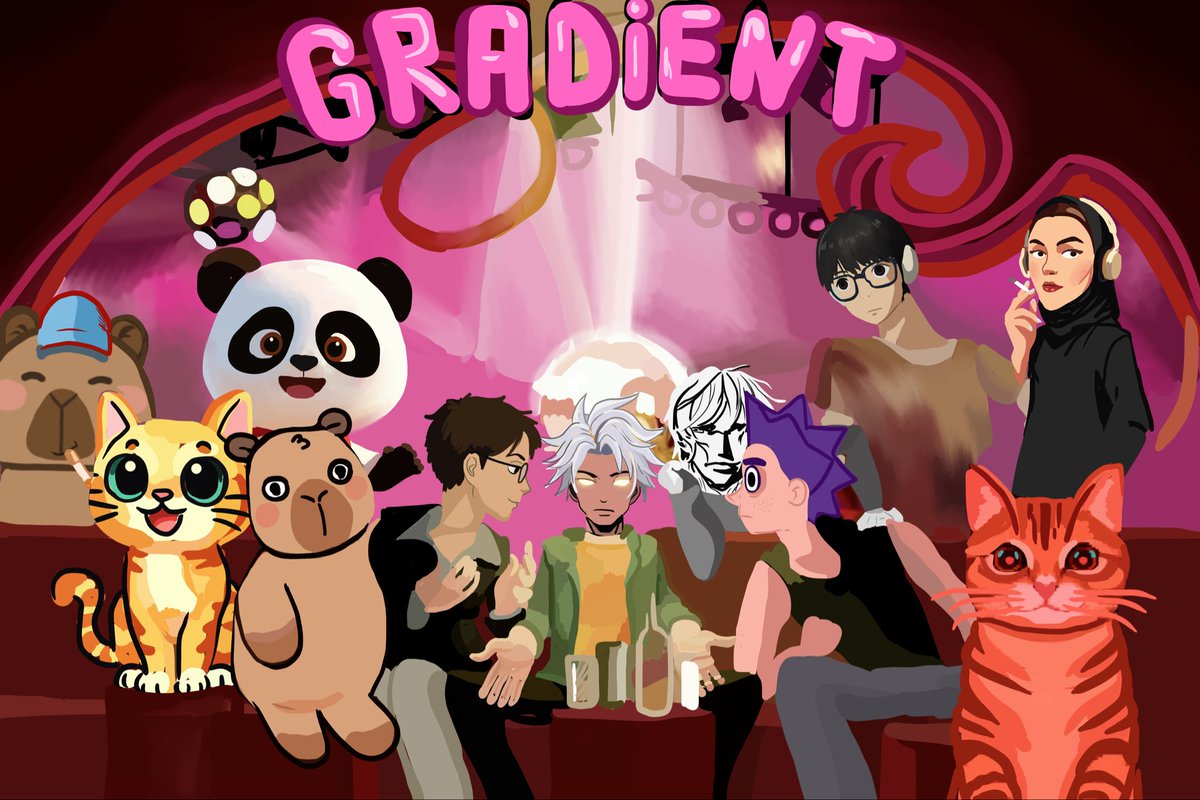
made this one for the @Gradient_HQ rebrand contest
we built, now we celebrate
on pic @Nekomamu16 | @HexxRL | @davidz9 | @adamy_gn | @Pascal2_22 | @renatghoste | @VinoisAsian | @Leila1113514 | @Chupaa_mw
English
‼️New Challenge Alert ‼️
Be prepared to participate in new challenge that will last 21 days in which you will be required to answer questions related to @ritualnet
ONLY TOP MEMBERS WILL GET ROLES AND INACTIVE MEMBERS WILL GET NPC 😈
English

"newest piece of the GRID just got an upgrade" + Galxe company + Spaces with Billions + Sentient
🔥Yes, this all happened literally recently! I advise you to immediately pay attention to the GRID update and much more in the official announcement @SentientAGI!

Sentient@SentientAGI
Our newest piece of the GRID just got an upgrade 😁 GRID is the world’s largest network of intelligence, containing agents, models, data sources, frameworks, and Sentient Chat—the infrastructure that stitches it all together.
English

gSenti
Just think about regular Wednesday evening, u came back to home after work, cooked a dinner and all that daily stuff
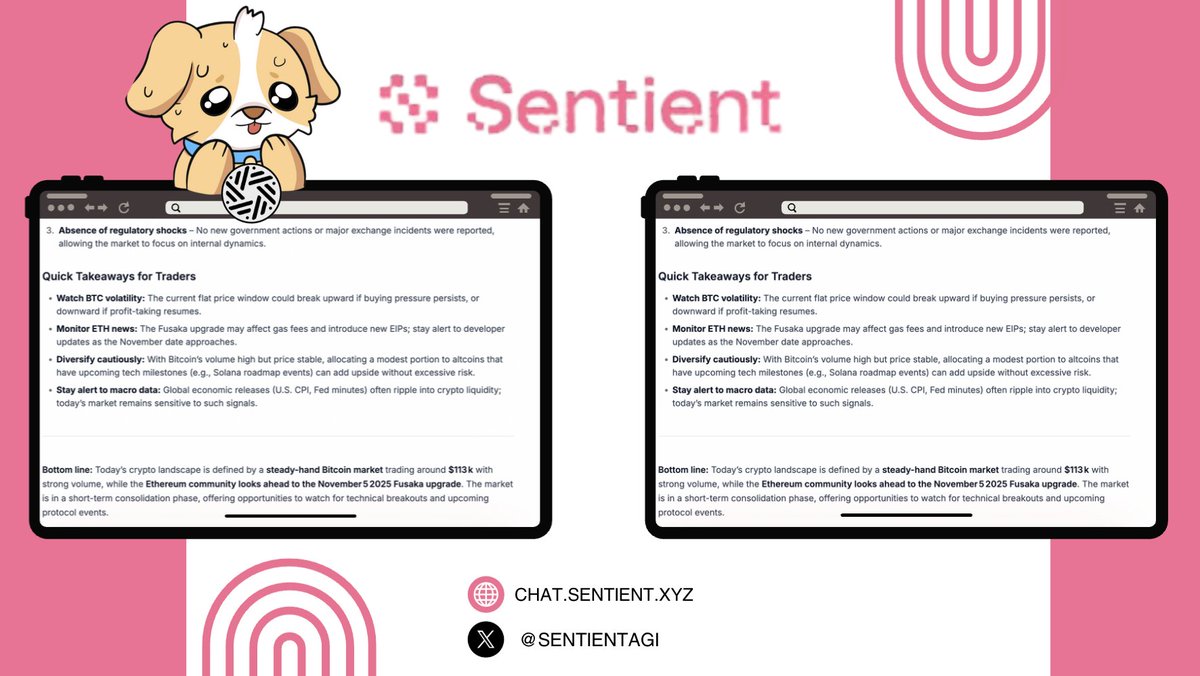
But u have interesting hobby - crypto trading, and if u want to know everything what happened during the day while u were working - I d recommend u to ask @sentient_chat
With Sentient u dont have to check 20 tg groups, scroll twitter for hours and all that stuff, but just write this prompt👇
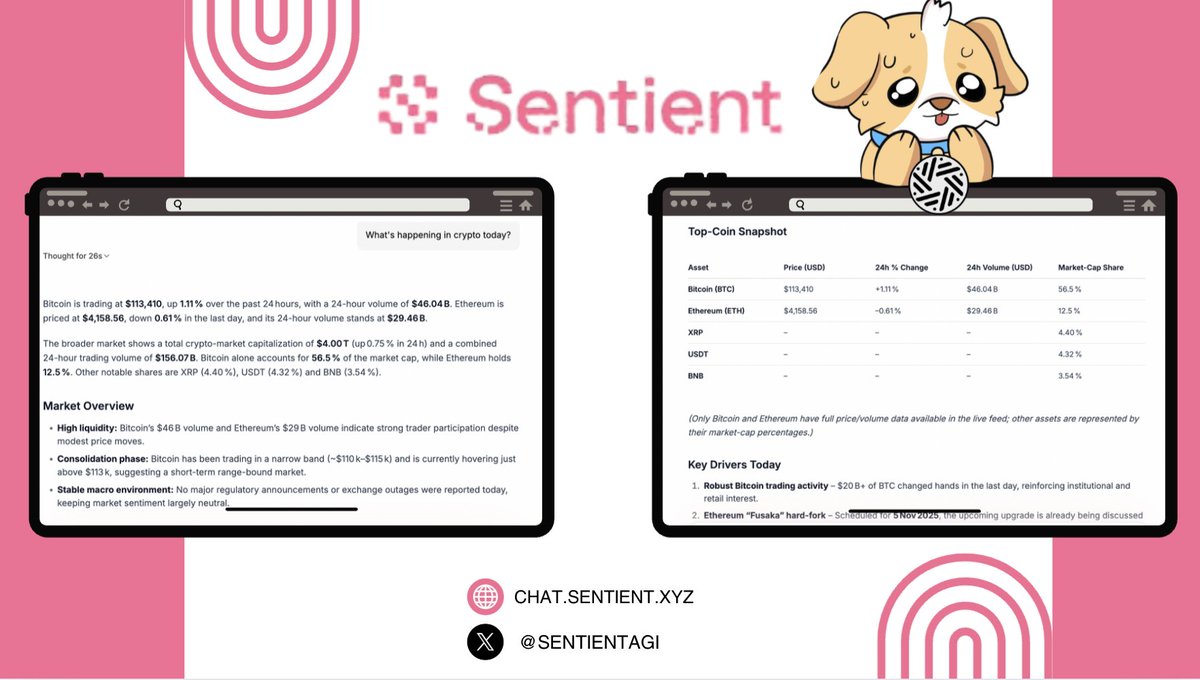
''What's happening in crypto today?''
U ll get the best possible answer:
The response you got isnt just a price update - its essentially a condensed market briefing
Why it is so valuable and time-saving?👇
1⃣Clear market snapshot
In a few lines, you get the essentials:
Bitcoin at $113,410, Ethereum at $4,158.56 and the total crypto market cap at $4T
Instead of hunting through charts or multiple sources, you immediately know:
->where the top assets stand
->their trading volumes
->overall market share
This is useful because traders, writers or casual investors often need instant context without wading through noise
2⃣Context behind the numbers
It doesnt just state prices - it explains why the market looks the way it does:
👉High liquidity shows real money is moving
👉Consolidation phase signals Bitcoin is stable in a range, hinting at an upcoming breakout
👉Stable macro environment reassures that no external shocks are rocking the market today
This is powerful because it tells you whether today is a day for quick moves or for waiting things out
3⃣Forward looking signals
The mention of the Ethereum Fusaka upgrade is a gem👇
it puts today’s quiet ETH movement into perspective while flagging a future event traders will care about
That is the kind of insight most casual news summaries miss here, you are not only told what happened, but also what to watch next
4⃣Quick takeaways for action
The Quick Takeaways section gives ready touse guidance:
👉Watch BTC volatility in its narrow band
👉Monitor ETH for dev updates
👉Diversify into altcoins tied to tech milestones
👉Stay alert to global economic data
This format saves readers hours because it boils down the clutter into practical steps - smth both a professional trader and a curious investor can act on
5⃣Why it feels like a special agent found the answer?
The response reads like it was written by a specialized market analyst who did the legwork across:
->data feeds
->trading volumes
-> upcoming events
Instead of you scanning multiple platforms like: CoinMarketCap for numbers, Twitter for sentiment, news outlets for regulatory updates, GitHub for ETH upgrades), it pulled everything into one coherent update
Thats why it feels so good - someone who not only retrieves the data but also explains it in the best possible, human language form so no need to research everything for hours or read the whole articles from other AIs
This kind of AI response turns scattered crypto data into a:
->digestible
->insightful market brief
🔥It saves time and helps to live more quality and chill life hehe
@sentient_chat is the best for research and I ve already had few tweets why, but today we were talking about news and crypto updates, so why exactly it is better than other AIs in this?
1⃣Straight to the point
Other AIs might dump raw numbers or long explanations
Sentient Chat gives a quick snapshot:
->prices
->volumes
->market cap - plus a oneline summary of what it means
2⃣Not just data, but insight
It explains why things look the way they do (for example Bitcoin is consolidating, no new regulations today), so you dont just see numbers - you understand the context without spending extra time for thinking about it
3⃣Flags whats next
Instead of stopping at “Ethereum is $4,158” it adds that the Fusaka upgrade is coming on Nov 5, 2025
That helps you prepare for future moves
4⃣Feels like an expert analyst(it really is btw because of GRID and ROMA)
The response reads like a market pro checked volumes, market share and news - then gave you the best possible answer
5⃣Saves serious time
Normally you’d check 5+ sources (CoinMarketCap, Twitter, news sites, GitHub) to get the same info
With Sentient it is done in one clear update
Sentient gives more accurate, deeper and understandable answer than any other AI, thats why I chose Sentient, thats why u should always choose Sentient
@sandeepnailwal @hstyagi @viswanathpramod @sewoong79 @Joelc_eth @abhishek095 @oleg_golev @vivekkolli @LeaderX_btc #SentientChat
English
English

Integrating Doma with GoDaddy: Unlocking Web3 for Millions of Domain Owners
GoDaddy is the world’s largest domain registrar, managing over 80 million domain names (including ~53 million .com domains) and serving 20+ million customers globally. It is the go-to platform for buying, registering, and managing domains. Integrating Doma with GoDaddy would be a game-changer simply due to scale: it could bring a huge portion of the world’s domains into the Web3 realm overnight. We’ve already seen early steps in this direction. In early 2024, GoDaddy partnered with the Ethereum Name Service (ENS) to let users link their DNS domains to crypto wallet addresses without any technical friction. GoDaddy even added a section in its domain management dashboard for customers to associate an Ethereum address with their domain name, “allowing seamless integration with hundreds of applications across the web3 ecosystem”. This meant a GoDaddy domain (like yourname.com) could double as a human-readable ENS name for receiving crypto or logging into dApps, achieved in just a few clicks and with no gas fees (thanks to an off-chain resolution contract). The success of this ENS integration - which “streamlined the way users interact with web domains, blending the familiarity of DNS with the potential of blockchain” - shows GoDaddy’s interest in bridging Web2 and Web3.
Doma integration is the next logical step. While the ENS partnership focused on identity (mapping domains to wallets), Doma would focus on asset tokenization and finance. GoDaddy is uniquely positioned to leverage Doma because, as one industry expert noted, “registrars are best positioned to enable Web3 functionality for DNS domain names”. GoDaddy’s platform could serve as an on-ramp for domain owners to enter the DomainFi economy in a trusted environment. In fact, smaller registrars have begun piloting this: InterNetX (a large European registrar) announced plans to tokenize 22 million domains via Doma, and NicNames (an ICANN registrar) recently integrated Doma’s testnet, bridging its portfolio of 500,000 domains into Web3. These early adopters see tokenized domains as a new asset class and want to be early movers. By following suit, GoDaddy could cement itself as the leader of this new era, converting its massive inventory of domains into “tradable RWAs on platforms like OpenSea and Magic Eden”.
From GoDaddy’s perspective, embracing Doma unlocks new business opportunities and user value. It aligns with GoDaddy’s core mission (“bringing ideas online”) by now bringing domain assets on-chain. It can differentiate GoDaddy’s services with innovative features, attract crypto-savvy customers, and add revenue streams from domain-financial services. As Doma’s platform promises registrars: “Integrate once... offer passive income on dormant domains, increase customer retention, and stay DNS-compliant - all seamlessly.” In other words, GoDaddy can offer its customers more value from their domains (like earning yield or obtaining loans) which encourages them to keep and invest in domains longer. Next, we’ll dive into how exactly a GoDaddy-Doma integration might work and the concrete benefits it would deliver.
How Would the Integration Work?
Imagine logging into your GoDaddy account and seeing a new option: “Tokenize your domain (Powered by Doma)”. The integration would likely work as a one-click process for the user. GoDaddy already has all the needed information (the domain registration data and user credentials), so with user consent it can interface with Doma’s API/smart contracts to mint a token for the domain. Thanks to Doma’s design, this tokenization is simple and user-friendly: NicNames’ pilot, for example, lets customers tokenize a domain “in one click, creating new opportunities for domain liquidity, fractional ownership, and DeFi integration - all while maintaining the familiar registration and management experience they rely on.” GoDaddy would essentially perform a verified minting: Doma’s protocol would generate an NFT representing the domain, and GoDaddy (as the registrar) attests that this NFT is linked to the actual DNS domain in the user’s account. This ensures trust – no one can fake ownership on-chain because the registrar’s integration only tokenizes domains for the legitimate owner.
Technical workflow: When the user clicks “Tokenize,” GoDaddy could prompt them to connect a Web3 wallet (e.g. MetaMask) or create a custodial wallet for them. NicNames’ integration even supports “Login with MetaMask” and offers to hold tokens in a custodial wallet for users not familiar with crypto. In GoDaddy’s case, a seamless approach might be to have an optional custodial wallet tied to the user’s account for convenience, with the ability to transfer the NFT out to a personal wallet later. After confirmation, the Doma protocol mints the NFT (on the Doma chain or a connected network) and links it to the domain’s record. The domain’s status could be flagged as tokenized in GoDaddy’s system. From that point on, the user possesses a blockchain token that represents their domain. The domain stays in their GoDaddy account (GoDaddy remains the registrar of record), but any changes in ownership can now be managed via token transfers as well.
Critically, the domain’s functionality remains unchanged during and after tokenization. Doma’s protocol is DNS-compliant, so the domain still resolves to your website, email still works, DNS records remain configurable - the token is an added layer of ownership, not a replacement. This backward-compatible approach (often called a “backwards compatible onramp”) means users don’t have to choose between using their domain normally and using it on-chain; they get the best of both worlds. GoDaddy’s integration would handle any syncing required - for example, if the NFT is sold to someone else, GoDaddy (as custodian/registrar) can automate the transfer of the DNS registration to the new owner, ensuring the on-chain sale corresponds to real-world ownership transfer. Conversely, if someone renews a domain or lets it expire, that could be reflected back to the token’s state via Doma’s attestation system. Doma provides transparent attestation of domain data like registration status, history, and changes, which the smart contracts and marketplace can use to enforce rules (e.g. preventing a tokenized domain from expiring unnoticed). In essence, GoDaddy would act as the bridge/custodian for the domain in Web2 and Doma as the bridge in Web3, with the integration keeping them in sync.
Once a domain is tokenized on Doma via GoDaddy, a world of possibilities opens up for the user. Below we explore the major use cases and benefits this integration would bring:
New Use Cases & Benefits of GoDaddy–Doma Integration
1⃣ Instant Domain Trading on Web3 Marketplaces
Traditionally, selling a domain through GoDaddy or other brokers can be a slow process involving escrow services, auctions, and high fees. With Doma, a tokenized domain can be bought or sold like any NFT - nearly instantaneously on blockchain marketplaces. After integration, a GoDaddy user could click “List on Marketplace” and put their domain-NFT up for sale on platforms such as OpenSea, Magic Eden, or Doma’s own marketplace, reaching a global pool of crypto buyers. As D3 (Doma’s creator) CEO Fred Hsu explains, “Doma enables domains to be tradable like NFTs, with low fees, transparent transactions, and minimal blockchain complexity.” These tokenized domains “pave the way for new liquidity” that was previously unavailable to domain owners. In other words, your domain becomes a liquid asset: you can sell it on-chain in minutes, or even trade it 24/7, just like people trade tokens.
Another exciting integration benefit is the ability to fractionalize high-value domains. Many premium domains (single-word .coms, ultra-short names, etc.) can be worth tens or hundreds of thousands of dollars - sometimes even millions. Traditionally, only big investors or companies could own these assets. Doma changes that by allowing a tokenized domain to be split into multiple tokens or shares that represent fractional ownership. GoDaddy’s Doma integration could offer a feature for domain owners to “Fractionalize” their domain NFT into, say, 1,000 smaller tokens (each representing 0.1% ownership, for example). These fractions can then be sold to or held by multiple people. The NicNames–Doma launch highlighted “high-value domains can be divided into tradeable tokens, enabling broader participation in premium domain investments”. Imagine owning 1% of et for domains: price discovery could improve when millions of domains are listed on open marketplaces, and selling a domain might become as simple as selling a collectible NFT. All this is achieved without sacrificing security -- because the tokens are verified by GoDaddy and Doma, buyers know the NFT truly represents the DNS domain (a trust factor that pure “wrapped” domains lacked before Doma’s solution).
2⃣ Domain Fractionalization and Co-Ownership
Another exciting integration benefit is the ability to fractionalize high-value domains. Many premium domains (single-word .coms, ultra-short names, etc.) can be worth tens or hundreds of thousands of dollars – sometimes even millions. Traditionally, only big investors or companies could own these assets. Doma changes that by allowing a tokenized domain to be split into multiple tokens or shares that represent fractional ownership. GoDaddy’s Doma integration could offer a feature for domain owners to “Fractionalize” their domain NFT into, say, 1,000 smaller tokens (each representing 0.1% ownership, for example). These fractions can then be sold to or held by multiple people. The NicNames–Doma launch highlighted “high-value domains can be divided into tradeable tokens, enabling broader participation in premium domain investments”. Imagine owning 1% of voice.com or any expensive domain - small investors could speculate on valuable domains by buying fractions, and domain owners could raise capital without selling the entire domain.
GoDaddy could facilitate this by creating fractional ownership contracts (possibly via Doma’s Forge or other modules) and even interface with DAOs. For instance, a group of users who fractionally own a domain might form a DAO to govern the domain’s use. This echoes the quest example of a “project website fractionalized and turned into a DAO” - one could tokenize a community’s website domain, and community members collectively own and manage it via tokens and voting. While such advanced scenarios might be further down the road, the integration lays the groundwork. Fractional ownership democratizes domain investing: more people can have a stake in premium names, and original owners can unlock some value while still retaining partial ownership and possibly control. This could lead to crowdfunding of domains (communities pooling funds to acquire a domain they care about) or domain-based micro-investment funds.
Crucially, fractionalization on Doma remains DNS-compliant and secure - there would likely be a primary controller (possibly a smart contract or a managing DAO) that the registrar recognizes for making DNS updates, while the fractions are for economic ownership. GoDaddy’s integration might enforce that one address (or a multi-sig) is designated to manage the domain’s DNS settings even if 1,000 people own pieces of it, to avoid chaos. But those 1,000 owners could, through governance, decide to sell the domain or lease it and share in revenue. By offering a UI and legal framework for fractional domains, GoDaddy could become the platform where domains are turned into mini IPOs – an entirely new service line. And as with any such service, GoDaddy could earn fees on fractionalization or trading of fractions. Overall, this increases the utilization and value of domains: rather than sitting idle, a premium domain could have 1,000 advocates invested in its success. The integration thus “enables broader participation in the domain market” that was once limited to a few big players.
3⃣ Using Domains as Collateral in DeFi
Perhaps the most groundbreaking aspect of a Doma–GoDaddy integration is bringing DeFi (decentralized finance) use cases to domain owners. Once a domain is an NFT in a user’s wallet, it can be plugged into the rich ecosystem of DeFi protocols - and Doma is actively bridging domains to major chains to support this. One immediate application is using a tokenized domain as collateral for loans. Just as people today borrow stablecoins by putting up their Bitcoin or an NFT as collateral, a domain owner could borrow crypto against their domain. Doma’s documentation explicitly cites that tokenized domains can serve as collateral in decentralized lending protocols and other financial applications. In practice, GoDaddy could partner with DeFi lending platforms (perhaps via Doma’s own Mizu DeFi launchpad or established protocols on Avalanche, Ethereum, etc.) to enable a user to “stake” their domain NFT and take a loan. For example, Alice owns example.com (valued at $10,000). She needs liquidity but doesn’t want to sell her domain. Through the integrated interface, she could deposit the example.com NFT into a smart contract and instantly borrow, say, $5,000 USDC stablecoin. The domain NFT is held in escrow by the contract; if Alice repays the loan with interest, she gets her domain back. If she defaults, the lender (or the protocol) gains ownership of the NFT (and GoDaddy would transfer the domain’s registration accordingly to the new owner via the verified token transfer).
This scenario showcases how domains become financial instruments, much like real estate properties with mortgages. It unlocks value for domain investors: “domains can be tapped for liquidity and DeFi use cases previously unavailable”, as Fred Hsu noted. Domain owners no longer have to rely solely on selling a domain to realize its value - they can borrow against it to fund other ventures, effectively monetizing a parked domain. GoDaddy’s role would be making this accessible. The average domain investor might find using Metamask and Aave intimidating; but if GoDaddy provides a UI (perhaps integrated with Doma’s DeFi apps), it could be as simple as “Get a Loan on Your Domain” - with clear terms and one-click actions. The Doma protocol handles the heavy lifting of ensuring the domain is locked while collateralized (so the owner can’t secretly transfer or let it expire), maintaining trust for the lender.
Beyond loans, staking and yield opportunities could arise. Doma mentions enabling passive income on domains. This could include leasing out your domain via smart contracts - e.g., someone pays monthly to use your domain for a project, and the payment is distributed to the NFT owner(s). It might also include participating in domain index funds or yield-farming programs where holding certain domain NFTs earns you rewards (perhaps Doma’s network might incentivize early adopters with token rewards). Another DeFi angle: domains could be bundled into liquidity pools or used in fractional vaults that issue fungible tokens representing a basket of domains. The specifics will evolve, but the key point is integration gives GoDaddy customers a gateway to use their domains in DeFi. A user could potentially stake a valuable domain to earn yield, much like staking cryptocurrencies, turning a traditionally static asset into a productive one. All these financial utilities are new to the domain world - “making domains into DeFi instruments for the DomainFi economy” - and GoDaddy, by integrating with Doma, would be the pioneer offering these to the mass market.
4⃣ Enhanced Domain Utility: Identity and Web3 Presence
While Doma is largely about financial utility, it also naturally extends a domain’s function as an online identity. After integration, a GoDaddy user who tokenizes their domain can use it not just as a website address, but as a Web3 username/ID across multiple platforms. We saw a glimpse of this with the ENS partnership - using your domain as a wallet address alias. With Doma, because it bridges to various blockchains, your domain could become your name on those networks too. For example, your example.com might be used as an address on Solana or an identity on a Web3 social network. Doma’s protocol enables domains to function as decentralized identifiers (DIDs) and Web3 profile names, all tied to that verified ownership. GoDaddy could integrate this by letting users publish records or profiles associated with the domain token. A user might have a Doma profile where they link their domain NFT to their avatar, bio, social accounts, etc., creating a portable identity that’s recognizable on-chain.
This has benefits for both security and convenience. Verified digital identity was listed as a benefit of domain tokenization - the blockchain record provides immutable proof of ownership and history for the domain. That means if you log into a service with your domain NFT, the service can cryptographically verify “Yes, this wallet truly owns example.com.” This could be used for domain-based login systems (imagine logging into a forum or a metaverse world using your domain NFT as credentials, proving you are the domain owner). It could also help establish trust in online interactions: a company could prove control of its domain via NFT in dealings on-chain, reducing phishing risk (since someone with a fake copy wouldn’t have the verified NFT). For creatives or influencers, owning a domain NFT might become a status symbol or a way to curate one’s digital assets (e.g., NFT galleries that show which domains a person owns).
GoDaddy’s integration could also allow subdomain functionality in novel ways. Possibly, if you own mydomain.com and tokenize it, you might issue subdomain NFTs (like user1.mydomain.com, user2.mydomain.com) to community members or as NFTs for fans. This is speculative, but it aligns with the idea of “a wallet app with built-in subdomains for every user” (an example from the quest prompt). If, for instance, GoDaddy teams up with a wallet provider, every user could be given a subdomain of a GoDaddy-managed domain as their username, and Doma could handle those subdomains on-chain. While this goes beyond the core integration, the point is that by having domains on-chain, new integrations with browsers, wallets, and dApps become possible. GoDaddy could even run a DID service where a tokenized domain can be quickly resolved to the owner’s blockchain addresses or public profile data (similar to ENS but for DNS names across chains). In sum, integrating Doma doesn’t just turn GoDaddy into a domain trading platform; it also extends GoDaddy’s domains into the realm of decentralized identity and social Web3, blending Web2 domains with Web3 personas.
5⃣ Benefits to Users and GoDaddy Itself
For domain owners (GoDaddy’s users), the value proposition of Doma integration is clear: your domain becomes more than just a name; it’s now an investment asset, a revenue-generating asset, a borrowable asset, and a portable identity. This adds tremendous utility to something that previously might sit idle if not used for a website. Owners can earn money from domains without selling them (through leasing or DeFi yields), they can easily liquidate domains when needed by selling or fractionating on-chain, and they gain access to Web3 communities by virtue of owning a domain NFT (perhaps participating in DomainFi governance or exclusive domain-holder airdrops, etc.). It essentially unlocks liquidity and functionality that were trapped in the traditional system. No longer would a domain just “gather dust” in a GoDaddy account - it could be out in the world, actively traded or utilized in decentralized apps. Also, the integration lowers the barrier to entry for Web3. Many GoDaddy customers are small business owners or individuals who might not be familiar with crypto. By providing a guided, one-click interface and abstracting away complexity, GoDaddy can introduce them to Web3 finance in a comfortable way. The user doesn’t need to know the ins and outs of Ethereum gas or NFT contracts; GoDaddy and Doma handle it under the hood (similar to how the ENS partnership required no gas fees from users). This user-friendly approach will be key to driving adoption.
For GoDaddy as a company, the integration aligns with keeping GoDaddy at the forefront of internet technology. It stands to gain new revenue streams - potentially taking a cut from on-chain domain sales, fractional trades, or DeFi transactions facilitated on its platform (much like how exchanges earn fees). By offering premium Web3 features, GoDaddy could create new premium packages or subscriptions (imagine “GoDaddy DomainFi Pro” accounts for power users, etc.). It would also likely boost customer retention: domain owners have more reason to keep domains longer if those domains are earning or useful in new ways. As Doma’s materials highlight, giving customers the chance for “passive income on dormant domains” can increase loyalty. Instead of dropping a domain at expiration because it’s not being used, a customer might keep it because it’s fractionalized or staked and earning some yield. Additionally, GoDaddy could attract a new customer segment - crypto enthusiasts who previously didn’t see the point of traditional domains. If GoDaddy becomes the portal for domain-based NFTs and DeFi, crypto investors might start buying .coms as easily as they buy .ETH names, but through GoDaddy. This cross-pollination could expand GoDaddy’s user base and domain registration volume (more demand for domains means more registrations). In short, integrating with Doma could transform GoDaddy from just a web2 service provider to a pioneer of Web3 domain utilities, securing its relevance in the blockchain era.
In conclusion would like to say that the vision of integrating Doma with GoDaddy is about bridging two worlds: the established domain industry and the emerging decentralized finance ecosystem. Domain names – sometimes called the “original internet real estate” – have been an untapped asset class in Web3 until now. Doma provides the technology to tap that asset class, and GoDaddy provides the massive user base and trust to bring it mainstream. By allowing millions of everyday domain owners to tokenize and utilize their domains in Web3, this integration could unleash a wave of innovation and liquidity in the domain market. It aligns perfectly with the trend of real-world asset tokenization, which is accelerating rapidly (over $25B in RWAs moved on-chain and growing fast as of 2025). Domains are now joining art, real estate, and other assets in this on-chain revolution.
@D3inc @domaprotocol @GoDaddy

English

English

$33M Series + Kite AIR 🪁
Kite secured $18M new funding led by PayPal Ventures + General Catalyst, bringing total backing to $33M. Other investors include 8VC, Animoca Brands, LayerZero, Avalanche Foundation, Samsung Next and more.
PayPal’s PYUSD lead highlighted Kite as a core layer for autonomous payments, a unique endorsement in the blockchain x AI space.
Alongside the raise, Kite introduced Kite AIR — infrastructure for autonomous AI agents to:
• prove on-chain identity with Agent Passport
• run policy-enforced actions
• send stablecoin payments instantly
• discover services through an Agent App Store
Built by engineers from Berkeley, MIT, Databricks, Salesforce, Uber, Kite is positioning itself as the base layer for the agentic internet, where AI agents interact and trade on their own

English

Dobby sets the rhythm and will soon release the soundtrack to the AI revolution on @SentientAGI !

English
Infernet is the most capable decentralized oracle network purpose-built for AI and heterogeneous compute, with over 8,000+ independent nodes.
To get a feel for all the terms and technical side you should read the ritualfoundation.org/docs/architect…
English
What is Infernet and how does it work? 🧐
Infernet is @ritualfnd decentralized oracle network purpose-built for AI workloads. Launched in November 2023, it's the first decentralized oracle network (DON) specifically designed for AI computation.

English
Almost 1 month without our Sentry Node 🕯️🕊️
Time goes fast especially if you follow the latest updates from @Gradient_HQ and stay part of the community
OCTOBER GONNA BE FIRE 🥵
English
GHOSTE รีทวีตแล้ว
The future of AI deployment should be fast, affordable, and owned by all.
Introducing Gradient Cloud, the all-in-one station for building with AI, powered by the Gradient distributed AI stack.
Run frontier models at production speed for a fraction of the cost.
English
GHOSTE รีทวีตแล้ว

17.08.2025
I got married
And honestly I can say with full confidence that I am truly happy
Nothing in this world can make you feel the same as being with your soulmate and the love that stays by your side
This feeling is irreplaceable
I wish everyone to find it one day ❤️

English
GHOSTE รีทวีตแล้ว
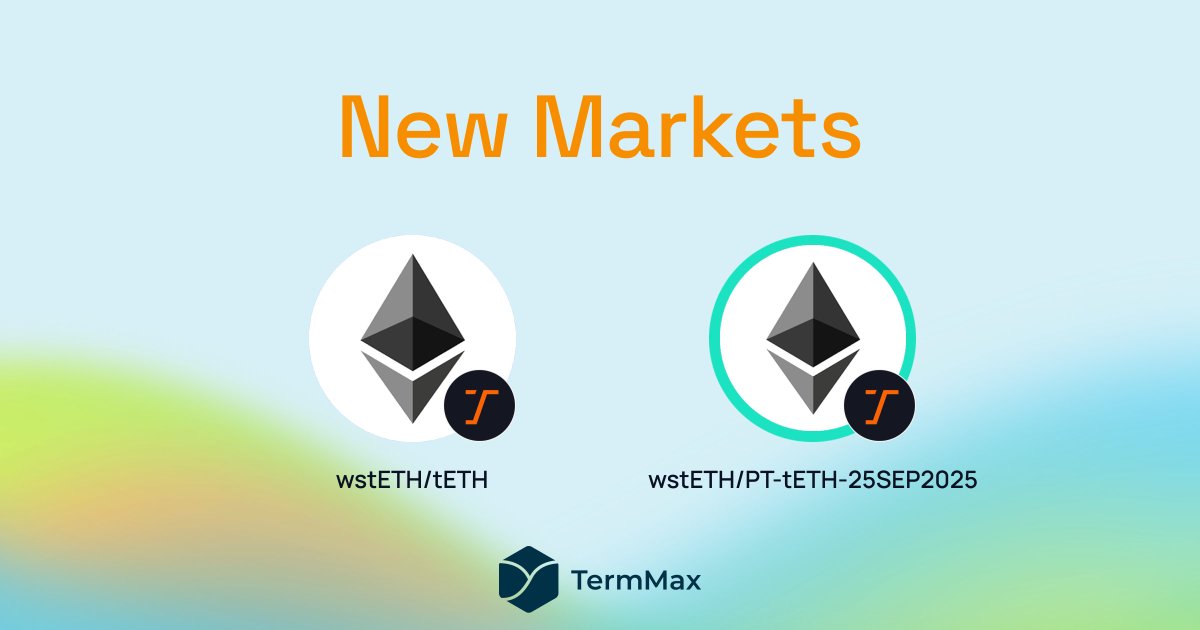
𝗛𝗼𝗽 𝗔𝗯𝗼𝗮𝗿𝗱 𝘁𝗵𝗲 𝗟𝗮𝘁𝗲𝘀𝘁 𝗙𝗹𝗶𝗴𝗵𝘁𝘀 𝗼𝗻 𝗧𝗲𝗿𝗺𝗠𝗮𝘅 ✈️
🛫 wstETH/tETH
🛫 wstETH/PT-tETH-25SEP2025
Secure your wstETH by borrowing against @Terminal_fi's tETH or @Pendle_fi's PT-tETH-25SEP2025 with a locked-in rate.
Ready for takeoff?
Start your journey here 👇
app.termmax.ts.finance/borrow?collate…
English
The era of AI is evolving too fast but we just don't know how far it will go yet thanks to our own efforts together with @ritualfnd
English
More wallets = More opportunities for all users to become part of the community
TermMax | Fixed Rate Borrowing & Lending@TermMaxFi
You can now use @WalletConnect on TermMax!
English
A new batch of POAP is ready for those joining at the AMA at discord.gg/qntrGErZ
Only in this way you can learn new alpha from builders and team members, so do not miss this event, which occurs although rarely but very long awaited 🛠️
Ritual Foundation@ritualfnd
Join us for a technical Community AMA with @Ritualnet engineers @arshankhanifar & @ckartik_. Peer behind the architecture powering the most expressive chain on earth. Get your answers straight from the builders behind the protocol🕯️ 📅 Wed, July 23 🕑 2pm UTC 📍Ritual Discord
English