Sucheta Tripathy

4.6K posts

Sucheta Tripathy banner
Sucheta Tripathy

Sucheta Tripathy

@tsucheta

Genome scientist working for CSIR-IICB. My family, lab, my mental and physical health are my priorities in that order. Mom to Ada, plants.

Kolkata, India เข้าร่วม Ocak 2009
631 กำลังติดตาม626 ผู้ติดตาม
ทวีตที่ปักหมุด
Sucheta Tripathy
Sucheta Tripathy@tsucheta·
A book of its own kind. A protocol book for Cyanobacteria was long overdue. With frustrations in existing protocols not reliably replicated, we standardized each of these protocols in the lab and have placed them in the book.
Subhajeet Dutta@Subhaje27888236

New book from our lab. A comprehensive detailed protocol for Cyanobacteria research. @genomicsLabIICB @tsucheta @CamScholars @CyanoTracker #Cyanobacteria #CyanobacteiaResearch @csir_iicb @CSIR_IND @ASMicrobiology @ICMRDELHI @DBTIndia

English
0
3
6
286
Sucheta Tripathy
Sucheta Tripathy@tsucheta·
An honest roadmap
Himanshu Sinha@hsinha1445

Jensen Huang said AI has 5 layers of value. India doesn't have a presence in any of them. ⚡ Layer 1 — Energy. A hyperscale AI campus now draws 1–2 gigawatts — a mid-sized nuclear reactor, for one building. China added nearly India's entire installed grid in new capacity last year. 💾 Layer 2 — Chips. The silicon brain and everything that makes it. → GPUs: Nvidia (US), AMD (US), Broadcom (US) design. TSMC (Taiwan) fabs at the cutting edge. → HBM, the high-speed memory beside every GPU: ~90% Korea. → ASML (Netherlands) has a monopoly on the one machine that prints the most advanced chips. → Silicon wafers ~60% Japan. Photoresist ~90% Japan. 🏭 Layer 3 — AI infrastructure. The data centre and everything around the chips. → Hyperscale cloud: AWS (US), Azure (US), GCP (US); Alibaba (China), Tencent (China). → Servers and AI-rack cooling: Supermicro (US), Vertiv (US), Schneider (France), Eaton (US). → Commodities: copper (Chile, Peru), niobium (~90% Brazil), rare earths (~85% processed in China). 🧠 Layer 4 — Models. Closed: OpenAI (US), Anthropic (US), Google (US), Meta (US). Open: DeepSeek (China), Qwen (China), Kimi (China). 💻 Layer 5 — Applications. ChatGPT (US), Copilot (US), Cursor (US), Claude Code (US), Agentforce (US). Mostly US. Increasingly Chinese. China has a presence in all 5. Korea owns HBM. Taiwan owns the cutting-edge factory. Netherlands owns the machine that makes it possible. India: Layer 1 — grid stretched, industrial power expensive and patchy. 24/7 clean power is hard to deliver today. Layer 2 — no frontier chip factory. Tata-PSMC (India-Taiwan) at ~28nm is a decade behind AI chips. India's chip design talent works for Nvidia (US), AMD (US), Qualcomm (US), Intel (US). Value flows to US balance sheets. Layer 3 — India builds the data center buildings (Yotta, Adani, Reliance) and generic industrial power and cooling gear (BHEL, Crompton, Blue Star). But no hyperscale cloud, and no specialized AI-rack cooling or power shelves. Every Indian AI startup runs on AWS (US) or Azure (US). Layer 4 — Sarvam, Krutrim (India). Real teams, orders of magnitude below the frontier. Layer 5 — Zoho, Freshworks (India) are real SaaS businesses, but their AI features — like most Indian AI-app startups — are thin wrappers on OpenAI (US), Anthropic (US), Google (US). And not agentic. Agents are where the flywheel lives. India has no agentic platform at that scale. This is a 30-year-old choice. India bet on services and not manufacturing. TCS, Infosys, Wipro, HCL (India) built a ~$250B export industry. It paid off. But services sit above the stack — they don't own any layer of it. India's AI Mission is ~$1B. China's is in the hundreds of billions. That's not a gap to close — it defines the game.

English
0
0
1
40
Sucheta Tripathy
Sucheta Tripathy@tsucheta·
@Ketanomy I dont know what makes you think it is a ubiquitous symbol of power. I too have a towel on my chair which is not white. I keep for the reason that I can just wipe my hands dry and it is handy...
English
0
0
0
30
Ketan
Ketan@Ketanomy·
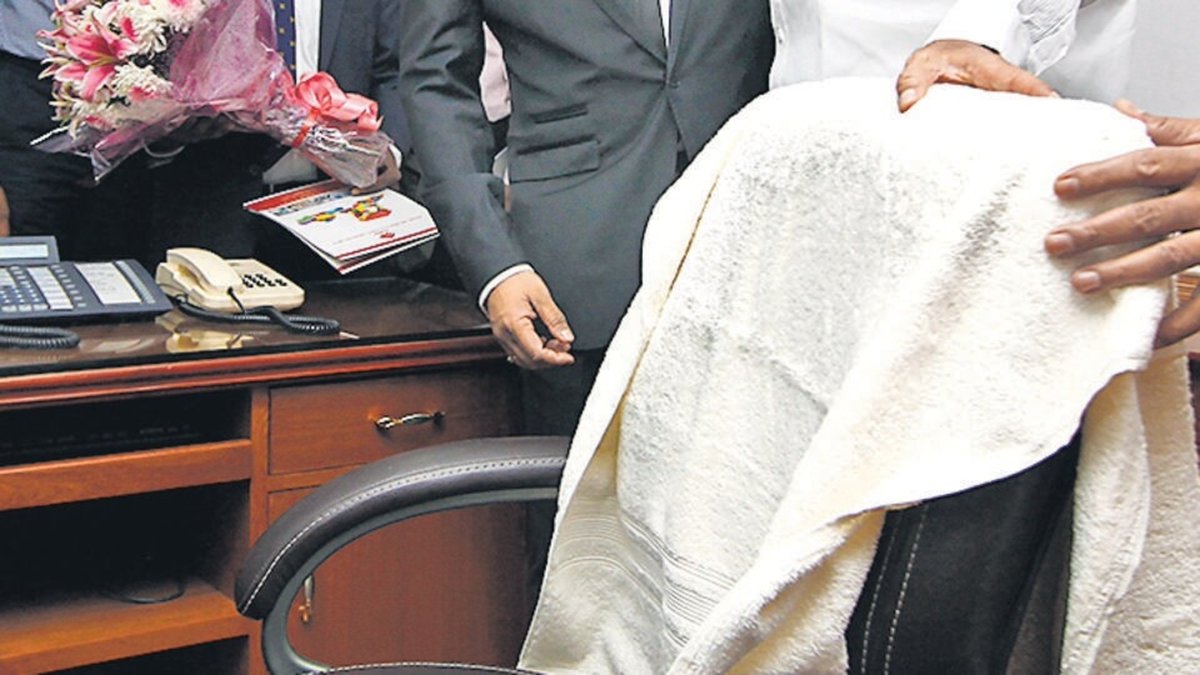
Walk into any government office in India, towels are a common sight on the chairs of bureaucrats. A ubiquitous symbol of power. Such is the importance of the towel that a few years ago in Uttar Pradesh, lawmakers filed complaints, aggrieved at not being offered chairs draped in white towels during visits to government offices, while pointing out that officers were "sitting on tall, betowelled chairs." The matter was serious enough that the state's parliamentary affairs department had to issue a formal directive to officials, reminding them of the existing hierarchy. The government ordered that MPs, MLAs and MLCs be given towel-adorned chairs "of the same height and decor" at meetings across the state. In the Uttar Pradesh secretariat in Lucknow, around 1,000 towels are changed twice a week, on Mondays and Thursdays😀
Ketan tweet media
English
171
383
2.5K
769.9K
Sucheta Tripathy รีทวีตแล้ว
Prof. Nikolai Slavov
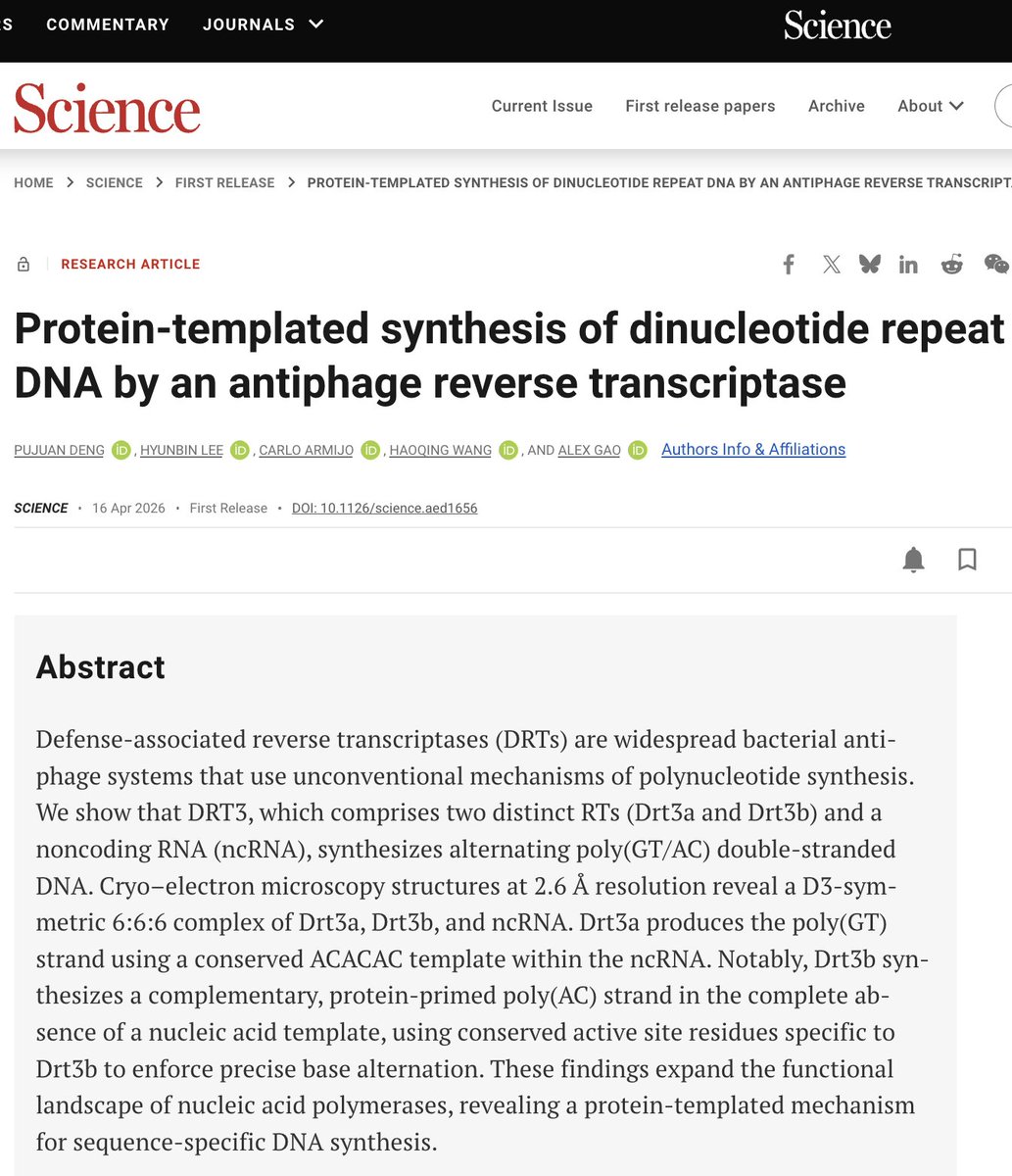
Bacteria are full of diverse molecular tricks. This Science article reports an interesting one that is being misrepresented by news coverage, including the coverage in Science. The study describes an enzyme complex that synthesizes alternating dinucleotide repeat DNA as part of an immune response. Protein templating DNA is a cool observation, even if the sequence is only a repeating dinucleotide. The headline-grabbing takeaway is the mechanism of the Drt3b subunit. While its partner, Drt3a, uses a canonical RNA template (reverse transcription), Drt3b synthesizes the complementary strand in the absence of a nucleic acid template. Instead, it uses specific amino acid residues (a glutamate and an arginine) to stabilize and "select" the incoming dNTPs. It is tempting to view this as a radical shift in our understanding of information transfer, a "protein-templated" genetic sequence. However, we should be cautious with the "paradigm shift" narrative. Why this isn't "rewriting" the Genetic Code: Despite claims in the news coverage, this finding does not represent a new form of hereditary information transfer. This is not a protein "reading" itself to create a complex message; rather, it is a highly specialized structural constraint. The protein is essentially a "stuttering" machine, physically keyed to produce a simple, repetitive sequence. The "information" is hard-coded into the protein's fold to perform a single, specific defensive task, rather than acting as a general-purpose template for diverse genetic messages. The Parallel to tmRNA: This observation is not entirely unprecedented when we look at how bacteria handle biochemical "dead ends." It reminds me of transfer-messenger RNA (tmRNA). In trans-translation, when a ribosome stalls on a broken mRNA, the tmRNA molecule steps in to provide both the tRNA component and a short mRNA "tag" to rescue the ribosome: - The "Non-Standard" Template: Much like tmRNA provides an external sequence to fix a stalled process, the DRT3 ncRNA and the Drt3b protein provide "internal" instructions to create DNA where no genomic template exists. - Specialized Rescue: Both mechanisms are niche "emergency" responses, one for proteostasis (tmRNA) and one for viral defense (DRT3). In the end, this discovery doesn't replace our understanding of the genetic code; it expands the "toolbox" of how cells can synthesize polynucleotides when the standard rules don't apply. It is a beautiful reminder that in the microbial world, if a chemical shortcut is possible, evolution has likely found it.
Prof. Nikolai Slavov tweet media
English
5
89
364
27.3K
Sucheta Tripathy รีทวีตแล้ว
Hemanth Govinde
Hemanth Govinde@HemanthGovinde·
github.com/Govinde18/govi… Vibe coded (Claude) PySide6-based molecular biology toolkit Run main.py to launch the UI includes: • Electrophoresis simulation • Cloning (RE + Gibson Assembly) • Primer design tools @ATinyGreenCell you might like this.
Hemanth Govinde tweet media
English
5
50
315
17.4K
Sucheta Tripathy
Sucheta Tripathy@tsucheta·
One day two celebrations!! Two of my brightest graduating on the same day on 10th April 26. It was a great joy to watch you grow. Wish you the best of everything in life.
Sucheta Tripathy tweet mediaSucheta Tripathy tweet media
English
2
1
5
47
Sucheta Tripathy
Sucheta Tripathy@tsucheta·
@livingdevops Very well said. We should have well laid out tax accounts for people. The more tax one pays, the more govt. benefits they get.
English
0
0
0
8
Akhilesh Mishra
Akhilesh Mishra@livingdevops·
Someone earning 60 LPA got laid off during oracle layoffs Last year, he paid ₹15 lakh in taxes. And paid over 1 crore in taxes in last 7 years. - Now, he has no salary. - He is going to lose his home as he can’t pay EMI - His kids are going to kicked out of school - He won’t have health insurance When someone start earning, government try to extract every penny they can in the name of - Stamp duty for home - GST in everything including schools fee and books - They even charge GST on health insurance, air purifier, water filter and 20 things as government failed to provide basic needs. When that same person loses his job, Government never show up to help. If taxpayers contribute in good times, shouldn’t government provide some protection in bad times too? No matter which political parties you support, result is same. I think it’s time we push our government to provision a separate policy for laid off employees. It’s time for government to show some support for its tax payers.
English
337
699
2.4K
147.1K
Sucheta Tripathy รีทวีตแล้ว
Vivo
Vivo@vivoplt·
15 AI related accounts you should follow on Twitter: 1. @karpathy His tweets already create LLMs narratives that you later see on linkedin in 2 months. 2. @fchollet posts thoughtful research on intelligence, benchmarks, and AI limitations. Keras creator + ARC-AGI 3. @ylecun Yann LeCun is Deep learning pioneer & Meta Chief AI Scientist; big-picture research takes and critiques (and drama). 4. @AndrewYNg Andrew Ng is AI education legend; practical ML advice, courses, and real-world implementation. creator of deeplearning ai 5 @rasbt Sebastian Raschka posts on Practical ML/LLM implementations, "build from scratch" tutorials, and books. 6. @dair_ai Weekly ML/AI paper threads and accessible research explainers (high-signal for staying current). 7. @lilianweng Lilian Weng is ex-OpenAI and her Lil'Log-style threads are good. has In-depth LLM research breakdowns 8. @jeremyphoward posts interesting takes on AI/crypto news, and works on democratizing practical deep learning and accessible education. 9. @simonw Simon post Practical LLM tools, takes, experiments, prompting, and engineering breakdowns. django co-founder 10. @_akhaliq Curates the latest arXiv papers, model releases, and open-source AI drops. 11. @ID_AA_Carmack AGI/low-level optimization takes that makes you think about the problem. 12. @gwern Really high-quality long-form AI research notes and essays. 13. @goodside LLM evaluation, prompting research, and real capabilities testing 14 @drfeifei Computer vision pioneer; human-centered AI and spatial intelligence research 15 @demishassabis Been following his work for 9 years. Demmis is my hope against google usurpating their power with AI. Demmis is google DeepMind's CEO Let me know who I missed guys
English
92
337
2.1K
289.9K
Cha
Cha@accscrt2431·
@Jennnyyyyyy We can solve it using system of linear equations in two variables... x+y = 10 x-y = 4 ---------- + 2x = 14 x = 14/2 x = 7 So, y = 10-7 = 3 73
English
12
1
168
14.1K
Jenny
Jenny@Jennnyyyyyy·
Riddle Time ⏰ Difficulty - Medium 😬
Jenny tweet media
English
5.7K
123
967
503K
Sucheta Tripathy รีทวีตแล้ว
Itai Yanai
Itai Yanai@ItaiYanai·
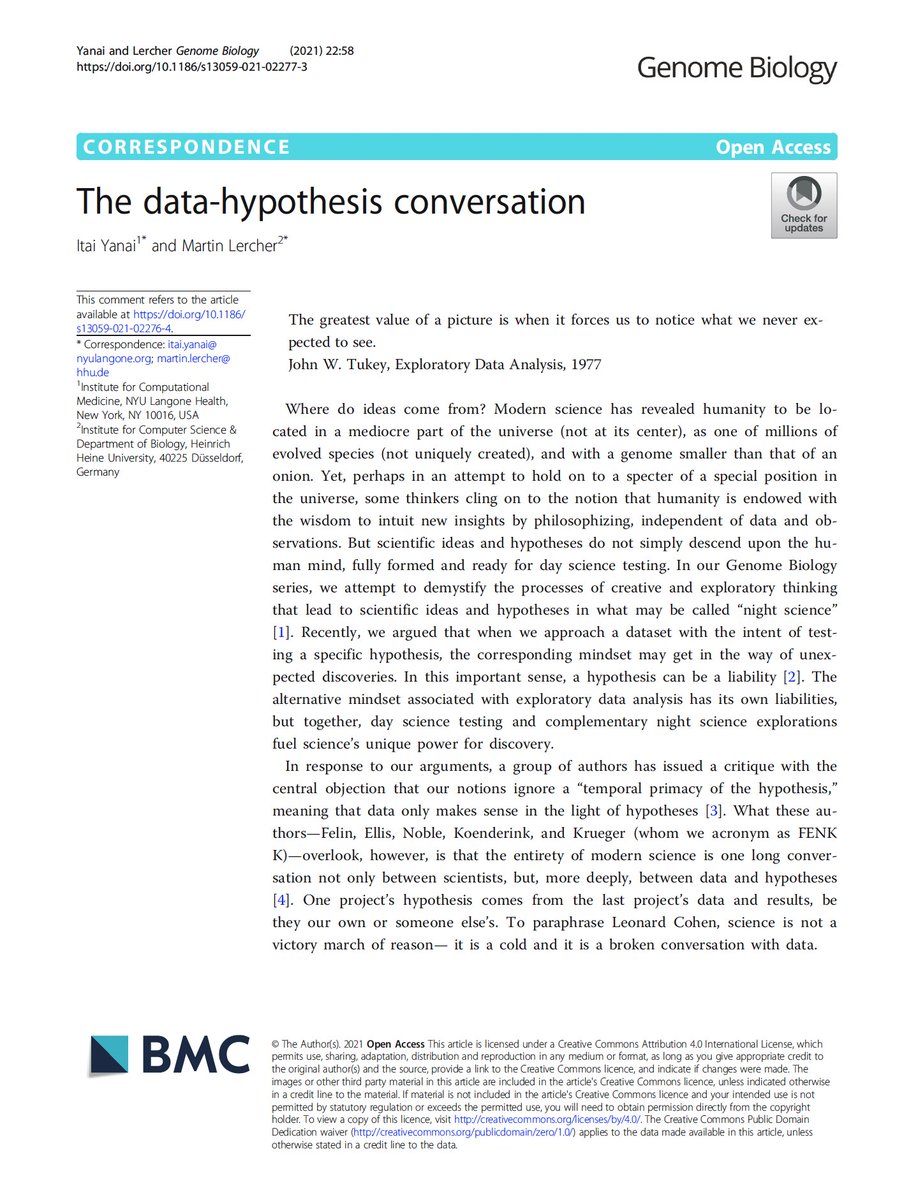
There's a strange myth about science: that theory comes first, and that data cannot show anything new. But anyone who's ever done science knows the truth that there's a long conversation between data & hypotheses. Back & forth.. until the discovery. And if you think about it, it has to be this way! (Night Science recap, Day 6)
Itai Yanai tweet media
English
11
67
281
23.1K
Sucheta Tripathy รีทวีตแล้ว
Ming "Tommy" Tang
Ming "Tommy" Tang@tangming2005·
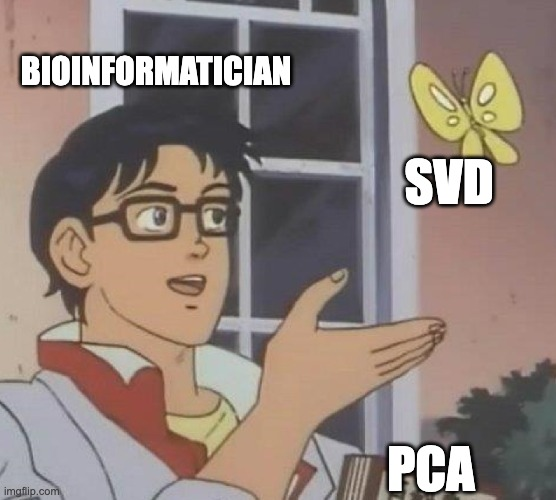
🧵 PCA is everywhere in bioinformatics—but did you know it’s just SVD in disguise? 1/ If you've done bioinformatics, you've likely used PCA. But did you know Singular Value Decomposition (SVD) is at its core? Let’s break it down. 👇
Ming "Tommy" Tang tweet media
English
1
10
73
7.9K
Sucheta Tripathy รีทวีตแล้ว
Niraj Rai
Niraj Rai@NirajRai3·
Genome India Project is out. 59 of 83 populations show higher inbreeding than Ashkenazi Jew- signals that we are only seeing the tip of the iceberg; scaling this to over 4,900 communities has the power to fundamentally redefine global clinical genetics. medrxiv.org/content/10.648…
English
23
151
639
74.6K
Sucheta Tripathy
Sucheta Tripathy@tsucheta·
Many Congratulations Dr. Geeta for successfully defending thesis and earning accolades. It was a joy to watch you grow and graduate into a fine scientist.
Sucheta Tripathy tweet media
English
1
0
7
62
Sucheta Tripathy รีทวีตแล้ว
Itai Yanai
Itai Yanai@ItaiYanai·
Doing science requires us to speak two very different languages: (1) Day science language is a highly precise and metaphor-free language for designing and executing experiments; while (2) Night science language uses analogies and anthropomorphizing to give us intuitions about the unknowns we explore. (Night Science recap, Day 4) link.springer.com/article/10.118… night-science.org
Itai Yanai tweet media
English
4
111
463
18.4K
Sucheta Tripathy รีทวีตแล้ว
Science Magazine
Science Magazine@ScienceMagazine·
#MachineLearning models discover thousands of bacterial immune systems, according to two new papers in Science. Together, these studies reveal that bacterial immunity is far more extensive than previously appreciated, and highlight how such discoveries can inspire powerful biotechnologies. 📄: scim.ag/3Qm3IXs 📄: scim.ag/47MowgS
Science Magazine tweet media
English
7
83
299
30.2K
Sucheta Tripathy รีทวีตแล้ว
Ihtesham Ali
Ihtesham Ali@ihtesham2005·
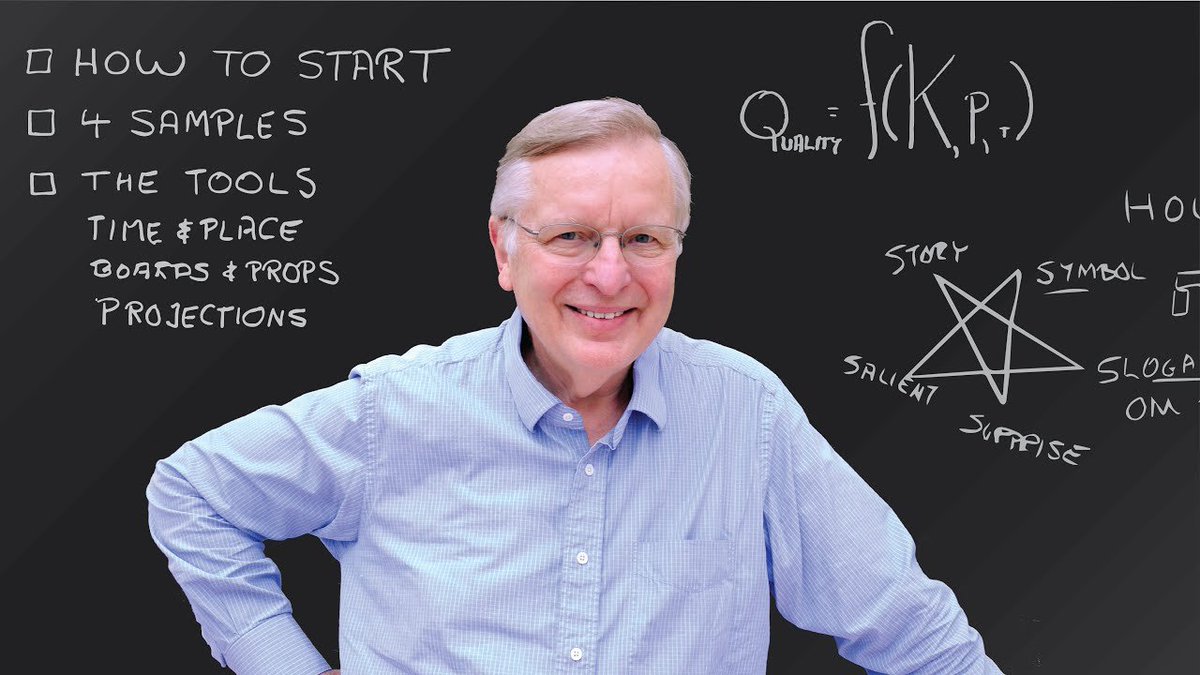
A MIT professor taught the same lecture every January for 40 years, and every single time it was standing room only. I watched it at 2am and it completely rewired how I think about communication. His name was Patrick Winston. The lecture is called "How to Speak." His opening line hit like a truck: your success in life will be determined largely by your ability to speak, your ability to write, and the quality of your ideas in that order. Not your GPA. Not your pedigree. Not your IQ. How you speak is what separates people who get heard from people who get ignored. Here's the framework he drilled into MIT students for four decades. He said never start with a joke. Start by telling people exactly what they're going to learn. Prime the pump before you pour anything in. He called it the "empowerment promise" give people a reason to stay in their seats within the first 60 seconds. Then he broke down the 5S rule for making ideas stick: Symbol, Slogan, Surprise, Salient, and Story. Every idea worth remembering hits at least three of these. The part that floored me was his "near miss" technique. Don't just show what's right show what almost looks right but isn't. That contrast is when the brain actually locks something in permanently. His final rule before any big talk: end with a contribution, not a summary. Don't recap what you said. Tell people what you gave them that they didn't have before they walked in. I've used this framework in pitches, interviews, and presentations ever since watching it, and the results are not subtle. Patrick Winston passed away in 2019, but this lecture is still free on MIT OpenCourseWare. One hour, watched by millions, and it costs absolutely nothing. The most important class MIT ever put on the internet isn't about code or math. It's about how to make people actually listen to you.
Ihtesham Ali tweet media
English
200
3.8K
20K
1.9M