
Thomas Gleeson

2.2K posts

Thomas Gleeson banner
Thomas Gleeson

Thomas Gleeson

@GleesonThomas

Co-Founder @storeheroapp helping DTC Brands grow profitability

NYC شامل ہوئے Mayıs 2012
1.6K فالونگ925 فالوورز
پن کیا گیا ٹویٹ
Thomas Gleeson
Thomas Gleeson@GleesonThomas·
Last night’s queue right before kick-off at Shopify New York 👇 Our biggest turnout yet, not entirely surprised given the topic at hand and the speaker lineup. AI is front and centre in every conversation right now, not just in DTC, but across every industry. In DTC alone, I’m seeing it used for everything from creative ideation and ad copy, to building complex Excel formats and onsite merchandising etc! Huge thanks to our speakers last night — @obviceo , @johnhickey1970 , Chris Maliwat — and the brilliant @Velstar_ duo, Joe Lyon & Greg Hughes, who flew in from the UK and will be around NY all week. We’re closing in on 800 members in the DTC Builders New York group. If you're in NYC, get involved — some big events coming up 👊 meetup.com/shopify-e-comm…
Thomas Gleeson tweet media
English
4
0
32
2.5K
Mat De Sousa
Mat De Sousa@DsMatie·
Interesting insights for Shopify App Founders This paper from Fabrizio (@judgeme @celispj ) is really interesting Seems like you guys didn't share it there, so I'm doing it Real data from: 1. ~24,000 Shopify apps 2. ~2.7 million stores 3. Thousands of installs and uninstalls Even though there are 24,000 apps: 1. Most apps never get installed 2. Only ~4,000 apps have real usage 3. Most merchants use 3 apps or fewer More than half of Shopify app categories are very competitive. No single app dominates. Even in big categories like: Discounts Upsells Email Bundles So launching in a “crowded” category is not stupid. The study shows something surprising: In almost 9 categories out of 10, older apps are losing users and newer apps are gaining users. That follows what I was saying: new apps are getting pushed by Shopify (Let me know if you want the full document from Fabrizio)
Mat De Sousa tweet media
English
67
10
156
19.8K
Thomas Gleeson ری ٹویٹ کیا
Taylor Holiday
Taylor Holiday@TaylorHoliday·
"GET YOUR ASS INTO THE SimGym!" - Unc Tobi Easily the most interesting feature that @Shopify announced today in their Winter '26 Edition was the "SimGym". It allows you to unleash thousands of AI personas on your store to test changes before a real human ever sees them. Driving the cost of learning to zero. Here are the 10 simulations to run on Day 1 to improve your contribution margin: 1. The Elasticity Stress Test: Take your top 5 bestsellers. Simulate a 5%, 10%, and 15% price increase. Find the exact breaking point where the drop in conversion rate outweighs the gain in margin dollars. 2. The Free Shipping "Thresholdbreaker": If your free shipping threshold is $75, simulate moving it to $100, $125, and $150. Find the maximum AOV lift the AI will tolerate before cart abandonment spikes. 3. The Offer Structure Deathmatch: Stop arguing about whether "Buy 2 Get 1 Free" is better than "25% Off." Run the sim. Which offer generates more net profit dollars (not just revenue) after accounting for the cost of goods? 4. The "Discount Detox": Simulate turning off your 10% welcome pop-up completely. Does the increase in full-margin sales outweigh the drop in list growth and conversion? 5. The Aggressive Cross-Sell: How much friction can you add to the cart? Test aggressive, multi-step upsell flows in checkout. Find the line between "AOV boost" and "rage quit." 6. The Returns Policy Squeeze: Simulate a stricter return policy (e.g., adding a small restocking fee or shorter windows). If front-end conversion only drops 0.5% but you save 4 points of margin on returns, that’s a massive win. 7. Merchandising for Margin (Not Volume): Re-sort your collection pages to prioritize your highest % margin products first, rather than your bestsellers. Does demand shift profitably, or do users bounce? 8. The "Subscription Default": Simulate making "Subscribe & Save" the pre-selected default option on PDPs instead of "One-time purchase." Measure the impact on immediate conversion vs. projected LTV. 9. The High-Ticket Lander Validation: Before you drive paid traffic to a new bundle page designed to spike AOV, run it through the simulator against your standard PDP. Validate the economics before you validate the ad spend. 10. SKU Rationalization Sim: Take your lowest margin SKU. Simulate deleting it entirely. Does that demand shift to a higher margin alternative, or does it leave the store? eCom is moving from a creative industry to an engineering discipline. Stop guessing. Start simulating. This is a huge step in progressive truth.
Taylor Holiday tweet media
English
7
4
83
11.6K
Kanish
Kanish@KanishDigital·
If not lifetimely app, are there any other app options that you are using, that show cohort retention numbers clearly and other details?
English
1
0
1
189
Thomas Gleeson ری ٹویٹ کیا
Edward Upton
Edward Upton@eUpton·
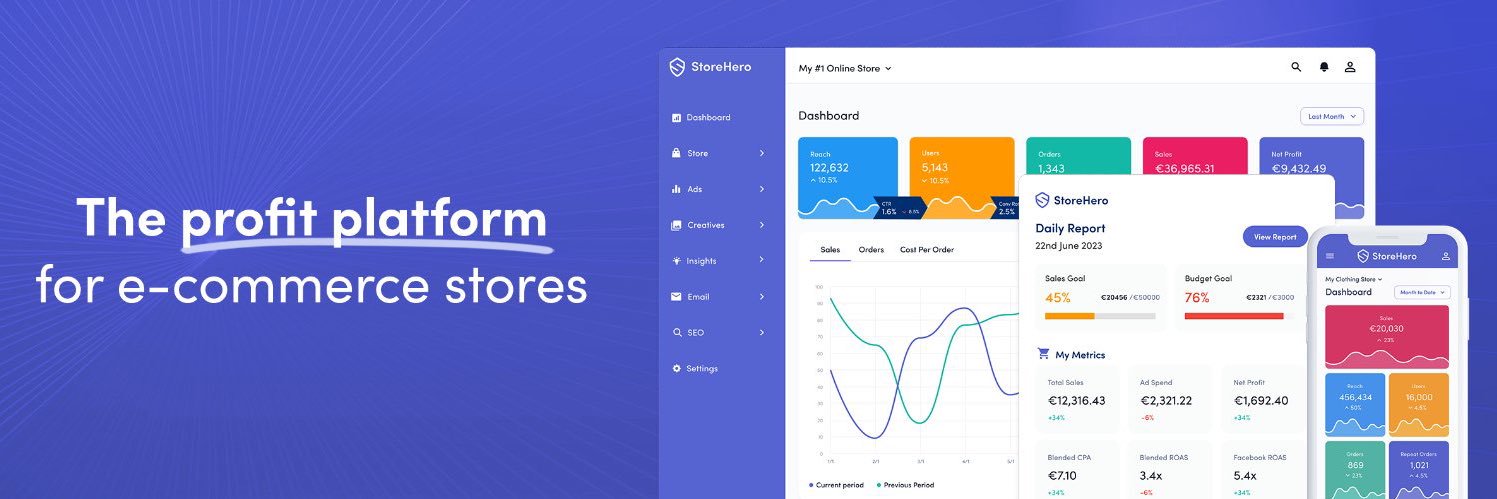
Every week I hear: “We're trying a new attribution tool.” And every time I think, “That won’t fix your signal.” StoreHero’s guide to tracking puts numbers to the problem: Browser-based tracking is now missing 30-40 % of conversion events. Ad blockers, ITP, cookie limits, browser lockdowns. The browser is the weakest link in your data pipeline. Attribution tools do not fix that. They analyse the data. They do not repair it. If your tracking is: ❌ Leaky ❌ Incomplete ❌ Blocked …then every ROAS model you build on top is already wrong. The sequence has to be: 1. Fix the signal Move tracking server-side so every Shopify checkout, subscription, and upsell is captured, even when the browser drops out. This is exactly where Littledata focuses: a reliable server-side Shopify data layer that ad platforms can trust. 2. Then layer attribution on top Tools like StoreHero become far more useful once the inputs are accurate. That is when you get real answers to: ✔ Are these campaigns actually profitable? ✔ What is our true ROAS once costs are included? ✔ How much can we afford to spend to acquire a new customer? ❌ Bad signal → Bad attribution → Wasted spend ✅ Clean signal + Profit clarity → Sustainable scale Thank you to Thomas Gleeson for including Littledata in the guide. Worth a read: storehero.ai/server-side-tr…
English
0
1
5
58
Thomas Gleeson
Thomas Gleeson@GleesonThomas·
@jforjacob I was just about to suggest matrixiy here. Not ideal and a big hacky. Good feature request though, will get this added asap
English
0
0
0
51
Jacob
Jacob@jforjacob·
@GleesonThomas What I’m doing now is having to install Matrixify app, add a column to the CSV for “tags”, import to matrixify, update the customers in shopify with the tag, then create the custom cohort in Lifetimely Seems long winded
English
1
0
1
864
Jacob
Jacob@jforjacob·
Is there no way to import a CSV list of customers to Lifetimely to create a custom cohort?
English
2
1
9
5.4K
Thomas Gleeson ری ٹویٹ کیا
Harley Finkelstein
Harley Finkelstein@harleyf·
Curious what people are buying this Black Friday? Just talked about it on @CNN Early Start Nice job @aloyoga, @cozyearth, Merit
English
21
7
163
11.3K
Thomas Gleeson
Thomas Gleeson@GleesonThomas·
@andrewjfaris I would add the cogs\gm% line is always usually wide open for 90% of brands to save a few %.
English
1
0
1
24
Thomas Gleeson
Thomas Gleeson@GleesonThomas·
@andrewjfaris Where do you typically put agency fees out of curiosity? We get so many varying opinions on this one.
English
2
0
0
350
Andrew Faris
Andrew Faris@andrewjfaris·
If you give me a brand's PNL and say, "What's the first place you look to identify more opportunities to grow profitability?" my answer is: OpEx as a % of revenue. It's not always the place with the opportunity for the BIGGEST total impact, but it is often the place where it's easiest to spot a problem and fastest to fix it. If you're >$3M in revenue and paying more than 15% of your revenue in OpEx (or don't have a clear path to getting there) something is probably wrong, and fixing it is fast.
English
16
1
39
13.3K
Thomas Gleeson ری ٹویٹ کیا
tobi lutke
tobi lutke@tobi·
Big week for all commerce / retail entrepreneurs. Let’s go.
English
43
44
875
69.3K
Thomas Gleeson ری ٹویٹ کیا
Irlandarra
Irlandarra@aldamu_jo·
Hungary 🇭🇺 2 Ireland 🇮🇪 3 Ireland has qualified for the World Cup playoffs with a goal in the 96th minute. Congratulations Ireland!!
English
49
199
1.6K
207.2K
Thomas Gleeson ری ٹویٹ کیا
Taylor Holiday
Taylor Holiday@TaylorHoliday·
The next wave of 9 figure exits in eCommerce won’t be Brands, SaaS or agencies. They’ll be SEANs — Software Enabled AgeNcies. The line between software and service is disappearing, and a new hybrid model is emerging in its place. A SEAN combines the scalability and predictability of SaaS with the human leverage and outcome-orientation of an agency. It’s the inevitable result of two business models, software and agency, collapsing into one. (And yes, the name is a wink to DTC Twitter’s favorite @seanfrank, because he is the hired spokesperson for every “SEAN”.) The convergence is a result of tectonic shifts in our landscape. SaaS is under pressure. In the mid-market and lower tiers of eCommerce, the expectation of value per dollar is so high that monetizing pure software has become nearly impossible. The dream of self-serve software, like Slack, where users can derive value in a completely autonomous manner doesn't exist. Most brands can’t extract value from software without guidance. And the truth is they don’t want tools; they want outcomes. At the same time, agencies are evolving. AI and automation have made them faster, leaner, and more consistent. Internal tools, scripts, and proprietary systems are replacing headcount. The best agencies now behave like SaaS products, predictable, scalable, and data-driven. But they also possess a critical feature that most SAAS doesn't, accountability for the outcome. These two forces are colliding. SaaS companies are adding services: onboarding, customer success, weekly strategy calls. Agencies are adding software: proprietary dashboards, AI layers, internal platforms. Both are converging on the same destination, SEAN. Modern examples include Haus, Fulfill, Fermat, Saras Analytics, Icon and US (CTC) each blending automation, software, and human expertise into a single, productized experience. The economics are the key to understanding what is happening. SaaS was prized for revenue quality and scale, predictable ARR, great retention, and strong LTV/CAC (3:1). SEANs achieve similar economics through a slightly different route and with slightly less total scale. Gross margins drop from 90% to something closer to 60-70% as you add the human component, but net revenue retention still exceeds 100%, growth rates remain healthy, and operating expenses shrink thanks to AI and systemization. The market rewarded SaaS not for its form but for its financial model, and SEANs can come close to replicating that performance through a hybrid structure. The benefit of eCom SAAS becoming SEAN's is that it reframes the pricing comparison for brands. Currently, SaaS sells into a brand’s software budget, maybe 1–3% of revenue. Agencies sell into the labor budget, often more like 10–12%. SEANs have the potential to reframe pricing around labor replacement, not software cost, expanding TAM and aligning pricing with true value delivered. Investors are beginning to see it too. Many “SaaS” businesses are actually SEANs pretending to be pure software for the multiple, but the market is catching up. SAAS multiples are experiencing compression. Meanwhile, agencies that leverage technology are seeing multiple expansion as their margin and predictability increase. The two curves are converging toward a shared financial reality. Ultimately, customers don’t care whether it’s software or service, they care if it works. The delivery model that can guarantee outcomes through automation, human intelligence, and proprietary systems will win. The best SaaS companies will look like agencies. The best agencies will look like SaaS. The winners will be SEANs, Software Enabled AgeNcies, owning the middle ground where revenue quality meets operational leverage and customer's take home the lion's share of surplus value creation.
English
39
10
172
63.6K
Thomas Gleeson
Thomas Gleeson@GleesonThomas·
After a lot of conversations with StoreHero customers, I decided to put together a quick blog on new customer offers! (low CAC is not your friend) storehero.ai/blog-how-to-bu…
English
1
0
3
53
Johnny Hickey🐊 🇺🇸
Johnny Hickey🐊 🇺🇸@johnhickey1970·
Listen up. We’re about to start doing local meetups around the country. About ten years ago, I started a real estate meetup in upstate New York, and it blew up. People drove for hours to come. I’ve been building communities ever since. @michael_upstack @ChrisLangSocial and I are bringing that same energy to DTC. We’re organizing small, local events where brand owners can connect, learn, and build genuine relationships. @SanjayAtPlay is doing Dallas @TalktoHenryJ is talking about Atlanta We’re seeking local partners to assist in finding suitable spaces and help keep costs low. The goal is simple. High impact. Low cost. Big value. If you want to be part of it, this is the time to get in. Let me know if you'd like to help host in your city. I'm thinking 6-10 times a year, so 1x a month
English
5
1
19
35K
Thomas Gleeson ری ٹویٹ کیا
Des Traynor
Des Traynor@destraynor·
Stellar article by @collision detailing how the Irish government is now just a bloated mess that does nothing, slowly All progress stalls due to an epidemic of committees, NGOs, Quangos all of whom myopically focus on self preservation and local metrics. irishtimes.com/life-style/peo…
English
35
56
620
46.1K