
پن کیا گیا ٹویٹ
high_byte
14K posts


high_byte
@high_byte
ai, software dev, cyber security and whatever else
شامل ہوئے Mart 2016
4K فالونگ5.7K فالوورز



btw this is an engineering project you can do at home
buy electrodes, buy cockroach, attach, control cockroach with phone
they sell kits for $199.99

Rowan Cheung@rowancheung
NATO is testing live cockroaches as AI-powered spy drones. Incredible AI engineering, but also something I kinda wish I hadn't learned about: > Swarm Bio-tactics wired real cockroaches with electronic backpacks containing AI hardware, radios, cameras, and microphones. > Cockroaches are steered by sending electrical signals directly into the insect's nervous system > They can crawl through rubble, tunnels, and spaces where drones can't fly, and troops shouldn't go, transmitting data back the entire time. > Within one year, they went from concept to field-validated systems with paying NATO customers, including the German military. The qualities that make them useful for military recon (small, silent, nearly undetectable) are exactly what make them creepy. ...International laws weren't written with cyborg insects in mind.
English
@SuhailKakar I think this is the correct take
Vadim@zacodil
nobody accidentally swaps $50M into a pool with $36K of liquidity lol. fresh wallet, $50.4M from Binance, zero slippage protection, routed through the jankiest Sushiswap path possible. and then an MEV bot just happens to flash borrow $29M from Morpho in the same block and pocket $9.9M? cmon. 0xngmi called this exact play a year ago - construct a deliberately terrible swap, let a friendly bot extract the value, dirty money comes out the other side as "legit MEV profit." $154K per AAVE isn't a fat finger. it's a laundering fee
English

i love defi but this is bad. really bad
this isn't on aave or cow swap. the contracts did their job. but a checkbox on mobile being the only thing between you and losing $49.9M to slippage? come on
permissionless =/= unprotected. wallets and frontends need to show the actual loss in big red numbers, force splits on large orders, something. anything
the tech worked. the ux didn't. and in defi bad ux costs millions
we can do better
Stani.eth@StaniKulechov
Earlier today, a user attempted to buy AAVE using $50M USDT through the Aave interface. Given the unusually large size of the single order, the Aave interface, like most trading interfaces, warned the user about extraordinary slippage and required confirmation via a checkbox. The user confirmed the warning on their mobile device and proceeded with the swap, accepting the high slippage, which ultimately resulted in receiving only 324 AAVE in return. The transaction could not be moved forward without the user explicitly accepting the risk through the confirmation checkbox. The CoW Swap routers functioned as intended, and the integration followed standard industry practices. However, while the user was able to proceed with the swap, the final outcome was clearly far from optimal. Events like this do occur in DeFi, but the scale of this transaction was significantly larger than what is typically seen in the space. We sympathize with the user and will try to make a contact with the user and we will return $600K in fees collected from the transaction. The key takeaway is that while DeFi should remain open and permissionless, allowing users to perform transactions freely, there are additional guardrails the industry can build to better protect users. Our team will be investigating ways to improve these safeguards going forward.
English
@AutismCapital I think this is the correct take
x.com/zacodil/status…
Vadim@zacodil
nobody accidentally swaps $50M into a pool with $36K of liquidity lol. fresh wallet, $50.4M from Binance, zero slippage protection, routed through the jankiest Sushiswap path possible. and then an MEV bot just happens to flash borrow $29M from Morpho in the same block and pocket $9.9M? cmon. 0xngmi called this exact play a year ago - construct a deliberately terrible swap, let a friendly bot extract the value, dirty money comes out the other side as "legit MEV profit." $154K per AAVE isn't a fat finger. it's a laundering fee
English

This is actually a great teachable moment about money. While one dude may worry about being able to pay bills on time there’s some other dude who literally kept $50M on his cell phone to just yolo randomly into shitcoins. Warning? Extreme slippage? Didn’t even care. SWAP. There are levels to the game. Insane.
Stani.eth@StaniKulechov
Earlier today, a user attempted to buy AAVE using $50M USDT through the Aave interface. Given the unusually large size of the single order, the Aave interface, like most trading interfaces, warned the user about extraordinary slippage and required confirmation via a checkbox. The user confirmed the warning on their mobile device and proceeded with the swap, accepting the high slippage, which ultimately resulted in receiving only 324 AAVE in return. The transaction could not be moved forward without the user explicitly accepting the risk through the confirmation checkbox. The CoW Swap routers functioned as intended, and the integration followed standard industry practices. However, while the user was able to proceed with the swap, the final outcome was clearly far from optimal. Events like this do occur in DeFi, but the scale of this transaction was significantly larger than what is typically seen in the space. We sympathize with the user and will try to make a contact with the user and we will return $600K in fees collected from the transaction. The key takeaway is that while DeFi should remain open and permissionless, allowing users to perform transactions freely, there are additional guardrails the industry can build to better protect users. Our team will be investigating ways to improve these safeguards going forward.
English

3/ Most if-statements are simple. Treat them that way.
`{% if product.available %}` — Liquid was treating EVERY condition like it might be a complex boolean chain.
autoresearch: detect single conditions upfront, skip the full evaluator entirely.
Common case → fast path.
English
Tobi just ran /autoresearch on Liquid — Shopify's 20-year-old template engine used on EVERY store.
Result: 53% faster, 61% fewer memory allocations.
Here's what the AI actually found that humans missed for 2 decades 🧵
tobi lutke@tobi
OK, well. I ran /autoresearch on the the liquid codebase. 53% faster combined parse+render time, 61% fewer object allocations. This is probably somewhat overfit, but there are absolutely amazing ideas in this.
English

the ultimate solution is through technology
we engineer what has been called a bodyoid: brainless animal bodies that provide as much meat as we desire without harming any sentient beings
this would transform medicine - the same platform would allow us to grow organs on demand, eliminate transplant waiting lists, and produce perfectly matched tissues for each patient
experimental therapies could be tested on full biological systems without involving conscious animals, regenerative medicine would accelerate as entire replacement tissues become manufacturable
in the same way that agriculture turned food from a scarce resource into an abundant one, engineered bodyoids would turn biological material into infrastructure - meat without slaughter, organs without donors, and medical research without sentient suffering

Lewis Bollard@Lewis_Bollard
Hidden on page 744 of the farm bill the House Agriculture Committee passed Thursday is a provision that would condemn millions of pigs to a lifetime in gestation crates. Rebranded the 'Save Our Bacon Act,' it's a pork-industry play to wipe out every state law banning the sale of pork from crated pigs — laws the conservative Supreme Court upheld in 2023. Over 85% of Democrats and Republicans oppose these crates. Voters have backed ballot measures to ban them in state after state. The pork industry knows it can't win a straight vote on this. So it's burying the provision in an 800-page bill and hoping no one notices. Contact your senators and representative today and tell them: oppose the farm bill unless the Save Our Bacon Act is stripped out. You can reach them at senate.gov and house.gov — it takes two minutes and it matters.
English

I found something.
One of those stupid tricks that feels too dumb to work.
You see, GPT *loves* writing code.
Way more than running it.
And way, way more than testing it.
So sometimes: "test your code"
Becomes: "it compiles" "LGTM."
Then it never runs the code.
The fix I came up with is stupidly simple.
I gave it one function that:
1. Opens a browser
2. Waits
3. Takes a screenshot
4. Saves it
5. Prints the path
take_screenshot()
->
Enjoy: *screenshot*
Magic screenshot tool.
Don’t ask questions.
Then I wired it to /bin as a single command.
And kept it far away from the project code so GPT wouldn’t "improve" it.
I left GPT looping all night on a frontend project with this.
Prompt: "Use this to take screenshots"
Made a ridiculous difference.
---
The code
---
const fs = require('node:fs')
const { spawn } = require('node:child_process')
const sleep = milliseconds => new Promise(resolve => setTimeout(resolve, milliseconds))
const cdp = (socket, method, params = {}) => new Promise(resolve => {
socket.onmessage = event => resolve(JSON.parse(event.data).result)
socket.send(JSON.stringify({ id: 1, method, params }))
})
async function captureScreenshot() {
const PORT = 9222
const URL = 'http://127.0.0.1:3333'
const OUTPUT_PATH = 'screenshot.png'
const chrome = spawn('google-chrome', ['--headless=new', `--remote-debugging-port=${PORT}`, URL], { stdio: 'ignore' })
await sleep(3000)
const socket = new WebSocket(((await (await fetch(`http://127.0.0.1:${PORT}/json/list`)).json()).find(target => target.type === 'page')).webSocketDebuggerUrl)
await new Promise(resolve => socket.onopen = resolve)
fs.writeFileSync(OUTPUT_PATH, Buffer.from((await cdp(socket, 'Page.captureScreenshot', { format: 'png' })).data, 'base64'))
socket.close()
chrome.kill('SIGKILL')
console.log(`Screenshot captured to ${OUTPUT_PATH}`)
}
captureScreenshot()
English


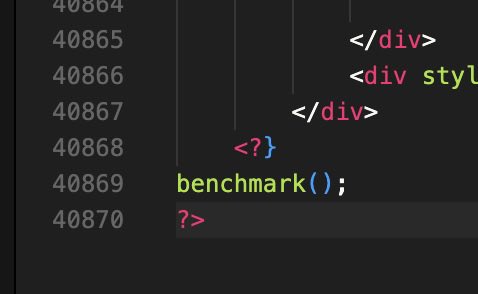
photoai.com is a 40,870 line file called index.php
$105,000/mo revenue
$80,000/mo profit
jonah@jonahseguin
29k+ lines of php in 1 file. this guy is richer than me. fml
English

The CIA psyoped the whole world into thinking space is an empty vacuum.
They solved physics decades ago, but the only way to keep it secret was to lie to everyone.
Cat's out of the bag now, nuclear secrets are leaking on social media.
Ashton Forbes@AshtonForbes
They covered up cold fusion and these videos prove it. The 'orbs' are non-thermal plasmas producing fusion not from temperature, but precise collisions of particles at resonance conditions to maximize the cross section. UFOs are fusion reactor, particle colliders. They're making a black hole aka wormhole.
English
@mntruell @hive_echo I love cursor as general purpose ai interface.
today I used its terminal to edit a video with ffmpeg.
before that I used it to create graphviz diagrams of my architecture.
English

We believe Cursor discovered a novel solution to Problem Six of the First Proof challenge, a set of math research problems that approximate the work of Stanford, MIT, Berkeley academics. Cursor's solution yields stronger results than the official, human-written solution.
Notably, we used the same harness that built a browser from scratch a few weeks ago. It ran fully autonomously, without nudging or hints, for four days.
This suggests that our technique for scaling agent coordination might generalize beyond coding.
English
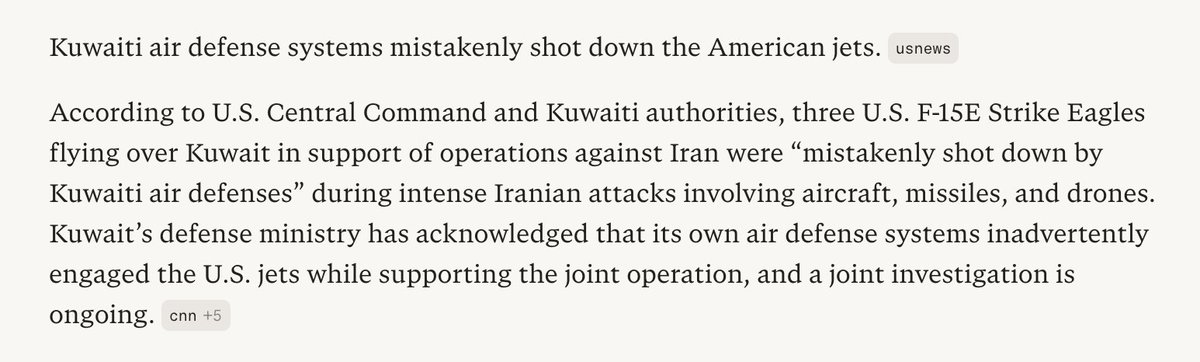

@high_byte American defense system downed American jet.
English
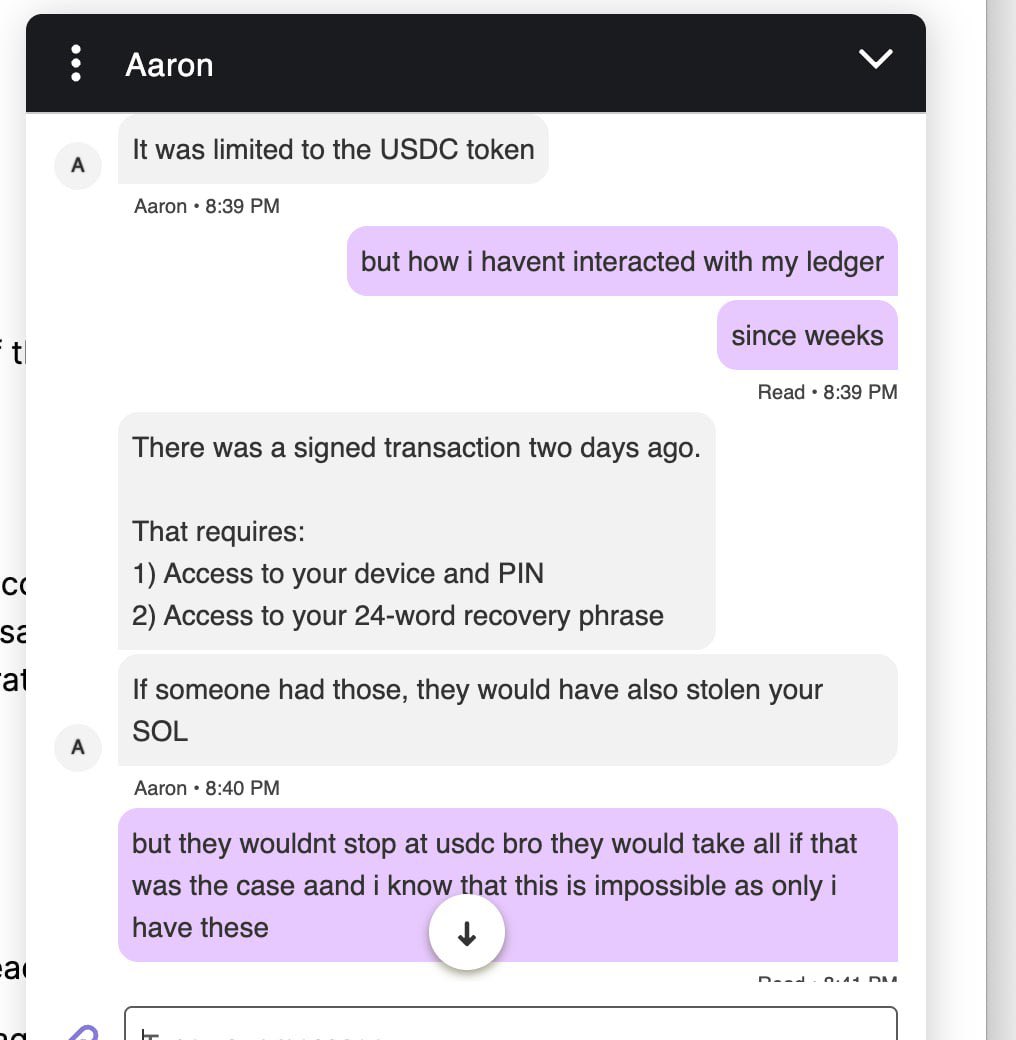
@Canissolana @Ledger @zachxbt possible scenarios
- fake ledger
- poorly randomized seedphrase (unlikely would only drain usdc?)
- or you forgot you did one of the things you say you didn't do (eg. aporoving usdc somewhere)
English

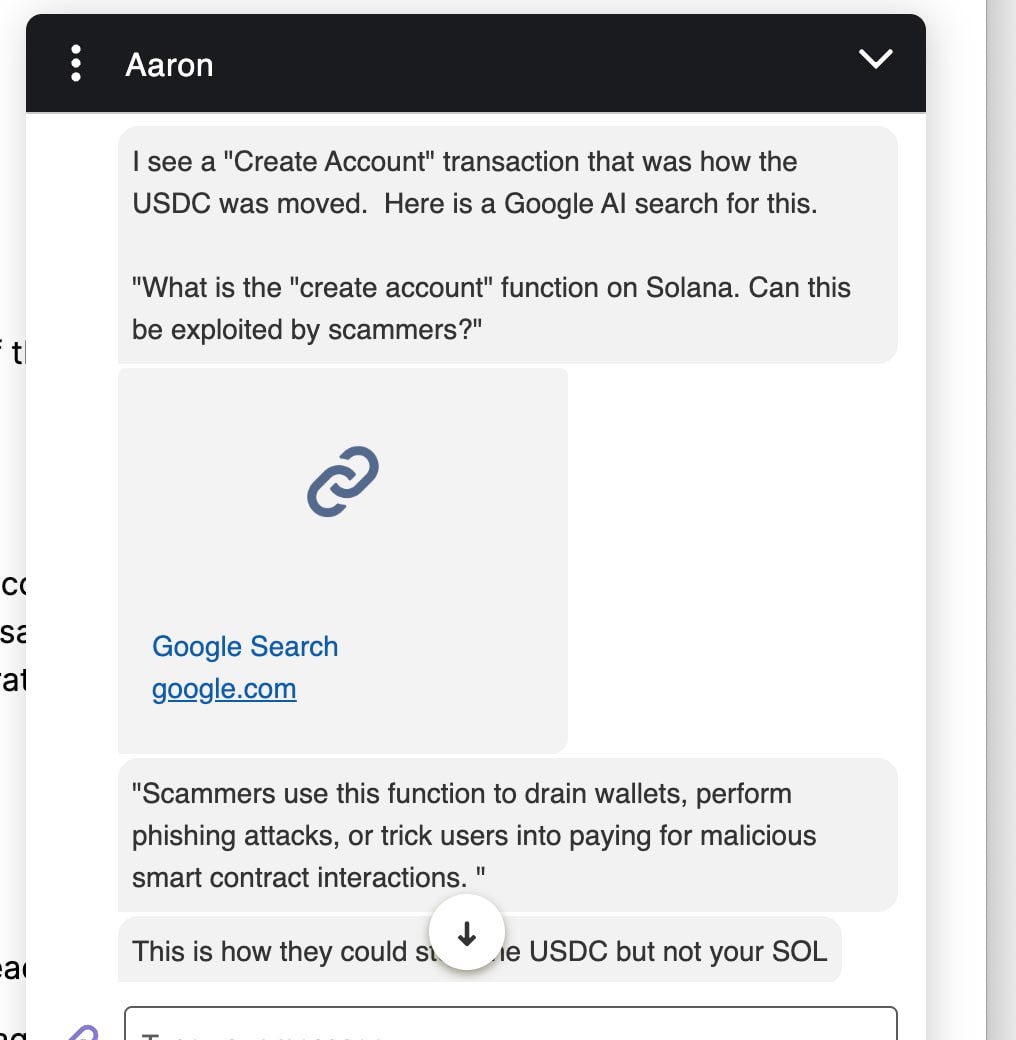
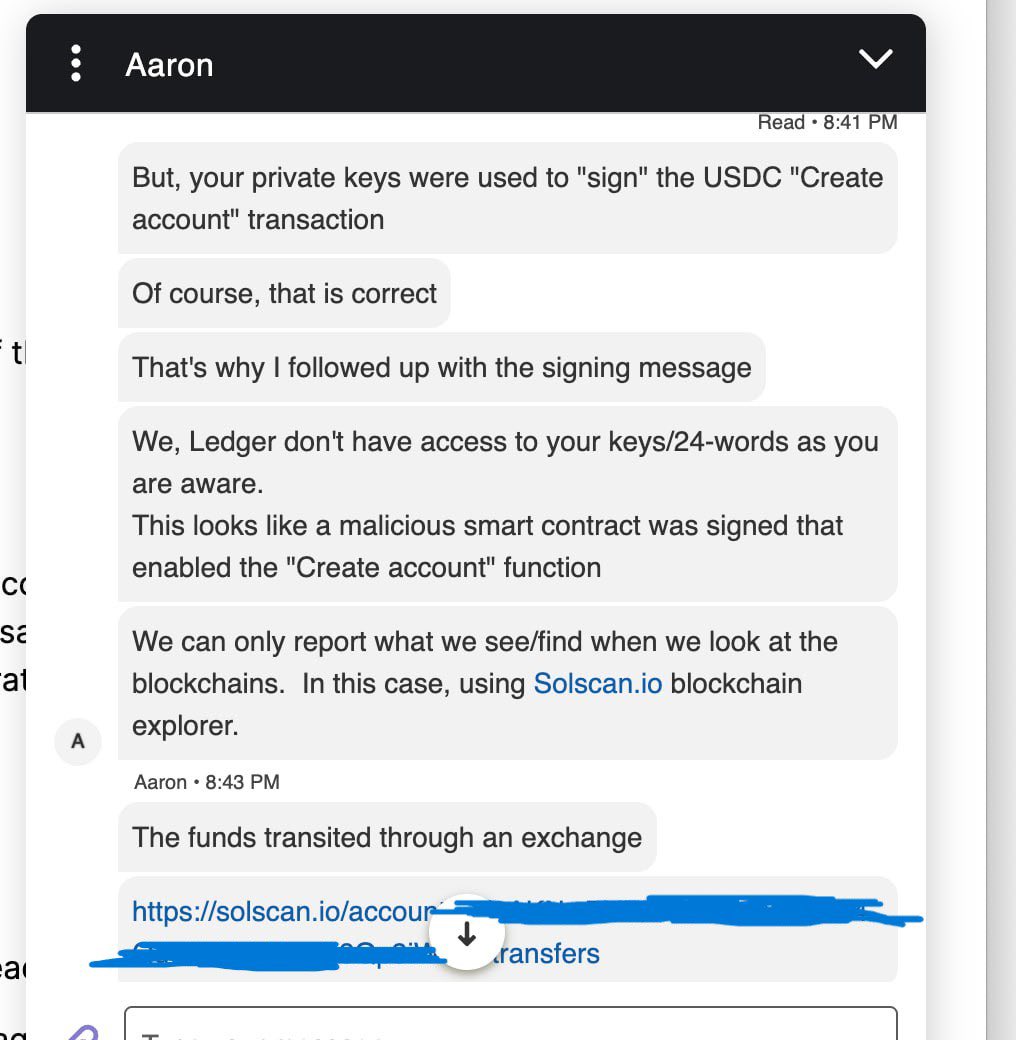
I am reporting an unauthorized withdrawal of approximately 30,000 USDC from my Ledger-secured wallet.
The wallet was protected by a @Ledger hardware device. The recovery phrase (private keys) has never been shared, digitized, photographed, typed, or exposed to any third party. The Ledger device itself is used exclusively on a dedicated MacBook (Apple M4), which was purchased fresh and is used only for Ledger transactions. This laptop is not used for browsing, downloads, third-party wallet connections, or any other activity unrelated to Ledger.
The @Ledger device is not used on any other computer. It has not been connected to any unknown software, websites, or external wallet interfaces. I have not opened or used the Ledger wallet for several weeks prior to discovering the incident. I did not initiate, confirm, or sign any transaction authorizing this withdrawal.
Upon reviewing the blockchain transaction history, I discovered that approximately 30,000 USDC was transferred out of my wallet without my knowledge or authorization. The funds were subsequently sent to Bitget.
I am 100% certain that:
The recovery phrase has never been exposed.
No transaction was manually confirmed by me.
No third party has had physical access to the Ledger device.
The dedicated MacBook has not been used for any other crypto-related activity outside Ledger.
This withdrawal was not authorized by me in any form, and I require a full explanation as to how such a transaction could have been executed under these conditions. HELP
English



Reels make you retarded.
We should get our adversaries addicted to Reels.
Hey, wait a minute! 🤔
Nicholas Fabiano, MD@NTFabiano
Addiction to short-form videos reduces brain activity in the frontal lobe weakening the ability to focus.
English
@the_smart_ape @Polymarket ps. I love your dashboard dm I would love to hire / pay per project for something like this
English
@the_smart_ape @Polymarket highly likely this is a data issue
my guess is the historic resolution is wrong and/or differs between delta prices and token prices
possibly historic data is 1 minute resolution and this skews the results
because I can tell you empirically this is wrong
English

I had the same impression that the UP side looks underpriced on the BTC 5-min markets on @Polymarket.
But it now seems like the data is starting to confirm it.
When the BTC price = BTC target and there are 30 seconds left (that’s the box with the red arrow below) the UP is priced at 0.31, while the logical price should be around 0.5.
The data collected so far shows that the actual UP rate in this setup is indeed close to 0.5.
It still needs more data to fully confirm, but I think it’s definitely worth looking into.
My guess is that it could be due to the overall bearish sentiment on Bitcoin.
But in theory, global BTC sentiment shouldn’t really affect ultra-short-term prediction markets.

Pudgy 3588@pudgy3588
18 hours of data. 1.28M samples. 218 resolved rounds. 100ms resolution. here's what the data says so far. THE MARKET IS MISCALIBRATED when polymarket prices UP at $0.35 (implying 35% chance BTC goes up), the actual win rate is 47%. when it says 50/50, it's actually 60%. when it says 60%, it's 75%. systematic underpricing of UP across every single bucket. the crowd overestimates DOWN. 218 rounds is a small sample. BTC was trending up during this window, which naturally biases toward UP wins. need 500+ rounds to separate structural miscalibration from trend noise. that's exactly why we're collecting 7 full days. WHEN DOES THE MARKET "KNOW"? this is the most interesting finding. the opening price is basically a coin flip — 55.8% accuracy. but as the round progresses: • 4-5 min remaining: 55.8% (noise) • 1.5-3 min remaining: 73.9% (signal emerging) • last 60 seconds: 79.8% (strong signal) the market doesn't price in information until ~90 seconds before expiry. early prices are just vibes. the edge — if there is one — lives in that transition zone where the market starts to "know" but hasn't fully adjusted yet. SPREAD STRUCTURE avg total bid (UP + DOWN) = $0.985 across all rounds. that ~1.5% gap is the market maker's cut. the spread widens from 1.3% at open to 2.3% at close — market makers want more margin as expiry approaches. if you can buy both sides for under $1 total, the spread itself is a mechanical edge. we tested this live yesterday — 3 rounds, both sides filled every time, ~$0.15 profit per round. no prediction needed. this is day 1 of 7. 6 more days of data collection, then the ML model. questions i want to answer with more data: — is the UP bias structural or just this week's BTC trend? — can price momentum at 90-120s predict outcome better than raw price? — where exactly does the market maker leave money on the table? all public when it ships. dashboard live at predictor.pudgy3588.ai
English