Mohit Garg

676 posts

Mohit Garg

Mohit Garg

@mohrahit

Co-Founder & CEO at Tapistro | AI for GTM Teams

SF Bay Area شامل ہوئے Temmuz 2009
355 فالونگ121 فالوورز
Mohit Garg
Mohit Garg@mohrahit·
The great AI paradox: Making software cheaper to build will actually make companies buy MORE SaaS. There’s a growing assumption that AI-assisted coding is going to kill off-the-shelf software. The "SaaSocalypse." The thinking goes: Why pay a subscription when your engineers can just prompt an internal tool into existence? 🤔 Because opportunity cost is at an all-time high. 📈 AI is making teams leaner and radically more productive. We are seeing engineering teams compress 6 years of roadmap into just 6 months. When your engineers are that fast, bandwidth for non-core, internal tooling goes to absolute zero. Here is why teams will actually double down on buying SaaS in the AI era: 🧩 1. The "Malleability" Shift Historically, we built internal software because off-the-shelf solutions were rigid. AI changes that. When an AI agent can instantly mold a vendor's tool to match your exact process, the primary reason to "build" completely disappears. 🪤 2. The Maintenance Trap AI makes writing code infinitely cheaper. But maintaining it, patching security vulnerabilities, and ensuring uptime? That still costs focus. Lean teams refuse to own the ongoing technical debt of a homegrown CRM. 🚀 3. The Vendor Advantage People forget that SaaS vendors have AI, too. Their products are evolving 10x faster. Your internal, AI-generated side project simply cannot compete with a dedicated company iterating at AI speed. 🛡️ 4. Outsourcing the Headache Building your own tools means taking on all the SOC2, GDPR, and data privacy risks. Buying means outsourcing that massive liability to specialists. Bottom line: Buy the non-core. Build the core. 💡
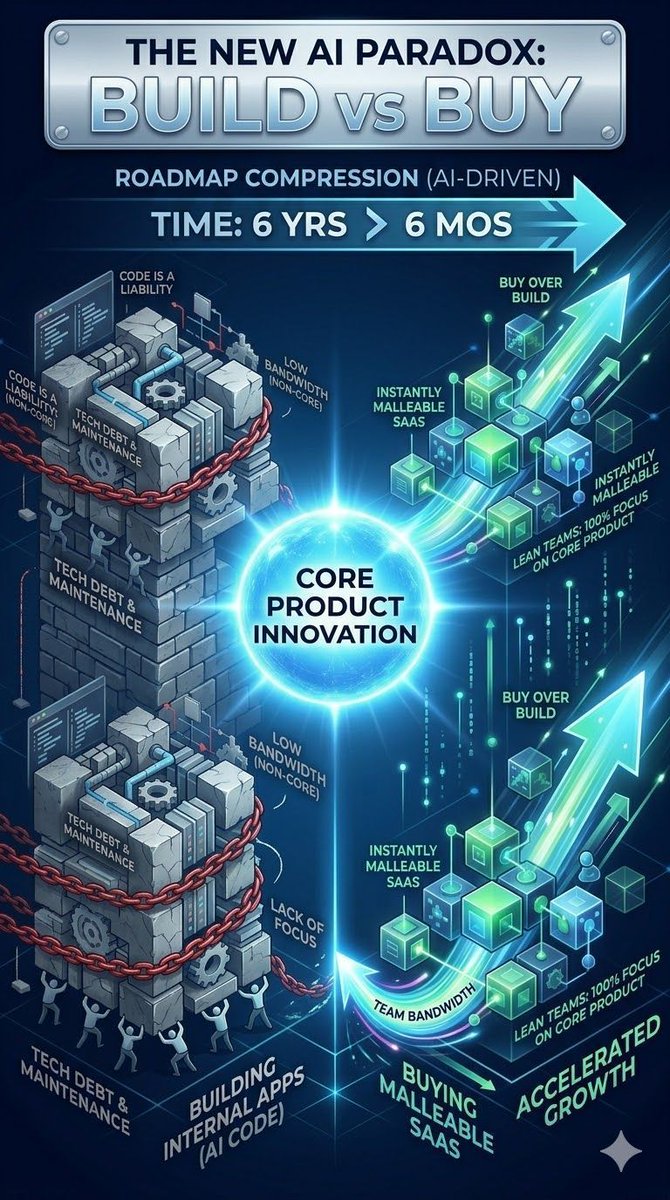
Mohit Garg tweet media
English
0
0
0
8
Mohit Garg
Mohit Garg@mohrahit·
@hsaid50 @Ric_RTP Software pricing was never about cost to build. It was about value and the cost run and operate it. Software development has always been R&D budget. Doesn’t impact gross margins.
English
0
0
0
176
Hytham Said
Hytham Said@hsaid50·
I think the biggest issue is that customers pay companies for a thing (call it a square). A square took a year to make last year. Now a square takes two months to make. The customer paid for that square based on an hourly rate. Once the customer knows the square takes only two months they want to pay that same rate for two months of work not a year. Also they still only want one square. CEOs maybe but the demand for more squares cannot be forced either.
English
4
0
0
5.6K
Ricardo
Ricardo@Ric_RTP·
Jensen Huang just called out every CEO who’s been firing people “because of AI.” Jim Cramer asked him why companies are laying people off if AI is supposed to make everyone MORE productive. Jensen's answer: "For companies with imagination, you will do more with more. For companies where the leadership is just out of ideas, they have nothing else to do. They have no reason to imagine greater than they are. When they have more capability, they don't do more." Read that again. The man who built the most important tech company on Earth just told you that if your CEO is using AI to cut headcount, it means one thing: They have no imagination. They have no vision for what comes next. They got handed the most powerful tool in human history and their FIRST instinct was to fire people. This is the CEO of NVIDIA. The company whose chips power every AI system on the planet. If anyone on Earth has the right to say "AI replaces workers," it's Jensen Huang. And he said the OPPOSITE. He said every carpenter could become an architect. Every plumber could become an architect. AI elevates capability. It doesn't eliminate it. But here's where it gets really interesting... During the same interview, Jensen revealed something nobody's talking about: He said AI startups like OpenAI and Anthropic are seeing their revenues increase by one to two billion dollars a WEEK. And he wishes these companies were public so the world could see what he sees. One to two billion per week. That's a $50 to $100 BILLION annualized run rate. For companies that most people think are burning cash and making nothing. The entire Wall Street narrative that "AI companies aren't profitable" might be completely wrong. Jensen sees their numbers. He sees their compute orders. He sees their growth. And he's saying the revenue is real. So if the money IS real, why are other companies firing people? Because they're not building AI products. They're not creating new revenue streams. They're not using AI to expand into new markets. They're using AI as an EXCUSE to cut costs because they ran out of ideas 3 years ago and need something to tell the board. Jensen's company added $500 billion in new orders in 5 months. He expects $1 trillion in cumulative revenue through 2027 from just two product lines. That number doesn't include the new chips, systems, or partnerships announced this week. And he's not cutting people. He's hiring. Because when you have imagination, more capability means MORE opportunity. Not less headcount. Meanwhile Salesforce cut thousands. Meta cut thousands. Amazon cut thousands. All blaming "AI efficiency." Jensen's response: You're out of imagination. He also said something that stuck with me. Cramer asked if he ever thought he'd build a $10 to $20 trillion company while waiting tables at Denny's. His answer: "I was just trying to make it through the shift." Biggest tip he ever got? Two, three dollars. Now he's building tech that increased computing demand by one million times in two years. He announced OpenClaw, which he says is as big as ChatGPT. And he's got 21 months of new business that isn't even counted in the trillion dollar figure yet. When asked how long he plans to keep working? "I'm hoping to die on the job. And I'm not hoping to die anytime soon." This is a man who believes every single thing he's building. And his message to every CEO using AI to justify layoffs is simple... You're not innovating. You're surrendering. The technology wasn't built to shrink companies. It was built to make them limitless. If your leadership can't see that, the problem isn't AI. It's THEM.
English
353
1.1K
5.6K
892.6K
Mohit Garg
Mohit Garg@mohrahit·
When models are getting commoditized, data models will be key. This is true for every use case you will implement. We see so many sophisticated GTM teams with best in class tools have prospect and customer data scattered and fragmented. Agents will not automagically unify the data. But great software like Tapistro.com can make the process seamless.
English
0
0
0
45
Seema Amble
Seema Amble@seema_amble·
exactly what we’re seeing with the Fortune 500: moving from copilots into AI agents in production. the biggest question is still around data fragmentation and clean up
Aaron Levie@levie

Had meetings and a dinner with 20+ enterprise AI and IT leaders today. Lots of interesting conversations around the state of AI in large enterprises, especially regulated businesses. Here are some of general trends: * Agents are clearly the big thing. Enterprises moving from talking about chatbots to agents, though we’re still very early. Coding is still the dominant agentic use-case being adopted thus far, with other categories of across knowledge work starting to emerge. Lots of agentic work moving from pilots and PoCs into production, and some enterprises had lots of active live use-cases. * Agentic use-cases span every part of a business, from back office operations to client facing experiences from sales to customer onboarding workflows. General feeling is that agentic workflows will hit every part of an organization, often with biggest focus on delivering better for customers, getting better insights and intelligence from data and documents, speeding up high ROI workflows with agents, and so on. Very limited discussion on pure cost cutting. * Data and AI governance still remain core challenges. Getting data and content into a spot that agents can securely and easily operate on remains a huge task for more organizations. Years of data management fragmentation that wasn’t a problem now is an issue for enterprises looking to adopt agents. And governing what agents can do with data in a workflow still a major topic. * Identity emerging as a big topic. Can the agent have access to everything you have? In a world of dozens of agents working on behalf, potentially too much data exposure and scope for the agents. How do we manage agents with partitioned level of access to your information? * Lots of emerging questions on how we will budget for tokens across use-cases and teams. Companies don’t want to constrain use-cases, but equally need to be mindful of ultimate token budgets. This is going to become a bigger part of OpEx over time, and probably won’t make sense to be considered an IT budget anymore. Likely needs to be factored into the rest of operating expenses. * Interoperability is key. Every enterprise is deploying multiple AI systems right now, and it’s unlikely that there’s going to be a single platform to rule them all. Customers are getting savvier on how to handle agent interoperability, and this will be one of the biggest drivers of an AI stack going forward. Lots more takeaways than just this, but needless to say the momentum is building but equally enterprises are acutely aware of the change management and work ahead. Lots of opportunity right now.

English
3
2
28
9.9K
Mohit Garg
Mohit Garg@mohrahit·
@haridigresses @Workday Why will customers leave if companies charge for data access which they store for them? Cloud companies have charged data egress forever. People pay for value. If @Workday continues to provide value, AI agent data access costs is just one more dimension to the pricing matrix.
English
0
0
3
98
hari raghavan
hari raghavan@haridigresses·
@mohrahit @Workday They can and they will. And customers can and will leave if you treat them like that.
English
1
0
0
721
hari raghavan
hari raghavan@haridigresses·
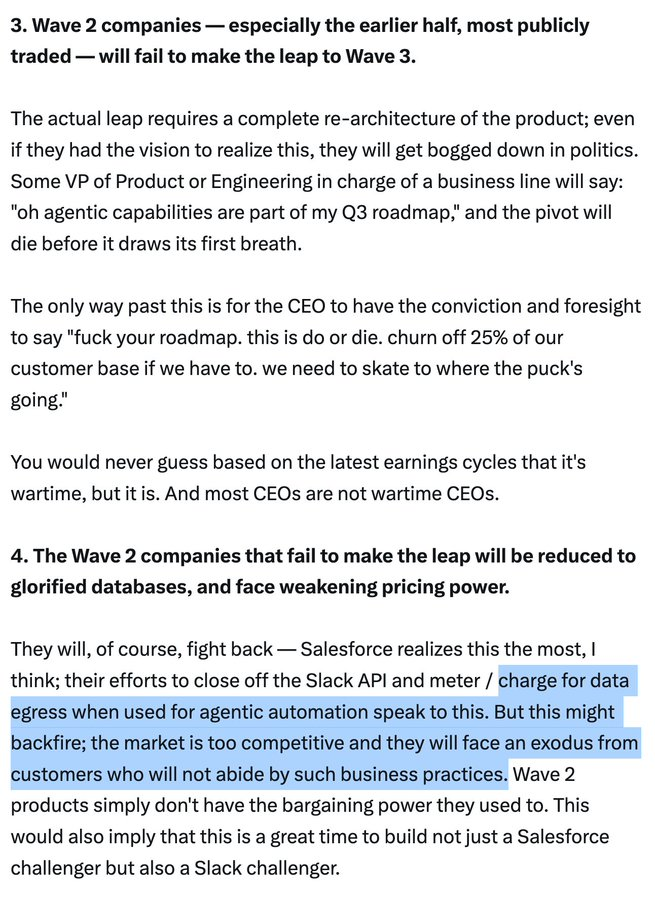
This is the beginning of the end for @Workday. Charging for data use and egress is the sort of rent-seeking behavior that companies employ when they've run out of innovation DNA. Hey Workday — it's not *your* data, it's your *customers'* data, and they can do whatever they want with it. If you want to block the "parasites", maybe just build a better product instead of engaging in anti-competitive practices (hi @FTC!). If you think you command the same pricing power with @HiBob_HR and @Rippling nipping at your heels, you're in for a rude shock. And just wait until someone builds an open-source Workday (I would bet this is a thing in the next few years). PS: Rippling also exhibits similar (in fact, worse) closed-platform tendencies, and I think it's a big mistake. I hope they change this philosophy. Open ecosystems tend to win in the end.
hari raghavan tweet media
Garry Tan@garrytan

Recent earnings call, Aneel Bhusri of Workday says startups with AI agents are "parasites" This is what system of record incumbents really think of startups. The war is just beginning. The facts: the user data belongs to the users, not the incumbent software vendor.

English
29
13
207
98.8K
Mohit Garg
Mohit Garg@mohrahit·
@neilpatel Seems like a premature comparison. @ChatGPTapp Ads are not generally available to all advertisers yet.
English
1
0
17
2.5K
Mohit Garg
Mohit Garg@mohrahit·
Software has been free for several decades. Remember Open Source? The game is never the code, it is the promise that you will maintain it, connect it to everything, secure it, and ensure it is up. That’s why there are so many companies built on open source software. Just copying existing UI? That’s even worse. At least there is a community of folks maintaining open source software. For cloned software, you will have no one helping you.
English
0
0
4
156
Harry Stebbings
Harry Stebbings@HarryStebbings·
Do CRMs become less valuable in an agentic world? "Switching costs are going to go close to zero because data portability will make it easy to move your data between products. Companies will be able to replicate the experience almost pixel by pixel, and clones will appear everywhere. When that happens, the real question becomes whether people are loyal to the product or just the experience." @gokulr How do you think about this @jasonlk @Benioff @dharmesh @nicolasosharp @klarnaseb and how to survive and thrive in an agent led world?
Harry Stebbings@HarryStebbings

Most podcasts are BS because they are fluffy and lack substance. This is the densest, most insightful episode you will listen to this year. @gokulr breaks down the 8 defensible moats you need for your company to be successful in a world of AI. 1. Data (Proprietary and inaccessible) 2. Workflow (Deeply embedded operations) 3. Regulatory (Licenses and contracts) 4. Distribution (Exclusive proprietary channels) 5. Ecosystem (Third-party platform reliance) 6. Network (Marketplace liquidity density) 7. Physical (Infrastructure and atoms) 8. Scale (Low cost through volume) (Links below)

English
12
14
82
32.8K
Mohit Garg
Mohit Garg@mohrahit·
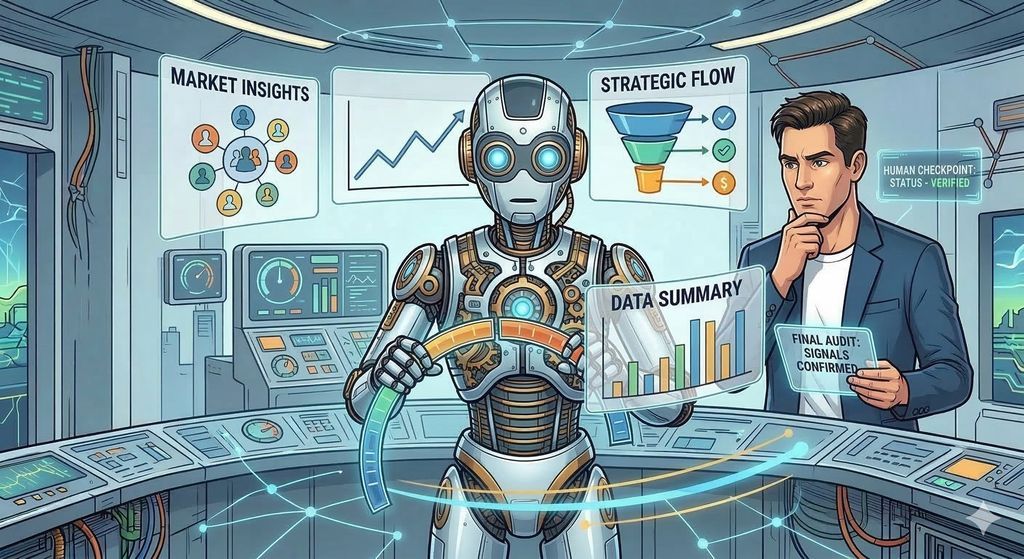
We’ve all seen the magic trick: type a prompt, and a flawlessly formatted block of code appears in seconds. It’s intoxicating. 🪄 But there is a massive gulf between generating syntax and deploying software safely. 🌊 We are seeing the consequences of ignoring that gulf play out in real time. Just look at the recent fallout at Amazon —hours of retail downtime, massive AWS outages caused by an AI coding agent, and a sudden, urgent internal mandate requiring senior engineers to manually sign off on AI-generated code. 🚨 Why? Because an AI hasn’t lived in their codebase. It doesn't know the fragile quirks of their production systems or the hidden legacy debt in their architecture. It is an astonishingly powerful engine for next-token prediction, but predicting text is not the same as understanding operational reality. 💻🧠 Now, take that exact same dynamic and apply it to Go-To-Market. 🎯 We are rushing to hand the keys of our revenue engines over to LLMs, expecting them to magically run campaigns and drive growth. But just like in engineering, an AI doesn't know your specific GTM context better than you do. 🔑 It hasn't sat in your strategy brainstorming sessions. It doesn't intuitively grasp the unsaid political dynamics of your target accounts, or the nuanced, unspoken reasons a buyer actually chooses you over a competitor. Next-token prediction can never replace the human judgment required to navigate a complex market. 🎧🤝 When we hand over the keys without guardrails, we aren't innovating. We're automating risk. 🚧 But here is where the real shift happens. The future isn't AI replacing your GTM team. Instead, AI is the ultimate tool to build your context. 🧩 It can synthesize thousands of disparate data points, call transcripts, and market signals to create your highly unique, first-party view of the battlefield. It can help you interpret that massive web of information, spot the hidden patterns, and make incredibly sharp, strategic decisions. 📊🔍 It’s humans using AI to dramatically increase their own outcomes. AI is the ultimate amplifier, but you still need a human to read the room. 📈
Mohit Garg tweet media
English
0
0
1
36
Jason ✨👾SaaStr.Ai✨ Lemkin
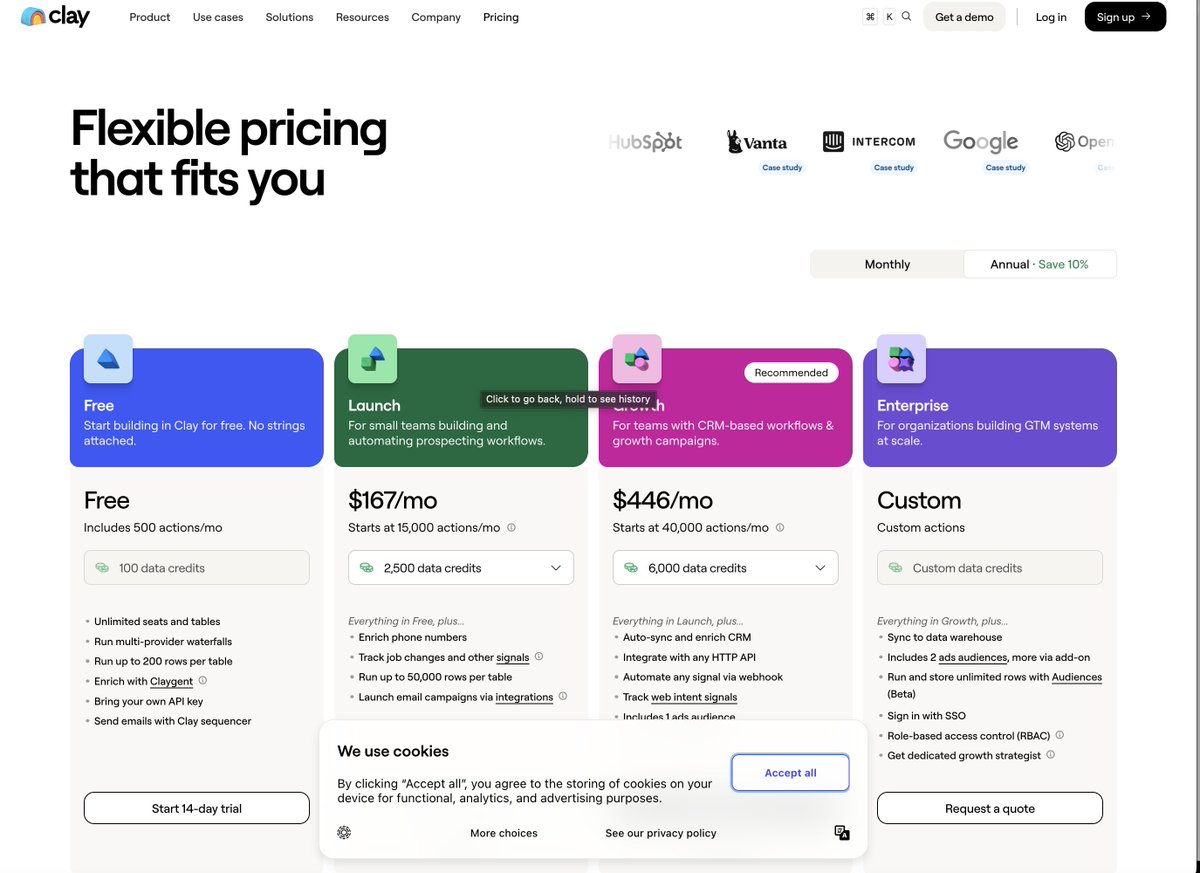
Man Clay got SO much more expensive with new "better value" pricing. 2x-3x more for us, I think. When pricing gets more complicated, it almost always means it's also gotten more expensive. At least for most.
Jason ✨👾SaaStr.Ai✨ Lemkin tweet media
English
39
1
114
25.5K
Sean Wilson
Sean Wilson@Seannywilson·
most SDR teams are: spending 4 hours building lists. spending 2 hours on research. spending 1 hour writing emails. spending 30 minutes on follow ups. meanwhile a GTM engineer with Clay does all of this before lunch. the game has changed people.
English
6
2
33
2.1K
Mohit Garg
Mohit Garg@mohrahit·
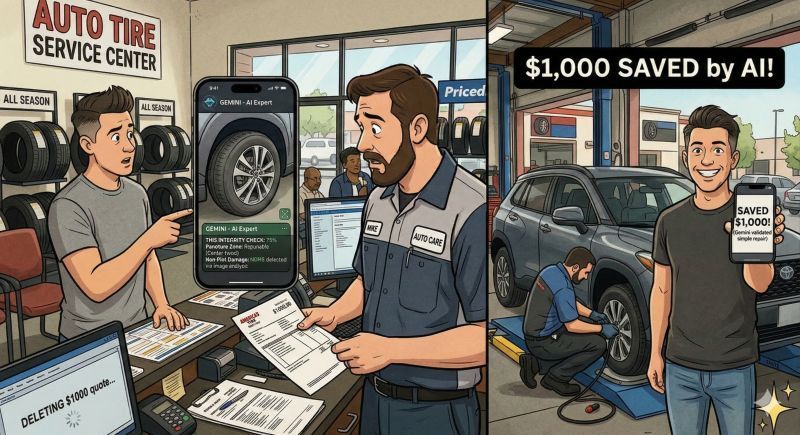
🚨 The $1,000 "Flat Tire Tax" is officially dead. 🚨 Every single time I get a tiny nail in my tire 📌, I brace myself for the exact same dramatic performance 🎭. The mechanic comes into the waiting room 🚶‍♂️, sighs heavily 😮‍💨, shakes his head solemnly 🙅‍♂️, and delivers the lines like he’s auditioning for an Oscar 🏆: "Yeah... see, you drove on it flat 🛞, so it's completely unrepairable 🚫. And since you have All-Wheel Drive 🚙, we can't just replace one. We have to replace all four tires so you don't destroy your entire drivetrain ⚙️. That’ll be $1,000." 💸 For years, I thought a flat tire was just a mandatory four-figure disaster 📉. But this time, I fought back 🥊. While the shop was typing up their massive invoice 🧾, I opened Google Gemini on my phone ✨. I explained the situation, and Gemini didn't just give me generic advice—it literally asked me to step outside and take a picture of my tire. 📸 I snapped a photo and uploaded it 📱. Gemini analyzed the sidewall 🔍, confirmed there was absolutely zero "run-flat" heat ring damage ✅, and handed me the exact script I needed 📜. 👨‍🔧 Mechanic: "So, card or cash for the four new tires?" 💳 🗣️ Me: "Actually, I just ran a check 🛑. There is zero structural damage on that sidewall to indicate it was driven flat 🙅‍♂️. On top of that, my vehicle uses an electronic AWD system ⚡ with no mechanical driveshaft connecting the axles. The 'replace all four' rule literally doesn't apply here 🧠. A simple patch will do just fine 🩹." The silence that followed was absolutely beautiful. 🤌🔇 He slowly backed away from the keyboard ⌨️, deleted the invoice 🗑️, and muttered, "Let me... go check with my team." 🏃‍♂️💨 Five minutes later ⏱️, he came back and silently agreed to just patch the tire 🤝. No arguments 🤐. No $1,000 upsell 🙅‍♂️💰. I was absolutely overjoyed! 🎉 Plus, I got it fixed right there without having to try and hobble down the street on a flat 🚗💨. Tapistro AI Agents are driving tons of ROI for our customers 📊. But I have to admit, having Gemini ✨ in your pocket to call out a $1,000 bluff in real-time? That's priceless! Has anyone else used Gemini to escape a wildly expensive upsell?
Mohit Garg tweet media
English
0
0
1
53
Mohit Garg
Mohit Garg@mohrahit·
@THArrowOfApollo Happy to migrate your use cases to Tapistro.com journeys - Signals, Enrichment, Storage and Orchestration. With storage inbuilt, we typically see 20x savings in enrichment credits vs Clay due to savings in unnecessary enrichments.
English
0
0
0
211
Taylor Haren
Taylor Haren@THArrowOfApollo·
Clay is charging $0.0124 PER API call now?? Did I read that right? WHOA
English
13
0
22
7.4K
Mohit Garg
Mohit Garg@mohrahit·
@toddsaunders So, you won't hire any engineers in your next gig? Just hire GTM folks and give them AI to code?
English
0
0
0
121
Todd Saunders
Todd Saunders@toddsaunders·
For essentially my entire career in tech, the most valuable person was an engineer who understood some business/GTM. The entire economic structure of the industry was built on this. Engineers commanded the highest salaries. The cap table was designed around equity comp because you couldn't afford them in cash. The seed round existed to buy engineering time/output. And VCs were, at their core, an arbitrage on engineering scarcity. That scarcity is gone. Now the most valuable person is the business/GTM person that understands some engineering.
English
42
22
381
33.8K
Mohit Garg
Mohit Garg@mohrahit·
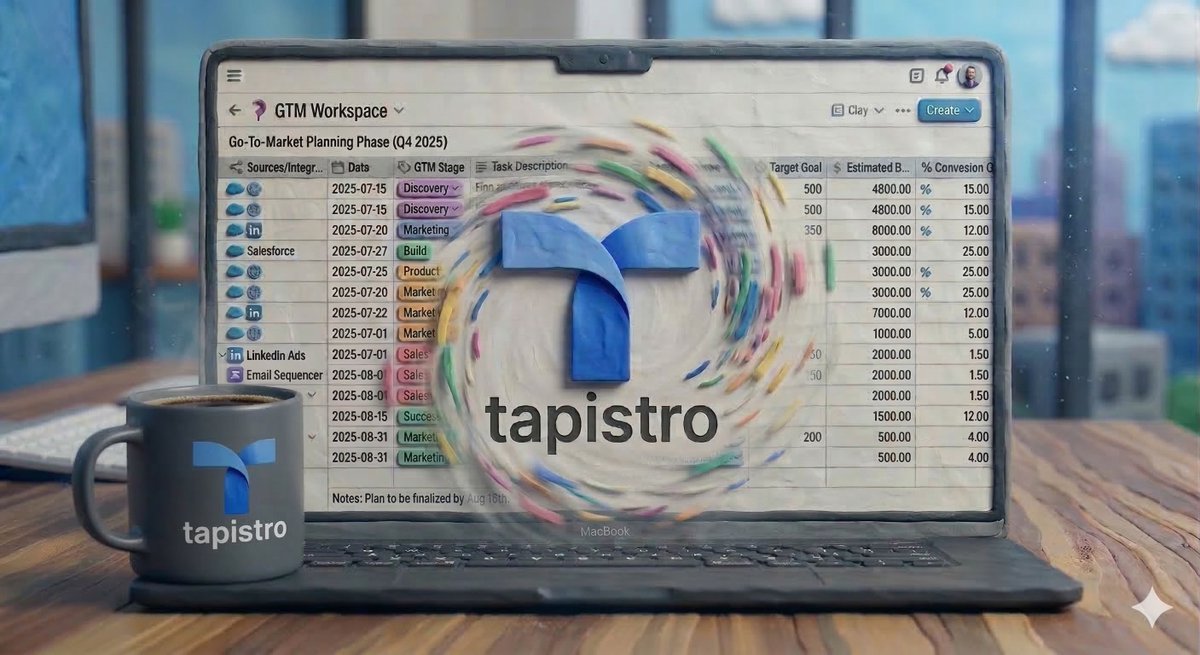
The GTM community just got a masterclass in reading the fine print. 🧐 The headline being sold right now is that data is 'commoditized'. But the reality hitting teams today is a brand-new toll booth sitting right in the middle of their workflows. 🛑 Here is the truth that everyone in GTM knows: the real value isn't in the raw data itself. Data is just the raw material. 🧱 The actual magic—the alpha—is in how you use that data, how you synthesize it, and how you combine it across different signals to find the right buyer at the right time. ✨ Yet, we've reached a bizarre moment in revenue tech where platforms are introducing metered "actions." That means you are now being taxed to do the exact thing that creates value: running AI operations, pushing a row to your CRM, or fixing a bug and redoing a basic sync. 💸 It’s triple-dipping on orchestration. When Raghavendra I started building Tapistro, we saw this exact friction coming. We fundamentally believe that Google doesn't charge you per email sent, Zoom doesn't meter your meetings, and your GTM platform shouldn't tax you to orchestrate your own data. 🤝 Our promise to the market is simple: 🚫 The zero-toll rule: You only pay credits when we pay someone else. Period. If sync with your owned systems, use your own API keys, or orchestrate your own workflows, it costs you nothing. ⚙️ The unified engine: We combine Signals, Enrichment, Orchestration, Storage, and Integrations into seamless, AI-native workflows. No duct tape required. 🏰 Your proprietary moat: Instead of just renting vendor data, we build a unique profile layer that is 100% proprietary to you. Over time, this alone saves 20x on enrichment costs. If your current spreadsheet platform like Clay is suddenly penalizing you for scaling the very workflows that make you successful, please reach out. Migration and Coffee☕️- both on us.
Mohit Garg tweet media
English
1
0
1
45
Mohit Garg
Mohit Garg@mohrahit·
@dan__rosenthal Good article. One key thing missing is the data unification layer. All this only makes sense when there is a profile layer to combine these signal, enrichment, and orchestration actions. At Tapistro.com we start from that.
English
0
0
0
37
Mohit Garg
Mohit Garg@mohrahit·
If you’re a GTM or Engineering Leader thinking of building similar things, let's talk. Your custom GTM logic takes a team of engineers months to construct from the ground up. It can be mapped out and deployed in Tapistro.com in under an hour. ⚡
LangChain@LangChain

x.com/i/article/2030…

English
1
0
1
95
Mohit Garg
Mohit Garg@mohrahit·
@airindiain Where can I check the flight status for this flight? Your website says it is cancelled but folks are in the plane and it has not taken off yet. Your call center doesn’t know anything either.
English
1
0
0
45
Air India
Air India@airindia·
@mohrahit Dear Sir, as per the current update, flight AI173 will now depart at 0355hrs on 30 MAR23. However, impacted passengers are being provided all necessary support by our ground team including hotel accommodation. We appreciate your patience and understanding.
English
2
0
0
81
Mohit Garg
Mohit Garg@mohrahit·
@airindiain #AI173 passengers are stranded at the DEL airport for 10+ hours with no clarity on the flight. Can you at least provide them an alternate flight and hotel? This is extremely ridiculous. Senior citizens traveling inter-continental long haul should be treated better.
English
2
1
0
302
Mohit Garg
Mohit Garg@mohrahit·
@airindiain @airindiain So you will have two flights at 3.55am on 30th March? There is a scheduled AI173 for 30th March as well.
English
1
1
0
59