Ahmed T Abdellah

3.1K posts

Ahmed T Abdellah banner
Ahmed T Abdellah

Ahmed T Abdellah

@MynephCC

Cardio/CC friendly nephrologist. In love with POCUS, cardiorenal & critical care medicine. Tweets reflect my own personal opinion

Kansas, USA 加入时间 Şubat 2012
509 关注1.8K 粉丝
置顶推文
Ahmed T Abdellah
Ahmed T Abdellah@MynephCC·
#_POCUS Few tips for learning POCUS for beginners like myself 1- it is very steep learning curve & long journey. 2- pick up one source & keep watching it over & over again. Youtube has lot of them 3- POCUS has 3 parts: image acquisition, interpretation & clinical integration
English
7
44
148
38.9K
Ahmed T Abdellah
Ahmed T Abdellah@MynephCC·
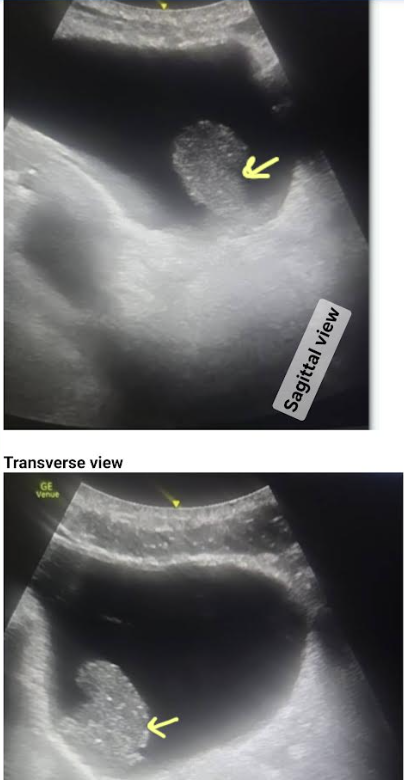
@NephroP This pt with chronic retention had traumatic injury after multiple attempts for exchanging his catheter
English
0
0
2
41
NephroPOCUS
NephroPOCUS@NephroP·
@MynephCC Great lesson. You have color/power Doppler by any chance? It’s difficult to differentiate between mass and clot unless you have recent imaging available.
English
2
0
5
336
Ahmed T Abdellah
Ahmed T Abdellah@MynephCC·
Confirmation of Foley catheter placement is essential in patients with gross hematuria, especially prior CBI. While initial urine return may suggest correct placement, POCUS in this case demonstrated a persistently distended bladder with a large clot no Foley's in the bladder.
Ahmed T Abdellah tweet media
English
3
3
10
1.6K
IMCrit
IMCrit@IM_Crit_·
ICU - Board Review Qs: 60 yo pt admitted to the ICU because of inferior STEMI. Emergency cath: 100% proximal RCA occlusion treated successfully with stenting One hour post-PCI: dyspnea/anxiety - BP: 94/70, HR: 60/min (sinus). Phys exam: JVD (+), clear lungs, cool extremities
English
17
27
215
106.5K
Ahmed T Abdellah
Ahmed T Abdellah@MynephCC·
Statistics are a "social construct" - shaped by human biases, not purely objective ~ Joel Best
English
0
0
0
24
Ahmed T Abdellah
Ahmed T Abdellah@MynephCC·
@franciscojlk Great post The risk of relying on this big ML algorthim for analyzing big data without direct supervision from “an insider”, always begets overfitting black box models. The best way is to have researcher select and deselect the variables that clinically relevant then run his ML
English
0
0
0
122
Dr. Chacón-Lozsán F .'.
Dr. Chacón-Lozsán F .'.@franciscojlk·
🧑🏻‍💻Hemodynamic phenotyping 4.0: Are we overcomplicating what we already understand? ->For decades, we’ve classified shock using physiology: 🫀 Hypovolemic → ↓ CO, ↓ filling pressures 🫀 Cardiogenic → ↓ CO, ↑ filling pressures 🫀 Distributive → ↑/normal CO, ↓ SVR Nothing new… right? - Now comes “phenotyping 4.0”: 👉 Machine learning 👉 AI-driven clustering 👉 Big data bedside tools Sounds revolutionary. But is it? ->Reality check from this paper: ⚠️ In “small data” (our daily ICU reality): ML often reproduces classic textbook phenotypes Sometimes with inconsistencies or misclassification Potentially leading to wrong treatment decisions 👉 Example: labeling vasodilation when SVR is normal 👉 Or bradycardia when HR is not truly low ->So what’s the real innovation? Not AI. 👉 How we PRESENT the data. ->Visual decision support = underestimated power 🧠 The brain processes visuals faster than numbers 📊 Graphical displays: Improve diagnostic accuracy Reduce cognitive load Speed up decision-making Reduce errors ->Key concept Instead of: ❌ Tables of disconnected numbers We move to: ✅ Physiological visualization MAP = CO × SVR CO = SV × HR 👉 See the mechanism instantly 👉 Treat faster, smarter ->Clinical insight AI may help with: ✔️ Large datasets ✔️ Pattern discovery But at the bedside: 👉 Physiology + visualization > black-box algorithms ->Critical warning AI errors ≠ harmless They can lead to: ⚠️ Wrong vasopressors ⚠️ Wrong fluids ⚠️ Wrong inotropes 👉 This is not just tech—it’s patient safety. 🤓The real “4.0” shift Not: 🤖 More algorithms But: 👁️ Better understanding 📊 Better visualization 🧠 Better clinical reasoning Bottom line AI should support clinicians. Not replace physiology. 📃Reference Michard F et al. Hemodynamic phenotyping 4.0. Anaesthesia Critical Care & Pain Medicine, 2026. doi.org/10.1016/j.accp…
Dr. Chacón-Lozsán F .'. tweet media
English
3
45
172
9.6K
Ahmed T Abdellah
Ahmed T Abdellah@MynephCC·
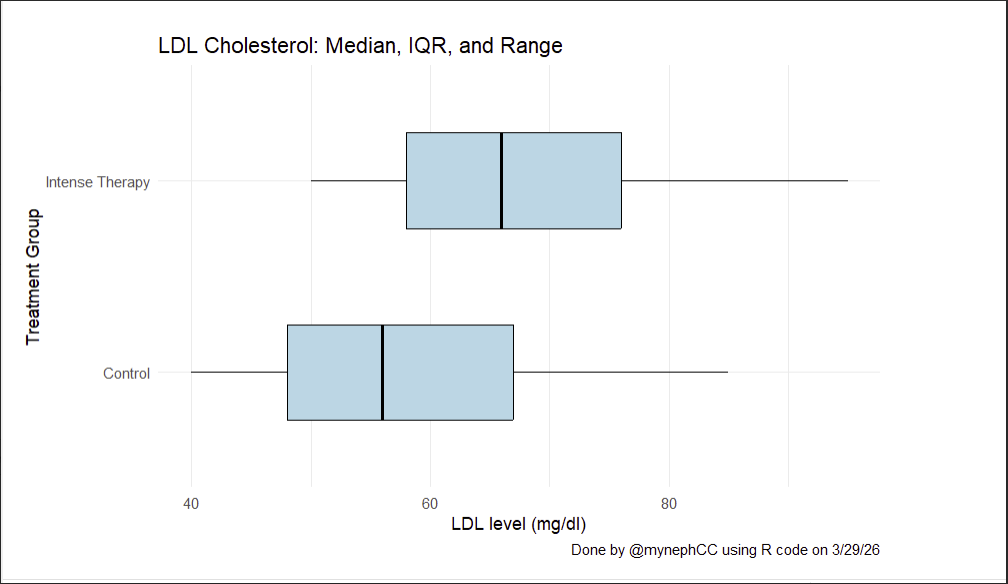
To visualize what you discussed about the median and IQR. I have created the following plot using these data. There appears to be a good chunk of overlap between the two. Lower 50th of intensive therapy falls with the 75th of the control Median diff 10 mg/dl
Ahmed T Abdellah tweet media
Nick Norwitz MD PhD@nicknorwitz

There’s been a lot of engagement and curiosity around the new Ez-PAVE results for intensive lipid lowering. Here are a few observations and some questions worth asking. First, the headline: intensive lipid-lowering therapy led to a 33% relative risk reduction (HR 0.67) and, more notably, a 3.1% absolute risk reduction in major adverse cardiovascular events (MACE)—including cardiovascular death, heart attack, stroke, revascularization, and hospitalization for unstable angina—over three years. Pause there. If that effect is real, it’s impressive. But it also raises some important questions. 1. How much of this effect is actually attributable to LDL lowering? The difference in LDL between groups was modest: a median of 56 mg/dL vs. 66 mg/dL. A ~10 mg/dL delta leading to a >3% absolute reduction in MACE over three years is a large effect size—and not one that feels immediately biologically intuitive. Is there a threshold effect at play? Something nonlinear about risk reduction at lower LDL levels? Or are we seeing effects beyond LDL itself? 2. Is there something unique about the population? This was a South Korean cohort. Could there be population-specific factors—genetic, environmental, or metabolic—that make individuals more responsive to modest lipid reductions or to the pleiotropic effects of the therapies used? 3. Who actually benefited? One under-discussed point: the benefit appears to be driven almost entirely by men. There was no clear evidence of benefit in female participants (HR 1.22) Yes, the cohort was male-skewed—but if you look at the hazard ratios, the signal is coming from men. That raises an important caution: these results may be prematurely generalized to populations (particularly women) where the data simply don’t support it. At present, the strongest evidence here applies to South Korean men. Question: Does the effect generalize? 4. What about the therapies themselves? “Intensive lipid lowering” wasn’t a single intervention—it included a spectrum of medications, each with distinct mechanisms and potential off-target effects. All of these should be considered for management of any individual patient… obviously. This includes off-target “good” effects, and off-target “bad” effects. As one case in point of additional “good” effects, take ezetimibe. Early data suggest potential neuroprotective benefits entirely independent of lipid management. I'm choosing to highlight a examples of a non-lipid pleiotropic "good" effect so no one can accuse me of 'cherry-picking,' but the point remains: this is more than a "lower LDL is better" story. It always was. It always will be. It’s sad, honestly, that when data like these come out the gut reaction is to shallowly wave a “lower is better” flag and attack the “LDL deniers” and “keto-zealots” in the name of virtue-signaling evidence-based medicine. It’s almost cultish behavior. In many cases, the shallowness of commentary reveals an almost intentional ignorance or, at minimum, a deficit in curiosity of what's actually going on in different human populations. Bottom line: These are interesting and potentially important data. They deserve thoughtful discussion—not dismissal. But simply waving the flag of “lower is better” isn’t a sufficient or rigorous interpretation of what’s actually going on here. We should be asking better questions. @realDaveFeldman @ApoDudz @AdrianSotoMota

English
0
0
0
140
Ahmed T Abdellah
Ahmed T Abdellah@MynephCC·
@ColtonOrtolf From pure biostat perspective: Reducing ACD y 24% (CI, 0.61, 0.95) it can get as high as 39% & as low as 5% ! (0.95 is fragile win, close 1 !) no benefit expect before 1.2~ (curve separation). for good ROI: u should commit for 5 y then throw yourself in that CI range for benefit
English
0
0
1
1.3K
Ahmed T Abdellah
Ahmed T Abdellah@MynephCC·
@SeeFisch It is noninfer. trial , it is just trying to prove that this device is not worse than anticoag. Here it reduces stroke by 13% [1-0.87]. Crossing "1" is counted for, not against, the device . It might be as good as anticoagulation. if CI [1.01-1.66] = it is worse than anticog
English
1
0
1
166
Conrad Fischer
Conrad Fischer@SeeFisch·
Confidence interval crossing ONE (1) is NOT a great look
NEJM@NEJM

Presented at #ACC26: In patients with atrial fibrillation, left atrial appendage closure was noninferior to NOACs in an analysis of death from cardiovascular causes, stroke, or systemic embolism and was superior for non–procedure-related bleeding. Full CHAMPION-AF trial results: nejm.org/doi/full/10.10… Editorial: Left Atrial Appendage Closure — Should Recommendations Be Expanded? nejm.org/doi/full/10.10… @ACCinTouch

English
4
5
42
20.7K
Ahmed T Abdellah
Ahmed T Abdellah@MynephCC·
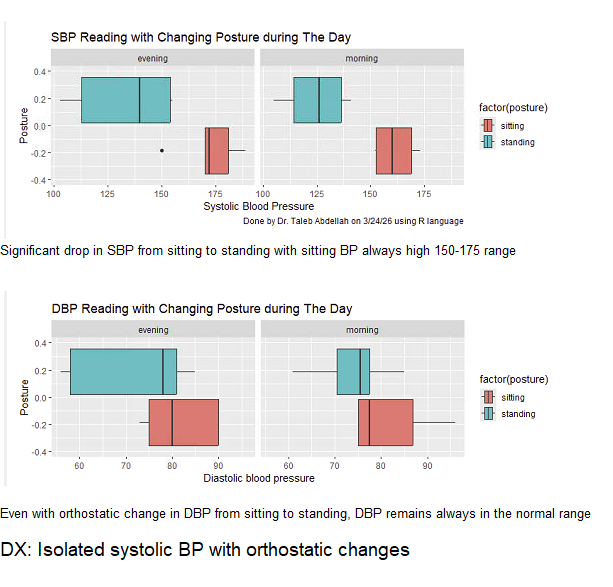
For outpt clinic BP management. When the patient hands up his BP logbook, i found it very useful to visualize these readings with boxplots. it make it very easy to compare the medians, IQRtiles instead of relying on the average values which can be misleading with high variability
Ahmed T Abdellah tweet media
English
1
1
2
150
Ahmed T Abdellah
Ahmed T Abdellah@MynephCC·
@VerwerftJan in statistical terms: EDV is additive variable and EF is multiplicative variable EDV (capacity) and EF ( Efficiency). You need to know both to make a good sense of your patient hemodynamics
English
0
1
1
403
Jan Verwerft
Jan Verwerft@VerwerftJan·
Small LV in HFpEF 👇 New 🇪🇸 viewpoint 🇧🇪led by @yulnunezvill with @rdelaespriella in @ESCHeartFailure High EF ≠ strong heart Small LV → ↓ preload reserve → low SV Even during exercise 📊 pathophysiology & therapeutic implications
English
3
21
70
13K
Ahmed T Abdellah 已转推
Yogesh Reddy
Yogesh Reddy@yreddyhf·
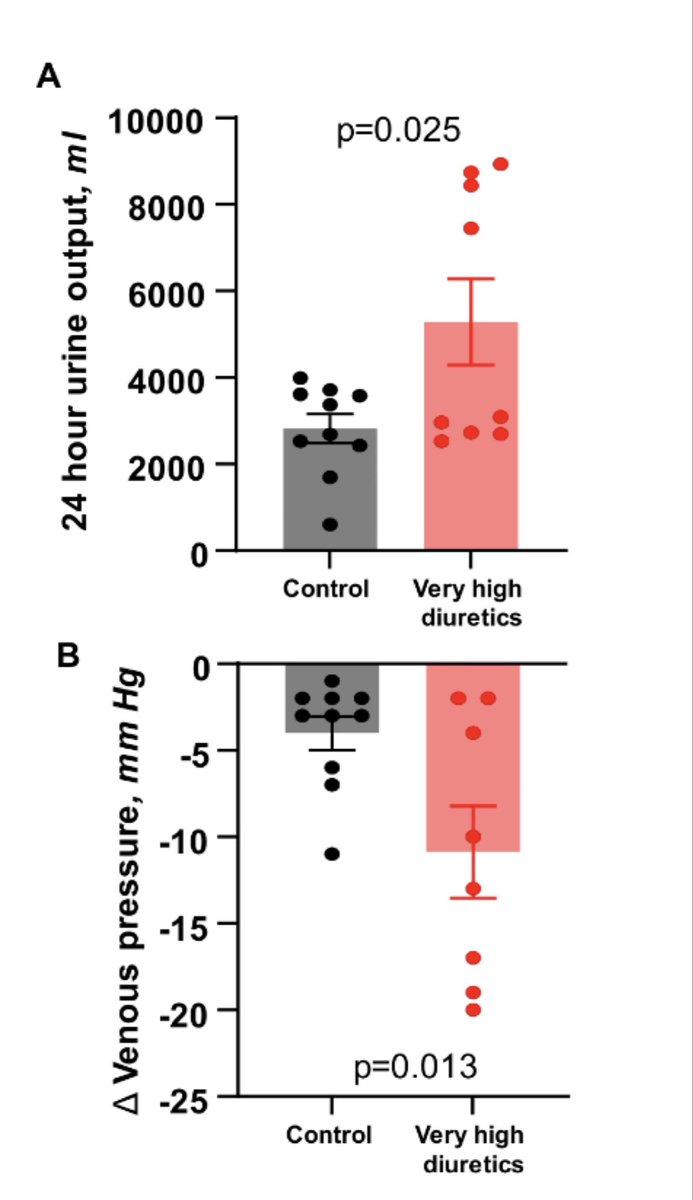
A common Q in acute HF is what dose of diuretic to start with. In this pilot RCT we tested a simpler strategy of just giving 1 gram of lasix over 24 hrs to everyone even if diuretic naive. We saw more urine, lower venous pressure and no drop in CO or gfr doi.org/10.1093/ejhf/x…
Yogesh Reddy tweet media
English
15
52
182
69K
Ahmed T Abdellah 已转推
Edgar Argulian
Edgar Argulian@argulian·
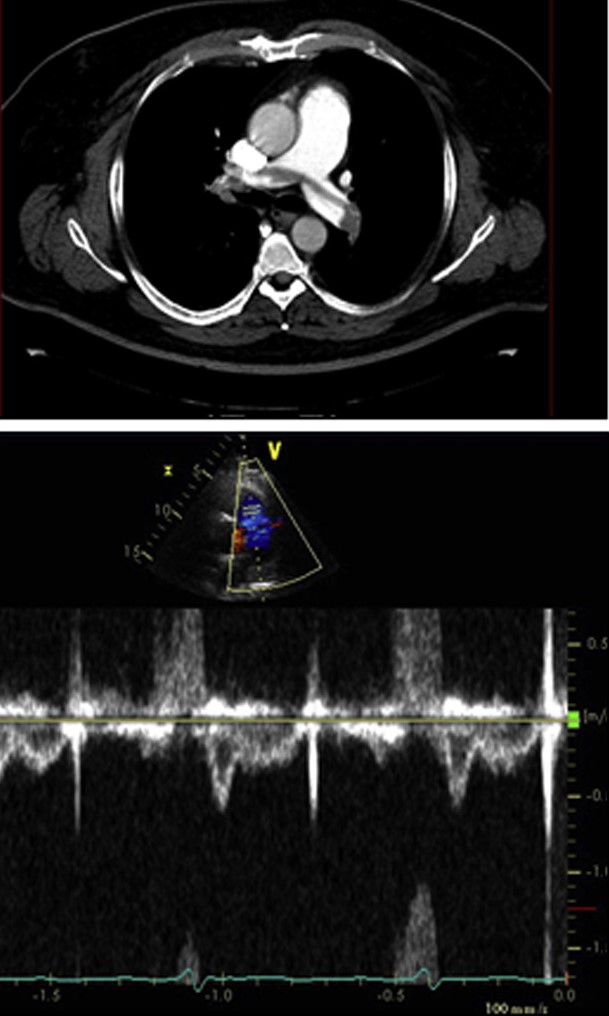
One of the important echo studies highlighting the importance of EARLY systolic notching of RVOT PW Doppler signal in patients with pulmonary embolism. This finding is present in >90% of patients with significant pulmonary embolism but it is uncommon in low risk/low thrombus burden patients. It is more prevalent than other well known echo phenomena, such as McConnell's sign, 60/60 sign, etc onlinejase.com/article/S0894-…
Edgar Argulian tweet media
English
1
23
100
5.6K
Ahmed T Abdellah
Ahmed T Abdellah@MynephCC·
@argulian Monophasic D-wave + d - reversal, and small prolonged s-reveral--> poor Rv compliance & elevated RAP
English
0
0
1
78
Edgar Argulian
Edgar Argulian@argulian·
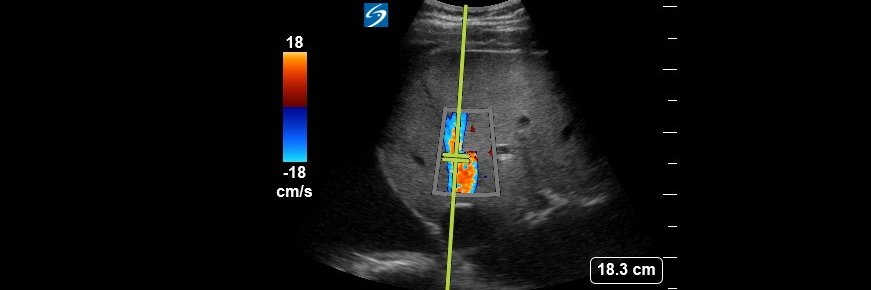
A patient with dyspnea and lower extremity swelling. Hepatic venous flow was sampled using PW Doppler. 1/2
Edgar Argulian tweet media
English
4
11
35
5.7K