
置顶推文
Moritz
2.1K posts


Moritz
@mxmoritz
To make better growth decisions, understand your customers: #CustomerCentricGrowth 🤍 food and farmers. 'with a style that can be irritating for some'
EU, EEA, North America 加入时间 Eylül 2009
374 关注98 粉丝
And once you realize it is written by AI it's hard not to ignore the entire thing and put it aside entirely
Paul Graham@paulg
A lot of the emails I get from founders are now written in a hard-hitting journalistic style. I know they're written by AI, because no founder ever wrote this way before. And once you realize something is written by AI, it's hard not to ignore it.
English

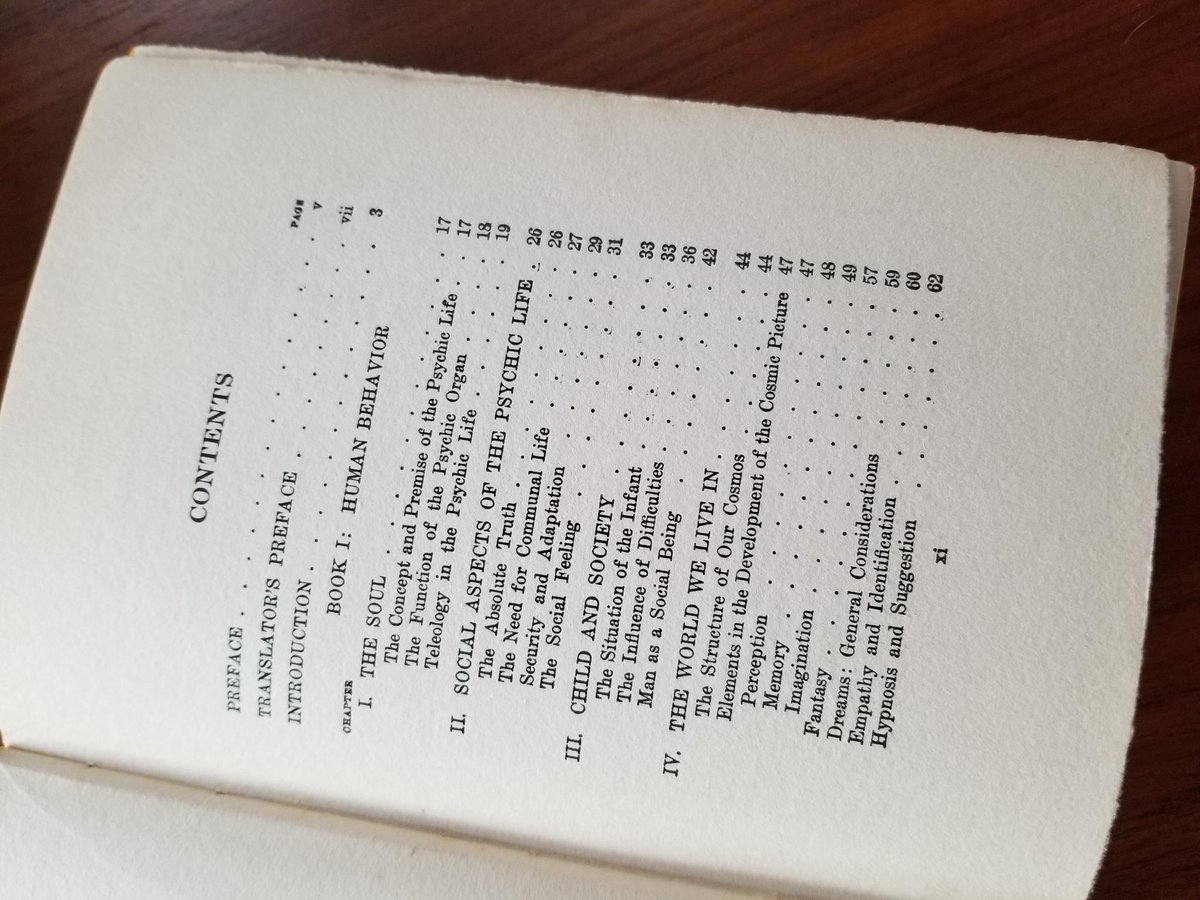
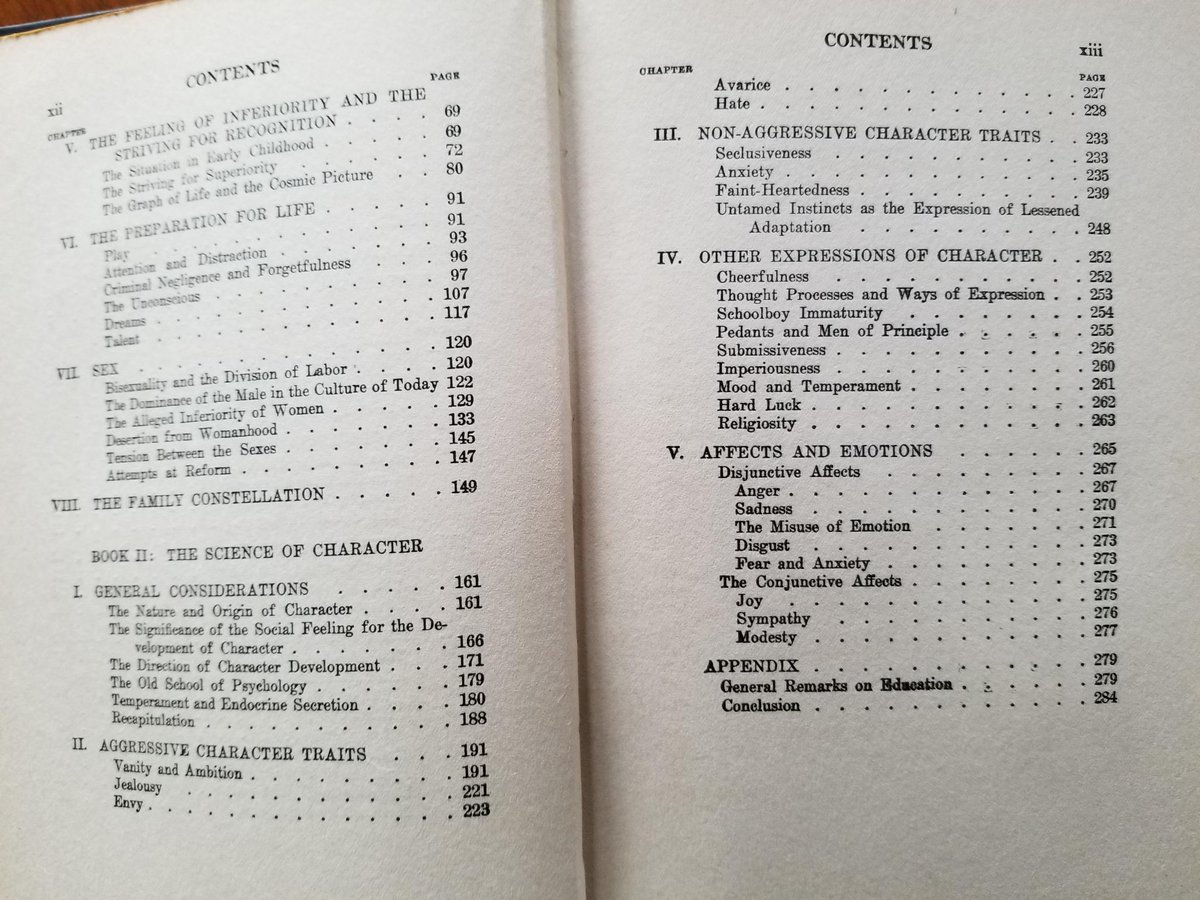
You will never see how superficial most new books are, until you read old ones.
Old books on human nature have so much meat on the bone...a depth & wealth of information.
Read old books.

English

Everyone building AI agents is focusing on building the prefrontal cortex. Planning. Reasoning. Multi-step chains. There's value here. CEO-stuff.
But also, a reframe: there is value in building the cerebellum. It's offloading boring tasks into reflex so the complex thought can focus.
Your mortgage gets paid by a standing order, not a committee. The things that are not fun, not interesting, but have to be done? Done. Most agent frameworks will fail because they treat all cognition as high cognition.
The winners will nail the boring stuff first.
English
@DHLexpress not working in Berlin. After experiencing @DeutschePostDHL not picking up twice(!), I opted for Express. But even their express division is unable to deliver in a timely manner!!
English
Moritz 已转推

I met a guy who teaches game design. Says nobody can predict what will be fun. You have to iterate and play test constantly. Same is true for demos. Don’t wait to perfect it because you are probably wrong about what will resonate!
English
English

Some years ago I heard the late Herb Kelleher, founder of Southwest Airlines, on a podcast.
He told a story about how he visited a business class for a Q&A. The students asked how he managed stress.
“I dunno? I like the stress.”
He was confused. The students were confused.
critter@BecomingCritter
interview today they asked me what i do to cope with stressful situations and i replied "nothing in particular i just focus on the next task" and i got the vibe that this was a very bad answer
English

San Francisco is is two technical generations ahead on shawarma technology
English

📖 Full breakdown + workflow on the blog: chatprd.ai/how-i-ai/strip…
English
While your team is just getting started vibe coding prototypes, the team at @stripe is vibe coding a full vibe coding platform.
@ow is a design manager at Stripe who built Protodash - an internal AI prototyping tool that lets designers and PMs spin up real, clickable prototypes in minutes.
In this ep he walks through:
- why generic AI tools produce "blurple slop" that doesn't match your design system
- how he built a full prototyping studio on top of dev boxes with cursor + cc
- why more PMs than designers now use Protodash
- the design review mode that lets teams ship feedback direct in the app
Plus, we talk about getting to the ultimate dream: demos, not memos.
ty to our sponsors!
🧠 @Celigo - Intelligent automation built for AI
💻 @cursor_ai - The best way to code with AI
Full episode on yt: youtu.be/hQFEAZK__q0
YouTube
English

Every argument of “because of the smartphone” or “the Internet” or “social media” is cope, to avoid confronting the catastrophic collapse of incumbent institutional competence over the same timeframe.
English

My biggest takeaways from @rabois:
1. The team you build is the company you build. Founders get distracted by markets, customers, and technology. If you have the right people, those problems get easier. If you have the wrong people, none of those things save you.
2. Build your company on undiscovered talent. The only way to scale an organization against incumbents with infinite budgets is to find talent that large companies’ hiring machines will misprocess. In practice, this often means skewing younger—not because young people are inherently better but because they have fewer data points, which means typical evaluation systems can’t categorize them accurately. This is where the alpha often is.
3. Hire more “barrels,” not “ammunition.” A “barrel” is someone who can take an idea from zero to outcome without hand-holding. Most companies have only a handful of these people. Hiring more people without expanding the number of barrels doesn’t increase output; it increases coordination tax and creates drag. The ratio of barrels to ammunition is what determines the number of important things a company can pursue simultaneously.
4. CMOs are becoming the #1 consumer of AI tokens. At a few of Keith’s top portfolio companies, the heaviest user of AI is the chief marketing officer. These CMOs are running analytics, shipping campaigns, and generating insights that previously required entire teams of deputies.
5. The three signs a company will win: operating tempo, internal talent development, and “the relentless application of force” from the top. Keith identifies a consistent pattern across his best portfolio companies. First, operating tempo: Ramp shipped physical cards in three months when the industry standard was 9 to 12. Second, talent development through internal promotion rather than senior external hires; the CMO at one of his top companies was the previous chief of staff. Third, the CEO’s willingness to push harder as things improve, not less. Mike Moritz told a friend of Keith’s that the most common trait of the best CEOs is “the relentless application of force.” Complacency is the natural by-product of success, and the CEO’s job is to offset it.
6. For consumer products, talking to customers is not just unhelpful; it’s actively harmful. Keith refuses to let companies he advises conduct consumer research. His argument: Consumer decisions are subconscious. Ask any Porsche owner why they bought the car, and 99% will cite every reason except the real one. Once misleading customer feedback enters the organization, it locks into people’s brains and distorts every subsequent decision.
7. Keith believes the PM role may not survive the AI era. Taking customer inputs, building a sequential year-long roadmap, and coordinating between teams are structurally incoherent when AI capabilities change weekly. The skill that matters now across all three roles—PM, designer, engineer—is business acumen: understanding the company’s equation and knowing what to build next.
8. Great hiring comes from great referencing. Run at least 20 references, and keep going until you hit negative feedback. Ask specific, forward-looking questions (e.g. “Would you start a company with them?”). If every reference is positive, you haven’t gone deep enough.
9. Use a 30-day feedback loop to sharpen your hiring instinct. Thirty days after every hire, ask: would I hire this person again? This is as predictive as waiting years, and dramatically faster for improving your judgment. Make this a habit, and your hiring quality will compound.
10. Criticize in public, not private—it optimizes for the system. Keith endorses a management practice that most people find confrontational: delivering negative feedback in front of the team, not behind closed doors. Private criticism optimizes for the individual, but the rest of the company doesn’t know the issue is being addressed, which breeds anxiety and suspicion. Public criticism lets colleagues see that leadership is aware, creates opportunities for others to volunteer help, and turns feedback into a team-building exercise.
Full conversation: youtube.com/watch?v=xCd9yk…
YouTube
Lenny Rachitsky@lennysan
"High performance machines don't have psychological safety. They're about winning." Keith Rabois (@rabois) was COO of Square, part of the PayPal Mafia, an early investor in Stripe, Palantir, Airbnb, DoorDash, and Ramp, and a 2x founder. He's spent 25 years obsessing over how to build world-class teams. In our in-depth conversation, we discuss: 🔸 How to identify undiscovered talent 🔸 Keith's barrels vs. ammunition hiring framework 🔸 The three traits of the best-performing companies right now 🔸 Why talking to customers is actively harmful for consumer products 🔸 Why the PM role is dying 🔸 The specific interview question he asks every senior candidate 🔸 Why CMOs (not engineers) are becoming the #1 consumer of AI tokens Watch now 👇 youtu.be/xCd9ykretlg
English
Moritz 已转推

@marcrandolph Bc now you move yourself and not just the universe around you and that increases surface for data points
English

Here’s something I’ve noticed — with creative work, with first-time founders, with anyone who’s been sitting on an idea waiting for the right moment: the moment you just start doing the work, something changes.
English

Many people think that when AI can do a task better than us, it will outcompete humans.
But token costs are not trivial, and, for many types of tasks, even skilled labor tasks, humans are much cheaper than AI. Increasing efficiency & compute supply will alter those calculations
English
@rebeccakaden @usv This felt freedom of reconfigurable spaces fostering innovation I still find fascinating ever since coming across it in some book on Silicon Valley history
English

Over the last few months we’ve rebuilt how we work @usv entirely. We’ve always loved being small in size (team; fund, relatively) but with tentacles that reach broadly. Now, that’s easier than ever with an agentic workforce.
The agents are on our emails and messages, pushing back, suggesting new ideas, finding opportunities. It’s a work in progress—so, as we always do, we like to publish it half-baked in the hopes that we’ll learn what we’re missing and where we can push further. If you’ve built an agentic workforce to change how your partnership operates, we want to share ideas.
USV@usv
English

When you're buying things the cheapness is literal. When you're talking about choosing problems to work on, cheapness means they have higher expected value, largely because there's less competition.
English
It's extremely valuable not to be influenced by fashion. In just about everything people do, from choosing problems to work on to buying art, there are unfashionable options that are not only better than the fashionable ones, but cheaper too, because they're unfashionable.
English
Moritz 已转推

Doing the reading is a superpower, and it's even better in a world where "no one" is doing the reading. (Inspired by a conversation I had with some college students.)
English