
Science Advancement and Outreach

4.8K posts

Science Advancement and Outreach banner
Science Advancement and Outreach

Science Advancement and Outreach

@SAOscience

Promoting human-relevant research, policies, and funding opportunities. Better for patients, better for animals.

Washington DC Beigetreten Eylül 2022
927 Folgt1.3K Follower
Science Advancement and Outreach
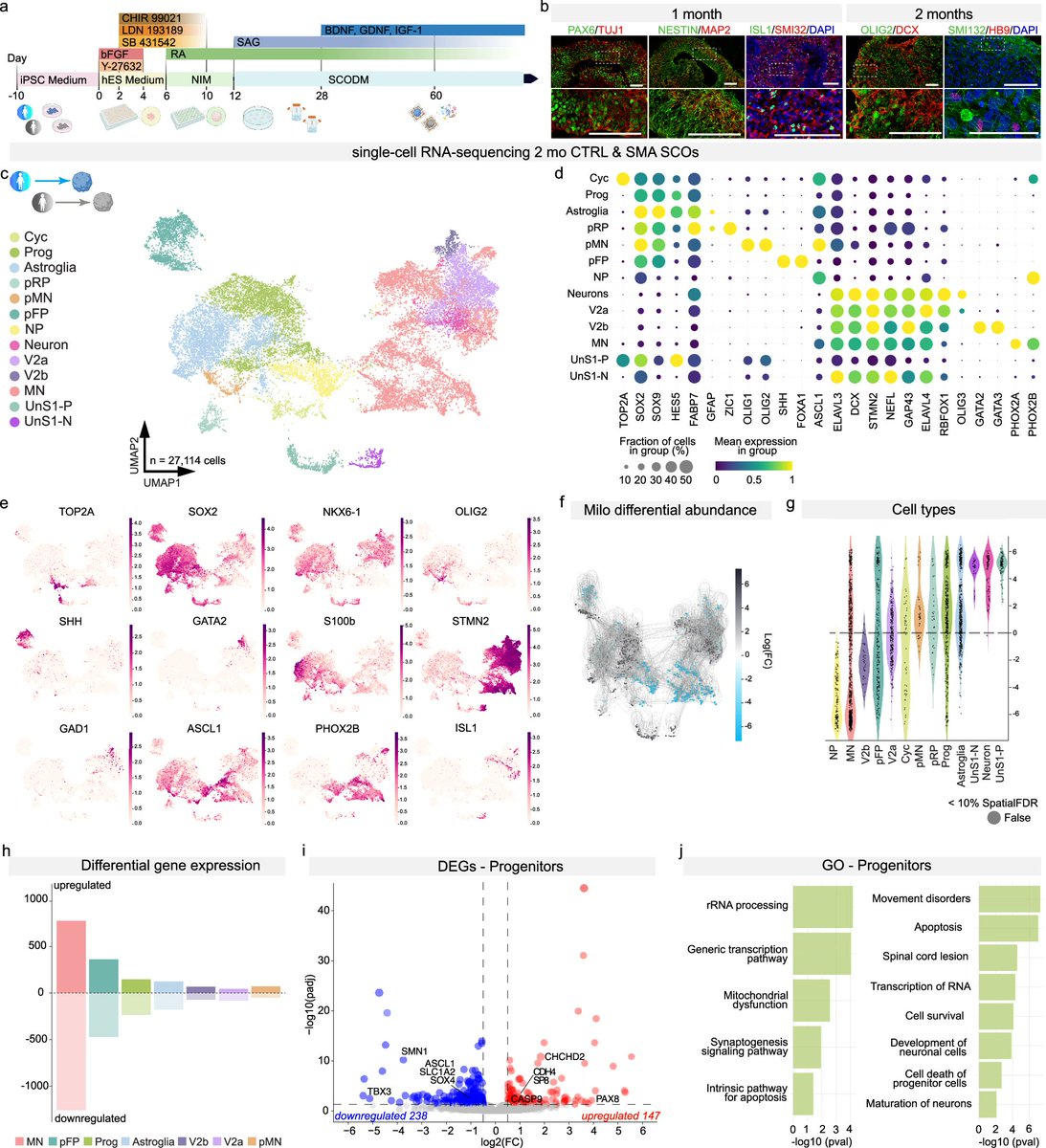
Using patient-derived spinal cord and cerebral organoids, as well as single-cell transcriptomics, researchers discovered that Survival Motor Neuron (SMN) deficiency disrupts the splicing of key genes involved in neural differentiation, potentially triggering spinal muscular atrophy pathogenesis. They also demonstrated that timely therapeutic intervention that increases SMN levels can rescue key pathological dysfunctions. In @NatureComms nature.com/articles/s4146… @IreneFaravelli, @tmonica86, @IlliaSimutin, @lisa_mapelli, @Chiacordi, @EleonoraPali, @CortiStefania, & others. @DBBS_UNIPV, @unipv, @Columbia, @CentDinoFerrari, @policlinicoMI, @humantechnopole, & @IstTumori.
Science Advancement and Outreach tweet media
English
0
2
7
132
Science Advancement and Outreach
In a new article in @LA_NatRes, Dr. Georgia Mason of @uofg makes a case for considering construct validity when assessing the welfare of animals used in experimentation. journals.sagepub.com/doi/10.1177/00… Mason points out that, often, "the quest for quantification (and perhaps simplicity)" can result in welfare assessments that are incorrect and don't actually ease suffering. In addition, most regulations only consider pain, suffering, or distress as what results from procedures. For example, Directive 2010/63/EU "assumes that conventional caging is neutral, when instead this causes cumulative stress." But we're not convinced that construct validity will do much to help. Relying on ANY indirect indicators to evaluate subjective experiences, like pain, fear, or stress, is still deeply problematic. In practice, simplicity and standardization are almost always prioritized, raising concerns that even "improved" welfare assessments may be systematically inaccurate, and potentially misidentify harmful procedures as refinement. Mason says: "Careful construct validation can never fully solve the ‘Other Minds’ problem: that animals’ subjective experiences are private (such that we can never measure them, only infer them)." We can't be certain what other animals are thinking or feeling, and using increasingly sophisticated validation frameworks may reinforce confidence in inherently limited measures. So, until they can answer directly, the best way to improve animal welfare assessments is to leave them out of experimentation altogether.
Science Advancement and Outreach tweet media
English
0
1
5
68
Prof Linda Gay Griffith
Prof Linda Gay Griffith@LindaGGriffith1·
Very grateful to the American Taxpayers, and to NIH, for giving us a chance to improve how therapies are developed, with the aim of getting safer and more effective therapies to patients on a faster timescale than you would ever have with animals as your only model system. Also, huge thanks to all the patients who consented to our studies and contributed to our biobank. As a patient myself, I know how much it means to contribute tissues that might help someone else avoid suffering in the future.
Science Advancement and Outreach@SAOscience

🚨 Today, @NIH announced a major funding push for non-animal research. As part of its Complement-ARIE program, the agency is devoting $150 million to "develop and scale research methods that better simulate human biology and reduce reliance on animal models." This funding will establish technology development centers to boost non-animal methods for research on gynecological conditions, cardiac disease, neurological disorders, and rare diseases, all areas that SAO has pushed NIH to modernize. In addition, a NAMs Data Hub and Coordinating Center and a Validation and Qualification Network will ensure that these technologies are standardized, accessible, and marketable. Some awards have already been issued to @LindaGGriffith1 of @MIT, Ivan Rusyn of @tamuvetmed, @JimWellsLab of @CincyChildrens, and @FNIH_Org. Learn more: nih.gov/news-events/ne…

English
3
1
16
3.1K
Science Advancement and Outreach
🚨 Today, @NIH announced a major funding push for non-animal research. As part of its Complement-ARIE program, the agency is devoting $150 million to "develop and scale research methods that better simulate human biology and reduce reliance on animal models." This funding will establish technology development centers to boost non-animal methods for research on gynecological conditions, cardiac disease, neurological disorders, and rare diseases, all areas that SAO has pushed NIH to modernize. In addition, a NAMs Data Hub and Coordinating Center and a Validation and Qualification Network will ensure that these technologies are standardized, accessible, and marketable. Some awards have already been issued to @LindaGGriffith1 of @MIT, Ivan Rusyn of @tamuvetmed, @JimWellsLab of @CincyChildrens, and @FNIH_Org. Learn more: nih.gov/news-events/ne…
Science Advancement and Outreach tweet media
English
0
3
8
5.8K
Science Advancement and Outreach
Synchronized Understanding of Real-time Guided Education with Interactive Navigated Simulation (SURGE-INS©) is a novel platform that combines video-based education and augmented reality with mid-fidelity simulation. SURGE-INS© was evaluated as a supplemental training tool for residents preparing for thyroidectomy, a surgery still practiced on live animals at institutions worldwide. The approach reflects a growing shift toward human-relevant, scalable, and technology-driven surgical training. 📄 Read the paper in Global Surgical Education, the journal of @Surg_Education: link.springer.com/article/10.100… By Haskins et al. of @ECUHealthNC, @ECUBrodySOM, @csc_ecu, @ECUResearch, @kennesawstate
Science Advancement and Outreach tweet media
English
0
0
3
58
Science Advancement and Outreach
In this protocol, @oaklandu scientists provide step-by-step guidance for constructing a humanized neurovascular organ-on-a-chip, outlining how iPSC-derived neural and vascular cell types can be integrated within a microfluidic system to recapitulate key features of the human neurovascular unit. The protocol details how to establish multicellular architecture and function and recommends imaging techniques and biochemical assays to assess barrier integrity, cell–cell interactions, and overall system performance. By Raut et al. of @FMS_OUWB and @OUBioSci, in @SpringerNature's 2025 Methods in Cardiovascular and Lymphatic Biology: link.springer.com/protocol/10.10… @OaklandResearch
Science Advancement and Outreach tweet media
English
0
0
6
79
Science Advancement and Outreach
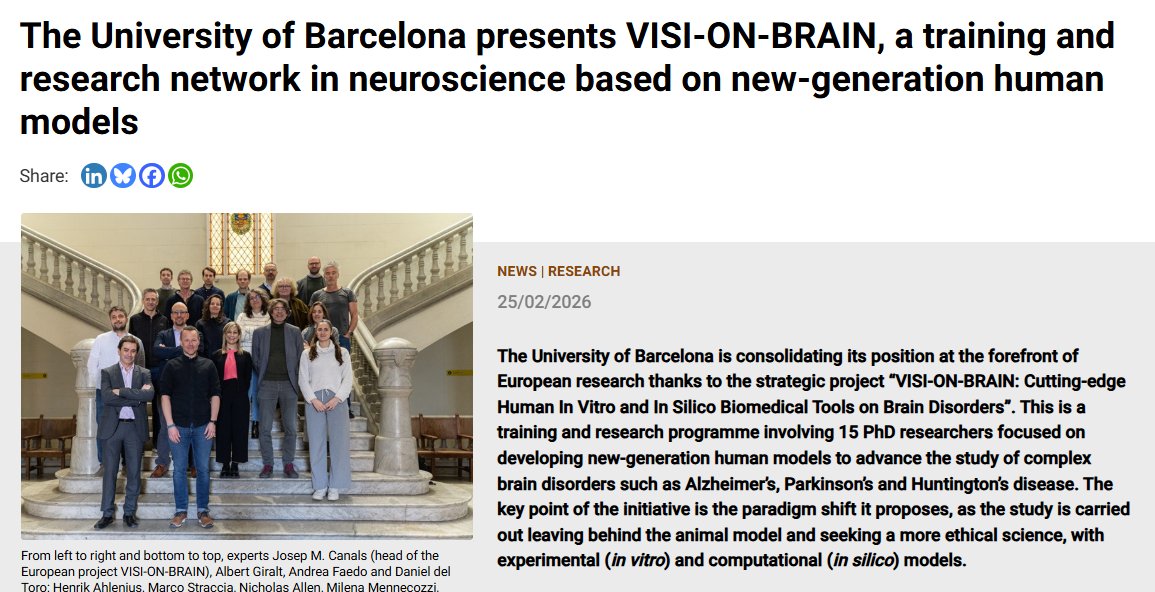
The @UniBarcelona is leading a major shift in neurodegenerative disease research with VISI-ON-BRAIN, a €4.5 million @EU_JRC–funded training and research network built entirely around human-relevant, non-animal methods. “The key point of the initiative is the paradigm shift it proposes, as the study is carried out leaving behind the animal model and seeking a more ethical science, with experimental (in vitro) and computational (in silico) models.” Fifteen PhD researchers will focus on developing these technologies to directly address one of neuroscience’s biggest challenges: the extraordinarily high failure rates seen when drugs for Alzheimer's, Parkinson's, and other neurodegenerative diseases are developed and tested in experiments on animals that cannot predict human biology. VISI-ON-BRAIN aims to close the translational gap while training the next generation of researchers to do better science. Congratulations to Josep M. Canals and the teams at @Creatio_UB and @UBneuroscience. 🔗 Read more about the VISI-ON-BRAIN initiative here: web.ub.edu/en/web/actuali… #BrainAwarenessWeek
Science Advancement and Outreach tweet media
English
0
1
5
57
Science Advancement and Outreach
Don't miss this new paper on current progress in phasing out the #ForcedSwimTest. Parissa Barai, @Jagnoor84178123 et al. of @MAHE_Manipal cover: ⚖️ The current regulatory and policy landscape surrounding the FST 🧑‍🔬 Human-relevant assays that can replace it 🐀 @PETA's worldwide campaign to eliminate its use 🚀 How a shift away from the FST would lead to better translation and more predictive antidepressant screening 💡 The coordinated efforts that are needed to facilitate a full transition “Owing to its ethical controversies and poor translational validity, the forced swim test (FST) faces global phase-outs, as the primary outcome fails to conclusively model human depression or reliably predict novel antidepressant mechanisms ... Collaborative innovation remains key to advancing ethical research paradigms that transcend the limitations of outdated behavioral assays.” Read the paper in @FrontAnimalSci: doi.org/10.3389/fanim.…
Science Advancement and Outreach tweet media
English
0
5
9
326
Science Advancement and Outreach
March is #EndometriosisAwarenessMonth! Endometriosis is a uniquely human disease—yet much of the research meant to understand and treat it has relied on animal experiments that don’t reflect its biology or patient experience. Our new article looks at recent work from researchers who instead use human‑based in vitro models: patient‑derived organoids, primary endometrial cells, and simpler human cell systems that are already delivering clearer, more relevant insights—both for understanding disease mechanisms and testing potential therapies. The science is there. What’s lagging behind are the funding and policy choices that determine which approaches get supported at scale. 👉 Read the article to see how human‑relevant models are reshaping endometriosis research. 👉 Like what you see? Support our Research Modernization NOW open letter: scienceadvancement.org/open-letter-pu…
Science Advancement and Outreach@SAOscience

x.com/i/article/2032…

English
0
3
4
109
Science Advancement and Outreach
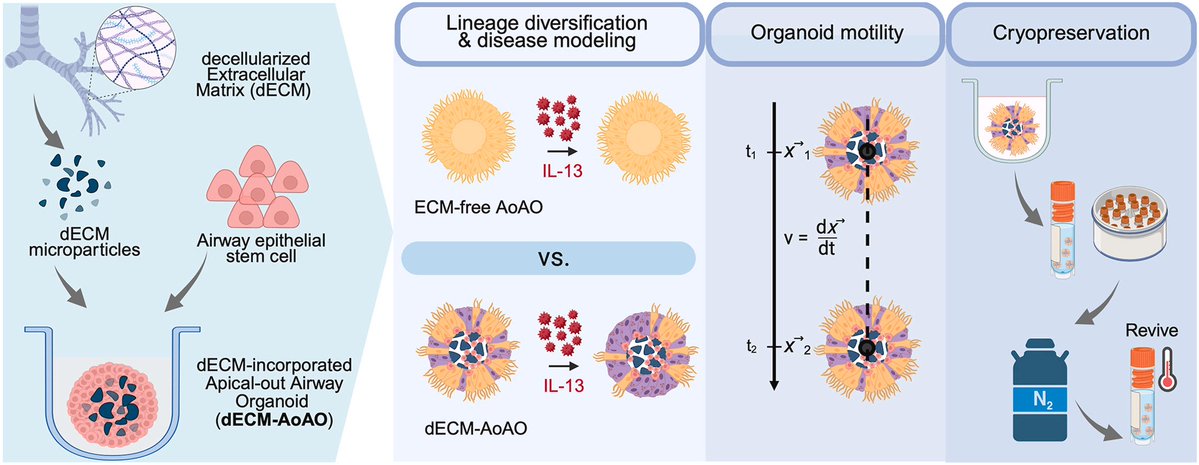
In this study, Gong et al., including @AmyLRyan of @RyanLabUIowa, developed a human airway organoid platform that incorporates decellularized extracellular matrix (ECM) microparticles and recapitulates native airway architecture, including lineage composition and responsiveness to pathogenic stimuli. This human-based model enables the investigation of epithelial–ECM crosstalk during airway homeostasis, pathogenesis, and injury responses, and has the potential to be adapted to other tissues and organoid systems, including the intestine, liver, and pancreatic islet cells. 🏛️ @UVMDeptMed, @uvmvermont, @cmu_bme, @CMUMeche, @CMUEngineering, @CarnegieMellon, @UIowaACB, @UIOWA_PMCCF, @IowaMed, @UIowaResearch 💰 NHLBI and @CF_Foundation 📖 @Biomaterials_ 🔗 sciencedirect.com/science/articl…
Science Advancement and Outreach tweet media
English
0
0
5
71
Science Advancement and Outreach
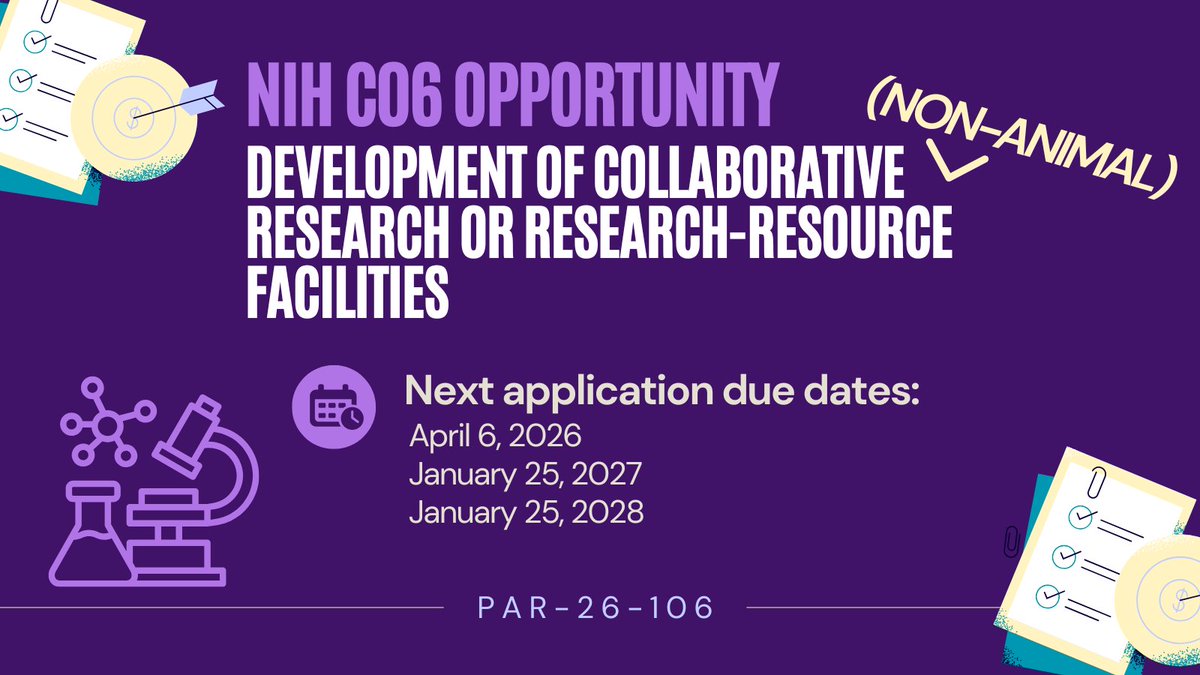
🚨 @NIHFunding alert! This new opportunity for the development of research or resource facilities that advance human-based tools for HIV/AIDS and other biomedical research is open! 🔗 files.simpler.grants.gov/opportunities/… If your institution has multidisciplinary collaborative research spaces, core labs, or state-of-the-art facilities like imaging centers, biorepositories, and other shared-use facilities that support emerging non-animal methods or human-based research technologies, this one is for you! ❌ Facilities focused on supporting animal research or animal care will not be prioritized.
Science Advancement and Outreach tweet media
English
0
0
5
149
Science Advancement and Outreach
Children’s movies showcase futuristic ideas through imaginative storytelling, and sometimes these ideas predict a not-so-distant scientific future. The new @Pixar film Hoppers depicts a young woman who transfers her consciousness into a robot beaver, and can then communicate with animals. While such mind transfers are still in the realm of sci-fi, the movie touches on very active areas of scientific research: animal communication and animal consciousness. At the same time, new technologies are offering ways to answer these questions without harming the animals we’re so interested in learning about. In this @sciam article, @jackiefmogensen examines whether the mind-melding science in Hoppers is possible. scientificamerican.com/article/the-re… The main idea in Hoppers is the transfer of consciousness between different bodies, but in the real world, scientists still argue about what consciousness is and how it arises. According to neuroscientist Dr. Alysson Muotri, professor of cellular and molecular medicine at @UCSDMedSchool, "[n]obody has successfully transferred consciousness from one nervous system to another or shown that this is possible." Muotri’s lab uses brain organoids to model neural activity and trains them to respond to stimuli, such as light, adding to knowledge of how neural circuits process sensory information. "In theory, it might be one day possible to mimic an entire brain’s worth of experiences, he says, and transfer them to a computer or another brain." Philosopher Dr. @eschwitz points out that for consciousness to be transferred, personal identity would have to be encoded as "informational patterns" that would be then replicated in another body. "That is highly implausible but not inconceivable," he says. Hoppers also imagines animals engaging in and coordinating a revolutionary uprising. While there is no shortage of stories about animals escaping from or revolting against cruel conditions, the real animal communication that humans have been able to observe is typically more pragmatic. @Cambridge_Uni zoologist Dr. @arikkershenbaum, author of Why Animals Talk: The New Science of Animal Communication, explains that most animal signals cover relatively basic information, like territorial claims, mating readiness, or warnings about predators. However, many animals make structured vocalizations or different sounds depending on context, showing that their communication is likely more complex than previously assumed. Researchers are now using advances in AI to analyze these vocalizations and their meanings. For example, this is how @ProjectCETI is beginning to decode sperm whale vocalizations. "Sperm whales have highly complex vocalization we’re learning, and that’s probably indicative that their inner lives are as complex as well," writes Dr. @begusgasper, associate professor at @UCBerkeley, "[w]e think we’re the only ones with language, or the only ones with complex thought. But that might not be the case." A better understanding of animal communication, through observation of animals in their natural environments, advances research on animal consciousness, as sophisticated language is directly linked to sophisticated cognition. Research on whales, primates, birds, and other species strongly suggests they have rich perceptual experiences and intricate social relationships. While Hoppers dramatizes humans’ (or robots’) ability to communicate with animals, real science is demonstrating, time and time again, that animals possess complex languages and cognitive inner worlds, reshaping scientific and ethical discussions about how they are treated. In parallel, new technologies, from AI-driven analyses to human brain organoids, are allowing scientists to investigate biological questions about language itself without subjecting animals to invasive experimentation.
GIF
English
0
4
11
420
Science Advancement and Outreach
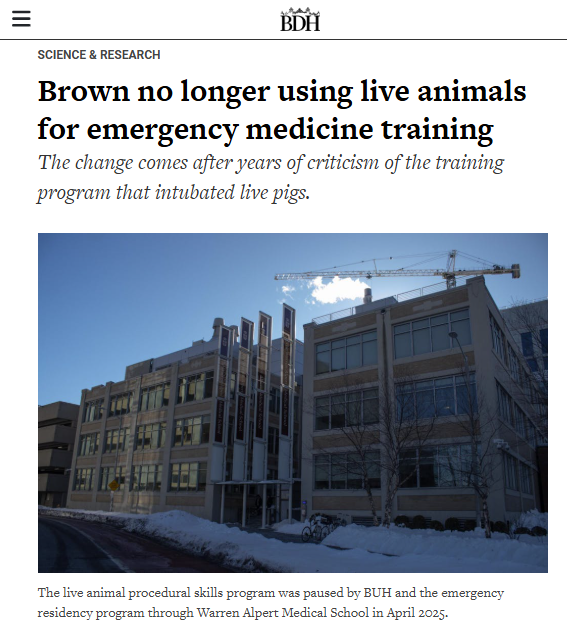
👏 @BrownUniversity has officially ended the use of live animals for it’s emergency medicine residency program! This brings the number of U.S. emergency medicine (EM) residency programs that still use animals down to just eight, despite 97% of EM residency programs having already moved away from this outdated approach to procedural training. (see: pcrm.org/ethical-scienc…) This progress adds to the growing number of medical training programs replacing live animal use with ethical, effective, human-relevant simulation models. Congratulations to @RyanWMerkley, Christine Kauffman, and the rest of the team at @PCRM on this important achievement. Read more on PCRM’s website: pcrm.org/news/news-rele… Or here in @the_herald: browndailyherald.com/article/2026/0…
Science Advancement and Outreach tweet media
English
0
2
5
72
Science Advancement and Outreach
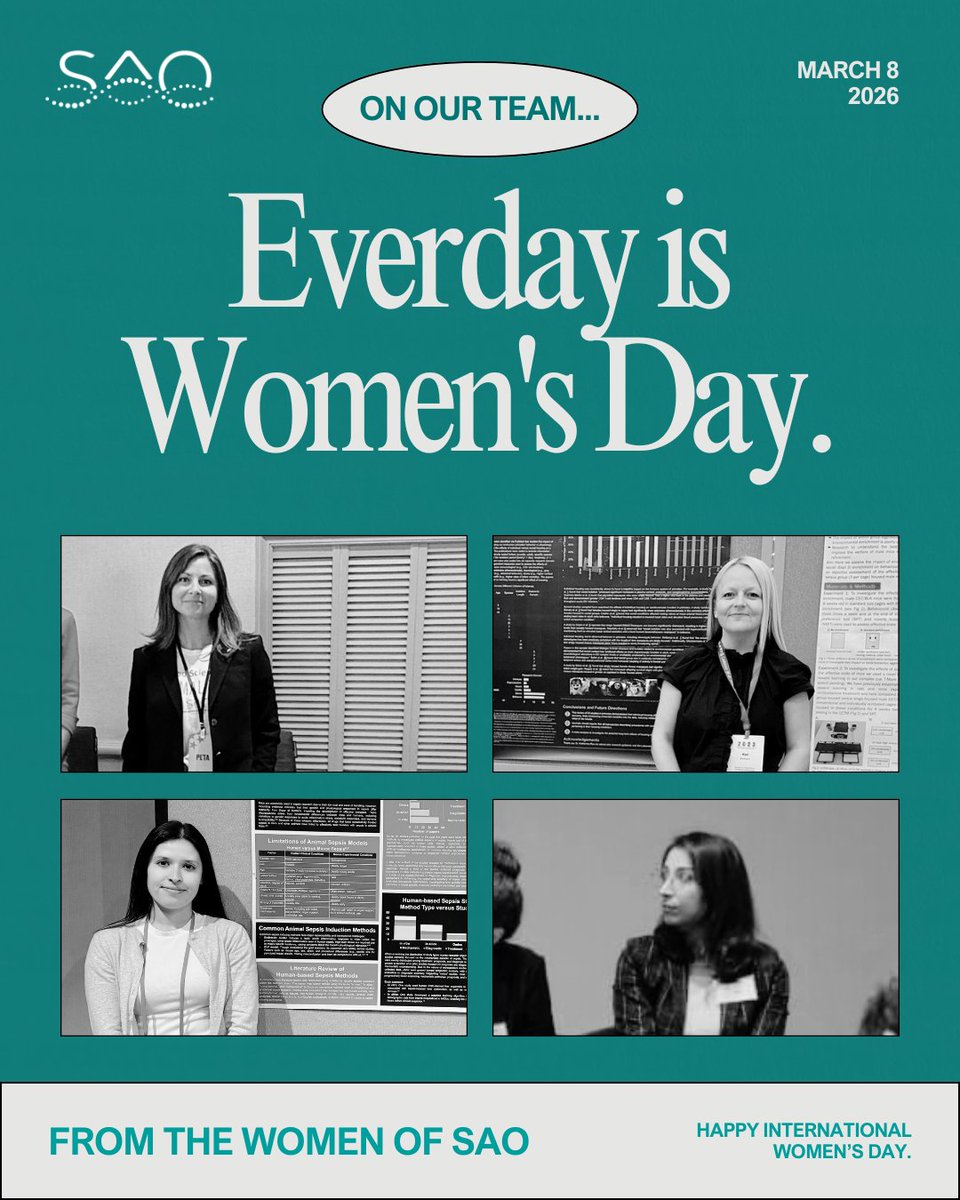
Science Advancement and Outreach is a division of women in a larger organization run by women, in a movement primarily led by women. Yesterday was #InternationalWomensDay, and we’re proud that women are leading the charge toward the future of science, innovation, and animal protection. Particularly in fields where women have been historically underrepresented. Every day, our team works to advance cutting‑edge, non-animal research; challenge outdated systems; collaborate with scientists, educators, and policy makers; and open doors for modern, humane science. We are proud to contribute to a movement shaped by feminine vision and female leadership: ♀️ Women who push for progress ♀️ Women who challenge the status quo ♀️ Women who demand evidence-based change ♀️ Women who speak up for the vulnerable ♀️ Women who mentor the next generation of scientists and advocates To all the women in science, advocacy, and research who are driving meaningful transformation: we’re grateful to work alongside you. A belated Happy International Women’s Day from the women of @SAOscience 🩵 - Emily Trunnell, PhD; Kati Bertrand, MS; Donya Mand, MD; and Gabby Vidaurre, PhD #WomensDay #WomeninScience #WomeninSTEM
Science Advancement and Outreach tweet media
English
0
2
5
124
Science Advancement and Outreach
🆕 @the_ISoOR recently published three articles on last year's major policy shifts toward human-based biomedical research. Check them out in the Journal of Organoid and Bioscience: 1️⃣ "NIH Shift Away from Animal-Only Research Signals a Major Opportunity for Organoids" - jobs.isoor.org/index.php/jour… 2️⃣ "United Kingdom Launches £75 Million National Roadmap to Phase Out Animal Testing by 2030: A Defining Moment for Human-Relevant Research" - jobs.isoor.org/index.php/jour… 3️⃣ "Major Shift in U.S. Research Policy: CDC to End All Nonhuman Primate Experiments by 31 December 2025" - jobs.isoor.org/index.php/jour…
Science Advancement and Outreach tweet media
English
0
1
6
66
Science Advancement and Outreach
Our colleagues at Animal-Free Science Advocacy are asking the Australian public to support the open parliamentary petition, “Allow Primates in Research the Same Protections as Great Apes.” The petition seeks to extend stronger ethical protections to all non-human primates used in research, not just great apes, via an amendment of the Australian Code for the Care and Use of Animals for Scientific Purposes. AFSA has also recommended that the @nhmrc: 🔷 Prohibit approval of new non-human primate research projects while allowing approved projects to conclude and animals to be retired appropriately; and 🔷 Cease funding for new non-human primate research from 2028 onwards, while prioritizing non-animal methods. AFSA's position is supported by testimony from: 👨‍⚕️ Andrew Knight, Veterinary Professor of Animal Welfare at Murdoch University and the Griffith School of Environment and Science, and 👨‍🔬 Jarrod Bailey, geneticist and Director of Medical Research at @PCRM "Restricting special protections to great apes while permitting invasive experimentation on other primates is increasingly viewed as inconsistent with contemporary science, ethics and community expectations," - animalfreescienceadvocacy.org.au/parliamentary-… 🇦🇺 AUSSIES! 🚨 Please add your name to the petition: aph.gov.au/e-petitions/pe… Read more in this @DynamicBusiness article: dynamicbusiness.com/topics/news/fr…
English
0
1
6
72