
Science Advancement and Outreach

4.9K posts

Science Advancement and Outreach banner
Science Advancement and Outreach

Science Advancement and Outreach

@SAOscience

Promoting human-relevant research, policies, and funding opportunities. Better for patients, better for animals.

Washington DC Katılım Eylül 2022
941 Takip Edilen1.3K Takipçiler
Sabitlenmiş Tweet
Science Advancement and Outreach
📢 BIG ANNOUNCEMENT! 🥁 ... Research Modernization NOW, our science policy roadmap, has become a living online resource! 📚 Dive into a resource packed with everything you need to know about animal experimentation and why we must transition to human-relevant, non-animal methods. 🔎 Discover why animal experimentation has been holding back medical progress, the shortcomings of current oversight, and the advantages of human-based technologies. 🗃️ Browse 40+ extensive appendices covering disease areas, medical education, and more. ⬇️ Download and print key reports to learn, educate, and advocate for a better scientific future. This 🆕 website will be regularly updated with the latest research and policy developments relevant to the transition to 21st century science. 👉 Visit science.peta.org today and take action to help shape the future of science. 🚀
Science Advancement and Outreach tweet media
English
0
4
7
331
Science Advancement and Outreach
In this review, @WuXuekun et al. give an overview of recent advances in cellular models, microphysiological systems, computational approaches, and other non-animal methods (NAMs) driving the human-centric shift in drug development and biomedical research. They also discuss how long-term adoption of NAMs depends on a workforce trained to use them—yet current training pipelines remain deeply rooted in animal-based paradigms. The National Institutes of Health’s human-based research initiative is noted as a step toward addressing this gap. The review concludes with a NAM-focused vision for the future, where human-based methods will take the lead in drug development and animals will no longer be used in experimentation: “The coming decade will mark a transitional period in which human -based NAMs gain a larger role in drug development while animal models contribute to a lesser extent and in more limited contexts. During this transition, animal studies are likely to move from being the default main evidentiary foundation to an intermediate role as calibrated reference systems that provide one evidence stream for benchmarking and refining predictive performance of NAM platforms, and eventually to a future state where they serve as ancillary information if needed.” The paper, also by Matthew A. Wu, @james_y_zou, Nicole Kleinstreuer, and @Joseph_C_Wu of @StanfordMed, @StanfordCVI, @StanfordDeptMed, @StanfordDBDS, @GreenstoneBio, and @NIH, can be found in @ScienceMagazine: science.org/doi/10.1126/sc…
Science Advancement and Outreach tweet media
English
0
3
4
630
Science Advancement and Outreach
More than 20,000 primates are imported into the United States every year for experimentation and testing. This global pipeline is not only an animal welfare issue—it also affects public health and biosecurity. Many of the most significant infectious disease outbreaks in recent history, like HIV, Ebola, mpox, COVID-19, and hantavirus, originated through animal-to-human pathogen transmission. The international transport and warehousing of large numbers of stressed wild and captive-bred primates creates ideal conditions for pathogen amplification, mutation, and cross-species transmission. Nonhuman primates can carry herpes B virus, tuberculosis, simian retroviruses, mpox-related pathogens, and other infectious agents that threaten both human and animal populations. In an article published last month in @ScienceMagazine, @JGippet, @ColinJCarlson, @T_Klaften, Mattéo Schweizer, @evanaeskew, Meredith Gore, and @BertelsmeierC at @OfBiology5546, @iids_uidaho, @Yale, @unil, and @umdgeography, found that among 2079 traded mammal species, 41% carry pathogens that infect humans, compared to just 6.4% of non-traded species. Species acquire one additional human-infecting pathogen for every decade they remain in global wildlife markets, suggesting that trade actively amplifies disease risk over time. "These findings highlight that cross-species pathogen transmission is an inherent consequence of diverse uses of wildlife by humans and underscore the need to strengthen biosurveillance and integrate zoonotic risk considerations into wildlife trade regulations to help prevent future pandemics." science.org/doi/10.1126/sc… If you’re asking what we, as members of the public, can do about this issue, there are two important measures being considered right now: 1️⃣ At the federal level, the recently introduced Preventing Risky Importation of Monkeys to Avoid Toxic Exposures Act, or PRIMATE Act (H.R. 8471), would prohibit laboratories and their suppliers from importing monkeys into the U.S. for experimentation and testing. 📢 Ask your Representative to co-sponsor the PRIMATE Act: support.peta.org/page/96444/act… 2️⃣ In Washington state, the Board of Health is currently considering a first-of-its-kind petition for rulemaking submitted by @peta, Northwest Animal Rights Network, and the @PCRM that would require primate experimentation facilities to report any detection of contagious diseases in monkeys. This is the same type of reporting that's already required when these transmissible pathogens are detected in humans. 🚨 Before the end of May, take action here to urge the Washington State Board of Health to keep Washingtonians healthy and safe: support.peta.org/page/96279/pet…
Science Advancement and Outreach tweet media
English
0
4
7
60
Science Advancement and Outreach
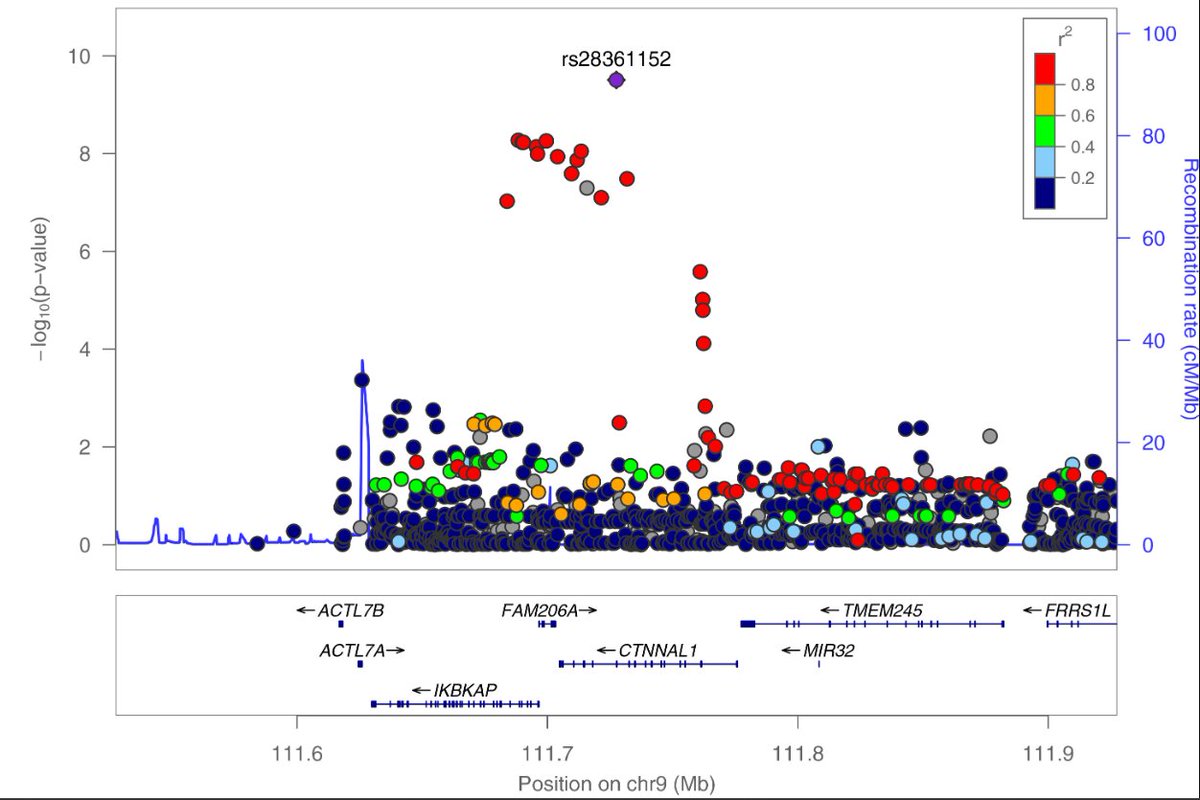
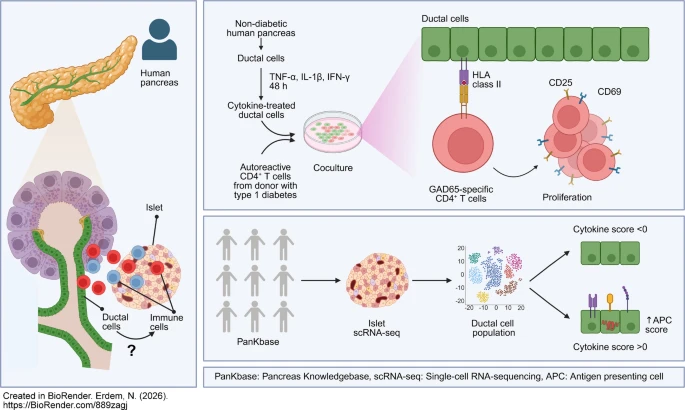
A small-scale study examined how opinions on xenotransplantation change when patients learn more about it. 🐷 When individuals with type 1 diabetes were informed that treating a single adult might require 25 or more piglets, over half of the 19 participants (58%) reported that this made them less willing to support the research. 🐖 When informed about zoonotic disease risk, participants were either much less willing (31.6%) or somewhat less willing (63.2%) to accept islet xenotransplantation as a form of treatment. The authors conclude: “[t]he findings demonstrate that patient support for islet xenotransplantation may be fragile. In our sample, the ethical implications of the high donor pig-to-recipient ratio appeared to be a significant barrier to acceptance.” By @Sheetal4444, Amy Glasofer, and @HurstDanielj of @RowanVirtuaSOM and @VirtuaHealth, in @Columbia's @VoicesBioethics: journals.library.columbia.edu/index.php/bioe…
Science Advancement and Outreach tweet media
English
0
3
4
58
Abhijit Majumder
Abhijit Majumder@abhijit_MLab·
Thank you for covering our Placenta on Chip :)
Science Advancement and Outreach@SAOscience

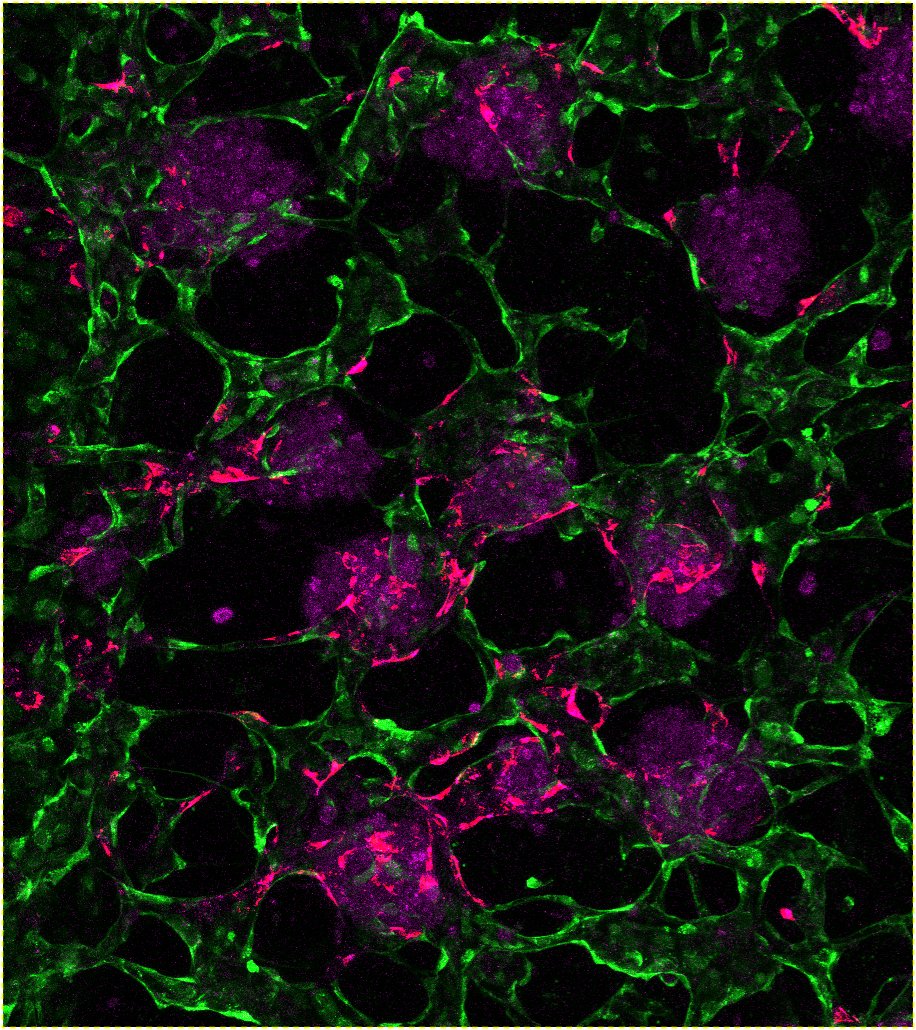
Mice don’t menstruate… but organoids do. Women’s health research has long been shaped by gaps in funding, focus, and the tools to access human biology. This #NWHW ♀️, we’re highlighting how human‑relevant approaches are reshaping the field, and why this work needs greater support. Recent studies using organoids, organ‑on‑chip systems, bioprinted tissues, and advanced imaging show how non-animal, human-based science is addressing questions about menstruation, pregnancy, and gynecological conditions that have gone unanswered for decades. ⬇️ Click below for the full article, featuring work by: 👩‍🔬 @KonsNikol, @wsybanez, & colleagues from the #TurcoLab at @UniBasel's @FMIscience, @Loke_CTR, and @ISBSIB 👩‍🔬 @matteomolelab, @irene_zorzan, @chris_penfold, @HorsleyNicole, et al. of the @BabrahamInst, @StanfordOBGYN, @CellStanford, and @SCICambridge 👩‍🔬 @DrErikaMoore and @AllisonMoses23 of @UMDBIOE 👩‍🔬 @anshulbhide1, @DeepakNModi, @srv_mkjee, and @abhijit_MLab of @icmrnirwoh and @iitbombay 👩‍🔬 @leo_jwu and @SeiyaO1224 of @UTSWMolBiol 👩‍🔬 @SciHeath, @craigulrich11, @DaveQuilici, and @anutr_sivakoses of @unrmed and @unrengineering linkedin.com/pulse/innovati… #NationalWomensHealthWeek CC: @womenshealth, @NIH_ORWH, @SWHR, @WomensResearch, @BrighamConnors, @MountSinaiWHRI, @Bowers_WBHI, @womenhealthucf, @LudemanCenter @ResearchonWH, @researchonwomen, @AWHONN, @NPWH

English
1
0
2
545
Science Advancement and Outreach
Mice don’t menstruate… but organoids do. Women’s health research has long been shaped by gaps in funding, focus, and the tools to access human biology. This #NWHW ♀️, we’re highlighting how human‑relevant approaches are reshaping the field, and why this work needs greater support. Recent studies using organoids, organ‑on‑chip systems, bioprinted tissues, and advanced imaging show how non-animal, human-based science is addressing questions about menstruation, pregnancy, and gynecological conditions that have gone unanswered for decades. ⬇️ Click below for the full article, featuring work by: 👩‍🔬 @KonsNikol, @wsybanez, & colleagues from the #TurcoLab at @UniBasel's @FMIscience, @Loke_CTR, and @ISBSIB 👩‍🔬 @matteomolelab, @irene_zorzan, @chris_penfold, @HorsleyNicole, et al. of the @BabrahamInst, @StanfordOBGYN, @CellStanford, and @SCICambridge 👩‍🔬 @DrErikaMoore and @AllisonMoses23 of @UMDBIOE 👩‍🔬 @anshulbhide1, @DeepakNModi, @srv_mkjee, and @abhijit_MLab of @icmrnirwoh and @iitbombay 👩‍🔬 @leo_jwu and @SeiyaO1224 of @UTSWMolBiol 👩‍🔬 @SciHeath, @craigulrich11, @DaveQuilici, and @anutr_sivakoses of @unrmed and @unrengineering linkedin.com/pulse/innovati… #NationalWomensHealthWeek CC: @womenshealth, @NIH_ORWH, @SWHR, @WomensResearch, @BrighamConnors, @MountSinaiWHRI, @Bowers_WBHI, @womenhealthucf, @LudemanCenter @ResearchonWH, @researchonwomen, @AWHONN, @NPWH
Science Advancement and Outreach tweet media
English
0
6
11
726
Science Advancement and Outreach
In a new editorial piece in the @BritishEcolSoc journal @MethodsEcolEvol, @g_iossa, @TamaraContador, @E_Drinkwater, @JosephMwanziaNg, @Elva_Robinson, @LynneUSneddon, @Bao_Jun_Sun, and others discuss the society’s views on evolving ethical standards in publishing. "As ethical standards, expectations and policies continue to develop, the research community faces new questions not only about compliance but also about fundamental values: What constitutes harm? Who or what deserves moral consideration?" doi.org/10.1111/2041-2…
Science Advancement and Outreach tweet media
English
0
1
4
48
Science Advancement and Outreach
The rapidly advancing understanding of cephalopod brains is exposing a growing gap between what we know and how these wondrous animals are treated in experimentation. nature.com/articles/d4158… Octopuses, cuttlefish, and squid have large, highly complex nervous systems and exhibit behaviors consistent with learning, problem-solving, and sentience. Read more in @liamjdrew’s @Nature article: nature.com/articles/d4158…. A growing body of evidence suggests that cephalopods can experience pain and distress, as described by @Dr_AlexSchnell, @zoophilosophy, @AndrewCrump94, Charlotte Burn, and @birchlse: onlinelibrary.wiley.com/doi/10.1002/br…. Yet in laboratories, these animals are subjected to invasive procedures, such as being surgically implanted with electrodes and physically restrained during neural recordings. Many regulations governing the use of animals in laboratories were built on the now-outdated assumption that only some vertebrates can suffer. In several regions, such as Australia, Canada, the EU, New Zealand, Norway, Switzerland, and the UK, some legal protections for cephalopods have been established. But most countries, including the U.S., still lack enforceable standards. Even where protections exist, major gaps remain: 🛑 There are currently no suitable analgesics or anesthetics for cephalopods, meaning invasive procedures are conducted without the ability to reliably mitigate pain. 🛑 Given the evidence of cephalopod sentience, proceeding with invasive experimentation is not a neutral act, it entails the acceptance of unmanaged suffering. 🛑 Cephalopod brains are fundamentally different from vertebrate brains in both structure and organization, making the application of mammalian neuroscience tools and frameworks methodologically wrong. Decades of data show that experiments on animals fail to translate to human outcomes. We cannot continue to rely on biologically distant species and expect human-relevant insights. Calls for a global framework, including a possible UN Convention on Animal Health and Protection, reflect a growing recognition that existing systems require reform, and the best way forward is to pivot toward human-relevant science.
Science Advancement and Outreach tweet media
English
0
3
7
78
Science Advancement and Outreach retweetledi
PETA
PETA@peta·
This is a living document that grows as science evolves. Explore the Research Modernization NOW roadmap at peta.vg/47aq.
English
1
4
25
1.6K
Science Advancement and Outreach
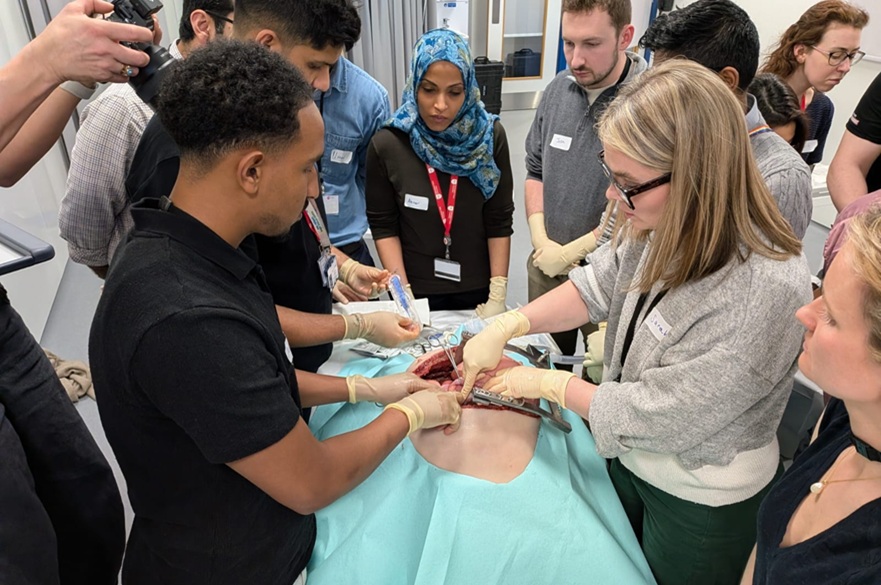
Last week, SAO’s Donya Mand, MD, attended @Surg_Education’s annual conference in Atlanta. ⚕️ #ASE2026 is a gathering of surgical educators and program directors focused on innovation, scholarship, and professional development in surgical education. During the conference, Dr. Mand explored the latest advances in #SurgEd theory, tools, and instructional approaches.  👉 Check out the article for standout presentations and simulation companies showcasing synthetic training models designed to move #MedEd beyond the use of animals. linkedin.com/pulse/2026-ass… Featuring: @TheAIMS_Lab, @UTSW_Surgery, @LaheyHospital, @DrGuzzetta, @Danny_Scott__, @SimDrN, @DukeSurgery, @SEAL_duke, @KentKYamamoto, @smbarter3434, @swthorntonjr, @bfgilmore1, @Sabino_Zani, @mcgillsim, @RIMUHC1, @DanielNegz, @Jeffrey35755111, @JNJMedTech, @SheriTingom, @AppliedMed_CRS, and more!
Science Advancement and Outreach tweet media
English
0
1
3
85
Science Advancement and Outreach
Human cell‑based models are changing how we study psychiatric disease. They allow researchers to investigate mental illness in systems that preserve human biology, uncover mechanisms that experiments on animals miss, and move more directly toward precision medicine. For #MentalHealthAwarenessMonth, we’re highlighting new studies that show what becomes possible when psychiatric research is built around human cells and asking why these approaches are still often treated as "complementary," rather than essential. 🧠 Check out our article, featuring work from @studerl, @NanXu4, @hermanymv, @TheSTEMtress, @_theglowup, @tythenstedt, @andrew_tidball, @LoriLIsom1, @fu_jianping, @LisaJ456, @neurokaire, and more! 🔗 linkedin.com/pulse/cells-ho… #MHAM #MHAM2026 #MentalHealthAwareness #MentalHealthMatters #MoreGoodDaysTogether
Science Advancement and Outreach tweet media
English
0
2
5
139
Science Advancement and Outreach
SAO director @ERoseEngland, joined @jlieberman2025 on his podcast, Puppies, Pandemics, and Public Health, to talk all things animal experimentation. In this episode—“Animal Research: Bad Science, and a Broken System: A Former Lab Researcher Speaks Out”—Dr. Trunnell recounts some of her experiences in animal laboratories during her Ph.D. training and examines why animal experimentation remains the scientific default, despite persistent ethical and scientific failures. Key themes from the conversation: 🙈 Inadequate oversight, self‑policing 🚫 Poor reproducibility and failed translation 🐁 Widespread exclusion of animals from legal protections 🧫 Human‑relevant methods already outperforming animal tests The takeaway is straightforward: animal suffering in laboratories is not incidental—it is the foreseeable outcome of a broken, self‑regulated system. Dr. Trunnell also points to the growing momentum behind modern, human-based approaches—organs‑on‑chips, organoids, and AI‑powered modeling—that better reflect human biology and scientific rigor. 🎧 Listen to the episode here, or wherever you get your podcasts! youtu.be/kotKjAexoUE?si… Puppies, Pandemics, and Public Health explores how animal welfare, public policy, and human health intersect. Hosted by Dr. Johnny Lieberman—a physician and public health advocate with training in medicine and policy—the show brings a systems‑level lens to how our treatment of animals shapes human health, the environment, and social justice. johnliebermanmd.com/podcast
YouTube video
YouTube
Science Advancement and Outreach tweet media
English
0
1
5
287
Science Advancement and Outreach
📢 Call for experts! @theNASEM is looking for experts for a new Standing Committee on Animal Health, Conservation, and Research. “Building on the vision of the Board on Animal Health Sciences, Conservation, and Research (BAHSCR) to focus on animal health and conservation, the new Standing Committee on Animal Health, Conservation, and Research will broaden its mission to address the intersection of animal health, biodiversity, ecosystems, and conservation.” This new Standing Committee’s remit includes the following topics: 1️⃣ “Research advances and their translation to decision-making, veterinary practice, health, and conservation 2️⃣ Use of emerging technologies for studying animal health in the wild 3️⃣ Development and use of artificial intelligence models and other computational approaches for studying animal health and welfare, ecosystems, and biodiversity 4️⃣ Animal welfare for wildlife-focused research activities 5️⃣ New approach methods (new alternative methods) for research with animals for animal health, including in wild and semiwild environments, zoological institutions, and aquaria 6️⃣ Challenges and solutions for addressing ecosystem-level issues that include animal and human populations" ➡️ If you'd like to nominate yourself or another expert, submit your recommendation by May 7: survey.alchemer.com/s3/8791471/Sta…
Science Advancement and Outreach tweet media
English
0
3
4
102
Science Advancement and Outreach
Call for abstracts! 📣 @JoVEJournal is accepting submissions to its topical collection, "Tissue-Engineered In Vitro Models: Biomaterials, Characterization, and Three-Dimensional Fabrication Approaches." Submit your work on: 🧪 Biomaterial development 📋Mechanical and chemical characterization techniques 🧫 Model fabrication, including for human-based 3D hydrogels, 3D bioprinting, or organoids Never published a peer-reviewed video before? Don't be intimidated! JoVE handles all video production after you submit your traditional manuscript. @MrFarsheedRocks (@salkinstitute) and @michshuang (@ucsfpharmacy) are the guest editors for this collection. Learn more about it here: jove.com/methods-collec…
English
1
1
6
346
Science Advancement and Outreach
In this recent perspective, @US_FDA leadership notes that "[t]he utility of NAMs extends well beyond safety assessment. Accumulating evidence shows they can improve the efficiency and predictive value of drug development itself." @TracyBethHoeg, @BiotechKoz, @HalehSaber, and @DrMakaryFDA also discuss the importance of the FDA's collaboration with @NIH, which allows the agencies to connect technology development with real-world use and outcomes. Read the piece in @JAMA_current: jamanetwork.com/journals/jama/…
Science Advancement and Outreach tweet media
English
0
2
5
114
Science Advancement and Outreach
Thank you for this thoughtful and principled response, @jscottwagner. We agree completely. We would never argue that animal experimentation should end only because some animals display particular cognitive or emotional capacities. This is exactly why we highlight extraordinary cognition across all taxa—to change people's perception that only certain species require more refined treatment. Such a narrow argument would be incomplete and, as you note, a dangerous slope that invites exactly the kinds of distinctions we should be rejecting. Cognitive complexity is not, and should not be, a moral yardstick for determining who deserves protection from harm. Our advocacy rests on multiple, mutually reinforcing foundations: the scientific failures of animal models, the ethical indefensibility of imposing avoidable suffering, and the availability (and growing success) of human‑relevant, animal‑free technologies. Those arguments stand on their own, regardless of whether an animal is deemed “simple” or “complex.” The purpose of highlighting animal cognition and emotion in this series is to challenge a persistent narrative that has been used to minimize or dismiss it. For some audiences, learning that experiments themselves reveal fear, distress, learning, and emotional responsiveness helps dismantle the fiction that laboratory harm is trivial or abstract. It is one piece of a much larger puzzle. We share your conclusion that unnecessary cruelty is unethical across the board. Pain is pain. Suffering is suffering. The failure of animal experimentation has less to do with an animal’s capacities than the system that continues to inflict foreseeable suffering when more consistent ethics and better science are available. We appreciate you articulating this so clearly and pushing the conversation in exactly the direction it needs to go.
English
1
0
2
10
J. Scott Wagner
J. Scott Wagner@jscottwagner·
Thank you- these are gratifying, validating responses to testing for any animal advocate, because they help us relate better to those we subject to these tests. For me, advocating for the elimination of testing based on assertions about cognitive complexity misses the mark. Would we say the torture of a sensitive genius is more salient than the torture of someone who is mentally or emotionally handicapped? It is unreasonable to make distinctions about physical and mental pain based on specie cognitive complexity for the same reason: cognitive complexity has only minor effects on the effects of torture, and may even help a creature endure certain things better. Pain is pain. Physical suffering in particular is a great equalizer. Emotional sensitivity, self awareness, or intellect don’t make for material differences in suffering under conditions of physical torture and isolation. Pain from testing is not greater in more sophisticated creatures; it’s merely more relatable. I don’t want to state this contention as true carte blanche. The world is complex. But I think it’s important to acknowledge that for the most part, these results skirt a key truth we know already, if we just stop and think for a second: avoidable cruelty is roughly as unethical on all creatures great and small. Trolley problem type justifications of pain in testing are arguably worth considering (do we sacrifice this animal’s well-being to provide great benefit to these other animals?). Potential distinctions between types and levels of damage and pain across species, given types of imprisonment and testing, may also be warranted. And maybe this argument for even-handedness breaks down with very small or short-lived creatures (bugs, bacteria); I’m not sure. But within, say, the realm of mammals, or fish, or large arthropods, we shouldn’t implicitly assume like this that a coarse comparative notion of social, emotional, or cognitive complexity can be a yardstick that justifies or doesn’t justify the torture inherent in most animal testing. Doing so is a form of speciesism, and opens us up to extraneous arguments we shouldn’t entertain about who deserves pain and torture more or less. We should rather focus on how evil it is to inflict unnecessary pain on these voiceless, how exactly despairing and awful it is for even relatively simple creatures.
English
1
0
3
24
Science Advancement and Outreach
For centuries, humans have justified the use of mice in experimentation under the false assumption that they are ‘simple creatures,’ lacking the cognitive and emotional capacities found in other animals. But a growing body of research is painting a very different picture. Most animals, including mice, consistently show us they have rich emotional lives and cognitive abilities that we’ve long misunderstood or underestimated. As this evidence grows, it becomes even more ludicrous for some to dismiss that laboratory experiments induce fear, distress, and pain in the animals subjected to them. As part of our World Week for Animals in Laboratories series, today we’re discussing animal emotions and cognition.   👉 Read the article to learn more. #WWAIL #WW4AIL #AnimalCognition #AffectiveNeuroscience #AnimalEmotions linkedin.com/pulse/world-we…
Science Advancement and Outreach tweet media
English
1
3
6
111
Science Advancement and Outreach
Read the bill here: steube.house.gov/wp-content/upl… For more information on monkey importation, see these recent posts: x.com/SAOscience/sta… and x.com/SAOscience/sta… and x.com/SAOscience/sta… 🗨️ Read statements of support for the PRIMATE Act from @BiodiversHealth, @macaqtivist, @gregsteube, and @repdinatitus in the graphics.
Science Advancement and Outreach tweet mediaScience Advancement and Outreach tweet mediaScience Advancement and Outreach tweet mediaScience Advancement and Outreach tweet media
Science Advancement and Outreach@SAOscience

In response to criticism of @CDCgov's decision to end its in-house experiments on non-human primates, Lynn Taylor, MD (@LMTaylor79), Etai Bally, and Zach Burns, DO penned a powerful letter outlining the many reasons the agency's choice was a good one. ✅ Myriad studies show that experiments on non-human primates fail to predict human responses. ✅ Scientific techniques exist that are more relevant to human health. ✅ "Nonhuman primates are highly intelligent, sensitive, social beings. Using them in research is cruel and sadistic, inflicting avoidable pain, fear and suffering." ✅ The use of monkeys in laboratories and the international monkey trade that supplies them poses zoonotic disease risks that endanger public health. ✅ Most of the world's primates are at risk of extinction. ✅ Past contribution does not entail present necessity. Read and share their letter in @JIDJournal: doi.org/10.1093/infdis…

English
0
1
3
63
Science Advancement and Outreach
Late last week, @gregsteube and @repdinatitus introduced the Preventing Risky Importation of Monkeys to Avoid Toxic Exposures Act, or PRIMATE Act (H.R. 8471). More than 20,000 primates are imported into the U.S. every year for experimentation and testing. The consequences of this pipeline are far reaching: ☣️ The spread of deadly pathogens to humans and other animals 🏞️ The nightmare for local ecosystems created by warehousing large colonies of monkeys (with all their waste, feed, and land use demands) 🐒 The decimation of wild monkey populations 💰 The use of resources that could be instead allocated toward effective, human-relevant research More monkeys are imported for experimentation than for any other purpose. It's what drives this global trade—only to result in data that doesn't help us understand human health or disease, or ensure that medications are safe or effective. The #PRIMATEAct would put a stop to it. It would prohibit laboratories and their suppliers from importing monkeys into the U.S. for experimentation or testing. 🚨👉 Ask your Representative to co-sponsor the PRIMATE Act: support.peta.org/page/96444/act… And see the press release from @gregsteube's office: steube.house.gov/press-releases… #primates #biosecurity
Science Advancement and Outreach tweet media
English
1
3
8
115
Science Advancement and Outreach
The past year has seen incredible progress in commitments to move away from animal use in experimentation and testing, and the transition toward human-based approaches. Most of this forward momentum has been in the regulatory and toxicology spaces, where our excellent colleagues and collaborators have been pushing for this progress for decades. Today, on World Day for Animals in Laboratories, we're celebrating the past year's major developments in basic and translational biomedical research, SAO's focus area. This international movement toward humane, human-relevant science reflects the scientific community's growing consensus that using animals to learn about human health and disease is neither ethical nor efficacious. 👉 Read the article to learn more. linkedin.com/pulse/world-we…
Science Advancement and Outreach tweet media
English
0
4
11
102
Paul F. Austin
Paul F. Austin@PaulAustin3w·
Is the US about to fast-track psychedelic therapy? That’s what @RobertKennedyJr said last week on the @joerogan podcast. He also made three things clear: → Multiple federal agencies are now working on psychedelic therapy policy (HHS, VA, FDA, NIH) → Treatments would happen in controlled clinical settings with trained facilitators and integration → Veterans suffering from PTSD are the first group being prioritized At the same time, the clinical pipeline is advancing quickly. Compass Pathways just released Phase 3 data for COMP360 psilocybin therapy and is targeting FDA approval in 2027. For most of the past decade, science and policy conversations moved separately. Now they appear to be accelerating at the same time and at similar rates. So, what's actually happening here? Is everyone just talking a big game? Or are we witnessing unprecedented progress toward nationwide psychedelic therapy?
Paul F. Austin tweet media
English
11
27
215
11.5K