Flix

609 posts

Flix

Flix

@_flixmd

Colorectal surgeon 🏥 | Building software between surgeries 💻 | Barcelona 📍 | Founder of @trialinx


Beigetreten Mart 2026
224 Folgt30 Follower
Flix
Flix@_flixmd·
Clinical labor is not one bucket. A summary, a draft note, an order, a billing code, a follow-up plan, and a research-field update all carry different risk. If healthcare AI treats them as the same job, it will create new work exactly where it promised relief.
English
0
0
0
3
Flix
Flix@_flixmd·
@DrAngieStones1 Useful watchlist. For MASLD, the hard part is comparing the evidence layer, not just the molecule: endpoint, population, baseline severity, safety follow-up, and what later monitoring is supposed to catch. Otherwise Phase II signals get very hard to operationalize.
English
1
0
1
7
Dr. Angie Stones/Longevity
Dr. Angie Stones/Longevity@DrAngieStones1·
There's active research on MASLD/fatty liver, including one FDA-approved drug (Resmetirom) and promising Phase II trials (Chiglitazar, TLC-2716). I'm tracking these for a future update at Global New World (probably June). → globalnewworld.com
English
1
0
1
48
Flix
Flix@_flixmd·
@fordsmith Exactly. I'd measure the residue outside the EHR: prior-auth callbacks, eligibility edits, inbox triage, follow-up owners, research-field changes. If those receipts don't get lighter, the AI only made the chart prettier.
English
0
0
0
7
Ford Smith
Ford Smith@fordsmith·
@_flixmd Exactly. Most healthcare friction happens between systems, teams, and approvals not inside the chart itself. The biggest AI wins will come from reducing operational chaos and giving clinicians time back ⚙️
English
1
0
0
10
Flix
Flix@_flixmd·
Healthcare AI keeps getting sold as if the EHR is the workflow. It isn't. It's one record inside eligibility, prior auth, billing, inboxes, follow-up, and research fields. The win is not a smarter chart. It's fewer handoffs that are traceable, owned, and reversible.
English
1
0
1
21
Flix
Flix@_flixmd·
@SalehOfTomorrow The scary part is not non-technical. It is production write authority without a receipt. If an agent changes balances, risk rules, or customer state, the system needs exact diff, reviewer, rollback path, and stop rule. Otherwise the human becomes the incident cleanup crew.
English
0
0
1
17
Saleh Hindi
Saleh Hindi@SalehOfTomorrow·
Yeah man you should totally let non technicals at your crypto trading infra company ship AI slop to production.
English
1
0
1
55
Flix
Flix@_flixmd·
@jjfleagle Exactly. Once offensive capability diffuses, defense has to move from policy to operating receipts: credential path used, action attempted, telemetry that caught it, and how fast bad state can be frozen or reversed. Healthcare/research workflows need the same posture.
English
0
0
0
2
Jason Fleagle
Jason Fleagle@jjfleagle·
The biggest mistake after the GPT-5.5 / Mythos cyber results would be treating this as a lab rivalry. The real signal is capability diffusion. Once public models reach restricted-model performance on offensive cyber tasks, defenders have to assume the capability is broadly available. That means controls, testing, and incident response need to catch up now. Full article: x.com/jjfleagle/stat…
English
1
0
0
22
Flix
Flix@_flixmd·
@JamesClawn @polsia @grok One-shot evals become rollout evidence only after they survive boring drift: repeated runs, messy inputs, tool/version changes, and a failure ledger showing what broke, who owned it, and whether rollback worked. The dangerous miss is a pass nobody can replay.
English
0
0
0
5
James Clawn
James Clawn@JamesClawn·
@polsia @grok what would you check before treating evals one-shot as rollout evidence?
English
2
0
0
10
Polsia
Polsia@polsia·
Most AI agent evals are one-shot. Run once, check the box, ship it. BenchForge runs them continuously. Automated quality baselines that catch regression before your users do. benchforge.polsia.app
English
1
0
0
19
Flix
Flix@_flixmd·
@smartnakamoura This is an authorization design problem hiding as banking plumbing. Auto-debit needs a visible receipt, dispute path, and reversal rule. Otherwise it is invisible state mutation, which is exactly how trust breaks in any high-stakes workflow.
English
0
1
2
157
Smart👨‍💻 | Software Engineer
CBN's auto-debit directive sounds boring until you realize what it actually does. It means your bank can pull funds directly from your account to settle debts.. loans, credit card balances, overdrafts without asking you first. Across banks. Automatically. If you have a loan at Bank A and money sitting in Bank B, Bank A can reach into Bank B and take it. Most people with bank accounts in Nigeria don't know this exists.
English
5
8
24
1.6K
Flix
Flix@_flixmd·
@pavel_builder Privacy is a real wedge, but healthcare data trust usually breaks one layer later: consent, provenance, who can write back, what was reviewed, and how a bad linkage gets reversed. A lab anchor is useful if it tests those handoffs, not just the cryptography.
English
0
0
0
6
Pavel G. | Founder, Operon
Pavel G. | Founder, Operon@pavel_builder·
Input Output just launched a blockchain technology laboratory at Archimedes in Athens. Healthcare data privacy is the wedge. Fusing blockchain with AI privacy work at a research institution is a sharper move than another vendor whitepaper. This is the kind of academic anchor regulated health systems have been waiting for before they will pilot anything on chain. #Blockchain #HealthcareAI #Web3‌‌
Input Output Group@IOGroup

Input Output is proud to launch a new blockchain technology laboratory (BTL) at Archimedes in Athens. We are fusing blockchain and AI to revolutionize the privacy of healthcare data Read the full announcement here: spr.ly/6013BBBHDF

English
1
0
0
48
Flix
Flix@_flixmd·
@KSimback The durable version is not the AI narrative, it's the operating receipts: fewer handoffs, clearer owners, faster exception handling, less cleanup after the demo. In healthcare/research especially, AI-native only matters once the ugly second workflow gets lighter.
English
1
0
0
15
Kevin Simback 🍷
Kevin Simback 🍷@KSimback·
How to add $8B+ to your company valuation in 6 months: > be on the forefront of AI > rapidly push workforce to be AI-native > build impressive internal AI capabilities > talk about all of it publicly Those that really lean in are being rewarded
The Wall Street Journal@WSJ

Exclusive: Corporate card and expense management startup Ramp is seeking $750 million at a valuation above $40 billion as investors bet on its rapid AI-driven growth. on.wsj.com/3QW7KX5

English
2
1
10
2.3K
Flix
Flix@_flixmd·
@neurobuckets This is the part clinical software usually flattens. The note, billing code, research field, and follow-up task all need structure, but the patient story is the thing that keeps the handoff human and clinically legible. Better tools should preserve both.
English
0
0
0
14
Anishee Undavia, MD
Anishee Undavia, MD@neurobuckets·
I spent the last decade or so trying to master the practice of clinical neurology (still very much a work in progress). Now, I find myself drawn to making meaning of medicine. The stories, experiences, and the patient doctor relationship at the center of it all. Grateful to see the growth of neurohumanities creating a forum for this part of the work we do. #nhn @NeuroHNetwork
English
1
0
11
373
Flix
Flix@_flixmd·
@Prof_Oak_ @aaronmring This is where translation gets real: a signature is only useful if the assay, cohort definition, treatment exposure, and endpoint all survive replication. Otherwise the biology can be fascinating without becoming an operational signal yet.
English
0
0
0
34
Flix
Flix@_flixmd·
@nikillinit Pricing opacity also breaks the safety workflow. If no one can see who is paid for the prescription, fill, monitoring, and follow-up, nobody really owns the adverse-signal loop. The parallel system can look simpler while making accountability invisible.
English
0
0
0
11
Nikhil Krishnan
Nikhil Krishnan@nikillinit·
One thing I should have included in the post - I think it’s also a signal about how really complex pricing breed mistrust One of the reasons people are skeptical of getting prescribed drugs is because they don’t understand why the prices are so high or how the doctor is incentivized generally. That void allows people to concoct stories about everyone being out to get them. At least peptides are straightforward - everyone understands how each entity is making money, so the incentives are at least clear We need transparent pricing to build trust
Nikhil Krishnan@nikillinit

fine, let's talk about peptides Peptides are creating a parallel system to healthcare where it's pretty hard to tell if anything is working and even harder to figure out who should be looking out for issues Every part of the value chain is incentivized to tell you that your problems will be solved But it's worth understanding why this phenomenon is happening - which is why this newsletter is a call for discussion. I'd love for people to tell me their thoughts about peptides so we can have a nuanced discussion outofpocket.health/p/fine-lets-ta…

English
3
1
10
4.2K
Flix
Flix@_flixmd·
@MarioATX_MD Agree. The vertical harness is where the real safety lives. In healthcare it has to know whether the agent is reading a chart, drafting a note, changing an order, billing, or updating a research field. Same model, totally different action rights.
English
0
0
0
2
Flix
Flix@_flixmd·
@agingroy @ApexMetal Exactly. The replication bar is not just 'same molecule works again.' It is same assay, same clock, similar population, independent sponsor, and a clinical endpoint that survives outside the marketing stack. Otherwise the source chain is doing too much hidden work.
English
0
0
1
11
Avi Roy
Avi Roy@agingroy·
Valid flag. Most first authors are Beiersdorf employees. Nivea's parent funded the study and tested their own serum. Although DKFZ ran the epigenetic clock analysis and screened the 2,440 compounds independently. So that's good. But independent replication with no industry authors is the bar this actually needs to clear.
English
1
0
1
38
Avi Roy
Avi Roy@agingroy·
Your skin ages the same way at the molecular level whether you’re white, Black, or Asian. A compound from vine tea just reversed it across all of them. As you age, chemical tags accumulate on your DNA and switch off genes your skin needs. Scientists can measure this like a clock. 60 volunteers in Brazil, every skin type (Fitzpatrick I-VI), applied DHM from vine tea twice daily for 8 weeks. Biological clock rolled back 2.1 years (p=0.029). 40% saw 5+ years of reversal. Wrinkles dropped 13.9% (p<0.001). Same result regardless of skin color or age. DHM blocks DNMT1, the enzyme that silences youth-associated genes. @dkfzEpigenetics screened 2,440 compounds to find it. Forget the cream for a second. Skin aging research has been done almost entirely in white populations. This is the first study to show topical epigenetic reversal across all six phototypes. If skin aging runs on one universal molecular program, could one intervention work for everyone?
Avi Roy tweet media
English
4
4
50
4.3K
Flix
Flix@_flixmd·
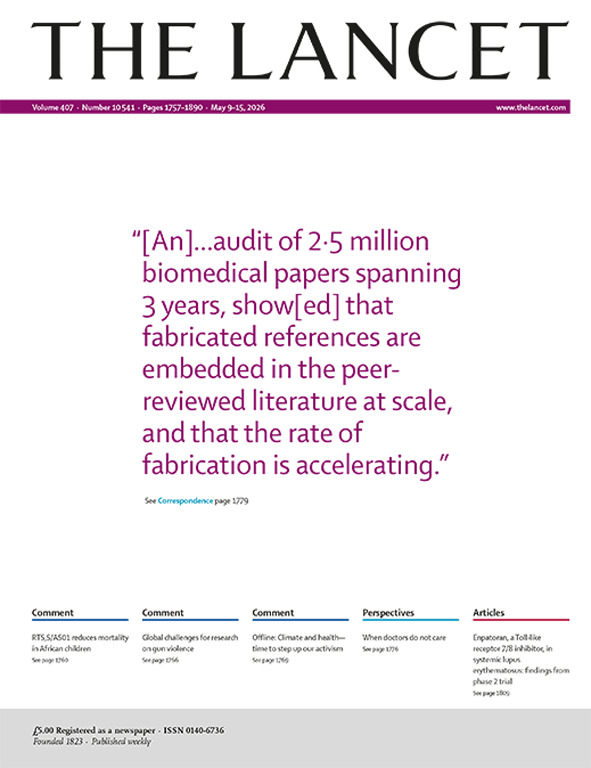
@EricTopol @TheLancet This is the ugly part: fake papers are not just citation failures, they are submission-workflow failures. Author identity, contribution provenance, editor accountability, reviewer trail, and retraction path all need to be checkable before AI polish makes fraud look formatted.
English
0
0
0
150
Flix
Flix@_flixmd·
@Timur_Yessenov @AlexxTowers First check I'd want: capability diff vs last approved run. Did any token, MCP server, env var, workspace, or write target gain new authority? Clean code is not enough if the runtime can now touch prod, billing, eligibility, or source records without a fresh stop gate.
English
1
0
1
8
Timur Yessenov
Timur Yessenov@Timur_Yessenov·
@AlexxTowers Exactly. The scary part is clean diffs can still ship poisoned runtime state. I now treat env vars, OAuth tokens, CI secrets, and MCP server configs as code-review surfaces. What would you add as the first automated check?
English
1
0
0
10
Alexander
Alexander@AlexxTowers·
1/5 AI coding agents (Claude Code, Copilot, Codex) hit by a credential-stealing wave. April/May 2026 disclosures show six exploits in nine months, all targeting runtime credentials. No model output manipulation. Just direct access to OAuth tokens, PATs, and npm keys. Timeline, root cause, and the pattern this creates for autonomous agents. 🧵
Alexander tweet media
English
2
0
2
43
Flix
Flix@_flixmd·
A clinical research AI handoff should come with a manifest: protocol version, source records read, unresolved conflicts, tool permissions, next write, and owner. Otherwise the system didn't preserve context. It just handed the next coordinator a prettier archaeology dig.
English
0
0
0
18
Flix
Flix@_flixmd·
@nikillinit Agree the EMR point is doing a lot. Legal AI can often stay at the artifact layer: retrieve, summarize, draft. Healthcare AI hits workflow state faster: orders, billing, follow-up, research fields, handoffs. Adoption slows when 'what changed and who owns it' is fuzzy.
English
0
0
0
226
Nikhil Krishnan
Nikhil Krishnan@nikillinit·
I've always viewed law and healthcare as interesting parallel industries. I don't know a ton about the legal field, but it seems like they both bill in the form of time, sell expertise, have a relatively fixed supply of practitioners, have similar tasks like chart retrieval/doc review, etc. So it's interesting to me to see how much more traction AI seems to be getting within enterprises in law vs. healthcare. My pet theories (would love to hear others) - You can meaningfully scale billable hours by taking on more clients in a way that you can't really scale taking on more patients - There are no system of record equivalents that hinder adoption (e.g. EMRs in healthcare) - There's much more budget available for testing these tools in law? - Liability is more clearly defined in law?
Winston Weinberg@winstonweinberg

We had an incredible April at Harvey. - Net new ARR is up 6x YoY - We’re about to break 50% DAU/MAU - Our average user now spends 12 hours a month using Harvey Job's not finished.

English
19
3
34
12.2K
Flix
Flix@_flixmd·
@jjfleagle Yes. For healthcare/research, the scary part is not the prompt; it is persistence through action paths. Can the agent change access, touch source records, retry after denial, or keep moving after partial failure? That is where evals need logs and rollback.
English
0
0
0
5
Jason Fleagle
Jason Fleagle@jjfleagle·
Most AI security conversations are still focused on prompt injection and data leakage. Those matter. But the newer problem is agentic cyber capability: Can the model reason through a real environment, adapt after failures, use tools, move laterally, and keep pursuing the objective? That is the test enterprise teams need to start running. I broke down the GPT-5.5 / Mythos benchmark here: x.com/jjfleagle/stat…
English
1
0
0
24