Angehefteter Tweet

English
Frazer Rice
48.5K posts

@frazerrice
Family Offices, Trusts, UHNW, 📕 🎙️ "Wealth Actually" , Golf/Horror/Comic Book/'80s


Think I might retire the ball now😎
Don't EVER compare SGA to Kobe Bryant Kobe wasn't a foul baiting merchant They are NOT the same

@AlanShipnuck @kathleennewsie You might as well be typing on a Smith-Corona. AI is an amazing tool when used responsibly.





Rain or Shine Centennial High School in Franklin, TN held graduation on the football field in heavy pouring rain, soaking students and families. Despite the forecast, no indoor backup was used. Diplomas stayed dry in plastic, but the chaotic ceremony drew frustration and backlash from parents.
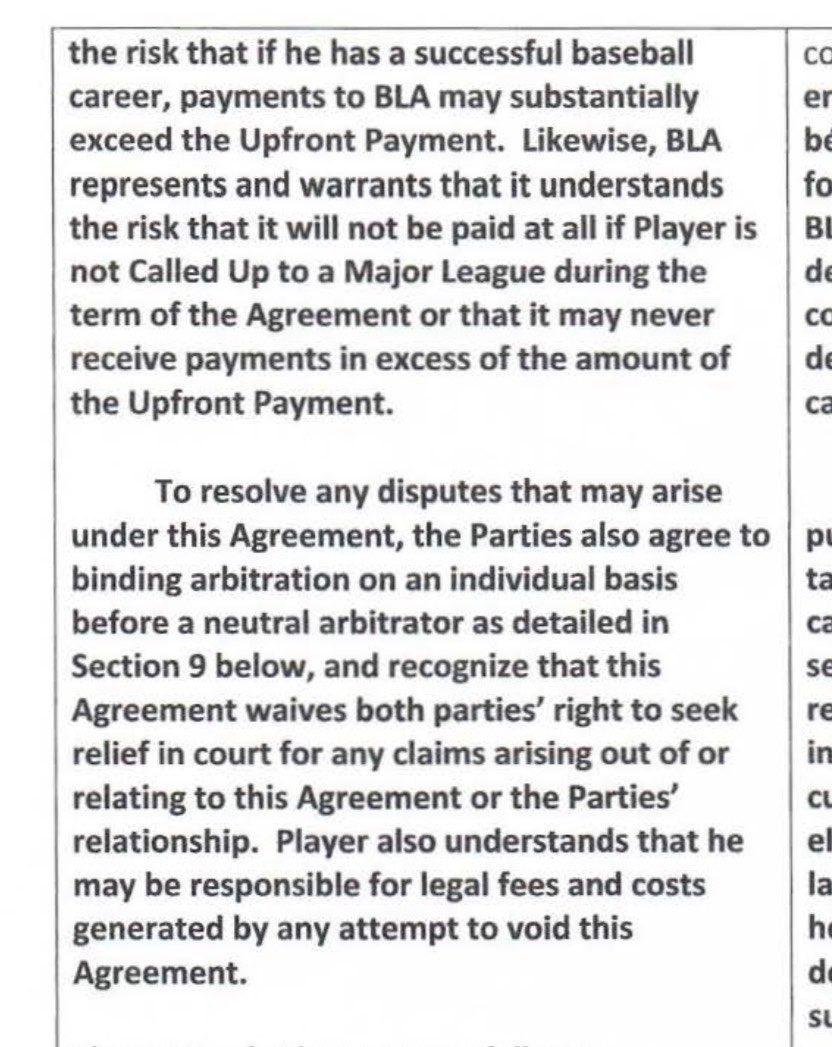
eventually AI will make contracts so clear and comprehensive that there will be less litigation


A Knicks final would be the most buzz of any major championship of my lifetime. The Knicks are a fusion of the Yankees and Cubs. Yankees prestige, Cubs-level heartbreak and futility relative to the history of the NBA. NYC is going to explode.
That water clarity is an engineering decision, and the math behind it is wilder than the video. Roman aqueducts ran on gravity alone. No pumps, no pressure systems. Engineers carved channels with a gradient so shallow it borders on absurd. The Pont du Gard in southern France drops 2.5 centimeters over 275 meters. That's roughly the thickness of a coin over the length of three football fields. They surveyed that accuracy with plumb lines and wooden leveling instruments. The clarity you're seeing is a direct product of flow velocity. Too steep and the water erodes the channel walls, picks up sediment, turns brown. Too flat and it stagnates. Roman engineers targeted a slope of about 20 centimeters per kilometer, which kept the water moving fast enough to stay fresh but slow enough to stay clear. Before the water reached the city, it passed through multi-chamber settling tanks where velocity dropped near zero. Suspended particles sank. Clean water flowed out the top into the next chamber. Repeat three or four times. Pliny specified the minimum slope in writing. Vitruvius published the exact mortar ratio for hydraulic cement: one part lime to two parts volcanic ash for underwater work. The pozzolana from Pozzuoli reacted with water to form a calcium-aluminum-silicate compound that actually gets stronger the longer it sits submerged. Modern concrete degrades in water. Roman concrete bonds with it. Scale the whole system and it gets harder to process. Eleven aqueducts fed Rome at its peak. Combined output: roughly 1 million cubic meters of water per day. That works out to about 250 gallons per person for a city of one million. Modern New York delivers about 125 gallons per person per day. Ancient Rome had access to double the per capita water supply of the largest city in the United States, running entirely on slope and stone. The Trevi Fountain in Rome is still fed by one of them. Two thousand years, same source, same gravity, same water.