
Pinned Tweet
Weeb
32.8K posts


Weeb
@CryptoWeeb808
Inbound-Certified Growth Strategist | MBA ’26 | Fintech • Web3 • AI | Communities → Systems → Revenue | Applied Research in Digital Ecosystems
USA Joined Ekim 2024
1.2K Following2.1K Followers

@andrewchen This flips where the network effect lives.
In traditional marketplaces, the edge was aggregating supply.
In agentic systems, the edge shifts to controlling the interface where demand is expressed.
That’s where the new moat forms.
English

marketplace startups are destined to be massively reinvented by AI. The weak form is already happening, where we use LLMs for customer support, supply/demand matching, etc. That’s easy
The strong form is to figure out how much of the supply side of the marketplace can be turned agentic and ultimately, robotic. “Uber for X” will have consumers requesting robots to do X. Every on-demand service of the 2010s will instruct a robotaxi or delivery robot. Or if you’re prev used a marketplace to hire X, then you “hire” an agent instead. You won’t need to app developer, because there’s agents to build your app
This will impact marketplace cos differently. Of course some marketplaces - like Airbnb - inherently work in the physical and will leverage AI around the core value prop. And some are bound to lose their network effects as matching fragmented supply/demand turns into an AI problem. Much change is coming
The next big business model for marketplaces will emerge when demand works at high abstractions and supply meets it by becoming programmable
English

lol even the Trumps are doing agentic payments
Donald Trump Jr.@DonaldJTrumpJr
AI agents that can reason but can't pay for anything are just expensive interns. Today @worldlibertyfi shipped the infrastructure to fix that. AgentPay SDK, open source, self-custodial, policy-first. Built on USD1. Your agent. Your keys. Your rules. Check it out: agentpay.worldlibertyfinancial.com
English
@OfficialLoganK @GoogleAIStudio We’re watching coding move from a skill
to an interface.
When databases, auth, and agents are all one click away, the bottleneck shifts from building
to knowing what to build.
English

Introducing the all new vibe coding experience in @GoogleAIStudio, feating:
- One click database support
- Sign in with Google support
- A new coding agent powered by Antigravity
- Multiplayer + backend app support
and so much more coming soon!
x.com/GoogleAIStudio…
Google AI Studio@GoogleAIStudio
English

If you’re looking for risk-adjusted returns, there is no second best. $STRC

English
@HarryStebbings @gradypb @andrew__reed That question is getting harder to answer in the AI era.
Execution cycles are compressing so fast that
“best days ahead” depends less on what you’ve built and more on how quickly you can adapt.
Longevity is starting to look like rate of iteration.
English

The one question I always ask with companies is:
Do I believe their best days are ahead or behind them?
With Sequoia being run by @gradypb and @andrew__reed it was so clear to me I am so excited for their days ahead.
Seeing this with the return of the OG, that excitement goes up another level.
Carl Eschenbach@carl_eschenbach
It’s time to return to the place where I know I can have the most impact. I am beyond excited to be rejoining @sequoia as a Partner. Here is what I shared with @gradypb @alfred_lin on how I am approaching my next chapter.
English

Had meetings and a dinner with 20+ enterprise AI and IT leaders today. Lots of interesting conversations around the state of AI in large enterprises, especially regulated businesses.
Here are some of general trends:
* Agents are clearly the big thing. Enterprises moving from talking about chatbots to agents, though we’re still very early. Coding is still the dominant agentic use-case being adopted thus far, with other categories of across knowledge work starting to emerge. Lots of agentic work moving from pilots and PoCs into production, and some enterprises had lots of active live use-cases.
* Agentic use-cases span every part of a business, from back office operations to client facing experiences from sales to customer onboarding workflows. General feeling is that agentic workflows will hit every part of an organization, often with biggest focus on delivering better for customers, getting better insights and intelligence from data and documents, speeding up high ROI workflows with agents, and so on. Very limited discussion on pure cost cutting.
* Data and AI governance still remain core challenges. Getting data and content into a spot that agents can securely and easily operate on remains a huge task for more organizations. Years of data management fragmentation that wasn’t a problem now is an issue for enterprises looking to adopt agents. And governing what agents can do with data in a workflow still a major topic.
* Identity emerging as a big topic. Can the agent have access to everything you have? In a world of dozens of agents working on behalf, potentially too much data exposure and scope for the agents. How do we manage agents with partitioned level of access to your information?
* Lots of emerging questions on how we will budget for tokens across use-cases and teams. Companies don’t want to constrain use-cases, but equally need to be mindful of ultimate token budgets. This is going to become a bigger part of OpEx over time, and probably won’t make sense to be considered an IT budget anymore. Likely needs to be factored into the rest of operating expenses.
* Interoperability is key. Every enterprise is deploying multiple AI systems right now, and it’s unlikely that there’s going to be a single platform to rule them all. Customers are getting savvier on how to handle agent interoperability, and this will be one of the biggest drivers of an AI stack going forward.
Lots more takeaways than just this, but needless to say the momentum is building but equally enterprises are acutely aware of the change management and work ahead. Lots of opportunity right now.
English
@amrishrau The role doesn’t disappear.
It compresses.
Less roadmap management, more product judgment + distribution thinking.
English

Product Management will see a massive change. PMs will become lot more technical or they will become product marketing managers.
The current won’t exist.
English

> whether decentralized systems can reliably produce real-world outcomes
pertinent point to ponder 🤔
Weeb@CryptoWeeb808
@VitalikButerin Open-source worked for software because distribution was digital. Applying it to vaccines shifts the challenge from access to coordination. The breakthrough isn’t just openness. It’s whether decentralized systems can reliably produce real-world outcomes.
English
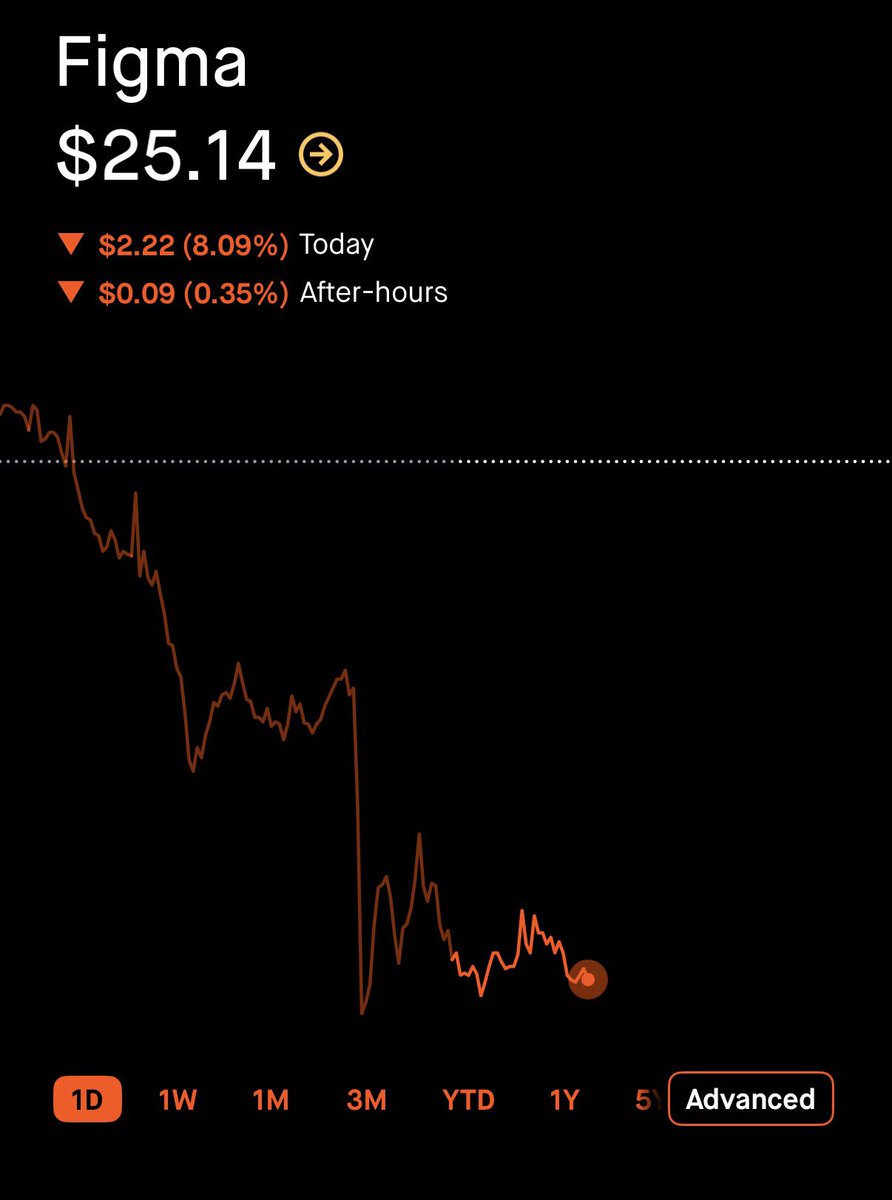
Figma got crushed on this one :/
Anecdotally seeing more companies task design work to the product team already.
Stitch by Google@stitchbygoogle
Meet the new Stitch, your vibe design partner. Here are 5 major upgrades to help you create, iterate and collaborate: 🎨 AI-Native Canvas 🧠 Smarter Design Agent 🎙️ Voice ⚡️ Instant Prototypes 📐 Design Systems and DESIGN.md Rolling out now. Details and product walkthrough video in 🧵
English