

Rana Mumtaz💙
860 posts

Rana Mumtaz💙
@TheUnVC
Product Growth Advisor, Superpower: Driving insights by combining qualitative and quantitative data. ex-engineer, ex-banker, Wharton Alum.
San Francisco, CA Joined Kasım 2012
836 Following177 Followers

I need to buy some new running shoes.
I run 70-80KM per week. One long run. 3-4 medium runs.
Nike, Asics, Hoka, On Running.
What are the best?
English
@chamath Fueling growth through SG&A and the accumulating Net Operating Losses. Also helps lower tax bills.
English

Why is it that the companies with the highest gross margins and zero marginal costs are also, as a group, consistently unprofitable?
It just seems odd to me.
Over the past few years, one hypothesis I have can be summarized as follows: "Your marginal advantage is inversely correlated to your gross margin."
IOW, 90+% Gross Margin SaaS businesses are allowed to have such high gross margins in part because their advantage is more fleeting than other businesses. They have this advantage precisely so they find profitability as quick as possible.
But so many of these companies do the exact opposite!
This hypothesis is important, because a default assumption in valuations of software businesses has historically been that at some magical point in the future, investors will see a falling percentage of R&D and S+M Expense which will create the profit margins that should be possible at 80%+ GMs. Again, there are exceptions, but the rule trends towards long term unprofitability.
While high GMs and a lack of COGs may seem like the greatest business model of all time, I don't think its the free lunch people think it is.
In many cases it also unintentionally creates a higher probability of a funded competitor or a series of competitors that ultimately whittle away product advantage. When this happens, that future window of profitability will likely never come...
At the other end, the software businesses that seem to overcome this are not ones that eventually find profitability, per se, but those that are much more prudent up front about how to get out of a J-curve, seem to understand pricing and demand dynamics but also seem to have fewer competitors as a result of all of these.
What is the summary: huge GMs are your friend if you have them, but they aren't a substitute for growth at all costs and indeterminate periods of unprofitability.
Profitability matters and finding operating leverage as soon as practicable is going to increasingly be a necessary condition of high valuations. As more and more public companies are going to be tech companies, its only logical that investors will increasingly prefer the profitable ones over the unprofitable ones.
English
@vkhosla Wealth is helping people in need and spreading joy. Not taking away a natural resource that brings joy to the public. What do you gain by cutting off access to the beach? You already have billions.
English

Beach access is less important than the principle of private property rights. I know commies hate private property rights
Strider@striderhere
@vkhosla you opening the beach access to everyone..imagine the amount of smile you would put in folks faces!
English
Rana Mumtaz💙 retweeted
What is the biggest business secret hiding in plain sight right now?
Well, we’ve been saying for a while on @theallinpod that we should prepare for interest rates “higher than we like and for longer than we want”.
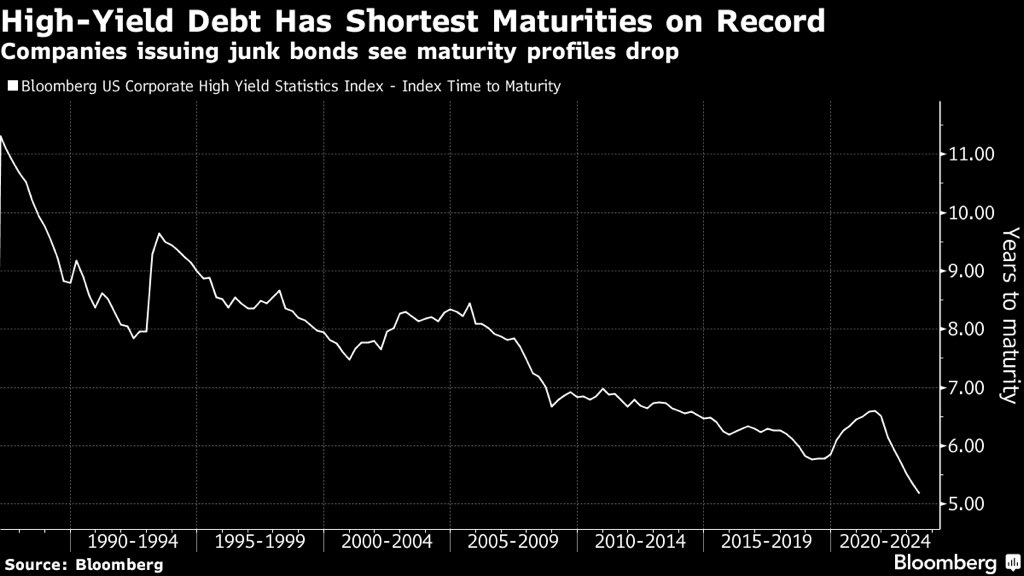
The most under reported issue in business is how Corporate America is about to hit a massive debt wall because of it.
A “debt wall” is a term that describes how much debt is due at various times. If a lot of debt comes due at the same time, it puts a lot of pressure on a company.
It turns out that companies issued a ton of short term debt during the pandemic at close to 0% interest rates. As you can see below, hundreds of billions of dollars will come due starting Jan-2024 and will need to be refinanced at MUCH higher rates.
Prepare for a bunch of companies who will not be able to refinance their debt and will thus see their equity value incinerated. This will hit the private equity industry very acutely, whose core playbook involves wrapping their companies in gobs of high yield debt.
That said, this will also ultimately create opportunities for those with capital on the sidelines to act as a buyer and recap the best of these companies.
Expect a bunch of articles about potential corporate bankruptcies starting this fall…lots of money to be made if you’re paying attention.
English
U.S. Government: Declare Illegal Fentanyl a Weapon of Mass Destruction - Sign the Petition! chng.it/Wn5Spwxb via @Change
English
Software is eating the world… feels like so last century. AI is eating the world now. #generativeai, #chatgpt, #OPENAI
English
@sama You are missing strong word of mouth due to 10x better product.
English

chatgpt has no social features or built-in sharing, you have to sign up before you can use it, no inherent viral loop, etc.
seriously questioning the years of advice i gave to startups 🙃
English
Open AI released generative images feature. It is incredibly easy to use no need to setup discord account and no other shenanigans. Is midjourney dead? #OPENAI, #midjourney

English

I first thought this said “$140m Series C” or “$14m seed”.
Nope. Looked closely and it’s indeed “$14m Series C round”.
How times have changed.
PS: Congrats to the Levitate.AI team - raising in this environment is no mean feat and is a mark of company quality!

English

I'm back in NYC and the difference between this city and San Francisco is astounding.
The streets are bustling, I haven’t seen a single drug encampment, and the sidewalks are glass-free.
Last night I walked at 1am without a worry in my mind…
This is what cities should be.
English
Is any entrepreneur working on unemployment insurance? Layoffs are real and it can take months to land a role. Why are we putting up with a pittance #layoffs, #layoffs2023, #unemployment
English

How to present
In 2006, I helped @ericschmidt create a deck outlining Google’s strategy, for a presentation Eric was delivering to the company. It taught me a profound lesson on how to present.
When I showed up to my first meeting with Eric, he asked me to visit with every product team at Google, chat with them to figure out what they were working on, and then summarize it on one slide (for each team).
Easy enough, I thought. I would use 3-5 bullet points per slide. Piece of cake. I started mentally mapping things out and got ready to leave.
“But”, Eric said, “I want no words on any slide”.
My well-laid plans disintegrated in an instant. How was I supposed to convey the key messages from each team, without WORDS?
Eric must have seen the panic on my face, and kindly gave me a hint. “Put the text in speaker notes”.
“But what goes on the slides, Eric?” I continued panicking.
That classic, gentle “Eric smile” fluttered on his face. “Why, images, of course!”
“You mean, you want each slide to just be comprised of images?”
“You got it. And use the title wisely. 7-8 words max. Let’s meet in a week to review progress.”
As I left the meeting, little was I to know that this conversation would fundamentally change my view on how to deliver effective presentations.
17 years later, I still cling tightly to the following principles:
1. The larger the audience, the fewer the words on the slide. In Eric’s case, the audience was thousands of employees, so we had 0 words per slide.
2. The title does most of the heavy lifting, which means it cannot be passive. It must be action oriented. Eg: not “Subscriber retention” but “Subscribers continue to be retained strongly” or even better “Net revenue retention continues to be > 100%”.
3. Use memorable images that substantiate and give credence to the words of the title. This image is what will occupy most of the slide area, so you need to spend much of your time thinking about what picture will best get the point (made by the title) across. In some cases, it might be a customer image or logo. in other cases, a graph. In yet other cases, it could be something else entirely. For the Google presentation, one of the images that gave me the most trouble was a slide on Google Search Appliance and other Enterprise products. The title stated that these products were increasingly being used by larger customers. The team didn’t want to share customer logos broadly since some were confidential, so logos were not an option. I decided to go with a trend line on the % of searches from enterprise customers, but the person who was supposed to pull this data for me, flaked at the last minute and I had to scramble. I ended up scrambling to create a mosaic of a bunch of consumer product logos with some kind of icon that denoted large enterprises. Not my finest moment but it got the point across.
4. Use speaker notes. Like Eric said, speaker notes should contain most of the details. It puts a lot of burden on the speaker since they cannot just read off the slides. But this doesn’t deter good speakers, since they prepare dozens of times, and then again.
So there you have it: my 4 principles for delivering compelling presentations to live audiences.
(CAVEAT: If the presentation has to be emailed to an audience who will consume it asynchronously, that’s completely different and has different rules).
How did the 2006 Google strategy presentation turn out, you ask? It went quite well, and later I got a nice thank you note from Eric. I didn’t realize at the time that I should have been the one thanking him for the once-in-a-lifetime learning opportunity.
English

@lpolovets Most Series A companies don't have clear product market fit. And in this current market, some Series B companies as well...
English

Things that seed stage VCs don't like to hear:
- "This is the last round we'll ever have to raise."
- "Our CAC is $0."
- "Our moat is that we work harder."
- "It's clear that we have product/market fit."
(These are heard frequently at seed stage, but true <5% of the time.)
English

My son just texted me “thanks bro u rock”
I’m not sure how to reply
English

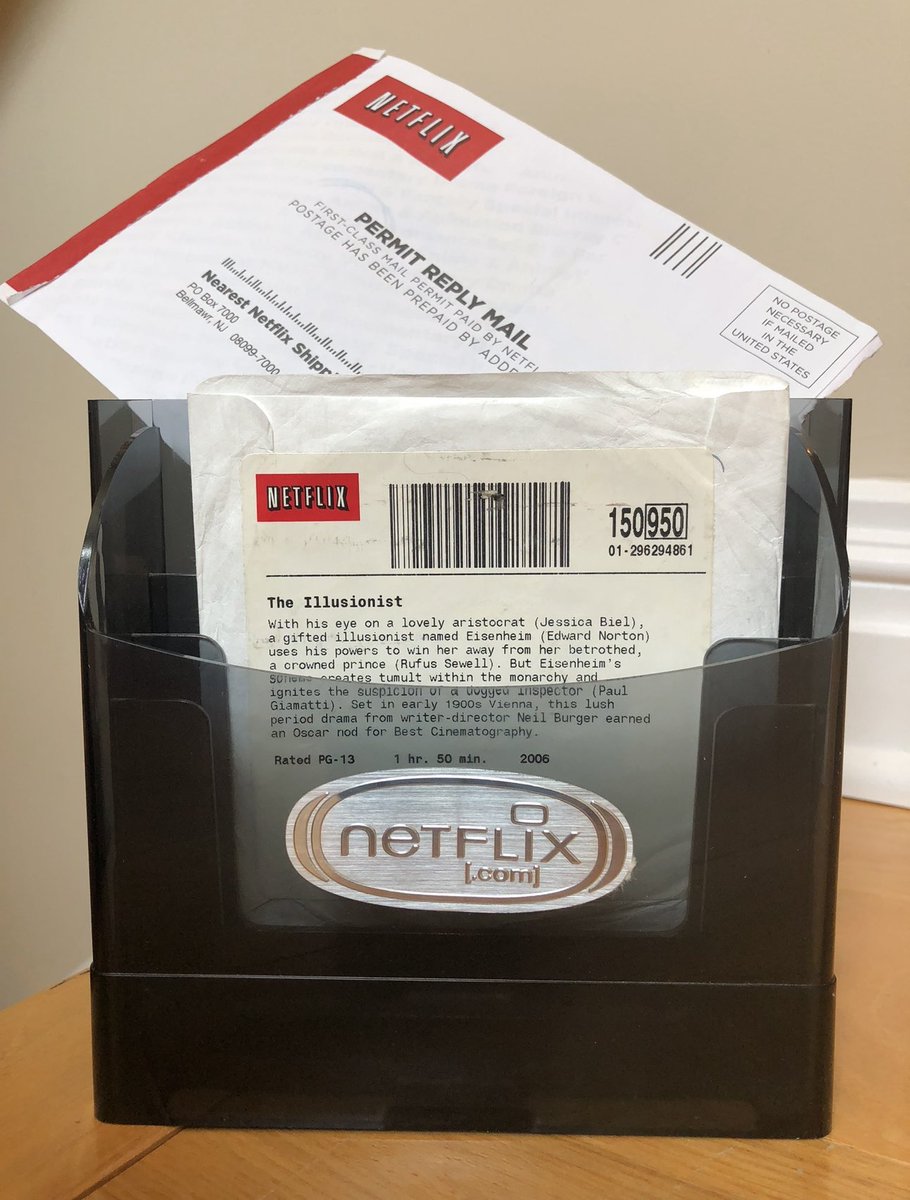
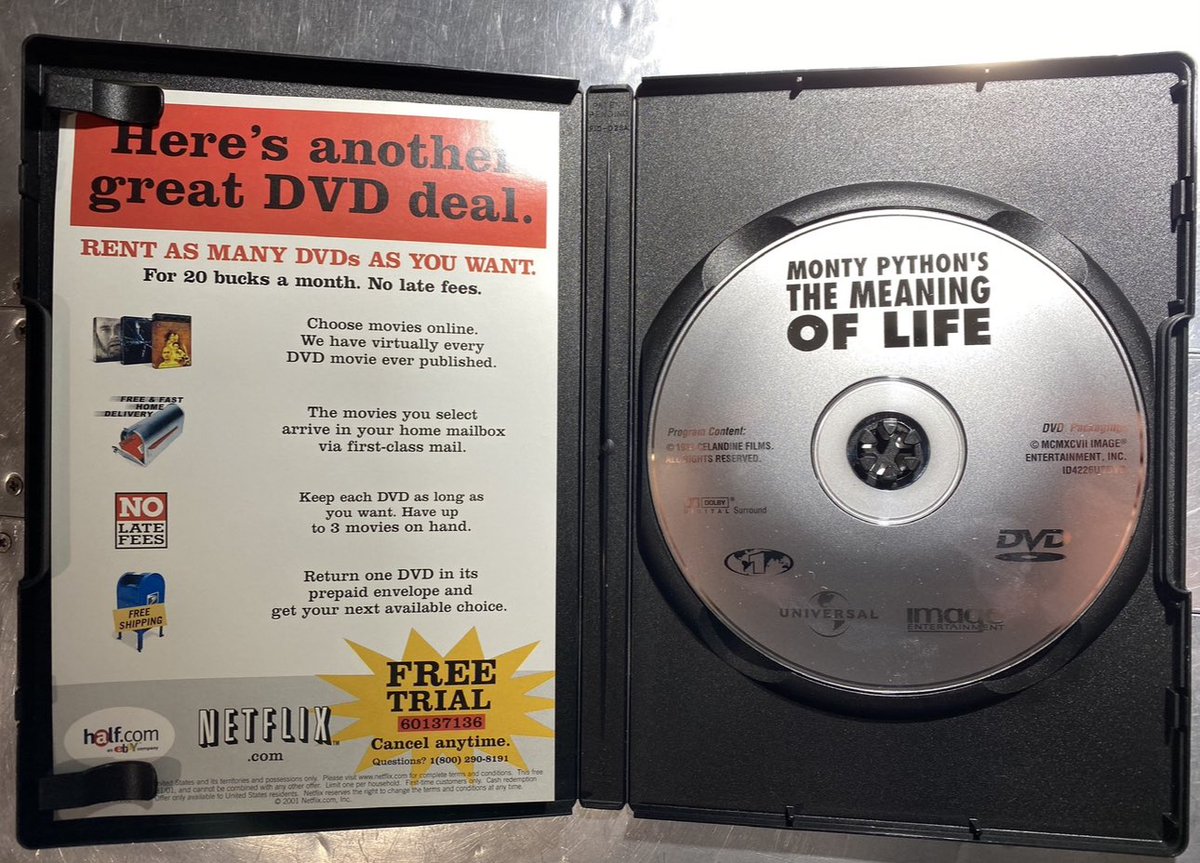
Netflix winding down DVD shipments this fall after 25 years! I remember they sent early customers a plastic DVD holder. And the time we pitched them to partner with Half / eBay. They didn’t do that deal but we indirectly sold tens of millions of their used DVDs over the years.
English
@livefree420365 @martymadrid You missed learning about your class status.
English


VC Twitter! What are the best idea-stage pre-product accelerators for female founders??
English
@heyalexfriedman Best way to invest is buy a primary home. The long term benefits are worth more than a $1M
English

My 30 year old friend just inherited $100,000.
If you were given the next 5 years, how would you turn that $100k into $1m?
English
English

🥳 Big news today!
We’ve raised $53M in Series C funding, led by @lightspeedvp and with the support of @felicis, @redpoint and @sequoia.
More from our CEO, @0xine: semgrep.dev/blog/2023/seri…
English