kisjah
233 posts

@eigengenesis I will be doing this this summer (hopefully)
English

@RegalOutlier @wotancore Dental sources and studies link prolonged mastic gum use to TMJ strain due to its tough texture and sustained jaw muscle stress, advising caution for those prone to issues.
English


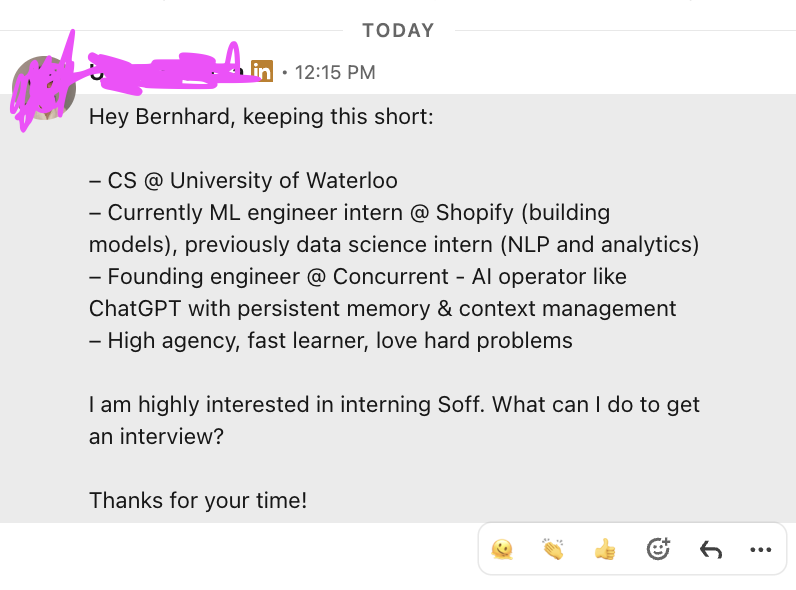
@GuacamoleM5405 @itsnotbernhard Yes, but do you have the time to actually go through it? most hr's/engineers dont! so you really have to just get to the point and ask if they could share sum guidance.
English

@itsnotbernhard Yes, but it’s not different than a resume is my point. The cold DMs that stand out show what a resume doesn’t.
English


🟢 Asha Sharma 1st month as Xbox Boss -
✅ Kills “This is an Xbox” ad
✅ Hypes return of Classic Xbox
✅ Prioritises console
✅ Talks Xbox 360 blades returning
✅ Hears chat on exclusives
✅ Announced Project Helix
✅ Brings back Xbox fan fest
✅ Announces Gears E:Day deep dive


English

@0pi0lu @Regenerato55245 @dear_self0 Ask Grok is currently available to Premium and Premium+ subscribers only. Subscribe to unlock this feature: x.com/i/premium_sign…
English

HIGH TESTOSTERONE MAKES YOU:
- More handsome
- More aggressive in life
- More calm under pressure
- More masculine in your presence
It is your primal edge.
HOW TO INCREASE TESTOSTERONE:
- Avoid all sugar.
- Lift heavy weights.
- Get daily sunlight.
- Add ginger to your diet.
- Get plenty of sleep.
- Lose the belly fat. It destroys your testosterone.
- Add zinc supplements.
- Take ashwagandha daily.
- Take magnesium supplements.
- Stop drinking excessive alcohol.
Stop living with low energy. Reclaim your edge.
English

@dear_self0 Leg day in particular increases testosterone & human growth hormone.
English
@movie_tvshows_ @grok make the same image but replace gravity with arrival
English


@TimmyWyd_ @WatcherGuru if u really want to help ppl change u dont box them in, u exploit them
English


JUST IN: X officially launches feature allowing users to restrict replies to posts by region.


English


なんか日本国内ではチキン野郎の高市早苗がトランプの穴を舐めて何も言えなかったみたいなスタンスが多いが、アメリカでは寧ろ「うちのバカが素っ頓狂なことを言ったのに対してキレつつも冷静でいる人」みたいな扱いになっている。
Muneeta Aneja@MuneetaA
@kaitlancollins When you are trying to stay calm but the universe ain't allowing that.
日本語

@Shirinsmit Shoes in the crib, street clothes on the bed, people who’s don’t like to shower daily before bed
To name a few
GIF
GIF
GIF
English

@FrenlyOfficer @whowrestlesgod Calling one person rude or lacking basic manners doesn't give you the right to judge an entire country and its people. That's like saying all Americans are pedophiles just because the president is one. The irony is thick.
English

@whowrestlesgod Their culture is completely different and broken compared to ours. I’m glad when they learn. I still would prefer that he remained in India and took his lessons there.
English
Incredible self-awareness and growth from this immigrant tbh, great thing for him to share
Bones 🇪🇪 🇺🇳@no_Bones_
This gives a perfect view into why India is the complete shithole that it is
English
@hsjjhamb @ShiprocketIndia @grok how much time and money would he realistically spend to resolve this case taking in considerations like power, bribes and a corrupted system
English
received a call from them and the guy kept reading the script intentionally for me to give up and end everything.
I AM TAKING YOU TO COURT @ShiprocketIndia
hsj@hsjjhamb
₹9000 keyboard delivered (returned) by @ShiprocketIndia damaged. They opened the product threw away bubble wrap and product packaging box and brought back a delicate aluminum keyboard in a polythene bag like this. They even opened a sealed pouch inside and broke the switches
English
More like we study for jobs or economic benefits then innovation. Sadly it's mostly students that are from lower / middle class households that will never truly reach true innovation or creativity.
They don't put in the time to fail and build simply cause they need a job
Rahul Raj@x_rahulraj
We can make fun of Galgotias, but the uncomfortable truth is that a large majority of BTechs, MTechs, PhDs, and even many professors in India will struggle to build good engineering products. The problem is not about intelligence. It is about ecosystem, incentives, and culture. Our education system gives very little importance to practical learning from an early stage. From as early as Class 9, hands-on experimentation is treated as secondary. By Class 12, many aspiring engineers skip practical work entirely. Setting up Young’s Double Slit experiment and getting right results is far less valuable than memorizing the formula d sin θ = mλ for exams. This mindset continues in college. Students quickly learn that studying core engineering deeply or performing genuine experiments is rarely rewarded. Seniors push them toward placements over learning, the job market values credentials over competence, and uninspiring teaching further reduces curiosity. In many labs, marks depend more on producing perfect graphs that match textbooks than on whether real experiments were actually performed. Even in the best engineering institutes, where talented students and capable professors exist, the incentive structure prioritizes publishing papers far more than building working products. Over time, this becomes a convenient justification across academia. Professors also face structural constraints. Setting up a good laboratory can take years. Procuring basic components involves lengthy bureaucratic processes. Career advancement depends largely on the number of research papers published, not on solving real industry problems or creating deployable technologies. Under such conditions, product building becomes an uphill task. When optics matter more than outcomes, the system naturally rewards visibility over value. Creating hype, publishing quickly, and maintaining appearances become easier choices than undertaking the difficult, uncertain process of building real engineering solutions. So yes, we can make fun of Galgotias. But the deeper issue is systemic. The real challenge is that our education and research ecosystem does not sufficiently reward those who build.
English


It was bought by an H-1B. Go to Truth Social. It was built by Heritage Americans
Mark Mitchell, Rasmussen Reports@honestpollster
I love Twitter. But it feels like it is engineered by H1Bs.
English
@MMRDAOfficial Again nothing changes they apologize and we move on, there's literally nothing you can do. You go the legal way they either bribe their way though and only if you live long enough.
English

We deeply regret today's unfortunate incident near Pier No. P196 by Mulund Fire Station
Some reports and social media posts have suggested a link to an earlier misleading post questioning the structural stability of Metro Line 4 construction.
We would like to humbly submit that this is inaccurate. The visuals used in that misleading post were from a different pier and a different location. Also, today's unfortunate incident involved the falling of a portion of the parapet.
A high-level investigation has been ordered in the incident, and a detailed report will be submitted promptly. We urge people to await the findings of the report and assure that all those found responsible will face strict action.
Also, immediate corrective measures will be implemented to prevent recurrence.
As a precautionary measure, construction in the immediate stretch has been halted for the time being. A fine of ₹5 crore has been imposed on the contractor and ₹1 crore on the general consultants.
@CMOMaharashtra @Dev_Fadnavis @mieknathshinde
@DrSanMukherjee @MahaDGIPR
English
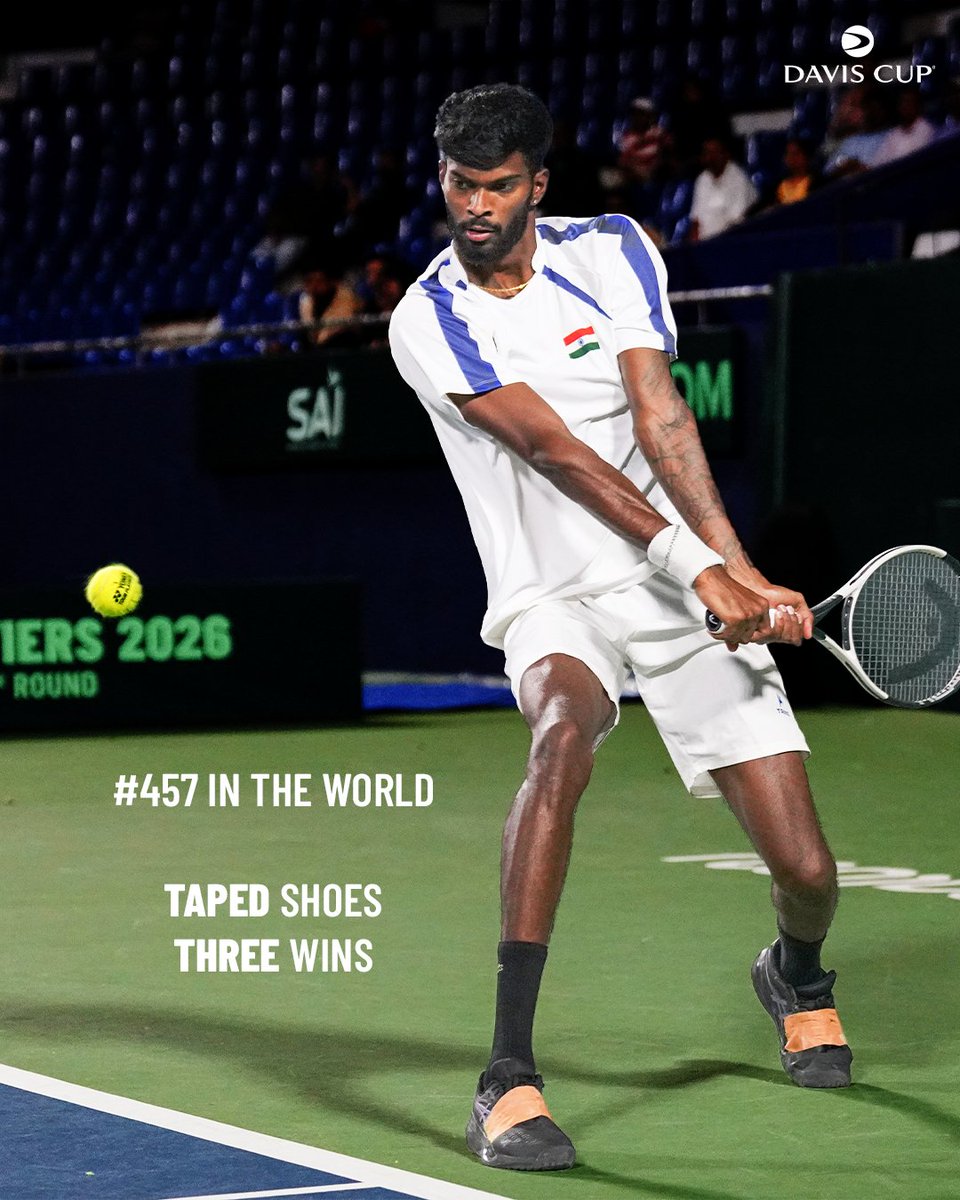
@DavisCup @AITA__Tennis I'm pretty sure he can afford shoes if he can play tennis in india?
English