stanec
7.4K posts

@0xStanec
Crypto Supercyclist | Geopolitics Hedger | Polymarket Player | NFA


.@LayerZero_Core’s marketing is so incredibly misleading at times, it’s absurd Take their “Decentralized Verifier Networks (DVNs)” for example DVNs are the infrastructure responsible for validating cross-chain transactions in the LayerZero ecosystem By the name, you would assume a DVN by definition is a decentralized network of node operators, right? Well no, in most instances the term “DVN” actually refers to a centralized company (a single node operator) Take their most popular DVN for example, which by default is used by most projects and therefore their associated volume in the LayerZero ecosystem It’s the “LayerZero DVN”, a centralized node run by the LayerZero Labs team themselves Not decentralized, but still called a decentralized network anyways, pretty continent security theater marketing Imagine you’re a user and you’re told a dApp’s cross-chain interactions are secured by the “LayerZero Decentralized Verifier Network” What impression is the user supposed to get from that other than thinking it’s a decentralized network and not a single centralized node? Now some may try to explain away this terminology by saying that a DVN could theoretically be decentralized in some circumstances But looking at the official list of all the DVNs in their docs, almost every single DVN is just a centralized team/company And the ones that aren’t, are often just a wrapper around another protocol that’s actually attempting to solve the cross-chain problem in a decentralized manner like CCIP or Axelar that can be used without the LayerZero framework Some may also argue that you’re supposed to compose multiple DVNs together in order to make it decentralized But (1) that doesn’t justify calling infra run by a centralized company a decentralized network and (2) the default path that most projects take is to use the centralized LayerZero Labs DVN given its chain support over other DVNs Even their flagship bridge @StargateFinance only uses a whopping 2 DVNs (one of which is the team themselves) This fantasy of projects composing networks out of DVNs just isn’t what we see in reality in the majority of situations Most devs simply do not any to deal with the massive security-sensitive problem of managing, configuring, securing, or running cross-chain infrastructure, they just want something that works Centralization runs rampant in the LayerZero ecosystem but the terminology may make you think otherwise

5 minutes before Trump’s announcement: * $1.5B notional worth of S&P500 (ES) futures are bought in a single clip. * $192M notional of oil futures (CL) sold. More than 4x-6x any other trade size during the market close. Insiders profited from his lies in broad daylight!


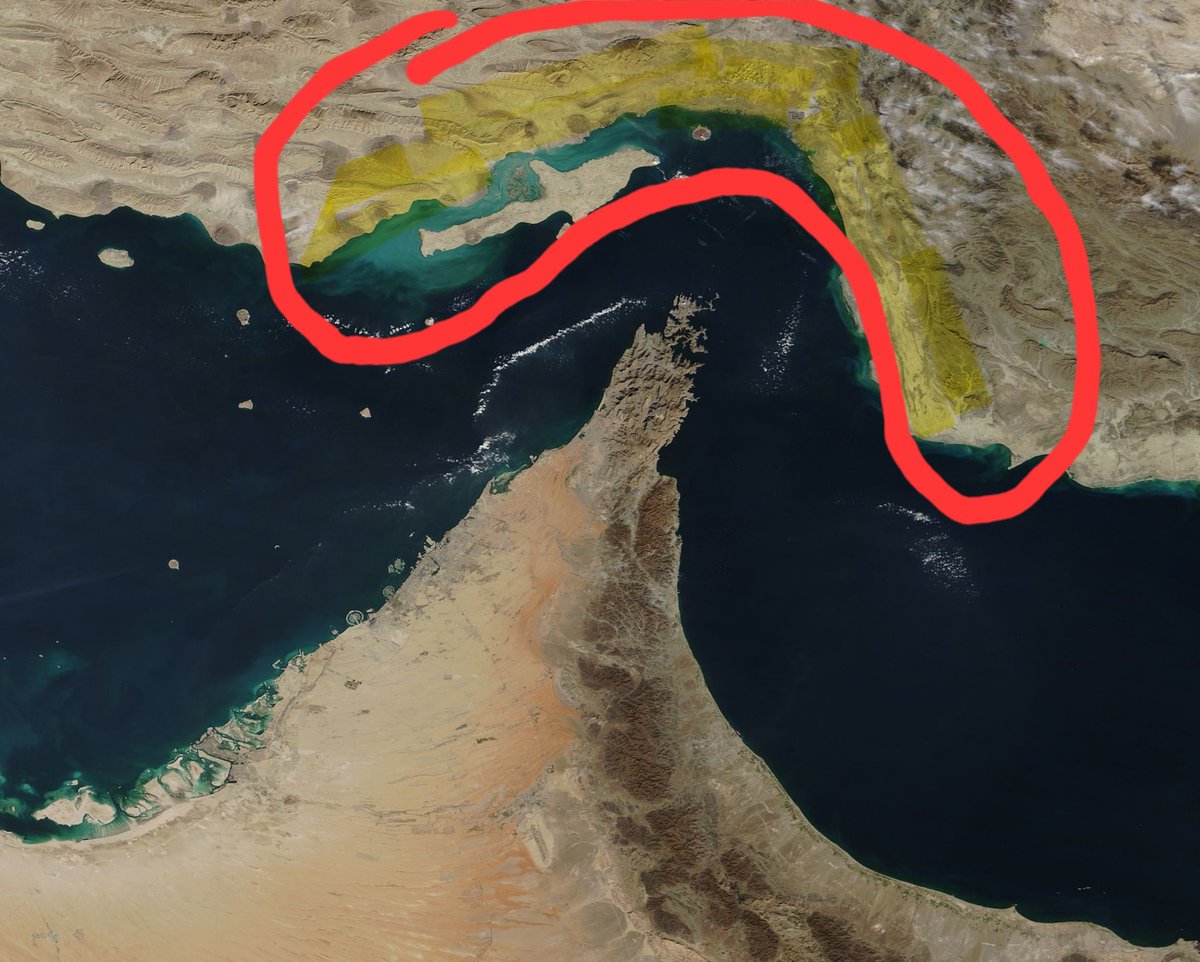
One of Iran's most problematic threats is its arsenal of anti-ship weaponry. Overlaid on a map centered at Kharg Island, below, are the ranges of Iran's primary anti-ship cruise (Noor/Qader) and ballistic (Zolfaqar/Hormuz/Khalij Fars) missiles. If we are considering an operation to take Kharg, these will come into play and complicate our force protection measures. It is the believed that both the Mayuree Naree (hit just a few days ago precisely in the engine room right above waterline) and the former UAE Navy vessel HSV-2 Swift (hit by the Houthis off Yemen in 2016 near the front) were targeted by Noor variants. The Noor is a reverse-engineered Chinese C-802 with several improvements. Iran could have hundreds of these, and some models are concealed in civilian-appearing vehicles until firing. The cruise missiles have a smaller 300 lbs warhead with a subsonic velocity, the ballistic missiles are up to 1,000 lbs warhead with a velocity of Mach 4-5. When you get to a 300 mile range, half that targeting circle is 35,000 square miles, equivalent to the U.S. state of Indiana. Every box truck in that area will have to be monitored and if confirmed hostile, taken out. That's a lot of area to cover, and the targeting systems in these weapons have been honed over time in real-world conditions in cooperation with the Houthis. Now layer hundreds of drones on top of this. Think about a three-layered attack, cruise missiles at sea-skimming level, ballistics on a high-altitude, high-speed trajectory, and drone saturation and low and mid-altitude. Coming from differing directions, in waves, with Russian planning and targeting assistance, perfected in their nightly attacks on Ukrainian cities against, at least in part, U.S. radars and air-defense missiles. Mines could also be laid by a swarm of small boats, at different depths, to create opportunities for congestion and routing into fire zones. Point is, this is a complicated environment that will take a lot of effort to suppress. Once we're past the Straight of Hormuz, we're in, getting out won't be easy, either. We take Kharg, or threaten to take Kharg, the regime won't have a reason to keep Hormuz open. Theoretically, they could take a couple of their tankers and scuttle them in the shallower portions, or drop anchor and leave them filled with explosives or fuel. Not a permanent fortification, but still, doing maritime salvage operations under fire won't be fun. If we're going in, we better go in prepared for the absolute worst-case scenario. Given that Trump is asking other countries for help right now, legitimate concerns exist on our preparation and what assets we have in place to deal with the potential clusterfuck a desperate, fanatical regime with its back against the wall could create. There's a reason our Navy isn't anywhere near these waters yet.


BREAKING: Over 5000 US marines and sailors are deploying to the Middle East-NBC


BREAKING: President Trump just put a gun to the head of 90% of Iran’s oil revenue and pulled the trigger on everything around it. “Moments ago, at my direction, the United States Central Command executed one of the most powerful bombing raids in the History of the Middle East, and totally obliterated every MILITARY target in Iran’s crown jewel, Kharg Island.” That is the President’s exact language on Truth Social tonight. Every military target. Obliterated. The coastal missile batteries. The anti-ship missile installations. The radar sites. The short-range air defence systems. The IRGC garrison of 250 to 500 personnel. The fast attack craft support. The naval mines infrastructure. Everything that defended the island, destroyed. Everything that makes the island valuable, deliberately spared. The oil terminals are still standing. The loading jetties are intact. The storage tanks are full. Ninety percent of Iran’s crude exports flow through those terminals. Trump left them untouched and told Iran why: “for reasons of decency.” Then he added the threat that makes decency conditional: if Iran interferes with free and safe passage through the Strait of Hormuz, the oil infrastructure goes next. This is the chequebook doctrine made operational. For fifteen days, this campaign has identified three layers governing the war: the nuclear programme is the existential minimum, the Strait is the clock, and the oil infrastructure is the chequebook. The chequebook was deliberately spared to control what gets rebuilt, by whom, and under what conditions. Tonight, Trump confirmed it. Kharg’s military defences are rubble. Kharg’s oil terminals are leverage. The island that handles Iran’s entire export economy now sits defenceless, its military guardians obliterated, its revenue infrastructure intact but held hostage to a single condition: open the Strait. The calculus Iran faces is unprecedented. The 31 autonomous IRGC commands that have been firing continuously for fifteen days just lost their forward defensive position in the northern Gulf. The coastal batteries that could threaten tanker escorts are destroyed. The radar that tracked shipping approaches is destroyed. The fast boats that laid mines operated from Kharg support facilities that are destroyed. The island that was Iran’s shield has been turned into America’s hostage. Iran’s oil cannot flow without Kharg. Iran’s military can no longer defend Kharg. And the man who ordered Kharg’s military annihilation has told Iran that the oil infrastructure joins it if the Strait does not open. The Supreme Leader who ordered the Strait permanently closed from a hospital bed just received the response: the terminals that fund his war are one presidential order from becoming the same rubble as the missile batteries that used to protect them. Brent will react within hours. The sparing of oil infrastructure should limit the immediate spike, but the threat converts every future Iranian provocation in Hormuz into a potential trigger for the destruction of 90% of Iran’s export revenue. The war premium is no longer about whether oil flows. It is about whether Trump decides to let it flow. The war began with an assassination. It escalated through mines, drones, and burning tankers. It crossed the nuclear threshold at Parchin. It crossed the alliance threshold at Incirlik. Tonight, it crossed the revenue threshold at Kharg. The existential minimum is the uranium in Pickaxe Mountain. The existential leverage is the oil terminal standing untouched on an island where everything else has been destroyed. Iran’s crown jewel just became America’s hostage. The ransom is the Strait of Hormuz. Full analysis - open.substack.com/pub/shanakaans…