Emma Miller

2.4K posts

Emma Miller banner
Emma Miller

Emma Miller

@ARCHIEM_lab

ARCHIEM started here as a tiny lab of ideas about housing renovation and social infrastructure. Now moving towards putting my ideas into practice…

Carnwath Katılım Şubat 2009
1.3K Takip Edilen350 Takipçiler
Sabitlenmiş Tweet
Emma Miller
Emma Miller@ARCHIEM_lab·
Having 43 000 empty homes in Scotland is shocking enough, but there’s tonnes of empty commercial space too, with the potential to accommodate the ‘non-nuclear family’ groups that can be more flexible in layout configurations and shared space
Habitat for Humanity GB@HabitatFHGB

Across #GreatBritain, around 7,000 empty commercial spaces are waiting to be transformed into homes! These #VacantSpaces can create over 19,500 residential units. 🔎 Join us this festive season as we shed light on our Empty Spaces to Homes programme: ow.ly/Scsi50QjFiK

English
0
1
4
1.3K
Emma Miller
Emma Miller@ARCHIEM_lab·
@MurphyNiallGLA Repurpose as single-sex safe asylum seeker or homeless co-housing? 🤔
English
0
0
0
83
Niall Murphy
Niall Murphy@MurphyNiallGLA·
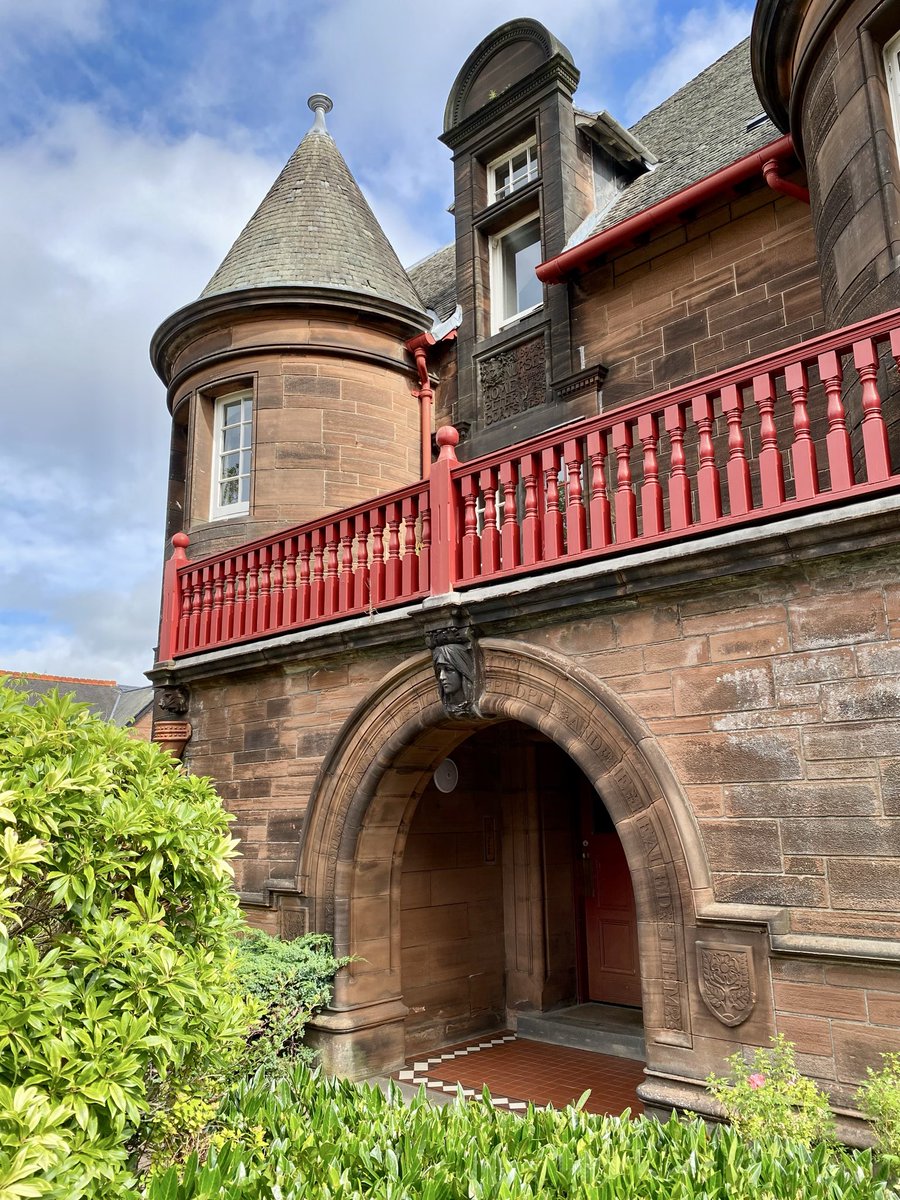
#MomentsOfBeauty near #Glasgow: though towards the end, I didn’t leave my Dad’s bedside for four days, but initially I was visiting the Royal Alexandra Hospital in #Paisley every day so had to walk up to it past its predecessor, the former Royal Alexandra Infirmary. The astonishingly ornamented complex dates from 1897-1900 and is by the exceptionally good Paisley architect, Thomas Graham Abercrombie who should be better known. Naturally, it was paid for by the Coats family. The Infirmary closed in 1986 upon the opening of the replacement hospital but it doesn’t look like anyone thought about what to do with it once it was redundant. Though the former nurses' home was converted into flats in 2005-6 and renamed the ‘Peter Coats Building’ with the eastern wing being similarly converted, thereafter the remaining wings have been allowed to fall into ruin. It’s such a shame as it is a tour de force! It’s very similar to the former Glasgow Samaritan Hospital For Women off Victoria Road in Glasgow but better and more intricately detailed. It makes you want to weep that we can be so wasteful with something built to last and show civic pride especially when it has so much potential for creative reuse 😢!
Niall Murphy tweet mediaNiall Murphy tweet mediaNiall Murphy tweet media
English
11
15
160
4.3K
Robert Burns
Robert Burns@Nugent4nil·
I was searching through my photos and found this picture, it’s iconic. A roll ‘n’ pie
Robert Burns tweet media
English
9
1
27
1.5K
Emma Miller retweetledi
The i Paper
The i Paper@theipaper·
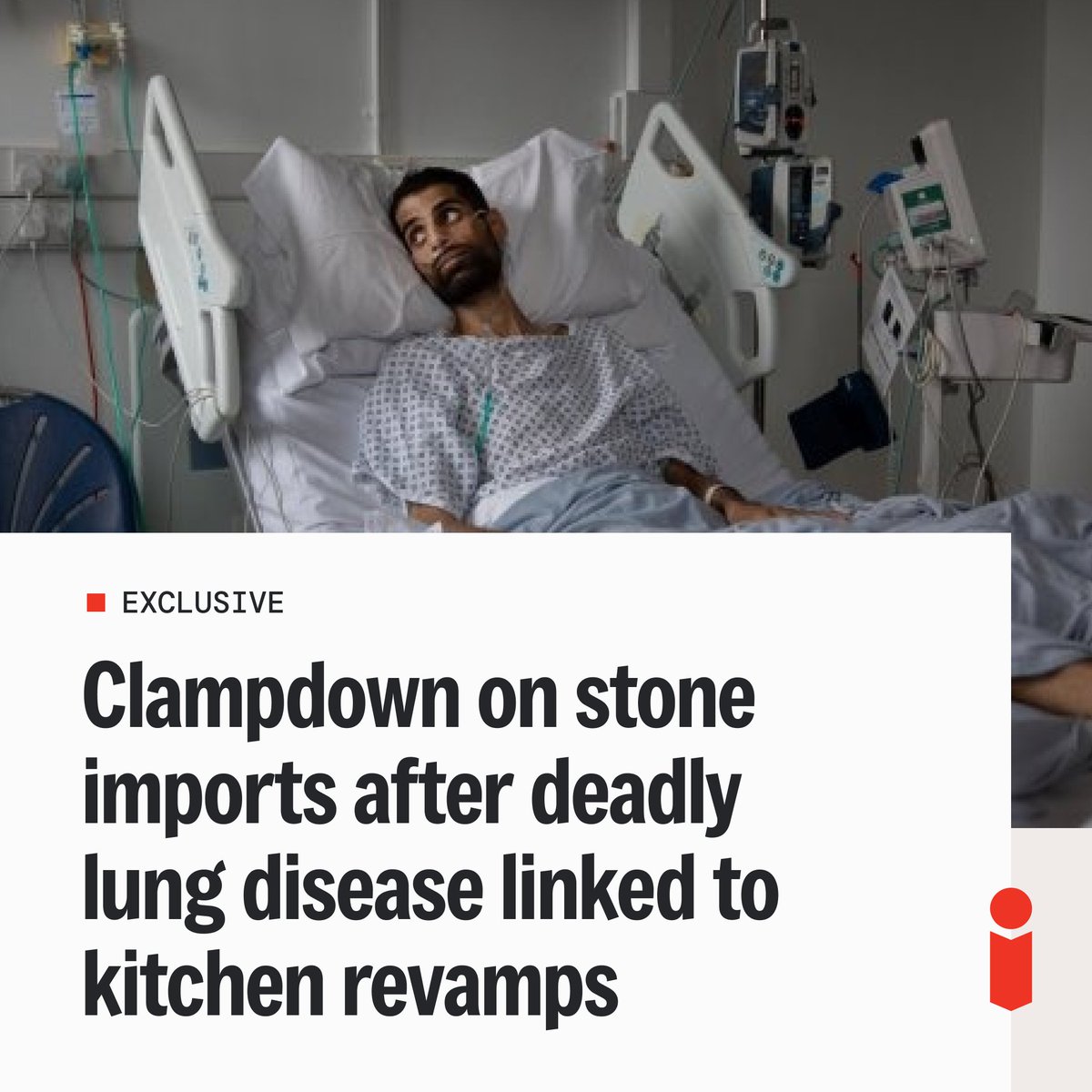
A man-made stone popular in kitchen refurbishments but linked to the deaths of young tradesmen from an incurable lung disease will now be subject to a Government crackdown, The i Paper can reveal trib.al/YcmTBhS
The i Paper tweet media
English
0
4
3
2.3K
Emma Miller retweetledi
Sara Salyers
Sara Salyers@SSalyers2·
Falling for Scotland - fundraiser for the Salvo/Liberation UN campaign. If you can chip in every bit helps. And maybe come along to support a bunch of heroes who are terrified of heights but still jumping out of a perfectly good aeroplane! (Contact details below.)
Sara Salyers tweet media
English
7
92
114
4.8K
Emma Miller
Emma Miller@ARCHIEM_lab·
@EuropeanPowell The Good Party (For the common good) (For sufficiency / good enough) (Good work, well done)
English
0
0
0
63
EuropeanPowell
EuropeanPowell@EuropeanPowell·
Top 5 Party Name Suggestions for Sultana and Corbyn's New Party. What do you think? Do you have suggestions? 1. The Socialist Alliance ✅ Clear, bold ideological identity ✅ Historically used but not legally blocked ✅ Appeals to grassroots, unionists, and anti-austerity voters 2. For the Many ✅ Evokes Corbyn’s era (2017 campaign slogan) ✅ No risk of legal conflict ✅ Emotionally resonant, easily brandable 3. The Solidarity Party ✅ Strong left-wing and union connotations ✅ Broad enough to unite activists, MPs, and movements ✅ Clear values: unity, fairness, mutual aid 4. The Commons Party ✅ Invokes tradition of public ownership and democratic control ✅ “Commons” also hints at Parliament ✅ Fresh and principled branding 5. The Left Party ✅ Broad, unifying mission-driven name ✅ No trademark conflicts ✅ Emphasizes socialist policies and principles over personality
English
74
27
81
6.1K
Emma Miller retweetledi
Scientists for Global Responsibility
🚨New Article: Home energy efficiency progress in Scotland 🏴󠁧󠁢󠁳󠁣󠁴󠁿 The Home Energy Efficiency Technical Suitability Assessment (HEETSA) would offer advice and support for retrofitting homes in Scotland, and could provide a model for other nations. sgr.org.uk/resources/home…
English
1
6
6
327
Rob Grant
Rob Grant@robgrantdotcom·
Trying on my new kilt…
Rob Grant tweet media
English
18
17
718
13.6K
Emma Miller
Emma Miller@ARCHIEM_lab·
@janrosenow There’s a massive population in tenements, on gas, and already in fuel poverty, living in areas that would probably be served by heat networks but that’s a few years away.
English
0
0
1
55
Jan Rosenow
Jan Rosenow@janrosenow·
To all those who believe that moving some levies from electricity to gas is unfair remember: 1) For the average household nothing changes - same levies just paid differently. 2) Fuel poor households are 2x as likely to heat with electricity than others.
Jan Rosenow@janrosenow

I’m in @theipaper today making the case for reforming levies on electricity bills to drive electrification.

English
28
14
64
13.1K
Emma Miller retweetledi
ThinkScotland
ThinkScotland@Think_Scotland·
The illusion of our constitutional choice “We’ve turned national decline into an art form. Not with chaos or revolution but with strategy documents, stakeholder engagement & PowerPoints presented to people paid not to notice the rot” argues Annemarie Ward bit.ly/4jEXuuI
English
1
1
3
486
Emma Miller retweetledi
Eugene Minogue
Eugene Minogue@EugeneMinogue·
‘Children in England growing up ‘sedentary, scrolling and alone’, say experts’ - @Guardian 📰 theguardian.com/society/2025/j… The government should ban “no ball games” signs, raise the digital age of consent to 16, restore play to the education system and put in place a statutory “play sufficiency duty” for local authorities, say the panel, who are urgently calling for a cross-departmental national play strategy backed by an annual £125m of funding. The experts leading the Raising the Nation Play Commission report, the entrepreneur @Paul_Lindley and former children’s commissioner @AnneLongfield, say that failure to provide children with the spaces they need outside the home is leading to a huge loss of outdoor play and independence. The commission brought together 19 experts, from doctors to play campaigners, to act as commissioners and then held a series of evidence sessions hearing from children, parents and professionals around the country. Full report: 📖 centreforyounglives.org.uk/news-centre/ev… From traffic-dominated streets to the huge decline in youth clubs and loss of funds for playgrounds, experts pointed to the decline in neighbourhood spaces where children could actually play freely. @IngridSkeels, co-director of @PlayingOut, was one of the 19 commissioners and has spent 15 years campaigning for children to have safer streets to play on. “The findings here confirm what we have been warning for years – children are being driven indoors by a lack of safe spaces to play, move and socialise freely. We can’t just blame overprotective parents and screens – we have to make the outside world a place children can play in real life. It’s brilliant to have this in-depth, rigorous report confirm what we have heard from families for years, now it’s time for action.” #EverythingToPlayFor #PlayCommission #NationalPlayStrategy #PlaySufficiency #ItAllStartsWithPlay #KnowBallGames #RightToPlay #UNCRC #Article31
Eugene Minogue tweet media
English
2
13
33
1.6K
Emma Miller retweetledi
Orkney Library
Orkney Library@OrkneyLibrary·
Remembering that time we catalogued a Collins Nature Guide to the seashore and found all the new insults we could ever need.
Orkney Library tweet media
English
24
138
805
18K
Emma Miller retweetledi
Alan McMahon
Alan McMahon@PAlanMcMahon·
Please retweet. We are getting enormous traction with Craig Murray and Matilde Pacheco's oral interventions before the Special Committee on Decolonization (C-24) at United Nations Headquarters in New York. The interest, approaches and meetings are astonishing.
Justice pour Tous Internationale@JPTi_J4Ai

🕊️ From the Pacific to the Highlands —Advancing the Global Right to Self-Determination at the UN HQ On 9 June 2025, Justice pour Tous Internationale (JPTi), alongside its strategic partner, the International Probono Legal Services Association (IPLSA), delivered two oral interventions before the Special Committee on Decolonization (C-24) at United Nations Headquarters in New York. Representing the voices of the colonially subjugated, JPTi spoke on the persistent denial of self-determination in French Polynesia and New Caledonia—while highlighting the emerging imperative to extend these same legal principles to the case of Scotland. 📺 Watch the French Polynesia statement delivered by @matildepachecoo : youtu.be/F9yHcIW_Kfk 📺 Watch the New Caledonia statement delivered by @CraigMurrayOrg: youtu.be/ZZbD-tPCS8g Building on two comparative legal memoranda submitted by JPTi along side with the Liberation Scotland movement, we assert that Scotland meets the same legal thresholds as French Polynesia and New Caledonia for recognition as a Non-Self-Governing Territory. Despite devolution, Scotland remains constitutionally subordinate to the United Kingdom, lacking sovereign powers over defence, currency, foreign affairs, and constitutional law. The UK Supreme Court’s 2022 ruling that Scotland cannot hold a binding referendum without Westminster’s consent exemplifies the structural denial of legal self-determination. ⚖️ JPTi affirms that the principle of self-determination applies universally—not selectively. It is a legal right, not a political favour. We therefore call upon the C-24 and the General Assembly to open formal consideration of Scotland’s status under Resolutions 1514 (XV), and 1541 (XV), just as was done for French Polynesia in 2013 through Resolution 67/265. More information on our website: jpti.ch/post/jpti-at-t… #JPTi #UN #Decolonization #C24 #Scotland #NewCaledonia #FrenchPolynesia #SelfDetermination #InternationalLaw #HumanRights #Colonialism #RightToDecide #Kanak #PolynesianVoices #ScottishSovereignty

English
20
309
359
12.2K
Emma Miller retweetledi
ScotNews
ScotNews@indyscotnews·
#SSRGConference2025 "Professor Robert Black KC: "Ladies and gentlemen, thank you very much. I never expected to be here, either physically or intellectually. I've been involved in the law of Scotland in various capacities: student, practising advocate, law reformer, law teacher, encyclopaedia editor, part-time judge, for more than 60 years. For 59 of those years I have believed implicitly, and in my career I have encouraged others, to believe that as a result of the Treaty of Union, the Acts of Union, the Scottish and English parliaments ceased to exist. That effectively, as states and international law, Scotland and England ceased to exist and were superseded by a new entity, the United Kingdom of Great Britain. Now that I may say, was not the view of the early 18th century scholars, politicians, as to what had happened in 1707. That became the standard orthodox view really only in the 19th century and, its to a considerable extent due to, an English legal scholar called Arthur Venn Dicey. When I was a student, our professor of constitutional law at the University of Edinburgh used to embody in his weekly lectures usually a statement at some point, ‘but Dicey wrong’. One thing, however he never claimed that Dicey was wrong about was what happened in 1707, the abolition of the two countries of Scotland and the superseding of a single country, the United Kingdom. Now, following Dicey, other leading lawyers in both England and Scotland followed that view. A leading English international lawyer, Lord McNair, wrote in 1938, England and Scotland ceased to exist as international persons and became the unitary state of Great Britain. Now that was a view that was also accepted by Scottish lawyers. Now, Professor T.B. Smith of Edinburgh University, he was the professor, or one of the professors of law when I first became a student. You cannot think of a more convinced legal nationalist than Professor T.B. Smith. But he concurred in the view that that was what had happened. He wrote in 1957, the separate kingdoms of Scotland and England merged in the new state of Great Britain and ceased to exist as persons for the purposes of international law. Now, T.B. Smith's counterpart in Glasgow was Professor David Walker. Now Walker in Glasgow took exactly the same view of what had happened in 1707. One of the few things I may say that Smith and Walker ever agreed about. I, however, having been ‘induced’ to look, to look as a lawyer with fresh eyes at, what actually happened in 1707 and thereabouts, I am now convinced that this explanation, of what actually happened in 1707, is false. The events of 1707 certainly resulted in Scotland's parliament and executive government ceasing to exist. But was there any parallel in England? Were the governmental institutions of both nations replaced by institutions of a new state? The answer, of course, is no. And what I want to do is to look at the institutions of government. Now, the first branch of government I want to look at is the legislative branch. Now, after 1707, both houses of the English parliament Remained in being exactly the same as before, save for the addition to the house of Commons of 45 Scots selected by the outgoing Scottish Parliament, and 12 peers selected by the peers of Scotland. The incumbent officers and members of the parliament of England remained exactly as before. And they, of course, were the overwhelming majority in that new body. Not even a general election was held to mark this supposedly new institution. So what happened? Well, for Scotland, everything changed. We lost our legislature. But for England, nothing changed. Now, they didn't even elect a new speaker. The speaker before the Scots joined, remained the speaker after the Scots joined. Now, the speaker in question was one John Smith, MP for Andover. Now, those of you who remember him or know of him at all, probably remember him one thing, and that one thing is that he said, ‘We have catched Scotland and will bind her fast’. Also, not just the speaker was the same, all of the standing orders of the English parliament remained in being, and the legislation that was passed by that parliament continued in an unbroken series. Acts of parliament, as you may know, in those days, were normally in England described by the regnal year of the monarch plus a chapter number. Now, the act of the English parliament which ratified the Treaty of Union, was numbered 6 Anne, chapter 11. The last act passed by the English parliament before the new dispensation took over was 6 Anne, chapter 34. And you may find it interesting that 6 and chapter 34 was an act for continuing the laws relating to the poor and to the buying and selling of cattle in Smithfield, and for suppressing of piracy. An interesting group of subjects to form the topic of one act of parliament. But that's merely by the way. That was 6 and chapter 34. The first act passed after the Scottish members joined the Parliament was numbered 6 Anne, Chapter 35, and it was a land tax act. I may say that the second act, which received the royal assent on the same day as the first act, was an act to repeal certain Scotch acts, namely, the Scottish Parliament's act for the security of the kingdom and its act anent peace and war. That was 6 Anne, chapter 36. So for the English parliament, nothing changed. For England, nothing changed. What about the Executive branch of government? Well, in 1707, the executive branch of the government in Scotland, the Privy Council and various other persons, was superseded by the existing executive structure, pertaining in England, including the English Privy Council, with, however, the addition of a Secretary of State for Scotland. But that didn't last long. The office of secretary of State for Scotland was abolished in 1746. And thereafter, Scotland was managed, and that's the word, ‘managed’. Scotland was managed by the Lord Advocate until 1827, and thereafter it was ‘managed’ by the home office. Now, that happened until 1885, when a Secretary of Scotland was introduced. And, upgraded in 1926 to a Secretary of State for Scotland. But in 1707, the whole of the executive governmental structure of Scotland changed. It was abolished. What happened in England? In England, the executive government, the institutions of executive government changed not at all. For England, nothing changed. Now, one of the functions of the executive branch of government is the conclusion of treaties and agreements with foreign countries. Prior to 1707, both Scotland and England did this. Scotland had treaties, including treaties with France, with the Pope and with various Scandinavian states. After 1707, legal scholars regarded none of those treaties continuing in subsistence. They all lapsed when Scotland, as a state in international law, ceased to exist. By contrast, England's pre-1707 treaties were regarded by the new regime, and by legal scholars, as continuing in full force and effect. Notwithstanding the supposed creation of a new kingdom. That includes the oldest English treaties still in existence. England's treaties of alliance with Portugal in 1373 and 1386. The view of the English government, the view of legal scholars, was that these treaties continued in full force and effect. But it's more than that. England's diplomatic representation in the countries of Europe, in the kingdoms of Europe, continued uninterrupted. No fresh credentials were submitted by the existing English ambassadors in consequence of the supposed new regime. Now, an ambassador supposedly, represents a territory under the monarch. The monarch was claiming now to represent Scotland as well as England. It was all one country. It was a new country. Therefore, there was, if you like, a suggestion that perhaps it might have been an idea that the ambassadors of this new unified state should present fresh letters of credence to the governments to which they were assigned. None of that happened. And, instructively, none of the foreign states to whom these ambassadors were accredited regarded it as necessary that new credentials on behalf of this supposed new state should be presented. So Scotland lost, if you like, its international persona. But for England, nothing changed. What about the judicial branch of government, the third of the branches. Well, it's clear that as far as the judicial branch of government is concerned, for England, nothing changed. At first sight, if you look simply at the legislation at the Treaty and Acts of Union, it would appear from the text that for Scotland, too, nothing changed. Article 19 is the relevant article of the supposed treaty. That the Court of Session, or College of Justice, do after the union, and notwithstanding thereof, remain in all time coming within Scotland as it is now constituted by the laws of that kingdom and with the same authority and privileges as before the union, subject nevertheless to such regulations for the better administration of justice, as shall be made by the parliament of Great Britain. Similar provision relating to the Criminal Court, the Court of Session, the College of Justice, was the Scottish Civil Court. The Criminal Court, the Court of Justiciary, similar provision in Article 19, which then ends that no causes in Scotland be cognizable by the courts of chancery, queen's bench, common pleas, or any other court in Westminster Hall, and that the said courts or any other of the like nature after the union, shall have no power to cognize, review or alter, the acts or sentences of the judicatures within Scotland. So there you are. These were the standard English courts. They met in Westminster Hall. These courts were not to have first instance authority over cases from Scotland, nor were they to have any appellate authority from the courts of Scotland. However, under the English system, appeal in certain circumstances could be taken from these English courts to the House of Lords. Now, it's a different house of lords. It's not the house of lords sitting as a house of parliament, as a house of the legislature. It's the house of lords sitting with another hat on, sitting as the highest court, the highest court in the English court structure. Now, there was something vaguely equivalent in Scotland. Protestation for remed of law, enabled dissatisfied litigants in the court of session to take their case under defined circumstances to the Scottish Parliament. That was a protestation for remed of law. And because that possibility existed under the Claim of Right, actually, existed in Scotland soon after 1707, it was asserted that an appeal should now lie in place of protestation for remed of right to the Scottish parliament, an appeal should lie to the House of Lords, the ultimate court of appeal in England. And the House of Lords, in its judicial capacity, swallowed this hook, line and sinker. Well, of course it did, because it's an extra piece of control, and control is important. So it was that from 1707, the ultimate court of appeal in civil matters in Scotland became the House of Lords. And I may say, the Scots made great use of this right of appeal that had been recognised. I have to say that their confidence in the unbiased justice that might be delivered to them in that times College of Justice was not high. So in any event, whatever the reason, appeals from Scotland to the House of Lords were recognised. And so after 1707, the ultimate court of appeal in civil matters in Scotland became the House of Lords. Now, it’s a House of Lords sitting as a court, was normally staffed by the Lord Chancellor, the head of the English judiciary, the Lord Chancellor. Any other peer who had held high judicial office was also entitled to sit. Now, very often, the Lord Chancellor sat alone. Between 1707 and 1867, the final court of appeal from Scottish civil courts contained not one single judge trained or qualified in the law of Scotland. Lord Chancellor Erskine, 1806, early 19th century, good Scottish name, but a lawyer trained and qualified only in England, said in the chamber, ‘I know something of the law, but of Scotch law, I am as ignorant as a native of Mexico’. These were the people who formed the ultimate court of appeal from Scotland. Here's another example, 1858, Scottish appeal to the House of Lords. Now, the judge sitting was one Lord Cranworth, a former Lord Chancellor. And he had decided that if this case had come to him from England, through the English court structure, he knew what the answer was. The English law was clear. And so he went on to say, but if such be the law of England, on what ground can it be argued not to be the law of Scotland? The law, as established in England, is founded on principles of universal application. So since 1867, at least one judge from the Scottish system, now it's normally two, have been appointed to sit in the final court of appeal, originally the House of Lords, now the Supreme Court. But I think you can perhaps imagine, how much damage was done to the law of Scotland between 1707 and 1867. And Scots law and English law were entirely different. They were entirely different systems, based on entirely different sources. Scotland was a part of the European legal tradition of received Roman law. England was not. England was, as in so many things, absolutely unique. It had a system of law based on what the judges who happened to be presiding over the case thought they should do. And then once one judge had done it, everyone, every other judge was required to follow that, the doctrine of precedent. So that’s different systems, different methods of operation. So, even though today, you have two judges sitting in the ultimate court of appeal from Scotland, a bench is normally one of five. So even today, if both Scots sit in a Scottish appeal, they are inevitably outnumbered by judges trained and qualified in a different system. No way to run a sweetie shop, one would have said. So on the face of the Articles of Union, it appeared as if the independence of the Scottish judicial system had been preserved intact. But in reality, and in actual practise, it was subordinated to the highest English appeal court, and it remains so today. But in England, nothing changed. Now, Sarah mentioned in her talk the opinion given by two international lawyers in the context of what was then a forthcoming referendum on independence in Scotland. The United Kingdom government in 2012, in anticipation of the referendum taking place, commissioned an opinion, from two distinguished, very distinguished international lawyers. Cambridge Professor James Crawford, who was a senior counsel from Australia, but was a member of English Barristers Chambers, and Professor Alan Boyle, who was one of my colleagues, was professor of International Law at the University of Edinburgh, but also an English barrister and a member of Barristers Chambers in England. Now, the purpose of this opinion was to advise, in the event of Scotland becoming an independent state in international law, whether there would be a state successor to the United Kingdom, succeeding seamlessly to the United Kingdom's rights and obligations under international law, including, of course, membership of the Security Council of the United Nations, just to mention one case at random. So would there be a successor state if the United Kingdom split up? And if so, what would the successor state be? Would it be Rump UK, in other words, England? Or would it be ‘Rump UK ‘plus Scotland? Would there be two successor, equal successor states? That was the problem. Well, Crawford and Boyle, in their opinion came to the conclusion in 184 paragraphs, spread over 45 pages, that there would indeed be a successor state if Scotland became independent, and that state would be England alone. Now, I have to say this was not a surprising conclusion. And, as a matter of strict international law regarding state succession, it was not necessarily an incorrect opinion. Sorry, but it was not necessarily wrong. However, that was the conclusion they reached, surprise, surprise. Now, en route to reaching this conclusion, the professors considered the legal nature of what happened in 1707. Now, in paragraphs 34 and 35 of their opinion, they. ‘One view is that the Union created a new state, Great Britain, into which the international identities of Scotland and England merged and which was distinct from both. An alternative view is that as a matter of international law, England continued, albeit under a new name and regardless of the position in domestic law, and was simply enlarged to incorporate Scotland.’ Now, it is perfectly clear from this opinion, and from the examples that they give of the continuation unchanged of English institutions, that Crawford and Boyle favoured the ‘England enlarged’ view of what happened in 1707. Now they did not find it necessary, actually, to decide that question in order to reach the conclusion that whatever the position, as a result of 1707 had been, the position, if there was a breakup as a result of the referendum, was that England would be the successor state and not Scotland. But it's interesting, you see, that these two very distinguished international lawyers, recognised what the alternatives were. And although they did not get down completely off the fence, it is perfectly plain which alternative they thought, was actually the correct one. Given that there are these two alternatives, how does one decide between them? Well, I've looked at the institutions and how institutions either differed or stayed the same after the events of 1707 took place. But if you're looking not at the international sphere, is there any other sphere which is useful, by analogy? This is what lawyers do. If you are confronted with a problem for which there is no immediate binding authority that governs what the decision must be, you tend to look for an analogy that may be helpful to you in resolving this legal problem. Now, it occurred to me that the closest possible analogy to what happened to Scotland and England in 1707, was the law of takeovers and mergers, in company law. Mergers, typically a mutual agreement, two companies, normally of relatively similar size and strength, decide to combine into a new single entity. A takeover, involves one company, the acquirer, taking control of another company, and the target. In a takeover, the target company becomes a subsidiary of the acquirer or is completely absorbed into the acquirer's operations. The acquirer has the controlling power and makes the key decisions. Now, takeovers can be friendly or they can be hostile. But in company law there are well recognised tests for determining whether what has happened is a merger or a takeover. I have no doubt that any corporate lawyer looking at the events of 1706 and 1707 and later, would classify what occurred as a takeover, not a merger. Whether the takeover was friendly or hostile, I don't propose to go into. Well, what's my conclusion? My conclusion is that no honest and conscientious lawyer can look at what happened in the first decade of the 18th century, to the institutions of government north and south of the Tweed, and reach the conclusion that the pre-existing states of Scotland and England both ceased to exist and that a new state emerged phoenix like out of the ashes. The evidence, the facts on the ground, support no judgement other than that Scotland ceased to exist as a state in international law and was absorbed into a still extant England, cosmetically renamed ‘Great Britain’. Scotland's legal status today, more than three centuries later, is therefore not that of a partner in a union, unequal perhaps, but a union nevertheless. But is that of a territory absorbed into a larger country, a territory with only limited self government and with its resources exploitable and exploited by the larger country for its own benefit and purposes. What consequences can and should flow from the recognition and acceptance of Scotland's true legal status as a non self governing territory, is for others to say. Thank you." @TheScotCongress @ScotSalvo @SSRG2021 @SSalyers2 @rblackqc @CraigMurrayOrg @PhilBoswellSNP
English
1
117
148
7.1K
Emma Miller retweetledi
Christophe Dorigné-Thomson
Christophe Dorigné-Thomson@thomsonchris·
Scotland is not a case of separatism... ...but the rightful pursuit of decolonisation and self-determination, firmly grounded in international law. Long before the invention of the 'United Kingdom', Scotland existed as an independent and sovereign nation with the oldest European flag. That sovereignty was not surrendered by free will but was extinguished through coercion, bribery, and the threat of English economic and military force in 1707. The so-called Treaty of Union was not a voluntary agreement between equal partners but a deeply flawed and manipulated act of subjugation that would fail the standards of modern international legitimacy. It cannot withstand the principles enshrined in the United Nations Charter, particularly Article 1(2), nor the legal and moral force of General Assembly Resolution 1514 on the granting of independence to colonial countries and peoples, nor Resolution 2625 on the principles of friendly relations and the rights of peoples. Scotland is not attempting to secede from a valid union. It is seeking the restoration of its extinguished sovereignty through peaceful, lawful, and internationally recognised decolonisation mechanisms under the authority of the United Nations. This is not an act of rebellion but an act of return and justice, a reawakening of a nation’s rightful claim to freedom. Scotland will reclaim its place among the nations of the world. Its people will no longer be spoken for by a coloniser that hides behind the fabricated identity of the United Kingdom. The path forward is clear. Scotland will rise, it will be free, and it will stand once again in the community of sovereign nations with dignity, justice, and the full rights of self-determination. 🏴󠁧󠁢󠁳󠁣󠁴󠁿 @UN @UN_HRC @eu_eeas @coe @EURightsAgency @francediplo @FranceintheUK @franceintheus @cgfEdimbourg @Elysee @GermanyDiplo @bundeskanzler @NorwayMFA @dfatirl @PresidentIRL
English
3
109
186
3.3K