Agora | Cardano

1.2K posts

Agora | Cardano banner
Agora | Cardano

Agora | Cardano

@AgoraCardano

Independent research bureau. Analysis & Framework design for Cardano governance, ecosystem funding and accountability. dRep ID: https://t.co/DyJT4OKjz6

Katılım Aralık 2023
1.2K Takip Edilen514 Takipçiler
Sabitlenmiş Tweet
Agora | Cardano
Agora | Cardano@AgoraCardano·
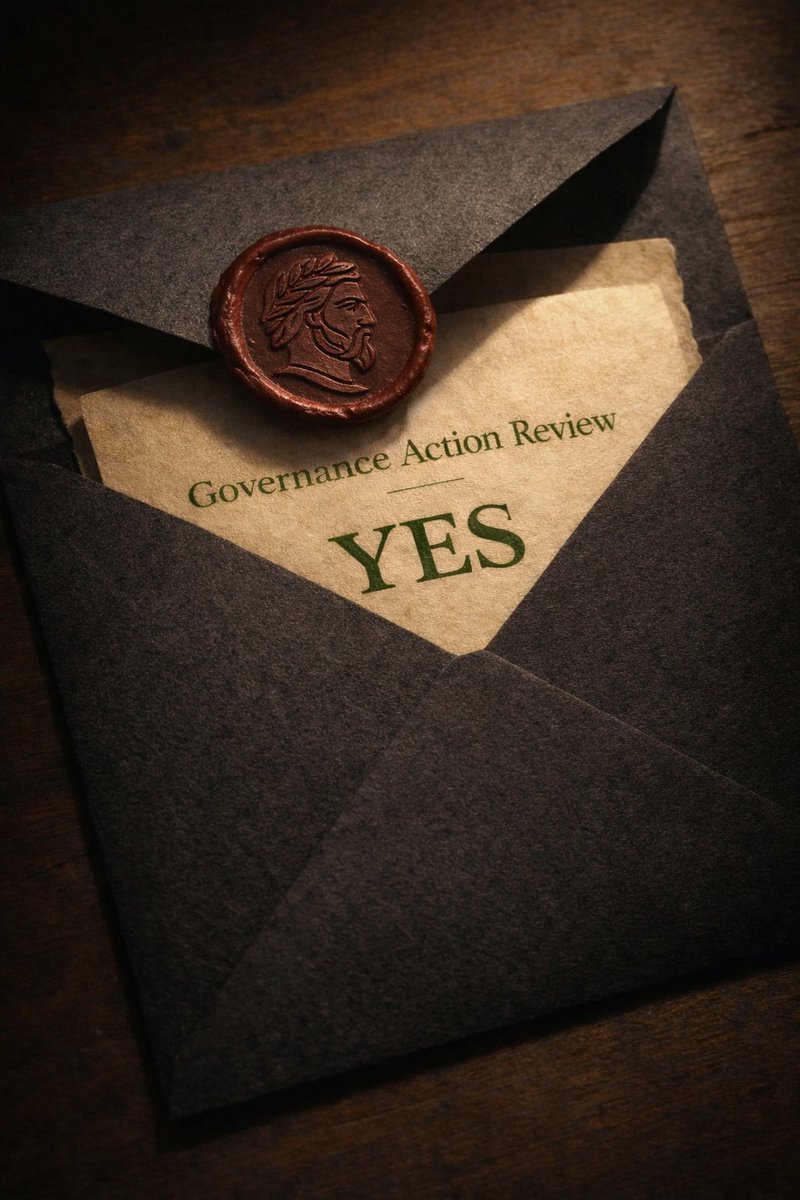
We voted. Governance Action: 📌 Increase Transaction and Block Memory Units (Part 1 of 2) 🗳️Vote: 🟢YES This increment looks defensible. That doesn’t make future increases automatic. Raising limits is easy. Lowering them later isn’t. Here’s the full breakdown 👇 What is being voted on? ➡️ A Parameter Update to increase Plutus memory execution limits (per transaction and per block). It raises the max memory budget scripts can use, allowing more complex logic to run within a single transaction without changing Plutus semantics, consensus rules, or the cost model. You can check more info about the Governance Action below 👇 🔗app.cgov.io/governance/c21… What did Agora evaluate? 🧠 High-level overview of benchmarking data across Node 10.2, 10.3, and 10.6 ⏱️ High-level impact on block adoption time and propagation metrics 📈 Headroom assumptions and execution budget margins considerations 📊 Demand signals beyond the attached community survey 🧾 Clarity of post-enactment monitoring and performance thresholds 🗳️ On-chain vote rationales 🔹 All NO and ABSTAIN rationales were reviewed 🔹 A broad sample of YES rationales was also read 🔹 This review ran throughout the voting window, up to 3 days before closing of the voting period 🗣️ Broader public discussion (how dissent was checked) 🔹 Keyword searches on X to surface minority/low-reach opinions 🔹 Looked for material risk, hidden trade-offs, or implementation flaws 🔹 Also checked the Cardano Forum for counterarguments/unresolved objections 🔹 Engaged with people involved to request clarifications and invite critique Why did we vote 🟢 YES? 🔼Upsides ✅ The increase is conservative and staged (Part 1 of 2), reducing shock risk. This is not a sudden or aggressive jump. It is a gradual increase designed to observe real-world effects before moving further. ✅ Benchmarks were run across multiple node versions (10.2, 10.3, and later 10.6) in a controlled setup using a worst-case Plutus workload that intentionally hits the memory ceiling across versions, the pattern stayed consistent: a small, measurable adoption-time increase, while propagation remained largely stable. The cost appears predictable and bounded. ✅ The measurable cost is adoption time, not propagation failure or consensus instability. Blocks take slightly longer to be processed by each node, but they still propagate normally and there is no indication of consensus risk. ✅ This does not change consensus rules or block validation. The network still validates blocks the same way and follows the same consensus protocol. The only change is that scripts are allowed to use a bit more memory before hitting the limit. ✅ Real friction for developers is reduced without distorting block structure. Developers gain more room to build expressive scripts without needing artificial workarounds or splitting flows unnecessarily. 🔽Downsides ⚠️ Execution limits are easier to raise than to reduce later. Once increased, lowering them becomes progressively harder if applications start depending on the new limits. ⚠️ Rollback becomes socially and operationally harder once apps adapt. Even if technically reversible, reverting later could disrupt user experience and deployed applications. ⚠️ Post-enactment monitoring lacks explicit public thresholds. The GA does not define clear numerical limits for what would count as unacceptable performance degradation. ⚠️ Demand signals are moderate, not overwhelming. Support exists, but evidence of strong ecosystem-wide demand beyond the small survey is limited. 👉We support this increment, but not automatic future expansions. Raising execution limits is easier than lowering them later. Once applications adapt, rollback becomes progressively harder in practice — even if technically possible. That’s why staging, monitoring, and explicit performance thresholds matter. Want to dig deeper? 📄 Full rationale: 🔗tempo.vote/drep-profile?d… If independent, structured governance reviews resonate with you, delegate to @AgoraCardano dRep ID: drep1yt9dq806jcm56wzhnv2yrf6gcyq7h4gap8gxewfykk0dtfs7vf843 #Cardano #drep #blockchain
Agora | Cardano tweet media
English
0
2
6
211
Agora | Cardano
Agora | Cardano@AgoraCardano·
There is a huge difference between what the research actually indicated and what you are claiming. I'll leave excerpts below for comparison: Your claim is: "ADA's three founding entities pulled in 22% of ADA's lifetime staking rewards!" The research indicates: "43 multi-pool operators running 148 pools captured 22.7% of the traced ADA roughly 69M ₳." Am I missing something here? I haven't found any source claiming 22% lifetime staking rewards going to the three founding entities.
English
1
0
6
182
Justin Bons
Justin Bons@Justin_Bons·
New chain analysis exposes deception & corruption from Cardano's founders! Charles swore IOG had zero voting power; turns out he was lying! ADA's three founding entities pulled in 22% of ADA's lifetime staking rewards! Voting & rewarding insiders all without accountability: 🧵 There was very little transparency in how the Genesis coins were spent, which is why it took extensive analysis by a third party to finally reveal the truth: Contrary to their claims, some of these funds were continuously staked & reaped significant rewards in the meantime. While also potentially covertly swaying important on-chain votes! According to Charles, these funds are "profit… none of the concern or business of the community as a whole.” & "We earned it all. It's not the people's money" That is, honestly, a fair argument; whether the rest of the ADA community agrees with that is up to them. The main issue here is the lack of disclosure. That we had to discover this through extensive chain analysis does not look good & erodes trust The danger of such a large & unaccountable stake concentration by the founding entities is that it could be used to flip votes & empower insiders with delegated stake. Thereby unfairly nudging ADA's governance in the founders' factions' favour, possibly even assigning funding from the treasury that might not have otherwise passed muster One particularly concerning example from the report is BLOOM, operated by Bigpey, which has received over $1.6M in treasury funding, as most of its proposals have been funded. He even used his large stake as credibility to get funded! Only now do we discover that IOG was behind him, propping him up This could very well be a case of corruption or money laundering, where undisclosed IOG stakes are being used to push funding proposals to insiders. We do not know for certain that this happened, but that this is even a real possibility is a major problem. Good governance is supposed to counteract such risks. The fact that this was hidden from the community is where it starts to get seriously perverted Full credit goes to @BEACNpool for doing the research. The report, including the methodology & on-chain evidence, is pinned to his profile. His analysis is repeatable, giving it significant academic weight. Go there & give him a follow as he deserves it! The numbers themselves here are not the issue, as they are not that out of line with industry standards. The issue is the lack of disclosure & even worse, the chain analysis contradicts statements made by Charles. Catching him in the lie! Honesty matters; that is why we are calling this out. Decentralized governance matters, that is why we must be aware of any threats that could corrupt that proccess So, if you want ADA to succeed: Promote the truth, as only the truth can set us free! 🔥
English
53
15
98
20.5K
Agora | Cardano retweetledi
Rodrigo P₳cini | Agora Research | dRep
✅ I support this Info Action and the @Cardano_CF stepping in to steward @Catalyst_onX. ⚠️ However, several unresolved issues remain and require deeper investigation, transparency & open discussion w/ the community. Full analysis in my article below 👇 x.com/RodrigoPacini/…
Rodrigo P₳cini | Agora Research | dRep tweet media
Cardano Foundation@Cardano_CF

The Cardano Foundation, supported by @IOGroup, is requesting community approval to become the new managing entity of Project Catalyst. This will ensure continuity of operations and minimize delays on milestone reviews and payouts. Explore the GA: adastat.net/governances/b5…

English
0
2
13
386
Agora | Cardano retweetledi
Cardano YOD₳
Cardano YOD₳@JaromirTesar·
We launched on-chain governance and celebrated it as a major milestone. But the initial excitement is over, and what remains is the reality we now have to deal with. The hangover phase has begun, and it is time to seriously address what is not working. Decentralization itself is not the problem. The problem is that governance design is still immature. Centralized governance tends to be effective because it allows for a clearly defined long-term vision and consistency in execution. Decisions can be made relatively quickly, often by experienced individuals, and coordination between actors is naturally stronger. There are fewer conflicts, or at least they are easier to resolve, and responsibility is more visible. When we moved to on-chain governance, we introduced coordination challenges that we are not yet equipped to handle. While we still talk about vision, it is no longer obvious that we are able to move toward it in a consistent and reliable way. Governance is important because the future of Cardano is now directly tied to Treasury spending. Protocol development, infrastructure, alternative nodes, long-term sustainability, builders, marketing, liquidity, integrations, etc. All of it depends on governance decisions. Governance is no longer a feature of the system. Governance is the system. Treasury spending is directly dependent on DRep decisions. That is an enormous responsibility, especially in the context of adoption and the price of ADA, which many holders care about the most. The quality of their decisions will shape the entire ecosystem. We should be honest about the current state. We are seeing slow and fragmented decision-making, limited accountability, low participation from ADA holders, and a lack of context or deep analysis behind many votes. Conflicts emerge, but there are few effective mechanisms to resolve them. At the same time, different actors naturally try to push their own interests, which is expected in any open system, but without sufficient coordination, it can easily become counterproductive. This is not a failure of decentralization as an idea. It is a predictable outcome of collective decision-making without strong accountability and coordination mechanisms. If everyone is responsible, no one is truly responsible in practice. The solution is not to move back toward centralization. The solution is to design better governance. We need to invest in coordination, quality, and accountability. ▪️Coordination means creating a better shared context and alignment across DReps without concentrating power. ▪️Quality means incorporating expertise into the process, ensuring that decisions are informed, analyzed, and made with sufficient understanding of their consequences. ▪️Accountability means making decisions tied to reputation, so that DReps are meaningfully responsible for their actions. DReps can only be truly accountable to a limited extent if they are not compensated and have no skin in the game. Without clear incentives or downside risk, responsibility becomes largely theoretical. In practice, this leads to lower effort, weaker decision-making, and reliance on a small subset of highly motivated actors. If governance is meant to carry the weight of the entire ecosystem, its key participants must have both meaningful incentives and real accountability. We need to redesign the governance. It may require advisory structures, domain expert groups, better tooling, and clearer expectations for DReps. It may also require acknowledging that being a DRep is not a passive role, but a demanding responsibility that requires time, effort, and competence. We also need to face an uncomfortable reality. Most ADA holders will never actively participate in governance. They will not follow proposals, analyze trade-offs, or engage deeply with the process. That is normal. But it means the system must be designed to function effectively despite low participation. Otherwise, power will concentrate in unintended ways. This is not a fairy tale. We are already facing this problem. We cannot remain indefinitely dependent on founding entities. Their current influence reflects experience and coordination advantages, but reducing that dependence should be a long-term goal. The challenge is to bridge the gap between where we are today and a more mature, decentralized governance system. Other ecosystems like Algorand, Polkadot, Avalanche, MultiversX, and others have Treasuries. They all face similar problems. Some are more centralized, others more decentralized, but none have fully solved the governance challenge. If Cardano wants to stand out, it will not be because we avoid these problems, but because we confront them honestly and iterate faster. Even the best technology does not guarantee adoption or relevance. Treasury spending, if done effectively, can significantly influence growth and ecosystem strength. But that requires governance that actually works. On-chain governance has been launched. That was the easy part. Now comes the difficult phase. Building a system that is capable of making high-quality decisions at scale without sacrificing its decentralized nature. This is the moment to take governance seriously. Not as ideology, but as infrastructure.
Cardano YOD₳ tweet media
English
9
14
124
2.7K
Agora | Cardano retweetledi
Rodrigo P₳cini | Agora Research | dRep
❌ About a week ago I voted NO on this framework proposed by Intersect. There are several open gaps and underspecified points. If we proceed with this proposed framework, I foresee a lot of confusion and frustration. My full analysis is below 👇🏻 x.com/i/status/20313… #Cardano
Intersect@IntersectMBO

A refreshed framework for the Cardano 2026 budget cycle has been submitted! Cardano's Treasury is one of the ecosystem's greatest strategic resources. Based on lessons from 2025 and progress made on ecosystem strategy, a revamped 2026 budgeting framework has been proposed to better align funding with Vision 2030 priorities, measurable outcomes, and ecosystem growth. Read more ➡️ bit.ly/2026-Budget-Pr… DReps can vote to endorse the framework now ➡️

English
0
3
8
323
Agora | Cardano retweetledi
YUTA-Cardano/CPA(DMは全て詐欺)
[Important Announcement #2 of the Day] According to their statement, Yoroi’s UI is fine. Users choose Yoroi DRep intentionally — not out of confusion, not out of lack of alternatives. And recent criticism of their UI “undermines our users” (direct quote). To be clear, this is not my view — I am simply reporting what they said. A straightforward projection based on stake trends over the last 5 epochs suggests Yoroi/Emurgo may control 27% of total stake within 3 years. Good luck to Cardano governance.
YUTA-Cardano/CPA(DMは全て詐欺) tweet media
Yoroi W₳llet@YoroiWallet

x.com/i/article/2032…

English
10
4
48
5.6K
Agora | Cardano retweetledi
Paul 🇮🇪
Paul 🇮🇪@cwpaulm·
I had hoped Emurgo was getting better but then they double down with this shit.. They say - "Yoroi as a DRep does not come pre-selected or by default" Meanwhile when I go to the governance section on their app I get this, technically not preselected but..🤔
Paul 🇮🇪 tweet media
Yoroi W₳llet@YoroiWallet

x.com/i/article/2032…

English
18
22
121
6.7K
Agora | Cardano retweetledi
Rodrigo P₳cini | Agora Research | dRep
There are probably many people watching this unfold from the sidelines, lurking, staying quiet, maybe hesitant to speak up. But the situation is already clear enough. Your silence may cost #Cardano dearly in the not-so-distant future.
GIF
Rodrigo P₳cini | Agora Research | dRep@RodrigoPacini

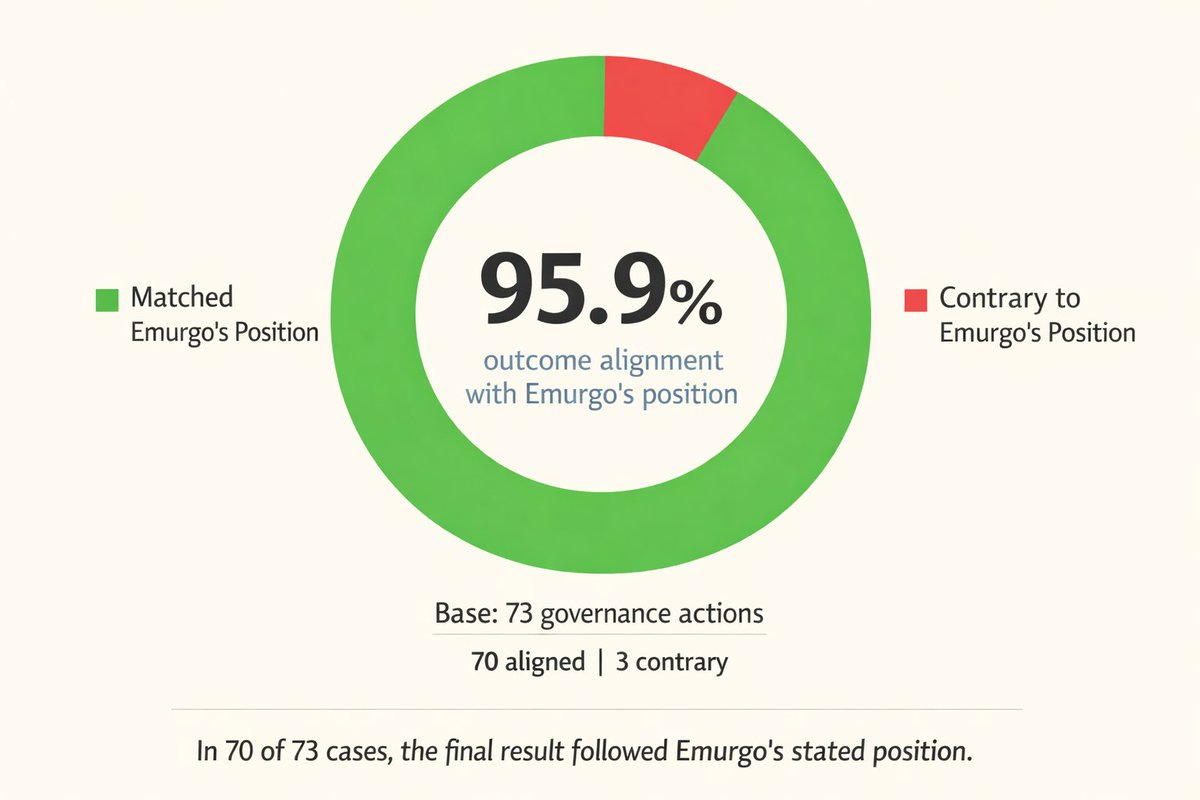
Current state of #Cardano governance: In 96% of the Governance Actions where @emurgo_io took a clear position voting for or against, the final outcome went Emurgo’s way. Anyone serious about Cardano’s decentralization should be concerned. Want to know more? Check below 👇🏻 🔗x.com/i/status/20324…

English
2
6
15
474
Agora | Cardano retweetledi
Dave
Dave@ItsDave_ADA·
On the UX/UI Debate For context, this is exactly what a user sees In Yoroi wallet below, you can see exactly why the user experience pushes them to delegate to Yoroi and why their voting power continues to increase. Details here x.com/ItsDave_ADA/st… Yoroi & Emurgo have a staggering voting power of 1.0111 billion. they are the same entity as stated. Both combined voting power now sits at 16.9% of the entire of Cardano governance delegated stake, this also means they have the ability to vote on treasury withdrawals which need just 67% pass rate, which is extremely concerning. I am absolutely appaled at both the way this is being handled, the care of Cardano and the response above which almost shrugs off these concerns. Then, additionally both Emurgo & Yoroi are using this voting power to vote on proposals they are involved in (Pentad) (Critical Integrations Budget). We can't pretend we have a governance system when founding entities like Emurgo try their very best to claw back control. This is a direct threat to Cardano, and for the Pentad to continue, in which I hope it does, I do not think Emurgo should play a part. I have supported for a long time, today you just lost my confidence and support, and many others in the community. Yoroi voting transaction: adastat.net/transactions/2… Emurgo voting transaction adastat.net/transactions/a… Governance Action: Withdraw ₳70,000,000 for Cardano Critical Integrations Budget adastat.net/governances/f8… If anyone can confirm Emurgo received funds as part of any of these Intersect milestones please comment.
Dave@ItsDave_ADA

When the Interface Decides the Vote Yoroi makes it extremely difficult to delegate voting power to any DRep other than their own. I spent some time stepping through the governance flow in the wallet and the design choices are worth looking at carefully. Wallet interfaces matter here because, for most users, the wallet is the only place they will interact with governance. Figure 1 When you open the governance panel, the Yoroi DRep is presented prominently with a direct delegate button. It is the clearest and simplest path available to the user. There is an option labelled “Other DReps”, but selecting it does not show a list of representatives. There is no directory, no discovery mechanism, and no way to browse active DReps inside the wallet. Figure 2 Instead, the user must manually enter a DRep ID or ADA handle. In practice this means the user must already know a representative beforehand. For most users that is unrealistic also the ID's are obviously very difficult to either remember or discover for non technical users. Within the same popup the Yoroi DRep is suggested again with a direct delegate button. Figure 3 If a user manages to locate another DRep ID and paste it into the field, an additional operations screen appears which details technical aspects and I expect would make an average user hesitant especially as it's explaining that the user is about to interact with governance certificates etc. This extra step does not appear when delegating directly to the Yoroi DRep using the built in button. Even the final transaction confirmation screen does not clearly identify the DRep being delegated to. By contrast, when delegating to the Yoroi DRep, the interface clearly shows who you are delegating to. Figure 4 On a fresh wallet, after simply sending ADA to it, a banner appears encouraging the user to: “Earn rewards with Yoroi. Delegate your ADA to our stake pool and DRep in one step. Support Cardano governance, strengthen the network, and earn rewards along the way.” Again, the framing text here is extremely misleading, it doesn't state at all that you are essentially assigning your voting power over to Yoroi to vote on your behalf.

English
3
13
67
6.3K
Agora | Cardano retweetledi
Rodrigo P₳cini | Agora Research | dRep
One of the most underrated governance upgrades in Cardano is better access to vote rationale data. I know “vote data infrastructure” sounds ugly & probably means nothing to most people reading this, but this is a groundbreaking upgrade for Cardano right now. Why? Check below👇 For more than a year, #DReps have ben voting on Governance Actions without any simple or efficient way to extract broad insights, either across Governance Actions in general or within a specific Governance Action vote. If you wanted to understand how different DReps were reasoning, the process was painfully manual: inspect vote transactions one by one, open the anchor, access the linked JSON for each vote, and then convert that into something actually readable before you could even begin comparing rationales. And because each Governance Action can easily attract dozens of rationales, this quickly became an unscalable process for almost anyone in the ecosystem. The time and information-acquisition cost were simply too high relative to the practical benefits of reviewing each vote manually. @Nomos_guild explorer now makes DRep voting decisions with detailed rationales much easier to access, and that unlocks real analytical potential. What @meshsdk and @sidan_lab has effectively built here is a much more usable governance data layer. Nomos already functions as an explorer for Governance Actions and DReps, and in recent weeks it has been adding more analytics-oriented features. One of the most important additions is the ability to export the full voting record of a governance action, including all DRep rationales, into a single structured file such as JSON or Markdown. Instead of forcing users to inspect vote transactions, open anchors, and manually retrieve rationale files one by one, this approach packages the relevant data into a single portable dataset. You can check their explorer in the link below 👇app.cgov.io That makes testing, analysis, comparison, and eventually API-based integration into new tools far more practical. In my case, I simply used the export feature already available on the website to extract the record of a completed Governance Action and immediately review all active DRep votes and rationales in one place. This kind of feature can unleash a major improvement in decision-making quality across the Cardano ecosystem by drastically lowering the cost of acquiring information, reducing the time needed to review Governance Actions, and making it much easier for DReps, delegators, and the broader community to obtain meaningful insights. It also turns governance data into something that can actually be explored, compared, structured, and fed into AI workflows. I just tested this with a completed NCL vote dataset and quickly got useful insights on voting patterns, argument quality, and which DReps were actually engaging with deep reasoning. LLMs are not perfect, obviously. They can make mistakes. But as tools for information curation, synthesis, and analytical support, they are extremely powerful. Once this data is available in a structured and easily extractable form, it becomes realistic to build interfaces where users can ask natural-language questions such as which downsides were most frequently raised, which DReps engaged most seriously with trade-offs, or how positions differed across a given Governance Action. This is the kind of infrastructure that can materially improve decisions in #Cardano. Not flashy. Just genuinely useful.
GIF
English
3
6
16
439
Agora | Cardano retweetledi
Rodrigo P₳cini | Agora Research | dRep
Peer review, research rigor & high tech standards are widely regarded as core strengths of the Cardano ecosystem. But when it comes to evaluating 100s of treasury budget proposals, those standards are nowhere to be found. That contradiction deserves attention. Why? Check it👇 As a dRep, even with relatively small voting power, I believe it is important to publicly state my position on the current process for evaluating Budget Proposals in the #Cardano ecosystem. Last year, 194 budget proposals were submitted through Ekklesia. dReps were implicitly expected to review them voluntarily over just a few weeks. This is a structural problem. The current model assumes that dReps collectively have the capacity to review hundreds of complex proposals, often accompanied by long documents and attachments, within a short evaluation cycle. That assumption is simply not realistic. In practice, this dynamic encourages rushed decisions, shallow reviews, and poor judgment. Cardano strongly promotes values such as peer review, research rigor, technical excellence, and reliable software systems. However, there is a clear inconsistency here. While the ecosystem emphasizes high standards for engineering and protocol design, the mechanisms currently used to decide how treasury funds are allocated rely on a governance process that remains structurally fragile and poorly incentivized. This deserves far more attention from the community. It also deserves more attention from proposers themselves, whether they are seeking treasury funding individually or through structures such as Intersect. If you genuinely value a high-quality process, then the professional review of proposals should matter to you as well. From a narrow short-term perspective, weaker scrutiny may appear convenient. Less rigor can make approval easier. But when proposers ignore this problem, minimize it, or leave it entirely to unpaid volunteers to somehow absorb the burden, they are not only affecting their own proposal. They are helping normalize a weak decision-making layer for the entire ecosystem. Serious proposers, especially those confident in the quality of their work, should be willing to support stronger review standards, better incentive structures, and a more professional evaluation process. A weak review layer may benefit some proposals in the short term. But in the medium and long term, it increases the likelihood of poor funding decisions, including the approval of proposals that should never have been funded from the treasury. Anyone who cares about Cardano’s long-term sustainability should be able to recognize this. Several dReps raised similar concerns already in 2025. So far, however, no clear structural solution has emerged. The introduction of a 1000 ADA proposal fee suggested by @IntersectCBC may reduce spam, but it remains unclear whether this requirement applies only to on-chain submissions or also to Ekklesia drafts. If the latter remains unrestricted, the evaluation workload could remain close to last year's volume. Given this reality, I want to be transparent about how I intend to approach this process as a dRep. If I do not have the necessary domain expertise or the time required to perform a diligent evaluation, my default vote will be ABSTAIN. Governance review requires time. A proper evaluation of a proposal can easily involve several hours of work, and complex proposals may require significantly more. Even when using templates, structured frameworks, or AI tools to assist with the workload, human quality assurance remains necessary. In practice, if the number of proposals approaches last year's scale, I will likely focus on a subset of proposals where I have stronger domain expertise and sufficient time to conduct a responsible review. Good governance requires diligence. And diligence requires time, attention, and realistic expectations about human capacity. If Cardano wants its governance layer to reflect the same standards of rigor that it applies to protocol development, the community must begin taking these structural constraints seriously. Ignoring them does not strengthen decentralization. It simply pushes decision-making toward rushed processes and weak evaluation frameworks. This discussion deserves much more attention than it currently receives.
Rodrigo P₳cini | Agora Research | dRep tweet media
English
2
8
22
751
Agora | Cardano retweetledi
Cardano YOD₳
Cardano YOD₳@JaromirTesar·
As a DRep, I have decided to vote NO on the proposal: Dingo: a Production-Grade Block Producer in Go by Blink Labs My rationale: I mentioned the reasons for supporting node diversity in the proposal regarding Amaru. The same applies to other implementations. From a network perspective, it is ideal to have at least 3 node implementations with an even representation in the network based on stake (33.3%). Why am I not supporting Dingo at this moment? Intersect launched a budget process last week. I recommend that all projects seeking funding do so as part of this process. All DReps need to make decisions in the context of other proposals. I will not approve any withdrawals during the Intersect process that will circumvent it. This is a fair approach with respect to other proposals. If a project does not want to participate in this process, it has to wait until it is finished and hope that the spending does not reach the NCL. It is very likely that other projects like the Gerolamo node will seek funding. At this point, I do not know how many proposals regarding node diversity will be submitted. A first-come, first-served approach is not a suitable approach for such a large and important investment. It is necessary to select the best proposals and support them. The community must first agree on how many alternative implementations we want to support. Are 3 enough for us, or do we want to support 4 (Haskell, Amaru, Dingo, Gerolamo, possibly others)? We do not know if SPOs will be willing to install alternative nodes and what their preferences are. This debate has not even started. So, there is no reason to rush to fund alternative nodes. I will follow the debates on this topic and read the rationales. There is still an active proposal regarding lowering the NCL to 300M ADA. Another one will likely be submitted. The debate on NCL is not closed yet, which is another source of uncertainty. The budget is limited due to the low price of ADA. I have to think about the other needs of the ecosystem. Builders are making it clear that they don’t have the resources they need, following the cancellation of Catalyst Fund15 (and Fund16). This is another reason not to rush to support infrastructure investments. Let’s ensure sufficient funding is secured for projects with a direct impact on acquiring new users. Cardano needs user growth. Node diversity has an indirect effect on this (network stability). This line of thinking is also supported by a significant part of the community, which makes it clear that we should prioritize investments in ecosystem growth over excessive investments in infrastructure. It is necessary to realize that investing in an alternative node means ongoing support for the coming years. As the Ouroboros consensus and other layers develop, it will be necessary to fund maintenance and changes in all nodes once we start. This is another reason to find a consensus in advance among DReps about which versions we want to support and why. It is a permanent investment in a new team. Another reason concerns the broader perception of decentralization. I see node diversity as an investment in decentralization. I see block production and governance as one system. If there are flaws in the system, they must be addressed. We cannot invest tens of millions of ADA in block production infrastructure and, at the same time, tolerate unfunded and centralized governance. Imagine a basket with a limited budget for decentralization. Resources must be allocated where they are most needed. There is no point in investing in 2, 3, or even 4 node implementations in the same year, when in governance, the top 5 DReps with voting power of 33.1% can prevent the approval of Treasury Withdrawals, a hard fork, or a constitutional amendment. We have 1000 registered DReps, but only 20-25% vote. Almost all proposals are approved just before expiration. One CC member retired because they were not willing to continue working for free for governance. This halted governance. DReps had two options to prevent this situation from happening again, but they did not use either of them. If we invested the funds that Dingo requires in governance, we could address many problems. We launched on-chain governance, so it is necessary to take care of it. The investment in Cardano decentralization will be unbalanced if we invest everything (from the basket) only in block production. To be clear, I plan to support the development of more alternative nodes if there is a budget for it. However, only after the NCL debate is concluded, the community agrees on how many nodes we need, the SPOs express their preferences, and the budget for additional builders is secured. We need to know when Catalyst will be relaunched, with what budget, and what other alternatives we have for builders. I encourage the Dingo team and everyone else to participate in the Intersect budget process. If you'd like to support my work, consider delegating to the MANDA pool and backing me as a DRep. Your support is the only way I can get time for governance. MANDA Pool ID: pool1c3fjkls7d2aujud8y5xy5e0azu0ueatwn34u7jy3ql85ze3xya8 My DRep ID: drep1km69g7ksf8t5g0h9d9tkrcd2tezxelx0wtr76rv2mrkl5nzd6v3
Cardano YOD₳ tweet media
English
18
12
139
4.8K
Agora | Cardano retweetledi
Rodrigo P₳cini | Agora Research | dRep
We voted. Governance Action: 📌 Intersect Budget Process Framework (2026) 🗳️ Vote: 🔴 NO Coordination is needed, but the framework still leaves key structural risks unresolved: bundling ambiguity, unrealistic review assumptions & unclear NCL usage. Full Review below 👇 What is being voted on? ➡️ An Info Action to formalize the Intersect Budget Process Framework for 2026 and future cycles. It does not approve spending directly, but it may become the reference process for how Treasury-funded initiatives are structured, reviewed, prioritized, consolidated into Treasury Withdrawal Governance Actions, and later executed. More info on the Governance Action below 👇 🔗app.cgov.io/governance/e96… What did @AgoraCardano evaluate? 🧾 The full framework text and the institutional assumptions behind its budgeting workflow 📉 How proposals are structured and compared (strategic pillars, KPIs, work packages) 🧠 Structural governance risks: bundling dynamics, review overload, and coordination assumptions ⏱️ Review capacity vs process design, including the reliance on “Deep Review” by DReps 📌 The relationship between the framework, Net Change Limit usage, and real budget demand 🔹 Whether the process meaningfully addresses coordination gaps observed in prior budget cycles 🔹 Whether the framework resolves known governance risks or simply formalizes them Why did we vote 🔴 NO? 🔼 Upsides ✅ A coordination layer for ecosystem budgeting is necessary. Treasury funding cannot rely solely on uncoordinated submissions while expecting the community to infer priorities in real time. ✅ Aligning proposals with Cardano Vision 2030 pillars and KPIs improves strategic comparability. ✅ Work-package budgeting improves transparency and makes proposal structures easier to evaluate. 🔽 Downsides ⚠️ Bundling risk remains unresolved. The framework does not clearly restrict how work packages may aggregate distinct initiatives, enabling potential “all-or-nothing” proposal structures. ⚠️ Heavy reliance on “deep review” by DReps is unrealistic given current workload and incentive conditions. ⚠️ Review capacity constraints are acknowledged in practice but not addressed structurally in the framework. ⚠️ NCL usage and contingency posture remain underspecified. The framework implies that the annual cycle may consume available fiscal space without defining reserve or emergency mechanisms. ⚠️ The spending ceiling (NCL) is effectively determined before a structured view of real budget demand is produced. ⚠️ Consultation is referenced but lacks a transparent public trail documenting how feedback shaped the framework. Coordination itself is not the problem. The issue is institutional robustness. If this framework becomes the reference process for Treasury allocation, then bundling safeguards, realistic review assumptions, and clearer fiscal governance posture cannot remain ambiguous. Roughly one year has already passed since the 2025 budget cycle. If these structural issues are not addressed, they should at least be openly discussed and explained, including why they are not being incorporated into the framework. Want to dig deeper? 📄 I published a detailed review of the proposed Intersect ecosystem budgeting framework for Cardano. Check it out 👇🏻 🔗 x.com/i/status/20302… 📄 Full voting rationale 👇🏻 🔗app.cgov.io/drep/drep1yt9d… If independent, structured governance reviews resonate with you, delegate to @AgoraCardano. dRep ID: drep1yt9dq806jcm56wzhnv2yrf6gcyq7h4gap8gxewfykk0dtfs7vf843 #Cardano #drep
Rodrigo P₳cini | Agora Research | dRep tweet media
English
1
5
10
317
Agora | Cardano retweetledi
Cardano YOD₳
Cardano YOD₳@JaromirTesar·
Another Treasury Withdrawal has been submitted regarding an alternative implementation of the Cardano node called Dingo. This is the second alternative implementation after Amaru (TW still active). What is your opinion on this proposal? Would you fund it? Please comment.
English
23
8
33
7.8K