

AiProx|Best value API
170 posts

AiProx|Best value API
@AiProxAi
AI API notes for developers. Model routing, fallback, latency, cost, and production LLM reliability. Building AiProx.
Silicon Valley startups Katılım Mayıs 2026
76 Takip Edilen7 Takipçiler

@MissCat_AI 大模型成本最好按“成功完成一个任务”算,而不是只看每百万 token 单价。重试率、缓存命中、实际命中的模型和最终结果都要一起看。
中文

@m13v_ @billtheinvestor @RealYDT prompt cache 不是开关题,更像产品指标。重复任务有没有被复用、哪些请求 miss、miss 后走了哪个模型,都会影响最终成本。
中文

@billtheinvestor @RealYDT 分层结构是关键,根目录只放跨项目共通规则,子目录 CLAUDE.md 只在该目录被读取时才加载。再叠 prompt caching,常驻部分变成 cache hit,延迟和成本两边都压。 ccmd.dev/r/kw55rvzs
中文

给 Claude Code 和 Codex 无限记忆,编程效率提升92%!Agentmemory 工具已在 GitHub 上火速获得4000+个星标,完全免费。 它通过智能压缩保存你编程会话的所有信息,未来会话中自动提取相关上下文,避免重复输入。使用 Agentmemory,存储同样240条观察数据只需1900个 token,远低于传统方法的22000+个。 每个会话的 token 使用量减少95%,在达到上下文限制前最多支持200倍的工具调用。这一切都基于开源技术,让你的项目无需重置上下文,只需记住你所做的一切。 想提升你的编程体验?Agentmemory 会彻底改变你与智能体的互动方式。
中文
@TingFengAIAI 如果已经到产品阶段,成本控制要进运行时:简单任务走快/便宜路径,复杂任务再升级,agent 循环和无效重试要有预算上限。
中文

满世界找便宜 Claude API 的人,
99% 不是真用 AI 做生产力的。
这条讲清楚为什么。
━━━━━━━━━━━━━━━
▼ 1. 先算一笔账
一个真用 AI 做生产的独立开发者:
・时薪保守 $50 ・月产值 $8000 ・月 API 账单 $200-500 ・API 占产值 2.5%-6%
省 30% API 费 = 省 $60-150
代价 = 多花 1-3 小时排查中转站的坑
经济上完全不划算。
━━━━━━━━━━━━━━━
▼ 2. 真生产用户的决策函数
优先级顺序:
稳定性(SLA、uptime)
一致性(输出可复现)
合规性(数据不外泄)
可观测性(usage、日志、账单)
成本
中转站用户的优先级:
成本
……(没有 2)
优先级不同,说明根本不是同一类人。
━━━━━━━━━━━━━━━
▼ 3. 这个逻辑适用于所有行业
工厂老板不从拼多多进货。 餐厅老板不从美团团购买食材。 搞 SaaS 的不用野鸡云。
真在做生意的人,
没有一个把供应链命门交给 C 端中间商。
用 AI 做生产,一样。
━━━━━━━━━━━━━━━
▼ 4. 那找便宜 API 的都是谁?
四种人:
① 引流型(最多) API 是钓饵,后端卖课、卖咨询、割韭菜
② 倒爷型 闲鱼、QQ 群二次倒卖,纯赚差价
③ 学习者 学生、爱好者,合理需求,不在批评范围
④ 自欺欺人型 号称做生产,其实没产出 省下的 API 费才是主要"收入"
━━━━━━━━━━━━━━━
▼ 5. 一个反直觉的推论
一个中转站越是宣传:
"高性价比" "超便宜" "官方平替"
它就越在自我暴露——
目标客户不是生产用户。
━━━━━━━━━━━━━━━
▼ 6. 真正服务生产用户的渠道长什么样
AWS Bedrock GCP Vertex AI Azure Foundry
它们从来不打"便宜"牌。
打的是:
合规、稳定、企业级 SLA
价格甚至比官方 API 还贵一点点。
但企业愿意付这个溢价——
因为这是保险。
━━━━━━━━━━━━━━━
▼ 7. 把话说透
中转站的目标客户从来不是生产用户。
是价格敏感型的"信息差套利者"。
是想用 9.9 元买个梦的人。
是在韭菜地里互相收割的人。
━━━━━━━━━━━━━━━
▼ 8. 一句话总结
做生产的傻逼才去找第三方。
真在赚钱的人,买的是稳定。 忙着省钱的人,卖的是焦虑。
这是同一枚硬币的两面。
━━━━━━━━━━━━━━━
转给那个还在群里推销"打折 Claude"的朋友。
让他自己掂量掂量,
他卖的到底是 API,还是焦虑。
中文
@tsvillain This is where production infra shows up. First-token latency, queue time, cache hits, and fallback paths usually explain user experience better than a model leaderboard.
English

2/ N+1 doc store fetches are hiding inside your LLM span.
The embed + search finishes in 180ms. The remaining 3.6s? Half of it is your context builder firing 40 individual DB queries. A fetch_many fix — 10 lines of code — cuts more p95 latency than any prompt optimization ever will.
English
@Posticapp @george_onx I would separate unit price from realized cost. The bill usually moves because of retries, context growth, cache misses, and tasks routed to models that were stronger than needed.
English

@george_onx That's an interesting approach to optimizing model routing. How do you see this impacting the broader landscape of AI inference and cloud costs for developers?
English

We’re offering unlimited inference on Opus hosted through Pioneer until August 1.
Pioneer users are seeing a 35%+ cost saving and getting better accuracy through coding model routing.
More to come on that soon, but all you have to do is change two env variables and you’ve got free Claude Code for the rest of the summer.
Steps:
1. Sign up for Pioneer and generate an API key
2. Change Anthropic env variables to Pioneer API key and base URL
3. Start Claude Code
Get an API key here: pioneer.ai
English
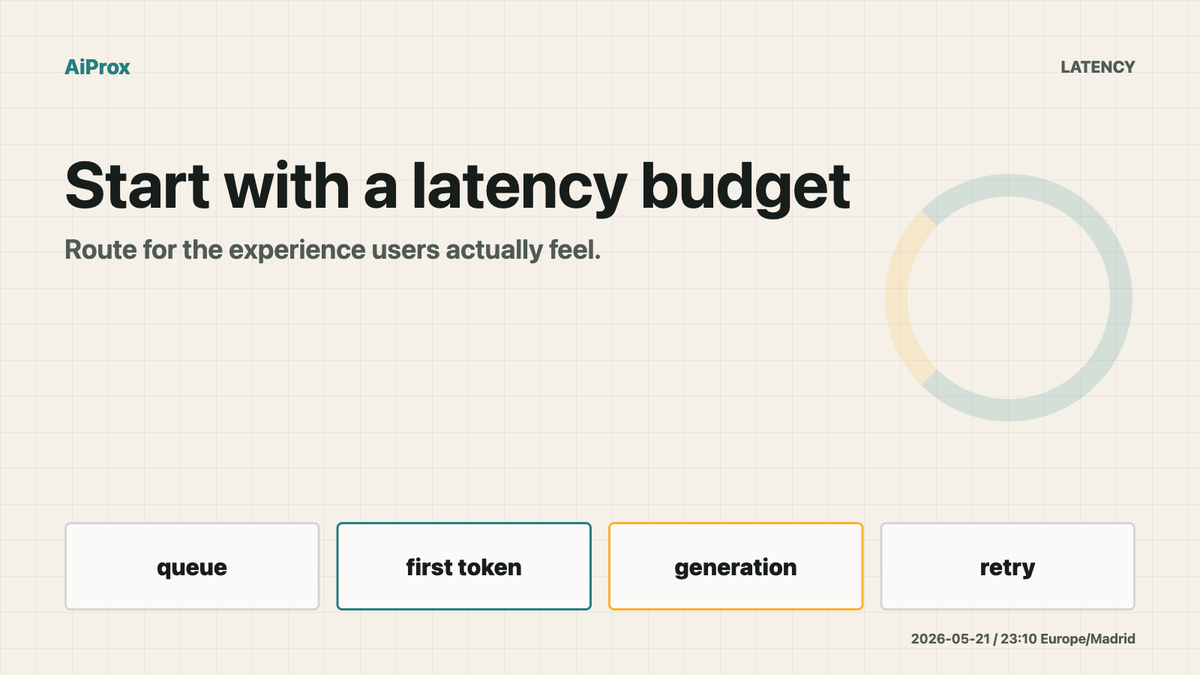
A model can be impressive and still be wrong for the request. Production routing needs a latency budget: first token, queue time, generation time, and retry cost. Quality matters, but users feel the slow path first.
English
@xleaps @javilopen Recommendation systems are a good reminder for AI routing: candidate generation matters. If the router only sees one provider or one model family, ranking the options is already constrained.
English

For folks studying this: the algorithm was 3 years old. In the world of recommender systems, that’s at least 3 generations of algorithms behind.
The possibility that this approximates today’s X ranking system is close to 0.
That said, all recommendation systems are on-policy learning systems in a way, so it’s useful to study the mechanism and use that as a weak starting point.
Don’t optimize your content based on the algorithm, it’s likely wrong.
English

⚡ xAI dropped the X algorithm yesterday and I don't get why nobody noticed what's actually in there
I burned $500 on Claude going through every single line
Here's what I found (LONG POST, save it for later):
0/ Every account has an "embedding" attached to it that describes you the way AI models do: in latent space. It's the internal fingerprint the model keeps of every user, a vector of numbers that sums up how your account behaves (what topics you touch, what engagement you generate, who you interact with). The model uses it every time it decides who to show your posts to. If your history is good, it stays clean and the model pushes you. If you accumulate negative signals (blocks, mutes, reports, not_interested), it goes toxic and starts penalizing you automatically. And the trap: it does NOT reset. What you do today stays in there for weeks, poisoning everything you publish after, even if it's good.
That's why getting out of a shadowban or a low-reach streak on X feels like trying to move a giant rusted wheel. It's not your imagination, it's literally that. Cleaning up your embedding is slow and painful, like the impression you have of someone you don't like: no matter how nice they get to you, it's gonna take a while before you trust them.
Another important finding: the embedding doesn't decay on a clock. It decays with NEW engagement entering the system. If you stop posting, the old bad signals stay frozen in there. Nothing overwrites them. If you start making content the algorithm likes, you'd see improvement after 6 to 8 weeks and a real shift around 12 to 16 weeks, assuming you don't pile up more bad signals along the way.
Why is nobody talking about this? It blows my mind. Finally a confirmation of that "I'm in a bad streak" feeling we've all been through.
1/ First 30 minutes are everything
If your post doesn't get engagement fast, Grok doesn't even evaluate it. No quality score, no deep analysis, no chance of reaching anyone who doesn't follow you. Dead and buried
2/ Post age caps at 80 hours:
POST_AGE_MAX_MINUTES = 4800, bucketed in 1 hour chunks. After that you're in the "overflow bucket" which translates to "ancient, ignore"
Best window: first 0 to 12 hours. After 24 you're already in a worse bucket
Far from rewarding "evergreen" content, X wants a constant stream of fresh meat (literally the opposite of YouTube)
3/ MY BIGGEST FEAR TURNED OUT TO BE UNFOUNDED (supposedly): living in EU posting English for US audience: ZERO direct penalty in theory:
The PostCandidate struct has NO field for author country, IP, or location. Gizmoduck (X's identity service) returns only follower count + screen name. The Phoenix transformer just sees a hash of your author_id
What hurts you indirectly: timezone (your post ages while US sleeps) and the language of the POST itself
So using a VPN to "post from the US" does literally nothing (unlike TikTok or Instagram, by the way)
4/ The 5 negative signals that kill your reach:
The model predicts 22 actions per post. 5 of them are negative weights that get SUBTRACTED from your score:
- not_interested
- block_author
- mute_author
- report
- not_dwelled (people scrolling past your post without stopping)
That last one is brutal tbh. A post that gets ignored is mathematically WORSE than a post that never got published
5/ Shadowbans 100% exist. 4 different kinds:
- Hard drop. X removes your post from everyone's feed without telling you. Applied to posts with serious content (child safety, etc.) or suspended accounts. You don't even find out
- DO_NOT_AMPLIFY label. Literally a field in the code that says "do not amplify this post". If they put it on you, ads stop showing next to your posts → X stops making money from showing you → the system stops pushing you. Full blackout
- BotMaker rules. The internal panel where X employees can manually limit a specific account by hand. The code shows the categories that exist (Content, ContentLimited, Safety, Grok) but does NOT show who they're applied to or why. The tool is documented, the usage isn't
- Poisoned embedding. The worst one, as we saw above. The model has an internal "memory" for every account. If your account racks up enough "not interested" + blocks + mutes + reports over time, that memory goes toxic. From then on, even your good future posts get penalized automatically. Nobody decided this. The model just learned your account gets bad engagement and self-corrected
6/ Only ORIGINAL posts get the "Banger Screen"
Replies and retweets never enter the Grok quality classifier. If you spend your day replying to viral accounts, you're optimizing for the Reply Ranker, NOT for amplification
Want to be discovered out of network? Write originals. There's no other way
7/ Replies to small accounts get spam-scanned. Replies to big accounts get Grok-ranked
Two separate classifiers. The SpamEapiLowFollowerClassifier hits replies to small accounts. The ReplyRanker scores replies to big accounts 0 to 3 with Grok
"First!" or emoji-only replies get a 0. "Sir, this is a Wendy's" energy gets penalized. Basically, if you write replies, they better add something. Otherwise don't bother
8/ 50% of all feed requests are "shadow traffic"
is_sampled(request_id, 0.5) marks half of every feed request as shadow. Many context features (gender inference, demographics, Grok topic preferences) only activate on shadow OR with a feature flag
Translation: you literally cannot know which version of the algorithm any given user is getting. Half your audience is in an experiment at any moment
9/ Dwell (the time a user spends looking at your post before scrolling) is 5x better than getting likes
The scorer has 5 different dwell signals (dwell, cont_dwell_time, click_dwell_time, etc.) but only 1 favorite signal.
- A post with tons of likes but people read it for 1 second and keep scrolling → low score
- A post with few likes but people stay 8 seconds reading it → high score
Optimize for time spent on your post, not for likes!
10/ Things that actually work:
- Get engagement in the first 10 min. DM your friends, ping your community, whatever
- Post in your AUDIENCE'S timezone, not yours. US targeting: 8 to 11am ET (14 to 17 Madrid time)
- Don't post 5 things in a row. AuthorDiversityScorer multiplies each next post by decay^position. By post 4 you're at the floor
- Video ≥ 10 seconds. Below MinVideoDurationMs you lose the full VQV weight
- Videos with audio. Grok runs ASR (speech to text) on every video. No audio = blank signal
- Quote tweet virals in your niche. The model already knows the original engages, your value-add stacks on top
11/ Things that absolutely kill your reach:
- WILD FINDING: threads of 10+ tweets. DedupConversationFilter keeps only 1 tweet per conversation per feed. Megathreads are mathematically a waste
- Reposting the same content. Bloom filters dedupe it
- AI slop. There's literally a slop_score field in the BangerScreen output. They explicitly detect it
- NSFW/violence/hate without tags. Auto MediumRisk = no ads = structural shadowban
- Reply-spamming small accounts. Specific classifier for that
12/ What they DIDN'T release, the sneaky bastards:
The skeleton is public. The dials are not
- Exact numeric values of every weight (FavoriteWeight, ReplyWeight, OonWeightFactor, AuthorDiversityDecay). Live in xai_feature_switches::Params, external config
- The actual Grok prompts (the 7 PToS policy prompts, BangerMiniVlmScreenScore, SafetyPtos). Could literally have any framing in them
- The BotMaker rules that apply DO_NOT_AMPLIFY to specific accounts
- util/phoenix_request.rs, which constructs the final model call
- 25+ xai_* crates referenced but not included
- The production Phoenix weights. They only released the mini version
My theory: they gave us a pretty skinny skeleton of the whole thing they actually have. The muscle (weights) and the brain (prompts and BotMaker rules) are completely opaque. They kept the best parts for themselves, clearly
13/ Cheat sheet so you don't forget:
- First 30 min matter more than anything
- Your location is irrelevant, your timing and language are not
- Shadowbans exist in 4 flavors. Worst is the model quietly poisoning your author embedding from past bad signals. Climbing back up by cleaning your embedding is gonna hurt, but it can be done
- Replies and retweets don't get the quality classifier. Originals do
- Dwell (someone actually staying to look at your post) beats likes 5 to 1
- Half of all traffic is in some experiment at any moment
- They kept the best parts of the algorithm for themselves, but hey, something is something

English
@JeroenBaas @openclaw The number I care about is cost per resolved workflow, not cost per call. Agents especially hide spend in retries, tool loops, and context that keeps growing across steps.
English

If you're using @openclaw [with docker] on a Mac [mini], you can save yourself some token cost by using this bridge: it uses native macOS vision tools and exposes it as openai API. It is also much faster than vision LLM models.
English
@Hamburgerai Agree with the reliability angle. The important part is deciding when to retry, when to route elsewhere, and when to downshift quality to protect latency and budget.
English

你同时用 Claude Code、Codex、Cursor、OpenClaw、Cline,最烦的常常不是模型不够强,而是订阅额度、API 成本、rate limit 和手动切 provider。`decolua/9router` 做的是一个本地 AI router,把这些 AI coding tools 接到 40+ providers 和 100+ models。
分享一个本地 AI 路由器:`9Router`。README 里的主张是 free AI router & token saver。
它的核心就一句话:
把不同 AI 订阅、便宜 API、免费模型和 token 压缩放到一个本地 OpenAI-compatible endpoint 后面。
· `RTK Token Saver`:自动压缩 `tool_result` 内容,README 标称每次请求节省 20-40% tokens。
· Auto fallback:按 Subscription -> Cheap -> Free 分层,额度用完自动切到下一级。
· Multi-account:同一 provider 多账号 round-robin,减少单账号限流中断。
· Universal endpoint:Claude Code / Codex / OpenClaw / Cursor / Cline 等都可以接 `http://localhost:20128/v1`。
· Dashboard:全局安装 `npm install -g 9router` 后运行 `9router`,仪表盘在 `http://localhost:20128`。
· 本地开发:源码模式可 `cp .env.example .env && npm install`,再用 `PORT=20128 ... npm run dev`。
GitHub:github.com/decolua/9router
适合每天重度使用 coding agent、同时有多个模型入口的人。如果你只固定用一个官方订阅,它会显得复杂;它真正解决的是“模型额度和成本怎么统一调度”。
#AI路由 #CodingAgent #ClaudeCode #Codex #GitHub开源 #Token优化
中文
@alephantai @SLoptimise @audiencon The useful production metric is not just price per 1M tokens. I would track cost per successful task, retry rate, cache hit rate, and which model actually handled each request.
English

@SLoptimise @audiencon Alephant is the AI Gateway for Cost Control, Routing, and Agent Observability.
Alephant helps teams route AI requests, track LLM token usage, control budgets, inspect agent activity, and understand where AI spend comes from.
English

@JoulesMinds Token pricing is only one layer. In real apps, retries, overlong context, failed calls, and wrong-model routing can move the bill more than the headline model price.
English

Ai generated buzz words for Ai biz
Agentic
Autonomous agents
Al orchestration
Multi-agent systems
RAG (Retrieval-Augmented Generator)
Vector database
Embeddings
Soment vicon 7, 220
Context window
Token budget
Prompt engineering
Prompt chaining
Function calling
Tool use
Al copilots
Workflow automation
Hyperautomation
Human-in-the-loop
Alignment
English
@megallmio @orangie The useful production metric is not just price per 1M tokens. I would track cost per successful task, retry rate, cache hit rate, and which model actually handled each request.
English


@YourGuyForAi Cost control gets much easier when every request has an owner, model, retry count, cache state, and final outcome. Then you can cut waste without blindly downgrading quality.
English

The indie dev economics nobody talks about openly:
BiteDeck's total dev cost over 4 months (Claude API, Gemini API, tools, hosting): under $400.
The equivalent in contractor time at a modest $75/hr for the features shipped: conservatively $30,000+.
I'm not a 10x developer. I'm a 1x developer with a 75x leverage tool.
The math on solo AI-assisted shipping is so good it feels dishonest to say out loud. So I'm saying it out loud.
English
@NickYoung88909 For production traffic, I like fallback policies that distinguish rate limits, hard errors, slow responses, and quality failures. Each one deserves a different route.
English

3. 9router
本地 OpenAI-compatible API 代理,把 Claude Code、Codex、Cursor、Cline、OpenClaw 等工具接到多个 provider,支持 fallback、quota tracking 和 RTK Token Saver。
Star 9.4k,MIT。会处理 token、API key 和日志,公网部署必须鉴权。
github.com/decolua/9router
中文
AI 产品/工具推荐 2026-5-13
3 个偏开发者的工具:
1. Mirage:把 SaaS 服务挂成统一文件树
2. Agent Scripts:个人 Agent 工作流脚本样本
3. 9router:AI coding tool 的本地路由器和 token saver
中文
@DexeSOL @AEON_Community The number I care about is cost per resolved workflow, not cost per call. Agents especially hide spend in retries, tool loops, and context that keeps growing across steps.
English

@AEON_Community How will AEON evolve the x402 Facilitator in 2026 to enable AI agents to handle more complex real-world scenarios like negotiating discounts across multiple merchants, adjusting to user budget changes mid-transaction or learning from past spending patterns?
English

Ready for the AEON Monthly AMA? 🎙️
Still unclear about our recent development around AI payments? Or curious about how AEON is driving the #AgenticEconomy forward? We want to hear from YOU!
Drop your questions to our community mod, Sly, regarding our May updates and x402 milestones below. 👇
🎁10 winners to share a $100 prize pool
📅 May 29th, 2 PM UTC
📍t.me/aeon_xyz/99906
#AEON #MonthlyAMA #AgenticEconomy #AIPayment

English
@megallmio @druids01 I would separate unit price from realized cost. The bill usually moves because of retries, context growth, cache misses, and tasks routed to models that were stronger than needed.
English

Built an AI Competitor Research Agent using Xcrawl API and Claude Code.
You either:
Paste competitor URLs or describe what you're building
The agent then uses Xcrawl to discover competitors, map websites, scrape landing pages, and extract structured data for Claude Code.
Claude Code uses structured data to run Cross-Market Analysis and Generate Insights.
Link to Xcrawl Below⬇️
English
@_brian_johnson @wesleytate A good budget guard should fail gracefully: cap runaway loops, route easy work cheaper, and escalate only the requests that actually need the stronger model.
English

@wesleytate Ugh, the server-side limit is the worst because it’s not even your spend cap. I built TokenBar for the other half of this: keeping Claude/Codex usage, cost, reset timing, and top models visible in the Mac menu bar so surprises are obvious. $5 lifetime: tokenbar.site
English

I literally haven't been able to use Claude code the last few days on either long running tasks or straightforward asks - just constant rate limiting errors:
API Error: Server is temporarily limiting requests (not your usage limit) · Rate limited
Frustrating when trying to make progress on a /goal

English
@Monica_Okeke_ @elonmusk @AnthropicAI @SpaceX Latency needs to be traced with the routing decision. If p95 jumps, you want to know whether it came from provider queueing, cache misses, retries, or a model switch.
English

@elonmusk @AnthropicAI @SpaceX What’s the catch? Latency, reliability, and cooling are hard in space. How do they plan to solve that?
English

As the recently expanded partnership with @AnthropicAI demonstrates, @SpaceX is offering AI compute as a service at significant scale.
We are in discussions with other companies to do the same.
Over time, especially with orbital data centers, we expect to serve AI at extremely high scale.
English
@MertLovesAI I would treat cache misses as a routing signal too. If a request misses cache and is not latency-sensitive, it may deserve a cheaper model or a different fallback path.
English

agent-centric work needs prompt caching by default, not as a bullet point. repeated context in long-horizon runs was silently eating 40%+ of token budget. explicit caching turns a cost surprise into a predictable line item.

English