Sabitlenmiş Tweet
Akul Jindal, CFA
636 posts

Akul Jindal, CFA
@AkulJindal2
MBA @StanfordGSB | Ex - @BainCapVC, @generalcatalyst | Building @kcap_in
New Delhi, India Katılım Ocak 2020
301 Takip Edilen826 Takipçiler
Akul Jindal, CFA retweetledi

We’ve raised our Series B round led by @peakxvpartners 🎉 — after our first full year of profitability. But that is not what this post is about.
Six years ago, when we started @getplumhq, we realized that our north star goal was not about the policy, the coverage, or the premium. It was the claims experience. The time of the claim is the most important moment for our users, and nobody we spoke to at the time had a good story to share. And so, we started building.
Today, half a million claims later, we are proud to share that we’ve built the best claims experience in the world. We don’t make this claim lightly. Cashless claims get done in minutes, not hours. Reimbursements get closed in days, not weeks. 88% of claims initially denied by the insurer are recovered in full after we step in.
And all of this reflects in our Claims NPS of 79 — the highest in the industry, worldwide.
We’ve raised this capital to capitalize on this momentum. The capital empowers us to deliver the new standard of the claims experience to millions of Indians, at audacious speed and scale.
To our 6,000+ customers, thank you for trusting us with your team’s health. To our investors (@gvravishankar, @RajanAnandan, @sjs_day1, @dvbydt, @gmovp, Ravi and Sankalp from Tanglin Ventures, and @nao_IFI), thank you for being a part of our mission. And to the 500 Plum-bers who are building this with us — you are our biggest moat.
If this is something you’d like to build with us, we’re hiring.
English
Akul Jindal, CFA retweetledi

Excited to announce Swish has raised $38M in Series B.
The love and affection we've received from our customers in Bangalore has been humbling. What started as an idea to deliver fresh food in 10 minutes has quickly evolved into becoming a new consumer category of its own.
To all our investors, customers, and team who believed in the vision – a big thank you 💚
@ujjwal_sukheja @saranonearth @justswishin
Read more in the first comment.

English
Akul Jindal, CFA retweetledi

A nice adaptation of Rawls’ veil of ignorance. For an even wider perspective of your fortunes, draw a marble not just from the pool of 8 billion extant humans, but from the 100 billion humans who ever lived.
Rob Henderson@robkhenderson
The Warren Buffet test to determine whether you live a blessed life: thefp.com/p/from-slavery…
English
Akul Jindal, CFA retweetledi

People really need to visit farms and see how intense the chemical usage is.
Most people will stop eating food altogether, especially veggies and fruits.
ರವಿ ಕೀರ್ತಿ ಗೌಡ@ravikeerthi22
Lead found in 26% of vegetable samples in Bengaluru: CPCB flags contamination deccanherald.com/india/karnatak…
English
Akul Jindal, CFA retweetledi

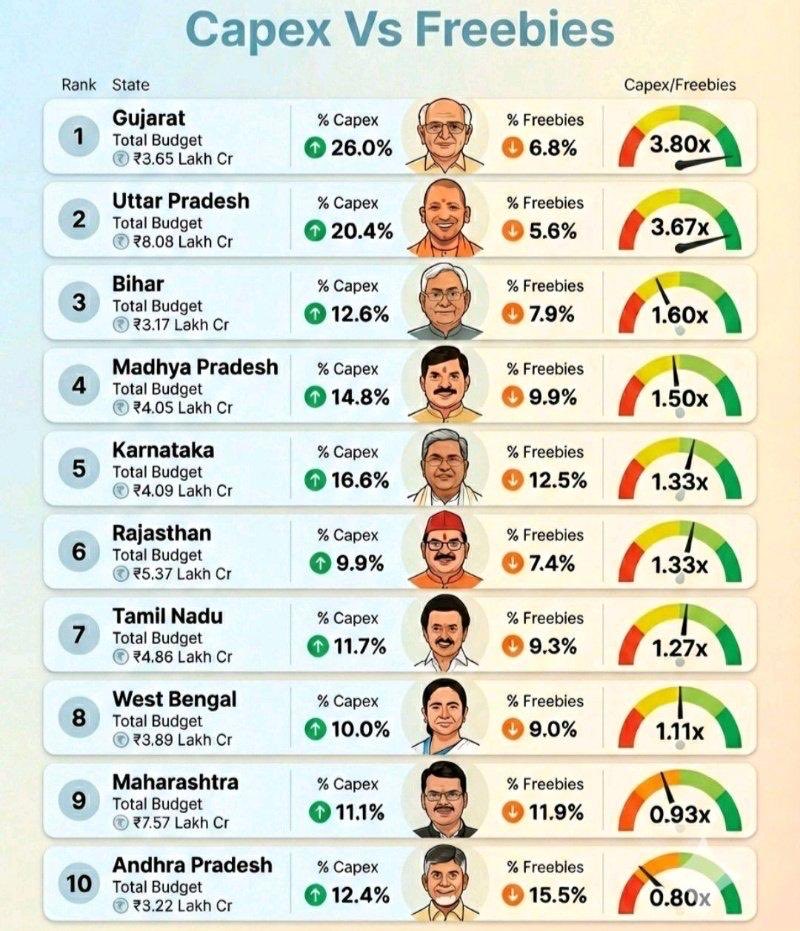
Interesting data. Surprised to see our @ncbn Babu garu way way down in ranking. Karnataka as the richest state should do better @CMofKarnataka @siddaramaiah

English
Akul Jindal, CFA retweetledi

I tried @claudeai inside powerpoint for the first time today and I am mind blown! I think the end of consultants is nearer than anyone imagined. I am really worried about what will happen to the entry level jobs in the coming years.
English
Akul Jindal, CFA retweetledi

A reporter spent a day as a gig worker and found the going hard, the conditions sharp and pay low.
What the reporter did not do was to spend a day doing what a gig worker would have done if he had not chosen to be a gig worker.
How do the working conditions & pay compare to the alternative? If the alternative was better then the person would be a fool to take up gig work.
This is the reality in any country. There are jobs that appear tedious and harsh to journalists and office workers. But at India’s stage of development we should be happy that there are jobs for honest people.
This doesn’t mean we stop caring or trying to change things for the better. It is to understand where we are on the developmental path, and realise that we can’t afford Scandinavian fashions at Indian incomes.
English
Akul Jindal, CFA retweetledi

When Azad Engineering started, the real challenge wasn't the machinery or the infrastructure—it was credibility. Who would trust critical components to a nobody operating from a shed?
Rakesh Chopdar's first 100 calls to potential customers ended in polite rejections. "Send us your company profile," they'd say, knowing full well that a one-page profile from a four-month-old company would go straight to the trash
The breakthrough came from an unexpected source. A German company, MAN Energy Solutions, was facing a crisis. Their Indian supplier for turbine airfoils had botched a critical order, and they needed replacement parts within six weeks—a timeline their regular suppliers couldn't meet.
The purchasing manager, Hans Mueller, had exhausted his options when someone mentioned "a new shop in Hyderabad that claims they can do complex airfoils.
"Mueller's call came on a Friday evening. "Can you manufacture 50 Stage-3 compressor blades for our industrial gas turbine? Inconel 718, tolerance of ±0.02mm on the airfoil profile, surface finish of Ra 0.4 microns?" The specifications would have intimidated most established manufacturers. Rakesh said yes without hesitation.
"Have you made these before?" Mueller asked, skepticism evident even over the phone.
"Send me the drawings," Rakesh replied. "Give me 72 hours for a sample."
That weekend became legendary in Azad's folklore. Rakesh didn't leave the shed for three days. He programmed the CNC machine himself, creating toolpaths that conventional wisdom said the old DMG couldn't handle. He sourced Inconel 718 bar stock by driving to three different suppliers, paying cash from his personal savings. When the machine's coolant system proved inadequate for the superalloy, he jury-rigged an additional cooling setup using aquarium pumps and ice.
Monday morning, 8 AM German time, Mueller received a courier package with a perfectly manufactured blade. Not just dimensionally correct—the surface finish exceeded specifications, the grain structure was optimal, and critically, Rakesh had identified and corrected a minor design flaw in the cooling channel that even MAN's engineers had missed.
"How did you spot this?" Mueller asked during the follow-up call.
"When you've spent enough time with airfoils, they speak to you," Rakesh replied. This wasn't mysticism—it was the intuition that comes from twelve years of handling thousands of components, understanding failure modes, and developing an almost tactile sense for how materials behave under stress.
The order was confirmed: 50 blades, €40,000, delivery in five weeks. For context, this single order was more than Atlas Fasteners' monthly revenue. But more importantly, it was validation. A German engineering giant had chosen a one-man operation in Hyderabad over established suppliers.
Delivering that first order nearly broke Rakesh. He worked 20-hour days, personally inspecting every blade, scrapping three for every one that passed his standards—standards that exceeded even MAN's requirements. He hired two more operators mid-project, training them on the fly. The final shipment went out with two days to spare, each blade wrapped like a jewel, documentation that would make aerospace companies envious.
Mueller called after receiving the shipment. "Perfect. Every single one. We have another order—200 blades, different stages. Can you handle it?"
This became Azad's growth pattern: impossible deadlines, perfect execution, exponential scaling. By the end of 2009, the 200-square-meter shed had three CNC machines and eight employees. Revenue hit ₹2 crore—modest by industry standards, but remarkable for a company that started with one man and one second-hand machine.
But what truly set Azad apart wasn't just technical capability—it was Rakesh's approach to customer relationships. Unlike typical suppliers who saw themselves as vendors, Rakesh positioned Azad as a problem-solver. When Siemens faced issues with turbine blade failures in high-temperature applications, Rakesh didn't just quote for replacements. He spent two weeks analyzing the failure modes, proposing design modifications, and even suggested alternative alloys that could extend component life by 40%.
"You think like an engineer, not a supplier," a Siemens executive told him. "That's rare."
What an amazing story!
Src – empor top , no reco
English
Akul Jindal, CFA retweetledi

Why Corporate India Refuses to Invest Despite Maximum Govt Push?
1. Instead of CapEx, Tech, and R&D investments, Indian firms are investing in stocks & bonds.
2. Stock market returns exceed Return on Assets (ROA). So, who will invest in business?
NIPFP DATA SOLVES THE PUZZLE:
Government Has Made Every Effort to Stimulate Corporate Investment
a. Providing huge liquidity
b. Multiple interest rate cuts
c. Recent GST rate cuts
d. Corporate tax rate cut from 30% to 22% (2019)
NIFPF Data Shows What’s Happening with Private Investment:
Last week, NIPFP (a research institute under the Ministry of Finance) published data that shows:
Private Sector's Rise in Financial Investments Instead of Capital Investments
a. Corporate tax rate cut in 2019 was aimed at stimulating private investment.
b. Total Assets of the companies increased due to big tax savings, but they chose to invest the surplus in financial assets (stocks, bonds, reserves, etc.) instead of investing in plant, machinery, and other physical assets.
c. This is evident from the data which shows the share of net fixed assets (productive assets) as a percentage of total assets has declined, but share of financial assets (stocks/bonds/reserves) has increased.
Outcome After the Historic Corporate Tax Rate Cut in 2019
FY19 to FY25:
a. Net Fixed Assets (capital investments, such as plant/machinery etc.) as a percentage of Total Assets: Declined from 16.5% in FY19 to 9.5% in FY25.
b. Reserves increased from 14.5% in FY19 to 20.0% in FY25.
c. Financial Investments (not capital investments) increased from 21.5% in FY19 to 24.5% in FY25.
In other words:
Making corporate tax rate lower than personal income tax did not fulfill the objective of stimulating investment. It merely boosted company balance sheets with financial assets.
Nifty 50 Returns are Higher than Return on Assets (ROA)
a. Obvious Reason: NIPFP researchers say that the obvious reason for declining corporate investment is that demand (consumption) has been weak in India. But a real-world reason must also be considered as follows:
b. Practical Reason: Average annualized return in the past decade on Nifty 50 and BSE Sensex has been in excess of 10%. In comparison, the Return on Assets (ROA), which is Net Profit as a % of Total Assets has been much lower than stock market returns.
FY13 to FY24:
In almost every year in this period (except during shocks like Covid or Russia-Ukraine war), stock market returns have significantly exceeded the Return on Assets (ROA).
This could have motivated companies to invest in financial instruments instead of investing in business activity.
NIFPF provides the following data:
Annual: ROA vs. Nifty 50 Return
FY17: 5.0% vs. 18%
FY18: 3.0% vs. 10%
FY19: 4.0% vs. 15%
FY20: 2.5% vs. -30% (Covid)
FY21: 5.5% vs. 70%
FY22: 9.0% vs. 19%
FY23: 11.0% vs. -1% (Russ-Ukr)
FY24: 13.0% vs. 28%
With these kind of returns, will you invest your money in business or in the stock market?
RBI Data Corroborates the NFPFP Analysis
RBI Bulletin (Aug 2025) shows:
Corporate Investment in FY24:
₹3.91 lakh cr
Corporate Investment in FY25:
₹3.68 lakh cr
This means from FY24 to FY25:
GDP Growth Rate: 6.5%
Private Investment: (-) 5.8%
Private investment is showing de-growth in the world’s fastest-growing major economy.
India’s GDP Trends FY13 to FY25:
An Increasingly Consumption-Driven Economy (Not Investment Driven)
India’s GDP (Expenditure Side) has 4 components:
a. Consumption (called PFCE)
b. Investment (called GCF)
c. Govt Expenses (GFCE)
d. Net Exports (Export-Import)
From FY13 to FY25:
a. Investment (Gross Capital Formation: Govt + Private: Plant, Machinery, Infrastructure, etc.) contribution in GDP has declined to FY13 levels @ 31.4% in FY25.
b. Consumption (Private Final Consumption Expenditure: food, clothing, housing, transport, healthcare, education, and services) contribution has increased from about 55% to 61.4% during the same period.
c. Net Exports are always negative -2% or -3%, while Government Final Consumption Expenditure (GFCE: salaries, pensions, etc.) hovers around 10 to 11%.
ENDQUOTE: When Stock Market Returns are More Attractive than Real Business Returns
“We do not live in an economy; we live in a Ponzi Scheme.” (A quote published in Arthur Magazine on March 15, 2009 – at the absolute bottom of the global stock market collapse.)
@arabicatrader
English
Akul Jindal, CFA retweetledi

"Now that we have the pottery wheel, most people will build their own pots and pans"
Garry Tan@garrytan
Zoho’s business would be first to be competed away by people building their own custom software built by people using @Replit @emergentlabs and @Taskade Why pay $30/seat/month for over bundled SaaS when soon even nontech ops ppl can vibe-code a custom solution in a weekend?
English
Akul Jindal, CFA retweetledi

@peter_tulip Mandating FSD is the best way to create a backlash.
Best thing is to allow FSD everywhere and let insurance companies charge lower premiums for FSD.
English