Angel Zoe retweetledi

And just wait a few more years, sadly it’s gonna get much much worse.
English
Angel Zoe
9.1K posts



Hunter Biden Returns. The White House Ghosts Me Regarding Erika… From: @RealCandaceO FOLLOW Her youtube.com/live/1QZ4X6q1D…





🇺🇸 Meanwhile in America “I won’t even sit down on a rock because the amount ***** Ticks everywhere - these guys will hunt you down” “No Alpha Gal syndrome yet, no Lyme Disease”




The functionality provided by Google's new Android System SafetyCore app available through the Play Store is covered here: security.googleblog.com/2024/10/5-new-… Neither this app or the Google Messages app using it are part of GrapheneOS and neither will be, but GrapheneOS users can choose to install and use both. Google Messages still works without the new app. The app doesn't provide client-side scanning used to report things to Google or anyone else. It provides on-device machine learning models usable by applications to classify content as being spam, scams, malware, etc. This allows apps to check content locally without sharing it with a service and mark it with warnings for users. It's unfortunate that it's not open source and released as part of the Android Open Source Project and the models also aren't open let alone open source. It won't be available to GrapheneOS users unless they go out of the way to install it. We'd have no problem with having local neural network features for users, but they'd have to be open source. We wouldn't want anything saving state by default. It'd have to be open source to be included as a feature in GrapheneOS though, and none of it has been so it's not included. Google Messages uses this new app to classify messages as spam, malware, nudity, etc. Nudity detection is an optional feature which blurs media detected as having nudity and makes accessing it require going through a dialog. Apps have been able to ship local AI models to do classification forever. Most apps do it remotely by sharing content with their servers. Many apps have already have client or server side detection of spam, malware, scams, nudity, etc. Classifying things like this is not the same as trying to detect illegal content and reporting it to a service. That would greatly violate people's privacy in multiple ways and false positives would still exist. It's not what this is and it's not usable for it. GrapheneOS has all the standard hardware acceleration support for neural networks but we don't have anything using it. All of the features they've used it for in the Pixel OS are in closed source Google apps. A lot is Pixel exclusive. The features work if people install the apps.

The functionality provided by Google's new Android System SafetyCore app available through the Play Store is covered here: security.googleblog.com/2024/10/5-new-… Neither this app or the Google Messages app using it are part of GrapheneOS and neither will be, but GrapheneOS users can choose to install and use both. Google Messages still works without the new app. The app doesn't provide client-side scanning used to report things to Google or anyone else. It provides on-device machine learning models usable by applications to classify content as being spam, scams, malware, etc. This allows apps to check content locally without sharing it with a service and mark it with warnings for users. It's unfortunate that it's not open source and released as part of the Android Open Source Project and the models also aren't open let alone open source. It won't be available to GrapheneOS users unless they go out of the way to install it. We'd have no problem with having local neural network features for users, but they'd have to be open source. We wouldn't want anything saving state by default. It'd have to be open source to be included as a feature in GrapheneOS though, and none of it has been so it's not included. Google Messages uses this new app to classify messages as spam, malware, nudity, etc. Nudity detection is an optional feature which blurs media detected as having nudity and makes accessing it require going through a dialog. Apps have been able to ship local AI models to do classification forever. Most apps do it remotely by sharing content with their servers. Many apps have already have client or server side detection of spam, malware, scams, nudity, etc. Classifying things like this is not the same as trying to detect illegal content and reporting it to a service. That would greatly violate people's privacy in multiple ways and false positives would still exist. It's not what this is and it's not usable for it. GrapheneOS has all the standard hardware acceleration support for neural networks but we don't have anything using it. All of the features they've used it for in the Pixel OS are in closed source Google apps. A lot is Pixel exclusive. The features work if people install the apps.


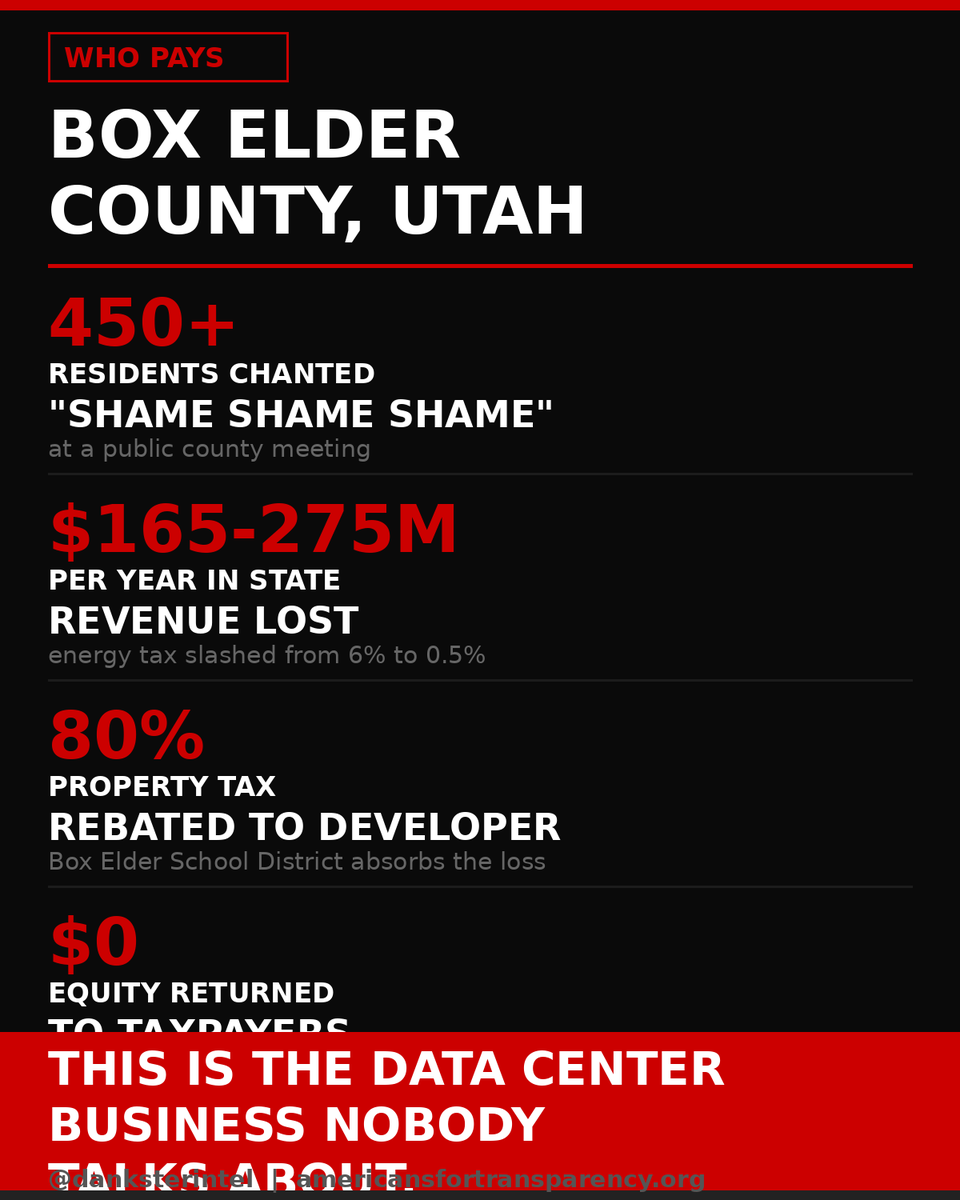
🚨 KEVIN'S NETWORK IS THE SURFACE. MIDA IS THE MACHINE. MIDA is a 2007 Utah law that lets 8 unelected people fast-track a $100 BILLION AI city in Box Elder County, sitting right next to a US Air Force base. Here is what those 8 people are allowed to do: Skip the utility regulator. No public hearing. Cut industrial energy tax from 6% down to 0.5%. Wipe out 100% of personal property tax. Hand the developer 80% of property tax back as a rebate. Bypass zoning. Issue bonds. Levy taxes. The developer is Kevin O'Leary. He lives in Abu Dhabi. The money is Emirati. MGX, the UAE sovereign AI fund, put $7 BILLION into Trump's Stargate announcement in January 2025. Same fund. Same Gulf ecosystem. Same playbook. Here is what Utah loses: $165 to $275 MILLION a year in state revenue. 80 billion cubic feet of natural gas burned every year. Your home value. Your water. Your sleep. Your air. Here is what the Pentagon loses: Hill Air Force Base now shares a fence line with a foreign-funded hyperscale data center inside protected military airspace. 8 board members. 5 picked by the governor. 1 Senate President. 1 House Speaker. 1 non-voting. Power flows down. Money flows up.