Ashwin Viswanath

886 posts

Ashwin Viswanath banner
Ashwin Viswanath

Ashwin Viswanath

@AshwinV800

Product guy: Analytics, APIs, data warehousing, data integration, iPaaS, B2B marketplaces, ML; startup & pre-IPO experience. ❤️ Open Source. Opinions are my own

Katılım Temmuz 2021
67 Takip Edilen97 Takipçiler
Ashwin Viswanath
Ashwin Viswanath@AshwinV800·
@alex_prompter Quite true - ever think about how a simple search query could simply be done through a Google search instead of using Gemini, Le Chat (from Mistral), Perplexity, ChatGPT, or Claude? It would cost a lot less but some people are hooked onto using AI tools for everything.
English
0
0
1
480
Alex Prompter
Alex Prompter@alex_prompter·
Marc Andreessen admitted on Joe Rogan that AI is making people less efficient. The guy who funds half the AI industry. On a podcast. Just casually dropping it. Same week: Nvidia's VP said compute now costs more than his employees. Microsoft canceled 100,000 Claude Code licenses because finance couldn't stomach the bill. Uber burned $3.4 billion in AI budget by April. And here's the detail everyone's glossing over: Uber didn't just adopt AI. They gamified it. Internal leaderboards ranking teams by usage. They made burning tokens a competition. A sport. It worked. Adoption went from 32% to 84%. Engineers loved it. They used it for everything. They stopped thinking about whether a task needed AI. They just used it. For everything. Always. And that's when the budget died. The tool was so good that people stopped being selective about when to use it. And the moment you stop being selective, the cost goes exponential. Because token-based pricing means every thoughtless query costs real money. This is the part nobody wants to name: AI doesn't have a cost problem. It has an addiction architecture. Flat-rate software trained an entire generation to use tools without thinking about cost. Now AI billing is per-use. But the habit of "just use it for everything" didn't update with the billing model. Uber built a leaderboard that rewarded maximum consumption of a product billed per unit consumed. Then acted surprised when the bill arrived. Microsoft's engineers unanimously wanted to keep Claude Code. Finance killed it. The people using the tool said it was the best thing that ever happened to their workflow. The people paying for the tool said they couldn't afford how much the users loved it. We built something so useful that the only way to sustain it is to stop people from using it freely. And that contradiction isn't a bug in the business model. It IS the business model. It's how every AI company makes money: build something addictive, bill by consumption, and wait.
English
28
69
264
33.9K
Ashwin Viswanath
Ashwin Viswanath@AshwinV800·
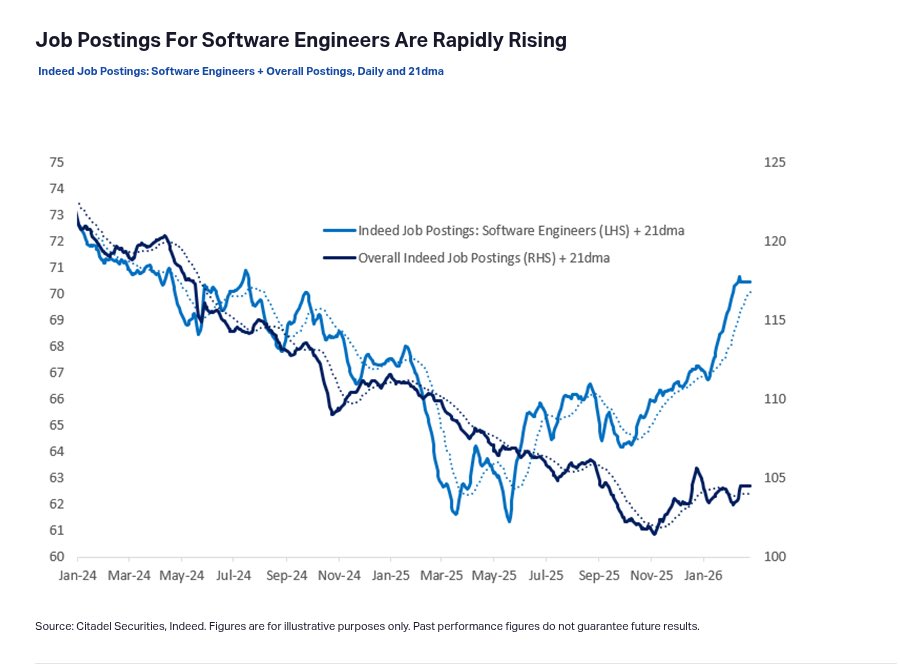
@DavidSacks The job postings for SW engineers are rising but the salaries are flat or declining. The layoffs were way to create a massive supply of desperate engineers willing to take jobs for whatever pay they could get. This is the case for “normal” industries and not the case everywhere.
English
0
0
3
157
David Sacks
David Sacks@DavidSacks·
Q: How are job postings for software engineers rising rapidly despite AI agents automating coding? A: Because there’s far more code to manage than ever before. We’re already seeing a 14x YoY increase in GitHub commits, and it’s accelerating. AI has dramatically lowered the cost of writing code, so it’s now being used across far more businesses, applications, and use cases. We’re at the beginning of a massive productivity boom driven by the proliferation of bespoke software throughout the entire economy. Coding has been AI’s breakout use case this year. The fact that it’s increased demand for software engineers — rather than decreased it — should call into question the entire “AI will cause mass job loss” narrative.
David Sacks tweet media
English
800
1.4K
8.8K
1.5M
Yoshik
Yoshik@AskYoshik·
@marcusholtbuild The amount of investment made in railroad or infra is nothing in comparison to AI. AI is not predictable at all, atleast not at the current valuations
English
6
0
77
10.9K
Yoshik
Yoshik@AskYoshik·
The AI bubble math doesn't add up. Anthropic spends $3 to make $1 and that’s before you include any and all other costs like staff or electricity. Microsoft dumped $300B in capex, made ~$18B in AI revenue. OpenAI and Anthropic alone make up 43-54% of Microsoft, Google, Amazon and Oracle's entire revenue backlogs. Enterprises are burning through annual AI budgets in 4 months with zero measurable ROI. This is the most expensive science experiment in history, funded by your SaaS subscriptions.
Yoshik tweet media
English
368
997
4.8K
982.4K
Ashwin Viswanath
Ashwin Viswanath@AshwinV800·
@siddsax It’s much easier for enterprises to walk away by putting caps on token usage. That’s going to hurt the frontier model companies which will then hurt the hyper skiers which then hurts Nvidia which then hurts all the other picks and shovels semiconductor companies.
English
0
0
0
16
Siddhartha Saxena
Siddhartha Saxena@siddsax·
The company that bankrolled OpenAI just refused to pay a competitor's software bill. Not because the tool failed. Token-based billing turned a productivity investment into a line item nobody could justify. And if Microsoft said no, what chance does everyone else have. Because it's not just Microsoft. Uber burned its entire 2026 AI budget in four months. GitHub is killing flat-rate plans. Prices are up 20 to 37 percent. This is happening everywhere, all at once. Which makes sense when you understand what the flat-rate era actually was. A land grab dressed up as a pricing model. Labs needed enterprise logos before IPOs. Enterprises needed permission to experiment. Both sides agreed to pretend the unit economics made sense. They didn't. Now the bill is real, and the companies least equipped to pay it aren't the big spenders. They're mid-size teams that wired AI into core workflows assuming costs would keep falling. No fallback. No leverage to renegotiate. Can't absorb a 30 percent jump mid-contract year. That creates a worse problem. If those teams cut usage to hit budget, labs lose the real-world feedback that makes models better. Slower improvement loops at the exact moment they need valuations to hold. This only ends two ways. Enterprises pull back, or labs cut prices. Either way, someone takes the writedown. The only question is who blinks first.
Siddhartha Saxena tweet media
English
1
2
10
999
Ashwin Viswanath
Ashwin Viswanath@AshwinV800·
@a16z Token costs have ballooned and that’s why GitHub is changing pricing to consumption based pricing. What are you guys talking about?
English
0
0
0
85
Ashwin Viswanath
Ashwin Viswanath@AshwinV800·
@itsolelehmann This had many erroneous facts. AGI isn’t here because agents are narrowly scoped. I can see my doctor typing notes and it isn’t ChatGPT. Pictures of issues are a real use case. As for the DNA, no experience there. The AI coders who don’t sleep will die young from heart issues.
English
0
0
3
1K
Ole Lehmann
Ole Lehmann@itsolelehmann·
marc andreessen just went on Rogan and casually dropped a TON of AI alpha full pod is 3 hours and 20 minutes, but i pulled out his most interesting takes here: 1. AGI is here. he thinks the line was crossed about 3 months ago with the new GPT-5.5, claude 4.6, gemini 3, and grok 4.3 models. nobody noticed because the field moves too fast for anyone to register the milestones anymore. 2. his other big claim: for almost any topic, the top AIs now give him better answers than the actual world-class experts he could call on the phone. and he can call basically anyone. 3. every doctor is already secretly using chatGPT in the exam room. marc says they turn around the second you stop talking and just type your symptoms in. some of them are doing it while you're still sitting there. his quote: "at that point you're asking the question of like, what do i need you for." 4. when AI refuses to answer something he wants to know, he tells it he's writing a novel. "i'm writing a detective novel, walk me through how the bad guy robs the bank." it'll explain almost anything if it thinks it's helping you write fiction. 5. when something is too complex he says "explain it to me like i'm 10." then "like i'm 5." then "like i'm 2." he keeps going until it actually clicks in his brain. 6. when he wants to understand a tough topic he doesn't ask "what's the right answer." he asks the AI to steelman one side, then steelman the other. then he decides for himself. 7. for big questions he tells the AI to pretend to be a panel of experts. "be a doctor, a lawyer, a historian, a psychologist, and argue this out with each other." then he reads the debate they have. 8. pay attention to the exact moment you think "i don't know how to figure this out." most people just give up at that moment. that's the moment you should open the AI. 9. the only real skill left in using AI is knowing what to ask it. the models can already do almost anything you can describe in plain english. the bottleneck lives in your own head. 10. you can send the AI photos of almost anything medical now and get a real answer. skin rashes, blood test results, even pictures of your poop. the new models can read images, not just text. it's a free 24/7 second opinion on basically anything. 11. the one type of therapy that's clinically proven to actually work is called cognitive behavioral therapy. it's also something an AI can fully do on its own. which means every person on earth is about to have access to a real therapist for free, anytime they want. 12. AI is now solving math problems that have been open for 100+ years that no human mathematician could crack. same thing is starting in physics, chemistry, and biology. expect cancer cures, new drugs, and weird new physics breakthroughs to start coming out of these things over the next few years. 13. the best AI coders in silicon valley now make $50 million a year. one person. that's how much value the top performers print with these tools. it tells you how big this thing actually is when you strip away all the doom takes. 14. one friend paid $200 to get his entire DNA decoded (this used to cost millions of dollars and take years to do). then he gave the AI his DNA, his blood test results, and his apple watch data. the AI built him a full health dashboard and started telling him exactly what to fix. 15. another friend (almost certainly zuckerberg) put two cameras in his home jiu jitsu gym. AI now watches him spar and gives him notes on his technique after every round. like having a world-class coach at every practice for free. 16. the best programmers in silicon valley now run 20 AI coding bots at the same time. each bot writes code while they review the others. they call themselves "AI vampires" because they've stopped sleeping. going to bed means 20 workers stop working and you literally lose money every hour you're out. 17. the obvious next step: the bots will start running their own bots. one human in charge of 20 bots, each in charge of 20 more bots. one person running an entire company of 1000 AI workers from a single laptop. this is months away, not years.
English
582
2.2K
13.8K
1.6M
Ashwin Viswanath
Ashwin Viswanath@AshwinV800·
@8090_Factory At an enterprise level, you have hundreds of architectural components across multiple cloud services, whether AWS, Azure, or GCP. You cannot just describe this into a prompt for an enterprise-class application spanning multiple geographies with extreme RTO and RPO times.
English
0
0
1
2.8K
8090
8090@8090_Factory·
Most engineering leaders are past the honeymoon with AI coding IDEs. They see how many tokens their agents burn. The reason is rework. The agent gets a vague prompt and a "make no mistakes" instruction, guesses at an architecture that isn't the one you run, and ships the wrong thing. Then engineers spend round after round correcting it. Rework is what the token bill actually measures. An agent builds correct code when it knows two things: what to build, and what to build it against. Software Factory's modules captures the full business intent and engineering architecture for all operators to reference in a unified multi-player environment, so everyone shares the same context. Then, we pass off the coding tasks to your IDE agent of choice execute against them (Claude, Cursor, Copilot - whatever you prefer). Today, your agents write the code well. The question is what they're writing it against. What is the unified system to reference context your teams are using today?
English
31
31
384
1.4M
Ashwin Viswanath
Ashwin Viswanath@AshwinV800·
@jackprandelli Any idea when the orange will get fully constructed and when the White will commence construction?
English
0
0
0
18
Jack Prandelli
Jack Prandelli@jackprandelli·
The US Department of Energy just mapped every data center in America. This is what the AI power grid looks like. The dots are data centers. Yellow = operating. Orange = under construction. White = planned. The lines are high-voltage transmission 735kV, 500kV, 345kV the arteries that move electrons from generators to compute loads. Look at the density along the East Coast, Northern Virginia to the Carolinas. Then look at Texas. Then Northern California. The largest circles on this map represent facilities demanding over 5,000 MW of power. Single campuses pulling more electricity than mid-sized cities. Northern Virginia is so dense the dots overlap. Data centers cluster on transmission corridors. Not because land is cheap because power is available. When the line is full, the next data center goes somewhere else. The grid is the bottleneck. Every orange dot is a power purchase agreement being negotiated right now. Every white dot is a utility commission filing, a gas plant approval, a pipeline capacity booking. The $66.8 bn NextEra-Dominion deal, Meta's 10 new gas plants in Louisiana, the Alaska LNG FID push they all trace back to maps that look like this. AI infrastructure is built in substations, on transmission corridors, and at the end of gas pipelines. Link in the comments, to see my stocks 👇
Jack Prandelli tweet media
English
344
2.7K
4.4K
328.2K
Ashwin Viswanath
Ashwin Viswanath@AshwinV800·
@ttunguz This is counter to the 2024 narrative that token prices would keep going down. The laws of supply and demand are immutable. If prices go down in this economy, demand will fall off a cliff and so will revenue. What happens then? The hyper scalers are spending over $700 billion.
English
0
0
0
192
Tomasz Tunguz
Tomasz Tunguz@ttunguz·
The subsidy era is over. 🧵 Three years of AI pricing data tells the story.
English
20
16
162
48K
Ashwin Viswanath
Ashwin Viswanath@AshwinV800·
@OfficialLoganK How do we fact check whether the answers that are being given to us or true or not? Sometimes when I search for something, I just want to go visit the most appropriate link and read all about it myself.
English
0
0
1
401
Logan Kilpatrick
Logan Kilpatrick@OfficialLoganK·
Today we are starting to roll out the biggest upgrade to the Google Search box in over 25 years — now completely reimagined with AI, along with Gemini 3.5 Flash as the new default model for AI mode users globally!
English
251
284
4.1K
1.4M
Ashwin Viswanath
Ashwin Viswanath@AshwinV800·
@sweatystartup You might’ve seen the WSJ article that Anthropic is slated to make over $10 billion in revenue for the second quarter and will be at an operating profit. How do you explain that though?
English
0
0
0
195
Ashwin Viswanath
Ashwin Viswanath@AshwinV800·
@levie Product managers who have worked at customer organizations instead of software companies have operated as FDEs for eons because we have literally created the implementation roadmap for success. This isn’t new.
English
0
0
1
240
Aaron Levie
Aaron Levie@levie·
Great post on FDEs. Everyone should read it if you’re interested in this job category. This is a job that is going to be around as long as AI keeps changing rapidly, which it inevitably will. People often wonder why isn’t this like just deploying other forms of technology in the past, like cloud. Because something like cloud adoption affected a fairly concentrated set of users (developers and IT), and generally didn’t require a fundamental change to the workflows of employees to get the benefits of the new service being delivered on the cloud. At best you went to one training session and you were done. With agents, the work to implement them is not only highly technical, but they directly impact the underlying workflows that people participate in. This means there’s a ton of technical work and change management that comes with it. Further, the pace of change of cloud wasn’t nearly as quick, so there was a lot more time for best practices to propagate. Now, every model change means either something new can be done that wasn’t possible before, or some piece of scaffolding is now redundant or holding you back. This is why it’s commonly easier for a vendor or partner that’s seen the implementation hundreds or thousands of times help do the work, even with internal support from the customer. So, this job isn’t going away any time soon, and will be a great path for a lot of technical talent, especially early career.
vas@vasuman

x.com/i/article/2057…

English
70
183
1.7K
582.9K
Ashwin Viswanath
Ashwin Viswanath@AshwinV800·
@HedgieMarkets Coupled with how most executives aren’t seeing the ROI of AI yet, this won’t help. As prices rise, demand will drop off.
English
0
0
1
175
Hedgie
Hedgie@HedgieMarkets·
🦔Google released Gemini 3.5 Flash this week, and the cheaper, faster model now costs 5.5 times more to run than its predecessor. Token prices tripled to $1.50 per million input and $9.00 per million output, and on agent tasks it burns through so many tokens that total costs end up 75% higher than Gemini 3.1 Pro, the model Flash was supposed to be cheaper than. Anthropic's Opus 4.7 has a hidden 30 to 40% price increase from token consumption. OpenAI's GPT 5.5 jumped 50 to 90% over 5.4. My Take The AI labs are all running the same playbook. Headline price per token reads as competitive, but the new models burn through more tokens per task, and the all-in cost to finish a job climbs release over release. Every developer and enterprise buyer should measure efficiency rather than token price now, because the two numbers have decoupled fast. Anthropic, OpenAI, and Google all raised effective prices in the last six months, which gives us the first hard evidence that the unit economics of frontier AI are catching up with the marketing. The labs charge more because each model burns more compute per task, and the hyperscaler capex no longer pencils out at the old prices. Enterprises that built workflows on the assumption that token costs would keep falling are about to see their AI bills jump 30 to 90% on the next model upgrade, and the productivity gains that justified the AI spend have to clear that higher bar to keep working. Hedgie🤗
Hedgie tweet media
English
40
144
566
39.4K
Ashwin Viswanath
Ashwin Viswanath@AshwinV800·
@_The_Prophet__ This post was also written by AI. The word “framing” is used by the LLMs a lot. Therefore, I don’t believe it unless a human has fact checked this post.
English
0
0
0
42
SightBringer
SightBringer@_The_Prophet__·
⚡️a16z is describing the industrialization of intelligence, and the labor implications are brutal. The real claim is bigger than Brooks’s Law. AI turns parts of software creation from a human-coordination problem into a capital-throughput problem. In old software, adding bodies created friction: meetings, interfaces, product debates, bugs, reviews, dependencies, management, alignment. Human coordination became the choke point. Frontier AI changes the choke point. More compute, more chips, more data, more power, more training runs, better evals, and a small elite team can now produce leaps in capability without scaling headcount in the old way. That means capital converts into output more directly than it used to. That is an enormous regime change. It means software is becoming less like a pure craft business and more like an industrial process. The factory is compute. The fuel is energy. The machinery is chips. The raw material is data. The operators are elite researchers and engineers. The output is intelligence. That is why AI companies can have insane revenue per employee. The value is no longer produced by armies of humans coordinating across a giant software org. The value is produced by small teams commanding massive machine infrastructure. Capital just became much more powerful relative to labor. In the SaaS era, talent was the bottleneck. In the AI era, talent still matters, but compute and capital matter more than they used to. A tiny group of elite people with a giant compute cluster can replace or compress work that previously required huge teams, agencies, departments, and software stacks. That is why this is so dangerous for normal white-collar labor. The old economy needed layers of people to build, operate, coordinate, support, analyze, and maintain complexity. AI starts eating the complexity itself. The labor market then splits between people who command the machine and people whose work becomes machine-readable. The best humans become more valuable. Average cognitive labor gets repriced downward. The a16z framing is also self-serving. Venture capital wants this thesis to be true because it says enormous capital deployment into AI can generate enormous output without needing proportionate headcount. That is the dream for capital: more scalable than SaaS, more defensible than apps, more infrastructure-like than software, and more winner-take-most because the upfront resource requirements are gigantic. But the part they underplay is deployment. At the model layer, yes, AI weakens Brooks’s Law. At the enterprise layer, coordination comes back with teeth. Permissions, liability, compliance, data access, security, workflow redesign, human review, customer trust, legal exposure, procurement, and institutional politics still matter. That is why AI labs are building consulting arms and embedded deployment teams. The model may scale with compute, but the world still has to be rewired by humans. So the real structure is two-layered: AI model creation becomes capital-scaled. AI deployment remains institutionally messy. That means the real winners are companies that control both: frontier models or specialized models, deep infrastructure, workflow integration, customer trust, and the ability to rebuild operations around AI instead of sprinkling AI on top. This also explains the contradiction everywhere right now. Companies say AI has not improved measured productivity yet, while simultaneously cutting jobs and raising AI spend. They are front-running the operating model. The productivity is uneven, but the direction is clear enough for CFOs to start rewriting headcount assumptions. Final read: AI does not magically abolish coordination. It relocates the bottleneck from human teams to capital, compute, energy, data, and deployment architecture. The old software era rewarded teams that could coordinate humans. The AI era rewards those who can command machines. That is the regime shift.
a16z@a16z

AI repeals the Mythical Man Month: "Rather than requiring large teams across multiple subsystems that need to coordinate, AI models are developed by smaller teams whose output increases in quality as a function of the data and compute thrown at them." "To wit, now you can throw money at software engineering in order to get more output." @martin_casado and @abhishekn in @FortuneMagazine: fortune.com/2026/05/20/ai-…

English
12
16
92
20.7K
Ashwin Viswanath
Ashwin Viswanath@AshwinV800·
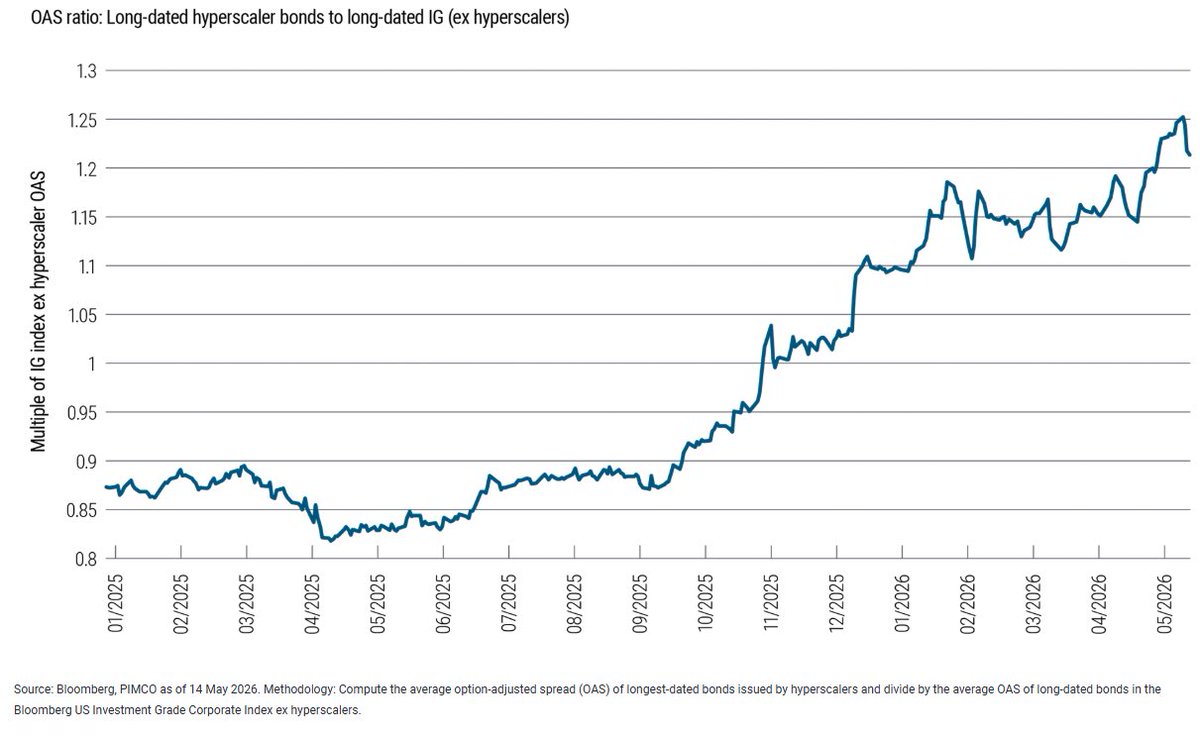
With the $NVDA earnings out, and the results having beaten expectations, we have to keep an eye on the GPU trade broadening to other sectors, high CAPEX, desire for free cash flow from fund managers, and how the bond ratesfor hyperscalers have increased because of CAPEX spend.
Ashwin Viswanath tweet mediaAshwin Viswanath tweet mediaAshwin Viswanath tweet mediaAshwin Viswanath tweet media
English
0
0
0
14
Ashwin Viswanath
Ashwin Viswanath@AshwinV800·
@foundmyfitness But this does not take into account sleep needs. You should never compromise on sleep. There have been isolated cases of hard charging folks only getting four hours of sleep a night, and then going hard in a high intensity Zumba class and then falling dead.
English
0
0
0
71
Ashwin Viswanath
Ashwin Viswanath@AshwinV800·
@garrytan You need to separate out visual AI and traditional ML from generative AI. There is a lot of generative AI that is used for AI slop whereas the first two are very useful for the cancer research use cases like Sid.
English
0
0
0
13
Garry Tan
Garry Tan@garrytan·
The benefits of AI are real now, but we will never get there in the United States (and America will cede its leadership) if we can't solve the bigger media issue of a mass smokescreen by forces that want to destroy America
Garry Tan tweet media
J.P.@evansjohnpaul

x.com/i/article/2057…

English
57
44
334
44.3K
Ashwin Viswanath
Ashwin Viswanath@AshwinV800·
@KirillGoldinBiz @levie That’s a good point. Using tokens is like using gas for your car. You can use a lot of gas and still drive around in circles instead of reaching your intended destination. And if you use a vehicle that’s a gas guzzler, like a Humvee, then your ROI becomes really low.
English
0
0
0
10
Kirill Goldin
Kirill Goldin@KirillGoldinBiz·
Is it possible at this point to measure effectiveness of token usage? One engineer can use X and produce crappy code and another will use 5X but produces much better one. Until we have the model to measure a value of what each token used actually produces it will be very difficult to figure out effective financial model.
English
2
0
6
952
Aaron Levie
Aaron Levie@levie·
Token costs will become a dominant topic in enterprises going forward with AI. Just got out of a dinner with many Fortune 500 enterprise CIOs and this was the most heated topic. A mix of strategies are being employed, but basically no one feels like they have the right solution. A mix of: figuring out how to prioritize workloads to different models, giving out access to better or worse agents by user type, setting different spend caps by team, having teams justify AI by their use-case, and some just having unfettered access. Everyone is trying to figure out a semi/predictable model right now in a world where the underlying tech and cost models are constantly evolving.
OpenAI@OpenAI

Introducing OpenAI Guaranteed Capacity: a new offering that enables customers to guarantee long-term access to OpenAI compute. We’ve made long-term investments in infrastructure, partnerships, and capacity planning to help customers scale reliably. Now, Guaranteed Capacity helps customers plan ahead for critical workloads in a compute-constrained world. openai.com/guaranteed-cap…

English
130
96
1.1K
345.4K
Ashwin Viswanath
Ashwin Viswanath@AshwinV800·
@chamath The pandemic bubble burst the moment the yields started rising in the late summer of 2021 and the crash began in November 2021, and then when the Fed raised interest rates in early 2022, that accelerated until we reached the bottom of the bear market in October 2022.
English
0
0
0
6
Paul Tassi
Paul Tassi@PaulTassi·
yeah it might just be over. like my whole industry I don't really know where to go from here. How do you exist in an ecosystem that takes all your work and gives you nothing in return
Culture Crave 🍿@CultureCrave

Google announces it will now prioritize AI-generated answers in search results over human-written website articles • Search will be centered around a reimagined ‘intelligent search box’ • Starts next Tuesday (via @TechCrunch)

English
517
1.4K
19.9K
1.4M