Austin Baraki, MD

3.2K posts

Austin Baraki, MD

Austin Baraki, MD

@AustinBaraki

Internist, FACP, Clinical Assoc Prof / Coach @BarbellMedicine / Doc @joinvineyard / Trained @evmsedu @uthsaim

El Paso, TX Katılım Kasım 2012
636 Takip Edilen4.9K Takipçiler
Austin Baraki, MD retweetledi

Scott Dietrich
Scott Dietrich@PCC_PharmD·
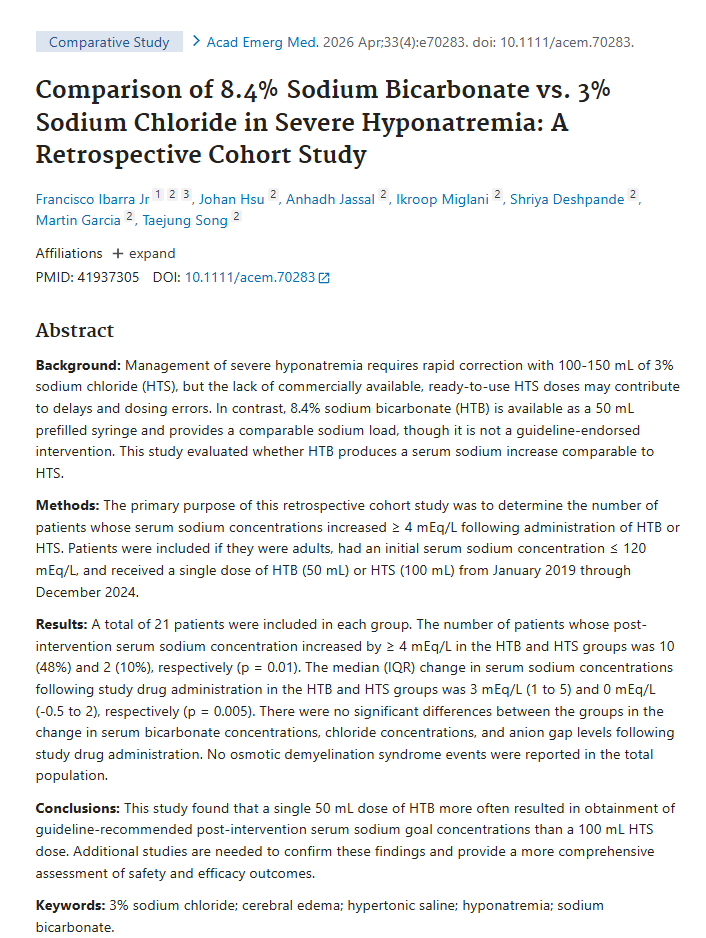
Cool study comparing 50 ml of bicarb vs 100 ml of 3% HTS for hyponatremia. @pulmcrit was talking about this forever ago, nice to see someone do a study on it bit.ly/4cgLTSu
Scott Dietrich tweet media
English
2
49
225
31.8K
Austin Baraki, MD retweetledi
JAMA
JAMA@JAMA_current·
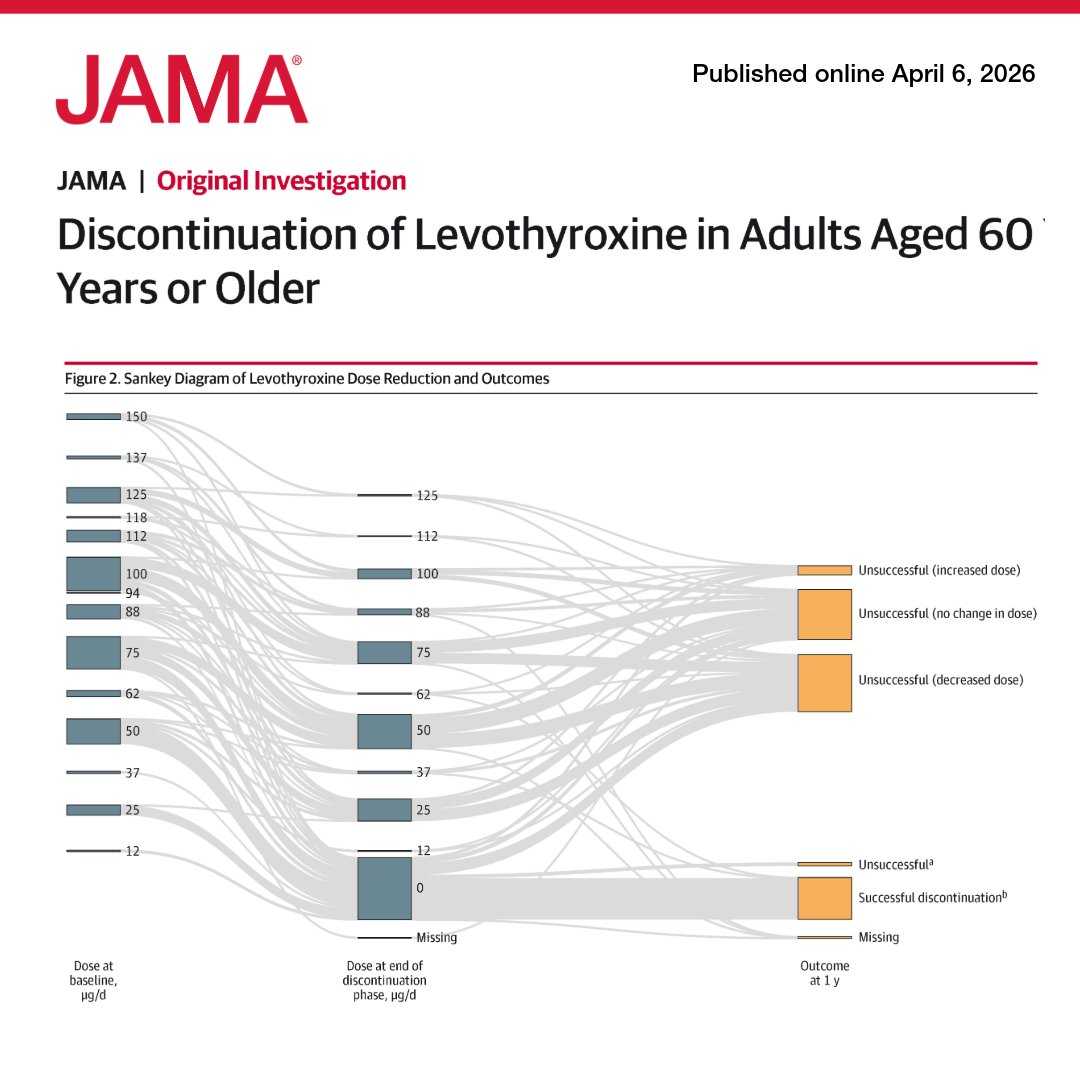
In adults ≥60 years, 26% discontinued levothyroxine while maintaining thyroid function, with 64% success for doses ≤50 μg/d, and no clinically important changes in thyroid-related symptoms. 🧵 ja.ma/41TS48I
JAMA tweet media
English
6
113
383
87.1K
Austin Baraki, MD retweetledi
Jen Can NuSH
Jen Can NuSH@JCanNuSH·
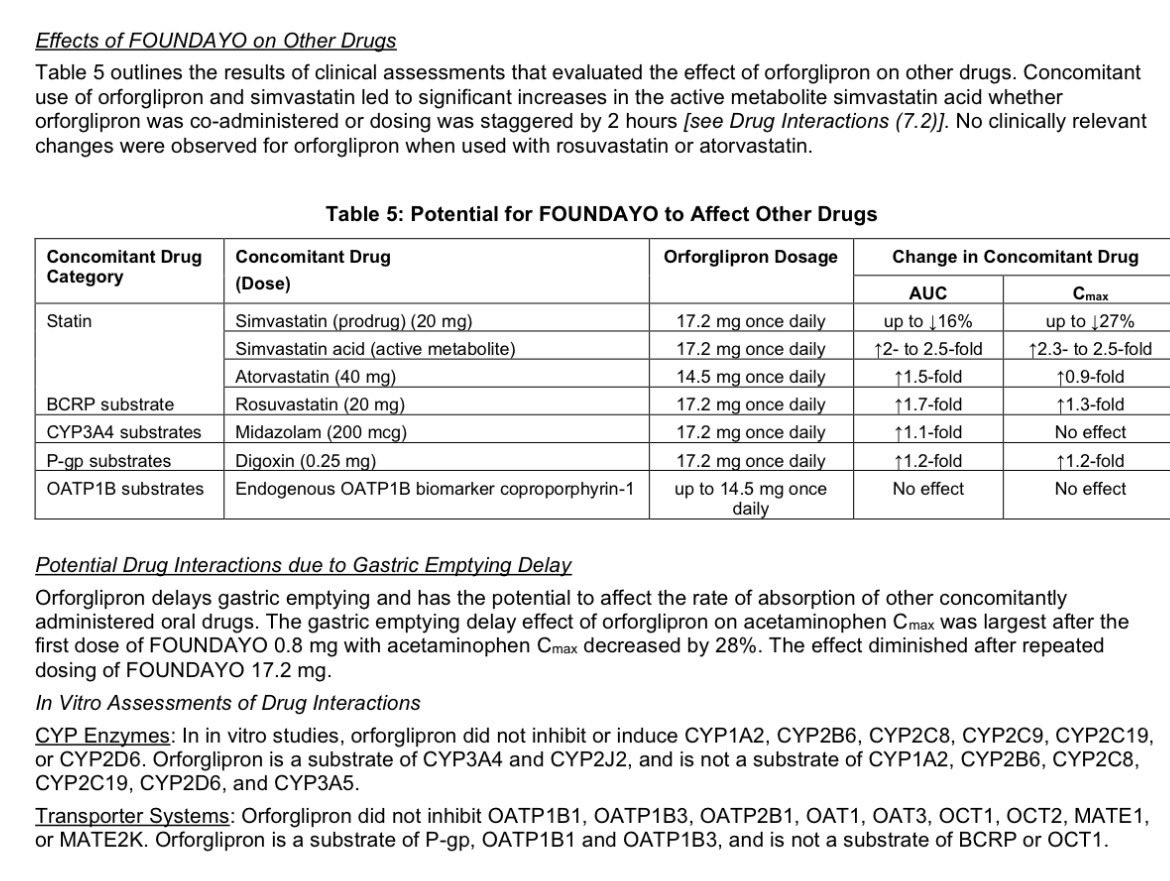
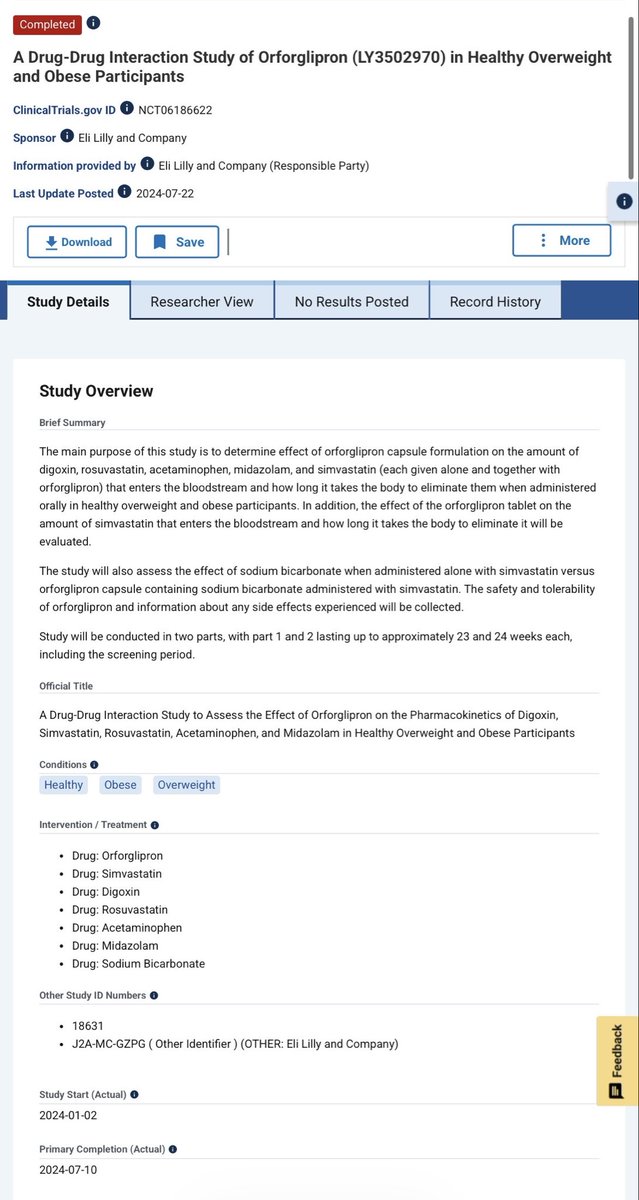
🛎️Diving into the simvastatin (Zocor) guidance on orforglipron (Foundayo). 🕵️‍♀️ Outline: 1️⃣ How does this change how people take simvastatin? 2️⃣ Why do we think the orforglipron capsule causes this effect on simvastatin? 3️⃣ Does simvastatin have issues with other meds? 1️⃣ The Foundayo prescribing information directs users to take no more than 20mg of simvastatin daily. This is because taking orforglipron can cause the amount of simvastatin acid to double in a patient’s system on the max dose of orforglipron. So, taking 20mg is equivalent to a “normal” 40mg dose, which is, incidentally, the maximum dosage of brand name simvastatin (Zocor) recommended by the manufacturer. (An 80 mg generic dose of simvastatin does exist but is generally advised against due to myopathy/rhabdomyolysis on higher dosages.) So a patient on 40mg simvastatin could switch to 20mg simvastatin taken concomitantly with orforglipron and essentially end up with the same effective dose as their original 40mg dose. (As a BETTER option, they could switch to a different, far more effective statin, like rosuvastatin (Crestor).) 2️⃣ Even though simvastatin and orforglipron are both CYP3A4 and OATP1B1 substrates, it doesn’t appear this is the actual source of the issue with simvastatin. Tests to see if orforglipron was inhibiting either CYP3A4 or OATP1B1 showed that it either had no effect or marginal effect on either, so the issue with simvastatin likely stems from a separate issue. This also does not appear to be an overloading issue of CYP3A4 or OATP1B1, as the effect is in one direction (simvastatin does not meaningfully alter orforglipron exposure). Instead, it’s possible that issue is that excipients (not the orforglipron molecule itself) cause issues with the uptake of simvastatin acid into the system, making it more potent. Lilly ran a study testing administering simvastatin with orforglipron (tablet and capsule versions) along with just administering simvastatin with sodium bicarbonate alone (NCT06186622). This demonstrates that they were potentially looking at a pH change from one of the excipients in the capsule and tablet as a source for the issue. (They also tested interactions with other common statins in the same trial. Notably, simvastatin is the only statin that they give a warning about in the Foundayo prescribing information.) Further evidence for the excipient hypothesis (over another mechanism) from Grok: ▪️The change is highly specific: simvastatin acid (the active metabolite formed by esterase hydrolysis of the lactone prodrug) increases 2- to 2.5-fold, while parent simvastatin (the inactive lactone) slightly decreases. This pattern is notwhat would be expected from CYP3A4 saturation, competitive inhibition, or simple substrate overload. ▪️An alkaline excipient like sodium bicarbonate (or the sodium carbonate anhydrous used in the approved tabletformulation) can raise local GI pH. This could plausibly enhance the hydrolysis of simvastatin’s lactone ring to the acid form or alter its solubility/absorption in a way that selectively boosts the active metabolite—without involving CYP enzymes at all. 3️⃣ Do other meds modify how much simvastatin you should take? YES. Lomitapide, Verapamil, Diltiazem, Dronedarone, Amiodarone, Amlodipine, and Ranolazine all have limits on how much simvastatin should be taken, for similar reasons. $LLY
Jen Can NuSH tweet mediaJen Can NuSH tweet mediaJen Can NuSH tweet mediaJen Can NuSH tweet media
English
3
2
14
1.4K
Paul Saladino, MD
Paul Saladino, MD@paulsaladinomd·
I believe this sort of a transformation is much more sustainable long term than Reta, Ozempic, Tirza etc.. These peptides work for weight loss, but you won't correct the underlying cause (garbage food, lack of discipline) and you'll gain the weight back when you stop.
holisticbaddie@holisticbaddie

Took me 10 months to unfat myself and I took no Reta. Learned a lot about myself along the way and endured the power of discipline. It sucks but much more rewarding than taking a fat drug or peptide.

English
61
8
296
117.1K
Austin Baraki, MD retweetledi
Beverly G. Tchang, MD
Beverly G. Tchang, MD@BevTchangMD·
Great systematic review of 36 studies finds no consistent signal for fetal harm with #GLP1 exposure in the preconception or pregnancy time period. 👉 Sample size included over 2 million patients/participants/charts 👉 8 studies were semaglutide-specific, none were tirzepatide-only, 18 evaluated other specific GLP-1RAs (liraglutide n=7, dulaglutide n=6, exenatide n=5), 3 were mixed multi-agent GLP-1RA datasets (2 including tirzepatide), and 7 large observational/review studies did not specify the individual GLP-1RA agent 👉 Few studies (4) focused on #obesity only, without #diabetes #prediabetes or #PCOS
Michael Mindrum, MD@MichaelMindrum

1/3: Systematic review of 36 studies on GLP-1 RA and GLP-1/GIP agonist exposure in pregnancy and lactation. Bottom line: no consistent signal for major congenital malformations with periconceptional/early-pregnancy exposure in adjusted analyses. doi.org/10.1111/dom.70…

English
2
6
33
7.2K
Austin Baraki, MD retweetledi
Keith Siau
Keith Siau@drkeithsiau·
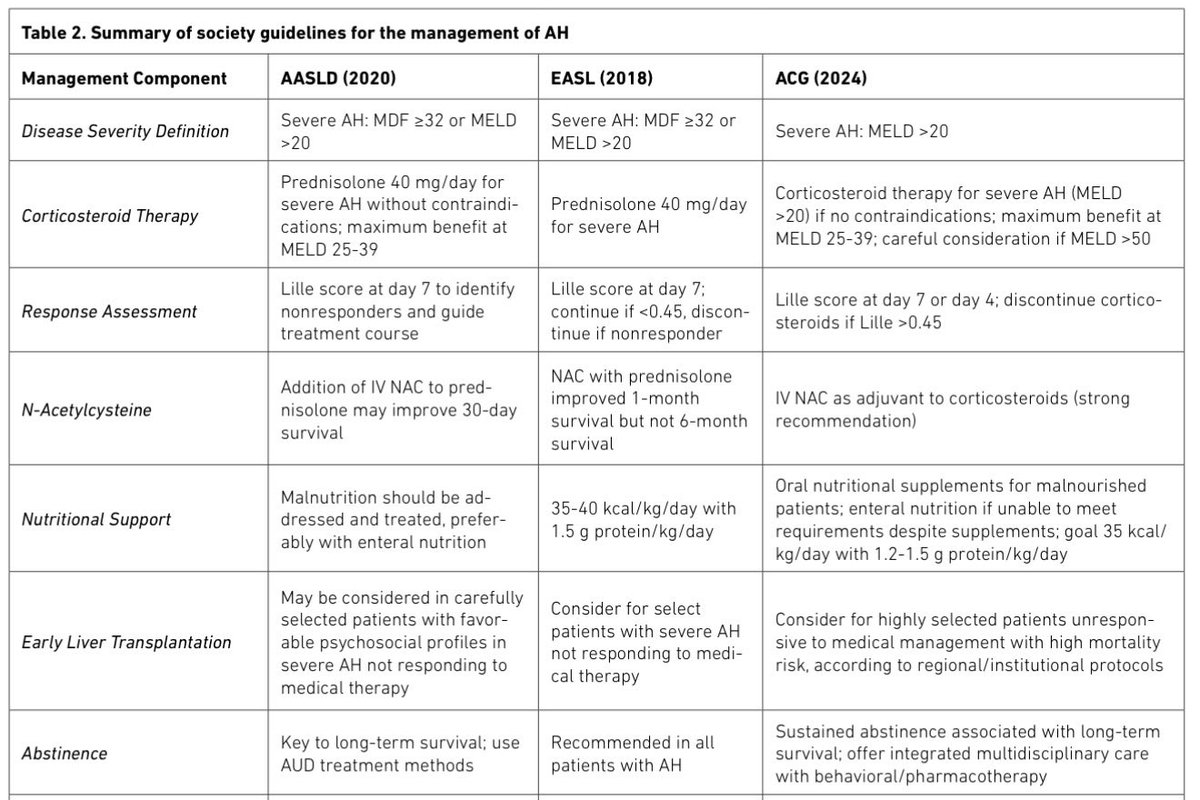
Alcohol associated hepatitis - check out this review (along with others) in the 🆓 @WorldGastroOrg newsletter 👇 1️⃣ Title page with diagnostic criteria ⚙️ 2️⃣ Management guidelines 💊 3️⃣ Potential upcoming therapies 🔮 📸: worldgastroenterology.org/UserFiles/file…
Keith Siau tweet mediaKeith Siau tweet mediaKeith Siau tweet media
English
0
36
111
10K
Austin Baraki, MD retweetledi
Gil Carvalho MD PhD🌈🇵🇸
Gil Carvalho MD PhD🌈🇵🇸@NutritionMadeS3·
Lipid-Lowering reduces risk of heart attacks/strokes in secondary prevention (people with a prior heart attack or stroke). But what about primary prevention? A recent meta-analysis reported some surprising findings. sciencedirect.com/science/articl…
English
10
17
80
12.7K
Austin Baraki, MD
Austin Baraki, MD@AustinBaraki·
@theproof @paulsaladinomd Right. All you need to do is imagine the data happened to point in the other direction, and I wonder what Paul’s interpretation would be 🤔
English
0
0
0
37
Paul Saladino, MD
Paul Saladino, MD@paulsaladinomd·
Could eating lots of meat lower dementia risk? Possibly! Yes it's an observational study, and risk of confounding from things like healthy user bias is pretty low with meat consumption (which does not associate with healthy behaviors in the broader population).
Dr. Dominic Ng@DrDominicNg

High meat consumption linked to 55% lower dementia risk in genetic risk group. New study finds older people carrying the APOE ε4 Alzheimer’s risk gene did not experience the expected cognitive decline if they consumed relatively large amounts of meat.

English
10
9
90
24.9K
Austin Baraki, MD retweetledi
Brandon Ballinger
Brandon Ballinger@bballinger·
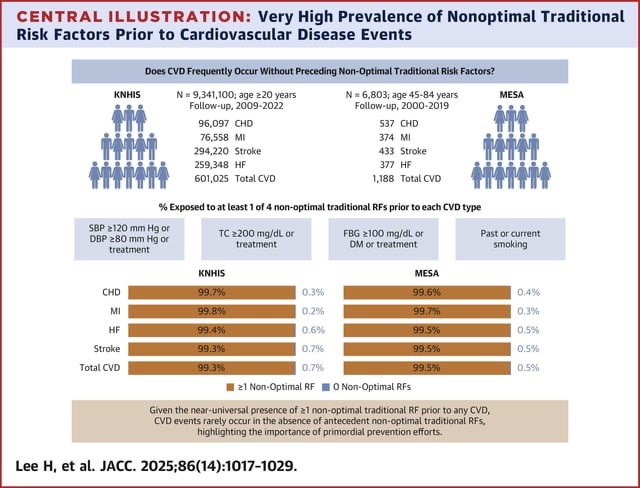
99% of people who experienced a first-time cardiovascular event had one non-optimal risk factor:
Brandon Ballinger tweet media
English
0
1
15
980
Austin Baraki, MD retweetledi
Michael Mindrum, MD
Michael Mindrum, MD@MichaelMindrum·
Beyond semaglutide. Beyond tirzepatide. Amycretin, a unimolecular dual amylin/GLP-1 co-agonist, hit >20% weight loss in early trials. New review in Metabolism covers the mechanisms, the data, and where this fits in the obesity pipeline. 1/
Michael Mindrum, MD tweet media
English
5
62
224
12.6K
Austin Baraki, MD retweetledi
Elliot Tapper
Elliot Tapper@ebtapper·
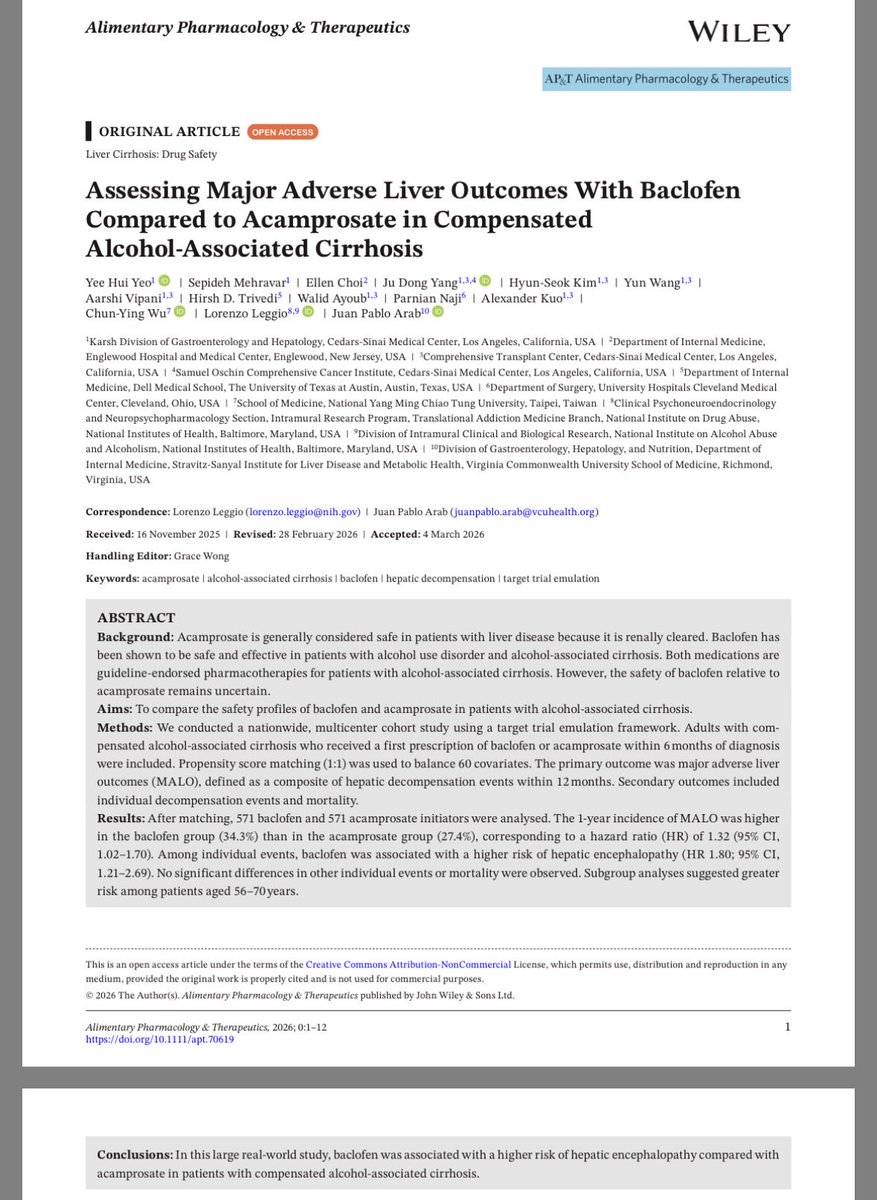
Naltrexone should be first line for AUD in people with cirrhosis It is increasingly uncomfortable to see baclofen mentioned alongside it, or even acamprosate
Elliot Tapper tweet media
English
4
35
130
12K
Austin Baraki, MD retweetledi
Henning Langer
Henning Langer@HenningLanger·
Super proud to share the first original research paper from my new lab: "Weight loss with GLP-1 medicines does not result in a disproportionate loss of muscle mass or function in obese mice and humans" cell.com/cell-reports-m…
English
11
25
110
7.5K
Austin Baraki, MD retweetledi
Casper Søndenbroe
Casper Søndenbroe@Soendenbroe·
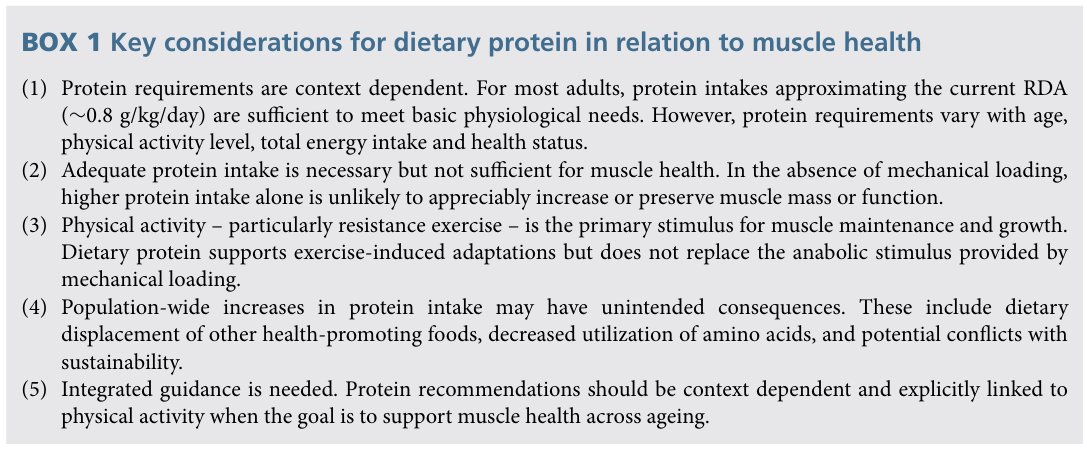
YOU CAN’T EAT YOUR WAY TO MUSCLE Our new paper in The Journal of Physiology shows that higher protein intake alone is unlikely to improve muscle health without increased physical activity.
Casper Søndenbroe tweet media
English
6
14
126
8.7K
Austin Baraki, MD retweetledi
William Aird
William Aird@WilliamAird4·
Iron deficiency symptoms precede anemia because the body prioritizes red cell production — other tissues become iron-deficient first.
William Aird tweet media
English
3
75
280
16.6K
Austin Baraki, MD retweetledi
Andrew Flatt
Andrew Flatt@andrew_flatt·
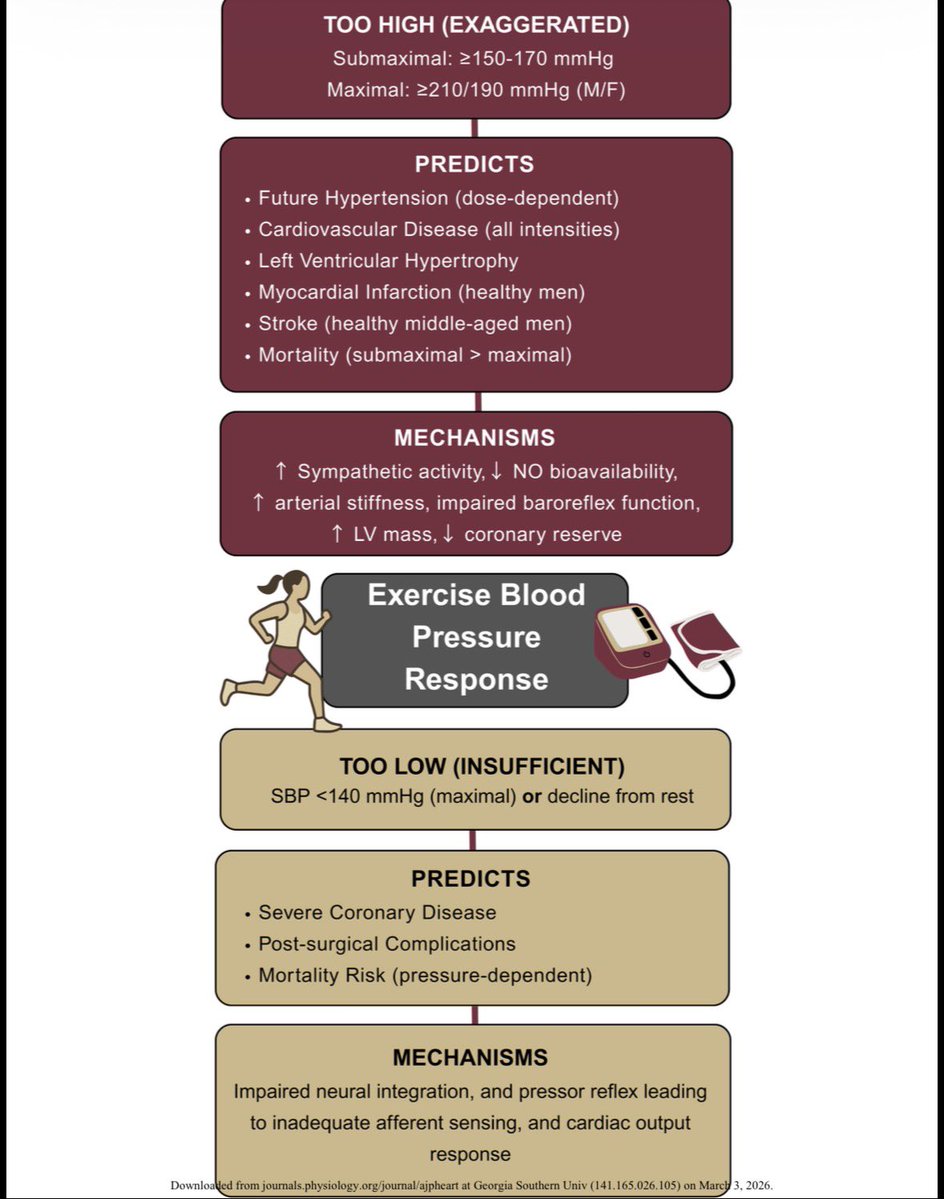
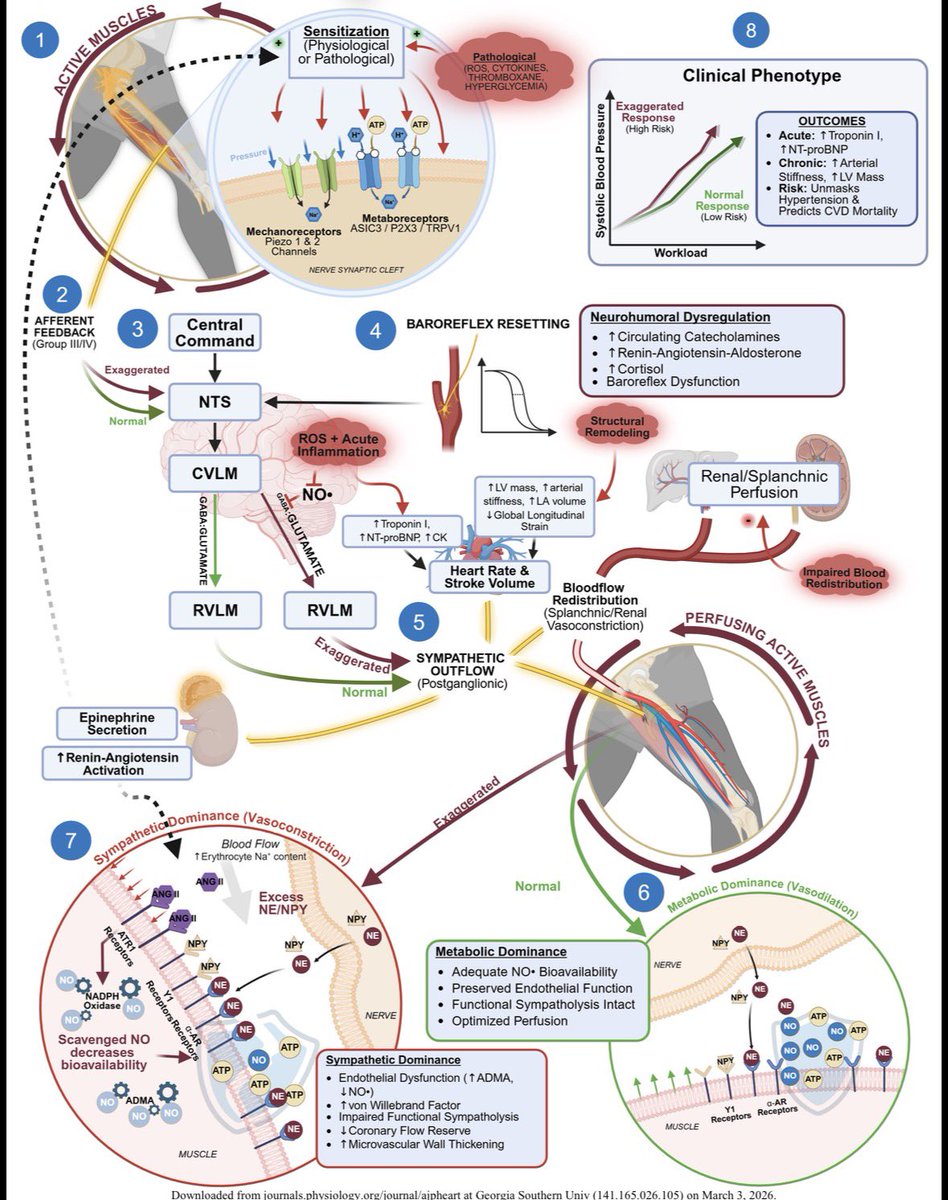
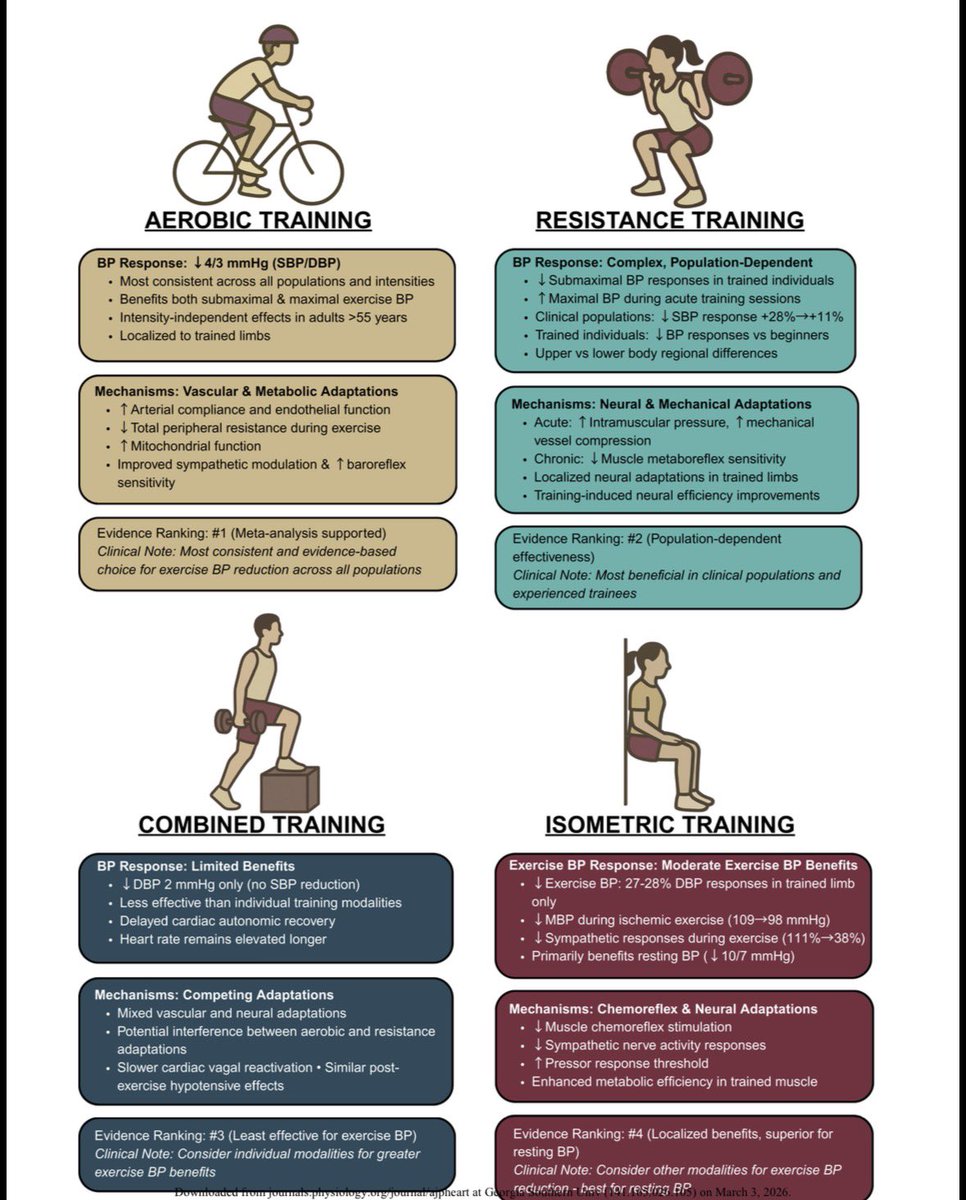
Highlights from a new review on exercise blood pressure: - Exaggerated BP responses to submax exercise are associated with a higher risk for adverse cardiovascular events and mortality, independent of resting BP and other CV risk factors   - Exaggerated exercise BP due to sympathetic overactivity driven by vascular and humoral dysregulation, leading to structural CV changes that reinforce vasoconstriction and cardiac strain. - Higher fitness predicts lower submaximal exercise SBP 7 years later  - Higher fitness is associated with slower rise in BP during submax exercise   - Greatest benefits from aerobic exercise via reduced sympathetic activity, improved baroreflex function and arterial compliance, enhanced endothelial function with higher nitric oxide availability, improved mitochondrial function, greater muscle oxidative capacity, enhanced vascular function, and reduced total peripheral resistance - Some benefits from resistance exercise also but via different mechanisms. Great paper from @Joseph_Watso group.
Andrew Flatt tweet mediaAndrew Flatt tweet mediaAndrew Flatt tweet media
English
4
38
144
12.9K
Austin Baraki, MD retweetledi
Steve Magness
Steve Magness@stevemagness·
There are no magical training paces! VO2max, Lactate Threshold, Critical Velocity, etc. None of them are special. They all have their purpose. Think of training as a spectrum– from jogging to sprinting–not as zones. All paces are useful and at your disposal.
English
6
15
176
23.3K