Raphael Bendenoun

542 posts

Raphael Bendenoun banner
Raphael Bendenoun

Raphael Bendenoun

@Ben2pop

Paris, Tel Aviv, Who knows ? Katılım Nisan 2010
488 Takip Edilen113 Takipçiler
Brahmin 2.0
Brahmin 2.0@RajeezusBackup·
@lonextrades Qullamaggie is an excellent trader but he was also someone who was at the right place at the right time. I think he made most of his bag in 2020/2021 market pump. You could've longed almost anything for insane ROI. .
English
4
0
7
2.2K
Lone
Lone@lonextrades·
Qullamaggie’s Perfect Stock - TASR (2003-2004) “Yeah, I’m going to show you the perfect stock. I’m going to show you a ticker I have in my database - TASR. Went from 35 cents to 30 bucks - almost a 100 bagger in a year. This thing had several high tight flags. Okay, pay attention now whatever you’re doing. Stop it.” Key Takeaways: - Focus on rising 10 and 20-day moving averages for momentum - High tight flag breaks: big moves up, pullback to rising moving averages, series of higher lows, potential undercuts and reclaims, tight ranges, breakout. “I just saved you four bucks and probably hours of time, you don’t need to buy this book. Boom. This is a perfect stock.”
English
6
60
452
82.6K
Evan Michaels
Evan Michaels@JustRandomGuy_K·
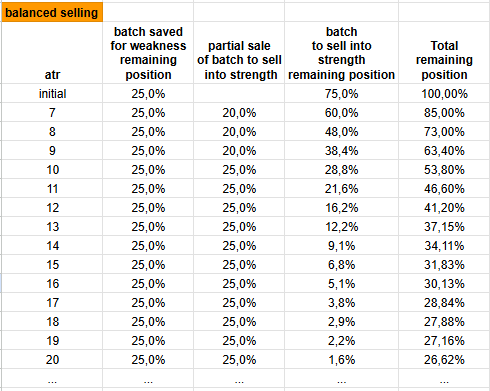
@jfsrev @RealSimpleAriel After reviewing my trades, most finish at 10-15 ATR extensions, however, a small amount keep going and the 21 EMA break is much much higher, so I developed the following selling rules. >25% of initial pos only into 21EMA break >75% saceld out ATR ext
Evan Michaels tweet media
English
5
4
38
5K
Chhirag Kedia
Chhirag Kedia@swing_ka_sultan·
This is indeed very helpful. While 1-minute and 5-minute ORB entries provide the earliest opportunities to enter, the chances of fakeouts are also much higher because the entire retail crowd is concentrated around the same price levels. If you get a fakeout entry and are stopped out, even if your trade idea was correct, it becomes of no use. That is why, at @tradetm_org, we focus on developing multiple entry techniques across different periods of the trading day. The post 30-minute entry technique often proves to be one of the best for avoiding fakeouts.
Jeff Sun, CFTe@jfsrev

Delaying your entry tactics by just 30 minutes after the market opens has proven to be exceptionally beneficial In this market

English
5
10
111
16.1K
Raphael Bendenoun
Raphael Bendenoun@Ben2pop·
@jfsrev Do you know that you can inverse any stock using -1 :) , PLTR * -1
English
1
0
2
345
Jeff Sun, CFTe
Jeff Sun, CFTe@jfsrev·
$PLTR - Can't Escape 7-Month Downtrend Channel In Market Rally In a euphoric market environment like this, $PLTR displaying this type of trend behavior is a weak sign and could deteriorate further if the broader market begins correcting. Take a look at the inverse $PLTD basing action.
Jeff Sun, CFTe tweet mediaJeff Sun, CFTe tweet media
English
13
4
70
14.7K
Jeff Sun, CFTe
Jeff Sun, CFTe@jfsrev·
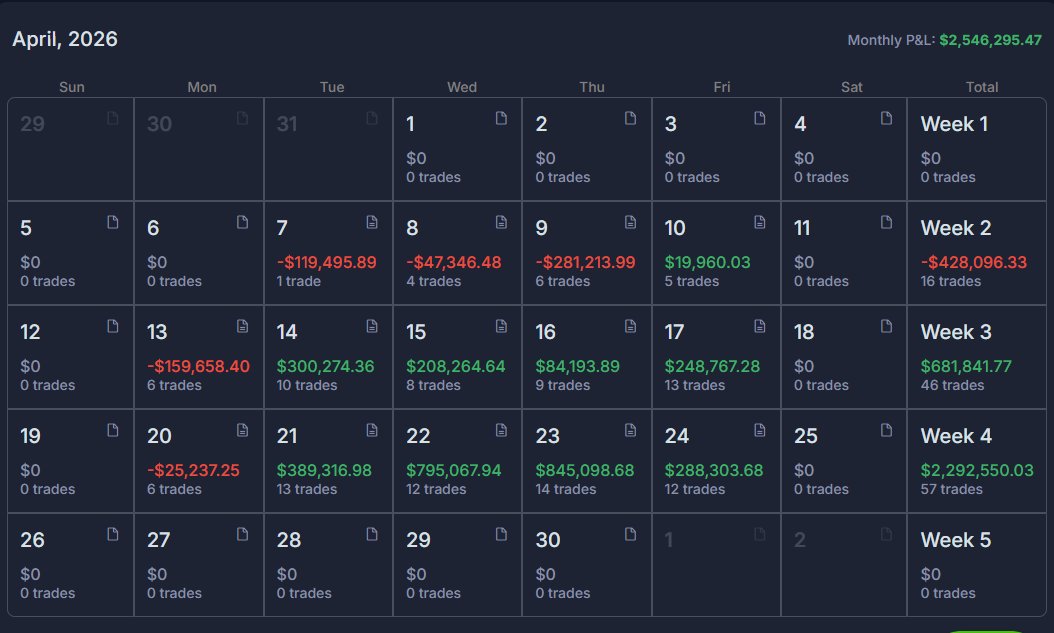
Portoflio Update - Best month of 2026 but this intraday drag is probably what most will experience today. Some ideas have clinched 10 x ATR% from 50-MA to trim and trail. As much as I wish, I don't think it's sustainable for Market to continue a straight up rally without a week or 2 of sideway or pullback action. Outcasted groups need to improve their relative strength and start participating, not continue widening the performance lag — preferably within the value segment. More opportunities to come if it happens.
Jeff Sun, CFTe tweet media
Jeff Sun, CFTe@jfsrev

$XLK has just recorded its first-ever 10× ATR% extension from the 50-MA since its 1998 inception at the open. This rally since April has been exceptionally persistent, with only two negative day sessions on April 23 and April 28. We are now heading for the 6th consecutive week of green close. I am trimming.

English
10
9
134
22.9K
Raphael Bendenoun
Raphael Bendenoun@Ben2pop·
@FelipeGuirao My question to you is then how you define your stop loss ? If LOD then you can't build a significant position unless you risk more than 2% of equity. What am I missing ?
English
0
0
0
43
Felipe Guirao
Felipe Guirao@FelipeGuirao·
Most traders blow up their accounts chasing breakouts during the day, but there's a way to avoid the fake-outs and still catch the best moves. The problem with trading breakouts in the morning or midday is simple: most of them reverse and leave you stuck holding a losing position. Price pushes through resistance, you jump in, and then it fades back down as soon as the next hour hits. In choppy or bearish markets, this kills your account slowly with a thousand small losses. I saw this wreck so many traders in 2022, death by fake breakout after fake breakout. But when you wait until the end of the day to enter your breakouts, everything changes because the move is already confirmed on the daily timeframe before you risk a single dollar. No more guessing if the breakout is real or if it's going to reverse in the next 30 minutes. The daily close tells you everything you need to know. Here's what EOD breakout trading gives you: • You filter out 90% of the fake-outs because price already held the breakout all day • You can backtest with clean daily data, no messy intraday noise to deal with • You build systems with hard rules, so there's no stress or discretion involved • You only need 20-30 minutes per day to scan, enter, and manage your trades • Your drawdowns stay controlled because you're not getting chopped up by intraday volatility • You execute without emotion because the system handles all the decisions Sure, you won't get super performance and win championships with this method, but if all you want is to trade with minimal time, get 100%+ returns on good bull years, and do so with a controlled drawdown, and grow your hard-earned money, listen up. I've averaged triple-digit % returns, even made 60% in 2022 shorting breakdowns, all while trading 30-min day with no discretion and no stress. No watching the market all day. No stressing about fake moves. No second-guessing every decision. Just show up before the close, take the signals that meet my criteria, set my stops, and let the market do the rest. If you're tired of getting faked out and want consistency without the all-day grind, EOD breakouts might be exactly what you need 📈
English
6
7
99
8.4K
Ariel Hernandez
Ariel Hernandez@RealSimpleAriel·
What an absolutely epic month. Didn't start perfect but I just closed out the best single week of my career. $CAR $MU $ARM $IGV $NVDA $AMZN $DELL $RKLB A week to remember!
Ariel Hernandez tweet media
English
281
39
2K
147.1K
Humanoid Investing
Humanoid Investing@HumanoidInvest·
$FCEL updated chart since April 13 Crazy what can happen in one week
Humanoid Investing tweet media
English
1
0
1
241
Jeff Sun, CFTe
Jeff Sun, CFTe@jfsrev·
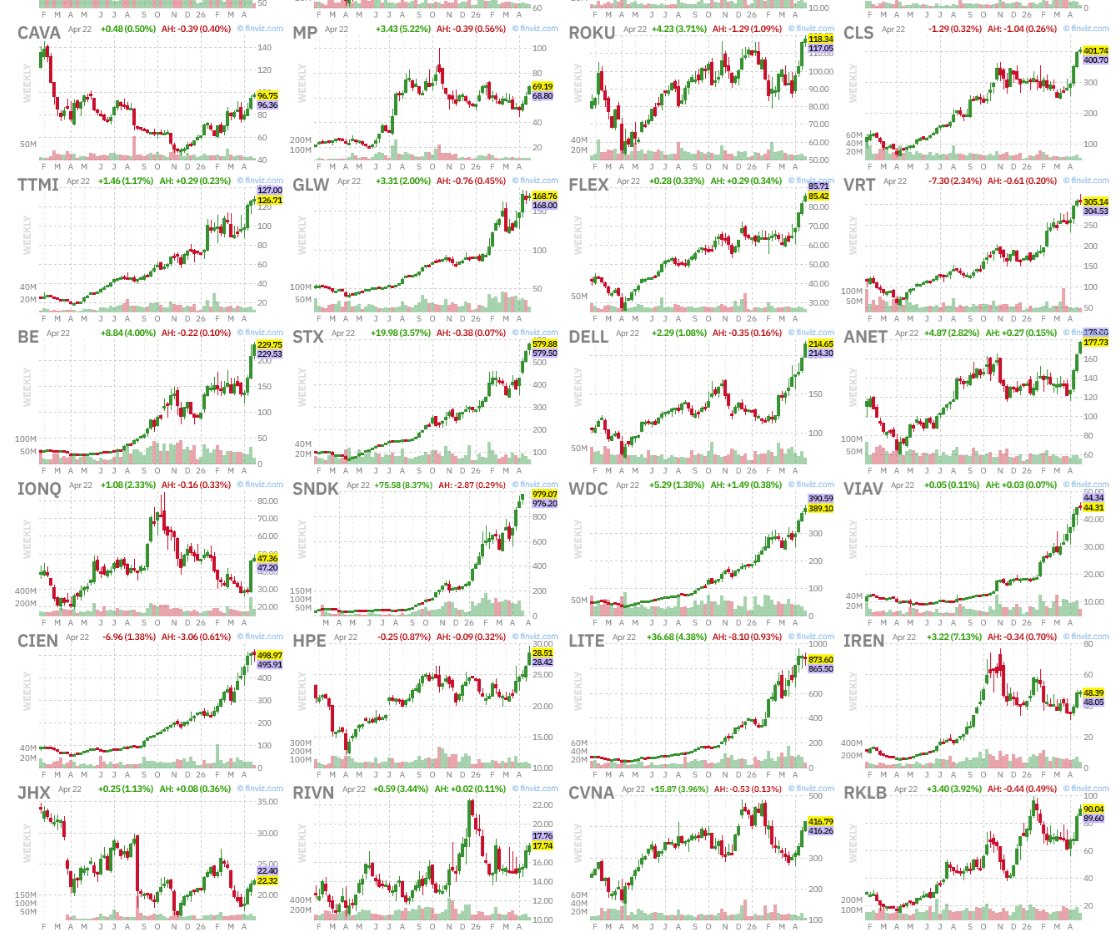
50 Strongest Name Trading Over $100M Avg Volume — Mainly Dominated by 5 Industry Groups $CCJ – Uranium $EXPE – Travel Services $ALB – Specialty Chemicals $NXT – Solar $CRWV – Software Infrastructure $NET – Software Infrastructure $CRWD – Software Infrastructure $NBIS – Software Infrastructure $TWLO – Software Infrastructure $MRVL – Semiconductors $ON – Semiconductors $GFS – Semiconductors $ALAB – Semiconductors $ARM – Semiconductors $CRDO – Semiconductors $RMBS – Semiconductors $MU – Semiconductors $AMD – Semiconductors $INTC – Semiconductors $TER – Semiconductor Equipment $LRCX – Semiconductor Equipment $ENTG – Semiconductor Equipment $AMKR – Semiconductor Equipment $COHR – Scientific Instruments $CAVA – Restaurants $MP – Metals & Mining $ROKU – Entertainment $CLS – Electronic Components $TTMI – Electronic Components $GLW – Electronic Components $FLEX – Electronic Components $VRT – Electrical Equipment $BE – Electrical Equipment $STX – Computer Hardware $DELL – Computer Hardware $ANET – Computer Hardware $IONQ – Computer Hardware $SNDK – Computer Hardware $WDC – Computer Hardware $VIAV – Communication Equipment $CIEN – Communication Equipment $HPE – Communication Equipment $LITE – Communication Equipment $IREN – Capital Markets $JHX – Building Materials $RIVN – Auto Manufacturers $CVNA – Auto Dealerships $RKLB – Aerospace & Defense $PL – Aerospace & Defense Hottest Stock Screener Chapter 3.2, jfsrev.substack.com/my-trading-too… P.S. You can now enjoy a free 7-day trial on Finviz Elite with no credit card required via bit.ly/finvizelite
Jeff Sun, CFTe tweet media
Jeff Sun, CFTe@jfsrev

I've just build a quick screen called "Hottest Stock" off @tradingview v2 tailored for individuals seeking stocks akin to $POET chart. This scan sifts through stocks that have exhibited significant momentum over the past month of trading, while also consolidating within a defined range over the past week. Parameters can be further loosen or tighten to your liking (eg. market cap, share float, avg volume). I need to highlight that the initial substantial movement is prioritized in this screening process. A first huge move has to be made. Some other similar names worth mentioning $DJT $ELYM $INDO $RILY $TMDX $WGS $ZURA To catch the initial surge of $POET, you'll require either a pre-market gap-up screener for April 22nd or a post-gap-up continuation base screener for April 23rd. Your approach to capturing stocks like this hinges entirely on your trading strategy and lifestyle preferences. No right or wrong, as long as it is sustainable on the long run for yourself. Pre-market screener example x.com/jfsrevg/status… Post gap up continuation screener example x.com/jfsrevg/status…

English
6
35
248
35.8K
Raphael Bendenoun
Raphael Bendenoun@Ben2pop·
@ohiain When you say Strong group and RS. Is it not too late to get in ? Don't you think that RS is good only in Market down trend to find which trade are surviving even if the market go down ?
English
0
0
0
82
iain
iain@ohiain·
Too many traders try to bottom fish garbage: 1. Strong name + Strong group + RS > Market = GET IN. 2. Weak name + Strong group + RS > Market = WATCH IT. 3. Strong name + Weak group = TACTICAL ONLY. 4. Weak name + Weak group + Weaker Than Market = DON'T TOUCH. Keep it simple!
iain@ohiain

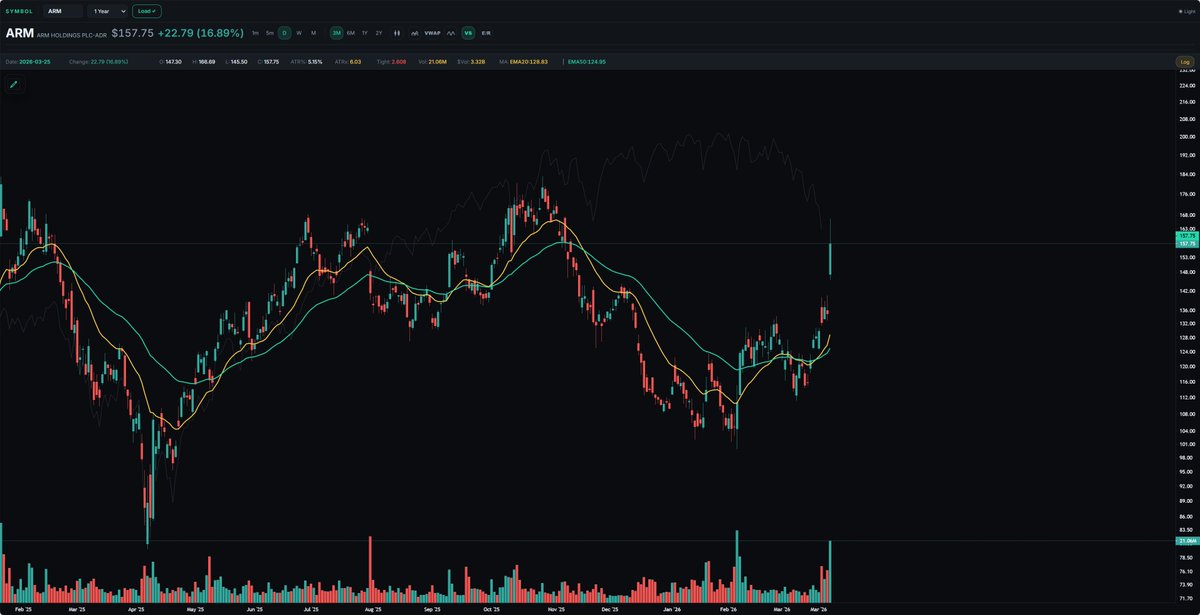
My stock selection "cheat sheet" is honestly very simple. I mentioned that I’m not trying to trade every chart that looks decent. I’m trying to trade the names where multiple layers of probability are lined up at once. The easier I can make the selection, the easier execution becomes. That means I’m always judging three things first: - The stock itself - The group/sector it lives in - Its relative strength vs the overall market If those three align, that’s where I get aggressive. 1. Strong name + Strong group + RS > market = Primary Focus This is where most of my money is made. If the stock is acting well, the sector is leading, and it’s outperforming the market, that immediately goes to the top of my list. These are the names institutions usually keep supporting on pullbacks! Think names like $ARM when semis are hot, or $WULF when data centers/power themes are moving. That’s where I’m looking for: > Weekly breakouts > Pullbacks into the 9/21 EMA > Tight consolidations > 15/30 min sniper entries This is where I press when conditions are good. 2. Weak name + Strong group + RS > market = Watchlist This one is underrated. Sometimes the group is strong, but an individual name hasn’t gone yet. It may look sloppy, be basing, or still digesting prior gains. Those are names I keep close because laggards can quickly become leaders once money rotates. I’m not forcing entries there yet, but I’m watching for similar action... - Tightening price action - EMA reclaims - Volume anomalies - Character changes Ex: $ONDS is one I'm currently watching, clearly not a leader making new highs every day, but one worth watching! Half of my trades come from names that were “boring” for two weeks and then exploded once they woke up. 3. Strong name + Weak group = Smaller Size/Tactical Only Yes, some stocks can outperform weak groups for a while. But if the tide is going out, I’m more cautious. I may trade it tactically, but I’m not treating it like an A+ setup. I know the group pressure can eventually catch up. I’d rather size big with the wind at my back than fight current for scraps. 4. Weak name + Weak group + weaker than market = Don’t Touch. This is the easiest filter in trading. If the stock is weak, the group is weak, and it’s underperforming the market… why am I wasting mental energy there? Too many traders spend hours trying to bottom fish garbage. I’d rather spend that time studying leadership,because if my focus is there, then there is no shortage of opportunity. I’m flipping through charts asking simple questions: - Where is the money rotating right now? - Which sectors are waking up? - Which names refuse to go down? - Which pullbacks are getting bought? - Which stocks are tightening near highs? That narrows everything fast. Then I wait for entries. The goal is to put myself in names where... 1) Demand is obvious 2) Risk is definable 3) Momentum can expand 4) Institutions are likely involved That’s why I preach trade with the tide, not against it. At the end of the day, the majority of the money you make is whether you can manage risk in the right stock! And you don’t need the perfect chart. You need the right stock, in the right group, at the right time! I hope this helps with how I think through things :))

English
14
36
341
37.5K
Konstantin Lazarov
Konstantin Lazarov@klazarovbg·
Here is my 3 stop Loss buttons inspired by @jfsrev x.com/jfsrev/status/…
Konstantin Lazarov tweet media
Jeff Sun, CFTe@jfsrev

I received a question about my 3-stop strategy, and I thought it’d be helpful to elaborate on the rationale behind it. The core principle is to reduce your losses well before a trade hits the full stop—ideally keeping them far below -1R. There are many creative ways to periodically scale down size in newly executed position that may not seem to be working. If your full-time job is aligned with U.S. market hours and you don’t have the flexibility to actively monitor your trades prior to the market close, the 3-stop strategy can be a game changer, capping most losses around -0.67R. The same benefit applies to those of us in the Asia-Pacific region, where market timing presents similar challenges. If I were to have the luxury of being present consistently prior to market close, (consistently is the key word), i will definitely do a 50% size down of newly executed trade on day #0 not showing any unrealized profit, on top of my 3 stop strategy. This will greatly reduce eventual R loss much further than -0.67R. You need to build a strategy that aligns with your lifestyle for long term sustainability, and most importantly longevity. From there, you refine and strengthen your edge—not the other way around. This is a major reason why many struggle to sustain day trading over time, it requires a whole new level of energy, focus and commitment to the market. big respect to @BrianLeeTrades for this. I highlighted this in pointer 5 previously in the thread below. "5. Learn to size down losses before your trade hit the eventual stops. I spoke alot about selling partial in sequential manner of 33% size out from 33% below entry, and further 33% size out from 33% to stop loss. I can control my average losses within 0.8R because of this even with slippages and spread. This is a metrics anyone can improve and I largely focus to improve on."

English
2
3
32
8.5K
Raphael Bendenoun retweetledi
Jeff Sun, CFTe
Jeff Sun, CFTe@jfsrev·
Systemizing profit taking for me, with some nuances highlighted; 1. Entry Day = Day 0, 3 stops at 33% level to final stop (usually LoD). 33% net size at each level. 2. If profit to risk exceeds 2x in day 0-2, i will shave 33% off. all 3 stops level will be maintained, have size adjusted to the net balance qty. I have highlighted several post on managing risk with 3 segregate stops to reduce your 1R loss even 0.6 to 0.8R. 1R loss is not 1R, more often than not it is 1.03 to 1.3R with slippage, spread, borrwing etc depending on liquidity of the securities on average period, and at time of explosive move u saw it is already making. 3. Day 3 = 33% size down (immediate partial profit taking or shaving risk down on trade that did not follow through but still hovering above avg entry as I have tight stops (since I only do execution when price action presents entry to LoD below 60%). All stops are consolidated to breakeven level on 1 full singular size. 4. Day 4 onwards is all mental stop on 10-MA. I do not mess with the trade if it doesn't close below 10-MA. eg. If close below 10-MA on Day 8, stop remains at breakeven level on Day 9 and I will let market trade for a opening range of 5 minutes and adjust my breakeven stop to the low of the opening range (ORL) and let it the market take it out. If stop not taken out by EOD of Day 9, during pre-market routine i will adjust back to breakeven, and reset new ORL for Day 10. I repeat this process until it get taken out. The rationale is to hold onto your winning trade as long as possible with minimal sacrifice or unrealize profit. Study my $XLU entry on 9th July. I'm still holding, and even added along the way up today (86 calendar days and running). 5. Some nuances to consider; i) if I were to take a catalyst gap trade eg. 1/10 (Day 0) $UNFI +100% surprise beat in EPS and intraday hit 10 x ATR% extension to 50-MA. When $UNFI hit 2x profit-risk in full size within 25 mins of the trade, I take 33% size off. It continue to follow through and hit 10 x ATR% extension from 50-MA. It is extremely unlikely for me to even be aware of this because I usually shut off after 3 hours from open and let my stops take care of my open heat risk. I will let Day 1 open and size down further 33% of net size as partial profit taking. When a trade ran up exceeding 4x profit to risk before my Day 4 breakeven, i will definitely consolidate all risk to a singular stop at breakeven. I am taking the risk of losing the remaining unrealized profit but it definitely don't make sense to visit losing range (below entry) by maintaining stop at 33%/66% and LoD stop at this parabolic point. ii) if i were to hold a swing trade beyond day 4 (all stops already consolidated at breakeven with partial profit taking already taken place), and trade continue to trend much faster than 50-MA to give me a 8-10x ATR% extension from 50-MA, this is a partial profit taking alert for me to sell on strength. eg. size down 33% of net size and readjust breakeven stop quantity accordingly. stop is always at breakeven with mental stop at 10-MA. iii) if Day 0 entry executed, and hit my first 33% level stop or even slice through to 66% level stop (2 stops trigger) before Day 4, i will always adjust a horizontal price alert to previous day high (the stop day), and if it trigger, i will add size inverse pyramid method (eg. 10,000 shares in, 6,666 shares stopped out and nett 3,334 shares. I will add 50% of 3,334 size (1,667 size) bringing me back to 50% net size instead of 33% net size). By doing so, if trade turn south to LoD stop on the singular day, u will not be hit risk exceeding 1R even with attempt to re-scale back up. iv) In holding a trade beyond Day 4 (with consolidated stop at breakeven at nett size), if there were to be a sideway price consolidation setup below 4x ATR% from 50-MA, i will inverse pyramid add 50% size of my nett size. @Qullamaggie treat it as a separate new setup but i prefer managing the same ticker as a single trade. By adding smaller size up this way, your avg price to the trade will not be severely disrupted and will bound to be below your 10-MA mental stop. You can continue to trail the trade like it was but with more potential profit trajectory to the trade. v) gap down open occasion below 10-MA, the routine i take is the same as 4. on ORL. The way I manage profit sizing and adjust stops in a sequential manner is aimed at reducing monthly drawdown % and achieving a smoother equity curve on a MoM basis. As your equity grows (especially when it surpasses your absolute dollar risk tolerance relative to your monthly expenses), seeing unrealized profit drop from, say, +$500,000 to +$280,000 in a single session can be hard to handle, even if you're following textbook rules. I believe not many can emotionally withstand holding 8-10 full-sized trades with 80% portfolio utilization, especially when trading with a bankroll that significantly impacts their quality of life and that of their dependents.
Alvin Tan WT@MOONBENG1

@jfsrevg With long u consider profit taking around 10xatr or so. Now with short. How do you systemise profit taking? Base on time? Or do MA levels. Also what could support the thought behind taking profits with short

English
43
129
669
176K
Ted Zhang
Ted Zhang@TedHZhang·
The biggest theme I see is semi equipment under the semi layer Younger and lesser market cap names You have $NVDA $AVGO $AMD $INTC $ARM as layer 1 under that, $FORM $ASX $ICHR $MKSI $Q $UCTT $TER You could even put memory as well $SNDK $WDC $STX in this layer.
English
9
22
209
26.5K
Raphael Bendenoun
Raphael Bendenoun@Ben2pop·
@DeItaone This is what happen when terrorist do not want to surrender and took by hostage great nation of Iran ..
English
0
0
0
586
*Walter Bloomberg
*Walter Bloomberg@DeItaone·
ISRAELI DEFENCE MINISTER KATZ: ISRAELI MILITARY INSTRUCTED TO CONTINUE STRIKING 'NATIONAL INFRASTRUCTURE' IN IRAN WITH FULL FORCE
English
117
264
1.2K
305.9K
Will Hu
Will Hu@traderwillhu·
By connecting the chart made by TV lightweight to the IB API, it transforms into a real-time data chart. I can develop any custom indicators I need, embed my execution tools directly, and seamlessly integrate the chart into my dashboard. As AI capabilities grow and costs drop, we’ll see an explosion of open-source projects on GitHub. In the future, building a trading platform will be like playing with LEGO, just let AI snap together the modules you need. I think traditional trading software companies are facing a real crisis.
Will Hu tweet media
English
5
2
75
5.7K