Just in case you’re wondering why I’m so bullish on CPO.
Like $SIVE (Lasers), Shunsin (Packaging), MSSCorps (Yields), Win Semi / $TSEM (Foundry).
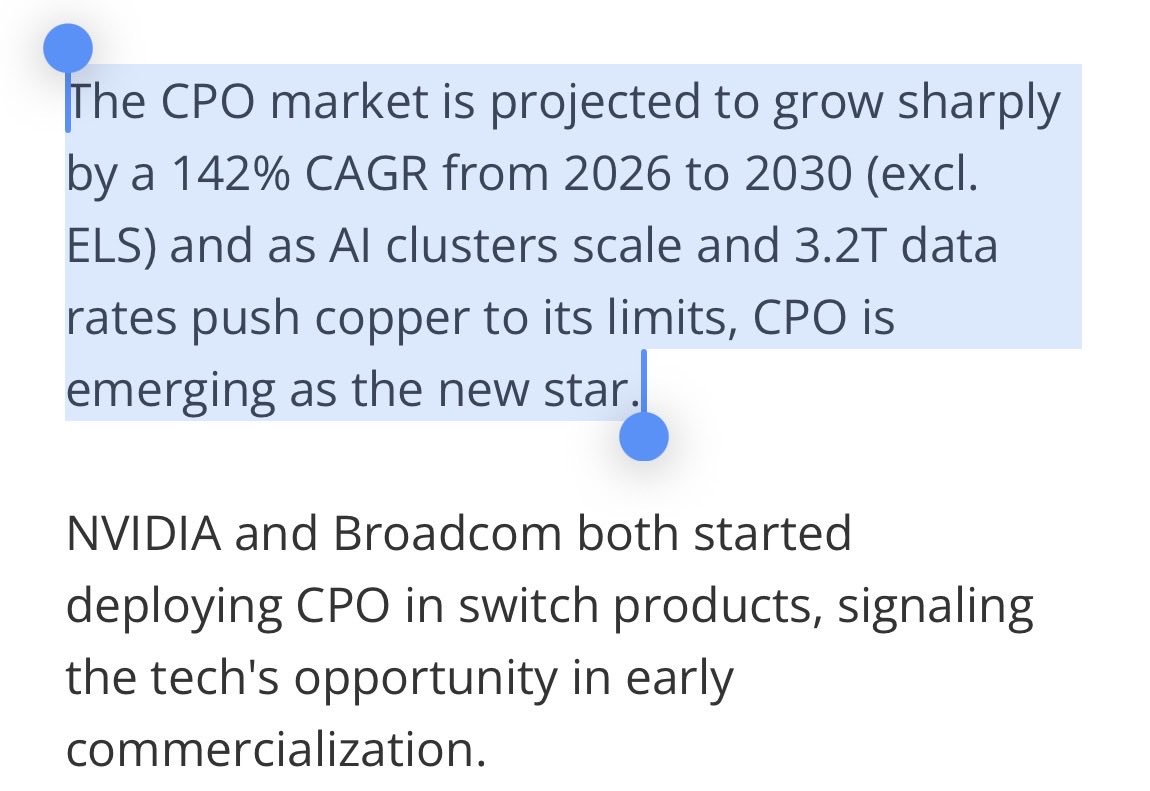
“The CPO market is projected to grow sharply by a 142% CAGR from 2026 to 2030 (excl. ELS)”
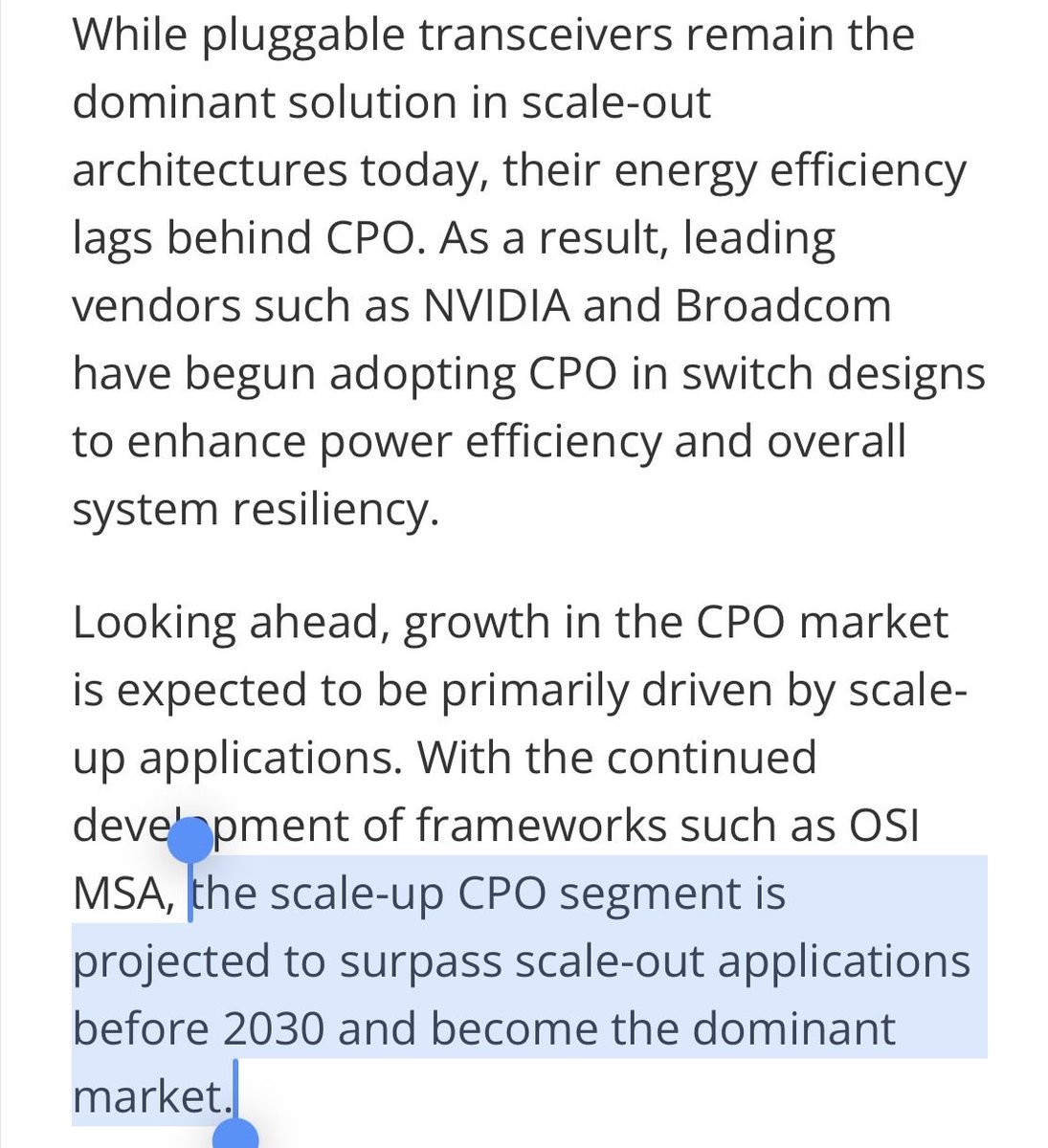
“The scale-up CPO segment is projected to surpass scale-out applications before 2030 and become the dominant market.
You have almost parabolic growth over the next few years.
With many players like Sivers having no material exposure to previous 800g pluggable optics but are the bleeding edge leaders of CPO as the laser supplier.
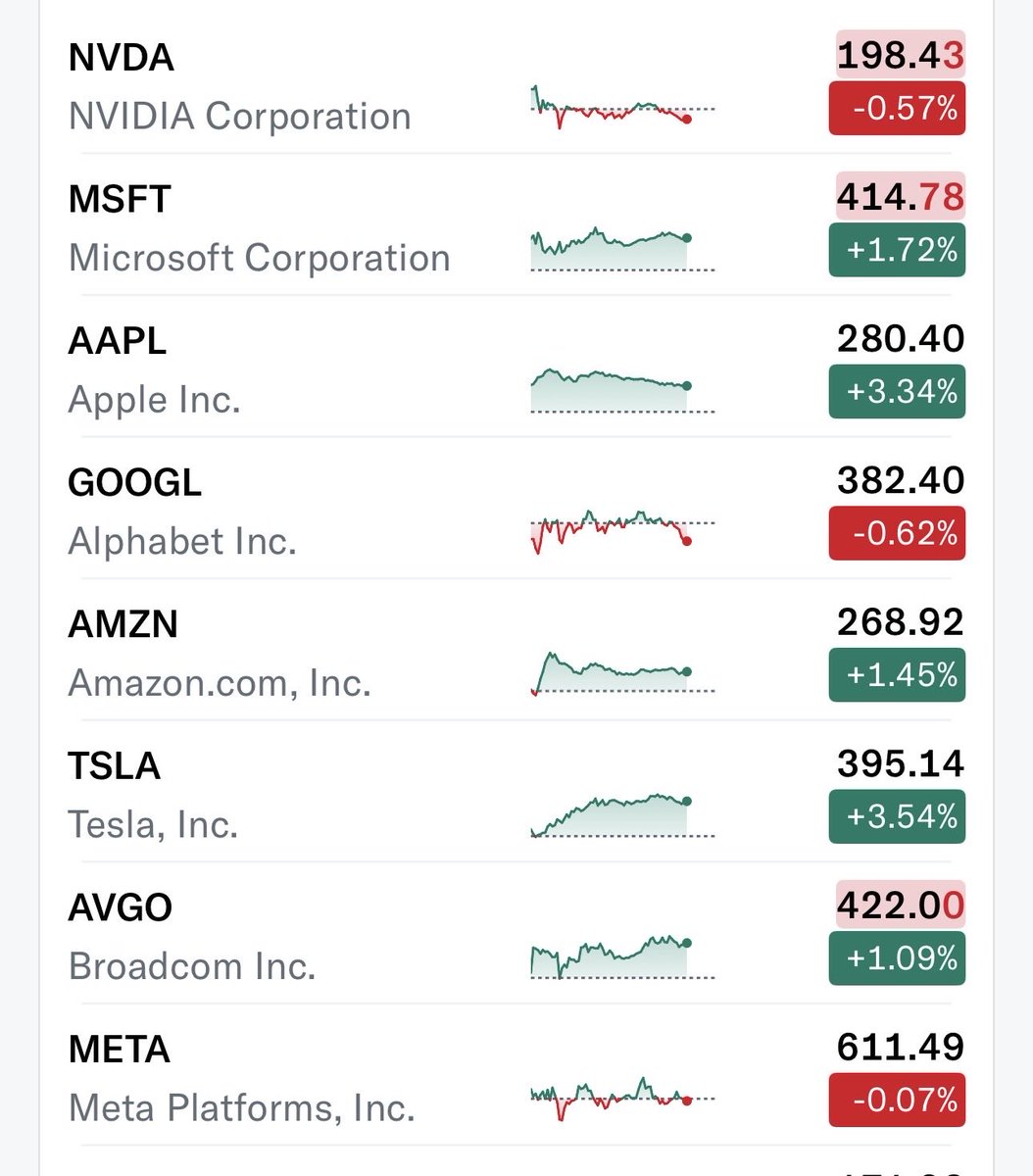
This is one of the best and earliest opportunities of the next optical supercycle for an architecture driven by $NVDA and $AVGO.
Buy a $100,000 depreciating vehicle = “Congrats, I'm so proud of you!"
Invest $100,000 in real estate or stocks = “Omg be careful, that's super risky.”
Buying a G-Wagon for your LLC is the smartest tax move in America
Section 179 of the IRS tax code lets you deduct 100% of the purchase price of a vehicle in the year you buy it, as long as the vehicle weighs over 6,000 pounds (gross vehicle weight rating)
The G-Wagon is 6,945 lbs. So is the Cadillac Escalade. So is the Range Rover, the Tesla Model X, the BMW X7, the Lexus LX, the Ford F-250, and basically any heavy SUV or truck. All Section 179 eligible
The math on a $90,000 G-Wagon purchased through your LLC:
Purchase price: $90,000
Section 179 deduction year 1: $90,000 (100% of purchase)
Tax savings if you're in a 37% federal bracket: $33,300
Tax savings on state income tax (avg 5%): $4,500
Total first-year tax savings: $37,800
Effectively the IRS subsidizes 42% of the purchase price. A $90K G-Wagon costs your business $52,200 after the deduction lands
How the rules actually work:
The vehicle has to be used 50%+ for business purposes. You document this with a mileage log showing business trips vs personal. Most operators easily hit 50%+ if they use the vehicle for client meetings, vendor visits, or any commute to a business location
The deduction limit for a passenger SUV under 6,000 lbs is roughly $12,400 in year 1 (much smaller). Over 6,000 lbs the limit jumps to the full purchase price. The 6,000 lb threshold is the entire reason every successful operator drives a heavy SUV
Bonus depreciation: if Section 179 doesn't fully cover the purchase (rare for vehicles), bonus depreciation kicks in for whatever's left. As of 2026 bonus depreciation is at 60% but congress changes this regularly
How you fund the purchase:
Stack 0% business credit cards. $90K of vehicle purchase routed through a dealer that accepts cards (or via Plastiq for the dealer that doesn't) sits on a 12-15 month 0% APR card. You drive the G-Wagon today. You get the $37,800 tax deduction at year-end. The credit card is at 0% for 12+ months while you pay it down from business cash flow
Net first-year cost of the vehicle: $52,200 (post-deduction price), spread interest-free over 12 months. Effective monthly cost: $4,350
Or take a $50K-$90K equipment loan from a bank like SoFi or Bank of America Business at 7-9% APR. The deduction still applies. The loan is structured around the asset
A client we worked with last quarter bought a 2024 Range Rover for his marketing LLC. Total cost $108K. Routed through Plastiq onto Chase Ink Business Cash and Amex Business Gold. Section 179 deduction in tax year 2024: $108K. He was in a 37% federal + 9% California state bracket. Total tax savings: $49,680
Effective net cost: $58,320 for an asset that was already going to be a personal car and is now a business asset with full deductibility. Plus he kept the credit cards at 0% while business cash paid them down through the year
The IRS wrote Section 179 into the code to incentivize small businesses to buy equipment. Vehicles count as equipment if they meet the weight threshold. Almost every wealthy business owner uses this. Almost every small business owner has no idea it exists
(we get 700+ score business owners $100K-$250K in 0% business funding and structure the Section 179 vehicle play alongside it. link in bio)
Hearing that @meta will announce a cloud business this year? Stock would rip. What’s the ROIC for a cloud biz investment versus their current ROIC? Maybe @DavidSacks or @friedberg have heard chatter about this?
I've warned for months that a @JetBlue-@SpiritAirlines merger would have led to fewer flights and higher fares.
@JusticeATR and @USDOT were right to stand up for consumers and fight against runaway airline consolidation.
This is a Biden win for flyers! apnews.com/article/jetblu…
@hxxntrr Only works if there is a business purpose that will produce additional, incremental income. Doubtful for most businesses/people.
What’s a $90k vehicle worth in 5 years?
The Vera Rubin VR NVL72 represents NVIDIA's most vivid, visceral, and voracious value vending venture yet. For versions past, NVIDIA was virtually virtuous — a vendor that volunteered vast value to the rest of the ecosystem, voiding its own leverage while Neolabs and Neoclouds reaped the dividends. With VR, that vision of NVIDIA as a benevolent, value-vouchsafing vendor is even further verified!
VR NVL72 arrives as a vehicle for vindication — a verifiable, vaulting leap in performance-per-cost that overturns every vestige of the old pricing paradigm. Viewed through the lens of total cost of ownership, the value extraction is vivid and unavoidable: Velocities of value that were previously invisible are now very visible, very intentional, and very, very NVIDIA. The V in Vera Rubin was never a vowel. It was always a vector, a vow and a verdict — pointing, inevitably, toward value.
@StockSavvyShay@brewmarkets CapEx guide up ~30–45% YoY, expenses still +20%, Reality Labs burning ~$16B/yr (~10%+ of total expenses) & maintaining operating losses w/ no clear ROI, DAP down QoQ, rising regulatory risk, and no AI monetization disclosure from Zuck when asked. Great ad biz ≠ blank check. 🚩
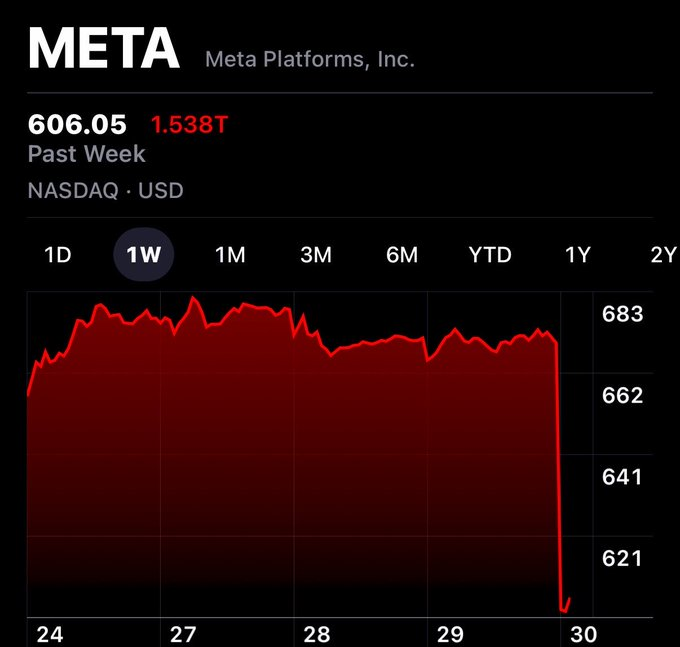
Absolutely wild that $META lost $160B in market cap after raising CapEx by just $10B even though the business posted some of its strongest growth metrics in years:
• Fastest revenue growth in ~5 years at 33% YoY
• Ad impressions grew 19% & Ad pricing grew 12% (rare combo)
• Reels time spent rose 10% from Instagram ranking improvements
• Q2 guidance came in stronger than expected at up to 28% growth
• Updated ad models drove a 6% boost in landing page view conversions
• Facebook video time rose more than 8% (largest sequential gain in 4 years)
• WhatsApp monetization is scaling with Family of Apps “Other” revenue up 74% YoY