Blake Warren

17 posts

Blake Warren banner
Blake Warren

Blake Warren

@BlakeWarrenAU

Money and Bitcoin education for Australians. Built The Bitcoin Warren.

Australia Katılım Aralık 2017
574 Takip Edilen42 Takipçiler
Sabitlenmiş Tweet
Blake Warren
Blake Warren@BlakeWarrenAU·
Every dollar in your account is hours of your life you've already worked. You traded the time. You stored what's left in dollars. The dollars are still there. The problem is they don't hold the energy you put into them. The container leaks, and it has leaked the whole time you've been filling it. Your work was real. The energy you stored has been escaping. thebitcoinwarren.com is built to show how, and why Bitcoin is the answer.
English

0
0
4
149
Blake Warren
Blake Warren@BlakeWarrenAU·
The cycles are real but they’re the waves on the surface. The tide is the dollar itself. A Sydney house was $20k in 1971 and around $1.5M now. Population doubled in that time, real wages went up maybe 70%. Neither gets you near a 75x price move. The money supply grew 200x over the same window. Most of what people call house price appreciation has just been the unit shrinking.
English
0
0
0
39
David Bird (ASX Trader) B.Ed, CFTe
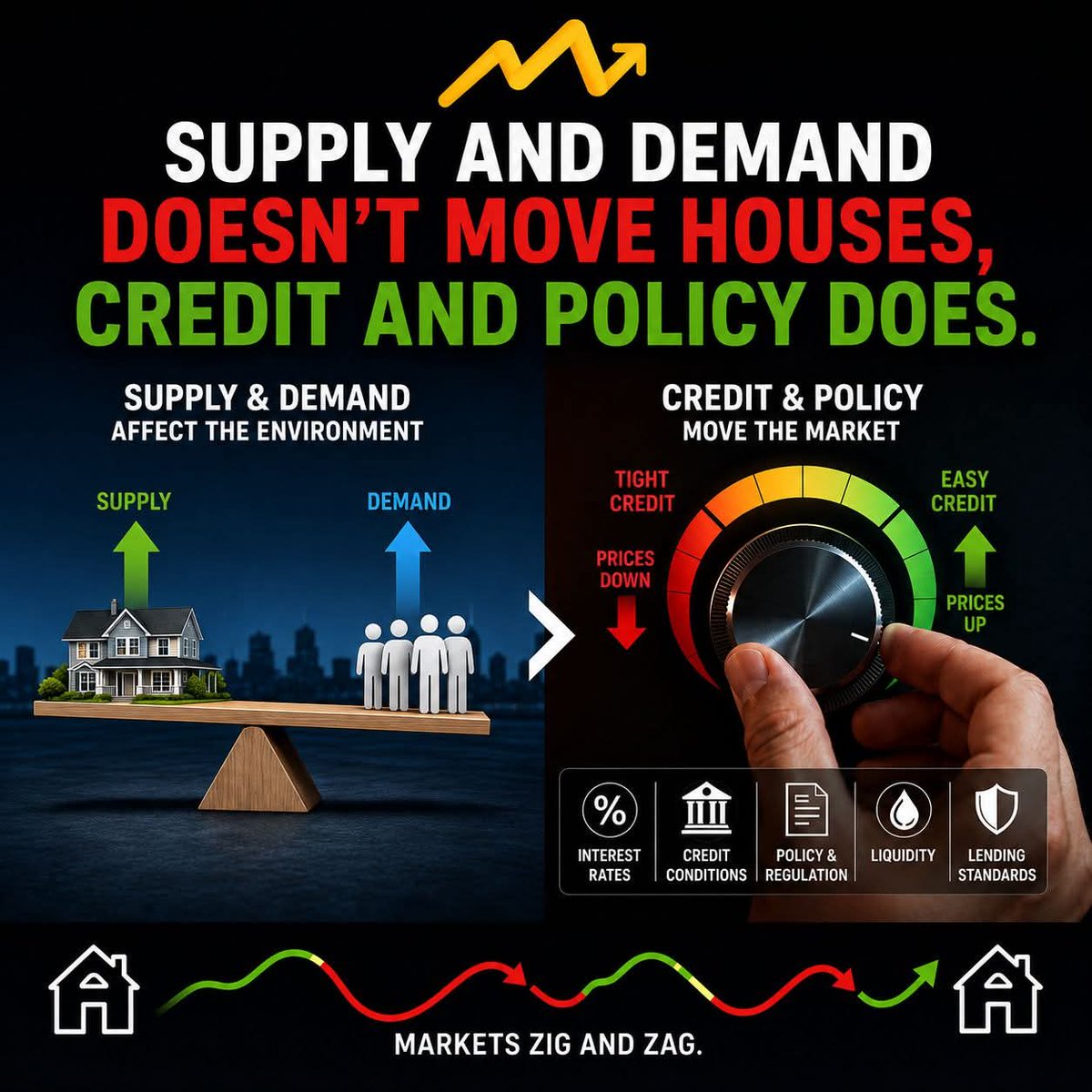
One of the biggest myths in Australia is that housing only moves because of supply and demand. People repeat the same arguments constantly: “There aren’t enough houses.” “Immigration is too strong.” “Australian property can never fall.” But if you actually study market history, you’ll realise something pretty quickly: Supply and demand explains the long-term trend. Credit and policy drive the cycles within it. And those cycles are what create booms, slowdowns, corrections, and crashes. Housing is a leveraged asset. People aren’t buying homes with cash. They’re buying borrowing capacity. That’s why markets are priced at the margin. A small rise in interest rates or tighter lending standards can wipe hundreds of thousands off what buyers can borrow overnight. Example: A family qualifies for a $1.5M loan. Rates rise. Banks tighten lending. Policy changes. Now suddenly they only qualify for $1.1M. Nothing changed about immigration. Nothing changed about housing shortages. Nothing changed about Australia being desirable. But the marginal buyer just lost $400k in purchasing power. That’s how cycles turn. We’ve seen it repeatedly: - Australia in 2018 after APRA tightening - Australia in 2022 during rapid rate hikes - US housing crash in 2008 - Ireland post-GFC - Sweden during 2022-23 tightening - Canada after aggressive hikes - Japan after the late 80s bubble - China once credit expansion slowed The common denominator? Credit contraction. Liquidity tightening. Policy changes. Not suddenly “nobody needed houses anymore.” This is the part most people miss: Supply and demand itself is affected by these things. Demand is not just “people exist.” Demand depends on: - access to credit - interest rates - confidence - liquidity - lending standards - employment conditions - government policy Those are the micro forces constantly shifting supply and demand underneath the surface. But the macro forces are what determine whether you get: - booms - slowdowns - corrections - crashes That’s why serious macro investors focus heavily on: - central banks - credit growth - liquidity - debt cycles - policy shifts - interest rates Because every asset market in history moves in cycles. Nothing moves in a straight line forever. Markets zig and zag.Expand and contract.Boom and mean revert. Property is no different. It’s not magical. It’s not immune to cycles. And it’s definitely not disconnected from credit. Eventually, that lack of understanding gets people absolutely slaughtered.
David Bird (ASX Trader) B.Ed, CFTe tweet media
English
11
12
88
5.2K
Blake Warren
Blake Warren@BlakeWarrenAU·
Forecasts are made up because the index is. M3 is up 57% over six years. CPI says 26%. Most of the gap sits in housing and assets the basket doesn’t include. Wages, pensions, and rate decisions all reference the smaller number. The real number would mean the whole framework admitting CPI was never built to measure what people think it measures. That’s why the small number is the one that gets used.
English
1
0
0
38
Mark 🇦🇺
Mark 🇦🇺@Mark_Graph·
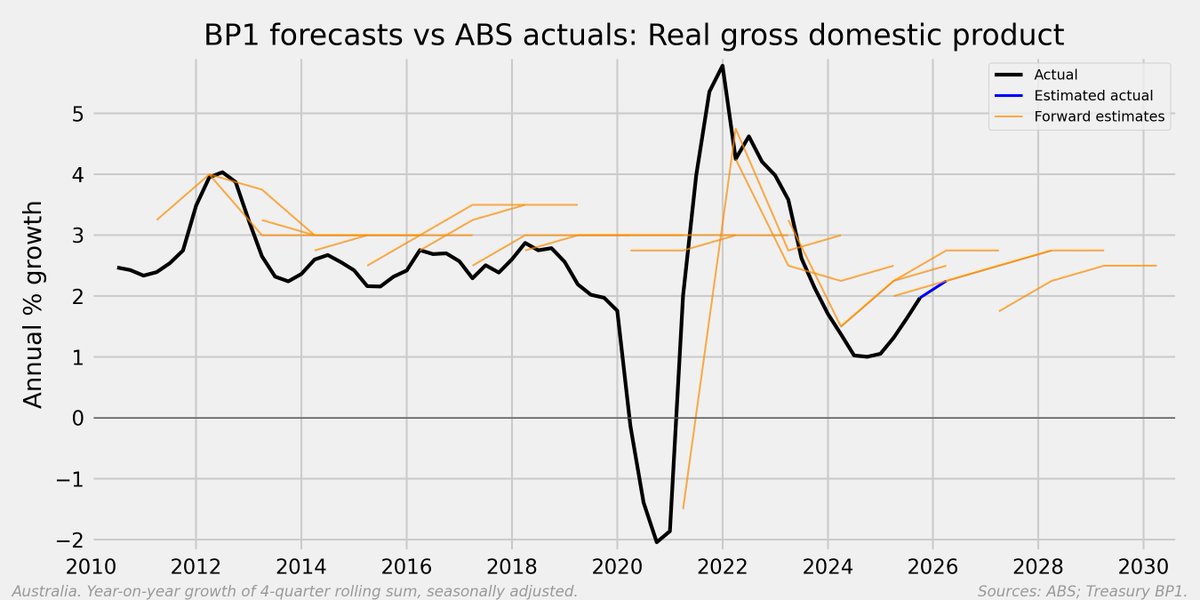
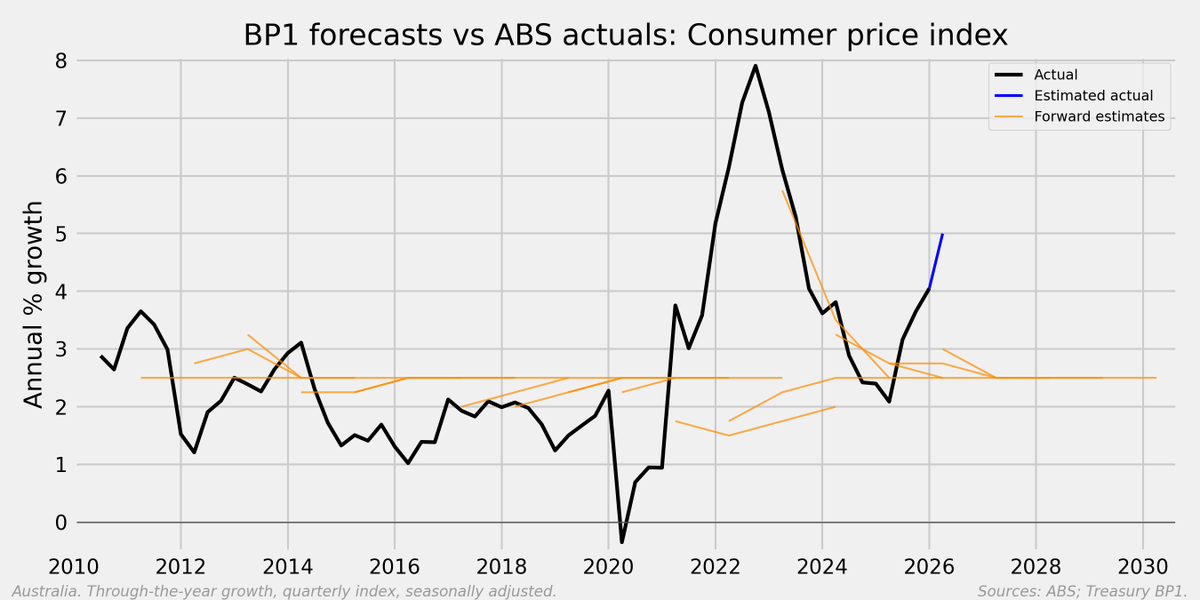
I have found my favourite two forward estimates in the Budget papers: GDP and CPI - they are mutually contradictory. We have GDP leaping above the speed limit of the economy. Meanwhile inflation in June 2026 will peak at 5% before returning to 2.5% in June 2027 and faithfully staying there. These numbers are made up. #auspol #ausbiz #ausecon
Mark 🇦🇺 tweet mediaMark 🇦🇺 tweet media
English
9
17
83
11.1K
Blake Warren
Blake Warren@BlakeWarrenAU·
@Hedgeye @gladstein Similar over here in Australia. Our CPI says the AUD lost about 21% over that period. Money supply expansion puts the real dilution closer to 36%. House prices know where the rest went.
English
0
0
12
3.9K
Hedgeye
Hedgeye@Hedgeye·
The U.S. Dollar has lost 30% of its purchasing power over the last six years
English
307
1.9K
9.6K
2.2M
Blake Warren
Blake Warren@BlakeWarrenAU·
Every limit on how much money can be created has come from one of two places. The physical effort required to make more of it, or the restraint of whoever controlled the supply. The first fails when technology makes production cheap. The second fails when breaking the commitment becomes more profitable than keeping it. For the first time, something exists whose supply limit does not depend on anyone keeping their word. It is mathematical. It cannot be expanded by crisis, election, or war.
English
0
0
0
4
Blake Warren
Blake Warren@BlakeWarrenAU·
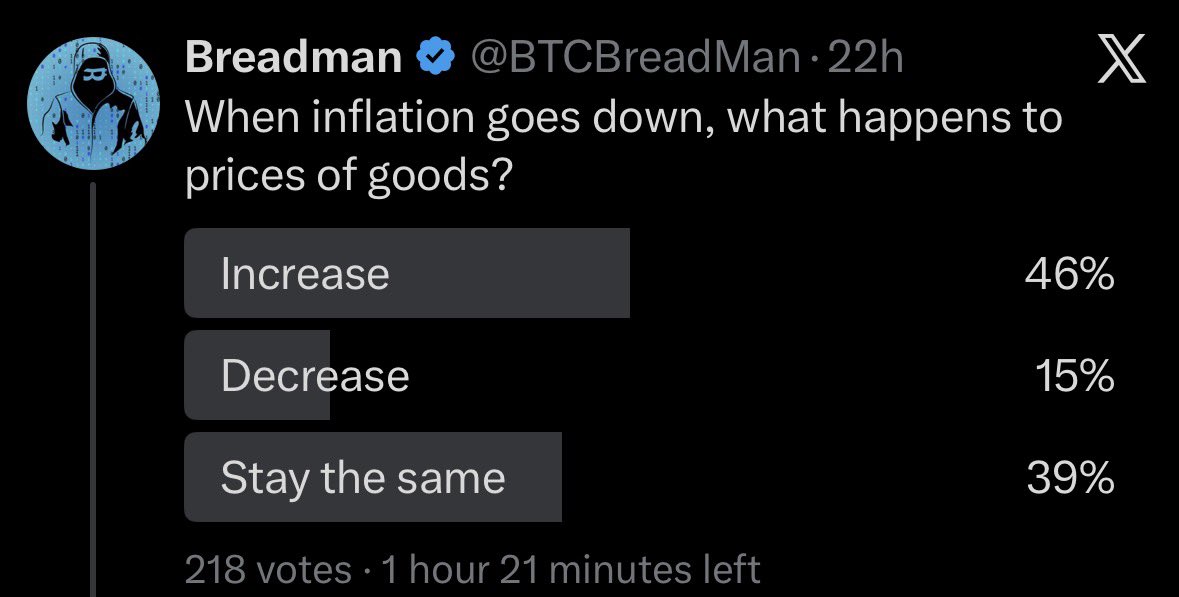
Agree its an education issue, and probably worse than the poll suggests. Peopl who got it right still think CPI measures the cost of living. Which it doesn’t. It’s a basket the ABS builds and reweights, with adjustments that smooth the headline. Even people who get the math usually dont realise that part.
English
0
0
1
38
Breadman
Breadman@BTCBreadMan·
Less than half of people understand that when inflation goes down, prices keep going up. What we have here is an education issue.
Breadman tweet media
English
22
1
37
1.7K
Blake Warren
Blake Warren@BlakeWarrenAU·
@DocumentingBTC @BlakeWarrenAU. Building the Australian case for Bitcoin starting with money. Most people don't need to be sold Bitcoin. They need to understand what's happening to their dollar first.
English
0
0
1
53
Blake Warren
Blake Warren@BlakeWarrenAU·
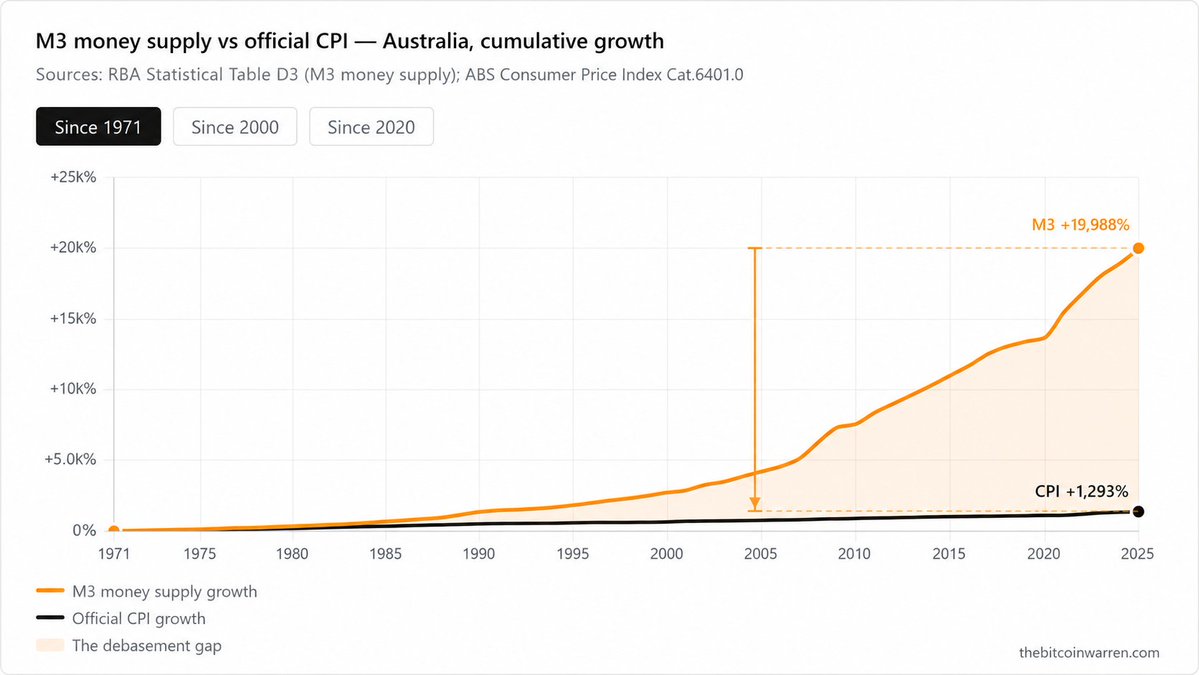
@River Its the same story in Australia. Since 2000: M3 is up 649%, CPI is up 102%. Since 1971, M3 is up nearly 20,000%. Meanwhile Australians just kept saving into the dollar wondering why it felt harder every year.
Blake Warren tweet media
English
0
0
1
52
River
River@River·
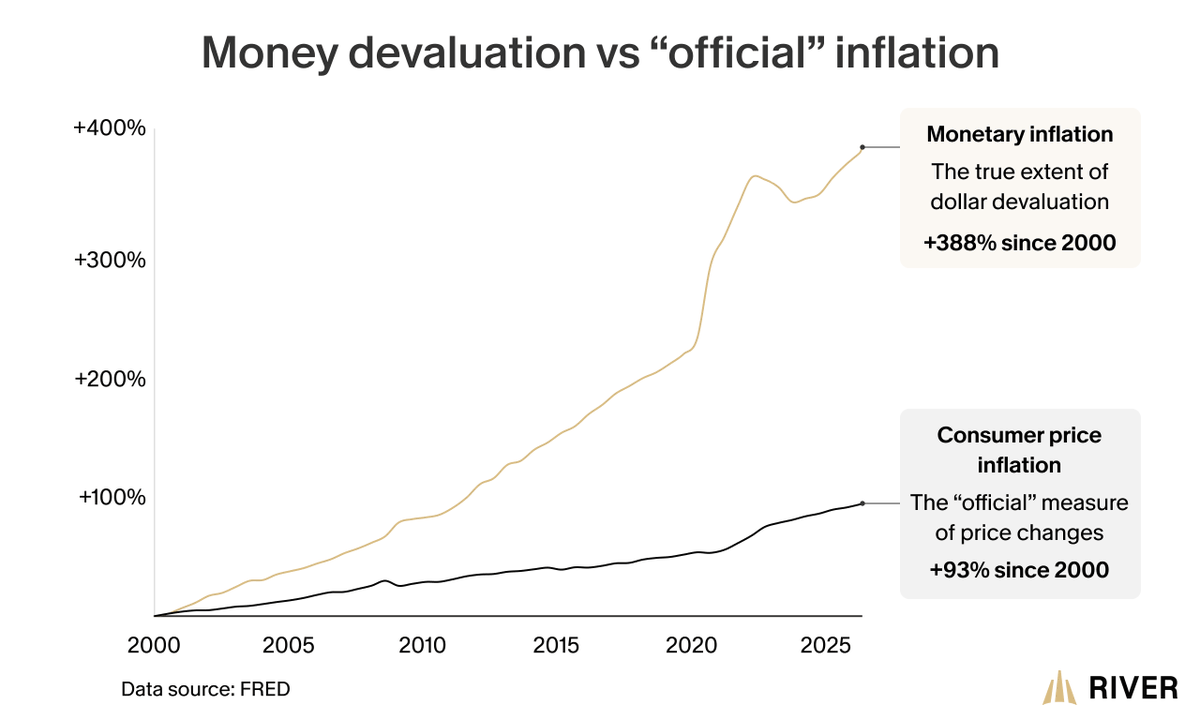
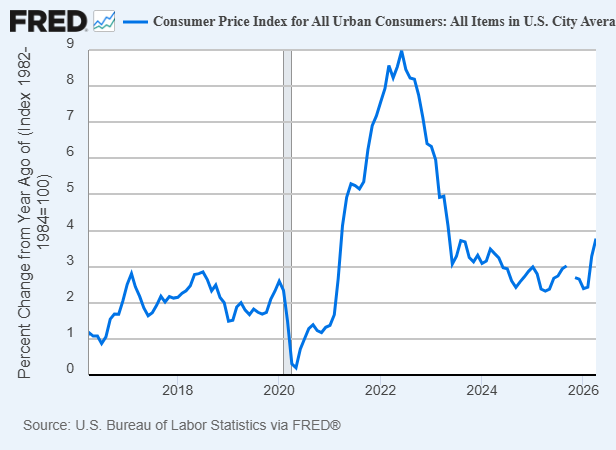
Mainstream media is telling you about “3.8%” inflation. Don’t let them gaslight you. The money printer tells the real story.
River tweet media
English
14
61
345
9.7K
Blake Warren
Blake Warren@BlakeWarrenAU·
@LynAldenContact Australia has had “low inflation” (CPI) for thirty years. Money supply (M3) grew 700% since 2000. Everyone felt it getting harder. Nobody reported the real number that explained why.
English
1
0
2
204
Blake Warren
Blake Warren@BlakeWarrenAU·
@bramk And you don't get taught this. People spend their whole life converting time into money without ever being told the money keeps buying less of the world they're working to own.
English
0
0
0
16
Blake Warren
Blake Warren@BlakeWarrenAU·
Put $10,000 in a savings account today at 5% and leave it for ten years. The balance in 2036 reads $16,289. That balance never dropped. Never looked risky. At the long-run rate of Australian money supply growth, it buys roughly 40% less than $10,000 buys today. Cash isn't low risk. It's low volatility. They're not the same thing.
English
0
0
0
6
Blake Warren
Blake Warren@BlakeWarrenAU·
Before 1971, creating more money required more gold. You could only mine it, not manufacture it. That put a physical ceiling on how much could exist. In 1971 the last link to gold was cut. The Australian dollar since then has been backed by nothing physical. Since 2000 the amount of Australian dollars in existence grew 700%. There is no physical limit on how much further it can grow.
English
0
0
0
8
Blake Warren
Blake Warren@BlakeWarrenAU·
Money has three jobs. Buy things, measure value, and store value across time. The spending works. Tap your card and the payment clears. Measuring value is where it gets unstable. Everything you own is measured in a unit that's been losing value for decades. The numbers go up only because the ruler got shorter. Storing value is the job that matters most. In money supply terms, the dollar has been losing half its purchasing power every seven years.
English
0
0
0
9
Blake Warren
Blake Warren@BlakeWarrenAU·
You go to work and come home with dollars. Every dollar you earned cost you time you will never get back. Money is just time you haven't spent yet.
English
0
0
0
5
Blake Warren
Blake Warren@BlakeWarrenAU·
If you have one painting with ten bidders, each with $1,000 to spend, the painting sells for around $1,000. Run the same auction with $10,000 each instead. Same painting, same ten people. It sells for around $10,000. The painting didn't get better. Only the amount of money in the room changed. Replace the painting with a house, a tank of petrol, a weekly shop. The extra money in the room comes from decades of money creation.
English
0
0
0
4
Blake Warren
Blake Warren@BlakeWarrenAU·
Between 2000 and 2026, the amount of money in Australia grew 700%. The number of dollars grew seven times. The amount of stuff to buy didn't. Prices look like they went up, but the measuring stick just got shorter.
English
0
0
0
11
Blake Warren
Blake Warren@BlakeWarrenAU·
You can follow every rule you were given about money and still fall behind. The dollar you're saving into loses value every year. Nobody taught you it worked like that.
English
0
0
0
16