

BrettTheTRDR
317 posts

BrettTheTRDR
@BlockhouseBrett
Head of Quant Trading @blockhouse_cap solving frag liq with my friends
Astral Katılım Aralık 2025
211 Takip Edilen30 Takipçiler

We need to stop with this nonsense of crowning RFQs over Orderbooks.
I’ve written about this before but once more wanted to share
Orderbooks like Lighter are venue for Price Discovery; where the price is set. The price is based on supply and demand.
RFQ models like Variational is a venue for Price Taking. It literally copies the price from elsewhere; physically cannot offer better pricing than the venue it hedges on without taking directional risk.
Simple math: RFQ Price = Source Price + Hedging Fees + Profit.
Actually, Variational isn't even a competitor to Hyperliquid/ Lighter; it is a customer of them when you check deep.
There is also the Last Look problem:
- In orderbook: If you see a price and click buy, you get filled. The engine is neutral, in Lighter's case it's proved by ZK that you get the fill you intended.
- In RFQ: You request a price. The MM (or OLP) looks at your request, looks at the market, and then decides if they want to take the trade. If you are profitable, the RFQ engine can simply start rejecting your quotes, can delay them or giving you worse pricing.
So please stop crowning RFQs. Most they can become an aggregator of actual trading venues.
Haseeb >|<@hosseeb
CLOBs are not going to take us to the RWA promised land. Today Hyperliquid owns the liquidity for a handful of RWA macro names. But outside the top 10 traded assets (which are ~90% of volume) liquidity falls off a cliff. When there's enough retail demand, order books can work. But "perps on everything" is a different problem, and TradFi solved it decades ago. The answer isn't every venue rebuilding its own order book. That's not what Robinhood does, it's not what Schwab does, and it's not what DeFi should be doing either. Building your own book for every asset means bootstrapping demand ticker by ticker, renting liquidity with subsidies, and ending up with thin markets that blow out 200x the moment news hits. It's like sucking the ocean of TradFi liquidity through a straw. Variational skips all of it via the RFQ model. RFQ is how institutions like Dragonfly actually trade. In RFQ, dealers quote just-in-time and hedge on the primary venue as orders come in. This lets Variational mainline TradFi liquidity directly and mirror it on-chain. Margin in smart contracts, settlement in stablecoins, liquidity aggregated from the people who already trade on the biggest underlying markets, like the CME and NYSE. It makes it permissionless to access the same depth and spreads the big boys get. With the cold start problem gone, new markets can ship at the speed of software. By next year I expect RWA perps to be the biggest contract class on-chain, bigger than BTC and ETH perps combined. That's how crypto truly becomes the market for everything. I believe the platform that wins that won't look like a traditional exchange. Proud to lead Variational's $50M Series A. Watch this space.
English
Thank you for contributing 🙏.
Are you allocating towards vault composition management onchain / execution oems .
Seems a lot of vc flows has been geared to the payments infa/processing realm. With the push to onchain trading - what expanded scope is YC taking, I hope not after just another perp dex 😂😩
English

We think all of finance is going to run onchain.
Excited to work with a ton of partners to unlock critical tools for crypto founders.
Y Combinator@ycombinator
Announcing YC Crypto deals We're now providing crypto deals to support fintech builders funded by YC: support on tools like wallets, onramps, audits, blockchains, onchain data.
English
Oh wow everyone is seeing how this can all work together now, we can have all the flavours. A world of not black and white.
What a beautiful circumstance.
RFQB4OB NOT RFQVSOB
BrettTheTRDR@BlockhouseBrett
KIND REMINDER ITS NEVER BEEN ABOUT RFQ VS OB, THATS PROPAGANDA TO MAKE EVERYONE FIGHT. THERE IS ENOUGH RFQ, OTC, INTENTS, OBS WHERE SYNERGY BETWEEN THEM ALL IS WHERE THE SYSTEM FLOURISHES. ITS NOT THIS OR THAT , ONE OR THE OTHER ITS RFQ B4 OB NEVER RFQ VS OB #wearedefi
English

There was a day in January one year, that I went Chinook fishing from 4am-10am, then showered up threw on my mountain bike gear - ventured over to fromme , did some laps with my berner-collie Wilky, which after that had some friends who wanted to get some night snowboarding in and pints, proceeded to ventured up seymour and rip with them (lived right at the mountain base essentially)
All in one day.
This was not in Toronto.
English

Vancouver, Canada 🇨🇦 Or Toronto, Canada 🇨🇦
Choose one and give a reason in comments....


English


English

if you are a solana perps trader that is still hesitant to give @PhoenixTrade a try would love to chat to understand what you’re looking for in your trading venue :)
English
@Paytrie @LoonFinance @CADCstablecoin Interested in CPN , local payout partners - how do I get in touch with the team behind CPN
English

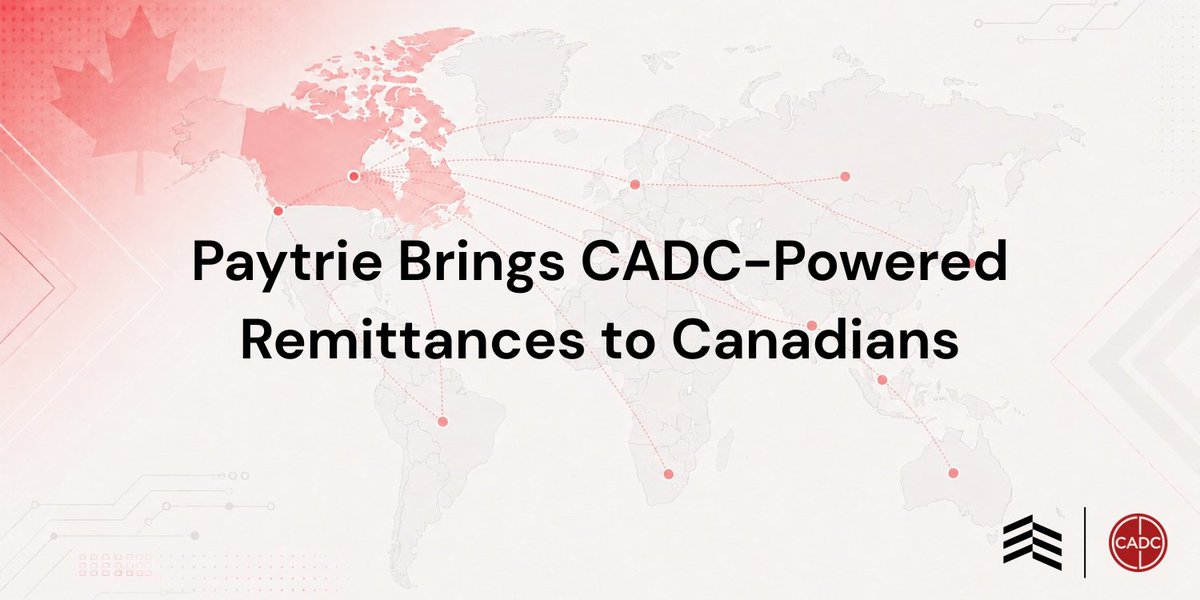
For the first time, CADC, a Canadian dollar stablecoin issued by @LoonFinance, is being used to power real remittance flows from Canada.
CAD → CADC through Paytrie
CADC → USDC converted onchain
USDC → Circle Payments Network (CPN)
CPN → Local payout partners (MXN and NGN)
More corridors coming soon!
Faster, more affordable ways for Canadians to send money abroad. This is just the beginning!
English

I want to connect with more @perps traders with a Quant focus.
Who's the best of the best to follow and chat with?
English
@Trader_CSK @ethtwit @PhoenixTrade our shop would love to help with liquidity side of things if ever needed , we quote all assets and trade full suite cex/dex multistrats.
were also integrated with @PhoenixTrade - just waiting to be tapped off the bench coach 😂
English

@ethtwit @PhoenixTrade Yeah I have seen the likes of JTX integrating phoenix, intrigued to see how that functions when it goes live. Happy to elaborate on what I've built if you want to chat
English
@ethtwit , @Trader_CSK is an absolute legend - spend multi years in the garage with him - if there is anyone who understands the sol community,its this man and of course @genuinearticles .
Honestly , wouldnt hurt to even peep into the garage and ask similar question there.
#GAGMI (miss you guys ill be back :P )
English
@ethtwit @PhoenixTrade Built a terminal that supports new traders and helps them learn. That's where a lot of friction exists due to most of the solana community being nft/defi users. Also has tools built in for more experienced traders for convenience. Phoenix is fully integrated into it
English
@zachxbt @GracyBitget reeeeee drubbberu effffff ovbs.
wonder if anti capital is also still designated MM for them.
English

You forgot to mention Bitget allows sketchy active market makers to defraud retail users with supply control manipulation schemes that end up like the left image while saying you’ll investigate without providing updates to the community (RAVE, RIVER, SIREN, LAB, etc).
Thanks to Gracy Chen for understanding.
English

谢谢Toni的看懂。
以前币圈大家喜欢追meme、追新叙事,但这一轮下来,很多图表最后都长成了左图这同一个样子。
不是说 crypto 绝对没机会了,而是我越来越觉得,真正的 alpha 可能不再来自“下一个热词”,而是来自更耐心的资产配置。
所以我们建立了UEX,为大家提供全球优质资产的交易机会。另外现在我的个人仓位和观察列表也更多放在美股、贵金属、pre-IPO stocks,也留了一些在做earning的稳定币,等一次值博率高的大回调。


0xToni@0xtonixie
中文
@toly @RuneCrypto_ @solana @PhoenixTrade @HyperliquidX agreed, and really appreciate the atomic/composable piece.
gud tek
English

@RuneCrypto_ @solana @PhoenixTrade @HyperliquidX It’s like asking what can hyperliquid do that binance or coinbase or CME cant?
Solana’s SVM needs an atomically composable perp dex in its runtime so innovation can flourish. Apps built inside the SVM can’t use HL because you have to bridge there.
English

i admire the @solana guys for pushing their apps publicly, genuine respect for the hustle
but maybe the energy should go towards innovation instead of replication
why do we need another perp dex? what can @PhoenixTrade do better than @HyperliquidX? lower fees? lighter already does zero. faster? hyperliquid settles instantly onchain
we don’t need 10 apps that all do the same thing on different chains. we need 10 apps that each do something different
crypto grows when someone builds what doesn’t exist yet, not when someone rebuilds what already works and slaps a different logo on it
hyperliquid solved perps. go solve something else. that’s how chains actually win
English

Spline orders brother
This is the way
Sam@0xCryptoSam
The perp DEXs on Solana (including @PhoenixTrade) face a massive uphill battle. Because Solana was built without cancel order prioritization for market makers, they're forced to compete with CEXs/Hyperliquid on latency. And gossip/consensus makes that incredibly difficult. For order priority, makers have to pay a fee, and that gets priced into the spread. Because it's structurally more expensive to be a maker on Solana, the exchanges are forced to lower fees, so the exchange makes less money. Only after future upgrades like JitoBAM and Constelation (MCP) which enable guranteed custom transaction ordering logic (effectively introducing cancel order prio) are the Solana perp DEXs really even competing with Hyperliquid. Post-upgrade, now we're competing on the dimension of product + system architecture, which IMO is significantly harder than sitting back and letting Jito/Anza do your technical work. You're going up against the designer of arguably the most successful DeFi application of all time. The reason for this post is that any other onchain perp DEX stealing significant market share from Hyperliquid should be extremely non-consensus.
English
Mostly a blend. HL was already pulling perp flow off Solana through Q1 — that's the slow bleed on the blue line. Drift April 1 exploit ($285M) was the cliff at the end. And "traddex" here = program-address orderbook (Phoenix, Serum-style) not Uniswap, so orange picking up is CLOBs absorbing what stayed on-chain. HL exodus + exploit + structural shift to on-chain books. Spot/DLMM (Meteora) is its own lane and stayed sticky throughout.
English

@BlockhouseBrett Yeah I know its not vs vs
but what happened on this drop off? Are you saying RFQ ate most of the volume?
English


i am looking for someone to hand over my money to for:
* funding rate arb tools integrating phoenix
* pair trading app integrating phoenix
* basis trade products integrating phoenix
* prediction market trading app integrating phoenix (might build this myself over a weekend)
the list goes on!
Phoenix@PhoenixTrade
Phoenix builder codes are live. Flight Codes let any trading app, terminal, bot, or agent route order flow to Phoenix and collect a fee on every trade.
English
@captain_kole cant wait , r u back on troll chat sir - 2024 koleworld troll chat days feel decades ago, need that energy back
English

Top’s not in until I flip short and start terrorizing the timeline like its 2024 again.

English
@InsilicoTrading I will only come back to Personal Account trading + Only doing so on insilico under one condition.
@captain_kole returns to troll chat and yells at everyone that top is in again.
Else, I just keep building. 😂
English

@TheNetDaily how is this any different than hockey hair..... canadian hockey players been ripping this set up for decades.
English

KIND REMINDER ITS NEVER BEEN ABOUT RFQ VS OB, THATS PROPAGANDA TO MAKE EVERYONE FIGHT.
THERE IS ENOUGH RFQ, OTC, INTENTS, OBS WHERE SYNERGY BETWEEN THEM ALL IS WHERE THE SYSTEM FLOURISHES.
ITS NOT THIS OR THAT , ONE OR THE OTHER
ITS
RFQ B4 OB
NEVER
RFQ VS OB
#wearedefi
English