English
Gerald Butts' Conservative Conscience
8.1K posts

@ButtsConscience
Liberal Apologist, High Falutin Eco-nutjob, Professional Bubble Buster & Dasher of Dreams. I carry Trudeau's water-box thingies. 🍎 🍏 Parody-ish

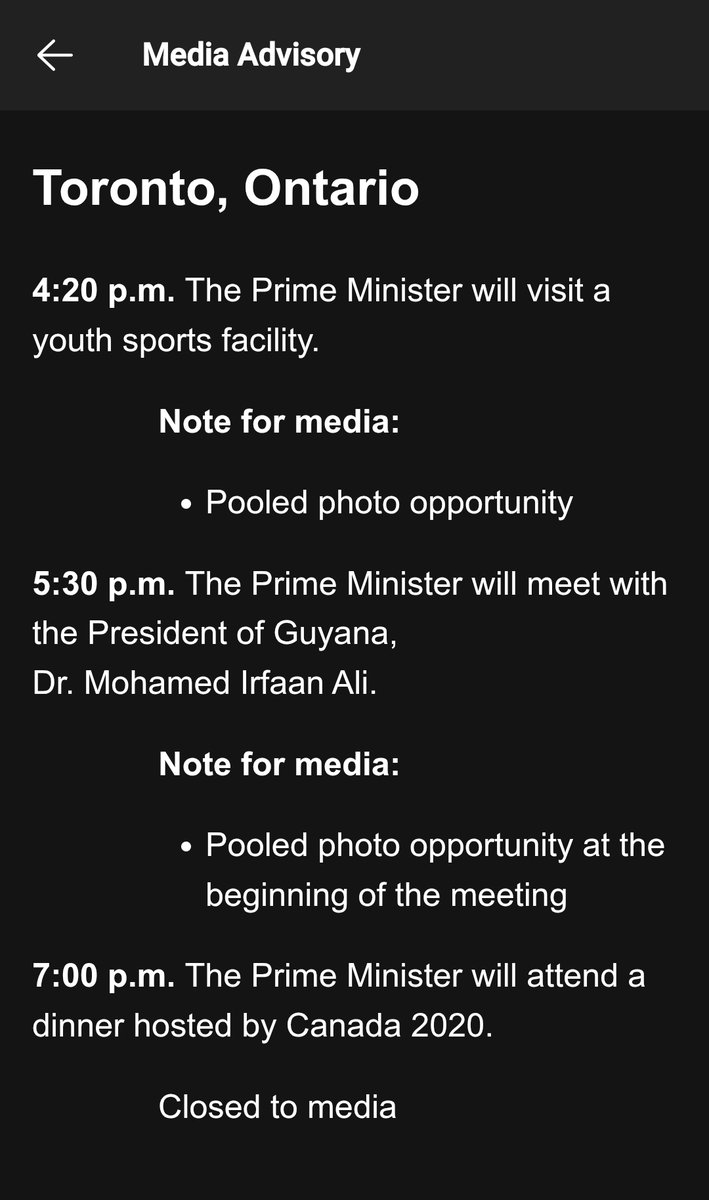


It is not Trump’s job to improve the Canadian economy. Trump’s job is to get the best trade deals for the USA and force the deadbeats of NATO to pay for their own defense costs.



From Crossing Floors To Crossing Lines: Dear Michael Ma, There are missteps in politics. Then there are moments so pristine in their execution that one almost wants to thank you for the demonstration. Your appearance at the House of Commons Standing Committee on International Trade was one of those moments. Not because it advanced anything. But because it clarified everything. You were questioning Margaret McCuaig-Johnston, a senior fellow at the University of Ottawa and a long-established expert on China, global supply chains, international trade, and the forced labour risks tied to Uyghur slavery. If ever there was a witness purpose-built to speak on that exact subject, she was it. Credentials aligned. Expertise aligned. Topic aligned. A rare moment where the system actually put the right person in the right chair. And then you arrived. Faced with Margaret McCuaig-Johnston’s level of expertise, you chose not to engage her evidence, but to sidestep it. “Anti China,” you suggested, as though documenting labour camps were a personality flaw rather than a matter of record. A neat little label, deployed with the confidence of someone hoping it would do the heavy lifting. It didn’t. Then came the tempo. The rapid-fire questioning. The insistence on short answers. The carefully managed interruptions that ensure just enough of a response is heard to pivot away from it. It had all the hallmarks of a strategy, in the same way a cardboard cutout has all the hallmarks of a person. You were not examining. You were staging. And layered over it all was that faint, unmistakable throwback tone. The kind that treats a highly qualified woman not as an authority to be reckoned with, but as something to be contained, redirected, and talked over until the room forgets why she was invited in the first place. A little early-1900s patriarchy, lightly polished and rolled into committee procedure. Very modern. Very progressive. Very on brand for a man who crossed the floor only to immediately begin crossing lines. There was, however, a second performance worth appreciating. In most committee rooms, when a Conservative so much as nudges a witness toward brevity, Liberals react as though parliamentary norms have been dragged into a ditch. Objections fly. Hands wave. Faces tighten. And the chair intervenes with great theatrical concern to ensure the witness is allowed to answer. A well-practised ritual. Which made the sudden outbreak of tranquility under Ben Carr feel almost experimental. No intervention. No reminders. No concern. Just a serene confidence that everything unfolding was, somehow, entirely appropriate. One assumes the rulebook was merely resting. Because this is the part that lingers. You crossed the floor from Pierre Poilievre’s Conservative Party to Mark Carney’s Liberal Party. A move presented, as these things always are, as thoughtful. Strategic. Necessary. You would be more effective, we were told, aligned with power. It is a compelling narrative. It does, however, rely on the assumption that effectiveness is transferable. What we saw instead suggests something else made the trip. Not improved. Not recalibrated. Just relocated. The Conservatives, for their part, have been handed a rather elegant escape. Not through foresight, but through timing. A problem that walks out the door is still a problem, just no longer yours to explain. That explanation now belongs to the Liberals. And here the irony becomes almost too generous. This is a party that never tires of informing Canadians that it will take no lessons from Conservatives. Yet when it came to you, the apparent vetting model seems to have been: well, he was over there, so surely somebody checked. A touching faith in invisible homework. Sadly, the Conservatives clearly did not do enough homework either. They just happened to unload the assignment before it exploded in someone else’s locker. The Liberals, however, cannot even claim surprise. They took a floor crosser from a rival party, apparently made sweeping assumptions, and then acted shocked when the package turned out to contain exactly what the label should have warned them about. Which brings us, inevitably, to Mark Carney. Because leadership is not tested by the decisions that go smoothly. It is tested by the ones that arrive with consequences attached. And you have arrived fully assembled. He now faces a choice. He can sideline you. Quietly reduce your profile. Remove the conditions under which this kind of performance becomes a recurring feature. In doing so, he also quietly dismantles the entire excuse for your floor crossing, that proximity to power would somehow make you more useful to your riding. Or he can do what his own track record suggests he may well do. Stand firm. Close ranks. Pretend the whole thing is overblown. Preserve appearances. Protect the ego that made the bad decision in the first place. Because to admit error would mean admitting that courting you over was not a show of strength, but a lapse in judgment dressed up as strategy. And that, politically, is where the trap closes. If Carney turfs you to the back benches, he blows a hole in your own justification for crossing. Suddenly the man who claimed he had to switch parties to get closer to power is left nowhere near it. But if Carney keeps you up front and keeps defending you, then he is not merely tolerating the behaviour. He is feeding it. He is teaching you that protection follows performance, no matter how boorish, how transparently partisan, or how steeped in old-school misogyny it may be. And people who feel protected rarely become more restrained. They become more confident. More willing. More asshole-ish. More certain that the room will adjust around them. So here we are. You crossed the floor in search of influence. And in short order, crossed a line by trying to discredit Margaret McCuaig-Johnston, a woman whose expertise on China and Uyghur forced labour far exceeded anything you brought to that exchange. If ever there was a witness who could speak to Uyghur slavery, she was it. And Michael Ma’s answer to that was not substance. It was swagger, interruption, and the kind of stale patriarchal toxicity that should have been left somewhere around the invention of the typewriter. As for Mr. Carney, he may soon discover that in the pursuit of numbers, he acquired something far less cooperative. Not an asset. Not a coup. A stinking, rotting albatross now hanging around the Liberal Party’s neck like a garland of decaying principles. And if he chooses to keep feeding it rather than cut it loose, he can keep it. Sincerely, Melanie in Saskatchewan, A citizen who was paying attention 👇🏻 buymeacoffee.com/melanieinsaska… 👇🏻 open.substack.com/pub/melanieins…



🇨🇳 State media now praising 🇨🇦 MP Michael Ma’s attack on on @M_Johnston1 “Michael Ma launched a rapid-fire interrogation that sent tension through the room. The witness's stumbling response sparked uproar.” Increasingly damaging for @OurCommons 🔗 m.guancha.cn/internation/20…


How Delusional Are Canadians About Carney x.com/i/broadcasts/1…
Moneyball... The Canadian Political Edition Are razor thin election margins being quietly converted into Liberal seats? What if the path to power in Ottawa is no longer persuading voters but recruiting MPs from ridings the Liberals barely lost? Imagine losing an election in a riding by a few dozen votes. Not thousands. Not even hundreds. A few dozen. The voters speak. The ballots are counted. The result is recorded. The seat goes to the other party. Democracy has rendered its verdict. Now imagine that seat quietly changing hands anyway without another election. Not because the voters changed their minds. Because the MP did. If that sounds vaguely familiar, it should. It is essentially the political version of what the Brad Pitt film Moneyball made famous. In that story, the Oakland A’s could not compete with richer baseball teams by buying superstar players. So they did something different. They hunted tiny statistical advantages other teams ignored. Marginal gains. Overlooked players. Small edges buried in spreadsheets. Individually the moves looked insignificant. Collectively they changed the standings. Now consider Canadian politics. Not baseball players. Members of Parliament. Not batting averages. Election margins. And not trades. Floor crossings. To be clear, floor crossing is legal. It always has been. Members of Parliament are free to change parties. Canadian politics has seen it before. Conscience evolves. Ideologies shift. Personal calculations change. All of that is true. But something interesting appears when you begin looking closely at the numbers, specifically the ridings where the margins were razor thin. These are seats where the electorate was already divided almost perfectly down the middle. And those are precisely the seats where acquiring a single MP can flip the parliamentary math instantly. Consider several ridings from the last election where Conservatives defeated Liberals by extremely small margins. Terra Nova–The Peninsulas was decided by only a handful of votes. Milton East–Halton Hills South by just a few dozen. Windsor–Tecumseh–Lakeshore by fewer than a hundred. In Markham–Unionville and Edmonton Riverbend the margins were still narrow by federal election standards, measured in the low hundreds. In ridings with tens of thousands of ballots cast, those margins are not ideological fortresses. They are statistical coin flips. Now imagine you are a strategist trying to change the parliamentary math without calling another election. Would you target MPs who defeated your party by twenty thousand votes? Or would you look at ridings where the electorate was already split nearly fifty fifty? Where persuading one individual changes everything!? That is where the Moneyball logic appears. Instead of persuading fifty thousand voters, you persuade one MP. The scoreboard shifts instantly. No campaign. No election. No voters trudging through snow to mark an X. Just a quiet change of jersey on the House of Commons floor. Now consider the MPs who have crossed the floor or whose ridings are currently the focus of speculation. Seats like Edmonton Riverbend held by Matt Jeneroux and Markham–Unionville represented by Michael Ma sit squarely in that category of competitive swing ridings. Even Nunavut, represented by Lori Idlout, illustrates how single seats in geographically unique ridings can dramatically affect parliamentary arithmetic. Notice the pattern. Not massive strongholds. Swing ridings. Seats where the Liberal candidate already came within striking distance. Which raises an uncomfortable question. Is this coincidence? Or strategy? Because if a riding was decided by one hundred votes, persuading the MP to change parties is dramatically easier than persuading fifty thousand voters to change their minds. The parliamentary math changes instantly. The voters never get another say. (Just like Canadians did not get a say when 131,674 votes from Liberal Party members at Mark Carney's leadership race installed Mark Carney as defacto Prime Minister. He effectively became the Prime Minister of Canada through installation, not election. That is 0.33 percent of Canadians. Or, put another way, roughly one third of one percent of the country’s population participated in choosing the Liberal leader who then became Prime Minister through the parliamentary system without being elected by the people of the country. • 131,674 people chose the leader • out of about 41 million Canadians) Of course nobody in Ottawa will describe it this way. Politics prefers softer language. You will hear phrases like cooperation, evolving priorities, responsible leadership, and national unity. Politics prefers poetry. Arithmetic prefers patterns. Individually every floor crossing can be explained. Each one comes with its own "so-called" story, its own "so-called" reasoning, its own "so-called" justification. But collectively something else begins to emerge. A seat here. Another seat there. Nothing dramatic. Until one day the standings look different. Exactly the way Moneyball worked. No blockbuster moves. Just quiet arithmetic accumulating advantage until the outcome changed. Which leads to the question Canadians should probably start asking. What happens when parliamentary power can be quietly reconstructed not by voters but by strategic acquisitions? Because when an MP crosses the floor in a riding decided by one hundred votes, something remarkable happens. The voters who cast those ballots never get a second say. The riding simply changes hands. The scoreboard updates. Democracy becomes adjustable. Perhaps it is coincidence. Politics produces coincidences the way prairie fields produce dandelions. Sudden ideological awakenings. Perfectly timed conversions. Entirely possible. But if it is strategy, it is an elegant one. Because the brilliance of the Moneyball approach is that it hides in plain sight. Each move looks isolated. Each explanation sounds reasonable. Each crossing appears personal. Until one day you step back and notice something unsettling. The standings have changed. And the voters were never asked again. Because if Canadian politics has truly entered its Moneyball era, the most powerful force in our democracy is no longer the voter. It is the margin. And if the margin is small enough, the voters themselves can apparently be traded after the game is over. That is not strategy. That is rewriting the final score after the stadium lights are off and the crowd has already gone home. Melanie in Saskatchewan * Of Note: I submitted a petition to address this, and if it’s accepted and sponsored I will post it. Hopefully we can put an end to this type of dishonesty in our parliament. 👇 buymeacoffee.com/melanieinsaska… 👇 open.substack.com/pub/melanieins…
🇨🇦 Canada used to produce entrepreneurs. Now we mostly produce paperwork for them. 📝 Take 3 minutes and listen to Catherine Swift describing the life of a Canadian entrepreneur in 2026: 👉🏻Higher taxes. 👉🏻More regulation. 👉🏻Less incentive to build anything. And somehow government still wonders why investment is leaving.🤦🏼♂️ #MakeSanityGreatAgain #cdnpoli