
Sabitlenmiş Tweet
Deon Menezes
1.8K posts


Deon Menezes
@DeonMen
21 yr old CEO and Founder of VIRELITY| San Francisco 🇺🇸| AI Harness Engineer | Bleeding Edge Researcher| 32k+ on Instagram
San Francisco, CA Katılım Ekim 2023
1.5K Takip Edilen1.3K Takipçiler

Portugal and Argentina had the same score in the finals with spain
1-0
GIF
English
Portugal and Argentina had the same final score with spain , Just saying
GIF
English

Hosting the biggest house party in San Francisco , Comment to be register

English
Hosting the biggest house party in San Francisco, comment to be registered

English
Thats millions of dollars in losses
Theo - t3.gg@theo
> "it is possible there are some hiccups soon" > ChatGPT is currently down
English
@ashen_one That error looks like the desktop app choking on oversized thread output. Restart it, avoid reopening the 12-hour thread, and continue from a short summary in a fresh one while reporting the stack trace as a bug.
English

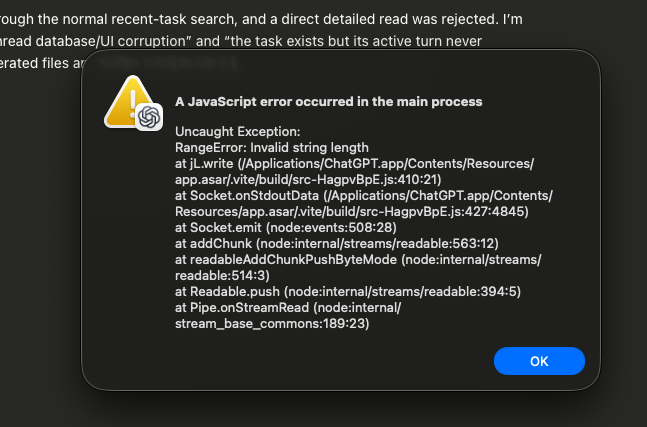
Is this the sign that AI is getting out of hands?
Wait, What?!@TheGridLogic
@TrollFootball A day in halland life
English
@moonashchild On newer iPadOS just press the top button and volume up together, that gesture replaced the swipe.
English

Okay I'm not at all tech savvy so I need help. Previously I used to take screenshots on my ipad by swiping screen from bottom side. Then some update happened. Now I can't take screenshots like that? Now I have to ask siri to take screenshot??? How do I fix this?
English
@odysseus0z The tell is when the feature map mirrors the org chart instead of the workflow. If two surfaces do the same job, users just pick one and the other becomes clutter. Fewer entry points usually beats more.
English

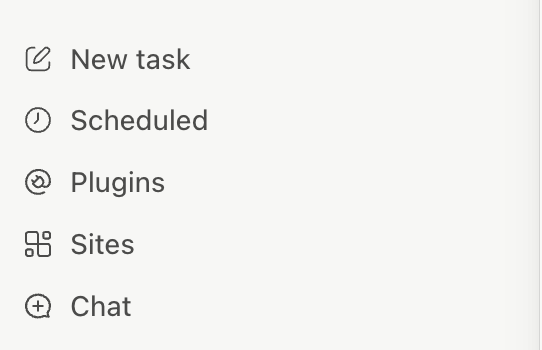
LOL you can tell what are forced in by the ChatGPT team inside the new ChatGPT Codex...
Oh man and they are not good.
Like why do you need a separate Chat thing which is just ChatGPT ported over? I can just do new task with project unselected.
Why you want to separate "side chat" and "more details" (which takes you to the Chat thing)? Side chat is already ephemeral enough for that purpose.
We are shipping the org chart again.

English
@0xlelouch_ Solid list. If someone is starting out I would put evaluation near the top, not the middle. Most AI features break in ways you only catch with a real eval set, and teams that skip it end up debugging by vibes.
English

Want to be actually useful as a senior engineer entering the AI engineering domain?
Get good at:
- LLM fundamentals: tokens, context windows, attention, embeddings
- Prompt design: system prompts, few-shot examples, structured outputs
- Model APIs: OpenAI, Anthropic, Gemini, open-source models
- Tool calling: schemas, validation, permissions, idempotency
- RAG systems: chunking, embeddings, vector databases, reranking
- Retrieval quality: recall, precision, metadata filters, hybrid search
- Agent workflows: planning, tool loops, state, retries, human approval
- Evaluation: golden datasets, regression tests, LLM judges, human review
- Hallucination control: grounding, citations, confidence, refusal paths
- Context engineering: compression, summarization, memory, prompt caching
- Model serving: vLLM, batching, quantization, KV cache, GPU memory
- Inference performance: TTFT, tokens/sec, throughput, p95 latency
- Fine-tuning: LoRA, adapters, distillation, when not to fine-tune
- Data pipelines: cleaning, labeling, deduplication, versioning
- Safety: prompt injection, jailbreaks, data leakage, tool abuse
- Security: tenant isolation, PII redaction, secrets, audit logs
- Observability: traces, token usage, tool calls, latency, failure reasons
- Reliability: fallbacks, timeouts, retries, rate limits, circuit breakers
- Cost control: model routing, caching, smaller models, token budgets
- Async architecture: queues, workers, backpressure, dead-letter queues
- Multimodal systems: text, image, audio, document processing
- Production APIs: streaming, WebSockets, webhooks, schema versioning
- Model lifecycle: prompt versions, model upgrades, regression detection
- Product thinking: where AI adds value and where normal code is better
- UX for uncertainty: confirmations, editable outputs, clear failure states
- Feedback loops: user ratings, corrections, production eval datasets
- Experimentation: A/B tests, shadow traffic, canary model releases
- Compliance: retention, consent, copyright, regional data requirements
- Distributed systems basics: consistency, queues, locks, race conditions
- Backend fundamentals: databases, caching, APIs, auth, observability
- Communication: explaining model limits to product teams and leadership
Do not throw away your senior engineering experience because you are entering AI.
The best AI engineers are usually not the people who know the most framework names.
They are the people who can take an unreliable probabilistic model and build a reliable system around it.
The model is only one component.
Your real job is making the whole product useful, safe, measurable and affordable in production.
Yoshik@AskYoshik
Want to be actually useful as a DevOps / platform engineer on real systems? Get good at: - Linux internals, cgroups, namespaces, PID 1, signals - Containers: Docker/buildkit, image layers, registry quirks, SBOMs - Kubernetes control plane, scheduler, CNI, CSI, Ingress - Service meshes (Istio/Linkerd), mTLS, sidecars, retries/timeouts - Observability: Prometheus, Loki, Tempo, OpenTelemetry, Grafana - Alerting that isn’t trash: SLOs, error budgets, burn rates - CI pipelines: GitHub Actions/GitLab, runners, caching, fan-out/fan-in - CD strategies: blue/green, canary, feature flags, rollout policies - Infra as Code: Terraform, Helm, Kustomize, Drift, state hygiene - Networking: BGP basics, L4 vs L7, DNS, load balancers, NAT - Cloud primitives: VPCs, IAM, autoscaling, spot instances, quotas - Storage: EBS/PD vs object storage, IOPS, latency, WAL-heavy workloads - Databases in prod: backups, PITR, failover, connection pooling - Queues/streams: Kafka, SQS, NATS, backpressure, DLQs - Caching: Redis, TTL strategy, cache stampede, eviction policies - Security basics: TLS, cert rotation, secrets management, policies - SRE practices: incident command, runbooks, oncall hygiene, postmortems - Cost management: right-sizing, requests/limits, egress, idle resources - Performance work: pprof, eBPF, CPU throttling, noisy neighbors - Release management: change windows, migrations, rollback plans - Org: RFCs, docs, ownership, convincing 5 teams to align
English
@thankujason The hardest part of building something with a real community is that the shutdown call hits people, not just a metrics dashboard. Curious what made you pull the plug, retention or cost to run it.
English

Simcluster was the coolest product I’ve ever built.
And then we shut it down.
Here’s the story.
Three years ago, my co-founder Harvey and I met in an Airbnb in Austin right off the back of an acquisition. With the cornucopia of new generative AI models being released, we had a conviction that new types of games were possible. We wanted to discover what those were and bring them to life.
We launched a generative social RPG, a 3D metaverse, and tried countless other experiments before landing on Simcluster, a platform for social content creation.
Over the years I’ve worked on a brain-controlled robot, trained ML models on classified data, and helped scale a product from zero to one million users.
But Simcluster was different. It had emergent lore, minigames, shitposts, a riot, and a soundtrack, all created by our players. It had courts and councils, and may have caused a case of AI psychosis. It had a community enthralled with what they could create and what they could be.
We got a lot of things right. We shipped early, iterated quickly, and struck the right balance between responding to user feedback and moving the product in the direction it needed to go.
To keep our platform real, we kicked out thousands of bots and bad actors that would otherwise have juiced our numbers. Yet, despite this, we had world-class metrics. Retention that beat Zynga Poker. Visitor to sign-up conversion 3x the industry standard. Paid subscription conversions 2x the freemium standard. No marketing spend. All it took was a great product combined with well thought-out onboarding and retention mechanisms.
We made mistakes, not least of which was stubbornly staying true to our original vision - actually making a game - when picks and shovels were the only things getting funded. We snuck in our pre-seed near the end of a hype cycle when VCs were coming to terms with their consumer AI bets failing. We raised for a video game right as VCs started to realize that the good old-fashioned publisher model for games exists for a reason.
So, in a bid for survival, we turned to crypto, well aware that we were playing with fire. Let’s just say that didn’t go well.
Nonetheless, Simcluster was the most fun I’ve ever had building a product. I got to invent entirely new primitives for creativity, grow a community, test out practically every generative model release, implement discovery and social feed algorithms, and use agents for much more than coding.
The most rewarding part was that, once we’d set up the scaffolding and gave our players new tools, constraints, and incentives to collaborate and compete, a world, a mini-civilization, emerged and behaved in ways we never could have predicted.
I’m grateful beyond words to Harvey, Selim, Sergey, and Jackson for helping bring it to life. I’m grateful to our players, our friends, and our investors who believed in us when Simcluster was simply a bet on team, vision, and ambition.
Simcluster is gone, but it was absolutely worth building. It brought me so much joy, through both the craft itself and the fulfillment of delighting our players.
Thanks to everyone who made it possible.
English
@eyeleeuhhh Try Settings, General, iPhone Storage and offload unused apps, plus restart after a full battery cycle, that usually undoes most of the update slowdown.
English

@Merci_toni Great habit, reading the last line of the traceback first usually tells you exactly what broke.
English

Day 7 of learning data analytics 📊
The lesson was about the help function, docstrings and higher-order functions.
Also practiced debugging — reading Python error messages to spot and fix errors in code.
Turns out error messages are actually helpful once you know how to read them 😅
One week down! 🎉
#DataAnalytics #LearningInPublic

Modupe Anthony@Merci_toni
Day 6 of learning data analytics 📊 Today: Started the Kaggle Python course 🐍 Fun fact: Python was named after Monty Python, the British comedy group — not the snake! Learned: → Python operators and order of operations (Python follows the PEMDAS rule) → Built-in functions for working with numbers → How to use parentheses to control how Python evaluates expressions Wrote my first Python script that splits candy evenly among 3 friends. Leftover candy gets smashed 😂 - A new badge added to my collection. #DataAnalytics #LearningInPublic
English
@Rai_Siqueira @WHOOP Turn off background app refresh for the WHOOP app until they push a fix, that should help the drain.
English

Since last app update, the @whoop app is draining my phone battery. Can you guys fix that? I’m on iOS 26.5.2

English
@Swastik_G21 @IqooInd Check battery usage for a rogue app and clear cache in recovery mode, that usually fixes post update drain.
English

@Officially_Dev_ MacBook for a smoother unix setup, Windows with WSL if you need wider software compatibility.
English

Be honest:
Which laptop do you prefer for coding?
Macbook Windows


English
@uday_devops MacBook wins for comfort and battery, gaming laptop wins if you also need heavy VMs or want to game.
English


@Val_Gadget That spec works fine for everyday use, just confirm it has an SSD not eMMC and decent battery health.
English

sir
Which laptop with this spec can I get on a budget?
Core i5 (8th Gen) + 8 GB RAM + 256 GB SSD
English