Bilaspur - #1.2BT #Coal 🚊⚡️🔌 GDP

35.9K posts

Bilaspur - #1.2BT #Coal 🚊⚡️🔌 GDP banner
Bilaspur - #1.2BT #Coal 🚊⚡️🔌 GDP

Bilaspur - #1.2BT #Coal 🚊⚡️🔌 GDP

@Desifunday

#Adani #PowerGrid #NTPC #CoalGate #India #Indigo #AirIndia #JetAirways #KingFisher #SpiceJet #DEL #BOM #BLR #UDAN #AAI #Railway #Bilaspur #Korba #Chhattisgarh

Boston, MA Katılım Kasım 2011
1.6K Takip Edilen1.1K Takipçiler
Sabitlenmiş Tweet
Bilaspur - #1.2BT #Coal 🚊⚡️🔌 GDP
@jcrajan00 Burning more than 1 billion tons of coal is not achievement it is disaster Moving 1 billion tons of coal by canceling passenger trains, express trains is not achievement Subsidizing local trains in Tier 1 slum cities from coal railway zones is not achievement
English
0
0
1
56
Chenthil
Chenthil@jcrajan00·
India treated coal like a state secret for decades. Private companies couldn't mine it, couldn't sell it, couldn't price it. Then June 2020 — commercial auctions opened. Result: 1,012 million tonnes in FY24. All-time record. Coal India's monopoly share dropped below 75% for the first time ever. Private capex flooded in. Now look at non-fuel minerals. Lithium, copper, rare earths — same government-only licensing from the 1950s. IREL sits on 10 lakh tonnes of monazite capacity, runs at 53%. Private exploration applications gather dust. The coal precedent proved something simple: let people bid, let them mine, let them sell at market price. Production follows. I think we'll look back at critical minerals the way we look at coal pre-2020. The sector doesn't need more policy. It needs liberation.
English
8
44
342
22.8K
Bilaspur - #1.2BT #Coal 🚊⚡️🔌 GDP
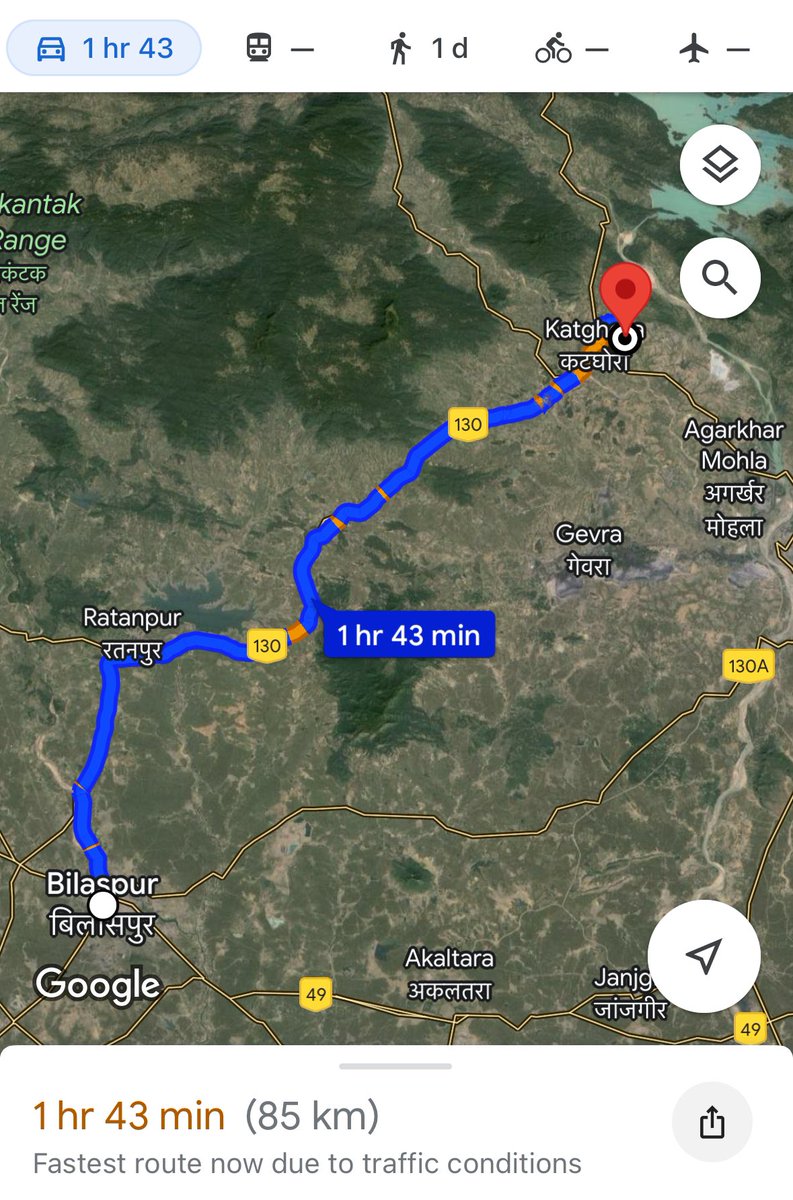
Maharashtra Madhya Pradesh Uttar Pradesh Bihar Jharkhand Odisha Andhra Pradesh Telangana Chhattisgarh will get connected with each other, promoting tourism from Ayodhya - Amarkantak - Puri - Tirupathi and trade across states
हिन्दी
0
0
0
44
Bilaspur - #1.2BT #Coal 🚊⚡️🔌 GDP retweetledi
Chenthil
Chenthil@jcrajan00·
India's mining sector contributes 2-3% to GDP. A Deloitte report says it could add $500 billion by 2047. The gap isn't geology — we have the minerals. It's that we still treat mining as a permit raj problem instead of a technology problem.
English
6
23
214
5.6K
Bilaspur - #1.2BT #Coal 🚊⚡️🔌 GDP
@DecentInd Local municipalities can raise property taxes to spend on municipal projects Tier 1 slum cities in India 🇮🇳 has lowest property taxes per sq ft which helps rich 🤑 people pay lower property taxes and almost same as slums
English
0
0
1
351
Decentralised India
Decentralised India@DecentInd·
China's democracy is underrated India's democracy is overrated
English
20
231
943
29.1K
Bilaspur - #1.2BT #Coal 🚊⚡️🔌 GDP
One of the most advanced supercritical boiler is currently being installed in NTPC, Sipat outside Bilaspur It is funded by government grant
Raghav Wadhwa@raghavwadhwa

Spent the last few hours on this question: Why did BHEL, L&T, and Thermax all license supercritical boiler technology from foreign players (Alstom/Mitsubishi/B&W) when these are companies that build heavy machinery for a living? And if the technology barrier is that high, why are EBIT margins stuck at 7-9%? Worth answering together, because India is now adding 80 GW of fresh coal capacity by 2031-32. ₹6.67 lakh crore of capex. BHEL alone has contracted 68 supercritical boilers and 63 turbines, its biggest order book in over a decade. The "dead" sector is being rebuilt at scale. So who actually makes money here? Start with the licensing puzzle. The IP is not in "how to build a boiler." Indian companies can weld, fabricate, and machine heavy equipment all day. The real IP is decades of failure data. A subcritical boiler runs at ~200 bar, 540°C. Standard steel works fine. A supercritical one runs at 250-270 bar, 600-620°C. At these temperatures, steel suffers "creep." Tube walls thin, micro-cracks propagate, and ruptures occur after 50,000-100,000 operating hours. You need Grade 91/92 chromium-moly-vanadium steels, Inconel, and austenitic stainless. The part nobody talks about: B&W, Alstom, Mitsubishi each hold proprietary creep-life databases built over 40-60 years of operating supercritical plants globally. At what thickness, what temperature, what pressure, how long until failure. You cannot construct this from a textbook. You operate hundreds of units for decades or you do not have it. Even China had to license all of it. Shanghai Electric from Siemens. Harbin from Mitsubishi. Dongfang from Hitachi. So the moat is real. Then why are margins thin? 🔹 Powerful buyers. NTPC alone controls ~70 GW. Three suppliers exist, but NTPC runs competitive bidding and plays them against each other. Oligopsony cancels oligopoly. 🔹 Lump-sum turnkey contracts. Fixed price today, executed over 36-48 months. Steel and alloy prices move 15-30%, forex shifts, scope creeps. All risk on the maker. Exactly why Thermax flagged "project cost overruns" repeatedly in FY24-25 concalls. 🔹 IP is in design, not manufacturing. 60-65% of bill of materials is commodity steel and alloy. You're not selling software at 80% gross margin. You're selling 12,000 tonnes of fabricated steel with IP embedded. Material eats the margin. 🔹 BHEL sets the floor. As a PSU, it bids at 5-6% EBIT to satisfy capacity utilization and employment goals. Private players cannot price above it. 🔹 Working capital carry. 36-48 month execution, customer advances cover 10-20%. Thermax's borrowings went from ₹368 Cr to ₹1,718 Cr partly for this. So where is the actual money? Not in the boiler. In what comes after. 🔹 New boiler EPC: 7-9% margin (the razor) 🔹 Spare parts: 25-35% (only OEM has exact-fit specs) 🔹 Annual maintenance: 20-30% (locked in for 30-year plant life) 🔹 Retrofits and upgrades: 15-25% (forced by emission norms) 🔹 Performance optimization: 20-30% (pure IP) Every supercritical boiler installed today is a 30-year annuity. The installed base is still young. Aftermarket revenue has not reached scale yet. The number to track on every concall is aftermarket/services revenue from the installed base, and its YoY growth. When this moves from ₹50-100 Cr to ₹200-300 Cr, that is the margin inflection the market has not priced. Sell the razor at 7-9%. Service it for 30 years at 20-30%. That is the actual model. For educational purposes only. Not a buy/sell recommendation.

English
0
0
2
81
Raghav Wadhwa
Raghav Wadhwa@raghavwadhwa·
Spent the last few hours on this question: Why did BHEL, L&T, and Thermax all license supercritical boiler technology from foreign players (Alstom/Mitsubishi/B&W) when these are companies that build heavy machinery for a living? And if the technology barrier is that high, why are EBIT margins stuck at 7-9%? Worth answering together, because India is now adding 80 GW of fresh coal capacity by 2031-32. ₹6.67 lakh crore of capex. BHEL alone has contracted 68 supercritical boilers and 63 turbines, its biggest order book in over a decade. The "dead" sector is being rebuilt at scale. So who actually makes money here? Start with the licensing puzzle. The IP is not in "how to build a boiler." Indian companies can weld, fabricate, and machine heavy equipment all day. The real IP is decades of failure data. A subcritical boiler runs at ~200 bar, 540°C. Standard steel works fine. A supercritical one runs at 250-270 bar, 600-620°C. At these temperatures, steel suffers "creep." Tube walls thin, micro-cracks propagate, and ruptures occur after 50,000-100,000 operating hours. You need Grade 91/92 chromium-moly-vanadium steels, Inconel, and austenitic stainless. The part nobody talks about: B&W, Alstom, Mitsubishi each hold proprietary creep-life databases built over 40-60 years of operating supercritical plants globally. At what thickness, what temperature, what pressure, how long until failure. You cannot construct this from a textbook. You operate hundreds of units for decades or you do not have it. Even China had to license all of it. Shanghai Electric from Siemens. Harbin from Mitsubishi. Dongfang from Hitachi. So the moat is real. Then why are margins thin? 🔹 Powerful buyers. NTPC alone controls ~70 GW. Three suppliers exist, but NTPC runs competitive bidding and plays them against each other. Oligopsony cancels oligopoly. 🔹 Lump-sum turnkey contracts. Fixed price today, executed over 36-48 months. Steel and alloy prices move 15-30%, forex shifts, scope creeps. All risk on the maker. Exactly why Thermax flagged "project cost overruns" repeatedly in FY24-25 concalls. 🔹 IP is in design, not manufacturing. 60-65% of bill of materials is commodity steel and alloy. You're not selling software at 80% gross margin. You're selling 12,000 tonnes of fabricated steel with IP embedded. Material eats the margin. 🔹 BHEL sets the floor. As a PSU, it bids at 5-6% EBIT to satisfy capacity utilization and employment goals. Private players cannot price above it. 🔹 Working capital carry. 36-48 month execution, customer advances cover 10-20%. Thermax's borrowings went from ₹368 Cr to ₹1,718 Cr partly for this. So where is the actual money? Not in the boiler. In what comes after. 🔹 New boiler EPC: 7-9% margin (the razor) 🔹 Spare parts: 25-35% (only OEM has exact-fit specs) 🔹 Annual maintenance: 20-30% (locked in for 30-year plant life) 🔹 Retrofits and upgrades: 15-25% (forced by emission norms) 🔹 Performance optimization: 20-30% (pure IP) Every supercritical boiler installed today is a 30-year annuity. The installed base is still young. Aftermarket revenue has not reached scale yet. The number to track on every concall is aftermarket/services revenue from the installed base, and its YoY growth. When this moves from ₹50-100 Cr to ₹200-300 Cr, that is the margin inflection the market has not priced. Sell the razor at 7-9%. Service it for 30 years at 20-30%. That is the actual model. For educational purposes only. Not a buy/sell recommendation.
English
24
52
277
30.7K
Decentralised India
Decentralised India@DecentInd·
This is why India does not even have one functional Metropolis Mayors in India are toothless We must decentralise spending and decision making back to the cities
Decentralised India tweet media
English
5
28
175
3.5K
Chenthil
Chenthil@jcrajan00·
We're the world's 3rd largest coal producer and we still import 250MT a year. Not because we're short on coal. Because we can't move it fast enough from pit to plant. The bottleneck is railways, not geology. Always has been.
English
18
22
246
6.8K
Bilaspur - #1.2BT #Coal 🚊⚡️🔌 GDP
@Normal_2610 India 🇮🇳 is building Datacenter in mostly Tier 1 slum cities where electricity ⚡️ and water 💦 costs are highest Eventually it will burnout the financial books Even Oracle in USA 🇺🇸 is unable to get financing easy way
English
1
0
1
427
Normal Guy
Normal Guy@Normal_2610·
The country that invented AI now cannot build data centres fast enough. Power grid wait times are 5–7 years in key places like Virginia and Chicago. Building in India is 3 times cheaper. US costs are rising because of supply-chain problems. This makes India even more attractive First-ever pure data centre IPO in India (Sify Infinit Spaces, ₹3,700 crore) is approved and coming soon. Airtel’s Nxtra Data and Yotta Infrastructure are also planning listings. Blackstone and other big funds are buying data centre assets here.
English
7
33
299
15.1K
Bilaspur - #1.2BT #Coal 🚊⚡️🔌 GDP retweetledi
T S Singhdeo
T S Singhdeo@TS_SinghDeo·
आज 8 मई 2026 को केंद्रीय वन पर्यावरण एवं जलवायु परिवर्तन मंत्रालय की वन सलाहकार समिति (FAC) की बैठक में राजस्थान राज्य विद्युत उत्पादन निगम लिमिटेड को आवंटित और अदानी के एमडीओ वाली केते एक्सटेंसन कोल ब्लॉक की वन स्वीकृति देने पर विचार होगा। विष्णुदेव साय सरकार पूर्व में ही वन स्वीकृति की अनुशंसा केंद्र को भेज चुकि है। इस नए खदान में लगभग 7 लाख पेड़ काटे जाएँगे जिससे न सिर्फ़ समृद्ध जंगल-जमीन, जैव विविधता, हसदेव नदी और बांगो जलाशय का विनाश होगा बल्कि छत्तीसगढ़ रेगिस्तान में तब्दील होगा। फारेस्ट एडवायजरी कमेटी(FAC) की आज नई दिल्ली में इस बैठक के पूर्व मैंने कमेटी से जुड़े सदस्यों से फोन कॉल पर हुई बात एवं ईमेल व वाट्सएप से भेजे गये दस्तावेज के माध्यम से ऐतिहासिक स्थल रामगढ़ के संरक्षण एवं संवर्धन की दिशा में पहल करते हुए कुछ महत्वपूर्ण तथ्यों की ओर ध्यान आकृष्ट कराया है जिसके माध्यम से केते एक्सटेंशन कोल माइन जो हसदेव अरंड कोल फील्ड्स का हिस्सा है के लिये फारेस्ट क्लीयरेंस नहीं देने अथवा रिजेक्ट करने पर विभिन्न बिन्दूओं में अपनी बात रखी है:- - 1,742.155 हेक्टेयर जंगल की जमीन माइनिंग के लिये इस्तेमाल की जायेगी, जिससे लगभग 7 लाख से ज्यादा पेड़ काटे जायेंगे जो एक पुराने और साफ-सुथरे जंगल का हिस्सा है। - इस इलाके में माइनिंग की वजह से पास की रामगढ़ पहाड़ियों में कई दरारें आ गई हैं, जो एएसआई के सेंट्रल प्रोटेक्टेड स्मारक का हिस्सा है। पहाड़ी की एरियल दूरी 8 किमी है। लेकिन रिपोर्ट में इसे गलत तरीके से खनन स्थल से 10 किलोमीटर से ज्यादा दूर बताया गया है। ऐसा इसलिए किया गया क्योंकि खदान की दूरी पहाड़ी के सबसे पास वाले किनारे से नहीं, बल्कि सबसे दूर वाले किनारे से मापी गई थी, जहाँ प्राचीन गुफाएँ मौजूद हैं। अगर यह पहाड़ी गिर जाती है, तो रामगढ़ की प्राचीन गुफाएँ और मंदिर भी इसके साथ ही नष्ट हो जाएँगे। - भारतीय वन्यजीव संस्थान (WII), देहरादून ने माननीय NGT के आदेश पर 2021 में अपनी रिपोर्ट हसदेव अरण्य कोयला क्षेत्र, छत्तीसगढ़ में चुनिंदा जीव समूहों पर विशेष ज़ोर के साथ जैव विविधता का आकलन(खंड II) सौंपी थी। इस रिपोर्ट में WII साफ तौर पर यह सिफारिश की है कि PEKB-I को छोड़कर, बाकी सभी नई खदानों के लिए केते एक्सटेंशन को खनन के लिये नो गो एरिया घोषित किया जाए। यहाँ तक कि ICFRE, देहरादून द्वारा तैयार की गई रिपोर्ट पूरे हसदेव-अरण्य कोयला क्षेत्र में जैव विविधता का अध्ययन, जिसमें छत्तीसगढ़ के तारा, परसा, परसा ईस्ट और कांता बासेन, और केते एक्सटेंशन कोयला ब्लॉक शामिल हैं (खंड-I 2021) में भी साफ तौर पर यह सुझाव दिया गया है कि वे सभी कोयला ब्लॉक जो ‘चोरनाई वाटरशेड’ का हिस्सा हैं। जो हसदेव नदी के लिए एक बेहद ज़रूरी जलग्रहण क्षेत्र है। वहां खनन पर पूरी तरह से रोक लगा दी जानी चाहिए। ‘केते एक्सटेंशन’ कोयला ब्लॉक का 90% इलाका ‘चोरनाई वाटरशेड’ के अंतर्गत आता है। इसके बावजूद, इस इलाके में खनन की अनुमति किसी भी पर्यावरणीय आधार पर नहीं दी जा रही है, बल्कि सिर्फ इसलिए दी जा रही है क्योंकि ऐसा माना जा रहा है कि इसे मंज़ूरी मिलने की प्रक्रिया अब अपने अंतिम चरण में है, जो कि पूरी तरह से गलत और अनुचित है। - यह जंगल हाथियों के रहने के लिए एक बेहद अहम जगह है और ‘लेमरू हाथी अभ्यारण्य’ के बफर ज़ोन (सुरक्षित सीमा) में आता है। इस इलाके में खनन शुरू होने के बाद, यानी 2014 के बाद से, इस क्षेत्र में इंसानों और हाथियों के बीच संघर्ष की घटनाएँ काफी बढ़ गई हैं। - 26 जुलाई, 2022 को छत्तीसगढ़ विधानसभा के हसदेव अरंड कोयला क्षेत्र में कोयला खनन के खिलाफ और नई कोयला खदानों को रद् करने के खिलाफ एकमत से प्रस्ताव पारित किया गया। - इसके अलावा, सुप्रीम कोर्ट को दिए एक एफिडेविट में छत्तीसगढ़ के फॉरेस्ट डिपार्टमेंट ने कहा है ‘अभी चल रही PEKB माइन में अभी भी 350 मिलियन टन कोयले का डिपॉजिट है, जिसकी माइनिंग होनी बाकी है। यह डिपॉजिट लगभग 20 सालों तक 4340MW के लिंक्ड पावर प्लांट्स की पूरी कोयले की डिमांड को पूरा करने के लिए काफी है। इसलिए, माइनिंग के लिए कोई नया माइनिंग रिजर्व एरिया देने और इस्तेमाल करने की कोई जरूरत नहीं है। उपरोक्त बिन्दूओं के आधार सहित प्रधानमंत्री कार्यालय को मेरी ओर से भेजी गई समस्त दस्तावेज की कॉपी भी भेजते हुए यह निवेदन किया गया है कि ऐतिहासिक रामगढ़ स्थल के संरक्षण एवं संवर्धन की आवश्यकता है। मुझे उम्मीद है कि फारेस्ट एडवायजरी कमेटी इन बिन्दूओं पर गंभीरता से विचार करेगी और ऐतिहासिक स्थल रामगढ़ को संरक्षित करने आवश्यक कदम उठायेगी।
T S Singhdeo tweet media
हिन्दी
11
55
149
4.6K
Bilaspur - #1.2BT #Coal 🚊⚡️🔌 GDP
@CEEWIndia Why India 🇮🇳 is setting up data centers in Tier 1 slum cities? Datacenter in USA 🇺🇸 are being setup in remote regions with abundance of cheap electricity ⚡️ and water 💦
English
0
0
0
121
CEEW
CEEW@CEEWIndia·
🚨 More than half of India's data centres already face temperatures above 35°C for over 90 days a year. By 2040, nearly 90% could. India's data centres are growing in number and scale. At the same time, climate change is making the regions they sit in significantly hotter. CRAVIS maps how the two trajectories meet by 2040. Planning data centres alongside energy, water, and land-use systems can help ensure India’s digital growth strengthens resilience, rather than creating new points of stress. cravis.ai lets you explore heat, water, and energy risk across India's districts and climate scenarios. Try it and tell us: what surprised you? #AskCRAVIS
CEEW tweet media
English
12
61
136
27.4K