

Edward Reines
36 posts
My proposals will help lower gas prices by taking on corporate profiteering. They put working and middle-class Americans first.
The Gasoline Export Ban Act restricts giving American crude oil to foreign countries when the average price is higher than $3.12. That keeps supply at home to reduce prices here. It only includes refined gasoline, not diesel fuel, to protect our allies.
The Big Oil Windfall Profits Tax Act would return joint filers $324 dollars and would push gasoline prices down. The tax only applies to 50% of the price per barrel compared to the average last year and is levied against only the largest 30% of companies. Under my bill, producers have more incentive to invest to increase supply, not just profiteer. The tax bill decreases as producers bring prices down through increasing supply.
Trump’s war of choice in Iran is the clear cause of this price spike. Gas is up 38 percent since the war began. The average across the country jumped from $2.98 per gallon to $4.13 today. That’s projected to give $63 billion in profit to U.S. Big Oil.
Real relief will come from stopping this war and ending Big Oil’s profiteering.
US Oil & Gas Association@US_OGA
Good evening @RepRoKhanna. We hope you had a nice Saturday. Several people have requested we comment on your post. We will quickly before we take Mrs. USOGA out for date night. First - like you, we hope this war will end soon and things will return to normal. Until then - things will be what they will be. But high gas prices in your district aren’t “Trump’s war”—they’re Sacramento’s doing. California drivers pay nearly double the national average in state taxes, plus cap-and-trade, Low Carbon Fuel Standard, unique reformulated gasoline, refinery limits, and geographic isolation that blocks cheap imports. That adds $1.00–$1.78+ over the U.S. average. Here is our suggestion. Your proposed windfall profits tax will do nothing to bring relief to your overtaxed and underappreciated constituents. Instead -suspend those state-level taxes first and bring California prices in line with the national average. Put your state bureaucracy on a diet. They could stand to shed a few pounds. Encourage California domestic oil and gas production and expand your refinery capacity instead of shutting it down. Stand up to your Governor. You know he is wrong and you can be on the right side of things And let's talk windfall profits tax. They don't work. While you don't call it a windfall profits tax, California recently passed one and called it a "wealth tax" now you see high net worth individuals fleeing your state. History proves it backfires. The 1980 Crude Oil Windfall Profit Tax cut domestic production 1–8% (hundreds of millions of barrels lost), boosted imports 3–13%, raised far less revenue than projected after deductions, created massive bureaucracy, and was repealed in 1988 because it discouraged supply exactly when America needed more. That in turn led us to depend even more on Middle East imports for another 20 years right up until the shale revolution occurred. Kind of like how California is dependent on imports now. Your repeated sponsorship of a new Big Oil Windfall Profits Tax Act would repeat the exact same mistake—shrinking U.S. output and raising costs. Crude exports? They expand global supply, narrow price spreads (WTI-Brent) which is exerts downward pressure on world prices. It is directly helping allies in Europe and Asia counter China's skirting sanctions and colluding with Iran to purchase crude at huge discounts. Restricting exports would tighten markets, spike costs everywhere—including here—and hurt the consumers you claim to protect. Finally we must also point out that your voting record shows consistent opposition to our industry you want to tax. For example, you: Voted against leasing more public lands and waters for oil drilling (2023, Roll Call 23). Voted against reversing land-management protections to open the Arctic National Wildlife Refuge (ANWR) to oil and gas drilling—multiple times, including 2025 Roll Call 295 and earlier efforts to halt ANWR development. Opposed critical oil and gas leasing reforms and fast-tracking fossil-fuel infrastructure (2024 Roll Call 95; 2025 votes undermining LNG authority and blocking fracking bans). Voted NO on NDAA provisions that would expedite oil/gas permitting (2022–2023). You have a 99% lifetime League of Conservation Voters score—near-perfect opposition to domestic energy exploration, production and leasing. You’ve led hearings attacking us and sponsored bills to repeal industry tax provisions. Fine—own that record. But please stop shifting blame to “Trump’s war” or federal policy while California’s own choices keep your constituents paying the highest pump prices in America. Real relief comes from more American supply + streamlined permitting, not recycled 1980s taxes or more restrictions. Energy abundance, not rhetoric, lowers prices and bolsters U.S. and allied security. Mrs. USOGA has instructed us to put the phone away so we will do that. Have a good weekend.
English
@Gabbar0099 Before and after the 10/7 the masochistic (and sadistic) Hamas raid. What did you expect?
English


It is a relief that Trump took an off-ramp tonight.
But if he was going to back down, he did so in the worst way. Raising the stakes so high beforehand, he maximized the damage to his credibility & global perceptions of U.S. power. This is a clear strategic defeat for the U.S.
English
English
Trump backed down.
No credit to Congress, which barely made a whimper.
Credit to the American people—progressive activists & anti-war conservative voices like @TuckerCarlson, @mtgreenee, and many more.
We need an anti-Epstein class, anti-war, pro-working class coalition.
English

We don't know the real terms of the ceasefire.
We don't know if it will last.
We do know that American forces were not ordered to commit a crime against humanity tonight -- an event that could break the military and trigger a constitutional crisis.
I'm relieved, but I'm also furious that he put the innocent people of Iran, our nation, and the world through one of the most senseless, anxious, and dangerous days in recent history.
And he might do it again.
English
@thomasjuneau Incredibly balanced. This is rare. Why is this balance so elusive to so many of the pseudo-intellectual pundits. Is TDS the full answer?
English

US, Iran agree to 2-week ceasefire. Some thoughts:
-Both had strong reasons to want the war to stop (very costly for each, even if in a very different way)
-Their demands in coming talks for a durable ceasefire are VERY distant, and both will be intransigent
-So the risk of renewed violence is real
This war will leave long-lasting consequences:
-the precedent of Iran blocking the Strait of Hormuz (big leverage it will be able to threaten to use again)
-the failure of the Axis of Resistance: Iran's deterrence - its ability to inflict a cost on adversaries - did not come from Hamas, Hezbollah, or other armed groups it supports, but from its own missiles and drones.
-So expect Iran to double down on drones and missiles; it will sprint to rebuild production capacity and replenish stocks.
-Expect them also to learn the lesson that closing maritime chokepoints works; a lesson Iran and the Houthis will certainly remember for the Bab al-Mandab in the future. It is permanently held hostage as well.
-Arab states of the Gulf already mistrusted Iran - the war will leave a long-lasting legacy of even more bitterness
-Arab states of the Gulf will also be angry at the US... but will have no choice but to stay close, and perhaps closer, given the continued threat of Iran
-The Islamic Republic survived the war. Yes, it will claim victory merely because it resisted, but it comes out much, much weaker economically, militarily (with the exception of the Hormuz precedent), and diplomatically (it has annoyed a lot of countries). Domestically, I am skeptical there will be a sustained rally-around-the-regime effect. The regime remains as unpopular and it is a matter of when, not if, popular protests resume, and the regime will repress them as brutally as ever.
-The domestic crackdown will be brutal, but so will the international one: transnational repression (targetting dissidents abroad) will intensify, as it did in the past when two variables (regime vulnerability and enhanced diaspora mobilization) converged.
-And needless to say, the US is led by an absolute clueless incompetent madman who is damaging US power, reputation, alliances, etc.
English

The war isn’t over but the picture that’s emerging is already deeply troubling.
Based on the NYT piece its obvious that this war was launched with sweeping promises: regime change in Iran, the dismantling of its missile and nuclear programs, and preventing it from threatening the Strait of Hormuz.
And where are we now?
The regime is still firmly in power.
Its missile capabilities are damaged still intact
It still holds roughly 440 kg of uranium enriched to 60%.
And in return?
A ‘controlled’ reopening of the Strait of Hormuz, something that wasn’t even truly closed to begin with.
Let’s be honest: this is not a strategic victory.
If these are the outlines of the endgame, alongside Iranian demands for compensation and guarantees against renewed fighting, then we are left with a hard, unavoidable question:
What, exactly, was the point of this war?
Because tactical successes and operational achievements are almost meaningless if they fail to deliver a coherent strategic outcome.
At the very least, one has to hope that the negotiations in Islamabad will produce a different outcome on the nuclear issue. Otherwise, we risk emerging from this war worse off than when it began.
Because if the end state leaves Iran’s nuclear capabilities fundamentally intact, then the strategic reality after the war will not just fall short of expectations, it will be unequivocally worse than at the outset.
#IranWar
Talal Raza@raza_talal
How the Middle-East conflict moved from from regime change in Iran to reopening Strait of Hormuz that was actually open before the war started!
English

I’m not going to lie just because it doesn’t align with other people’s worldview.
I’m expressing my opinion based on geopolitical reality and my military experience.
I don’t dismiss the achievements of Israel and the US in this war. However, military capabilities and command structures can be rebuilt relatively quickly.
What we truly aimed to achieve - the complete destruction of the nuclear program and the destabilization of the regime - wasn’t accomplished.
In practice, the Islamic regime’s strategy succeeded:
- It survived the best opportunity in decades for its overthrow.
- It’s dictating the agenda in Hormuz.
- It continues to control and operate its energy facilities as usual.
- It has caused divisions between the US and European countries.
- It demonstrated its strength against the Gulf states.
- It retained its enriched uranium.
- It increased the lack of support among the American public for Trump, and especially for Israel.
I’m sorry, but this is the reality - this is a victory for the Islamic regime, and a defeat for the US and Israel.
English

I am thankful that we have a ceasefire. It happened much faster than I expected and it was the right move. But let’s be clear that this war ends (if the ceasefire holds) as a total strategic disaster. The scorecard
Nukes: Iran still has the HEU
Proxies: no change or impact
Missile and drones : Iran demonstrated its arsenal is sustainable and survivable under massive US and Israeli pressure.
Strait of Hormuz: Iran’s leverage to use it as a bargaining chip has dramatically increased.
Regime: killed Khameini but his son is still in place and unless they collapse in the aftermath will probably be just as strong or stronger then when this started.
US allies: totally screwed in the Gulf and horribly strained relations in Europe.
Global economy: major damage.
Israel: will be even more globally isolated after this and no more secure.
Region: as unstable as ever requiring a greater US commitment.
US capacity to be prepared for major contingencies in the IndoPacific set back for years.
But at least we took out their navy and destroyed their useless Air Force 🤷♂️. An epic strategic disaster.
English

Iran's "preconditions" are just requirements of international law:
- cessation and non-repetition of illegal acts (here, aggression)
- reparation for injury
I doubt we'll accept these preconditions, since we don't comply with international law anymore.
Idrees Ali@idreesali114
DUBAI, April 7 (Reuters) - Iran has set preconditions for talks on a lasting peace with the United States, a senior official told Reuters on Tuesday, including an immediate halt to strikes, guarantees that attacks will not be repeated, and compensation for damage.
English
@WarintheFuture Oddly, pundits seem to ignores that physical harm in the short medium and long term will weaken the government generally and specifically its ability to cause harm to others. Yet it’s the most immediate reality to recognize.
English

"There is also a question about whether Trump’s bridge & power strategy would actually work. Russia’s infrastructure campaign against #Ukraine since 2022 has been extensively documented...None of it broke Ukrainian political will." My quick assessment of Trump's Easter statements at @LowyInstitute
lowyinstitute.org/the-interprete…
English
@hahussain Excellent points. I wonder why so many analysts totally side steps these facts to dubiously declare Iran the victor. Weird. Maybe TDS.
English

To those claiming Iran will come out on top if the war ends this very minute, below is the counter:
1. Iran lost Khamenei and its top political operators. Leadership matters. Baby Khamenei will inherit a far weaker hand than his father did.
2. Iran lost massive war machinery, matériel, and infrastructure.
3. Iran's aura of invincibility was shattered. Iran’s regional strikes were nowhere near the doomsday scenario it had long threatened. Fewer than 10 percent of Iranian projectiles penetrated air defense to hit targets. No World War III.
4. If regime survives post war popular outrage, it will face even tighter sanctions and total isolation, far worse than before the war.
5. The Strait of Hormuz card proved weak. Closing it mainly hurt Iraq, Kuwait, and Qatar, who will now start expanding capacity of their overland alternative routes. Even if Iran tries to control Hormuz (which will require its violation of any ceasefire), alternative routes will make the strait irrelevant.
Bottom line: The “regime prevails, gets more radical, and closes Hormuz” narrative is pure regime-supporter spin in Western media, sort of war propaganda on behalf of Tehran. In reality, Iran is being beaten badly, physically and morally.
English
@NajamAli2020 On what planet is annihilation of a society’s military and economic infrastructure a win? Especially if it defines itself by projecting military power via proxies that are also improvised the same way? Please respond.
English

My read on the Iran war endgame:
The final settlement will formalize what the battlefield already decided.
Iran gets permanent leverage over the Strait of Hormuz. In return: uranium enrichment stops, missiles capped at the current 2,000km range, and sanctions lifted immediately.
The non-aggression pact gets guaranteed by China or the UN and not Washington.
There is no other realistic outcome. Every escalation from here further weakens the U.S. position, not Iran’s.
Tehran has already won the strategic war, even as it loses the military one.
English
@BabakVahdad @HamidRezaAz The most pro Iran take plausible. Among the bias, it treats the masses as though they are ex-pat pseudo-intellectuals rooting on the regime. Instead, they are largely information-deprived poor folks impoverished by their governments misuse of wealth via confrontation.
English
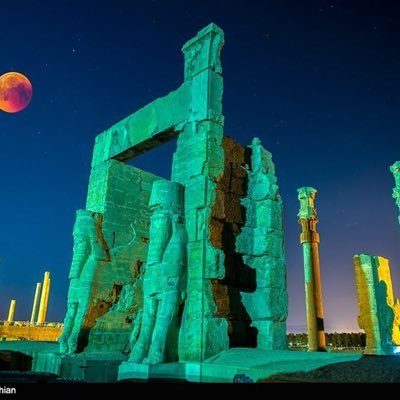
This: “At the expert level, another interpretation has emerged beyond those I mentioned earlier today. The new arguments is that the operation may have been a cover story for a failed heliborne attempt in Isfahan, potentially linked to Iran’s highly enriched uranium stockpile, which would make the episode strategically more serious than the public U.S. account suggests.”
I also heard a former CIA officer sayings the same thing (mentioned also preparation for ground incursion into Natanz).
#Iran #Iranwar
Hamidreza Azizi@HamidRezaAz
#Iran War Update No. 37 (focus on Iranian strategic narrative): 🔹The central development of Day 37 was the U.S. rescue operation inside Iran following the downing of an F-15E. In Iranian framing, the point is not to deny that the United States can still conduct complex operations, but to argue that it can no longer do so at acceptable cost, which is presented as evidence that Iran is successfully imposing costs despite the material asymmetry. 🔹At the expert level, another interpretation has emerged beyond those I mentioned earlier today. The new arguments is that the operation may have been a cover story for a failed heliborne attempt in Isfahan, potentially linked to Iran’s highly enriched uranium stockpile, which would make the episode strategically more serious than the public U.S. account suggests. 🔹Trump’s threat to strike Iran’s power plants and bridges if the Strait of Hormuz is not reopened has been read in Tehran in two ways. On the one hand, it is treated as a sign that military pressure has failed to push Iran toward capitulation. On the other hand, it is being taken seriously enough to sharpen internal debates over whether Iran should escalate preemptively. 🔹Some state-affiliated sources are warning that unless Washington explicitly backs away from infrastructure targeting, Iran may move toward a large-scale strike on Israeli and Gulf electricity and oil infrastructure, reflecting a shift by the Iranian armed forces toward abandoning proportional, reactive responses. 🔹In that sense, Trump’s threats may end up producing the opposite of their intended effect. Rather than compelling de-escalation, they may strengthen the camp in Tehran arguing that only a decisive and immediate show of force can restore deterrence. 🔹At the societal level, these threats are also reshaping perceptions of the war inside Iran. The conflict is increasingly seen not as an effort to pressure the regime while sparing society, but as a campaign against the country itself, which is deepening public disillusionment and narrowing the political space for any pro-U.S. narrative. 🔹This shift appears to be visible even beyond Iran’s formal political sphere. The fact that some diaspora opposition TV channels have reportedly moderated their tone suggests that attacks on infrastructure are eroding the plausibility of framing the war as “liberation” rather than destruction. 🔹Iran’s attacks on petrochemical and oil-related facilities in the UAE, Kuwait, Bahrain, as well as Israel, were framed during the day as a calibrated response to the strike on Mahshahr. Their purpose was to show that attacks on Iran’s economic infrastructure will trigger rapid retaliation against the wider regional energy system. 🔹At the same time, there is still no sign that Trump’s threats are pushing Iran to reconsider its Hormuz policy. On the contrary, the IRGC’s assertion that the strait will not return to its pre-war condition points to a hardening of Iran’s position rather than movement toward accommodation. 🔹What stands out increasingly is that Iran is no longer presenting Hormuz simply as a disruption tool. The emerging argument is that access to the strait should now be conditioned on compensation for wartime damage, effectively recasting passage not as a right but as an issue to be renegotiated under the terms of war. 🔹This is reinforced by the emphasis that ships are still transiting the strait with Iranian permission. The strategic point is to show that Hormuz is not closed in a crude sense, but operating under wartime regulations imposed by Iran, which helps undercut the U.S. claim that force is needed to “reopen” it. 🔹The push in Majlis (parliament) to impose cargo-based fees on ships and tankers passing through the strait takes this one step further. It suggests that Tehran is moving from wartime control toward institutionalized control, turning Hormuz into both a strategic lever and a prospective revenue-generating mechanism. 🔹The reported discussions with Oman are important in this regard. Tehran appears to be trying to build not only military control but also a legal and diplomatic basis, potentially with Omani involvement, for redefining the passage regime in a way that would outlast the current war. 🔹On the Lebanon front, intensified Israeli strikes, including in Beirut’s southern suburbs, have been met with drone and missile attacks and reported naval strike attempts. Even where those naval attempts failed, they still served an important purpose by widening the maritime battlespace into the Mediterranean. 🔹Iraq, by contrast, is being treated as a theater of sustained attritional pressure. Repeated drone operations against U.S. positions are meant to show that American forces remain vulnerable over time, while U.S. strikes on PMF-linked targets keep alive the risk of public mobilization against Washington. 🔹Iran’s decision to continue allowing Iraq safe passage through Hormuz should be read in that same strategic context. Tehran appears to see Iraqi economic stability as essential to preserving the political position of its allies in Baghdad, which makes Iraqi exemption a tool of influence as much as a stabilizing gesture. 🔹Regarding Yemen, the dominant view in Tehran is that its main strategic value lies less in missiles than in geography. The Houthis are therefore seen as preserving their strongest card, Bab el-Mandeb, while calibrating their current involvement so as to sustain pressure without prematurely triggering broader regional escalation. 🔹This makes Yemen a reserve front rather than a secondary one. The threat of activating Bab el-Mandeb more fully functions as deterrence in itself, while preserving room for a much sharper escalation if the war continues to intensify. 🔹Inside Iran, wartime conditions are also being used to justify tighter domestic control. The execution of two detainees arrested during the January protests, alongside a broader rise in executions under national security charges, indicates that the regime is coupling external war pressure with intensified internal repression. 🔹Diplomatic activity has continued, but without visible progress. Regional efforts to broker talks or a temporary ceasefire appear stalled, and Iran’s rejection of proposals tied to reopening Hormuz shows that Tehran still believes its leverage lies in holding its position rather than entering negotiations on U.S. terms. 🔹Overall, Day 37 points to a sharper Iranian shift from reactive signaling to pre-positioned escalation options. Tehran is increasingly trying to formalize control over key pressure points, while preparing politically and militarily for the possibility that Trump’s infrastructure threats will force a wider and more decisive phase of the war.
English
@RZimmt @HamidRezaAz If they have no breaking point wouldn’t it make sense to weaken them to the max so their ability to cause trouble is reduced? Even democrat politicians and analysts have acknowledged the Iranian regime is trouble if left unchecked. Negotiations has not seemed to contain them.
English

This message goes beyond a basic misunderstanding of the Islamic Republic (“Why hasn’t Iran capitulated yet?”).
It is difficult to imagine any country in the world that would surrender to the demands of a president who speaks in such a manner. This is not a matter of strategic assessment or ideological perceptions but rather of a desire to preserve basic dignity.
I don't know if the Iranian regime has a breaking point or what it might be. It is clear that the Iranian leadership still assesses that its ability to withstand even the next level of escalation—including attacks on critical infrastructure—is stronger than the ability of its neighbors and the global economy to absorb the expected consequences of such a move.
But even if this assessment proves in the coming days to be entirely mistaken and the Iranians become convinced to agree to the U.S. (at least regarding the Strait of Hormuz and the nuclear issue), it is clear that such a message from the president is perceived in Tehran as an expression of desperation on President Trump’s part rather than strength. Such rhetoric certainly does not encourage a willingness to compromise.
Barak Ravid@BarakRavid
🚨🚨🚨Trump on Truth Social: Tuesday will be Power Plant Day, and Bridge Day, all wrapped up in one, in Iran. There will be nothing like it!!! Open the Fuckin’ Strait, you crazy bastards, or you’ll be living in Hell - JUST WATCH! Praise be to Allah
English
Your gas is more expensive.
Your food is more expensive.
Your mortgage will be more expensive.
All because Donald Trump is fighting a war in the best interest of Netanyahu and his right-wing government.
What an epic failure.

English
@citrinowicz @HamidRezaAz If all that is achieved is defanging, shame and government poverty, that’s a massive win. Everything else is gravy. That’s rarely acknowledged by the Iran leaning scholarly analysts. But so obvious.
English
You’ve probably heard this before…
It won’t work.
Iran will not surrender.
The administration, and the president do not fully grasp what drives the Islamic Republic. Faced with pressure, Iran is more likely to escalate than to concede.
Trump will have to decide: escalate further or stop. But one thing is clear Iran is unlikely to "open" the Strait of Hormuz, even under extreme scenarios such as a ground operation on Kharg Island.
Trying to put out fire with fire will not resolve the conflict. It will only deepen the escalation and amplify the negative consequences for the international community.
#IranWar
Barak Ravid@BarakRavid
🚨🚨Trump on Truth Social: Remember when I gave Iran ten days to MAKE A DEAL or OPEN UP THE HORMUZ STRAIT. Time is running out - 48 hours before all Hell will reign down on them. Glory be to GOD!
English
@democratwaunp @MIND_ISRAEL @YadlinAmos @UEvental @N12News What society wouldn’t care if its infrastructure was demolished?
English

@MIND_ISRAEL @YadlinAmos @UEvental @N12News These two 🤡don't even have the slightest knowledge of Iranian regime. Do you think the regime would care about infrastructures? By doing this you are only turning Iranian society which thought Israel was their friend into an extremist nation that wont stop until fuck your mom
English

1/ Israel should not rule out a good deal with Iran, but better to end the war with no agreement than with a bad one, say @YadlinAmos and @UEvental in @N12News article. No deal will allow the regional and international system to keep exerting maximal pressure on the regime
>>>
English
@myacoubian @HamidRezaAz Needs a little more balance. Dwells on Islamic Republic strengths and does not acknowledge its vulnerabilities fully. Otherwise good.
English
Once again excellent analysis from @HamidRezaAz
Hamidreza Azizi@HamidRezaAz
#Iran War Update No. 34 (focus on Iranian strategic narrative): 🔹Iran’s messaging is shifting more clearly toward infrastructure-centric warfare. In both official and semi-official narratives, the emphasis is no longer limited to retaliation against military targets, but increasingly on demonstrating that attacks on Iran’s bridges, industry, and civilian infrastructure will be met with comparable pressure on the broader U.S.-aligned regional system. 🔹In this sense, Tehran is increasingly framing the war as a contest over regional connectivity rather than battlefield attrition alone. The strategic logic is to signal that the cost of sustained pressure on Iran will not only trigger responses against Israel or U.S. assets and interests in the region, but also against Gulf logistics, data infrastructure, and broader commercial/economic confidence. In other words, the underlying logic is that either all sides endure together, or all face collective ruin. 🔹The Strait of Hormuz remains the central lever, but Iran’s tone suggests ambitions beyond a temporary blockade. Iranian officials are increasingly raising the idea of closure with discussions of postwar protocols and long-term exclusion rules, including potential arrangements with Oman to establish a new legal regime governing the strait. 🔹This is strategically significant because it raises the political cost of de-escalation for Tehran. The more Iran frames Hormuz as a space where wartime sacrifice can be translated into lasting leverage, the more difficult it becomes to reopen the waterway without visible concessions from the opposing side. 🔹Trump’s recent speech was intended to project control over escalation and an endgame trajectory, but Iran has interpreted it in the opposite way. The combination of maximalist threats, the absence of a clear political endpoint, and the lack of a practical plan for reopening Hormuz allows Tehran to portray Washington not as dominant, but as strategically incoherent. 🔹This interpretation helps Iran justify continued escalation without appearing cornered. In Tehran’s framing, U.S. threats are no longer seen as evidence that deterrence has failed, but rather as an indication that Washington is relying on brute pressure due to the absence of a viable exit strategy. Within this framework, attacks on purely civilian infrastructure – such as bridges and pharmaceutical companies – are portrayed as signs of strategic desperation on Trump’s part. 🔹At the same time, Iran has, for the first time, threatened that it may target Israel’s nuclear facilities in response to U.S. and Israeli attacks. Iran’s deputy foreign minister on legal and international affairs stated that if strikes against Iranian infrastructure continue, “the most important option of the Islamic Republic of Iran” would be to target Israel’s nuclear facilities. 🔹This signals a lowering of Iran’s tolerance threshold in response to the attritional infrastructure warfare it has faced in recent days, particularly as Trump’s recent threats suggest the possibility of further escalation. In effect, Iran’s message is that the continuation of such a trajectory is functionally indistinguishable from a nuclear attack and could therefore provoke a response against Israel’s nuclear infrastructure. 🔹On Lebanon, recent developments point to a more entrenched conflict rather than a limited escalation. While Beirut warns that there is no end in sight and Israeli operations appear increasingly oriented toward establishing a longer-term security zone, Hezbollah’s continued strike tempo serves Tehran’s interests by tying Israel down in a costly, open-ended confrontation. 🔹The strategic value of Lebanon for Iran now lies less in decisive escalation and more in its attritional function, particularly if Israel’s northern campaign continues to shift from punitive strikes toward prolonged territorial control. 🔹In Iraq, airstrikes on PMF positions in Nineveh and warnings of potential militia attacks in Baghdad show that Iraq remains a more unpredictable front, where pressure on U.S. interests can increase without Tehran needing to foreground it publicly. 🔹This ambiguity serves Iran’s interests by preserving deniability while keeping the Iraq-Jordan-Syria corridor unstable. The message is that even if the primary theater remains Iran, Washington cannot assume that its regional military footprint is insulated from dispersed retaliation. 🔹Yemen has also become more politically salient. While Houthi attacks themselves are not new, increasingly explicit claims of coordination with Iran and Hezbollah suggest a shift from symbolic solidarity toward a more openly articulated multi-front alignment. 🔹Even where actual command-and-control remains uneven, the signaling effect is significant. Tehran benefits from Yemen being perceived not as an isolated auxiliary front, but as part of a broader escalation architecture that stretches Israeli defenses and underscores that maritime insecurity is not confined to the Strait of Hormuz. 🔹At a different level, international reactions highlight the limits of support for Washington’s preferred response. European reluctance to reopen Hormuz by force or to even allow the U.S. to use their territory for supporting its Iran operations reinforces Iran’s belief that leveraging global economic pressure can generate coalition-management challenges for the United States more rapidly than Washington can generate sufficient pressure to compel Iranian capitulation. 🔹The spike in oil prices underscores this dynamic. With Brent rising above $109 and WTI above $111 following Trump’s remarks, Tehran can credibly argue that the economic burden of the war is increasingly being externalized, reinforcing its view that time and market disruption remain among its most effective strategic tools. 🔹Overall, Day 34 was less about a singular dramatic military shift than about the articulation of a clearer Iranian theory of victory. Tehran used the moment to argue that it can withstand direct strikes, expand the target set to the region’s economic and infrastructural backbone, and shape the conflict around connectivity, cost imposition, and coalition strain, rather than purely tactical destruction.
English
@NickKristof @HamidRezaAz But they lack balance. Just a bit more balance would add credibility.
English

These updates by @HamidRezaAz are very helpful. Much recommended.
Hamidreza Azizi@HamidRezaAz
#Iran War Update No. 33 (focus on Iranian strategic narrative): 🔹Iran significantly intensified its missile attacks on Israel on April 1 compared to the days before, launching multiple waves with higher missile counts, with some sources describing it as the most sustained barrage in recent weeks. This escalation suggests a shift toward more concentrated strike patterns aimed at increasing cumulative pressure on Israel. 🔹The timing of these attacks during the Passover period indicates a deliberate effort to maximize psychological impact on Israeli civilians. In this sense, Iran appears to be applying timing-based pressure more systematically as part of its broader attritional strategy. 🔹Iranian pro-government sources also point to increased coordination, including simultaneous launches from multiple missile bases across the country as well as parallel activity from Lebanon and Yemen. This reflects a move toward more integrated multi-front operations. The coming days will show if this can turn into an established pattern. 🔹At the same time, Israeli strikes on the Mobarakeh Steel Company in Isfahan on the day before have caused severe structural damage, reportedly rendering production largely inoperable. 🔹Given the company’s central role in Iran’s economy, the attack is widely interpreted as part of a broader effort to undermine postwar recovery capacity. This suggests a growing Israeli emphasis on long-term economic degradation of Iran. 🔹Strikes on infrastructure in western Iran, including bridges and logistical nodes, alongside attacks on airports and multiple cities around Isfahan, point to a parallel effort to disrupt mobility and support networks. These patterns have fueled speculation about preparations for potential ground or airborne operations targeting critical assets. 🔹On the economic front, estimates from the International Energy Agency indicating large-scale disruption to global energy supply highlight the systemic impact of the conflict. This aligns with Iran’s increasing emphasis on economic warfare as a core dimension of escalation. 🔹Developments in the Strait of Hormuz, including growing number of foreign vessels seeking Iranian permission for transit, are viewed in Tehran as evidence of de facto control. The longer this dynamic persists, the more it reinforces Iran’s perception that its leverage over global energy flows is consolidating. 🔹At the same time, continued Iranian-linked incidents in the Persian Gulf, including reported strikes in Kuwait and near Qatar, demonstrate a willingness to sustain pressure on regional energy infrastructure. Even when damage is limited, such actions reinforce the perception of persistent vulnerability. 🔹Against this backdrop, statements by Donald Trump suggesting that the war could end within weeks, while downplaying regime change, have generated mixed interpretations. Some analysts view this as laying the groundwork for a controlled exit, while others interpret it as signaling a potential final – more expansive – escalation. 🔹Speculation about possible U.S. moves, including commando-style operations targeting nuclear materials or strikes on energy infrastructure, has heightened concern in Tehran. As a result, Trump’s messaging is often interpreted as either strategic deception or pre-escalation signaling. 🔹This has led to growing calls within Iranian strategic circles for a more assertive posture. The underlying concern is that failing to act decisively could invite a more damaging U.S. intervention. 🔹At the same time, continued U.S. troop deployments are widely interpreted in Tehran as indicators that options for a larger-scale operation remain under consideration. Some analysts point to the Easter period as a potential window for escalation. 🔹Within this context, debate in Iranian expert circles has intensified over the risk of losing escalation momentum. Concerns about a narrowing set of viable targets in Israel highlight a dilemma between sustaining pressure and avoiding increasingly symbolic or low-impact attacks. 🔹By contrast, escalation options in the Gulf remain available but carry significantly higher risks of regional expansion. This underscores a central strategic dilemma in Iranian thinking: how to restore deterrence without triggering uncontrollable escalation. 🔹Alongside these dynamics, Israeli statements indicating that a ceasefire with Iran would not extend to Lebanon have heightened concerns in Tehran. This has reinforced the perception that Israel seeks to sustain or expand operations on the Lebanese front regardless of broader de-escalation. 🔹From the Iranian perspective, such signaling reflects a willingness to pursue a more aggressive and potentially open-ended strategy in Lebanon, including maintaining a long-term presence in southern areas. In this sense, Lebanon is increasingly viewed as central to the war’s trajectory. 🔹Accordingly, Iranian analysts emphasize that Tehran must insist on a comprehensive framework for ending the war, encompassing all fronts, particularly Hezbollah. This reflects concern that fragmented agreements could allow Israel to consolidate gains in Lebanon while reducing pressure elsewhere. 🔹At the same time, Yemen’s role continues to expand, with additional Houthi attacks toward Israel. These operations are widely interpreted as part of an effort to stretch Israeli air defenses and redistribute military resources. 🔹Beyond their immediate impact, such attacks carry a signaling function, indicating that escalation could extend to Gulf economic targets if the conflict intensifies. 🔹Despite growing coordination, Iranian officials such as Abbas Araqchi continue to frame these actors as independent. This reflects an effort to preserve plausible deniability while benefiting from distributed escalation. 🔹At the same time, statements by these groups emphasizing joint operations highlight the increasing difficulty of maintaining this narrative as coordination deepens. This points to a widening gap between official messaging and operational realities. 🔹Pressure from Washington on European allies has intensified, including threats to reconsider commitments to NATO. This reflects how the war is contributing to growing transatlantic tensions. 🔹At the same time, Russian condemnation of Israeli strikes in Tehran highlights Moscow’s continued rhetorical alignment with Iran, while criticism in Tehran of Chinese and Pakistani mediation efforts points to a more selective approach to external diplomacy. 🔹Specifically, the use of the term “Gulf” instead of “Persian Gulf,” along with what is seen as an overly neutral framework that avoids addressing Iranian concerns directly, is interpreted as an attempt to accommodate Arab positions and prioritize stability over Iranian strategic interests, reinforcing perceptions of bias rather than genuine neutrality. 🔹Domestically, there has been criticism of Masoud Pezeshkian over remarks perceived as signaling openness to ending the war. Critics argue such statements undermine Iran’s broader economic pressure strategy and strategic messaging. 🔹Reports of diplomatic contacts alongside the targeting of figures such as Kamal Kharrazi, believed to have been linked to potential negotiations, have fueled speculation that ceasefire pathways may be actively disrupted by Israel. This reinforces Iranian narratives that the Israeli side seeks to prolong the war. 🔹Overall, Day 33 highlights a growing tension in Iran’s strategy between expanding coordinated, multi-front pressure and the risk of diminishing returns on escalation, particularly as target constraints in Israel become more apparent. At the same time, rising concerns over U.S. intentions and the trajectory in Lebanon are reinforcing a shift in Iranian thinking toward how to regain escalation dominance without being drawn into a phase of the war dictated by the adversary’s moves.
English