

Dter-DT(❖,❖)
3.1K posts

Dter-DT(❖,❖)
@Flaha_dter
Art Creator, Member of @Raikucom
Katılım Mart 2025
1.6K Takip Edilen1.2K Takipçiler


@VitNguynho36268 50ms is the dividing line between mainstream profitability and true "hidden alpha" in the staking race.
English

Latency is the “hidden alpha” in ETH staking
Many people think optimizing a validator means better infra, better relays, or scaling more nodes.
But in reality, there’s a massively underrated factor: network latency.
1. Latency isn’t just technical => it’s money
Recent data shows:
- Reducing latency by 50–150ms → +0.66% to ~2% APR
- For large operators → that’s millions of dollars per year
In a ~$100B staking market, this isn’t a minor optimization , this is real edge.
2. “Usable slot time” is where money is made
Validators are constantly playing a game:
Propose early → safer
Propose late → more profitable
Lower latency means you can wait longer while staying safe
→ See more MEV bids
→ Select better ones
3. MEV is the main profit driver
Just an extra 50–150ms can lead to:
13–16% higher bid value on average
20–30% of cases exceeding +30%
~150–190 ETH more per week
In some cases, “missed alpha” can be up to 20x — just because of a few milliseconds.
4. It’s not just more profit - it’s better accuracy
Lower latency improves:
- Head vote accuracy from 98.6% → ~99.1%
- Adds ~1000–2000 ETH/year across the network
Sounds small? That’s actually over 50% of the remaining gap to theoretical optimum.
5. The staking game is evolving
Before:
→ Whoever had more validators won
Now:
→ Whoever optimizes better wins
Latency today is like HFT in TradFi:
A small speed advantage = outsized returns
6. The most interesting part
You don’t need:
- More risk
- More complex strategies
You just need to:
→ Remove an existing constraint
Conclusion
Latency isn’t a technical detail.
It’s:
→ Time
→ Time = opportunity
→ Opportunity = money
In ETH staking, sometimes…
50ms makes all the difference.
Gmum.
@get_optimum
@aqccapital @MurielMedard @ChandlerOtterbe
@vssema11 @tgogayi @shariaronchain @ada_pegasus
#Optimum

Young Ji@VitNguynho36268
ᴡᴇʙ𝟹 ʜᴀs ᴀ ᴍᴇᴍᴏʀʏ ᴘʀᴏʙʟᴇᴍ — ᴀɴᴅ ᴡᴇ ғɪɴᴀʟʟʏ ʜᴀᴠᴇ ᴀ ғɪx. Web3 doesn’t suffer from “forgetfulness.” It suffers from flawed architecture. At its core, it lacks a true memory layer. Modern blockchains already resemble traditional computers in many ways. But one fundamental component is still missing: a decentralized memory layer capable of supporting the next generation of the internet. At a high level, Web3 functions as a global computer. Execution environments like the Ethereum Virtual Machine and Solana Virtual Machine run across thousands of distributed nodes, powering decentralized applications. But when you look deeper, a critical gap appears. There is no unified system for efficiently storing, accessing, and updating data. Instead, Web3 relies on a fragmented patchwork of solutions-inefficient, complex, and difficult to scale. The result is clear: Slow transactions. High storage costs. Limited scalability. That’s not what decentralization was meant to achieve. ᴀ ɴᴇᴡ ᴀᴘᴘʀᴏᴀᴄʜ The industry has already pushed existing solutions to their limits. Incremental improvements are no longer enough. A new direction is emerging: leveraging algebraic coding to represent and transmit data more efficiently across decentralized systems. This leads to a fundamental question: How do we build a truly decentralized memory layer? ᴇɴᴛᴇʀ ʀʟɴᴄ ᴀɴᴅ ᴅᴇᴄᴇɴᴛʀᴀʟɪᴢᴇᴅ ᴍᴇᴍᴏʀʏ A team led by @MurielMedard stepped away from academia to tackle this challenge head-on. Their approach is built on Random Linear Network Coding—a method developed and refined over nearly two decades at MIT. RLNC encodes data into packets that move efficiently across the network. Instead of repeatedly sending the same raw data, each transmission delivers new, useful information. The impact is significant: Higher throughput. Lower latency. Greater resilience. Unlike traditional gossip protocols—where nodes often share redundant data—RLNC ensures that each piece of information received adds real value. Think of it as always receiving new information, never duplicates. ғɪxɪɴɢ ᴛʜᴇ ʙᴏᴛᴛʟᴇɴᴇᴄᴋs Today’s blockchain communication behaves like rumor spreading. It works well at first, but as the network grows, redundancy increases and efficiency drops. RLNC changes this dynamic. It removes redundancy and keeps data propagation efficient, even at scale. Reimagining Memory: From Mempool to deRAM Web3 currently relies on mempools—temporary pools where transactions wait to be processed. In simple terms, it’s like a pile of clothes on the floor. Unstructured. Unreliable. Hard to manage. In contrast, a proper memory system—like RAM in traditional computing—must be: 1.Structured 2.Consistent 3.Reliable RLNC enables a new model: decentralized RAM (deRAM). This system: -Stores active data efficiently -Supports real-time updates -Reduces storage overhead -Preserves decentralization Instead of every node storing everything indefinitely, data can be handled dynamically-just like in modern computing systems. 𝓦𝓱𝔂 𝓣𝓱𝓲𝓼 𝓜𝓪𝓽𝓽𝓮𝓻𝓼 If Web3 is to become a true global computer, execution alone is not enough. It needs an efficient memory layer. Right now, blockchain systems rely on “best-effort” mechanisms that only partially replicate real memory. What’s missing is a unified architecture: A high-speed data bus An efficient memory layer for storage and access RLNC-based infrastructure has the potential to deliver both. 𝓣𝓱𝓮 𝓑𝓸𝓽𝓽𝓸𝓶 𝓛𝓲𝓷𝓮 Decentralization without efficiency cannot scale. RLNC and decentralized memory represent a fundamental upgrade: Faster data propagation Lower latency Scalable storage Real-time access This isn’t just an incremental improvement. It’s the missing piece finally coming together. Gmum. @get_optimum @aqccapital @ChandlerOtterbe @tgogayi @ada_pegasus @vssema11 @samurai_itan
English
@VitNguynho36268 Templar is amazing! It has all the features from cross-chain to lending, and the Crusader interface still looks incredibly smooth. Definitely worth trying.
English
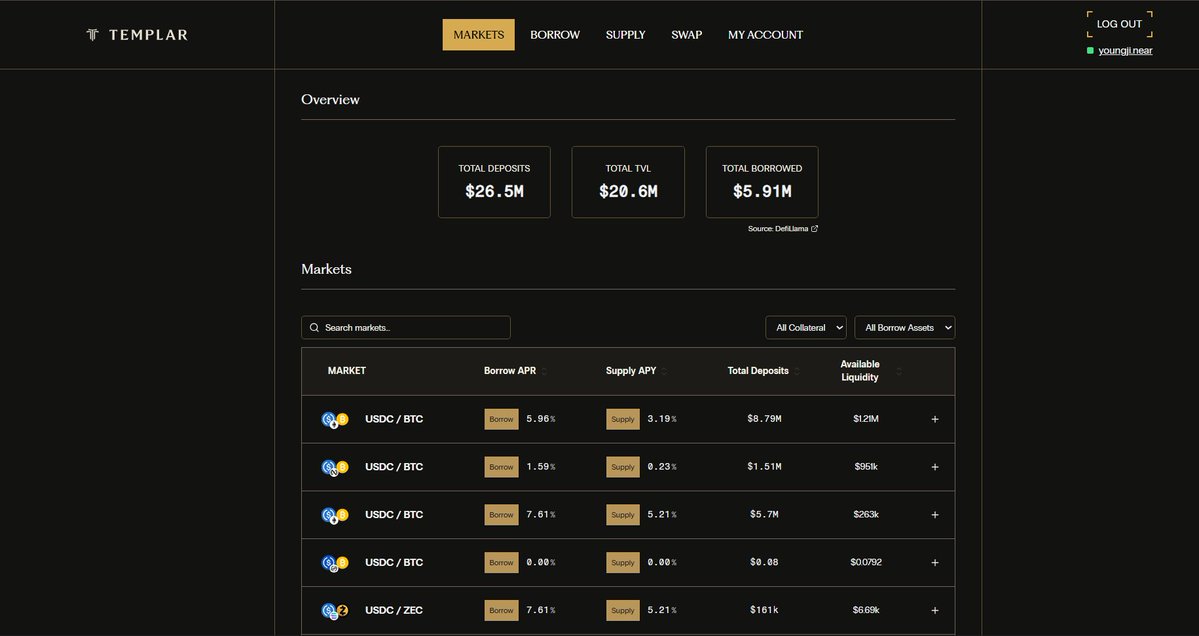
I’m still actively using the product and keeping a close eye on everything happening with Templar. Just look at the total deposited and borrowed amounts - those numbers are seriously impressive. The TVL speaks for itself.
What really stands out is how much Templar has already integrated. You can swap across chains, lend, earn APY — it’s all there in one place. That level of functionality this early on is honestly kind of wild.
And I’ve got to say, I genuinely love the interface. It has this vintage aesthetic that fits perfectly with the Crusader theme — it feels intentional, bold, like it’s moving forward with purpose instead of just chasing trends.
If you believe in what Templar is building, I’d recommend giving it a try. I think there’s a good chance you’ll end up liking it as much as I do.
They’re also running an ambassador program right now, with multiple tiers and some pretty attractive rewards — definitely worth checking out.
Feel free to join me here: discord.gg/dgy8UGJf
More infor about Ambassador Program : templarfi.org/blog/templar-k…
Try mainnet here : templarfi.org
gTemplar.
@TemplarProtocol
@Daveisacatsheep @annawobanana @RoyalF00l @peer2f00l


Young Ji@VitNguynho36268
Some projects make a lot of noise, raise big money, and promise the world but in the end, they fail. Why? Because their “product” is basically just a story designed to extract money from users and funds. Then there are the quiet builders. They don’t chase hype. They focus on execution, step by step, moving forward without needing constant attention. And somehow, they not only survive , they grow stronger. That’s exactly what I see with @TemplarProtocol A cypher lending project that raised only around ~$4M… yet look at what they’ve built. Real users. Strong trust from whales. A clean, simple UI that’s easy to use no unnecessary flash, just pure functionality. It reflects how they operate: no overcomplication, just results. And the numbers speak for themselves ,TVL around ~$21M. That’s seriously impressive given where they started. I genuinely believe this year could be a big win for Templar. Let’s push it to $100M, Knights. gTemplar. Bring Templar to the world.🛡️ @Daveisacatsheep @annawobanana @vuhi0811 @HoangNg469575
English
Half a month countdown
May is my birthday month, and it would be amazing if season 2 of Sentient started around this time
That would be the gift I'm looking forward to the most
I'll try my best so I don't have any regrets like in season 1 again
@SentientAGI @shad_haq @vivekkolli

English
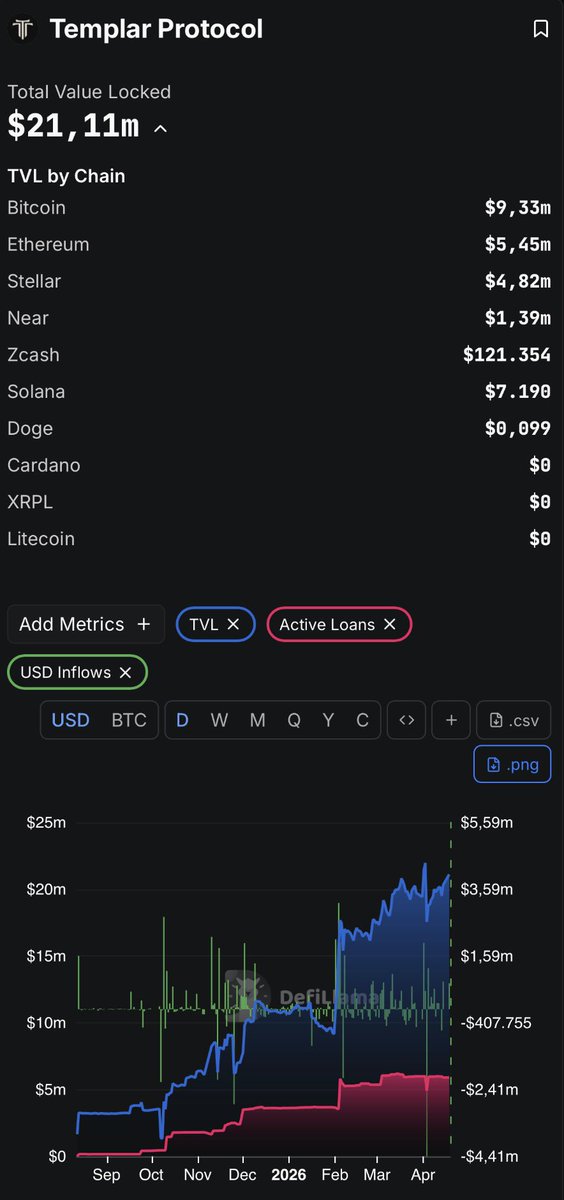
Some projects make a lot of noise, raise big money, and promise the world but in the end, they fail. Why? Because their “product” is basically just a story designed to extract money from users and funds.
Then there are the quiet builders.
They don’t chase hype. They focus on execution, step by step, moving forward without needing constant attention. And somehow, they not only survive , they grow stronger.
That’s exactly what I see with @TemplarProtocol
A cypher lending project that raised only around ~$4M… yet look at what they’ve built. Real users. Strong trust from whales. A clean, simple UI that’s easy to use no unnecessary flash, just pure functionality. It reflects how they operate: no overcomplication, just results.
And the numbers speak for themselves ,TVL around ~$21M. That’s seriously impressive given where they started.
I genuinely believe this year could be a big win for Templar.
Let’s push it to $100M, Knights.
gTemplar.
Bring Templar to the world.🛡️
@Daveisacatsheep @annawobanana @vuhi0811 @HoangNg469575
English
@VitNguynho36268 deRAM and RLNC are key infrastructure components that enable Web3 to optimize performance and truly scale.
English
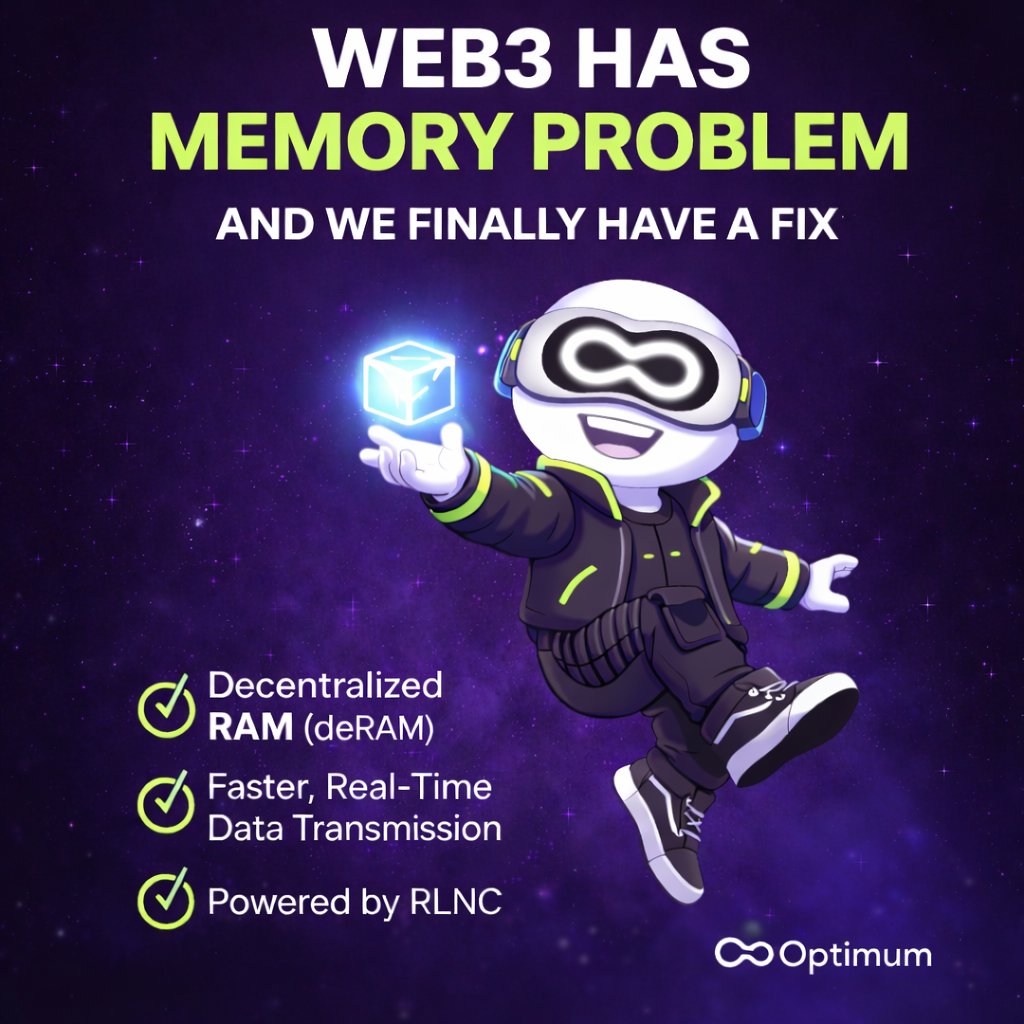
ᴡᴇʙ𝟹 ʜᴀs ᴀ ᴍᴇᴍᴏʀʏ ᴘʀᴏʙʟᴇᴍ — ᴀɴᴅ ᴡᴇ ғɪɴᴀʟʟʏ ʜᴀᴠᴇ ᴀ ғɪx.
Web3 doesn’t suffer from “forgetfulness.”
It suffers from flawed architecture.
At its core, it lacks a true memory layer.
Modern blockchains already resemble traditional computers in many ways. But one fundamental component is still missing: a decentralized memory layer capable of supporting the next generation of the internet.
At a high level, Web3 functions as a global computer. Execution environments like the Ethereum Virtual Machine and Solana Virtual Machine run across thousands of distributed nodes, powering decentralized applications.
But when you look deeper, a critical gap appears.
There is no unified system for efficiently storing, accessing, and updating data. Instead, Web3 relies on a fragmented patchwork of solutions-inefficient, complex, and difficult to scale.
The result is clear:
Slow transactions. High storage costs. Limited scalability.
That’s not what decentralization was meant to achieve.
ᴀ ɴᴇᴡ ᴀᴘᴘʀᴏᴀᴄʜ
The industry has already pushed existing solutions to their limits. Incremental improvements are no longer enough.
A new direction is emerging: leveraging algebraic coding to represent and transmit data more efficiently across decentralized systems.
This leads to a fundamental question: How do we build a truly decentralized memory layer?
ᴇɴᴛᴇʀ ʀʟɴᴄ ᴀɴᴅ ᴅᴇᴄᴇɴᴛʀᴀʟɪᴢᴇᴅ ᴍᴇᴍᴏʀʏ
A team led by @MurielMedard stepped away from academia to tackle this challenge head-on.
Their approach is built on Random Linear Network Coding—a method developed and refined over nearly two decades at MIT.
RLNC encodes data into packets that move efficiently across the network.
Instead of repeatedly sending the same raw data, each transmission delivers new, useful information.
The impact is significant:
Higher throughput. Lower latency. Greater resilience.
Unlike traditional gossip protocols—where nodes often share redundant data—RLNC ensures that each piece of information received adds real value.
Think of it as always receiving new information, never duplicates.
ғɪxɪɴɢ ᴛʜᴇ ʙᴏᴛᴛʟᴇɴᴇᴄᴋs
Today’s blockchain communication behaves like rumor spreading. It works well at first, but as the network grows, redundancy increases and efficiency drops.
RLNC changes this dynamic.
It removes redundancy and keeps data propagation efficient, even at scale.
Reimagining Memory: From Mempool to deRAM
Web3 currently relies on mempools—temporary pools where transactions wait to be processed.
In simple terms, it’s like a pile of clothes on the floor. Unstructured. Unreliable. Hard to manage.
In contrast, a proper memory system—like RAM in traditional computing—must be:
1.Structured
2.Consistent
3.Reliable
RLNC enables a new model: decentralized RAM (deRAM).
This system:
-Stores active data efficiently
-Supports real-time updates
-Reduces storage overhead
-Preserves decentralization
Instead of every node storing everything indefinitely, data can be handled dynamically-just like in modern computing systems.
𝓦𝓱𝔂 𝓣𝓱𝓲𝓼 𝓜𝓪𝓽𝓽𝓮𝓻𝓼
If Web3 is to become a true global computer, execution alone is not enough. It needs an efficient memory layer.
Right now, blockchain systems rely on “best-effort” mechanisms that only partially replicate real memory.
What’s missing is a unified architecture:
A high-speed data bus
An efficient memory layer for storage and access
RLNC-based infrastructure has the potential to deliver both.
𝓣𝓱𝓮 𝓑𝓸𝓽𝓽𝓸𝓶 𝓛𝓲𝓷𝓮
Decentralization without efficiency cannot scale.
RLNC and decentralized memory represent a fundamental upgrade:
Faster data propagation
Lower latency
Scalable storage
Real-time access
This isn’t just an incremental improvement. It’s the missing piece finally coming together.
Gmum.
@get_optimum
@aqccapital @ChandlerOtterbe @tgogayi @ada_pegasus @vssema11 @samurai_itan
English
There are rumors that Sentient Season 2 is being prepared.
I hope this isn't a lie.
We've been waiting for months since Season 1 ended. If this is true, I think it will help boost the community's morale as much as possible.
Bring Season 2 here!
@SentientAGI @shad_haq @vivekkolli

English

@Liquidwagmi I'm also looking into building my personal brand using X, and your advice like this really means a lot to me.
English

@VitNguynho36268 That's a very detailed and impressive analysis.
English
𝘽𝙧𝙚𝙖𝙠𝙞𝙣𝙜 𝙀𝙩𝙝𝙚𝙧𝙚𝙪𝙢’𝙨 𝙉𝙚𝙩𝙬𝙤𝙧𝙠𝙞𝙣𝙜 𝘽𝙤𝙩𝙩𝙡𝙚𝙣𝙚𝙘𝙠
In my view, Optimum is tackling one of Ethereum’s most fundamental challenges: data propagation between validators.
With its mumP2P system powered by RLNC, the results are already impressive, delivering a 5–6x speed improvement and bringing average block propagation time down to around 150ms.
What really stands out is how mumP2P handles data transmission. Instead of repeatedly broadcasting the same information like Gossipsub (which leads to redundancy and heavy bandwidth usage), it uses coded p => less duplication, smoother performance.
But this isn’t just a technical upgrade - it directly impacts validator economics. Faster data propagation means validators can sign and attest blocks more reliably, reducing missed opportunities.
That translates into higher rewards over time. Even if the improvement seems small on paper (just a few basis points), at scale - especially with large amounts of staked ETH ==> it becomes meaningful.
This is particularly important right now, as Ethereum staking yields have been compressing since The Merge. In that context, performance optimizations like this are incredibly valuable. You’re not changing the reward mechanism — you’re just earning more by operating more efficiently.
Another key point is cost. According to Everstake, running mumP2P doesn’t introduce any significant overhead compared to existing setups. That’s a big deal, because it lowers the barrier for adoption. If validators can gain performance without extra cost, it’s only a matter of time before others follow.
Looking ahead, I think the bigger picture here is Ethereum’s roadmap. One of the main constraints for reducing slot times has always been network propagation. With improvements like this, Ethereum could realistically move toward 6-second slots, and potentially even lower in the future.
For end users, the impact is clear:
1.Faster transaction confirmations
2.Smoother overall experience
3.Reduced risk of gas spikes during congestion
And it’s not just large validators who benefit. Even solo operators - the ones who care about every millisecond, can reduce missed attestations and slightly improve their chances of earning more when proposing blocks.
Everstake estimates this could reach mainnet within a few months. If the 5–6x performance gains hold up in real-world conditions, then better propagation won’t just be a “nice-to-have”, it will become the new standard.
At the end of the day, this isn’t just about speed. It’s about making Ethereum more efficient, more rewarding, and better prepared for what comes next — including the push toward 6-second slots.
Gmum.
@get_optimum @ethereum
@blockchainjeff @aqccapital @ChandlerOtterbe @ada_pegasus @vssema11 @samurai_itan
@MurielMedard

English
@alxburtsev @raikucom @duckk9x @_offmylawn @IDrawCharts @DeathAngel_69 This is great, can you make more?
English

Easter is here, and so is RAIKU Mini Game "Eggs Cather." Catch the falling eggs - just like the classic handheld games we all grew up with.
👇👇👇
raiku.online/egg/index.html
👆👆👆
@raikucom @duckk9x @_offmylawn @IDrawCharts @DeathAngel_69

ALXburtsev@alxburtsev
Try the mini-game Pair Up 🧩 @raikucom Find the matching pictures and collect them all! ✅ 12 characters ✅ 24 cards ✅ 1 goal - find every pair Just like @raikucom : alone they’re just cards, but together - a real team 🚀 Are you ready to test your memory? 😏 raiku.online/12/index.html
English


Get ready for an exciting night of camaraderie with Sentient South Asia & Vietnam Poker Night!
This is a special gathering space exclusively for poker players from South Asia and Vietnam.
Start time: Tuesday, April 7, 2026 at 9:00 PM.
@SentientAGI @shad_haq @LeaderX_btc

English
Dter-DT(❖,❖) retweetledi

It's been another absolutely packed week on @solana!
Catch up, chat with us, and secure a collectible NFT for attending tomorrow's townhall!
x.com/i/broadcasts/1…
English

⚡️BREAKING NEWS⚡️
@billmondays Just joined the Ritual team as community manager
Welcome Bill and good luck in your new position

English
I still have faith in @SentientAGI , although there's no information about season 2 yet, I still want to maintain my involvement in this project.
Hopefully the exciting times before will return soon
What do you think about this?
English
Since season 1 ended, how are you all doing now?
Still resting and enjoying yourselves? Participating in other projects? Or have you left the market?
This is truly a tedious and difficult phase for any project.
@SentientAGI @shad_haq @vivekkolli @abhishek095

English
Dter-DT(❖,❖) retweetledi

This is what conviction looks like.
Meet @jessupjong: deferred on a $1.5M/year offer, packed his car, and drove 5 days straight to San Francisco to join Cohort 0.
He’s now building wildfire fighting drone intelligence and multi-agent systems inside the Arena.
English
English

if you treat a person with respect
that person will reciprocate (well, most of the times i like to hope)
easy, right?
that's why I haven't stopped supporting @SentientAGI post TGE & I will continue doing so in the future
open-source AI is clearly the way forward
as for me, I'll play my part in ensuring it wins, no matter how small it may be in the grand plan
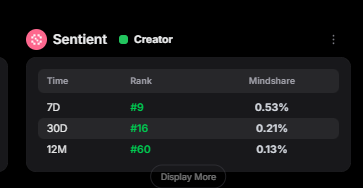
(btw idk how good G#mtu's tracker still is, but let's pretend it's 100% right)
Sentient@SentientAGI
New paper is out—CryptoAnalystBench: Failures in Multi-Tool Long-Form LLM Analysis. Improving reasoning agents starts with understanding how they fail. We study the errors that emerge when agents answer open-ended questions with no clear answer. Check core failures & fixes below 🧵
English

this one’s a must 👀
@raikucom townhall about to drop some serious alpha on Solana
don’t fade
Raiku 🐉@raikucom
What are you doing tomorrow and why is it attending the Raiku Townhall? Your handsome hosts @IDrawCharts and @_offmylawn will be filling you in on everything that happened on Solana this week! Watch live on X or our Discord for a collectible NFT! x.com/i/broadcasts/1…
English